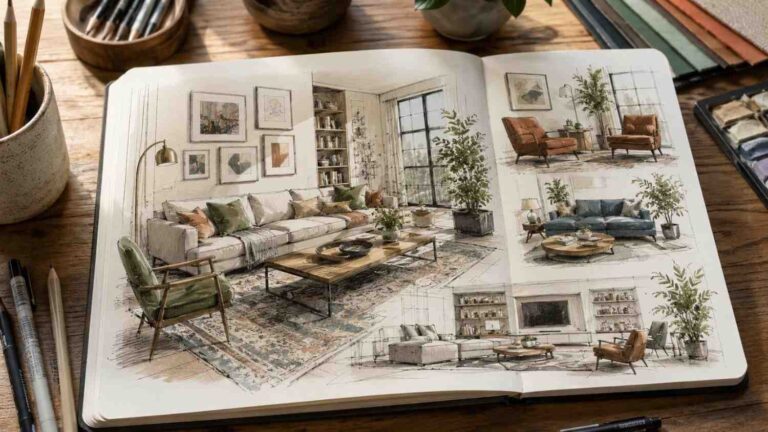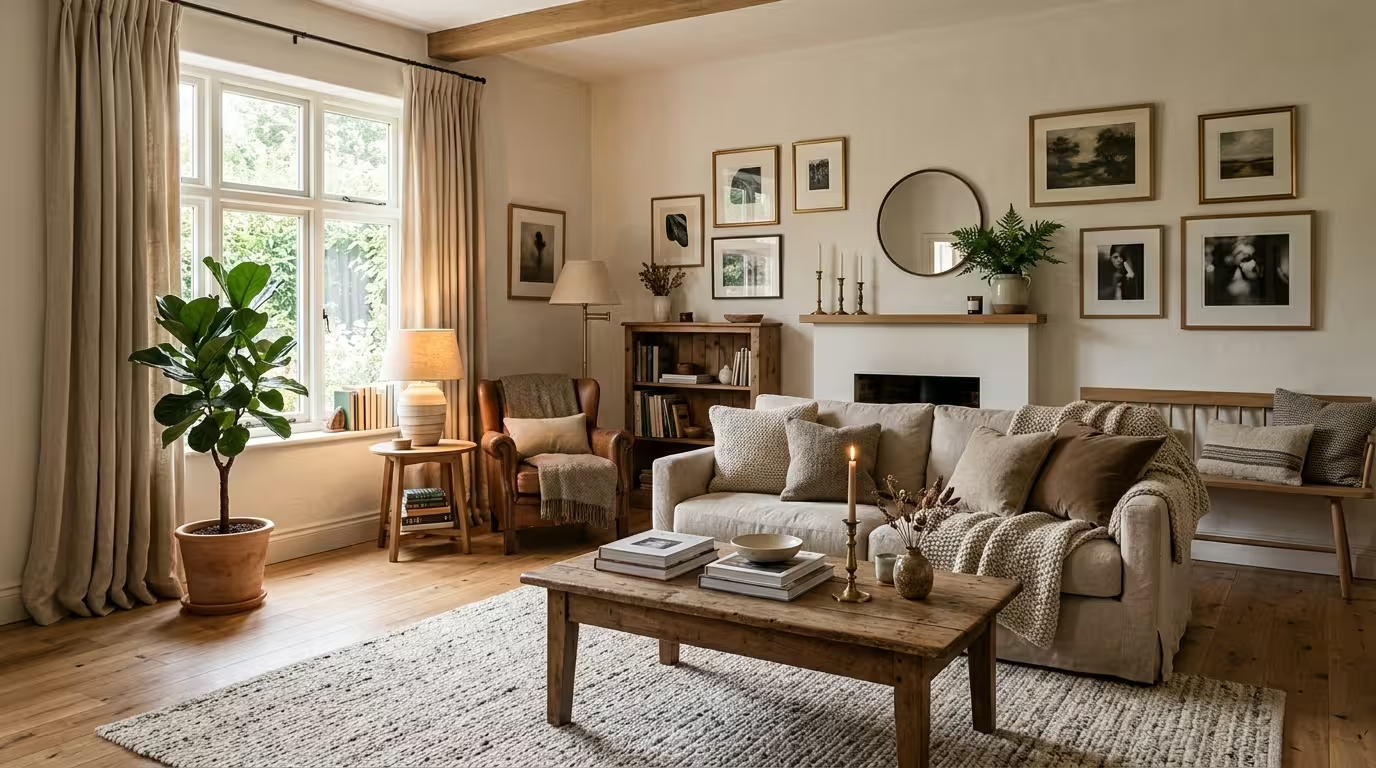
Living Room Ideas: A Complete Guide to Designing a Warm, Stylish, and Practical Space
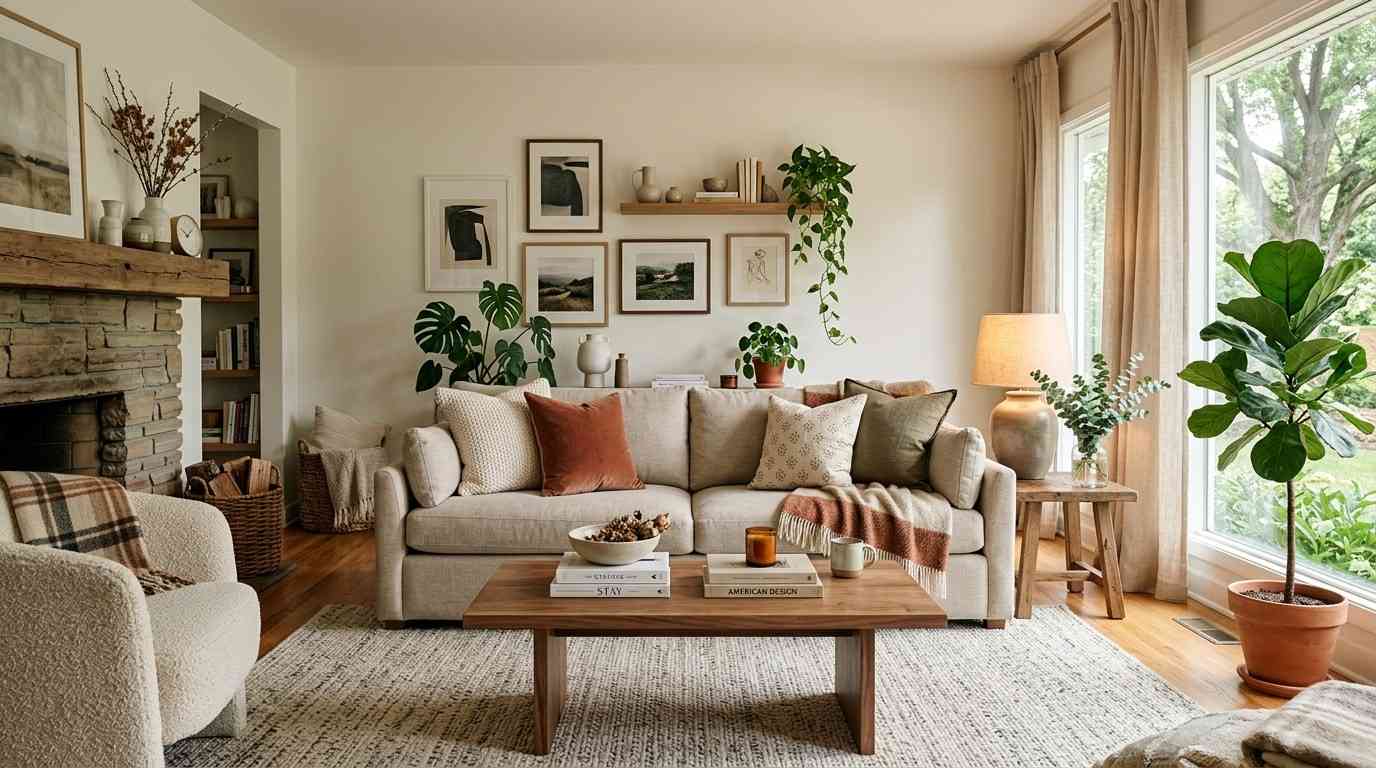
A great home often starts in the room where people naturally gather. It is where you rest after a long day, welcome guests, watch movies, read, talk, nap, and sometimes work with a laptop on your knees. Because it carries so many roles, one living room ideas should never be only about a pretty sofa or a trendy paint color. It should solve real daily needs while still making the room feel personal. The best spaces feel calm, easy to use, and connected to the people who live there. A strong living room idea begins with comfort, then becomes memorable through layout, texture, light, color, and details that tell your story.
Why the Right Living Room Idea Matters
A living room is not just a decorated box. It is a working part of the home, and every decision affects how the room feels. A sofa that looks beautiful may still fail if it blocks the walkway. A bold wall color can feel rich in one home and heavy in another if the natural light is weak. Even a large room can feel uncomfortable when seating is too far apart.
The right living room idea brings the room’s purpose into focus before you buy anything. Ask what the space must do first. Is it a family lounge, a formal sitting room, a TV room, a reading corner, or a mixed-use space? Once you know the answer, every choice becomes easier. Function comes first, then style supports it.
Start With Lifestyle Before Style
Before choosing colors or furniture, think about a normal week in your home. A couple who hosts friends every Friday needs flexible seating and surfaces for drinks. A family with young children needs durable fabric, closed storage, and rounded edges. A renter may need removable updates that do not damage walls.
This step prevents expensive mistakes. Instead of copying a photo, build around your habits. A living room idea works best when it reflects real use. Write down the top three activities that happen in the room. Then design around those activities. If the room feels beautiful but uncomfortable, it will never feel finished.
Measure First, Then Decorate
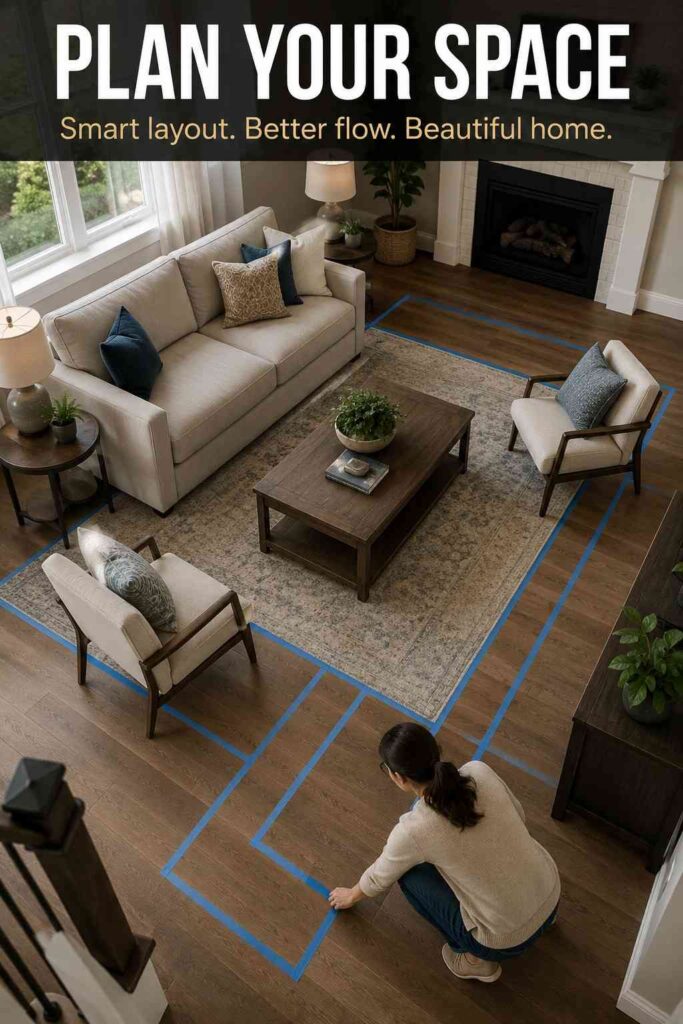
Measuring sounds boring, but it is one of the easiest ways to make a room feel professionally planned. Measure the room, doorways, windows, fireplace, outlets, traffic paths, and wall space before ordering furniture. Leave enough room to walk around seating without turning sideways. In many homes, 30 to 36 inches is a comfortable main walkway, while smaller paths can be tighter if the room is compact.
Use painter’s tape on the floor to test a sofa, rug, coffee table, or media console size. This simple step helps you see scale before spending money. A good living room idea should feel balanced from every angle, not just from the doorway. When pieces fit properly, the room immediately feels calmer.
Choose a Clear Focal Point
Every inviting living room needs a visual anchor. It may be a fireplace, a window view, a media wall, a large piece of art, built-in shelves, or a beautiful sofa. Without a focal point, the eye moves around without settling, and the room can feel unfinished. Once you choose the anchor, arrange the main seating to support it.
A TV can be the focal point, but it does not have to dominate. Surround it with shelving, paint the wall behind it in a deeper tone, or place art and storage around it so the screen feels integrated. If you have a fireplace and a TV, decide which one matters more for daily use. A practical living room idea respects how you actually spend time in the space.
Build a Conversation-Friendly Layout
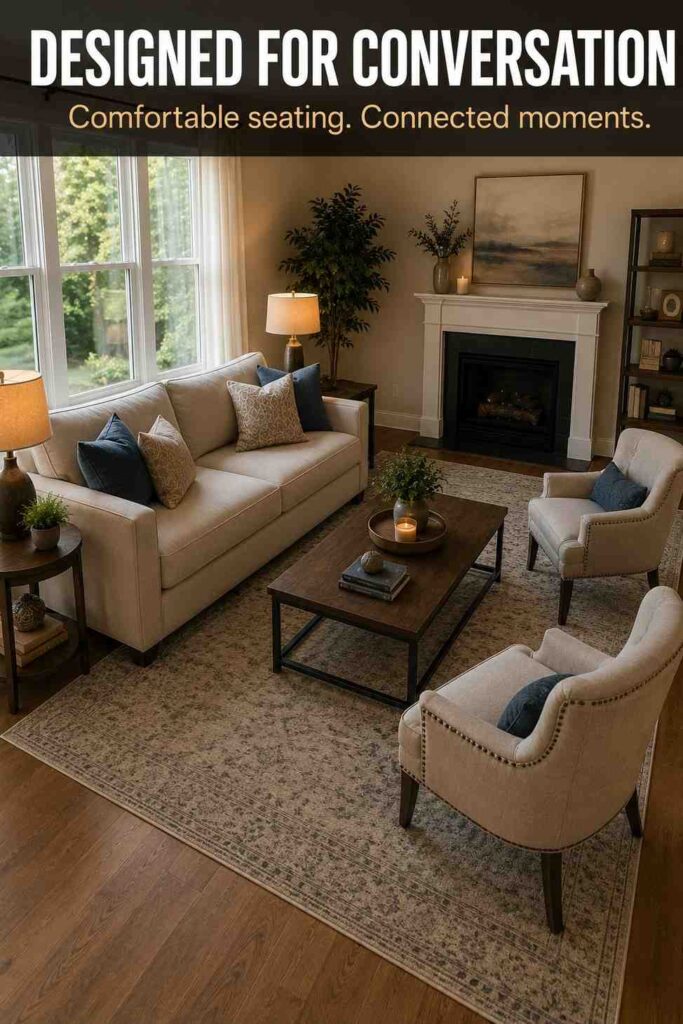
A living room should encourage people to sit, stay, and talk. Start with the largest seat, usually the sofa, then add chairs, stools, or a bench around it. Keep seating close enough for natural conversation. If people have to raise their voices, the layout is too spread out. If knees collide with the coffee table, the layout is too tight.
In a small room, a loveseat and two light chairs may work better than a bulky sectional. In a large room, divide the space into zones. One area can support conversation, while another can serve as a reading corner or game table. A flexible living room idea often uses smaller pieces that can move when guests arrive.
Pick the Right Sofa, Chairs, and Rug
The sofa sets the tone for the whole room. A straight sofa feels classic and easy to place. A sectional is useful for families, movie nights, and open rooms, but it can overpower a narrow space. A curved sofa softens hard lines and works well in open-plan homes. A low-profile sofa can make ceilings feel taller, while raised legs help reveal more floor and make compact rooms feel lighter.
A rug should connect the main pieces rather than float like a small island. When possible, place at least the front legs of the sofa and chairs on the rug. In a spacious room, all major seating pieces can sit fully on it. In a small room, a rug that is too tiny often makes the furniture feel scattered. The best living room idea treats furniture and rugs as one plan, not separate purchases.
Layer Living Room Lighting
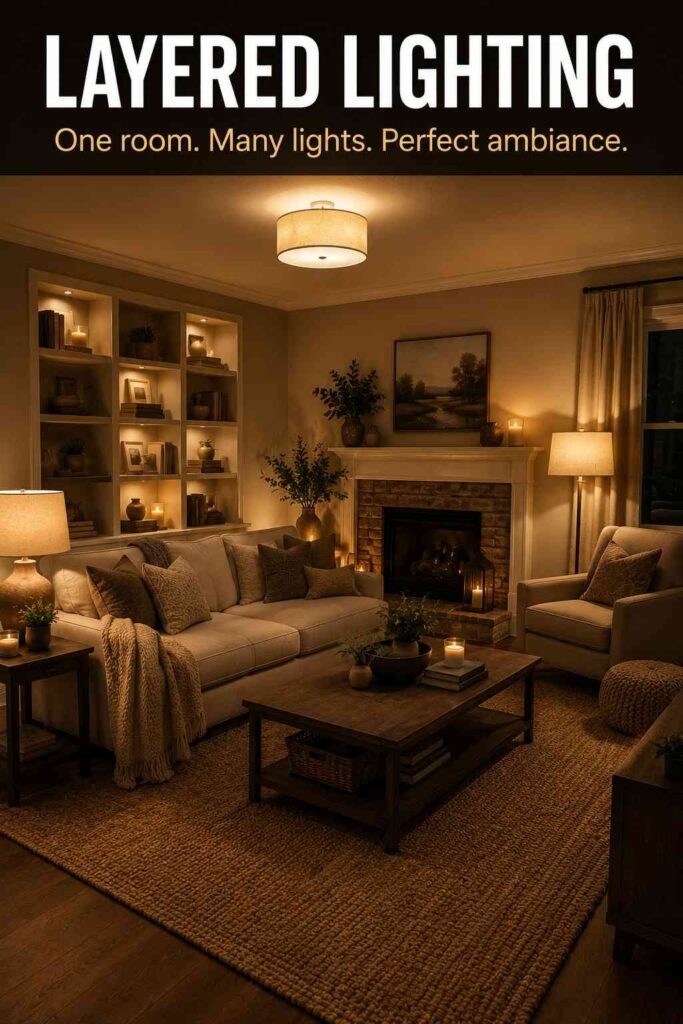
One ceiling light is rarely enough. A comfortable room needs layers: overhead lighting for general brightness, table lamps for warmth, floor lamps for reading, and accent lights for art, shelves, or architectural details. This layered approach helps the room shift from morning energy to evening calm without changing the furniture.
Warm bulbs usually make a living room feel more relaxed than harsh cool light. Dimmer switches are also useful because they let you adjust brightness for movies, guests, cleaning, or quiet nights. For deeper guidance, place the anchor text living room lighting design ideas near a section that explains lamps, sconces, dimmers, and mood lighting. The right lighting plan can make even a modest living room idea feel thoughtful and finished.
Choose Color With the Room’s Light in Mind
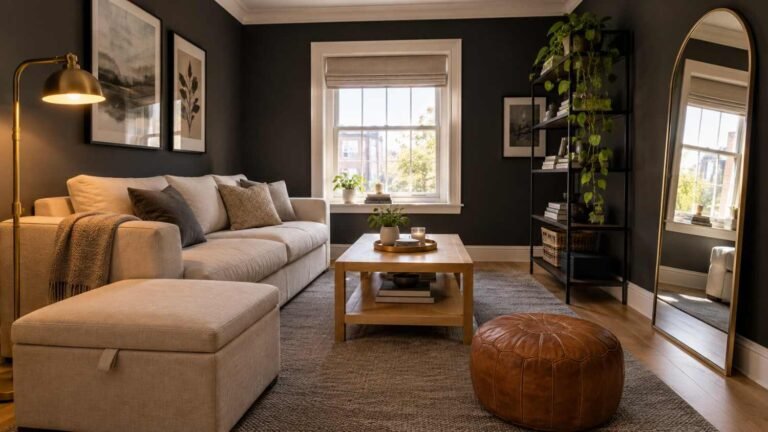
Paint looks different throughout the day, so test samples before committing. North-facing rooms often feel cooler, so warm neutrals, clay tones, creamy whites, and muted greens can help. Bright rooms can handle deeper shades, including navy, olive, chocolate, terracotta, or charcoal. Small rooms do not always need white walls; a darker color can create a cozy, wrapped feeling when paired with good lighting.
A balanced palette usually includes one main color, one supporting color, and one or two accent shades. This keeps the room interesting without feeling busy. For a calm living room idea, repeat colors in small ways through pillows, art, books, ceramics, and throws. Repetition makes the design feel intentional.
Mix Texture So the Room Feels Alive
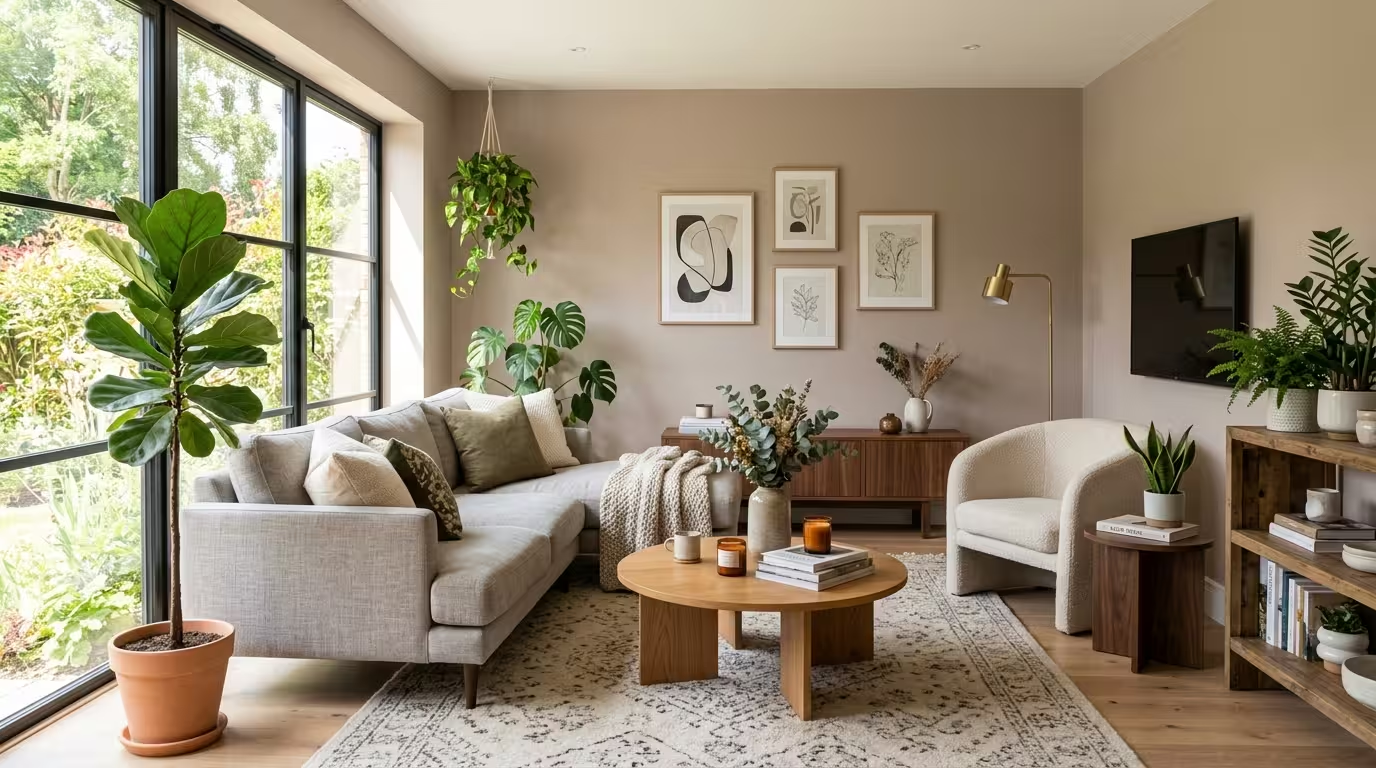
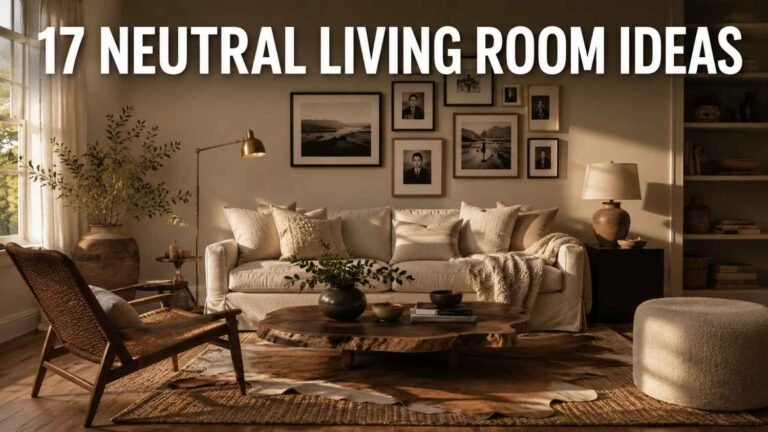
Texture gives depth to a room even when the color palette is quiet. Think of linen curtains, a wool rug, a leather chair, a stone table, a woven basket, a velvet pillow, or a ribbed wood cabinet. These details create visual warmth without clutter. They also help a room feel collected rather than flat.
A common mistake is filling the room with pieces that have the same finish. Too many smooth surfaces can feel cold. Too much heavy wood can feel dark. Mix soft, rough, shiny, matte, woven, and natural materials. A living room idea with layered texture feels more welcoming because it invites both the eye and the hand.
Add Storage That Looks Intentional
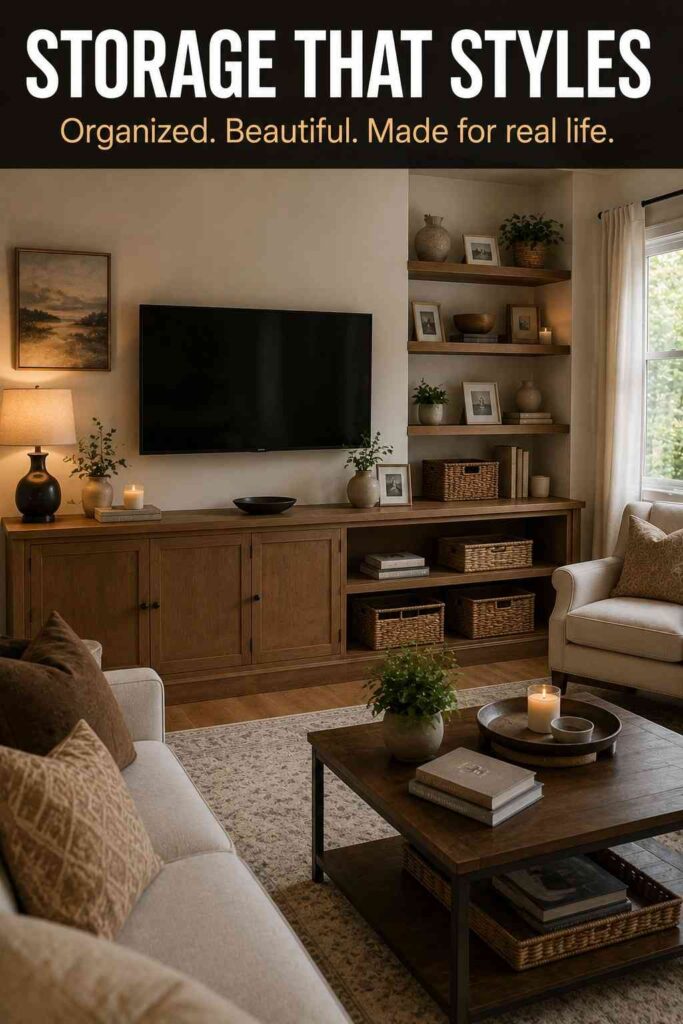
Storage is not only for hiding clutter. It shapes how the room works every day. Closed cabinets are useful for toys, games, cables, blankets, and extra remotes. Open shelves are better for books, pottery, framed photos, and a few personal objects. A storage ottoman can replace a coffee table in small rooms, while a console behind the sofa can hold lamps and baskets.
The goal is not to remove personality. The goal is to give everything a place. Clear surfaces reduce visual noise, especially in a room used for rest. A smart living room idea includes storage early, not after clutter becomes a problem.
Make Small Living Rooms Feel Bigger
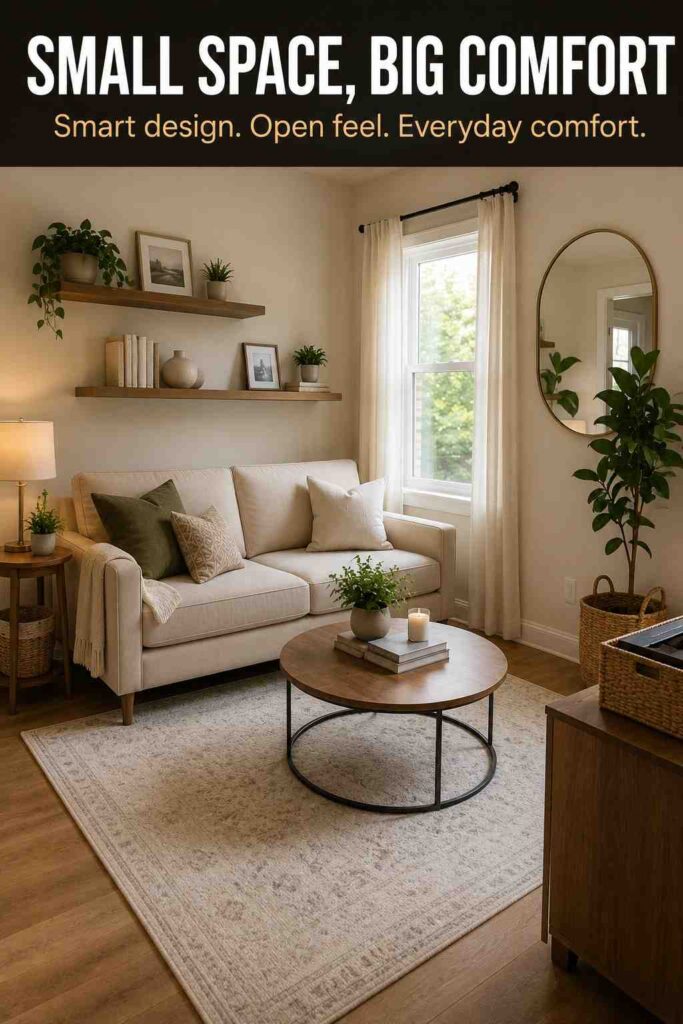
Small living rooms need careful editing. Choose furniture with visible legs, slim arms, and lighter visual weight. Mount shelves upward instead of spreading storage across the floor. Use mirrors across from or near windows to reflect light. Keep the color palette connected, so the room does not feel chopped into sections.
Do not push every piece against the wall automatically. Sometimes floating a chair or sofa a few inches inward makes the seating area feel more deliberate. Choose nesting tables, ottomans, wall lights, and compact chairs that can move easily. In a small space, the best living room idea is not about owning less style. It is about giving every inch a clear job.
Design Large Living Rooms in Zones
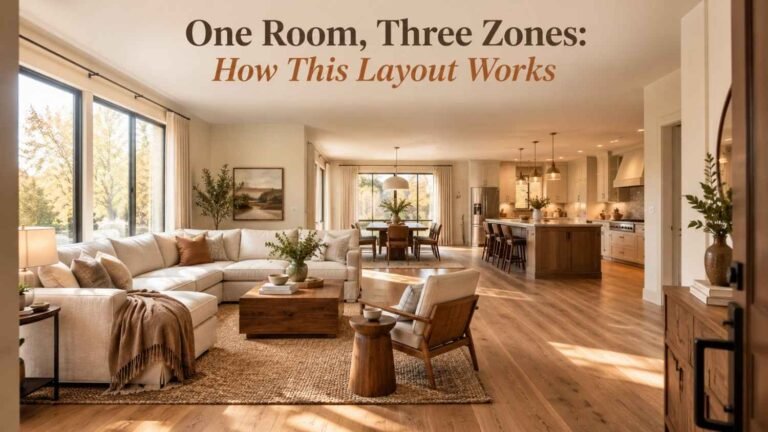
A large living room can feel cold if all the furniture sits around the walls. Bring seating inward and create smaller zones. A pair of chairs by the window can become a morning coffee spot. A game table can sit behind the sofa. A reading chair can stand near a bookcase and lamp. Rugs, lighting, and furniture placement help each zone feel connected but separate.
Use repetition to keep the space unified. Repeat wood tones, metal finishes, fabric colors, or shapes across the zones. This prevents the room from feeling like several unrelated spaces. A large-scale living room idea should create intimacy, not just fill empty floor.
Balance Old, New, and Natural Pieces
Rooms feel richer when they are not built from one matching set. Combine a modern sofa with a vintage table, a clean-lined media console with antique art, or new curtains with inherited lamps. This mix gives the room a layered, lived-in feeling. It also keeps the design from looking dated too quickly.
Natural elements soften a room. Wood, stone, rattan, cotton, linen, wool, clay, and plants can all make the space feel grounded. For more outdoor-to-indoor styling cues, use outinteriors where you discuss carrying patio textures, garden colors, and natural materials into the home. This approach works especially well in homes that open to a porch, balcony, or backyard.
Connect the Living Room With Nearby Spaces
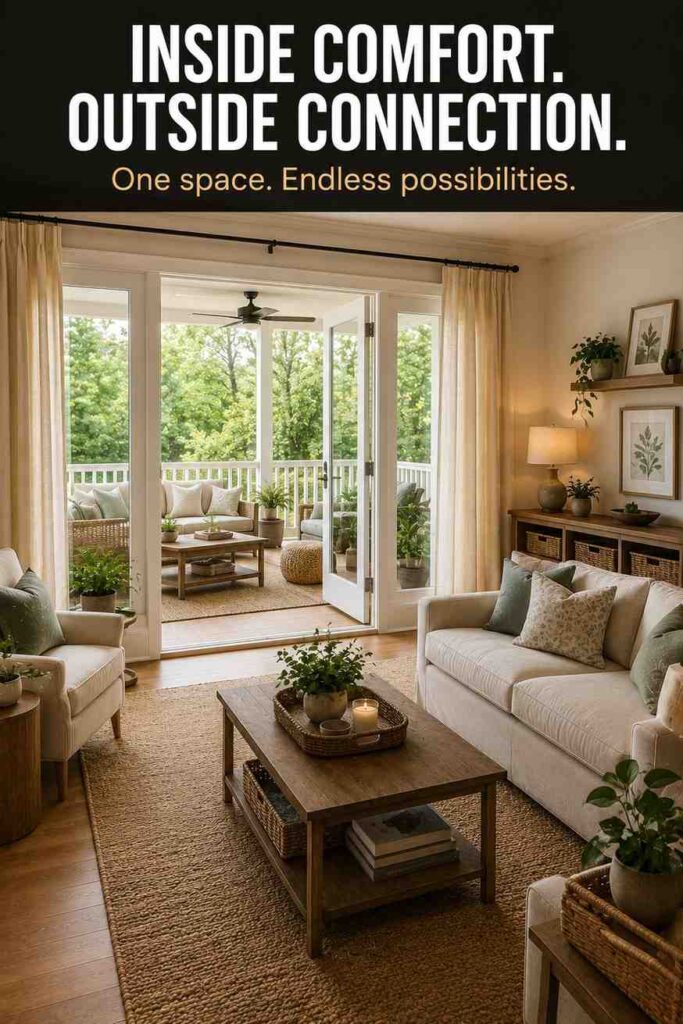
A living room rarely stands alone. It may connect to an entry, dining area, kitchen, staircase, porch, or hallway. The room feels more polished when nearby spaces share a visual thread. This does not mean everything must match. It means colors, materials, or moods should feel related.
For example, a navy front door can connect to navy piping on pillows. A wood dining table can connect to a wood coffee table. A porch with red, white, and blue seasonal touches can connect to subtle indoor accents. For a front-entry refresh that supports the indoor palette, place the anchor text patriotic porch in a sentence about seasonal curb appeal and matching accent colors. A connected room plan makes the whole home feel calmer.
Style Walls, Shelves, and Tables With Restraint
Blank walls can feel unfinished, but overcrowded walls can feel restless. Choose wall decor based on scale. A large sofa usually needs either one oversized piece, a pair of medium pieces, or a well-planned gallery. A narrow wall may need a vertical artwork, mirror, or sconce instead of a wide frame.
Shelves and coffee tables should look useful, not staged beyond real life. Use a simple formula: one tray, one stack of books, one natural element, and one practical item like coasters or a small bowl. Keep space open for daily use. A polished design supports the room instead of competing with it.
Budget-Friendly Living Room Updates
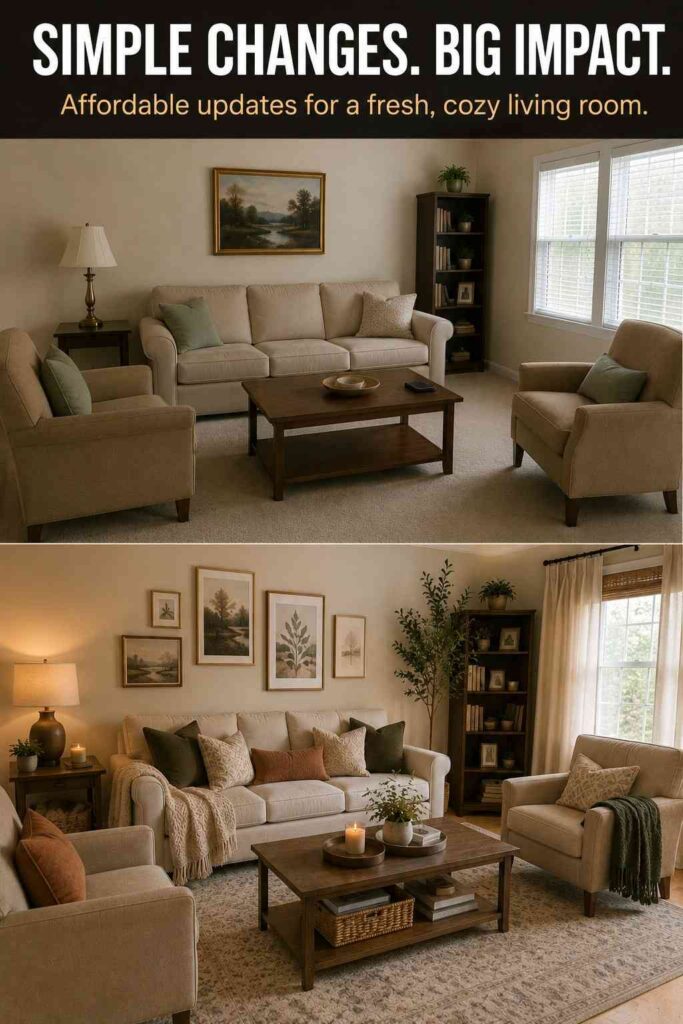
A fresh room does not always require a full makeover. Start by rearranging furniture, removing items that no longer serve the space, and shopping your own home for lamps, art, trays, or textiles. Then update the pieces that make the biggest visual difference.
Try replacing pillow covers, adding a larger rug, painting a bookcase, reframing existing art, switching harsh bulbs to warm bulbs, or hanging curtains higher and wider than the window. This budget-friendly room plan works because it improves scale, light, and personality before adding more stuff.
Renter-Friendly Living Room Improvements
Renters can still create a beautiful space without permanent changes. Use peel-and-stick wallpaper on a small wall, removable hooks for art, plug-in sconces, large rugs, freestanding shelves, slipcovers, and curtains hung with tension or no-drill rods where possible. If painting is not allowed, bring color through textiles, art, lampshades, and accessories.
Focus on pieces that can move with you. A quality sofa, washable rug, portable lamp, and flexible storage will serve more than one home. A renter-friendly design should avoid anything too custom unless it can be removed cleanly or reused elsewhere.
Common Living Room Mistakes to Avoid
The most common mistake is buying furniture before measuring. The second is choosing everything from one set. A matching room may feel easy at first, but it often lacks depth. Another mistake is relying only on overhead lighting, which can make the room feel flat at night.
Avoid rugs that are too small, curtains that hang too low, art that is too high, and coffee tables that block movement. Do not ignore storage, especially in family rooms. Also, be careful with trends. A trendy color or shape can be beautiful, but it should support the home’s character. A lasting room plan feels current without depending on one short-lived look.
A Simple Step-by-Step Plan
If the room feels overwhelming, follow a clear order. First, define the room’s purpose. Second, measure the space. Third, choose the focal point. Fourth, arrange seating for comfort and conversation. Fifth, select the rug, lighting, and storage. Sixth, choose colors and textures. Last, add personal details.
This order keeps you from decorating around random purchases. It also helps you make better choices with your budget. You do not need to finish the room in one weekend. In fact, rooms often feel better when they grow slowly. A thoughtful plan leaves space for future finds, family changes, and seasonal updates.
Conclusion:
A beautiful living room is not built from one purchase or one trend. It comes from clear choices that support comfort, movement, light, storage, and personality. Start with how you live, then shape the room around those needs. Measure carefully, choose a focal point, layer lighting, add texture, and include pieces that carry meaning.
The most successful room feels natural the moment someone enters. It welcomes guests, supports daily routines, and still leaves room for quiet moments. Whether your space is small, large, formal, casual, rented, or family-filled, the same rule applies: design for real life first, then let style make it memorable.
Frequently asked questions:
What is the best design approach for a small space?
The best approach is to use furniture with light visual weight, visible legs, compact tables, wall-mounted storage, and a connected color palette. Add mirrors near natural light and choose a rug that anchors the seating area properly. Avoid oversized sectionals unless the room can handle one comfortably.
How can I make my living room look expensive on a budget?
Focus on scale, lighting, and texture. Hang curtains high, use warm lamps, add a large enough rug, mix materials, and style fewer items with more care. Reframing art, changing pillow covers, and rearranging furniture can also make the room feel more refined without a full renovation.
Which color is best for a living room?
There is no single best color. Warm neutrals, soft greens, muted blues, clay tones, creamy whites, and deep earthy shades can all work. The right choice depends on natural light, furniture, flooring, and the mood you want. Always test paint samples during morning, afternoon, and evening light.
How do I arrange furniture in a living room?
Start with the focal point, then place the sofa where it supports conversation and movement. Add chairs, tables, lighting, and storage around it. Keep walkways clear and make sure every seat has access to a surface or light source. Use painter’s tape to test sizes before moving heavy pieces.
How can I decorate a living room without making it cluttered?
Choose fewer pieces with stronger purpose. Use closed storage for everyday items and open shelves for selected decor. Repeat colors and materials to create order. Leave empty space on walls, shelves, and tables so the room can breathe.
What should every living room include?
Most living rooms need comfortable seating, a clear focal point, layered lighting, a rug, storage, surfaces for daily use, and personal decor. The exact pieces depend on the room’s size and lifestyle, but these basics help the space feel complete and usable.