
Top 26 Pantry Organization Ideas to Transform Your Kitchen Storage in 2026
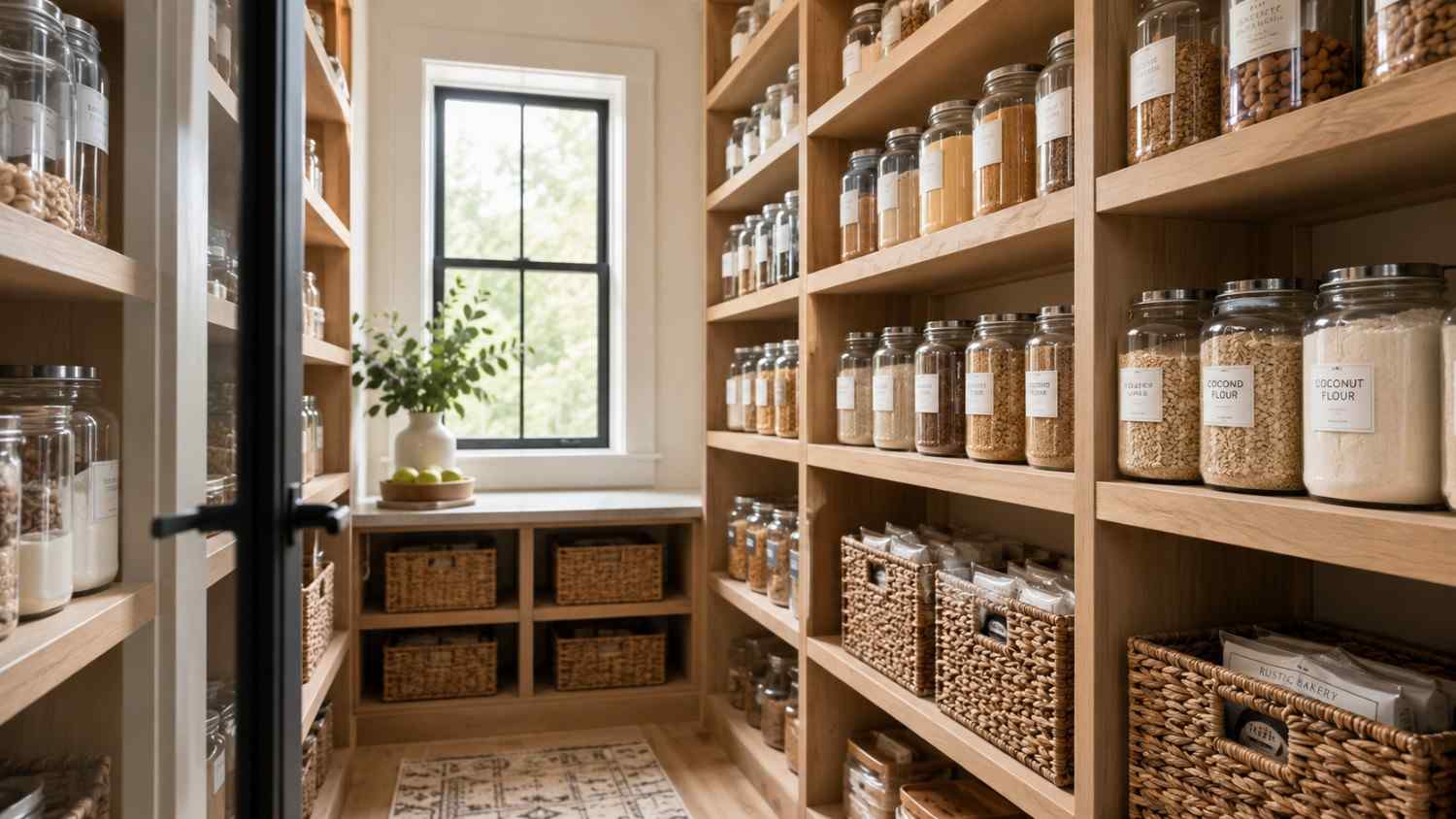
A cluttered pantry costs more than time — it costs money, in duplicate groceries and forgotten food that expires quietly in the back corner. Whether you’re working with a walk-in closet-style space or a single narrow cabinet, the right pantry organization ideas turn daily chaos into a system you can actually keep up with. This guide walks through 26 practical strategies, covering containers, shelving, zoning, small-space solutions, and the maintenance habits that keep a tidy pantry tidy for good. By the end, you’ll have a clear plan for your own space, no matter its size or budget.
Why Pantry Organization Deserves Real Attention
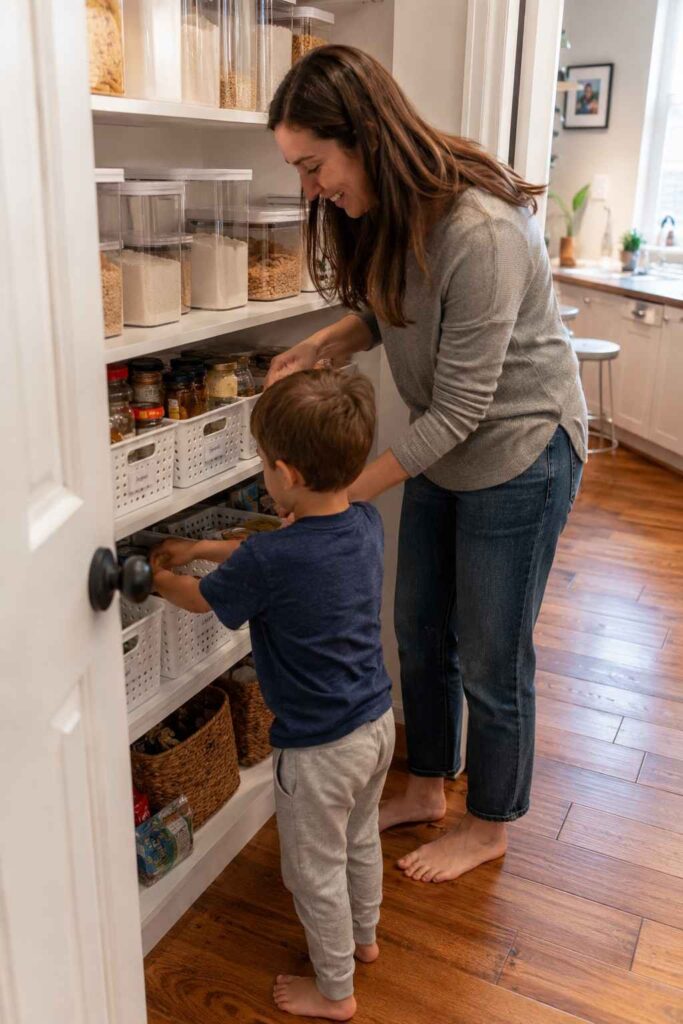
An organized pantry changes more than how a shelf looks. It changes how you shop, cook, and eat. When every item is visible, you stop buying duplicates of things you already own and stop losing food to spoilage. Meal prep moves faster because ingredients are grouped logically instead of scattered across three shelves. Kids and other household members can find their own snacks without turning the cabinet upside down. Most importantly, a defined system tells you exactly where new groceries belong, so the space stays organized for months instead of sliding back into clutter within a week. Good pantry organization ideas are really habit-building tools wearing a storage disguise.
Before You Start: Two Steps That Make Every Idea Work Better
Empty the Shelves and Take Inventory First
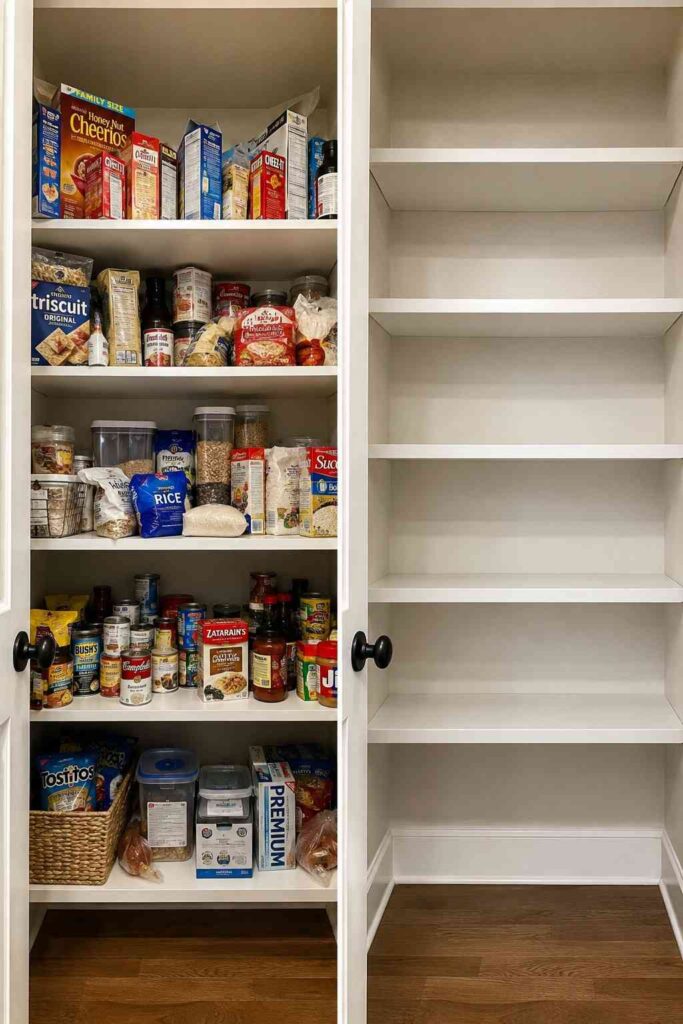
Pull everything out before buying a single container. Sort items into keep, toss, and donate piles, checking expiration dates as you go. This step alone often clears out a surprising amount of clutter, since most households store duplicates or food nobody actually plans to eat. Wipe down empty shelves while you have access — spills and crumbs are far easier to reach without cans in the way. Only after this reset does it make sense to plan a layout, because you’ll finally know how much real space you’re working with.
Measure Before You Shop for Organizers
Grab a tape measure and note shelf depth, width, and the vertical gap between shelves. Bins that look perfect online can be an inch too tall to fit under the next shelf. Save the measurements on your phone so you’re not guessing in a store aisle. Skipping this step is one of the most common reasons pantry organization ideas fail in practice — the container is beautiful, but it simply doesn’t fit.
26 Pantry Organization Ideas for Every Kitchen
Container and Storage Ideas
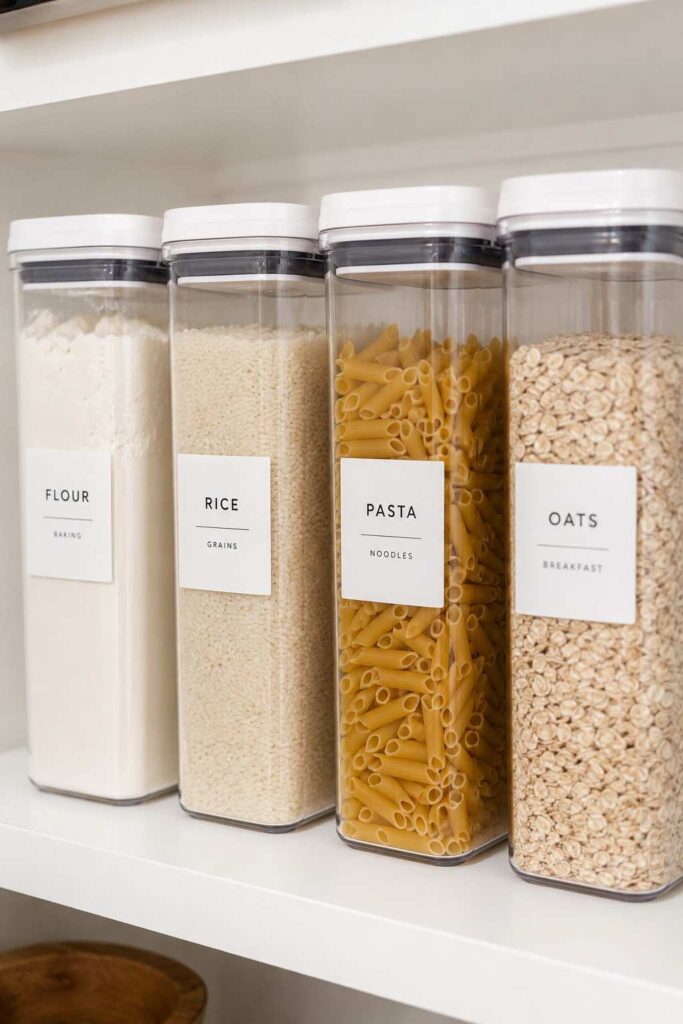
- Decant dry goods into clear, airtight containers. Flour, rice, sugar, oats, cereal, and pasta all stay fresher longer once air and humidity are sealed out, and you can see at a glance when supplies are running low.
- Choose one container family instead of mixing brands. Matching lids and stackable shapes make the pantry look uniform and let you predict exactly what fits where.
- Repurpose glass jars for spices and small grains. Washed sauce jars and takeout containers are free, sturdy, and just as effective as store-bought canisters.
- Use stackable bins for snack pouches. Applesauce pouches, granola bars, and crackers stay contained instead of sliding around and toppling over.
- Add a canned goods riser or rack. A first-in, first-out design means the oldest can rolls forward automatically, so nothing gets buried and forgotten.
- Install a lazy Susan for oils and condiments. Rotating trays put every bottle within reach without you needing to dig behind the front row.
- Store fresh produce in mesh or wire baskets. Potatoes, onions, and squash keep better with airflow, and a basket protects lower shelves from spills.
- Give pet food and treats their own sealed bin. Keeping it separate from human food prevents odors and cross-contamination in shared cabinet space.
Shelving and Layout Upgrades
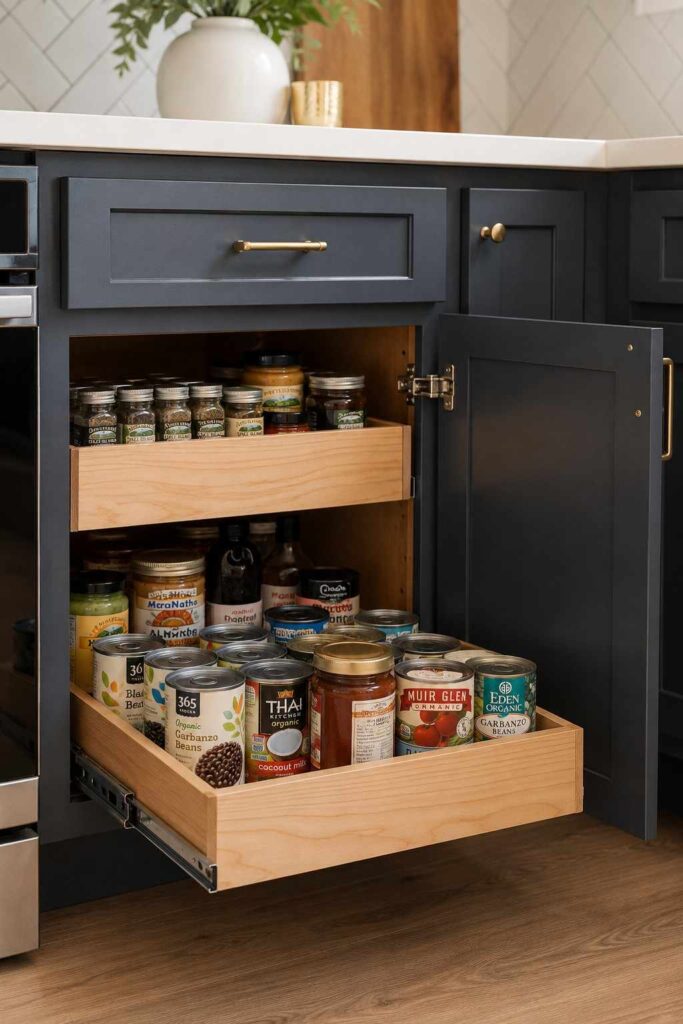
- Install adjustable wire or wood shelving. Fixed shelving wastes vertical space; adjustable brackets let you customize height as your storage needs change.
- Add pull-out drawers to deep cabinets. Reaching the back of a cabinet is the number-one complaint about awkward pantries, and a sliding shelf solves it instantly.
- Mount a rack on the inside of the pantry door. This “dead space” holds spices, snack packets, and foil boxes without using a single inch of shelf.
- Use a tiered spice riser. Angled steps keep every label visible from above, ending the habit of pulling out five jars to find the cumin.
- Group your pantry by zone: baking, breakfast, snacks, and canned goods. Zoning is faster to shop from and easier for the whole family to maintain.
- Reserve the top shelf for bulk or rarely used items. Store the extra flour and holiday baking supplies up high, and keep daily essentials at eye level.
Labeling and Zoning Strategies
- Label every container with a label maker or printed tag. A visible label removes the guesswork that leads to duplicate purchases.
- Write expiration dates directly on lids. A quick glance tells you what needs to be used soon, cutting down on wasted food.
- Create a grab-and-go snack zone at kid height. Lower shelves stocked with pre-portioned snacks mean less supervision at snack time.
- Set up a dedicated baking station. Keep flour, sugar, baking soda, measuring cups, and mixing bowls in one section so baking day doesn’t require a scavenger hunt.
- Use chalkboard or reusable labels for flexible categories. Grocery habits change, and a label you can wipe clean adapts instead of peeling off.
Small-Space and Budget-Friendly Ideas
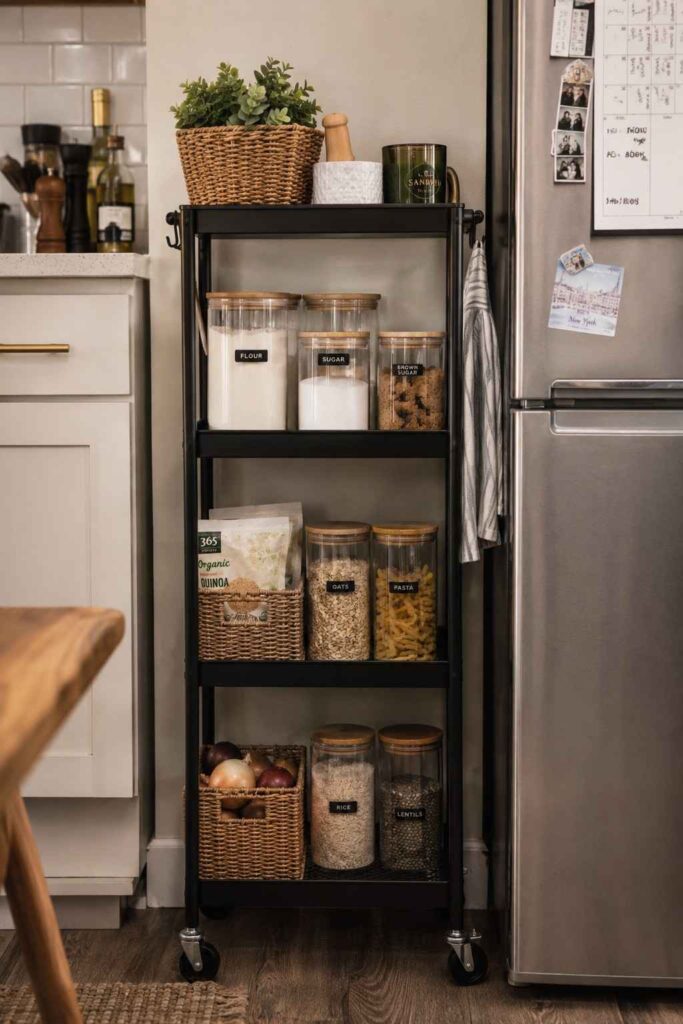
- Use a rolling cart as a stand-in pantry. Apartments and older homes without a built-in pantry can rely on a slim cart tucked beside the fridge.
- Add adhesive hooks for aprons, bags, and utensils. Command-style hooks free up shelf space without any drilling, which is ideal for renters.
- Repurpose an over-the-door shoe organizer. The pockets are perfectly sized for spice packets, snack bars, and small condiment bottles.
- Build DIY riser shelves from wood or wire scraps. A simple step shelf costs a fraction of a store-bought version and instantly doubles visibility on a single shelf.
Habits That Keep Your Pantry Organized Long-Term
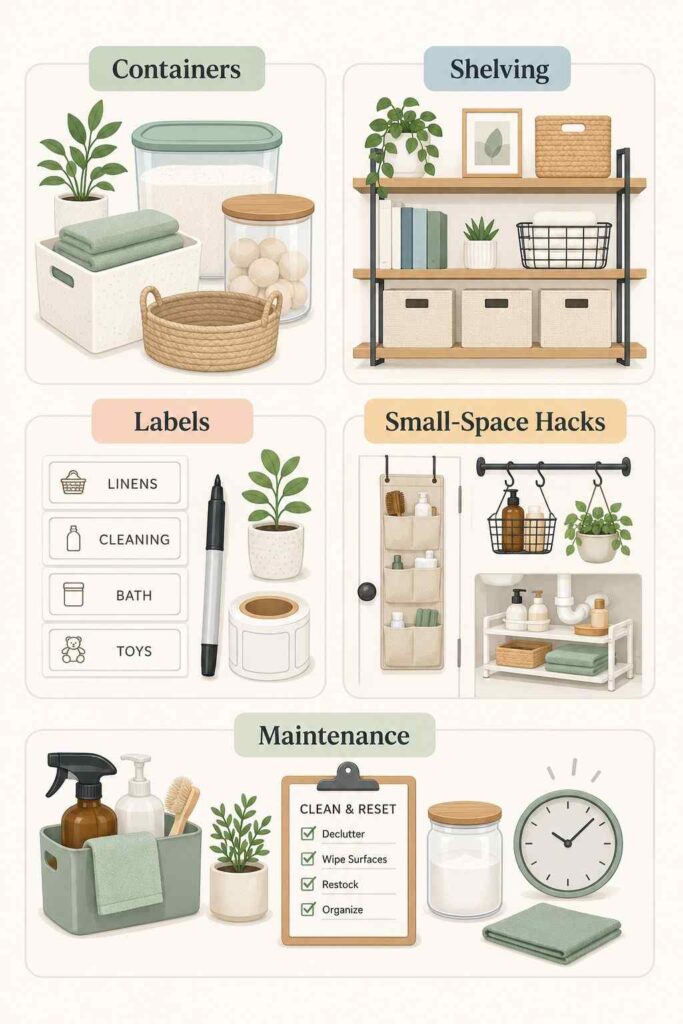
- Do a five-minute monthly pantry audit. Check for expired items, restock low containers, and reset anything that’s drifted out of its zone.
- Keep a running grocery list on the inside of the door. Jot items down the moment you notice you’re low, so you never overbuy or forget something.
- Rotate seasonal items out of everyday zones. Move holiday baking supplies, canning jars, or seasonal candy into labeled bins when they’re not in use, and swap them back in when the season returns. For families who love decorating for every occasion, it’s worth applying that same seasonal mindset beyond the kitchen — our halloween window decoration ideas are a natural next stop once your pantry’s candy stash is under control.
Bring the Same Energy to the Rest of Your Home
Once a pantry feels calm and predictable, it’s tempting to look at the rest of the house with new eyes. The same principles — fewer materials, clear zones, and intentional placement — apply just as well to a living room. If you’re chasing that same clutter-free, polished look elsewhere, our marble coffee table ideas show how a single well-chosen piece can anchor a room the way a good container system anchors a shelf. At Outinteriors, we believe every space in a home deserves this kind of thoughtful, functional design, one room at a time.
Conclusion
A well-organized pantry isn’t about buying every container on the market — it’s about building a system that matches how your household actually cooks and shops. Start with the two prep steps, pick the pantry organization ideas that fit your space and budget, and layer in the maintenance habits so the work doesn’t undo itself in a month. Small pantries, walk-ins, and even a single kitchen cabinet can all benefit from the same core approach: declutter first, contain second, label always, and revisit monthly. Once the system is in place, you’ll spend less time hunting for ingredients and more time actually using them.
Frequently Asked Questions
1. What is the cheapest way to organize a pantry?
Repurposed glass jars, cardboard box dividers, and adhesive hooks cost little to nothing and work just as well as store-bought organizers. Decluttering first — before buying anything — is the single biggest money-saver.
2. How do I organize a pantry with no shelves?
Use a slim rolling cart, an over-the-door shoe organizer, or stackable bins placed directly on the closet floor. These options work well for apartments and rentals where built-in shelving isn’t an option.
3. How often should I reorganize my pantry?
A five-minute check-in once a month is usually enough to catch expired items and restock low containers. A full reset, including emptying every shelf, is worth doing once or twice a year.
4. What containers are best for pantry organization?
Clear, airtight containers with secure lids work best for dry goods like flour, rice, and cereal, since they block humidity and let you see supply levels at a glance. Stick to one container family for a uniform, predictable layout.
5. How do I organize a small pantry so it doesn’t feel cramped?
Use vertical space with tiered risers and door racks, keep containers uniform in shape, and store bulkier or rarely used items up high. Grouping by zone also makes a small space feel more navigable.
6. Should I label everything in my pantry?
Labeling isn’t required for every single item, but it’s highly effective for bins, jars, and any container where the contents aren’t obvious at a glance. It also helps other household members put groceries away correctly.
7. How do I keep my pantry organized with kids in the house?
Create a grab-and-go snack zone at a height kids can reach on their own, and use durable, easy-to-close containers. Involving kids in putting groceries away also helps the system stick.