Stylish 20 Kids Bedroom Ideas That Are Fun, Functional, and Built to Grow With Your Child
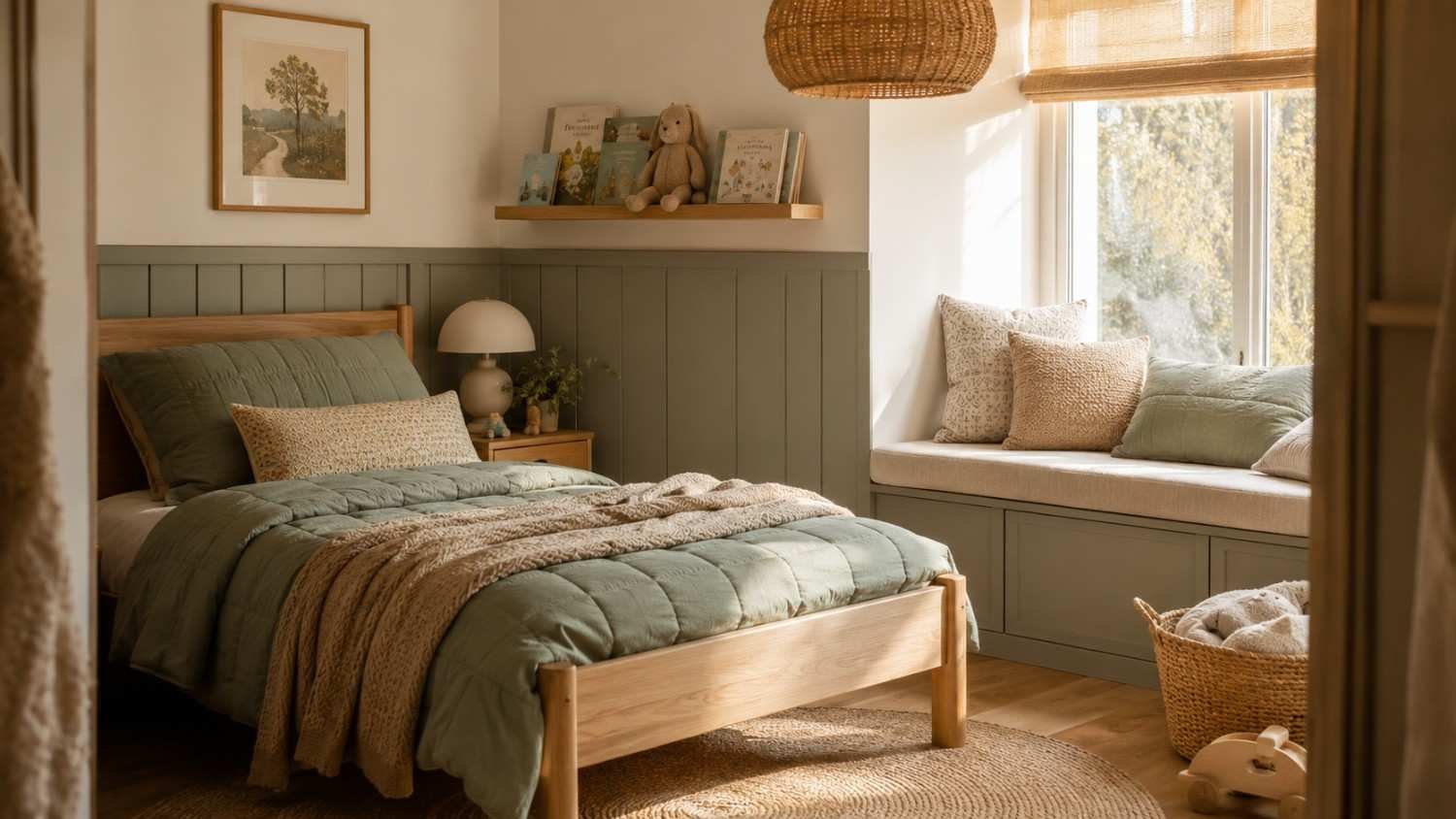
A child’s bedroom does more work than almost any other room in the house. It’s a nursery, a playroom, a study space, and eventually a teenage retreat, often within the same four walls. Finding kids’ bedroom ideas that hold up through those changes takes some planning. The best rooms balance imagination with practicality: they look playful, but the storage still works, the lighting is safe, and the furniture doesn’t need replacing the moment your child outgrows a phase. Below are 20 kids bedroom ideas covering layout, storage, color, decor, and safety, so the room keeps up with your child instead of falling behind.
1. Plan a Layout That Grows With Your Child
Design in Stages, Not Just for Right Now
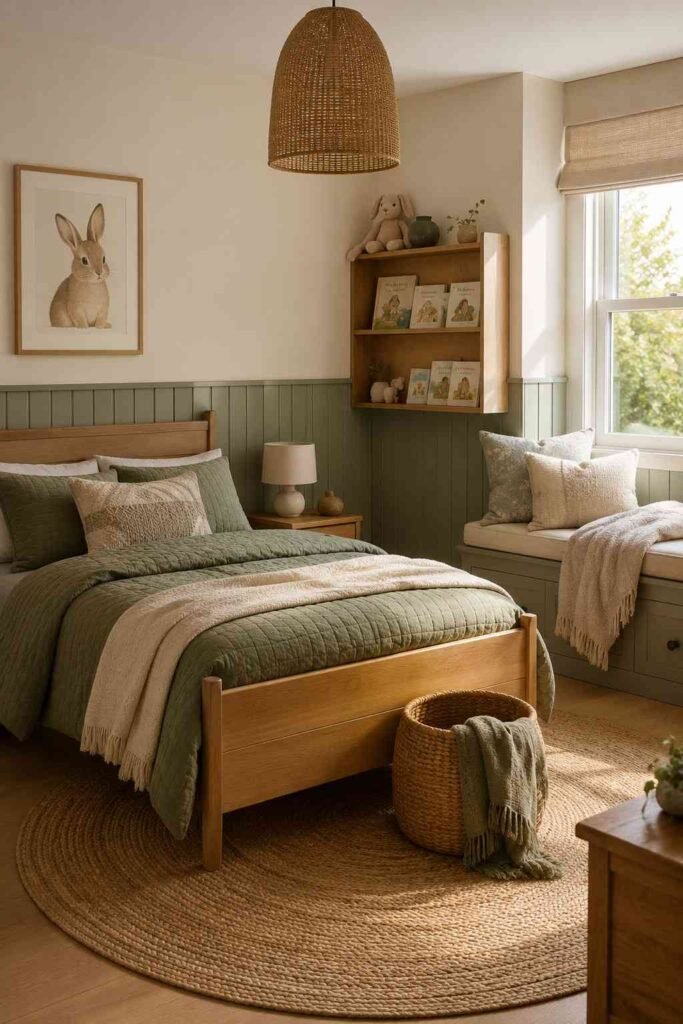
Most kids’ bedroom ideas start with color or theme, but layout matters more long-term. Before choosing paint or decor, map out where the bed, desk, and storage will sit for at least the next five years. A corner bed leaves floor space open for play now and study later. Locate the desk near a window, since it will get more use as your child moves from coloring books to homework. Thinking in stages, rather than decorating for a single age, saves you from redoing the room every birthday.
Choose Furniture That Converts
Convertible furniture is one of the most practical kids’ bedroom ideas for long-term value. A crib that converts to a toddler bed, an adjustable-height desk, or a daybed that later works as a sofa all stretch your investment across several years. Look for pieces built from solid wood or plywood rather than particleboard, since they hold up to years of climbing and wear. Adjustable shelving is another smart choice — brackets can be repositioned as your child’s books and toys change over time.
2. Space-Saving Furniture Ideas
Bunk Beds and Loft Beds
For families short on square footage, bunk beds and loft beds remain some of the most requested kids’ bedroom ideas. A loft bed frees up the floor beneath it for a desk, reading chair, or play tent, effectively doubling usable space. Bunk beds work well for shared bedrooms or sleepovers, since a spare bed is always ready. Choose a model with full guardrails, and reserve the top bunk for children over six, who are less prone to nighttime falls.
Murphy Beds and Multi-Functional Furniture
In a smaller home, a Murphy bed folds up against the wall by day, turning a bedroom into a playroom in seconds. A bed with built-in drawers, or a desk that folds from a wall unit, can replace two or three pieces of furniture. These space-saving kids bedroom ideas matter most in rooms under 100 square feet, where every inch counts. Look for rounded corners and soft-close drawers, which reduce pinched fingers.
3. Smart Storage Solutions
Keep Storage Low and Reachable
Children are far more likely to put toys away themselves when storage is at their height. Open bins, low shelves, and labeled baskets make cleanup part of the routine rather than a battle. This is one of the simplest kids bedroom ideas to implement, since repositioning existing shelves lower often solves the problem without buying anything new. Clear or labeled containers also help non-readers sort toys by category, cutting down on the everything-in-one-bin problem.
Rethink the Closet and Under-Bed Space
A closet rod hung too high wastes most of a child’s closet. Adding a second, lower rod plus a shelf at the bottom lets it hold clothes, shoes, and toys at once, and it can be reconfigured as your child grows. Rolling bins or drawers under the bed capture storage that would otherwise go unused — one of the easiest kids bedroom ideas to add without buying new furniture.
4. Color and Wall Decor Ideas
Choose a Palette That Lasts
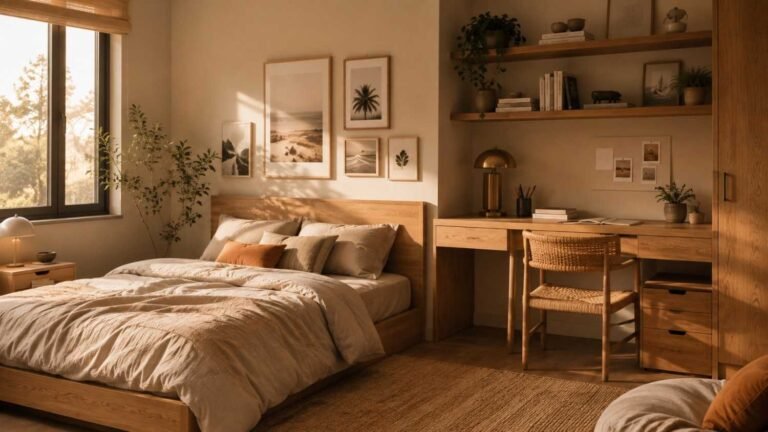
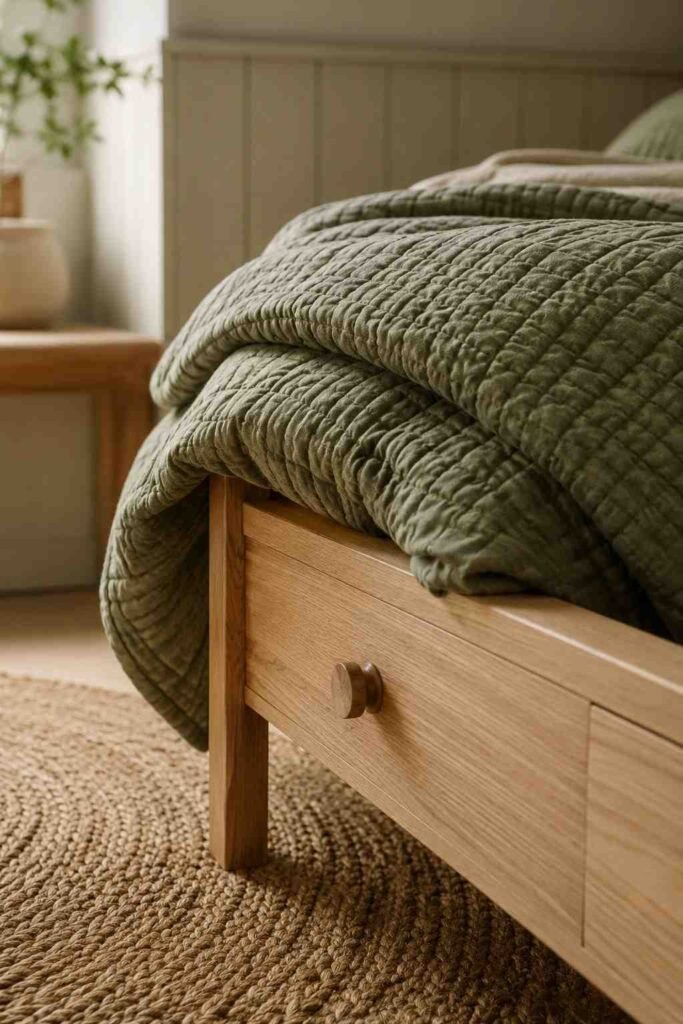
A soft, adaptable color palette — sage green, warm terracotta, or soft blue — tends to age better than saturated colors tied to one phase. Painting the walls a neutral base and layering color through bedding, rugs, and accessories makes it easy to update the look as tastes change without repainting yearly. This is one of the more cost-effective kids bedroom ideas available, since swapping a comforter costs far less than a fresh coat of paint.
Try a Removable Accent Wall and a Gallery Display
Peel-and-stick wallpaper or a single painted statement wall adds personality without full commitment, which suits renters or fast-changing tastes well. A rotating gallery wall of your child’s own artwork, or a name sign above the bed, gives the room a personal, finished feel. For a more polished finish, browsing luxury wall decor ideas can offer inspiration for framing and spacing that still works in a child’s room without looking overly juvenile.
5. Lighting and Ceiling Details
Layer the Lighting and Dress Up the Ceiling
A single overhead fixture rarely covers everything a bedroom needs. Layering ambient light, a desk lamp for homework, and a soft night light gives the room flexibility for play and sleep, and dimmable bulbs make bedtime easier to ease into. The ceiling is one of the most underused surfaces in a child’s room — string lights, a paper lantern cluster, or glow-in-the-dark star decals turn a blank ceiling into part of the design at very little cost.
6. Theme and Personalization Ideas
Use Subtle Themes Instead of Full Makeovers
A room fully committed to dinosaurs or unicorns can feel dated within a year or two. Introduce a theme through smaller, swappable details — bedding, wall decals, a lamp shade — while keeping furniture and wall color neutral. When interests shift, only the smaller pieces need replacing, which keeps kids’ bedroom ideas flexible as your child grows.
Add Personal Touches and a Reading Nook
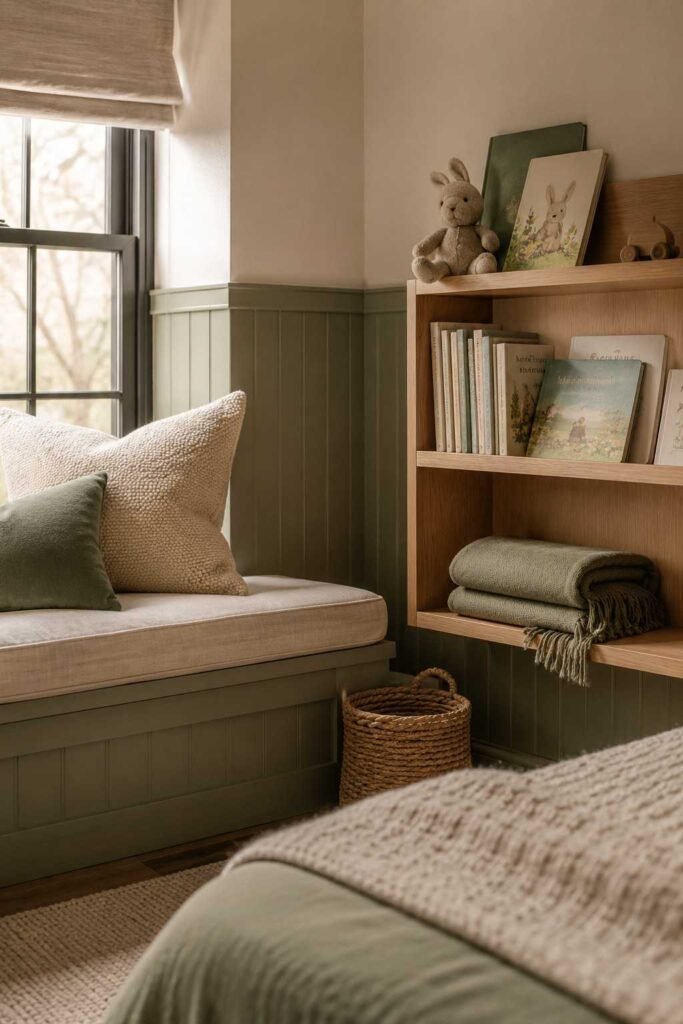
Wooden name letters, a hand-painted growth chart, or a small family tree mural add a personal touch a store-bought theme can’t replicate, and most can travel with you if you move. A cushioned window seat or a corner with a bean bag and low bookshelf gives kids a defined space that’s theirs alone — a 3-by-3-foot nook with soft lighting is often enough to encourage independent quiet time.
7. Shared Bedrooms and Small Space Solutions
Divide the Room for Siblings
When two children share a room, giving each a defined zone — even without a physical wall — helps reduce conflict. A bookshelf, a curtain, or two different rug colors can visually separate each child’s area, while matching bunk beds with individual reading lights let siblings share a room without sharing every item.
Small Bedroom Tricks and Planning Ahead
Light wall colors, a large mirror, and vertical storage make a small room feel bigger than it is. As your child gets older, many of these same principles — wall-mounted shelving, multi-purpose furniture, a neutral base palette — carry over smoothly when it’s time to explore teen bedroom ideas, so the transition doesn’t require starting from scratch. For more inspiration on compact rooms, resources like Outinteriors collect real examples of how families make small spaces work without sacrificing style.
8. Safety First: Non-Negotiables for Every Kids Bedroom
No list of kids bedroom ideas is complete without safety details, which are easy to overlook once decorating is done. Every dresser, bookshelf, and tall piece of furniture should be anchored to the wall, since tip-overs remain a leading cause of injury among young children. Under the STURDY Act, signed into law in December 2022, clothing storage units manufactured after September 1, 2023 must meet stricter stability standards and include an anchoring kit. Beyond furniture, choose cordless window coverings, opt for low-VOC paints, and secure area rugs with non-slip pads. None of this shows up in a finished photo, but it matters more than almost any decor choice in the room.
Bringing It All Together
A child’s bedroom rarely stays the same for long, and that’s part of what makes decorating it enjoyable rather than stressful. The most successful kids’ bedroom ideas aren’t the most elaborate ones — they’re built around flexibility, so a few swapped details can carry the room from toddler years through the tween stage. Start with a layout and furniture that will last, add storage your child can actually use, and layer in personality through color and lighting. Safety details, though easy to skip, deserve just as much attention as the fun parts. With the right foundation, a child’s room can grow alongside them for years, not months.
Frequently Asked Questions
1. What is the best age to start decorating a kids’ bedroom with the child’s input?
Most children begin expressing clear preferences around age 4 or 5. Before that, parents can handle layout and safety decisions, then involve the child in choosing colors or a few decorative pieces once they can say what they like.
2. How much does it typically cost to redo a kids’ bedroom?
A refresh using paint, bedding, and wall decor can often cost a few hundred dollars, while a full room with new furniture and flooring can run into the thousands. Tackling paint and lighting first is usually most cost-efficient.
3. Are themed bedrooms a bad long-term investment?
Not necessarily, but a fully committed theme can feel outdated once interests shift. A neutral base with a theme expressed through bedding and accessories tends to last longer and cost less to update.
4. What’s the safest type of bunk bed for young children?
Look for full guardrails on the top bunk, a sturdy attached ladder, and a design that meets current safety standards. Guidelines generally recommend against children under six sleeping on the top bunk due to fall risk.
5. How can I make a small kids bedroom feel bigger?
Light wall colors, vertical storage, a large mirror, and multi-purpose furniture all help a small room feel more open. Keeping the floor as clear as possible makes a noticeable difference too.
6. When should a kids’ bedroom start transitioning into a teen room?
There’s no fixed age, but many parents begin the shift somewhere between 10 and 12, as interests and privacy needs change. Gradually swapping decor rather than redoing everything at once tends to be less disruptive.
7. Do kids’ bedrooms need to match the rest of the house’s decor style?
Not at all. A child’s room is one of the few spaces where a different palette or personality is expected. That said, keeping flooring, trim, and window treatments neutral makes the home easier to sell later, if that’s a consideration.