27 Forest Bedroom with Canopy Bed: Ideas for Color, Fabric, and Light, Woodland Retreat
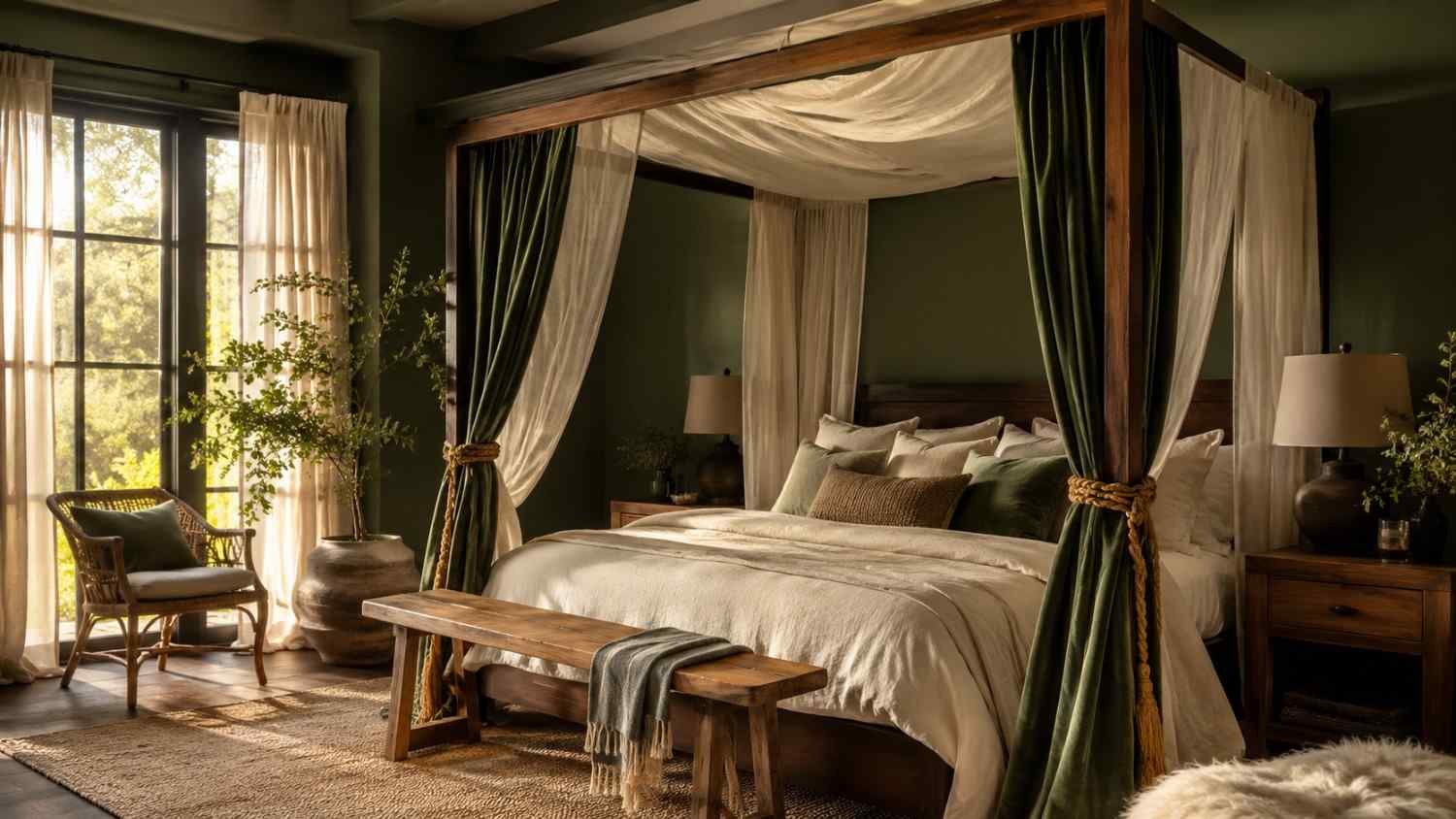
Picture waking up under soft green drapes, with morning light filtering through the fabric like sunlight through leaves. That calm feeling is what a forest bedroom with canopy bed design delivers. It combines the shelter of a four-poster with the colors, textures, and materials of the woods. This guide shares 27 practical ideas, from paint shades and frame styles to lighting and finishing touches. You will also find clear advice on room size, safety, and budget. Whether your room is large or compact, you can build a version of this look that feels warm, personal, and restful.
Why a Canopy Bed Works So Well in a Woodland-Themed Room
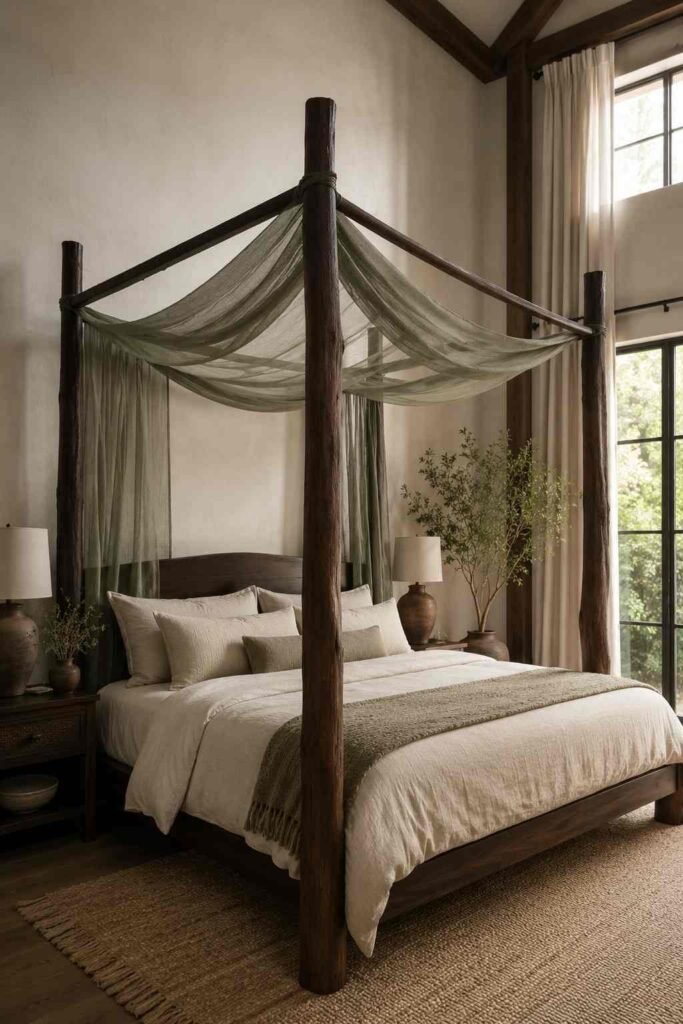
A canopy bed creates a room within a room. The posts echo tree trunks, and the fabric overhead acts like a leafy ceiling. This is why a woodland canopy bed feels cozy rather than themed or costume-like. Designers often use canopy frames to anchor a space, because the bed becomes the clear focal point. In a forest bedroom with canopy bed scheme, that focal point lets you keep everything else simple. You need fewer accessories to get a strong mood. A canopy also adds vertical interest, which helps rooms with high ceilings feel balanced instead of empty. Before buying anything, measure your ceiling height and bed footprint so the frame fits comfortably.
Color Palettes for a Forest Bedroom with Canopy Bed
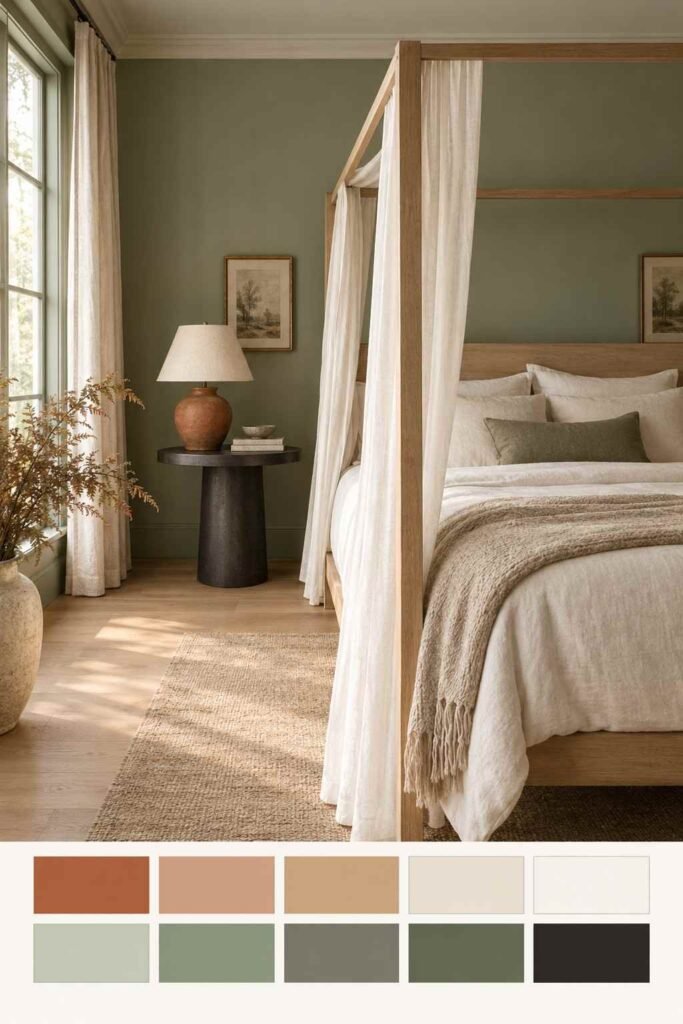
Color sets the mood before any furniture arrives. Forest palettes work best when they borrow from several layers of the woods: canopy greens, trunk browns, and the pale mist between trees. Start with one dominant shade, add one supporting tone, and finish with a neutral. This keeps the room grounded.
Greens That Feel Alive
1. Moss green on the walls. A muted moss shade looks like a forest floor and flatters natural wood. Pair it with warm white trim to keep the room bright.
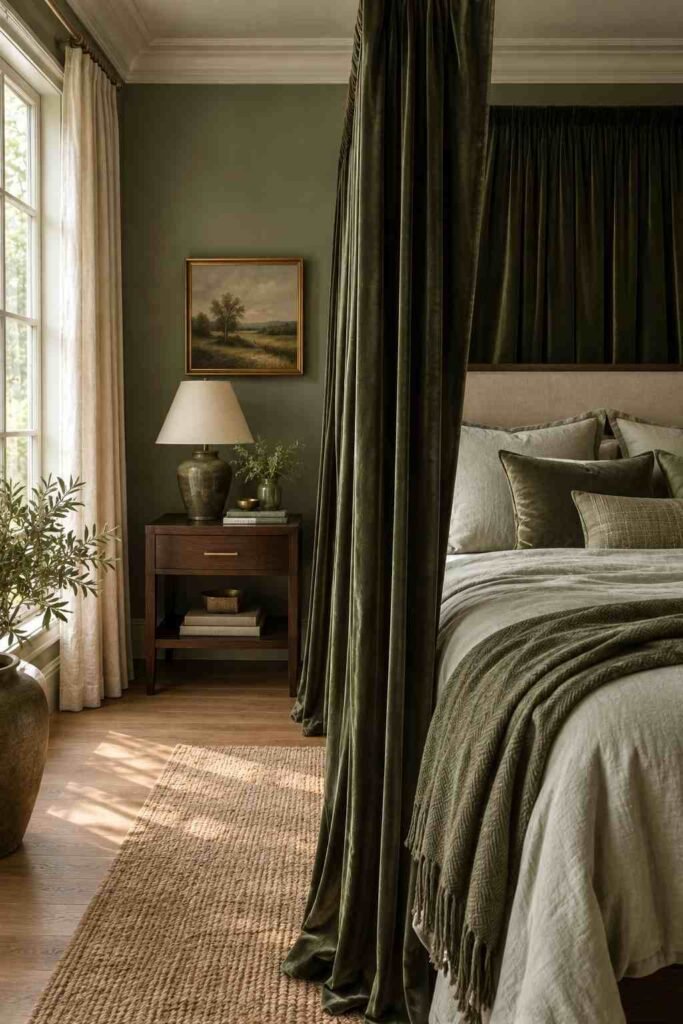
2. Deep evergreen drapes. Dark green fabric against a lighter wall adds depth and a sheltered feeling at night.
3. Sage and olive layering
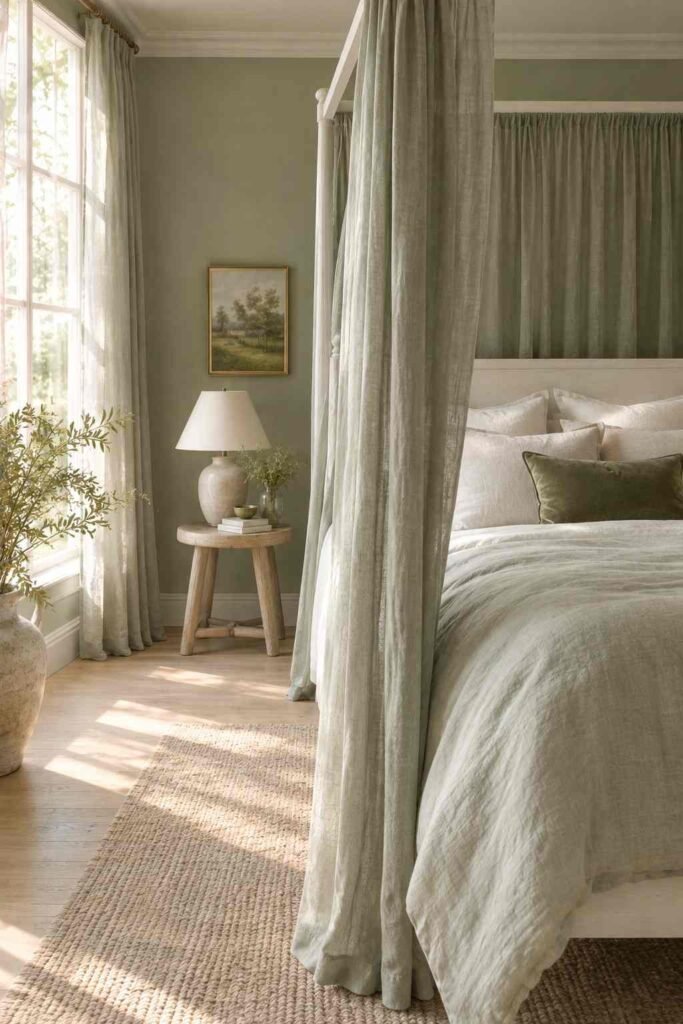
Mix soft sage bedding with olive cushions so the greens look collected rather than matched. If you love the softer end of the spectrum, a sage green canopy bedroom is a gentle starting point. Choose one green as the leader, and let the others play a supporting role.
Earthy Neutrals and Dark Contrasts
4. Bark brown accents. Chocolate or walnut tones in a bench, nightstand, or throw ground the greens and keep a forest bedroom with canopy bed from feeling too sweet.
5. Charcoal and fern
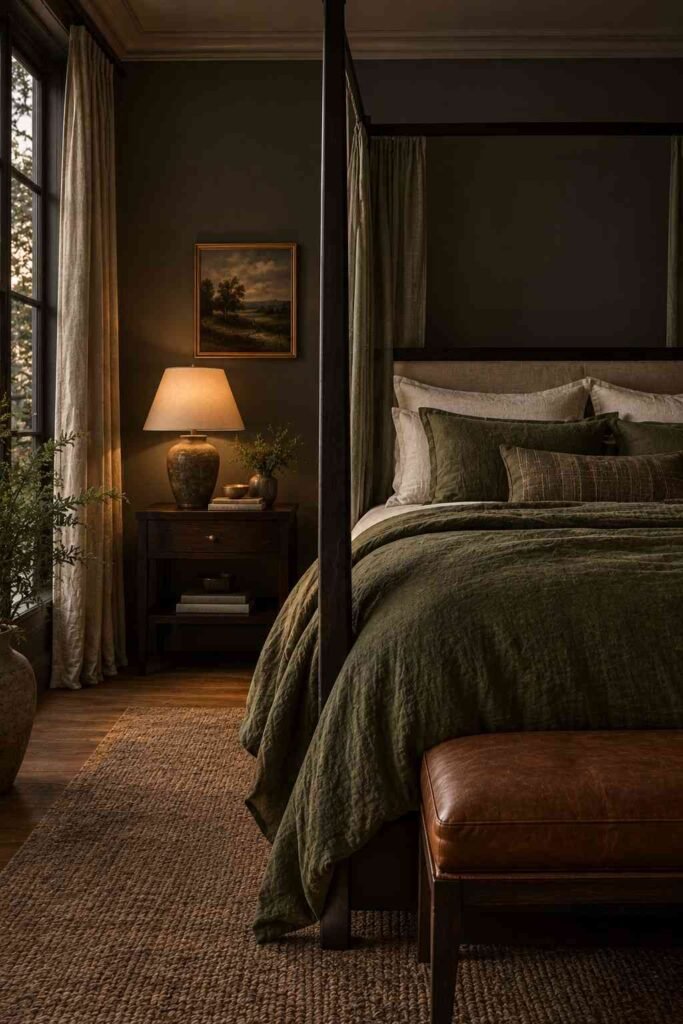
Charcoal walls with fern-green bedding create a dramatic, evening-in-the-woods mood that suits larger rooms.
6. Mist and cream. Pale gray-white and cream mimic morning fog and make small rooms feel open. Cream linen against a dark frame gives crisp contrast without harshness. Use these neutrals for about half of the room, and let the greens take the rest.
Canopy Bed Styles That Suit a Woodland Look
The frame is the largest object in the room, so its material matters. Wood feels the most natural, but metal and upholstered frames can also work when styled with care.
Natural Wood Frames
7. Raw oak four-poster
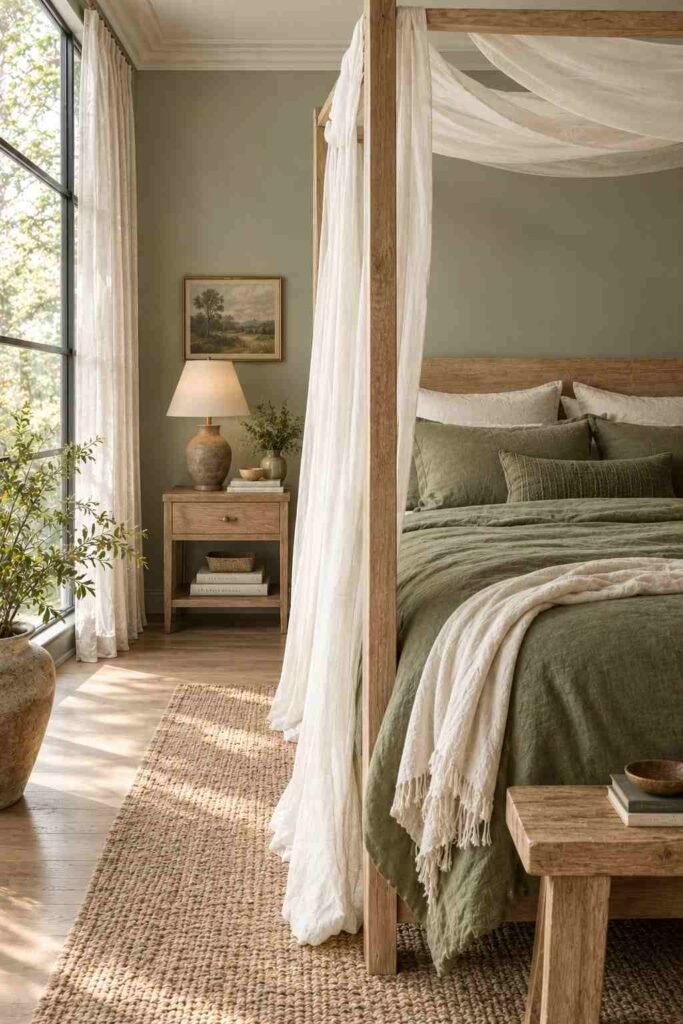
Oak has a visible grain that reads as honest and organic. A light finish suits airy rooms, while a darker stain feels like deep woods.
8. Reclaimed timber frame. Older boards carry knots, nail marks, and color variation that cannot be faked. They bring history into the room.
9. Branch-style posts
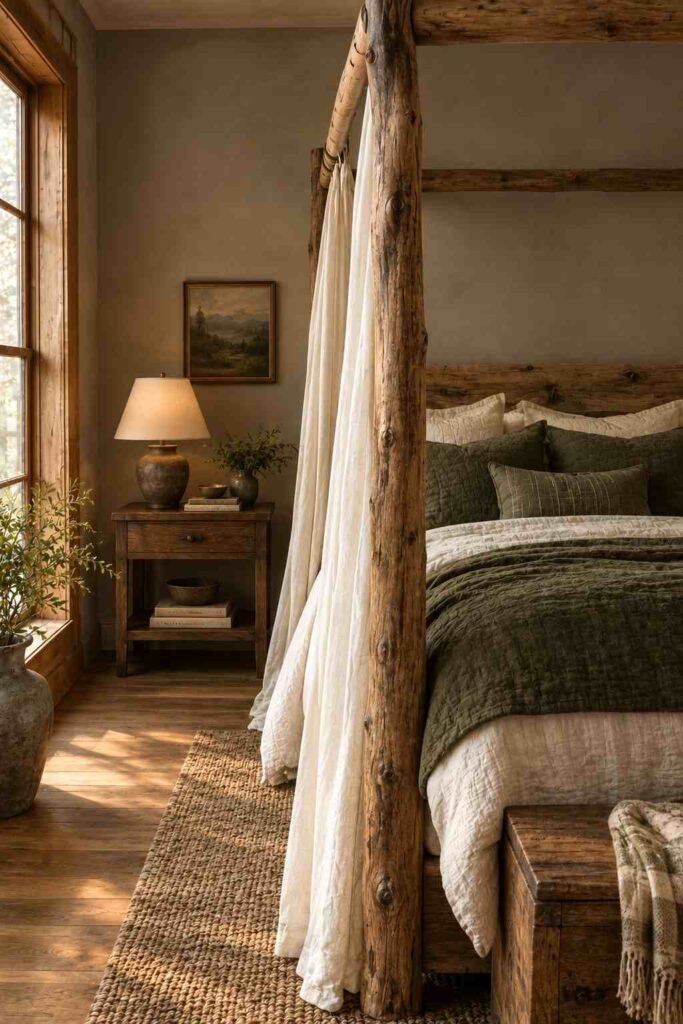
Rustic posts with a hand-finished look echo real tree limbs. Check that every surface is sanded smooth, and confirm the frame’s weight rating before purchase. Wood frames pair well with linen drapes and wool throws.
Metal and Upholstered Frames
10. Matte black iron. A slim black frame draws clean lines against green walls and suits modern woodland rooms.
11. Antique brass
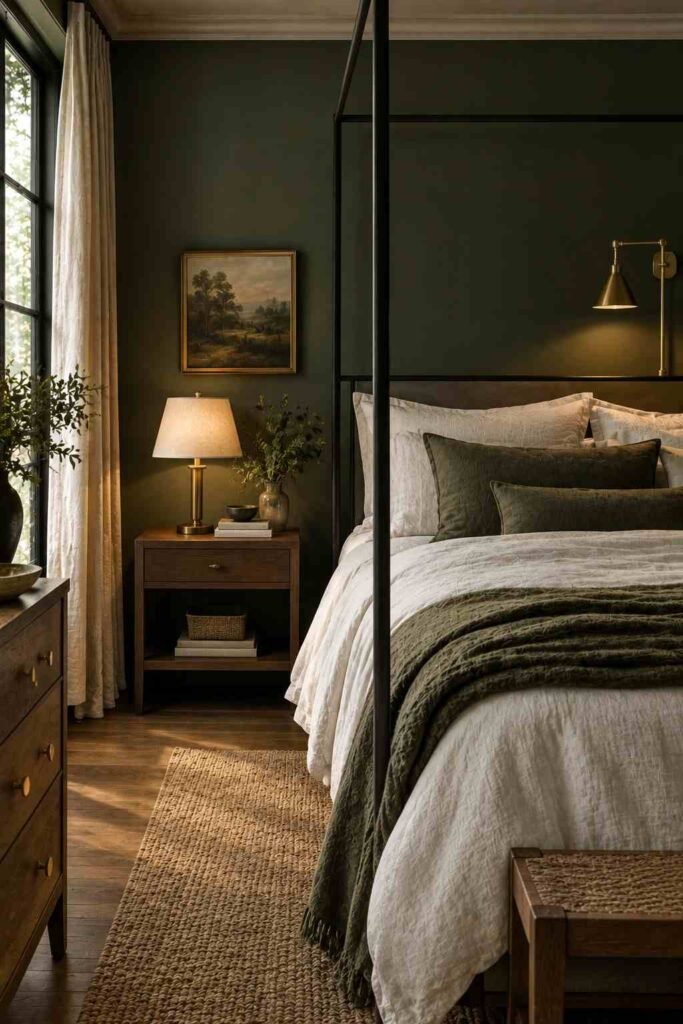
Warm metal catches lamplight and reminds you of sunlight on bark. It works nicely with deep evergreen.
12. Upholstered headboard with slim posts
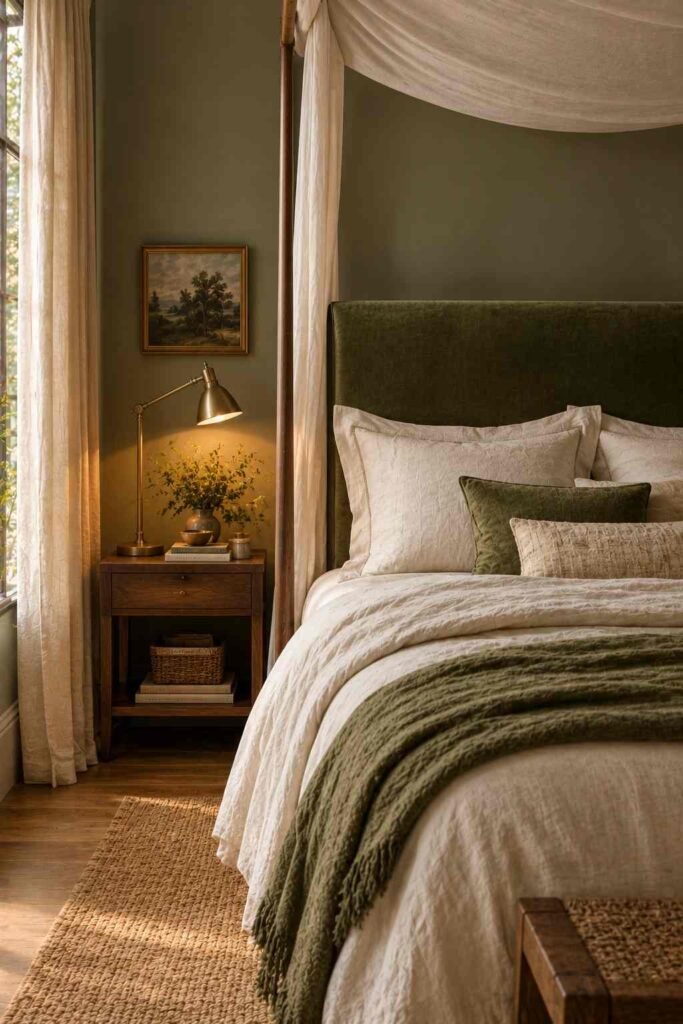
A padded headboard in moss velvet adds comfort for reading in bed, while thin posts keep the canopy light. In a forest bedroom with canopy bed, mixing a soft headboard with a hard frame gives the room a balanced, layered feel.
Fabrics and Textures That Add Softness
Texture is what makes a forest scheme feel real instead of flat. Think of moss, bark, and fern fronds: every surface in the woods feels different. Aim for at least three distinct textures on and around the bed.
Canopy Drapes
13. Sheer linen panels
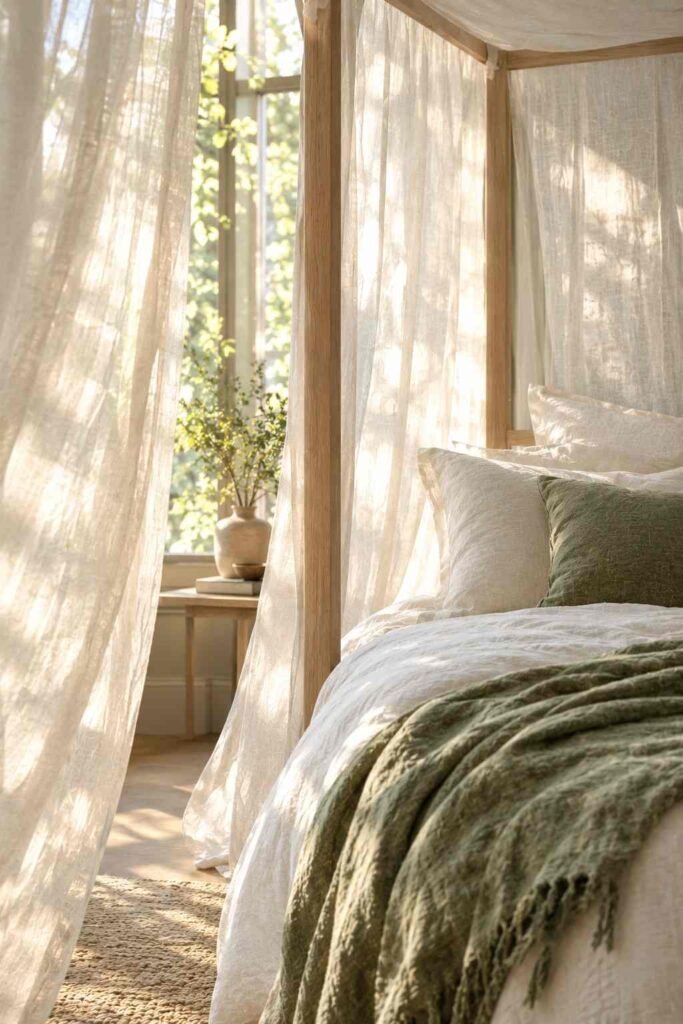
Linen filters light gently and moves with air. It gives the bed a dreamy, open look without blocking the room.
14. Velvet in forest tones
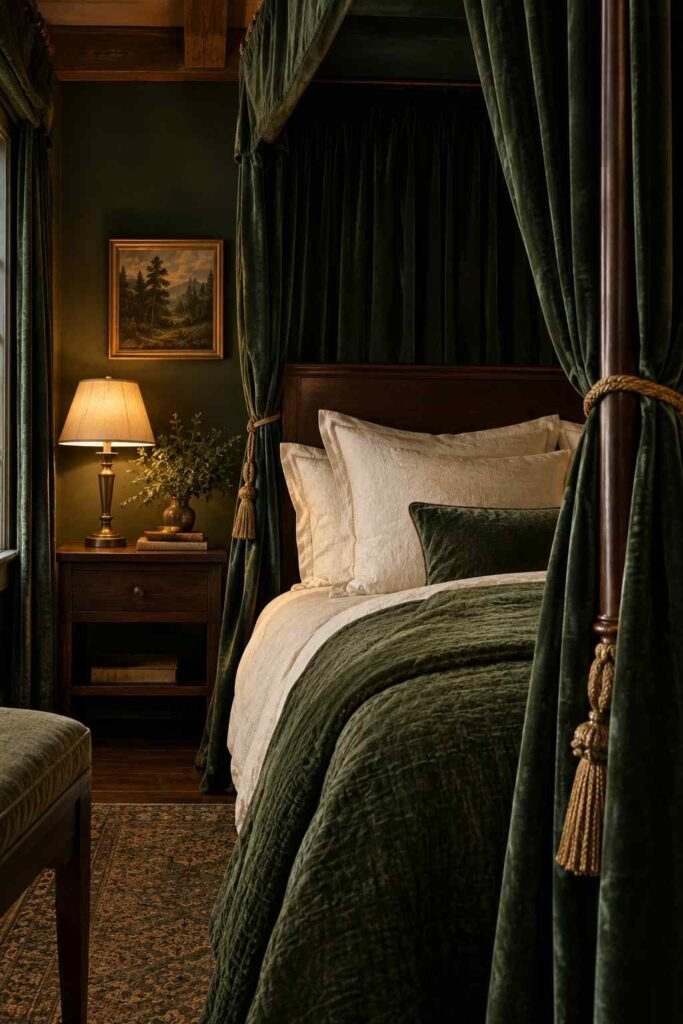
Heavy drapes in emerald or hunter green make the bed feel like a private cabin. Tie them back during the day.
15. Subtle botanical embroidery. Leaf or fern stitching adds interest up close but stays quiet from across the room. Avoid loud prints, which can compete with the architecture of the frame. Keep drapes washable if possible, since fabric overhead collects dust over time.
Bedding Layers
16. Waffle or chunky knit throws. These add a woodland, cabin-like feel and invite you to curl up.
17. Washed-linen duvet. Its natural wrinkles suit a relaxed forest look and become softer with each wash.
18. Wool or sheepskin at the foot of the bed
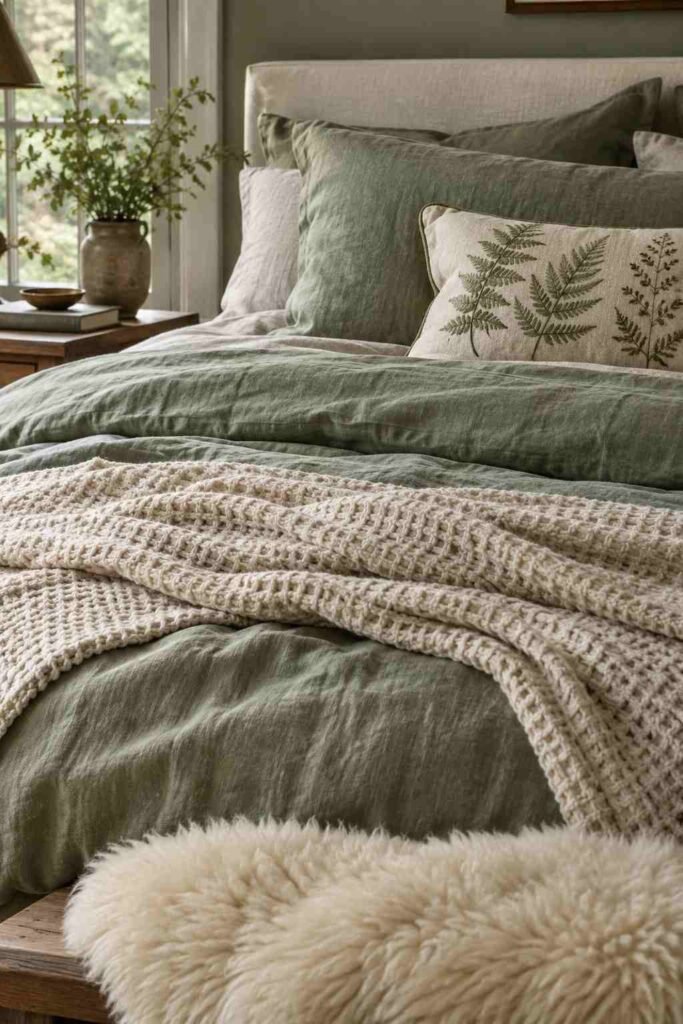
Natural fibers add warmth and a tactile contrast to smooth sheets. A thoughtful forest bedroom with canopy bed layers at least two fabrics in matching tones, such as sage linen with cream wool. Stay with a limited palette so the texture, not the color count, does the work.
Walls, Lighting, and Decor Around Your Forest Bedroom with Canopy Bed
Once the bed and fabrics are set, the surrounding walls and lights complete the picture. These choices frame the canopy and control how the room feels after sunset.
Wall Treatments
19. Botanical wallpaper behind the headboard
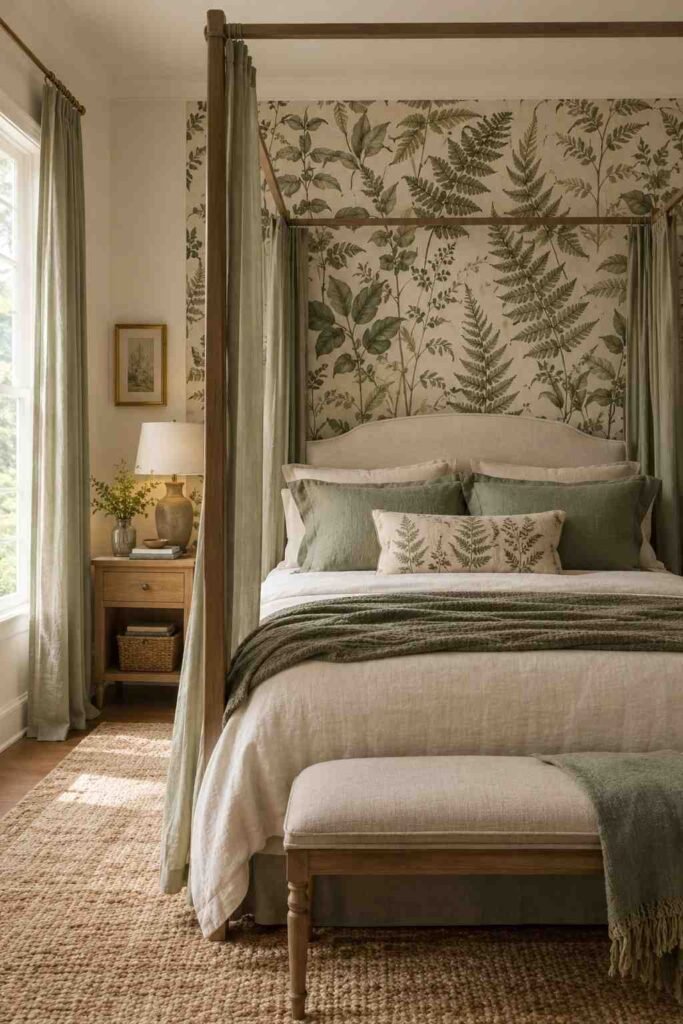
Large fern or leaf patterns add depth without covering all four walls. This is a simple feature wall bedroom approach that suits canopy beds well.
20. Wood slat paneling
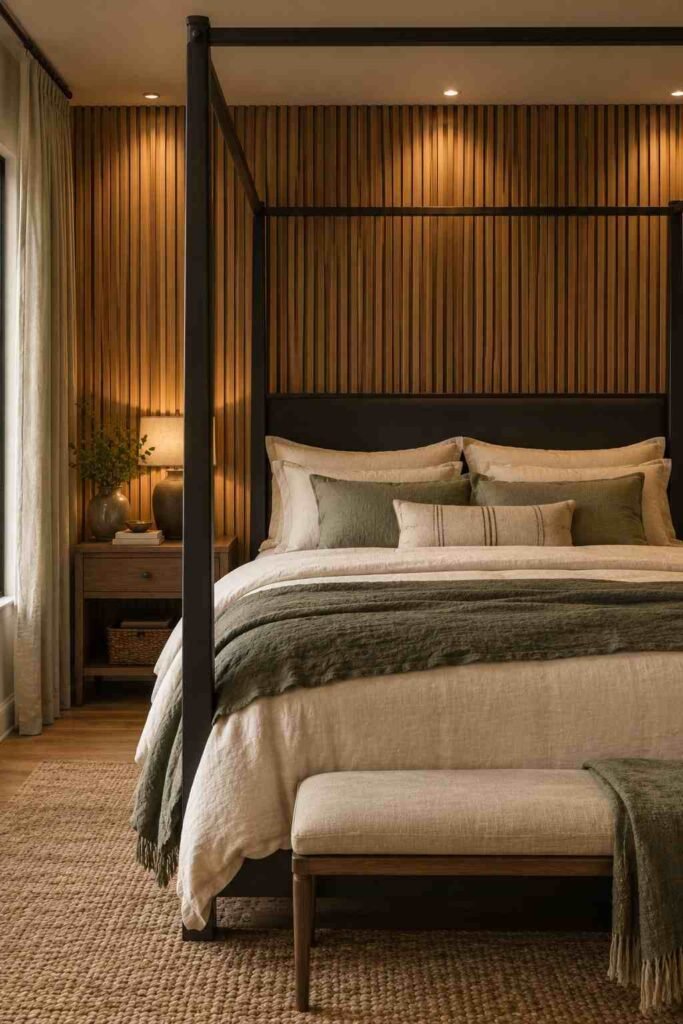
Vertical slats in oak or walnut mimic a tree line and add acoustic softness.
21. A painted tree-line silhouette
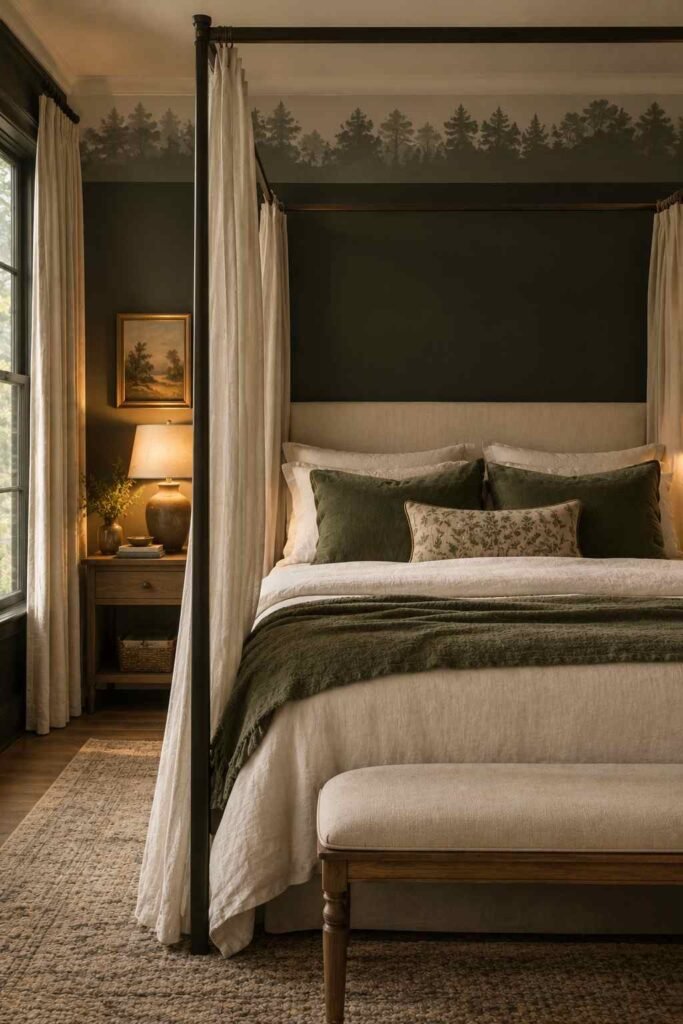
A soft, hand-painted band of treetops near the ceiling gives a mural effect with little cost. For a bolder mood, a black bedroom wall behind a pale canopy makes the greens glow. Keep one wall as the star and let the others stay calm.
Lighting
22. Warm LED string lights
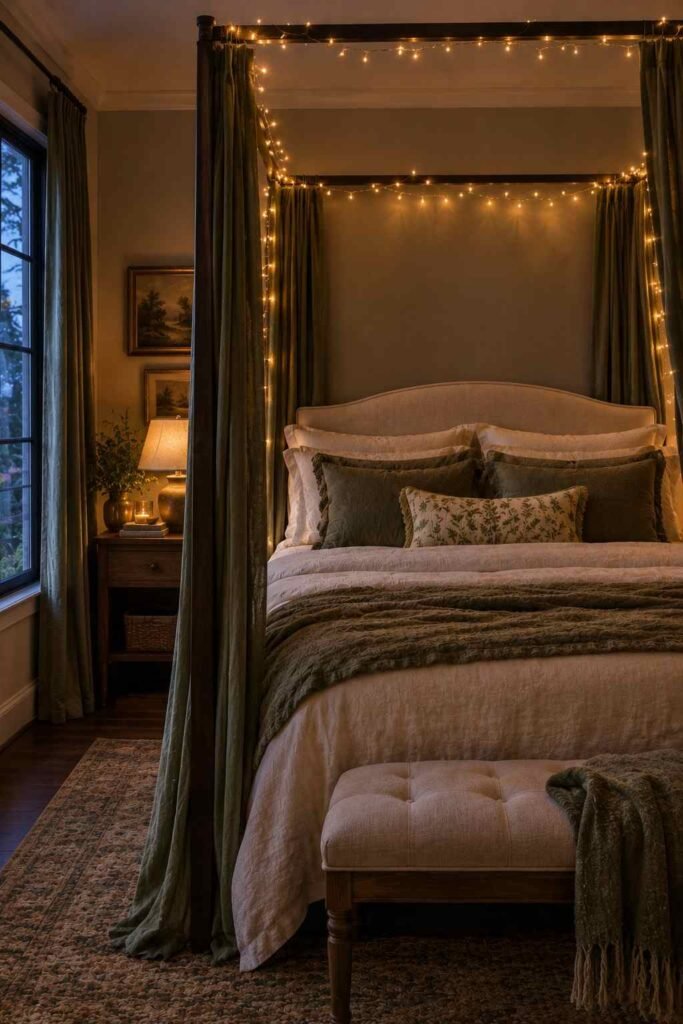
Weave them through the canopy frame for a firefly effect. LEDs stay cool, which is safer around fabric.
23. Linen-shade wall sconces. Mounted on each side of the bed, they free up nightstand space and cast a soft glow. 24. Lantern-style bedside lamps
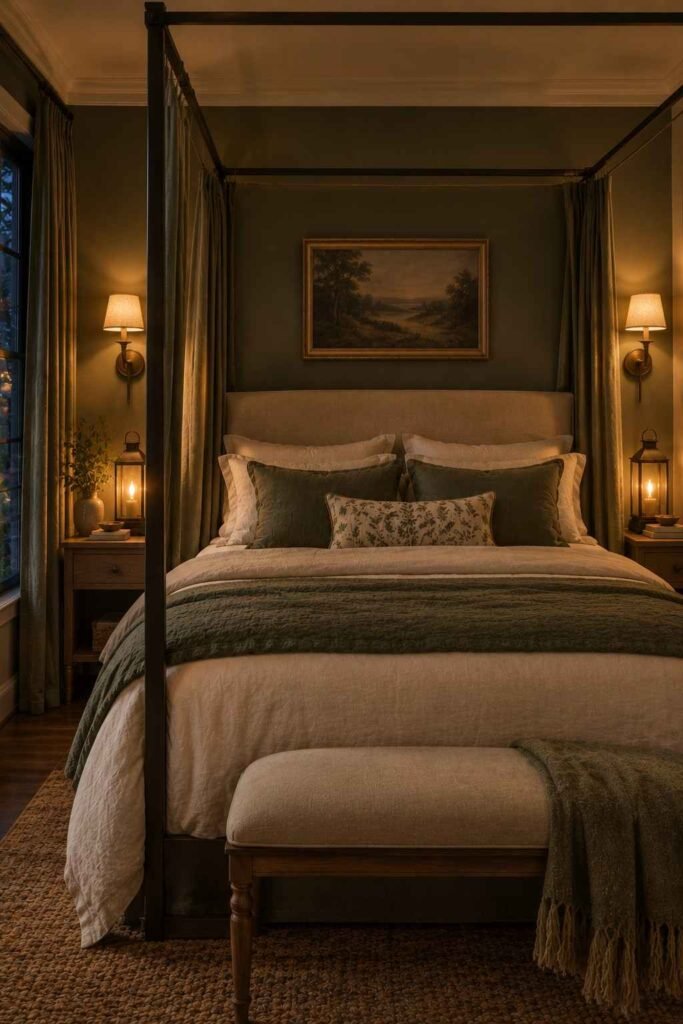
Their shape suits a woodland cabin feel. Choose bulbs in the 2,700 K warm range for a calm, golden light. A forest room looks best with several low light sources instead of one bright ceiling fixture.
Natural Finishing Touches
The final layer is where personality shows up. Keep it light, and choose pieces that look like they belong outdoors.
25. Trailing and leafy plants. Pothos, ferns, or a snake plant near a bright window bring living green indoors. Place them away from the bed’s fabric, and check which species are safe if you have pets.
26. Stone and timber accessories. A wood-slice tray, a stone bookend, or a driftwood branch on a dresser adds quiet natural character.
27. A layered jute and wool rug
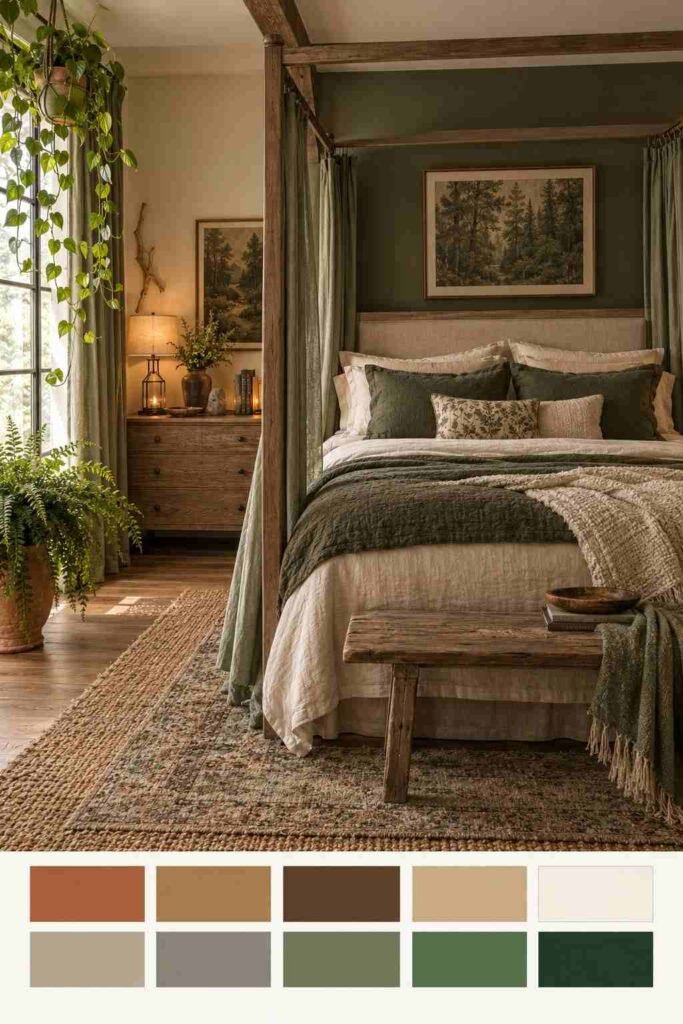
Place it so at least the lower two-thirds of the bed sits on it, giving your feet something soft at the edge of the canopy. Finish with a small bench in aged wood. These touches make a forest bedroom with canopy bed feel finished without feeling crowded.
How to Plan the Room: Size, Safety, and Budget
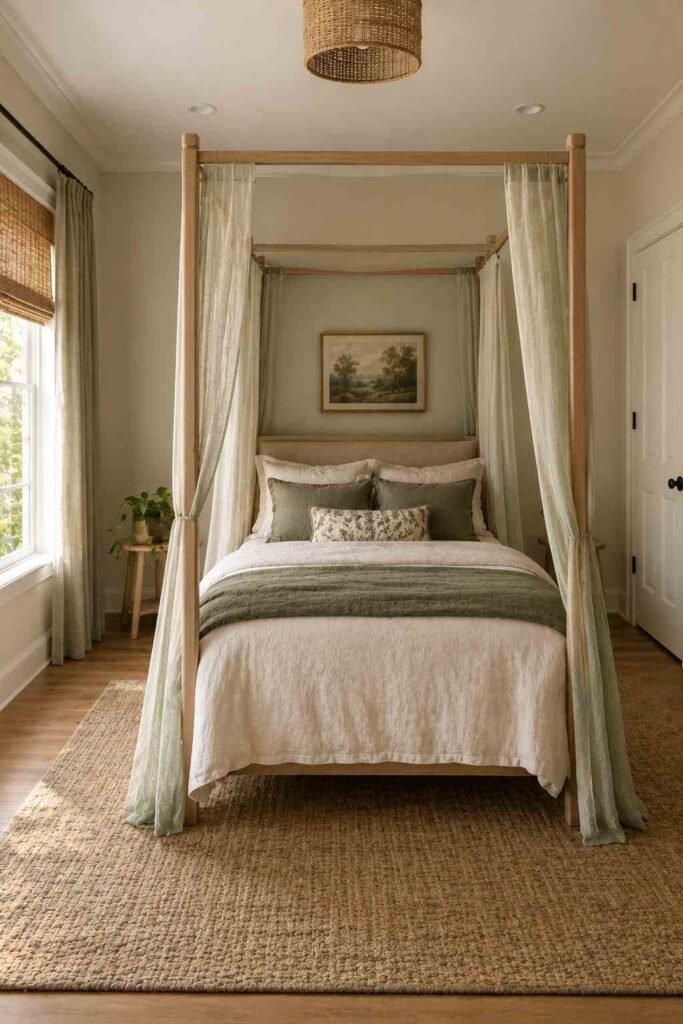
Good design starts with measurements. Check your ceiling height first. Many canopy frames stand roughly seven feet tall, so a standard eight-foot ceiling works but leaves little spare room above. Next, allow comfortable walking space around the bed. A common design guideline is 24 to 36 inches on the sides you use most. If you are planning a larger frame, browse some King Bedroom Ideas to see how furniture can be arranged around a bigger footprint.
Safety matters because fabric hangs above your head while you sleep. Keep drapes away from candles, heaters, and hot bulbs, and use LED lighting instead of open flames. Make sure the frame is assembled firmly and sits level. If the room is small, choose sheer fabric and lighter greens so the canopy does not feel heavy. Always follow the manufacturer’s care and assembly instructions. For more design inspiration and styling guides, visit outinteriors.
Budget can be managed in stages. Start with paint, drapes, and lighting, because they create most of the mood for the lowest cost. Add the frame, rug, and wall treatment later as funds allow. A forest bedroom with canopy bed does not need to be finished in one weekend. Building it slowly lets you adjust colors and textures until the room feels right.
Conclusion
A canopy bed gives a woodland bedroom what it needs most: shelter, structure, and a natural focal point. With the 27 ideas above, you can choose a color story, a frame material, soft fabrics, thoughtful lighting, and small natural details that suit your space. Start with one or two changes, such as moss-green paint or linen drapes, and build from there. Aim for calm over complexity. When color, texture, and light work together, a forest bedroom with canopy bed becomes more than a theme. It becomes a quiet place to rest at the end of the day.