
King Bedroom Ideas to Transform Your Space in 2026
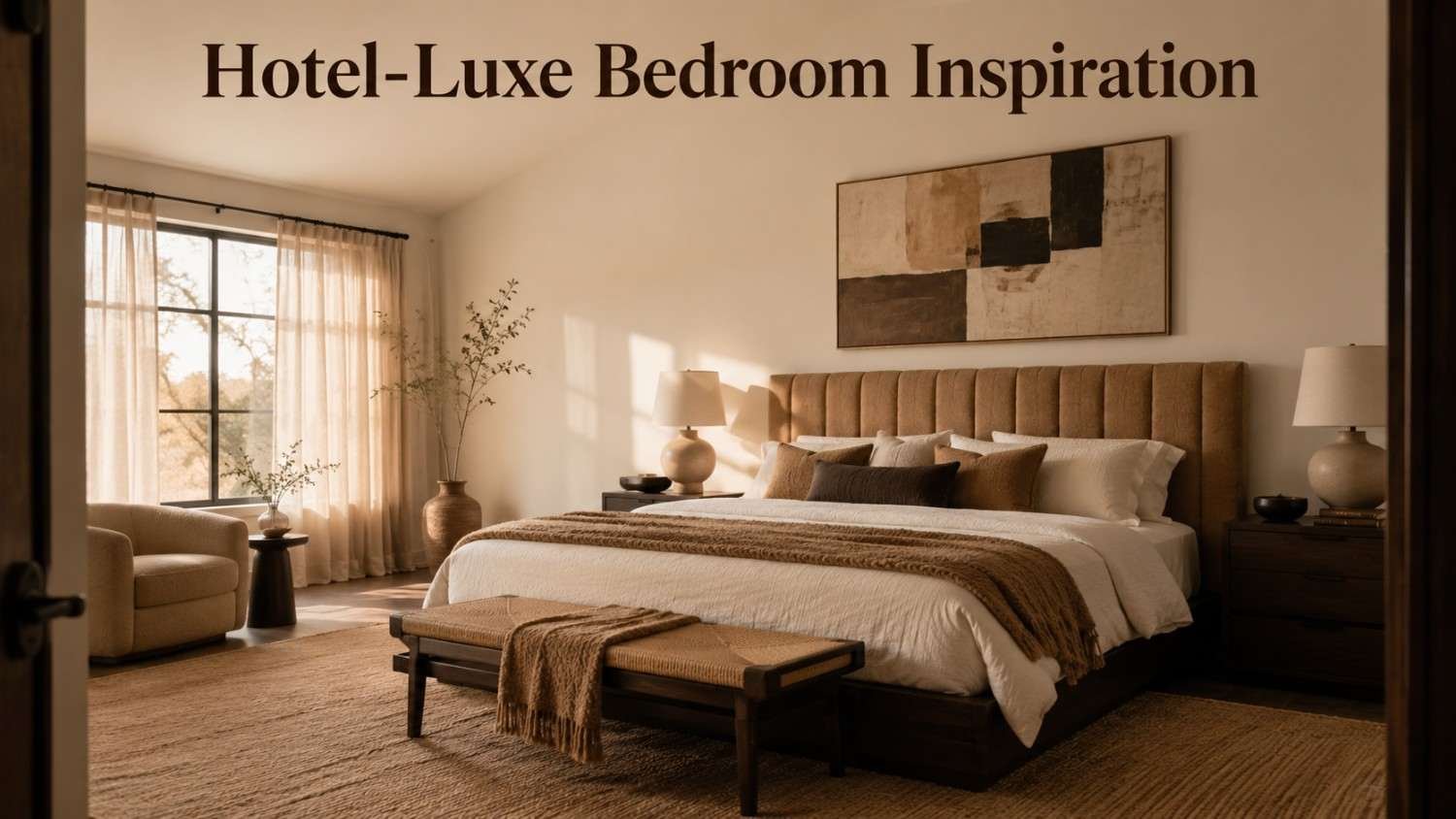
A king bed changes the way a room feels the moment you walk in. It anchors the space, sets the tone for the whole house, and turns an ordinary bedroom into a retreat you actually look forward to at the end of the day. But a bed this large also comes with real questions: How much clearance do you actually need? What if your room is smaller than you’d like? Which colors and layouts make the space feel calm instead of crowded?
This guide answers those questions while walking through 25 king bedroom ideas you can use right away — from layout and lighting to storage and small-space solutions most lists skip entirely. Every idea here is grounded in practical measurements and current design thinking for 2026, not just pretty pictures. Whether you’re furnishing a spare room or a full renovation, these king bedroom ideas are organized so you can jump straight to what your space needs most.
King Bedroom Ideas for Layout and Space Planning
Before choosing colors or furniture, the layout has to work. A standard king mattress measures 76 inches wide by 80 inches deep, which means the room itself does most of the heavy lifting when it comes to comfort.
1. Center the Bed With Breathing Room on Both Sides
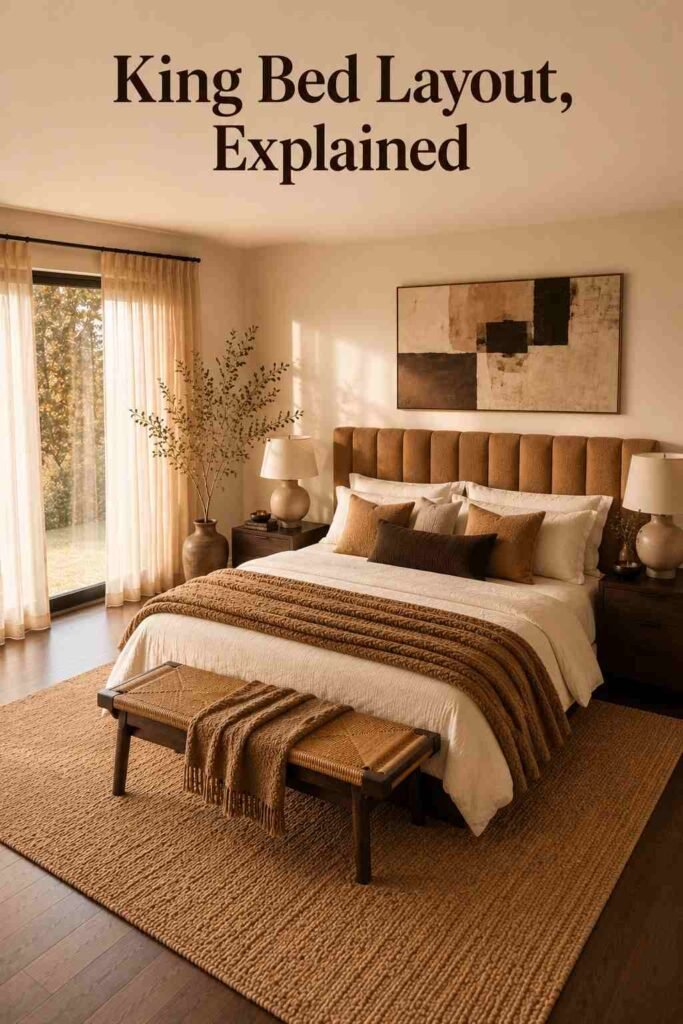
The classic approach still works best in most rectangular rooms. Center the headboard on the longest wall and leave at least 24 to 36 inches of clearance on each side for walking space and nightstands. This spacing follows standard interior design guidance and keeps the room from feeling boxed in, even with a large frame in place.
2. Float the Bed Away From the Wall
In larger rooms, pulling the bed a few feet off the back wall creates a sense of openness and allows for a narrow console or bench behind it. This works especially well in rooms with 12 feet or more of depth, where a flush placement would otherwise leave awkward, unused space.
3. Angle the Bed in an Oddly Shaped Room
If your bedroom has an alcove, a sloped ceiling, or an unusual footprint, placing the bed diagonally across a corner can solve problems a straight wall placement can’t. It also creates a cozier, more intentional feel rather than a leftover layout.
4. Use the Room’s Longest Unbroken Wall
Choosing the wall with the fewest doors and windows keeps the headboard as the visual focal point and avoids blocking traffic flow. It’s a small decision that has an outsized effect on how balanced the room feels once furniture is in place.
5. Leave a Clear Path to the Door
Regardless of where the bed sits, keep at least a 36-inch pathway from the entry to the bed. This isn’t just about comfort — it’s the difference between a room that flows and one that feels like an obstacle course at night.
King Bedroom Ideas for Headboards and Bed Styling
The headboard and bedding do more visual work than almost any other element in the room, simply because of the sheer surface area involved.
6. Choose an Upholstered, Channel-Tufted Headboard
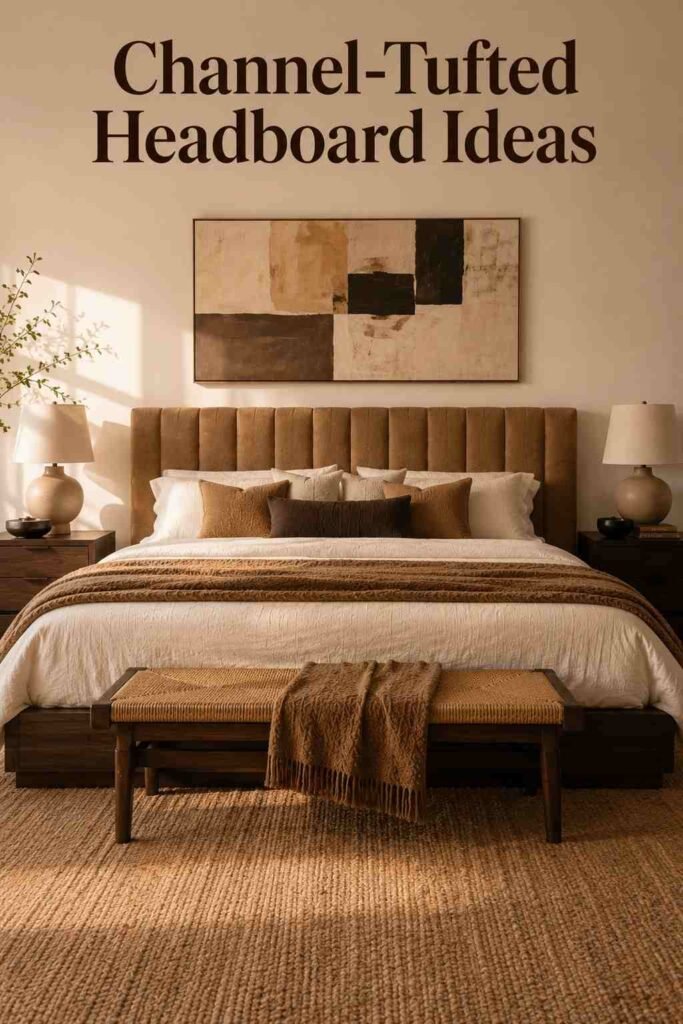
Soft, vertically channeled headboards soften the hard lines of a large frame and add a hotel-like quality to the room. Boucle, velvet, and performance linen are currently the most requested fabrics for this look.
7. Go Minimal With a Wood-Slat Headboard
Rather than an ornate carved frame, a simple slatted wood headboard reads as intentional and calm. It pairs naturally with the warmer, gentler minimalism now replacing the stark, all-white bedrooms of a few years ago.
8. Add a Canopy for Quiet Drama
Canopy frames with sheer or linen drapery are having a genuine resurgence, bringing softness and height to rooms with 9-foot ceilings or taller without requiring a full four-poster commitment. Even a partial canopy above the headboard reads as intentional rather than costume-like.
9. Layer Bedding Instead of Matching It
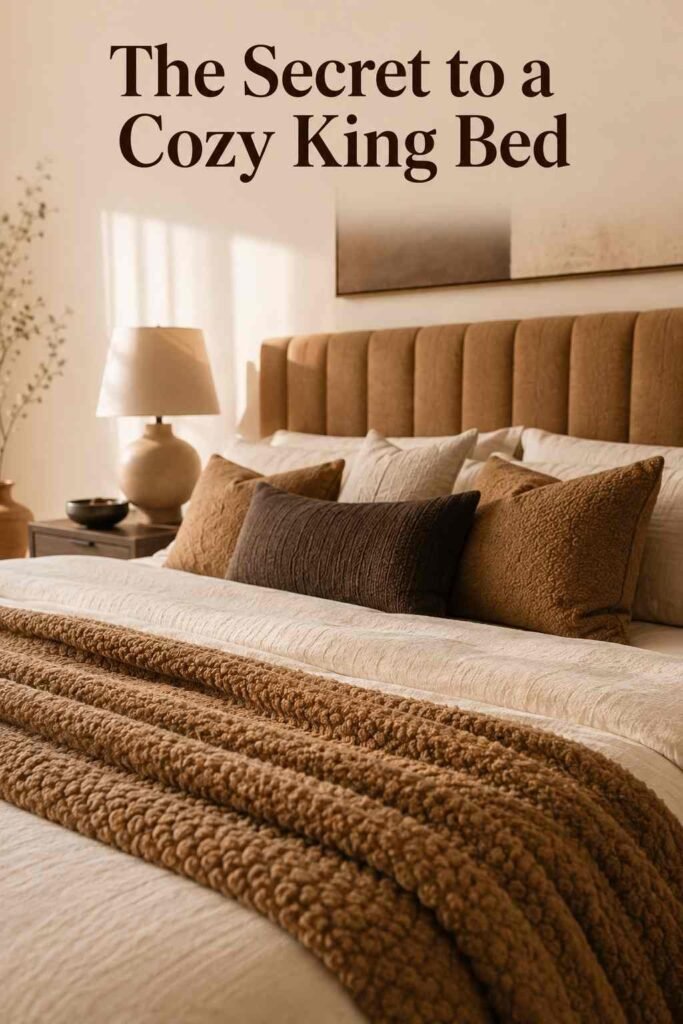
Skip the matched-set duvet and shams. Start with a fitted sheet, add a contrasting flat sheet, then a duvet in a richer tone, and finish with pillows in varied textures — linen, knit, and a small velvet lumbar pillow. This layered approach adds depth that a single matching set never achieves.
10. Replace the Headboard With Statement Wallpaper
If you’d rather skip a headboard altogether, a bold wallpaper panel behind the bed can do the same visual job. Botanical prints, plaster-look textures, and soft ombré patterns are especially popular choices for this treatment right now.
King Bedroom Ideas for Color and Texture
Color choices matter more with a king bed simply because there’s more surface area reflecting it at you. These king bedroom ideas focus on palettes that feel grounded rather than sterile.
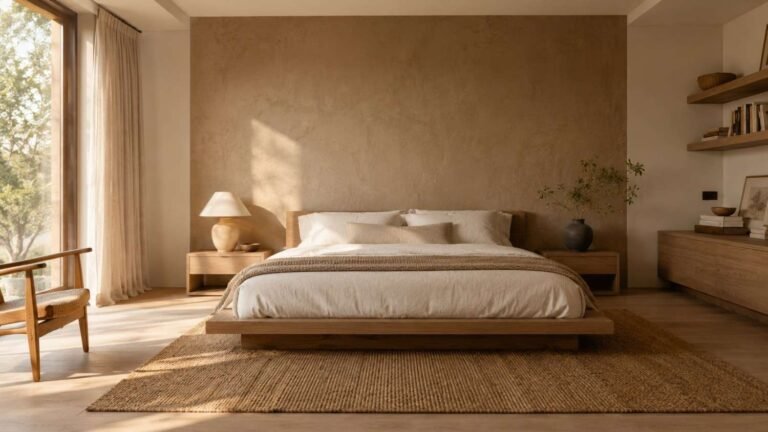
11. Warm, Earthy Neutrals
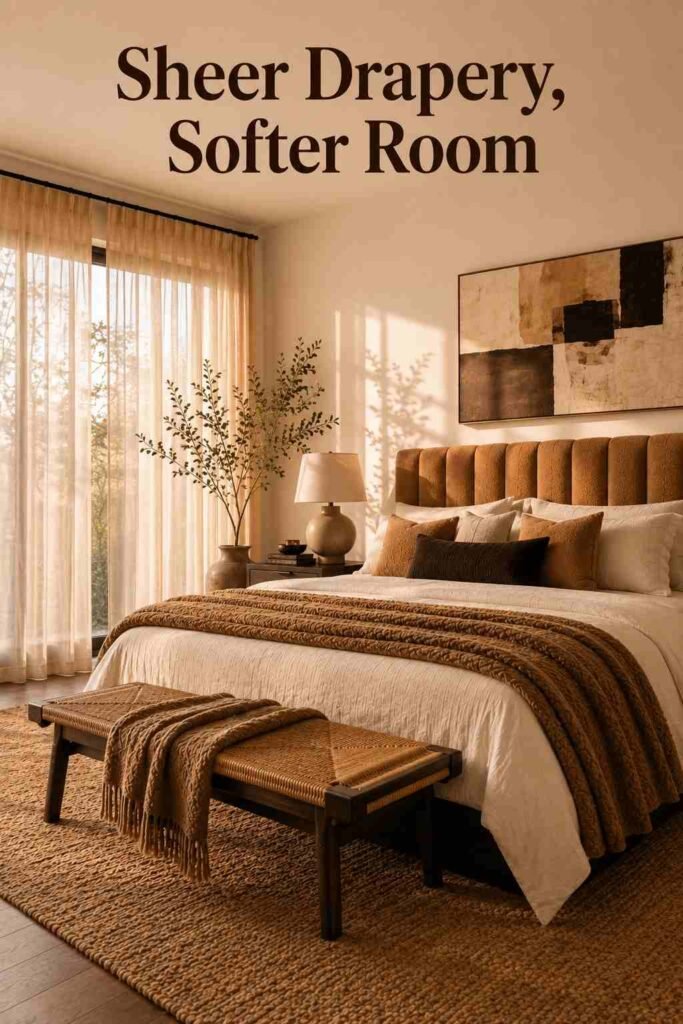
Terracotta, warm taupe, and soft clay tones are replacing the cooler grays that dominated bedrooms for the past decade. These shades feel grounded rather than sterile, which matters in a room this size.
12. A Single Deep, Jewel-Toned Wall
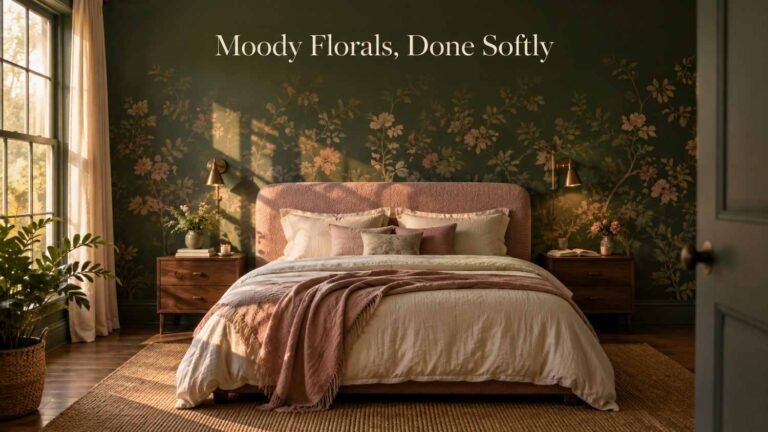
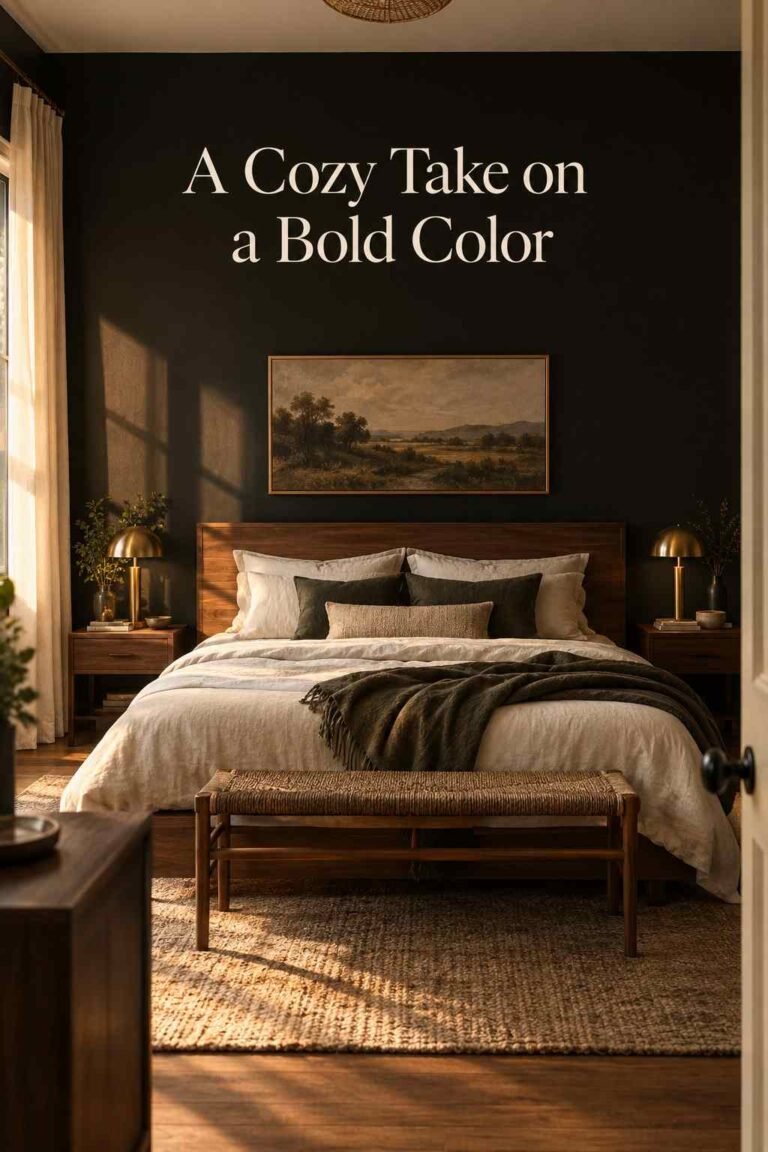
Instead of painting the whole room, commit one wall — usually behind the headboard — to a deep hunter green, ink blue, or burgundy. It reads as confident without overwhelming a large bed.
13. Mix Natural Materials Deliberately
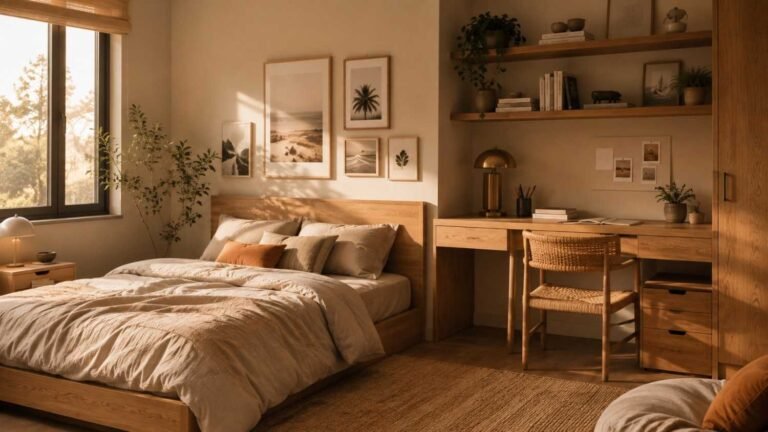
Rattan, raw wood, linen, and boucle used together create texture without pattern. This combination has become one of the defining features of a lived-in, unstaged bedroom rather than a showroom.
14. Try Tonal, Monochromatic Layering
Choosing several shades of the same color family — for example, three or four warm ivories — creates depth and interest without the visual noise of clashing patterns.
15. Trade Glossy Finishes for Soft Matte Surfaces
Mirrored furniture and high-gloss lacquer are fading from favor. Matte wood, honed stone, and brushed metal finishes now feel more current and pair better with soft, layered bedding.
King Bedroom Ideas for Lighting
Good lighting is one of the most overlooked parts of bedroom planning, and it’s often the difference between a room that photographs well and one that actually feels good to live in.
16. Layer Three Types of Light
Combine ambient overhead lighting, task lighting at the nightstands, and a soft accent light — like a floor lamp in a reading corner. Relying on a single overhead fixture is the most common lighting mistake in large bedrooms.
17. Swap Table Lamps for Statement Pendants
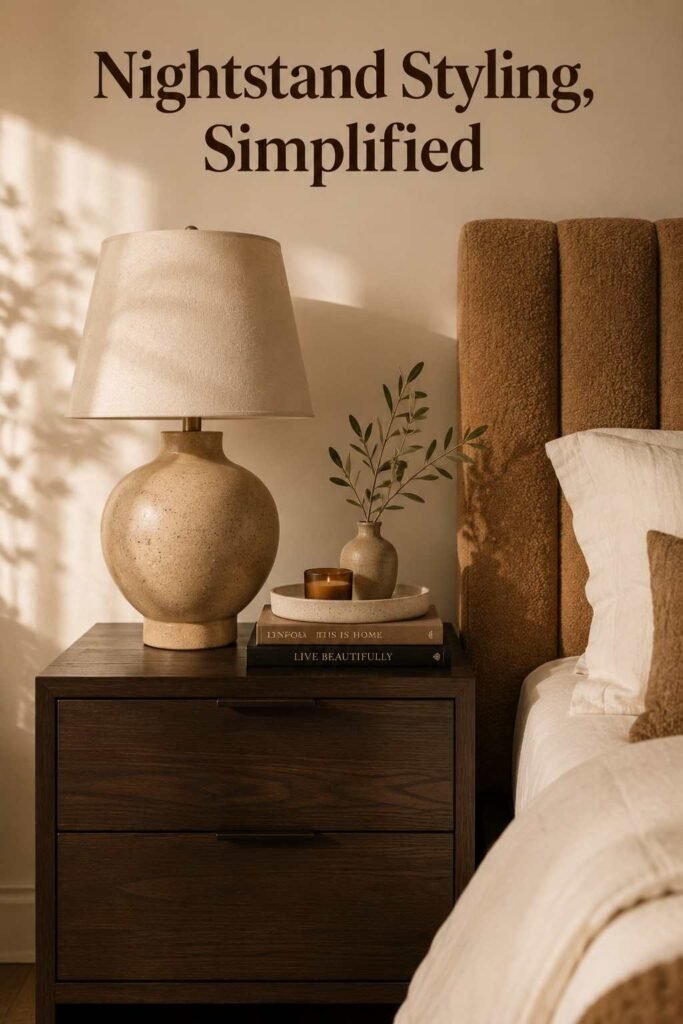
Hanging pendant lights on either side of the headboard frees up nightstand surface space and adds a custom, designer touch without custom pricing.
18. Install Dimmable Smart Bulbs
Adjustable lighting lets the same fixture serve reading, relaxing, and getting ready in the morning. It’s an inexpensive upgrade that changes how the whole room functions throughout the day.
19. Add Wall-Mounted Sconces
Sconces flanking the bed keep surfaces clear and work particularly well in smaller rooms where every inch of nightstand space counts.
King Bedroom Ideas for Storage and Furniture
A king frame takes up more floor space than a queen, so storage decisions need to be more deliberate. The following king bedroom ideas focus on function first, without sacrificing style.
20. Choose a Platform Bed With Built-In Drawers
Storage drawers built into the base eliminate the need for a bulky dresser in tight rooms and keep the overall silhouette low and open.
21. Let Nightstands Be Intentionally Mismatched
Perfectly matched nightstand pairs are giving way to curated pairings — a vintage trunk on one side, a simple floating shelf on the other. The key is balancing scale and color rather than matching every detail.
22. Add a Bench at the Foot of the Bed
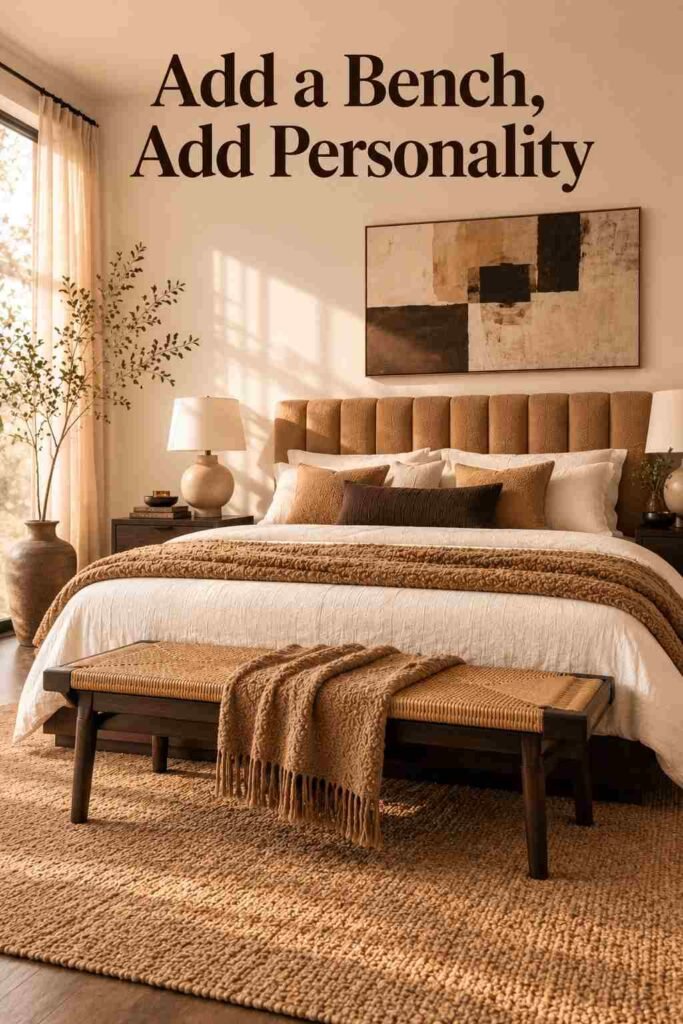
A bench or slipper chair at the foot of a king bed adds a practical landing spot for shoes and throws while breaking up the visual weight of such a large piece of furniture.
23. Use Floating Shelves Instead of a Second Dresser
Open shelving above a console or nightstand adds storage and display space without eating into floor area, which matters most once a king frame is already in the room.
King Bedroom Ideas for Small Spaces
This is the part most bedroom guides skip, even though it’s one of the most common concerns among people considering a king bed. A king frame can absolutely work in a modest room if you plan around it carefully, and these king bedroom ideas are built specifically for tighter footprints.
24. Choose a Low-Profile Frame
A frame that sits closer to the floor visually reduces the bulk of the bed and makes ceilings feel taller by comparison — a simple trick that works in rooms as small as 10 by 12 feet.
25. Flank the Bed With Built-In Storage
Wall-to-wall built-ins on either side of the headboard replace freestanding nightstands and dressers entirely, reclaiming floor space that a king bed would otherwise consume. This approach is especially useful in older homes where bedroom footprints tend to run smaller.
Budget-Friendly Ways to Style a King-Size Bedroom
You don’t need a full renovation to see a difference. Swapping hardware, adding a 9-by-12-foot rug, or repainting a single wall in a warm earthy tone can shift the entire feel of the room for a fraction of the cost of new furniture. Layered bedding is another low-cost, high-impact change — a good throw and a mix of pillow textures often do more visually than an expensive new duvet set on its own.
If you’re ready to spend more, the biggest returns typically come from the headboard and the lighting. An upholstered headboard and a pair of statement pendants transform the room’s focal point immediately, while a platform frame with built-in storage solves a practical problem most budget frames ignore. Prioritize one splurge item and keep everything else simple rather than spreading a budget thin across a dozen small upgrades that are harder to notice individually.
Bringing These King Bedroom Ideas Together
A well-planned king bedroom balances scale, comfort, and personality rather than chasing a single trend. Start with the layout, since that determines everything else that follows, then build outward through headboard style, color, lighting, and storage. Not every one of these 25 king bedroom ideas needs to make it into your room — pick the handful that match your space and budget, and let the rest go.
If you’re furnishing the space with a partner, our guide to Bedroom Decor Ideas for Couples walks through blending two styles into one cohesive room, while our broader collection of master bedroom ideas covers everything beyond the bed itself. For more room-by-room inspiration, outinteriors is a good next stop.
Whichever combination of king bedroom ideas you choose from this list, the goal stays the same: a room that feels restful the moment you close the door behind you.
Frequently Asked Questions
What size room do you need for a king bed?
Most designers recommend a room at least 11 by 13 feet to comfortably fit a king bed along with nightstands and a walkway. Smaller rooms can still work with careful furniture choices, such as a low-profile frame and built-in storage.
How much space should be left around a king bed?
Aim for 24 to 36 inches of clearance on each side of the bed and at least 36 inches at the foot if it faces a walkway or dresser.
What size rug goes under a king bed?
A rug measuring 9 by 12 feet or larger typically works best, extending at least 24 inches beyond each side of the bed so it grounds the furniture rather than floating beneath it.
Do you need two nightstands with a king bed?
Not always. While symmetrical nightstands are traditional, a single larger nightstand paired with a floating shelf or bench on the other side is an increasingly common and space-saving alternative.
Can a king bed fit in a 10 by 10 room?
It’s tight but possible if you skip a traditional headboard, use built-in or wall-mounted storage, and keep the color palette light to avoid a cramped feeling.
What colors make a king bedroom feel bigger?
Warm off-whites, soft greiges, and light earthy neutrals reflect more light and visually expand a room better than dark, saturated colors on every wall.
How do you style a king bed without a headboard?
A statement wallpaper panel, a fabric wall hanging, or a pair of symmetrical pendant lights above the mattress line can all stand in for a traditional headboard while keeping the look intentional.


One Comment