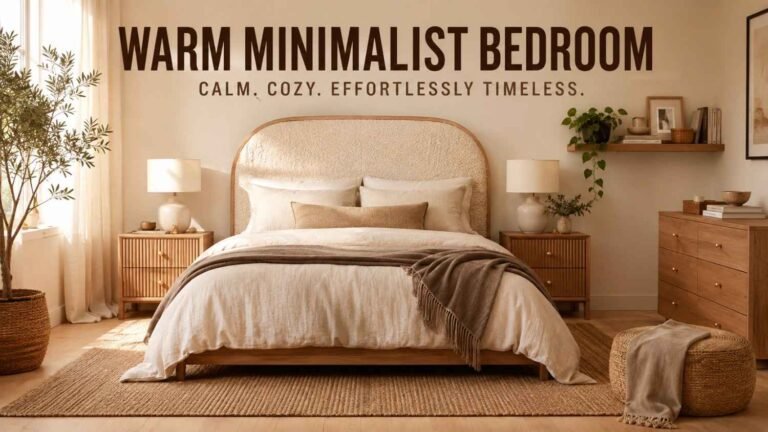
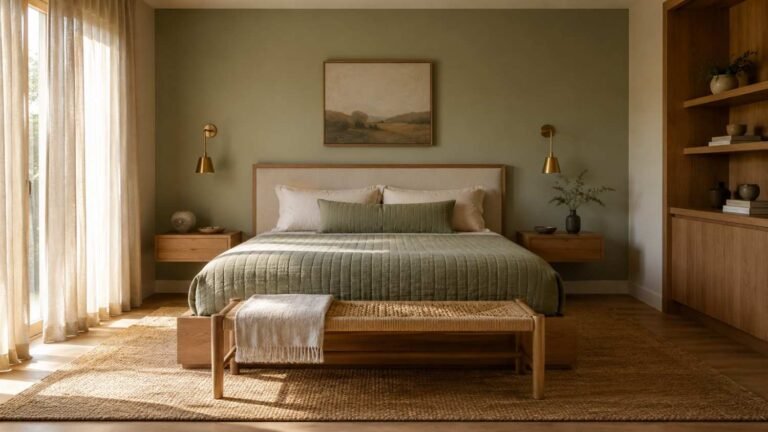
Feature Wall Bedroom Ideas: The Complete 2026 Guide to a Show-Stopping Statement Wall
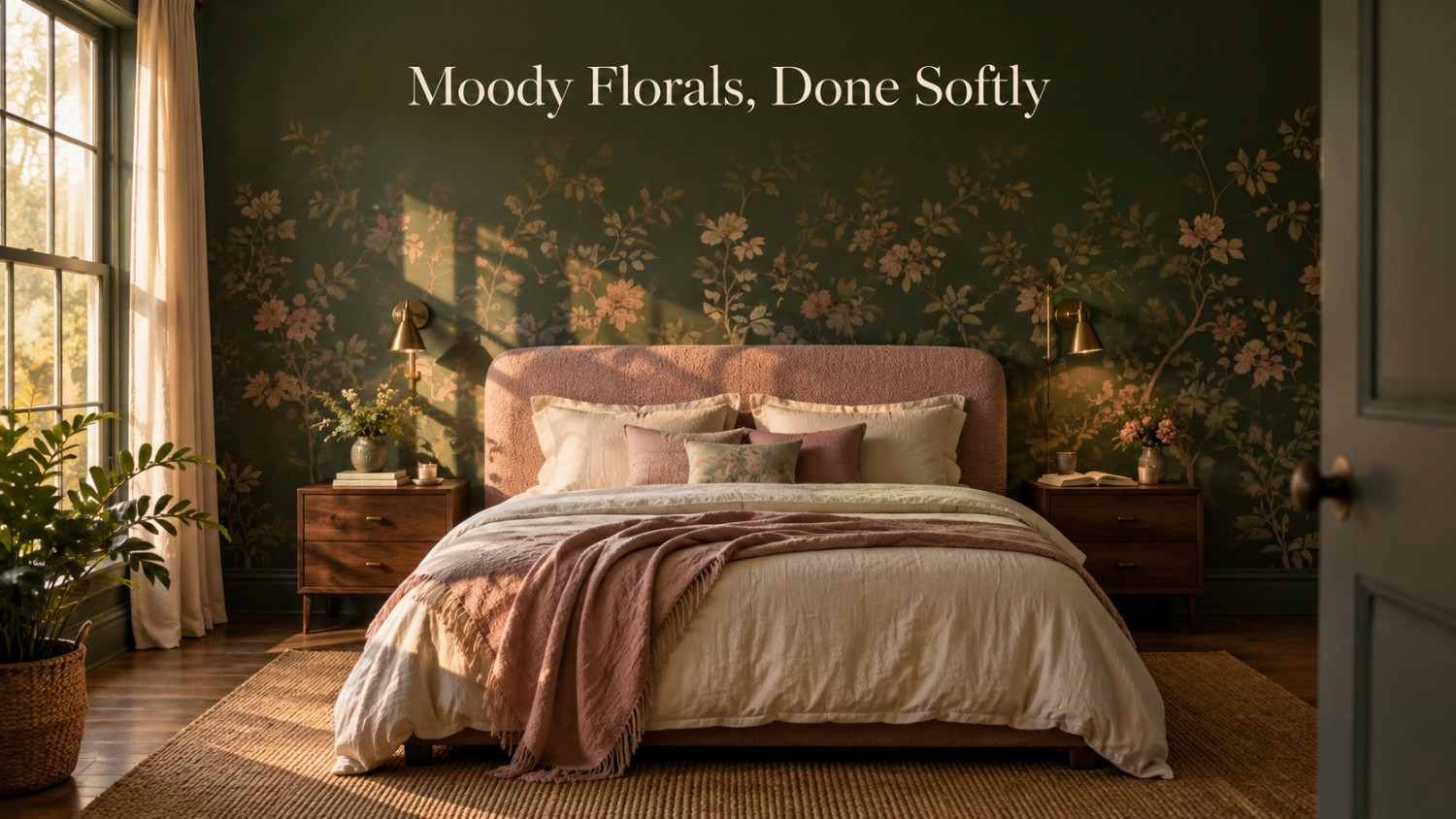
Walk into most bedrooms, and you’ll notice the same thing: four walls painted the same shade of “safe.” A feature wall bedroom design flips that script. Instead of blending in, one wall becomes the anchor that gives the whole room a sense of direction — a color, texture, or material that pulls your eye in and makes the space feel finished rather than half-decorated.
This guide is built differently from the usual roundup. Beyond just showing pretty walls, it breaks down 25 feature wall bedroom ideas by category, explains which wall to actually pick, flags the mistakes that ruin an otherwise good design, and covers the budget question most articles skip entirely. By the end, you’ll know exactly which style fits your space and how to execute it without regret.
What Makes a Feature Wall Bedroom Actually Work
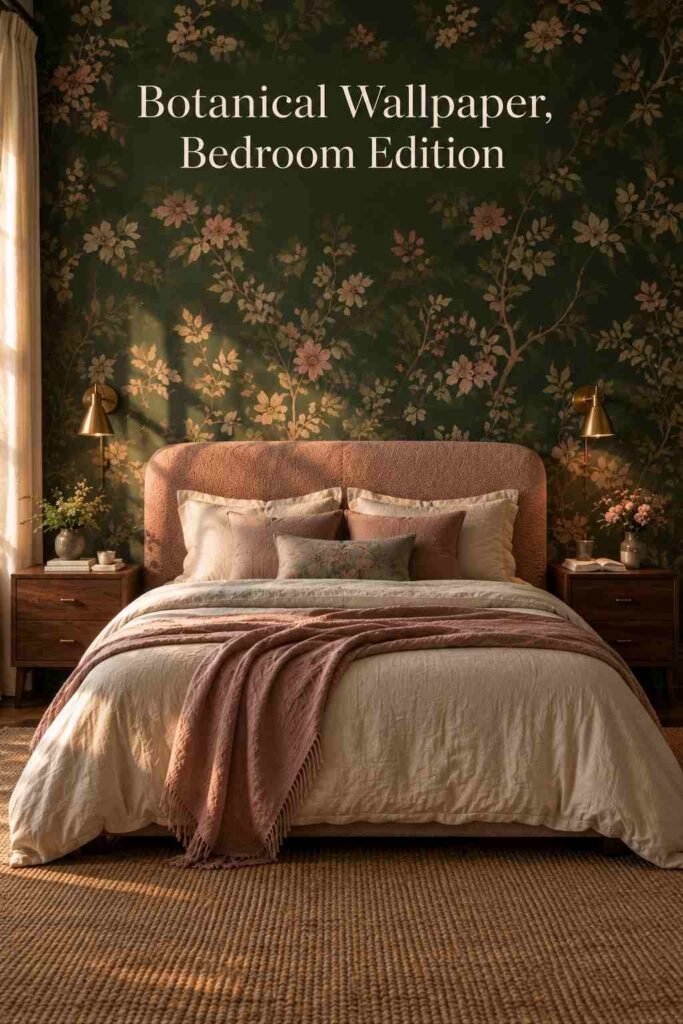
A feature wall bedroom succeeds when it does three things at once: draws attention, suits the room’s proportions, and still feels restful enough to sleep in. Designers generally agree the wall behind the headboard is the strongest choice, since it’s the first surface your eyes land on when entering the room and the last one you see before sleep.
The mistake most homeowners make is choosing a feature wall based on a photo they liked online, without accounting for their own room’s light, ceiling height, or furniture layout. A bedroom feature wall that looks stunning in a south-facing loft with 12-foot ceilings can feel heavy and cramped in a small, low-light room. Scale and lighting should always guide the decision before color or pattern does.
25 Feature Wall Bedroom Ideas Worth Copying
These ideas are grouped by category so you can shop by style rather than scrolling endlessly. Each one reflects what’s actually being specified by designers right now, not recycled trends from a decade ago.
Color and Paint-Based Feature Walls
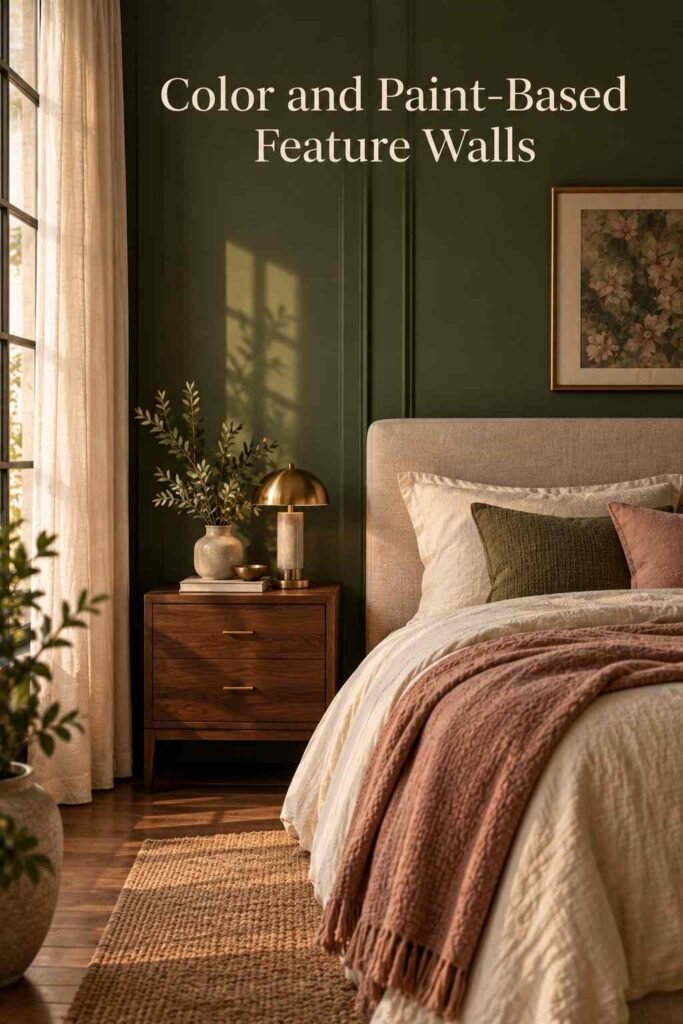
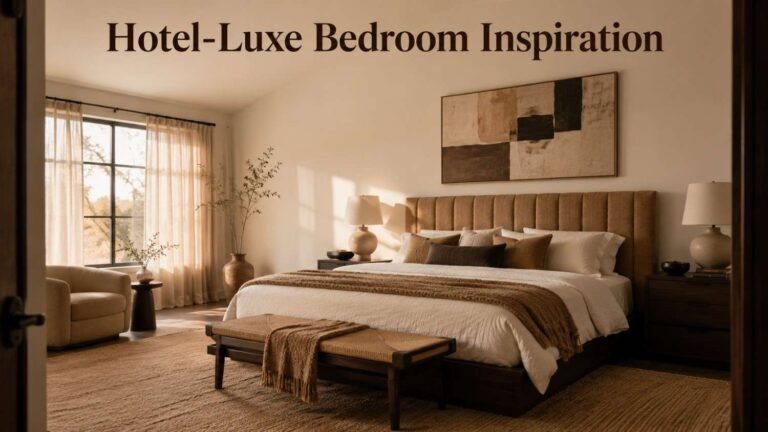
1. Espresso or Charcoal Brown Wall. Deep brown tones are back in a major way, with designers pairing warm walnut and burl-wood furniture against a moody chocolate or charcoal wall for a grounded, hotel-suite feel.
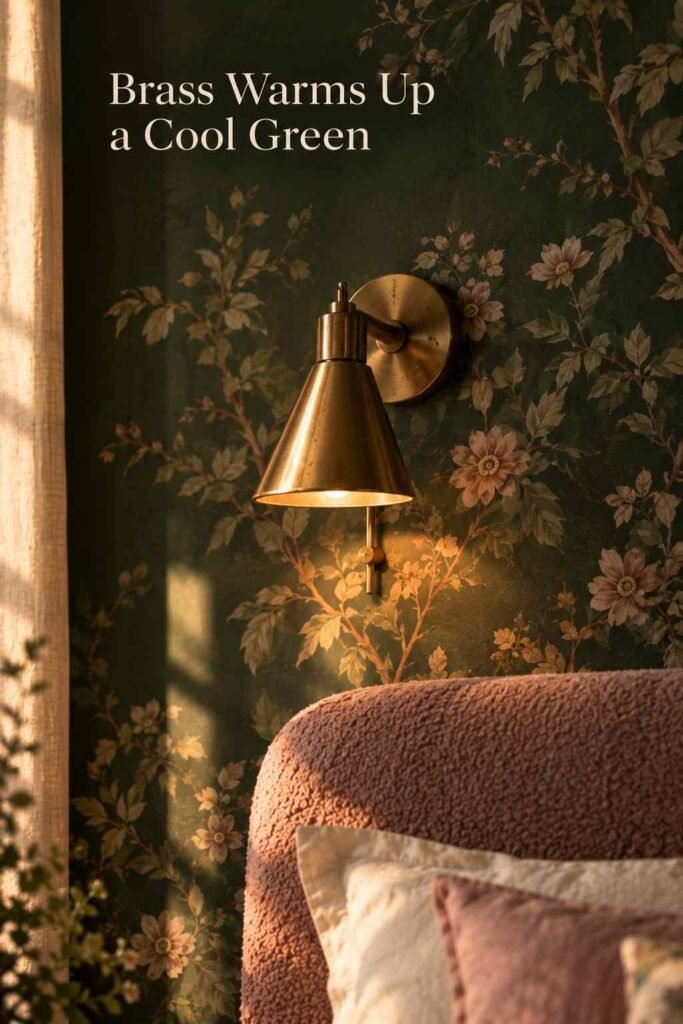
2. Warm Terracotta Wall. A clay-inspired orange-red tone brings warmth without the intensity of a full red wall, and it pairs beautifully with brass hardware and linen bedding.
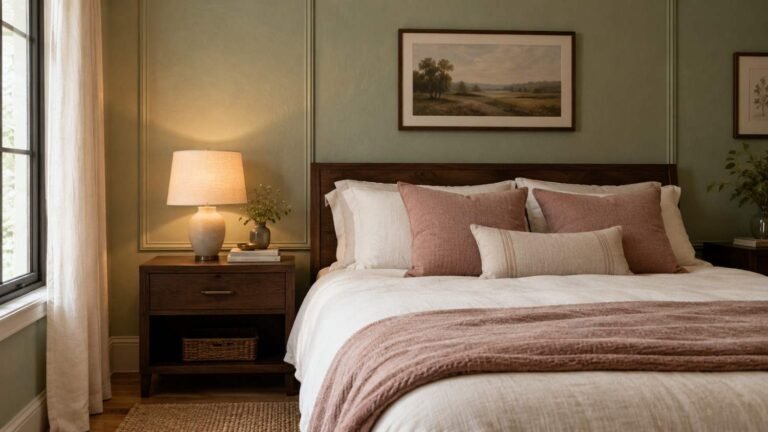
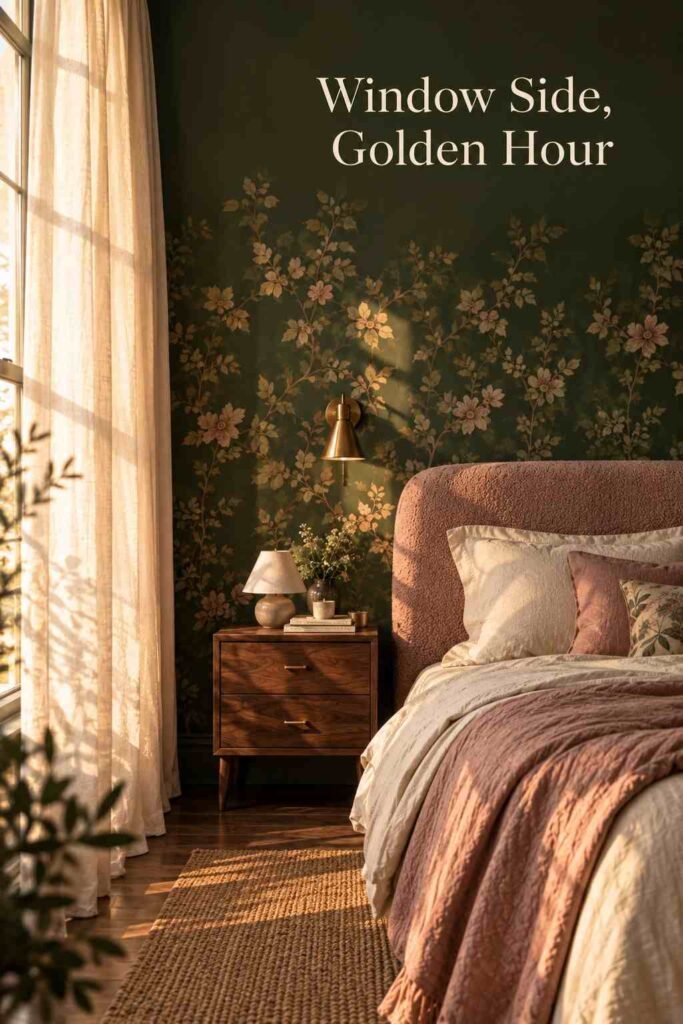
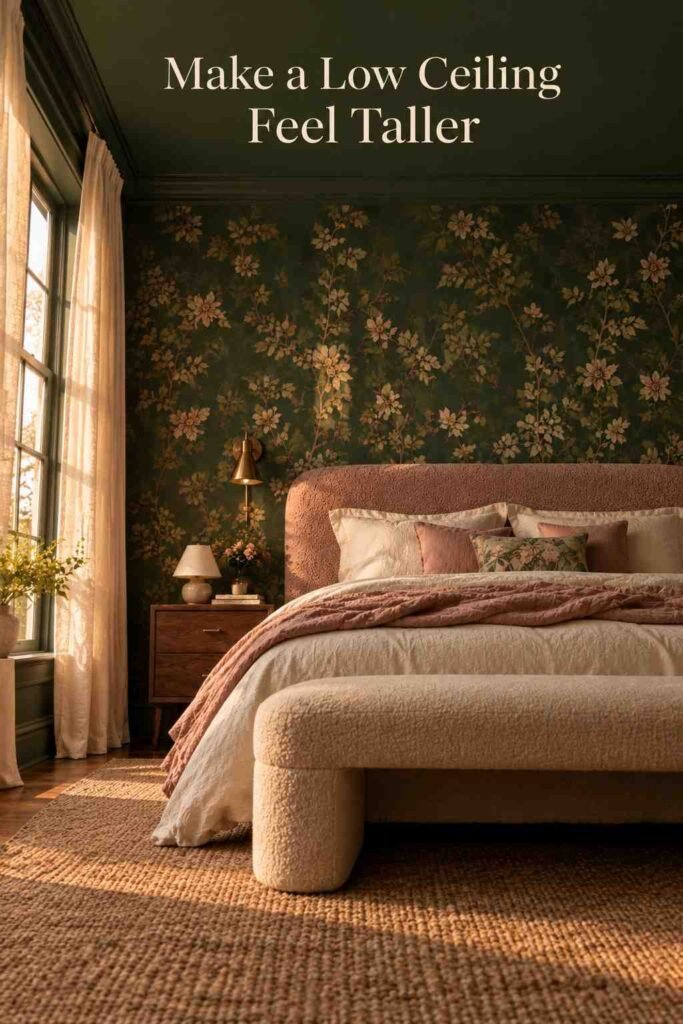
3. Deep Forest Green Wall. Muted, slightly gray-green shades read as bold yet calming — a combination that works especially well behind a wood-paneled or upholstered headboard.
4. Two-Tone Color Blocking. Splitting the wall horizontally, with a darker shade on the bottom two-thirds, adds architectural interest to a plain room without needing molding or texture.
5. Soft Blush Limewash Finish. A hand-applied, slightly uneven pink or clay finish gives the wall organic texture and depth, often eliminating the need for extra wall art.
Texture and Material Feature Walls
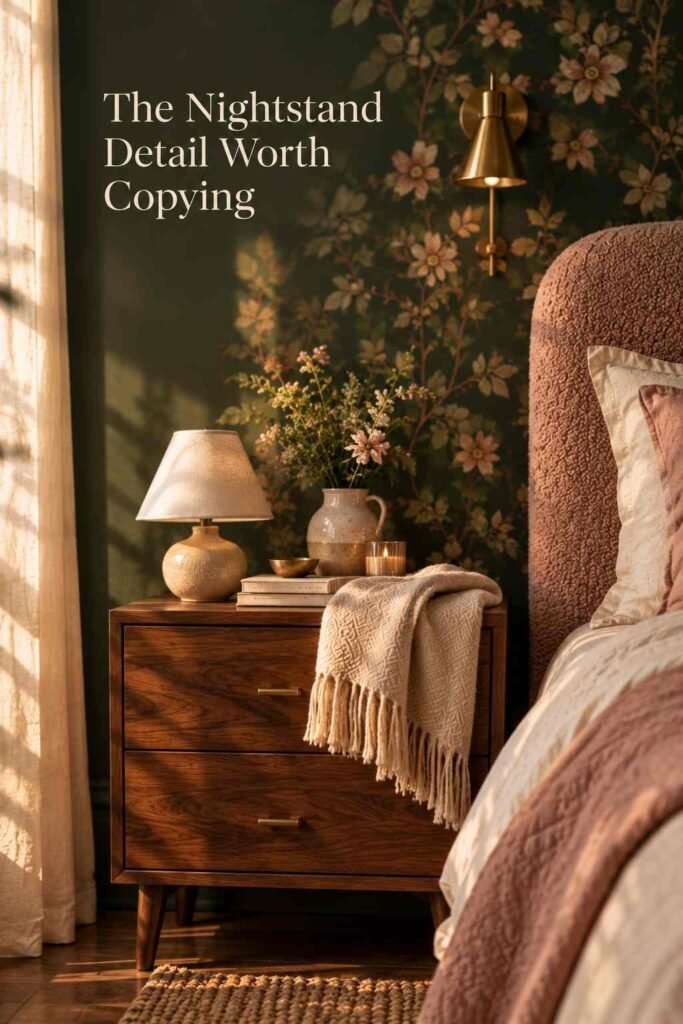
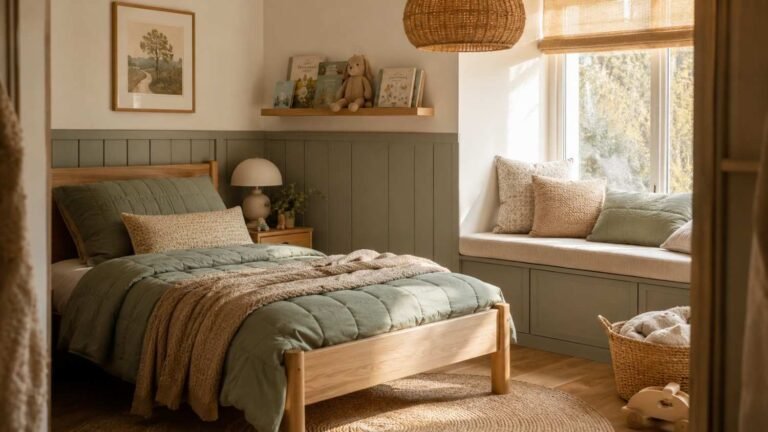
6. Shiplap or Board-and-Batten Paneling. Horizontal or vertical wood boards add instant architectural texture and work in both farmhouse and modern coastal bedrooms.
7. Reclaimed Wood Slat Wall. Raw or lightly stained wood slats installed floor-to-ceiling create a warm, textured focal point that also doubles as a natural sound buffer.
8. Clay or Venetian Plaster. This hand-troweled finish has subtle imperfections and a soft glow under lamp light, making it one of the most requested finishes among interior designers this year.
9. Natural Stone Veneer. Stacked stone or thin stone cladding brings a spa-like, elemental feel and pairs especially well with matte black fixtures and low-profile beds.
10. Woven Rattan or Cane Panels. Lightweight and textural, cane webbing softens a room’s acoustics and adds an organic, slightly retro warmth without overwhelming a small space.
Wallpaper and Pattern Feature Walls
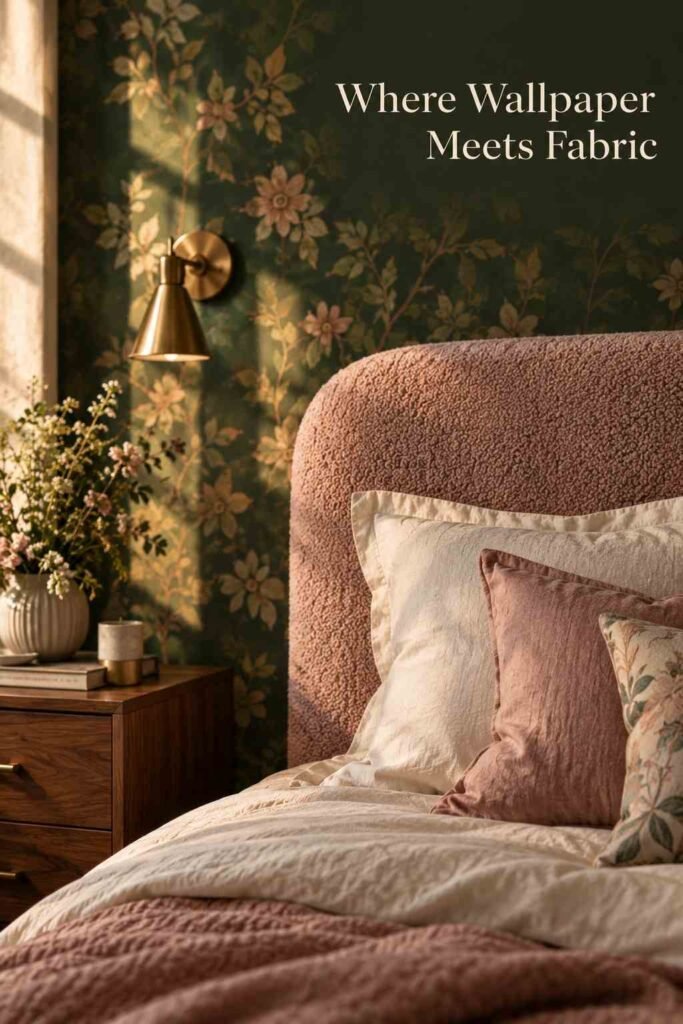
11. Botanical or Floral Wallpaper. Large-scale leaf or floral prints create an immersive, garden-like atmosphere and remain among the most popular feature-wall bedroom choices for primary suites.
12. Textured Grasscloth Wallpaper. A subtle woven texture in a neutral tone adds depth without competing with other design elements in the room.
13. Mural-Style Scenic Wallpaper. A single continuous scene — mountains, clouds, or abstract landscapes — turns the wall into a piece of art rather than a backdrop.
14. 3D Textured Wall Panels. Geometric or wave-patterned panels catch light differently throughout the day, adding movement to an otherwise flat surface.
15. Vintage Damask or Toile Print. Classic, richly patterned wallpaper brings old-world charm and works especially well in traditional or transitional bedrooms.
Architectural and Molding Feature Walls
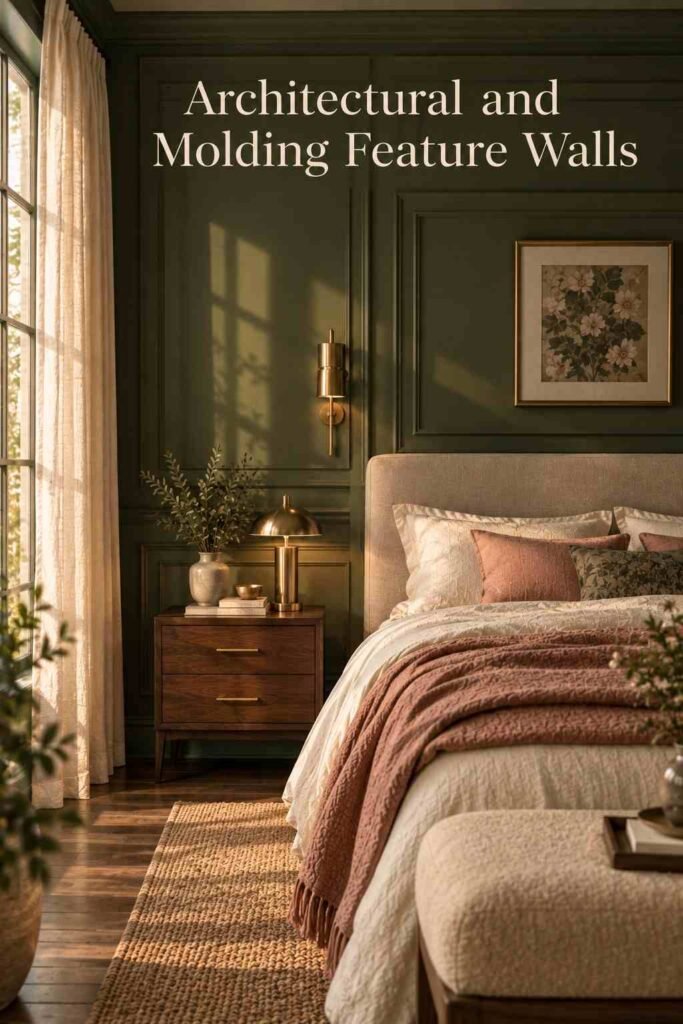
16. Grid-Style Shadow Box Paneling. Thin wood trim arranged in a grid pattern adds subtle sophistication and is one of the easiest DIY-friendly upgrades on this list.
17. Arched Alcove Behind the Bed. A built-in arched niche framing the headboard creates depth and draws the eye upward, especially effective in rooms with higher ceilings.
18. Faux Concrete Wall Finish. A board-formed or microcement look delivers an industrial, minimalist edge that pairs well with black metal furniture and linen textiles.
19. Upholstered Wainscoting. Padded fabric panels set within wood trim combine texture, sound absorption, and a tailored, boutique-hotel appearance.
20. Floor-to-Ceiling Wood Slat Headboard. Vertical slats extending from floor to ceiling double as a built-in headboard, eliminating the need for separate bed furniture.
Lighting, Art, and Functional Feature Walls
21. Oversized Art or Photography. A single large-scale piece hung above the bed creates immediate impact and visually connects the headboard to the ceiling.
22. Curated Gallery Wall. A collection of framed prints, mirrors, and small objects arranged thoughtfully turns a blank wall into a personal, evolving display.
23. Backlit LED Accent Wall. Concealed LED strips behind panels or shelving add a soft glow that makes the wall feel dimensional after dark.
24. Upholstered Fabric Headboard Wall. A wall-to-wall padded fabric treatment, often in bouclé or velvet, softens the whole room and adds a hotel-like coziness.
25. Layered Mixed-Media Wall. Combining texture, art, and lighting — for example, plaster with a floating shelf and a picture light — creates the most custom, designer-level result on this list.
Common Feature Wall Bedroom Mistakes to Avoid
Even a well-chosen material can fail if it’s applied incorrectly. The most frequent error is picking the wall opposite the door instead of the one behind the headboard, which weakens the visual impact the moment you’re lying in bed. Another common issue is choosing a heavily textured or dark material in a room with limited natural light, which can make the space feel smaller rather than more intentional.
Overcrowding the feature wall is another problem worth flagging. Once a wall has strong color, pattern, or texture, it rarely needs additional heavy artwork layered on top. A bedroom feature wall works best when the rest of the room — bedding, curtains, and furniture — stays relatively simple, letting that one surface do the visual work it was designed for.
Budget Considerations for a Feature Wall Bedroom
Cost varies enormously depending on material, and this is where many guides fall short. A painted or color-blocked wall typically costs under $150 in paint and supplies for a standard-size bedroom. Wallpaper runs higher, generally $300 to $900 depending on the pattern and whether it’s peel-and-stick or professionally hung. Wood paneling, shiplap, or slat walls usually land between $400 and $1,200, while natural stone veneer, plaster finishes, or custom millwork can exceed $1,500 once labor is included.
Peel-and-stick wallpaper and pre-cut wood panel kits have made mid-range looks far more accessible for renters and first-time DIYers, closing much of the gap between a professionally installed feature wall and a weekend project. Setting a budget before browsing ideas prevents the common trap of falling in love with a material that’s out of reach for the space.
How to Choose the Right Wall in Your Room
Before settling on a design, walk into the bedroom and identify the wall you see first when the door opens, then check which wall sits directly behind the headboard — these are almost always your two strongest candidates. Rooms with low ceilings benefit more from vertical elements like slat paneling or striped wallpaper, since they visually stretch the space upward, while wider rooms can handle bolder color blocking or a large mural without feeling overwhelming.
If you’re also refreshing the rest of your home, the same statement-wall logic extends beyond the bedroom. Many homeowners tackling a feature wall bedroom project also look at an accent wall living room treatment for consistency across shared spaces, while others pair the bedroom refresh with updated living room designs open concept layouts to keep the whole home feeling cohesive. For a broader library of room-by-room inspiration and product pairings, OutInteriors is a useful next stop.
Final Thoughts
A feature wall bedroom doesn’t need to be complicated or expensive to make an impact. What matters most is choosing a wall, material, and color that fit the room’s actual size, light, and layout — not just what looked good in someone else’s photo. Whether you go with a $50 can of charcoal paint or a fully custom plaster finish, the goal is the same: one wall that gives the whole room a sense of intention. Start with the wall behind your headboard, keep the rest of the room simple, and let that single surface carry the design.
Frequently Asked Questions
1. Which wall should be the feature wall in a bedroom?
In most layouts, the wall behind the headboard works best, since it’s the first surface visible from the doorway and the focal point when lying in bed.
2. Is a dark feature wall bedroom design too much for a small room?
Not necessarily. Small rooms can handle dark tones well if there’s strong natural or layered artificial lighting; the issue is usually insufficient light, not the color itself.
3. What is the cheapest feature wall bedroom idea?
A painted accent wall is the most affordable option, typically costing under $150 for materials, followed by peel-and-stick wallpaper for a similar budget-friendly result.
4. Should a feature wall bedroom match the rest of the house?
It doesn’t need to match exactly, but tying in one or two colors or materials from adjoining rooms helps the home feel cohesive rather than disjointed.
5. Can I combine wallpaper and paint on the same feature wall?
Yes — a lower painted band with wallpaper above, or wallpaper framed within molding, is a popular way to add pattern without covering the entire surface.
6. How do I keep a feature wall bedroom from feeling outdated quickly?
Choosing a neutral or textural base (like plaster, wood, or a muted color) rather than a highly trend-specific print keeps the design flexible for years.
7. Do feature walls work in rental bedrooms?
Yes — removable wallpaper, peel-and-stick panels, and washable paint options let renters achieve the same look without permanent changes to the wall.