Chesterfield Sofa Living Room Ideas to Elevate Your Space in 2026
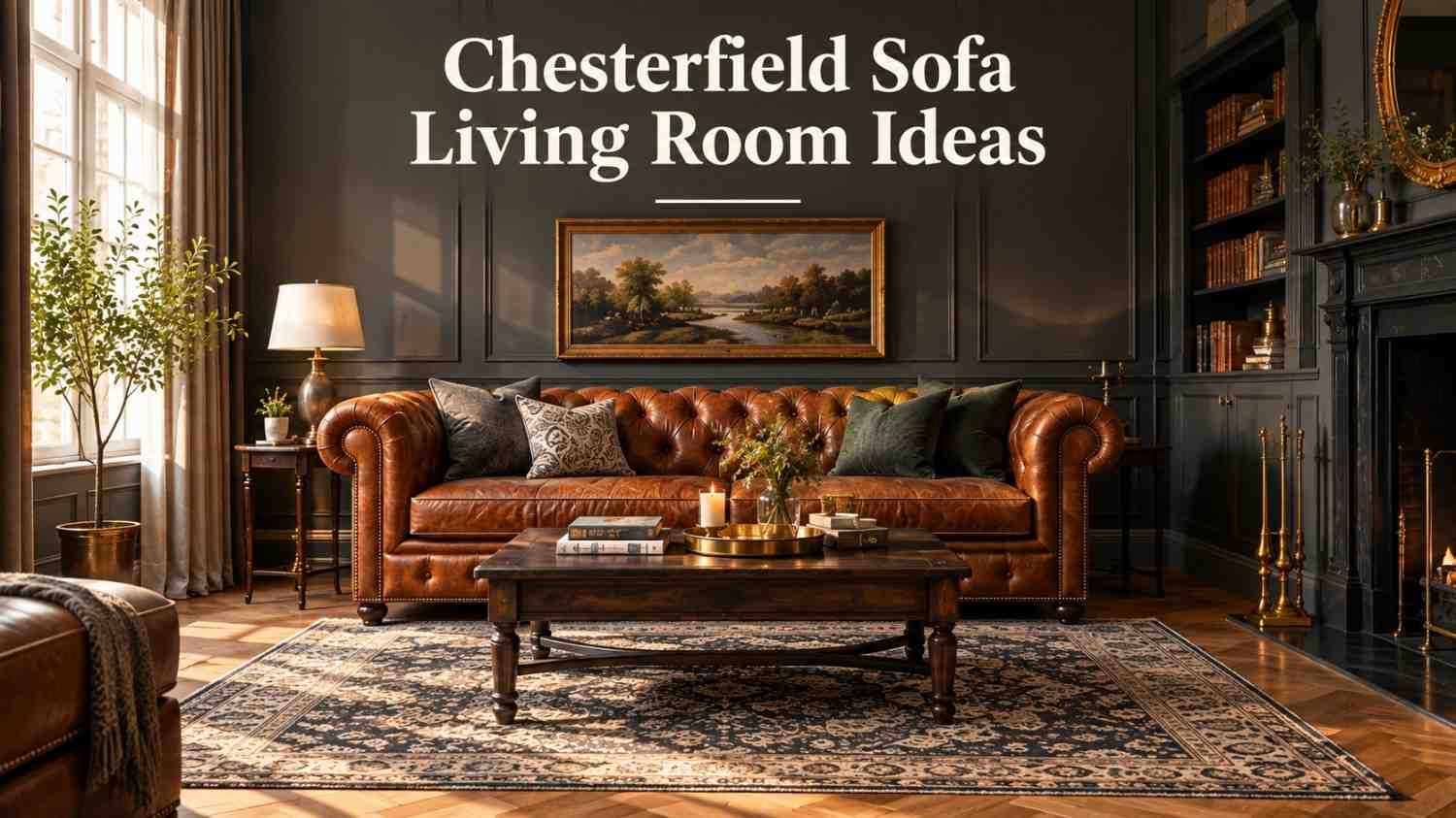
Few furniture pieces carry the quiet authority of a Chesterfield sofa. The deep button tufting, the rolled arms sitting flush with the backrest, and the low, grounded stance have made this shape recognizable for well over a century. Yet many homeowners still treat it as a one-note “old library” piece, missing how flexible it really is.
This guide breaks down 25 Chesterfield sofa living room ideas, covering colors, layouts, materials, small-space tricks, and styling mistakes to avoid. Whether you’re furnishing a first apartment or refreshing a family living room, you’ll find a version of the Chesterfield that fits.
What Makes a Chesterfield Sofa Different
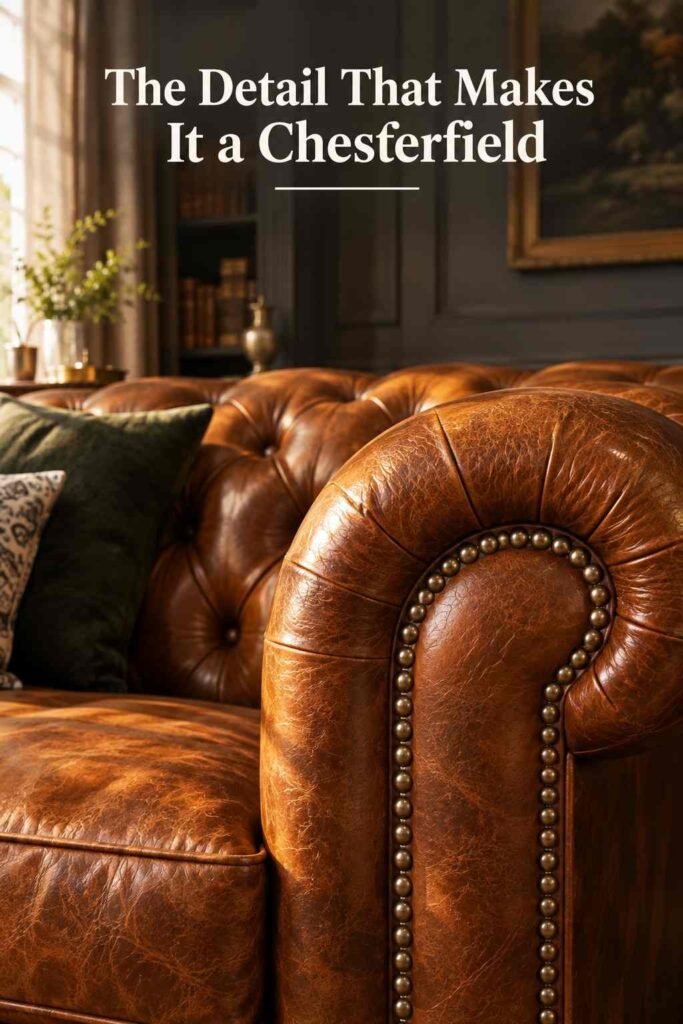
Before diving into layout ideas, it helps to know what actually defines this shape. A Chesterfield sofa is identified by three features: deep buttoned (tufted) upholstery across the back and arms, arms that rise to the same height as the backrest, and nailhead trim tracing the base. A standard rolled-arm sofa might look similar from across the room, but it lacks the tufting depth and equal-height arms that give the Chesterfield its boxy, tailored silhouette.
The design dates back to 18th-century England, reportedly commissioned for a Lord Chesterfield who wanted a seat that let a gentleman sit upright without wrinkling his coat. That origin story explains the sofa’s firm, structured feel compared to today’s overstuffed sectionals.
Chesterfield Sofa Living Room Ideas by Color and Fabric
1. Classic Cognac Leather
A cognac or whiskey-toned leather Chesterfield sofa living room setup pairs naturally with dark wood floors and brass lighting. It ages into a richer patina over years of use, which is part of the appeal rather than a flaw.
2. Emerald Green Velvet
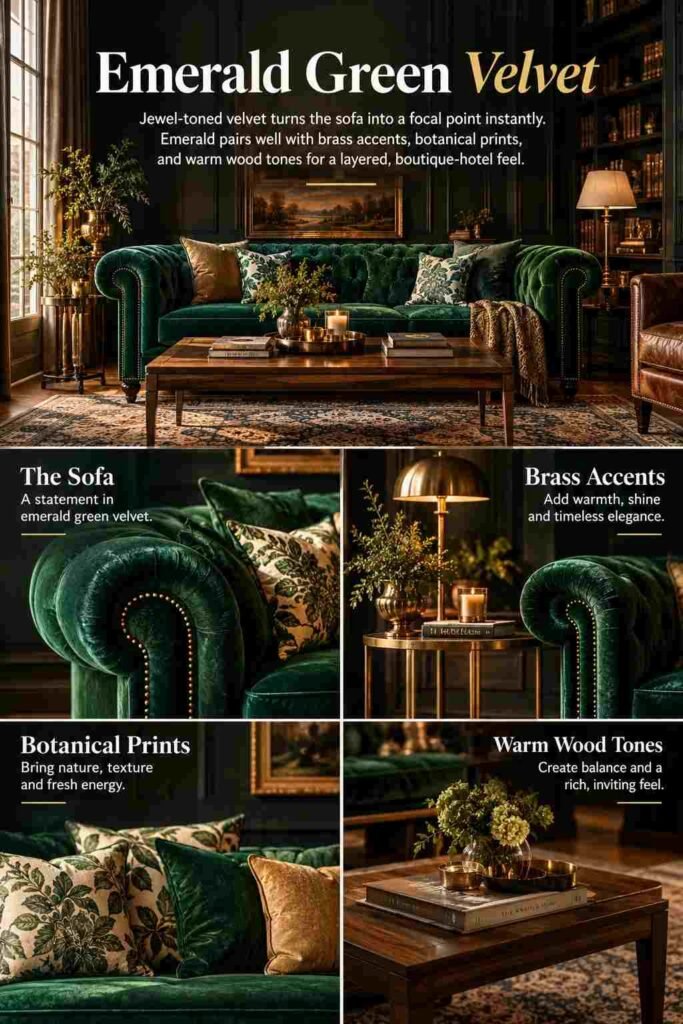
Jewel-toned velvet turns the sofa into a focal point instantly. Emerald pairs well with brass accents, botanical prints, and warm wood tones for a layered, boutique-hotel feel.
3. Sapphire Blue Statement Piece
A deep blue Chesterfield against a white or pale gray wall creates sharp contrast without feeling cold. It works particularly well in rooms with large windows and natural light.
4. Soft Taupe or Greige
For a modern Chesterfield sofa living room, neutral taupe bridges traditional tufting with a contemporary palette, making it easy to swap cushions and throws seasonally.
5. Burgundy or Deep Plum
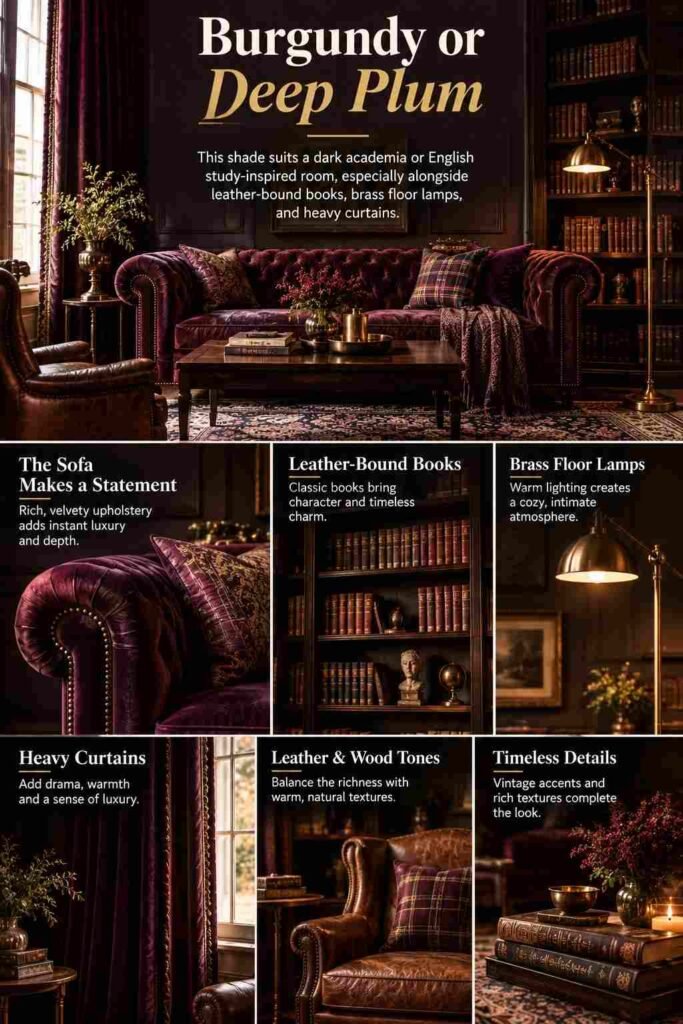
This shade suits a dark academia or English study-inspired room, especially alongside leather-bound books, brass floor lamps, and heavy curtains.
6. Crisp White or Cream Leather
A lighter leather Chesterfield reads coastal or Scandinavian rather than formal, especially when paired with light oak furniture and linen textiles.
7. Charcoal Grey Fabric
Charcoal is the safest neutral for a Chesterfield sofa living room that needs to work with frequently changing decor, from bold rugs to muted, minimalist accents.
8. Two-Tone Chesterfields
Some newer models combine leather seats with fabric backs or contrast piping, giving the classic shape a slightly updated, less formal look.
Layout and Placement Ideas
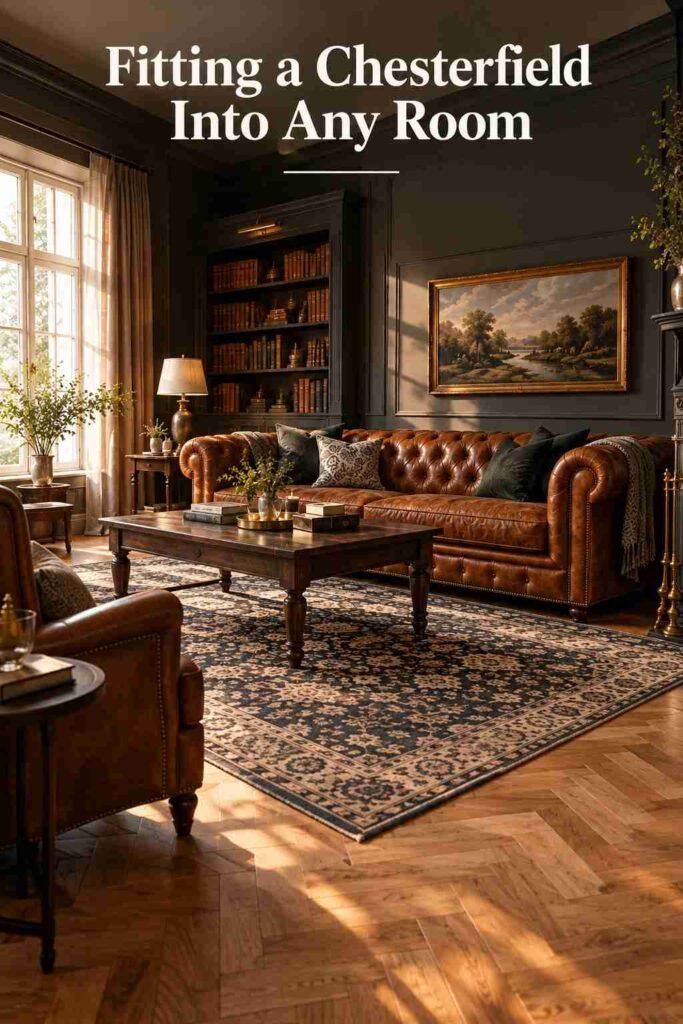
9. Anchor Against a Wall
Because a Chesterfield is visually heavy, place it against a wall rather than floating it in the center of a small room. This keeps floor space open and prevents the sofa from dominating the layout.
10. Face It Toward a Fireplace
A traditional pairing puts the Chesterfield directly opposite a fireplace, reinforcing the sofa’s old-world, conversation-focused character.
11. Use It as a Room Divider
In open-plan homes, a Chesterfield placed back-to-back with a console table or shelving unit can visually separate a living area from a dining or entry space.
12. Pair With a Rolled-Arm Accent Chair
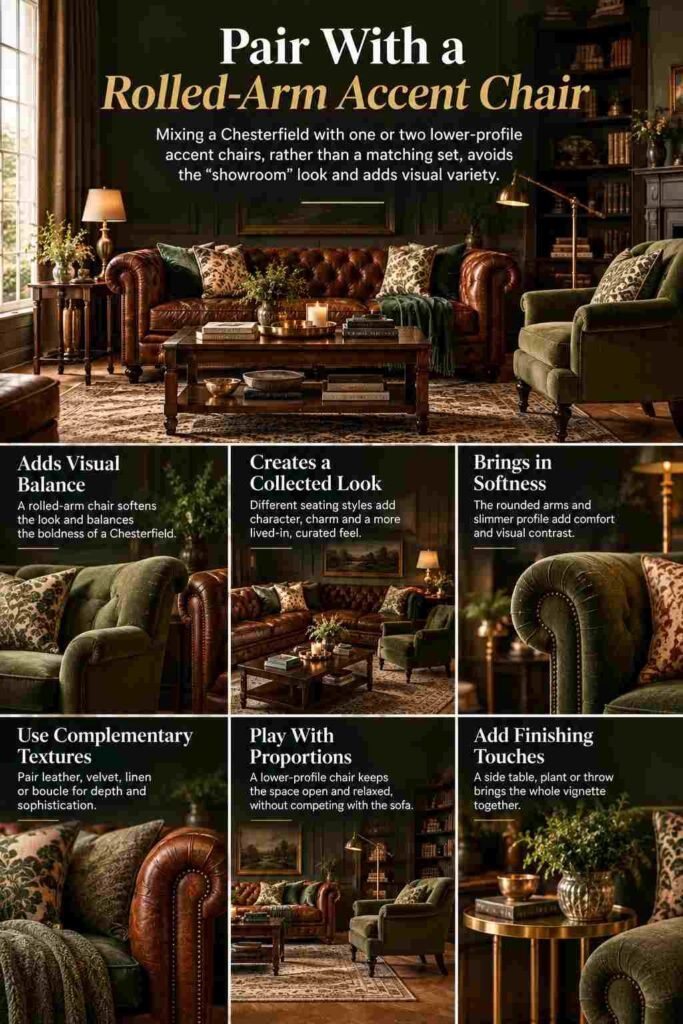
Mixing a Chesterfield with one or two lower-profile accent chairs, rather than a matching set, avoids the “showroom” look and adds visual variety.
13. Corner Placement for Small Rooms
Tucking the sofa into a corner, angled slightly, frees up walking space in compact apartments while still giving it presence.
14. Layer With a Chesterfield Loveseat
A two-seater Chesterfield loveseat opposite the full-size sofa creates a balanced, symmetrical seating arrangement for larger families.
15. Combine With Modular or Corner Seating
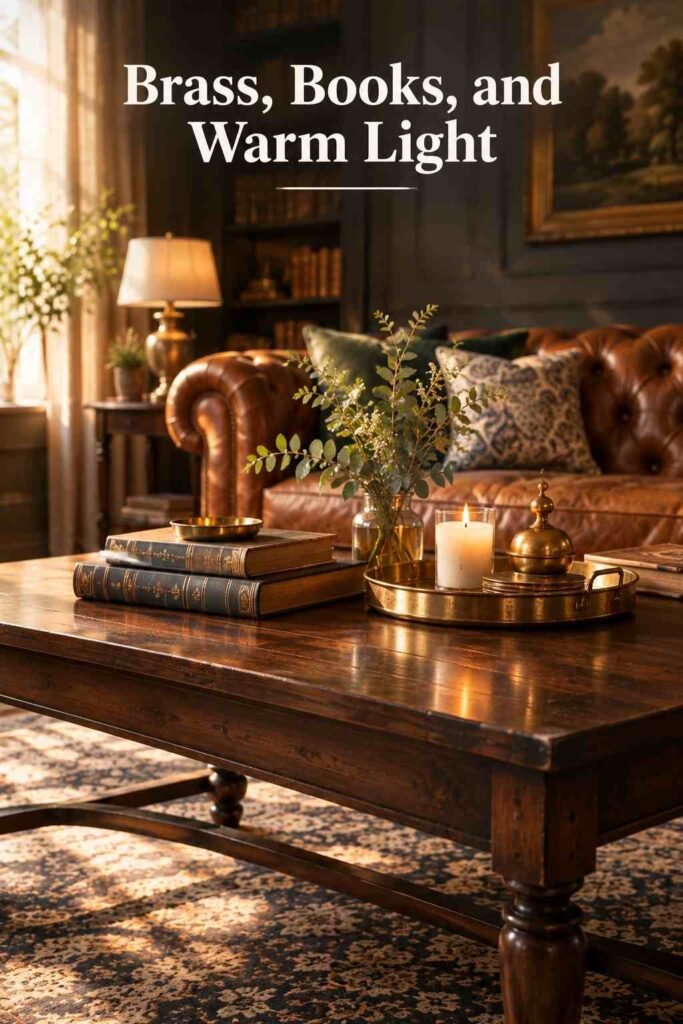
For households needing more everyday seating, a low-profile modular piece or one of the popular Corner sofa designs can sit alongside a single statement Chesterfield without competing with it.
Styling and Decor Pairings
16. Brass and Gold Accents
Nailhead trim already nods to metal detailing, so brass lamps, picture frames, and a gold-rimmed mirror complete the look without overdoing it.
17. Layered Textiles
Throws in wool, mohair, or chunky knit soften the Chesterfield’s firm structure and add warmth in colder climates.
18. Cowhide or Vintage Rugs
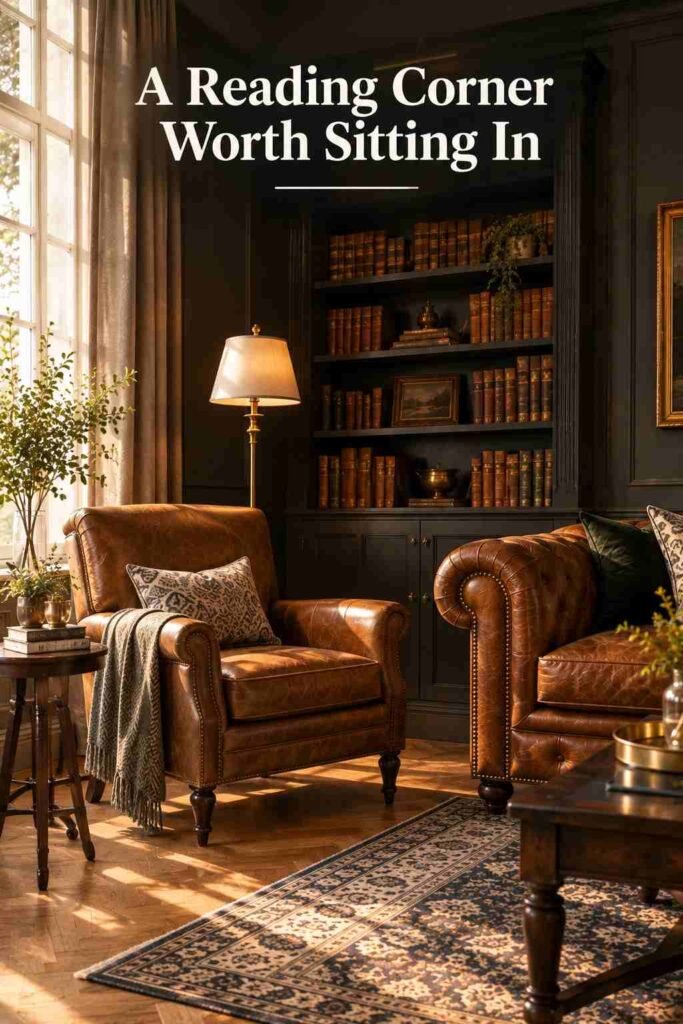
A cowhide or distressed Persian-style rug underneath grounds the sofa in a rustic or English-country scheme.
19. Gallery Wall Backdrop
Because the sofa itself is a strong visual anchor, a gallery wall of framed art behind it adds depth without cluttering the room.
20. Statement Coffee Table
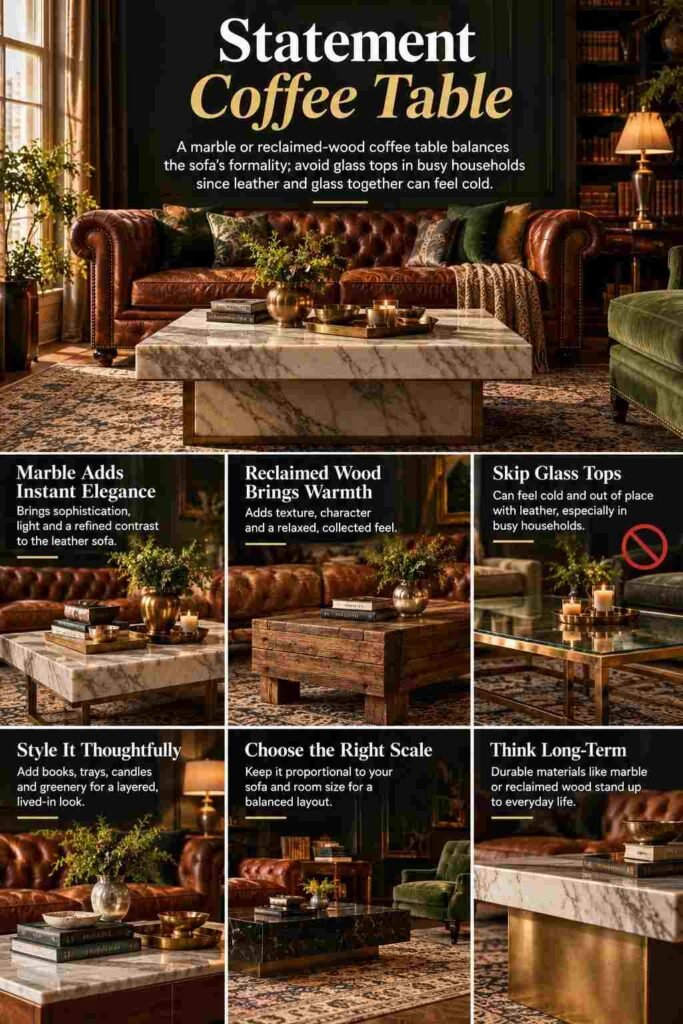
A marble or reclaimed-wood coffee table balances the sofa’s formality; avoid glass tops in busy households since leather and glass together can feel cold.
21. Botanical and Greenery Accents
Large potted plants soften the boxy silhouette and work especially well with green or blue Chesterfields for a fresher, less traditional feel.
22. Whimsical Eclectic Touches
Not every Chesterfield sofa living room needs to be formal. Mixing the sofa with playful lighting, patterned cushions, and curated finds from a whimsical home collection proves the shape works in maximalist, personality-driven spaces too.
Material, Size, and Buying Considerations
23. Leather vs. Fabric Decision
Leather is the traditional choice and the one that ages most gracefully, developing character over years of use, though it costs more upfront and needs occasional conditioning. Fabric Chesterfields, often in velvet or wool-mix weaves, are more affordable, come in far more colors, and feel warmer underfoot in colder climates. Leather suits a formal study or a high-traffic room since it wipes clean easily, while fabric blends better into softer, cushion-heavy living rooms.
24. Measuring for Scale
A full-size Chesterfield typically runs 80 to 90 inches in length, so measure doorways and hallways before delivery, not just floor space, since the boxy frame doesn’t compress like a modern sofa might.
25. Where to Shop for Quality Pieces
When comparing retailers, look for kiln-dried hardwood frames, hand-tied springs, and top-grain (not bonded) leather if leather is your pick. Buyers researching options often start with a curated retailer such as Outinteriors to compare frame construction and fabric grades side by side before committing to a full-size piece.
Common Chesterfield Styling Mistakes to Avoid
Many guides skip the practical missteps that actually derail a Chesterfield sofa living room project. First, pairing the sofa with an equally ornate rug and heavy drapery can overwhelm a small space — let one element carry the visual weight. Second, choosing bonded leather to save money often backfires within a few years, since it peels rather than ages. Third, ignoring room proportions is common; a Chesterfield’s low arms and deep seat need at least 30 to 36 inches of clearance in front for comfortable movement. Getting these three details right matters more than color choice alone.
Conclusion
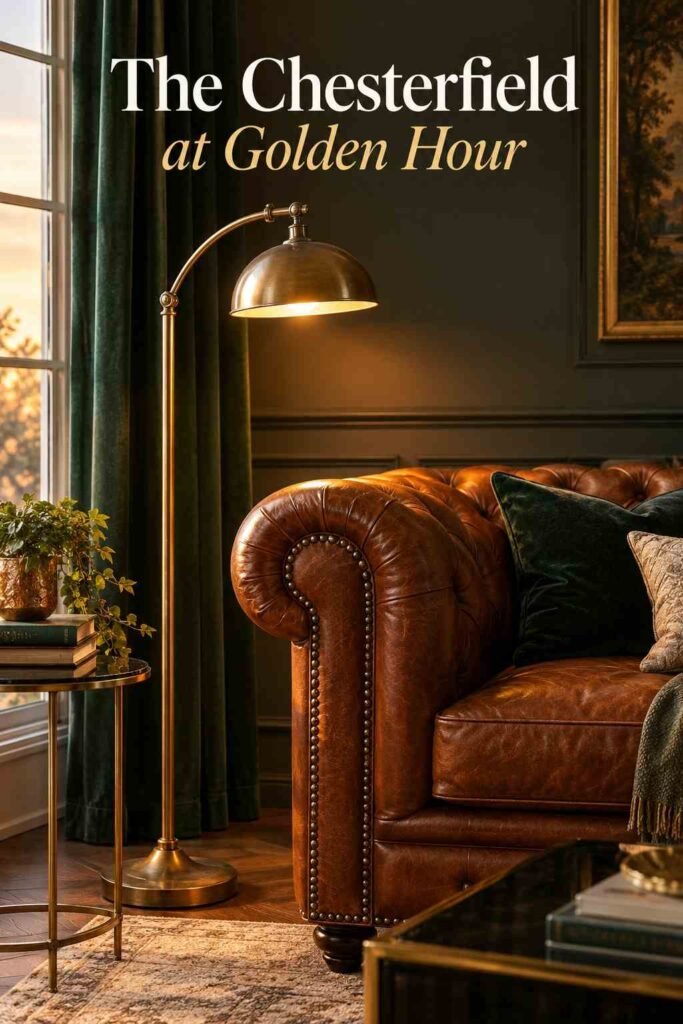
A Chesterfield sofa in the living room can be as traditional or as unexpected as you want it to be. From cognac leather in a study to emerald velvet in a maximalist apartment, the shape’s tufted structure and rolled arms adapt across nearly every design language. The 25 ideas above cover color, layout, styling, and practical buying advice so you can move from inspiration to an actual purchase with confidence. Start with the room’s proportions, pick a material that matches your lifestyle, then layer in the personality-driven details that make the space feel like yours.
Frequently Asked Questions
1. What is the difference between a Chesterfield sofa and a regular sofa?
A Chesterfield has deep button tufting on the back and arms, with arms rising to the same height as the backrest — a regular rolled-arm sofa typically lacks both features.
2. Is a Chesterfield sofa comfortable for everyday use?
Yes, though it feels firmer and more upright than an overstuffed sectional. Many owners add cushions or a wool throw to soften the seat for daily lounging.
3. What color Chesterfield sofa is most versatile for a living room?
Neutral tones like taupe, grey, or cognac leather are the easiest to restyle over time, since they pair with almost any accent color scheme.
4. Does a Chesterfield sofa work in a small apartment?
Yes, if placed against a wall or angled into a corner rather than floating in open floor space. A loveseat-sized Chesterfield also suits compact rooms well.
5. How do I clean and maintain a leather Chesterfield sofa?
Wipe leather with a slightly damp cloth and condition it every six to twelve months to prevent cracking; avoid direct sunlight, which dries out the material faster.
6. Can a Chesterfield sofa fit a modern or minimalist living room?
Yes — choosing a neutral fabric, pairing it with simple lines elsewhere, and avoiding heavy vintage accents keeps the look current rather than antique.
7. How much clearance space does a Chesterfield sofa need?
Plan for roughly 30 to 36 inches of walking space in front of the sofa, plus extra clearance for doorways since the frame doesn’t compress for tight turns.