Corner Sofa Designs to Elevate Every Living Room in 2026
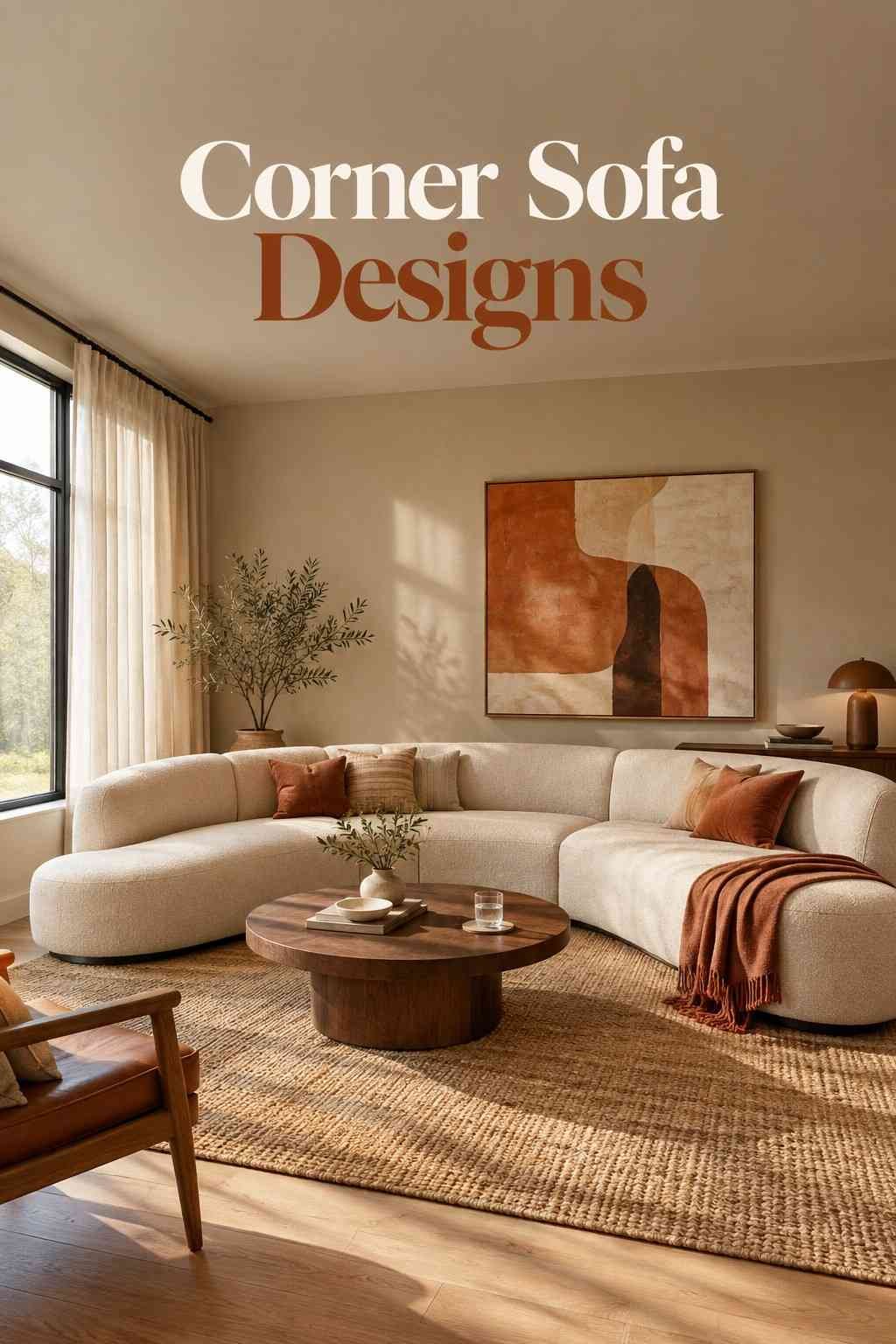
Choosing a new sofa is rarely just about seating. It’s about how a room feels when you walk into it, how many people can gather comfortably, and how well a single piece of furniture can define a space without a wall in sight. Among all the options on the market, corner sofa designs have become the go-to solution for homeowners who want generous seating, a defined layout, and a look that feels intentional rather than accidental.
This guide walks through 25 corner sofa designs worth considering in 2026, along with the practical details most articles skip: how to measure your room correctly, which materials actually hold up to daily life, and how to style a sectional so it feels like part of a finished room rather than an oversized afterthought.
Why Corner Sofa Designs Are Having a Moment in 2026
Open-plan living has made corner sofas more relevant than ever. Without walls to separate a kitchen from a living area, furniture has to do the work of dividing space. A well-placed corner sofa design creates a natural boundary around a seating zone while keeping the room visually open. It also solves a practical problem: awkward corners that used to sit empty or collect clutter now become the most functional part of the room.
Designers have also noted a shift toward what’s often called “lounge-style” living — informal, low, deep-seated arrangements built for conversation rather than just facing a television. A corner sofa naturally supports this because it wraps seating around a central point, letting people face each other instead of sitting in a straight row. That single shift in orientation is part of why corner sectionals continue to outsell traditional two- and three-seat sofas in many home furnishing categories.
How to Choose the Right Corner Sofa Design for Your Room
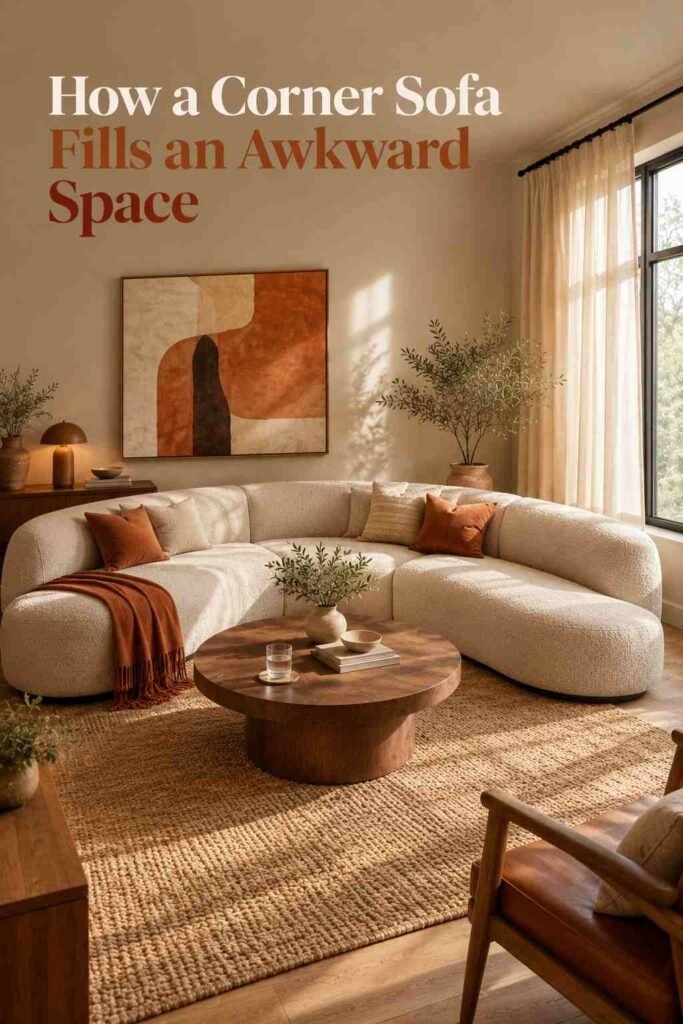
Before falling in love with a specific style, it helps to understand the numbers. A corner sofa design that looks stunning in a showroom photo can overwhelm a real living room if the dimensions aren’t checked first.
Measure your walls first. Start by measuring the two walls that will frame the sofa’s corner, recording each length separately since they correspond to the two arms of the L-shape. Note any obstacles along those walls — radiators, outlets, windowsills, or baseboards — that could affect how flush the sofa sits.
Leave room to walk
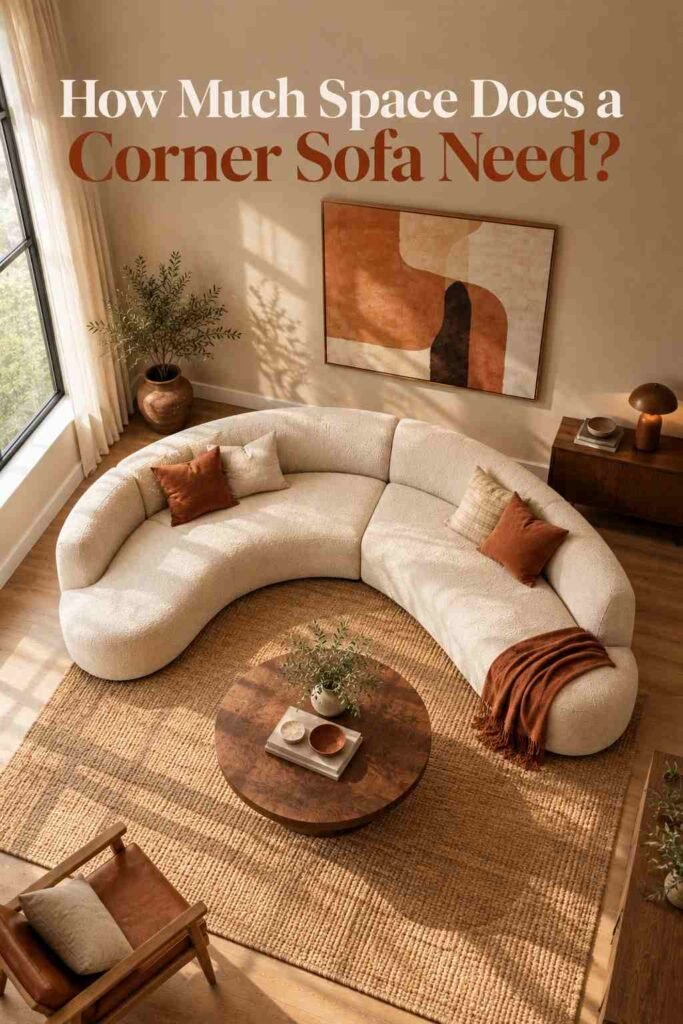
A comfortable walking path needs roughly 80 centimeters, or about 24 to 30 inches, of clearance on every side of the sofa people will need to pass. Skipping this step is one of the most common reasons a corner sofa design ends up feeling cramped even when the piece itself isn’t oversized.
Check the delivery path, not just the room. Measure doorways, hallways, staircases, and elevators the sofa will need to pass through. Many corner sectionals arrive in separate modules specifically to make this easier, so ask about breakdown options before buying a one-piece frame for a tight stairwell.
Decide on orientation. Corner sofas are typically sold as left-hand or right-hand facing, referring to which side the chaise or longer section extends toward when you’re standing in front of it. Getting this backward is a common and completely avoidable mistake — sketch your room layout before ordering.
25 Corner Sofa Designs to Inspire Your Next Living Room
Here are 25 corner sofa designs grouped by style and function, from sculptural statement pieces to practical, family-ready sectionals.
Curved & Sculptural Corner Sofa Designs
1. Boomerang Curved Corner Sofa
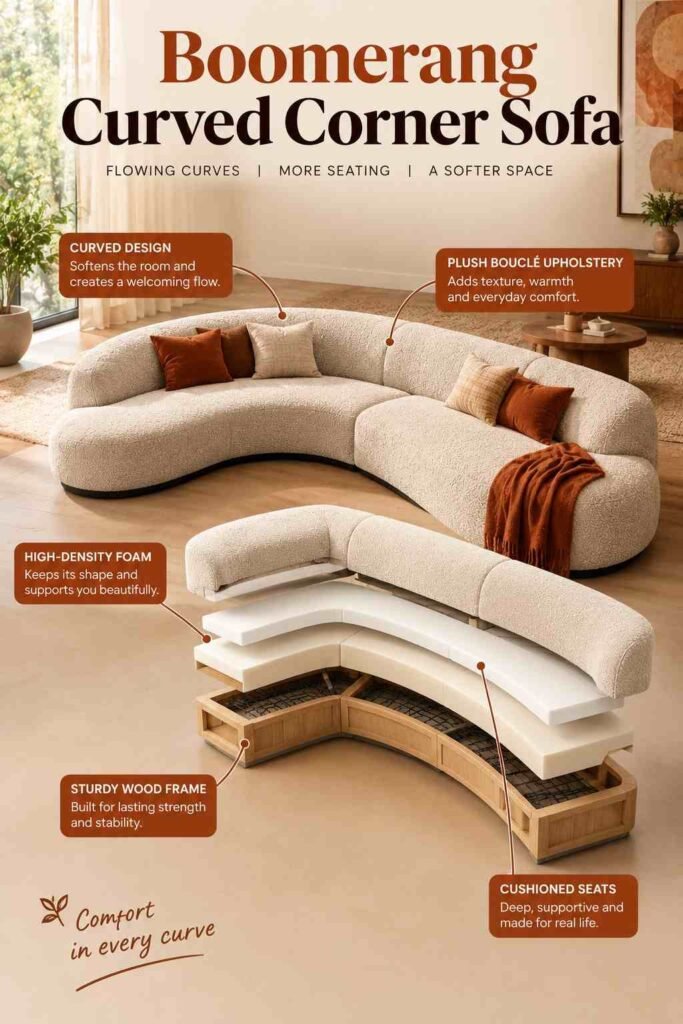
Built around a gentle 45-degree curve instead of a sharp angle, this design softens the entire room and works especially well floated in the center of an open-plan space rather than pushed against a wall.
2. Wave-Back Sculptural Sectional. The backrest ripples in a continuous curve rather than separate cushions, giving the sofa a single sculptural silhouette that reads more like a piece of art than standard furniture.
3. Rounded Chaise Corner Sofa. A traditional L-shape gets a rounded edge where the chaise meets the main seat, removing the hard corner while keeping the same generous seating capacity.
4. Art Deco-Inspired Curved Suite
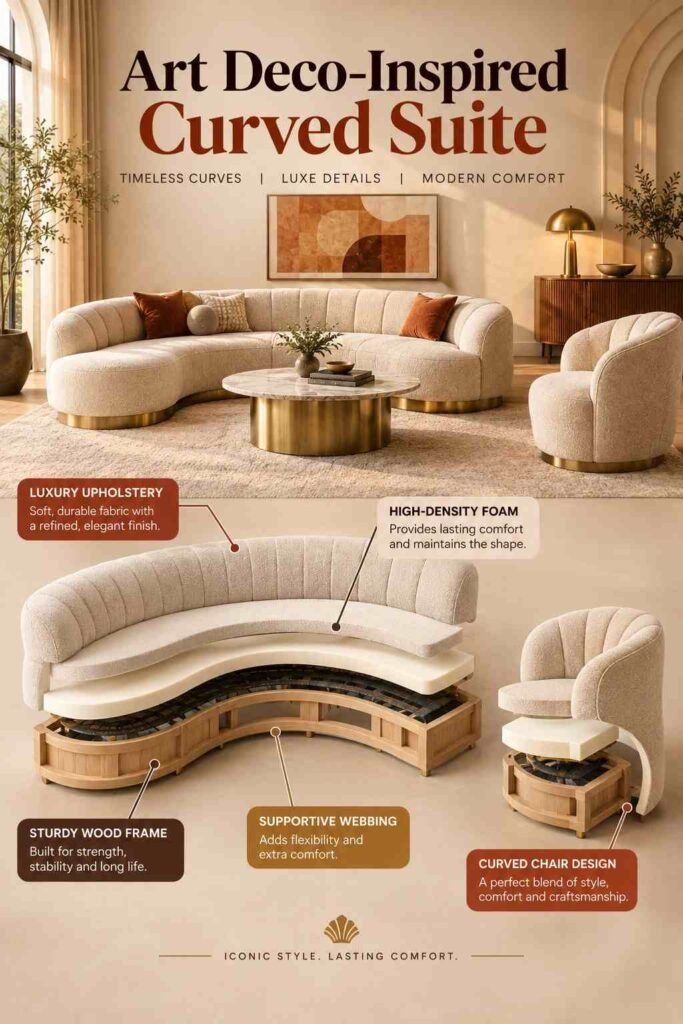
Channeling glamorous curved silhouettes from an earlier design era, this style pairs rounded arms with channel-tufted backs and works best as the visual centerpiece of a room, away from the wall.
Modular & Multifunctional Corner Sofa Designs
5. Modular Cloud Sectional with Ottomans. Individual seat modules and matching ottomans can be rearranged into dozens of configurations, so the same sofa can form a tight corner one week and a sprawling U-shape for a gathering the next.
6. Convertible Corner Sofa Bed. A pull-out mattress hidden beneath the chaise cushion turns this into a functional guest bed, ideal for apartments where a dedicated guest room isn’t an option.
7. Corner Sofa with Built-In Console
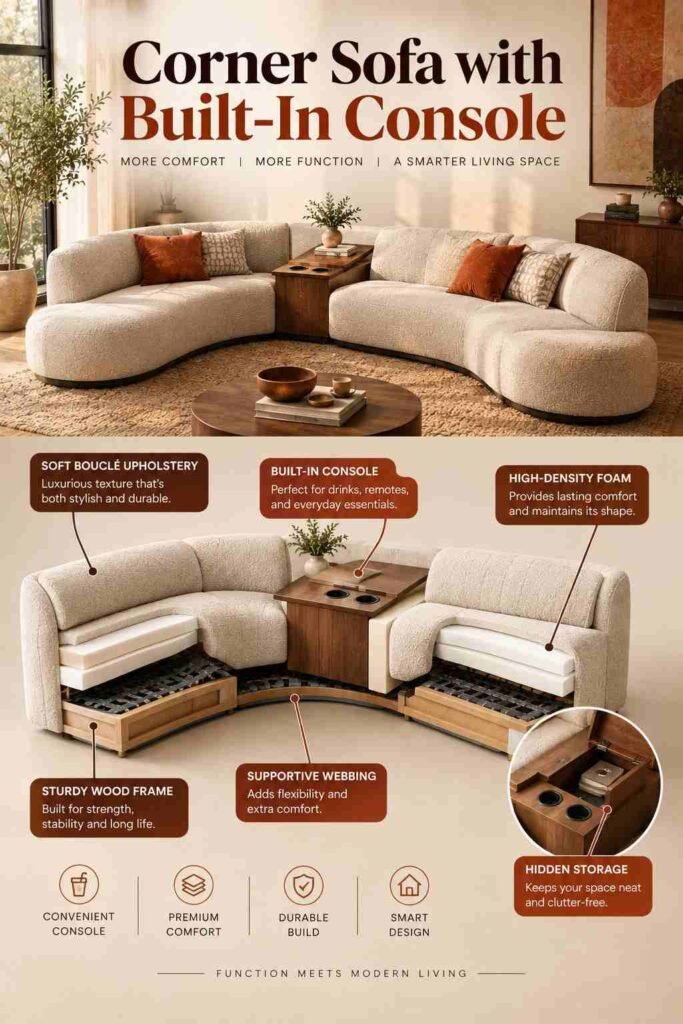
A slim table or shelf integrated between two sections gives you a spot for a lamp, drink, or remote without adding a separate side table to the layout.
8. Reconfigurable U-Shaped Modular Set. Extra corner modules let this sectional expand from an L-shape into a full U-shape, useful for households that entertain often but don’t always need the extra seating.
9. Corner Sectional with Storage Chaise. A lift-up chaise seat reveals hidden storage underneath, which is particularly useful in smaller homes where linen closets and media cabinets are in short supply.
Small-Space & Apartment-Friendly Corner Sofa Designs
10. Compact L-Shaped Sofa for Studios. Scaled-down proportions and a shorter chaise make this a realistic option for studio apartments, where a standard-size sectional would consume the entire floor plan.
11. Reversible Chaise Corner Sofa
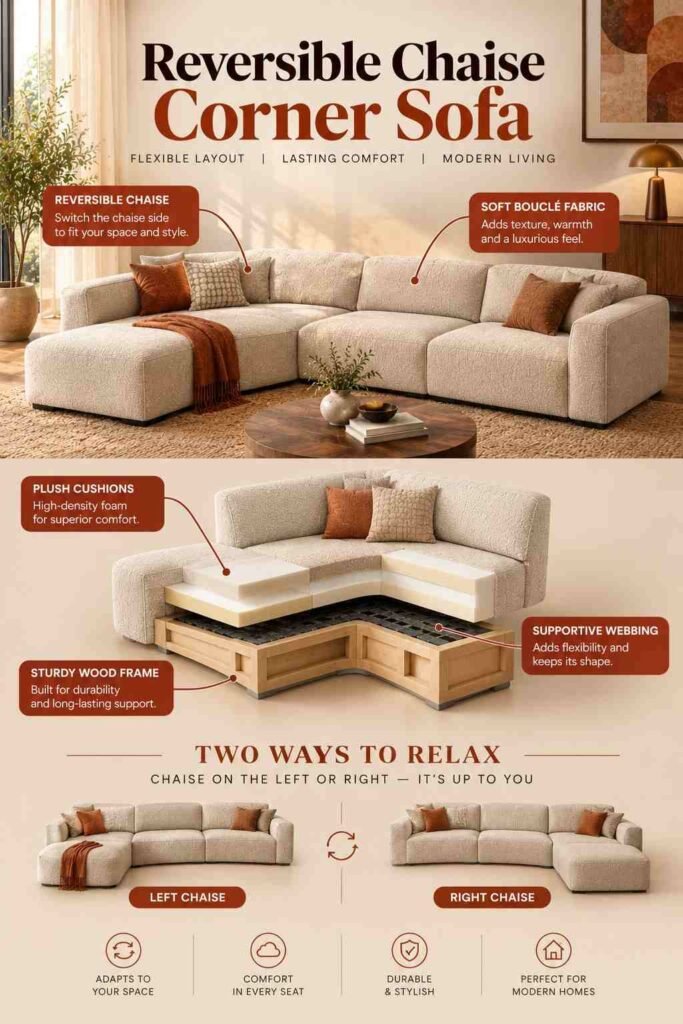
The chaise section detaches and can be moved to either side, so the same sofa adapts if you move to a new apartment with a differently shaped living room.
12. Armless Corner Sofa. Removing bulky arms adds several inches of usable seat width without changing the sofa’s overall footprint, a small design choice that makes a real difference in narrow rooms.
13. Corner Sofa with Slim Track Arms. Thin, straight arms replace rounded or rolled versions, giving the sofa a lower visual weight that suits apartments with limited square footage.
Luxury & Statement Corner Sofa Designs
14. Velvet Chesterfield-Style Corner Sofa. Deep button-tufting and rolled arms translate the classic Chesterfield silhouette into sectional form, adding old-world texture to a modern floor plan.
15. Leather Executive Corner Sectional. Full-grain leather in a deep, low-profile shape suits home offices and formal living rooms alike, aging into a richer patina over years of use rather than showing wear.
16. Two-Tone Designer Corner Sofa
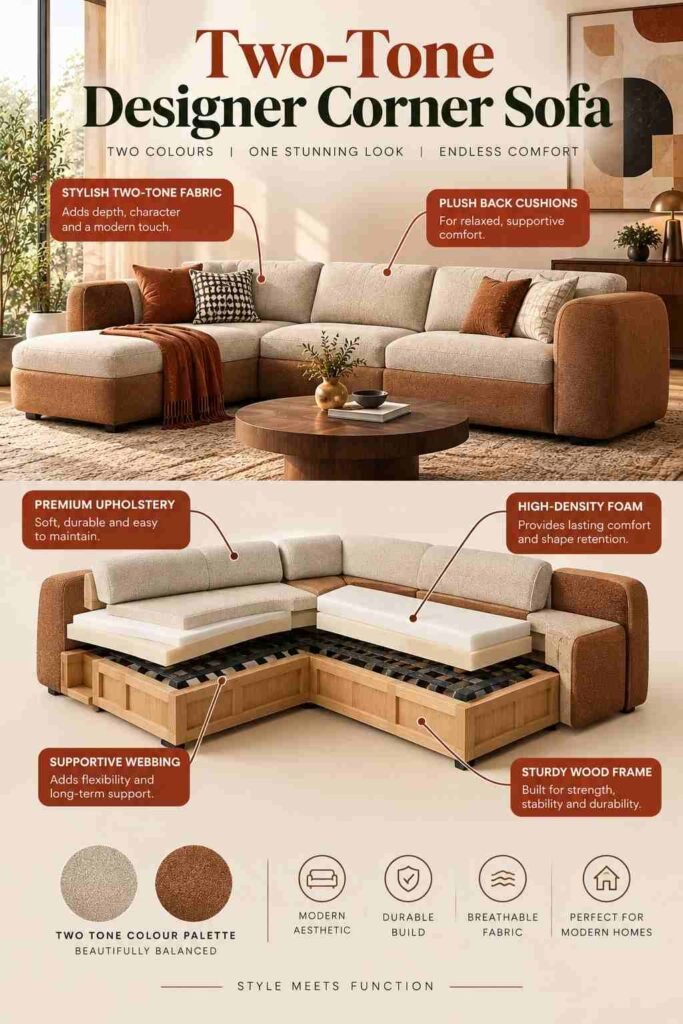
Contrasting fabrics or piping between the base and cushions add a tailored, custom-built look without the cost of a fully bespoke sectional.
17. Oversized Cloud Sectional. Extra-deep seats and low arms create the enveloping, sink-in feel that’s become one of the defining traits of upscale sofa design, best suited to larger living rooms with high ceilings.
Family-Friendly & Durable Corner Sofa Designs
18. Performance-Fabric Pet and Kid-Friendly Sectional. Woven from stain-resistant, moisture-repelling fibers, this design tolerates spills, muddy paws, and daily wear better than traditional upholstery.
19. Reclining Corner Sofa with Power Headrests
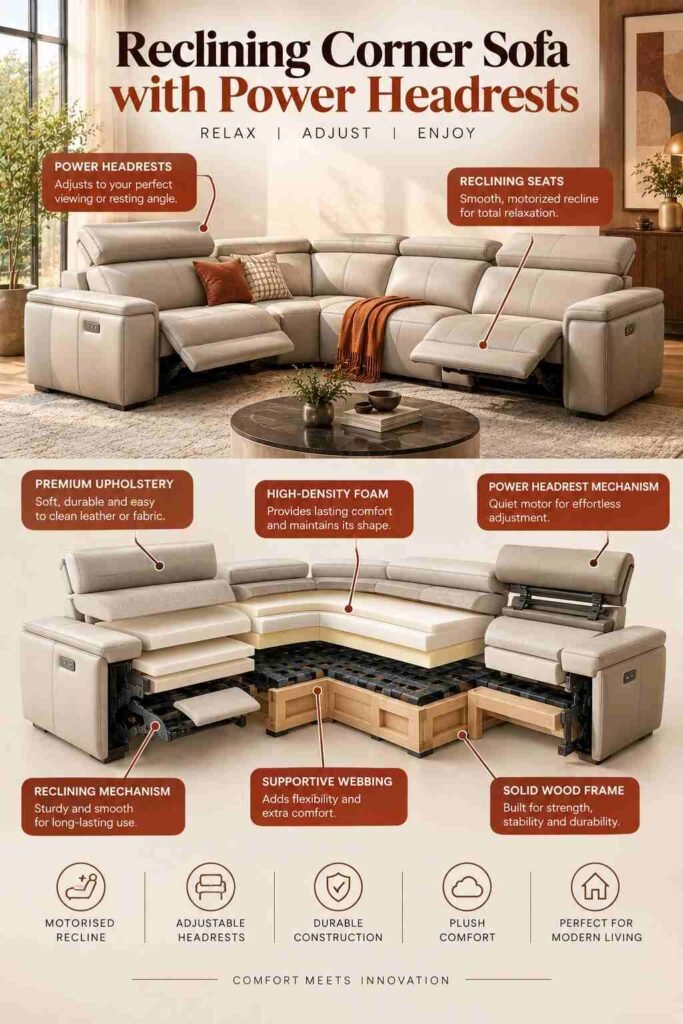
Built-in recliners and adjustable headrests turn one section into a dedicated media-watching zone while the rest of the sectional stays upright for everyday seating.
20. Stain-Resistant Slipcovered Corner Sofa. Removable, machine-washable covers make this a practical pick for households with young children, since the entire cover can be cleaned rather than spot-treated.
21. Sleeper Sectional for Guest Rooms. A reinforced frame and supportive mattress make this a genuine option for overnight guests, not just an emergency fallback.
Scandinavian, Minimalist & Color-Forward Corner Sofa Designs
22. Boucle Corner Sofa in Neutral Tones. The nubby, textured fabric adds visual interest to an otherwise simple silhouette, and it pairs naturally with the pared-back look of a Scandinavian interior.
23. Teak-Framed Scandinavian Corner Sofa. Exposed wooden legs and a low profile keep the design light and airy, letting natural light move freely through the room instead of being blocked by a bulky frame.
24. Sage Green Minimalist Corner Sectional
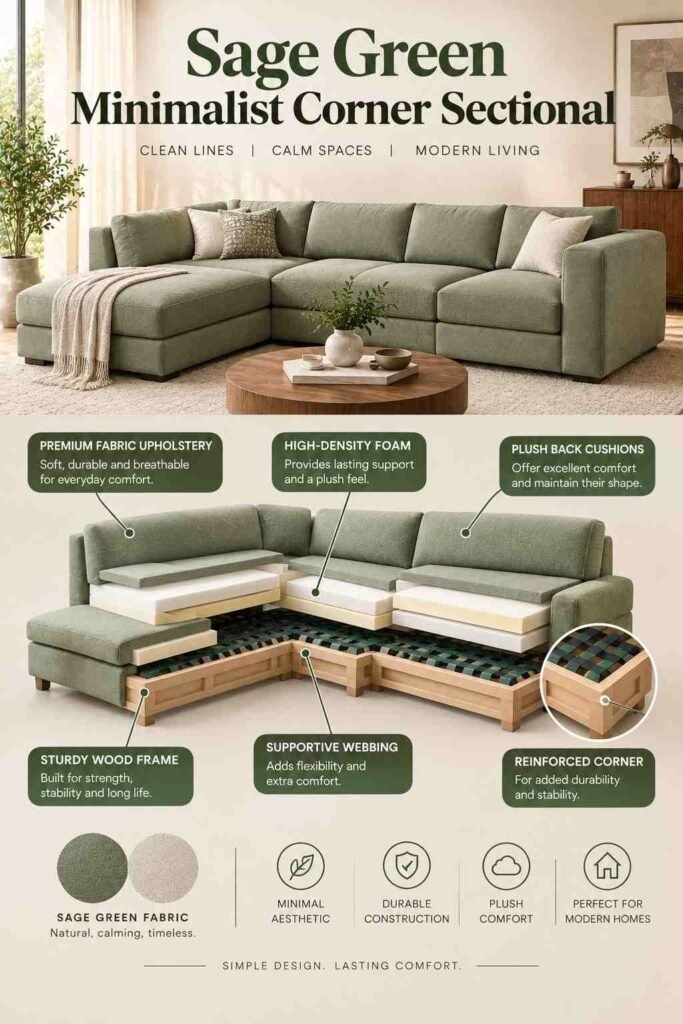
Muted, nature-inspired color has moved from accent pillows to entire sofas, offering a softer alternative to all-neutral rooms without feeling like a bold statement.
25. Terracotta or Olive Statement Corner Sofa. For those ready to move beyond beige, warm terracotta and deep olive tones bring personality to a large piece of furniture while still working with wood tones and warm metals already in the room.
Materials That Define Corner Sofa Design in 2026
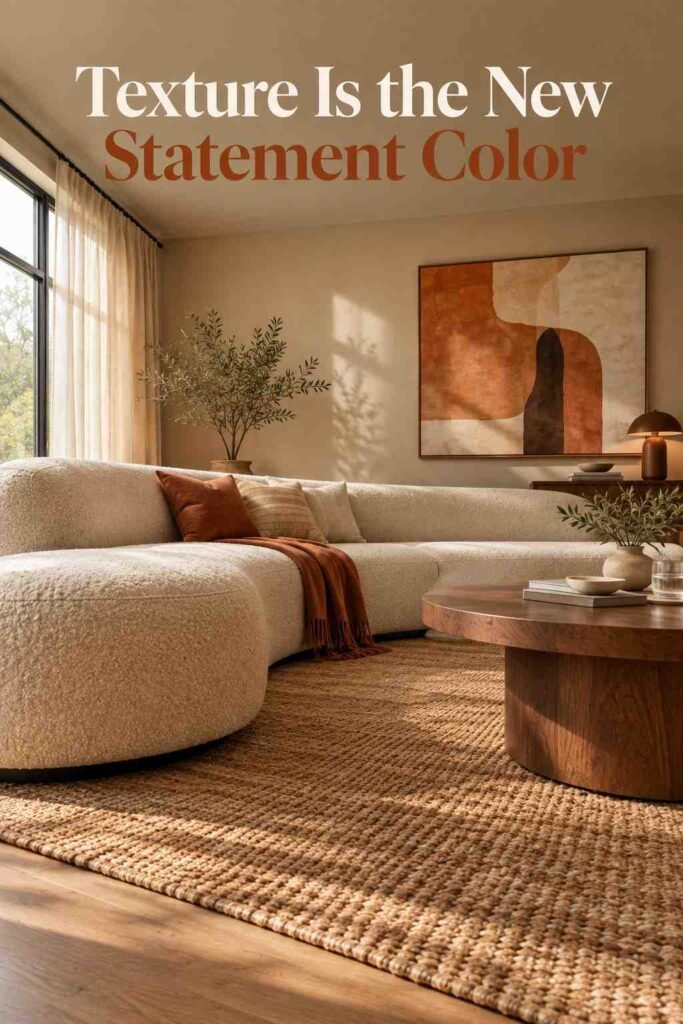
Fabric choice affects comfort, cleaning, and how long a corner sofa design actually looks good in daily use. Velvet and mohair bring a soft, light-catching texture and suit formal or adult-only living rooms. Boucle and chenille offer a similar tactile quality with better resistance to everyday wear, making them a common choice for family rooms. Performance fabrics, engineered to resist stains and moisture, have become standard in sectionals marketed toward households with children or pets. Leather remains a long-term investment; it costs more upfront but resists spills and typically outlasts fabric alternatives by years.
Color Trends Shaping Corner Sofa Design Choices
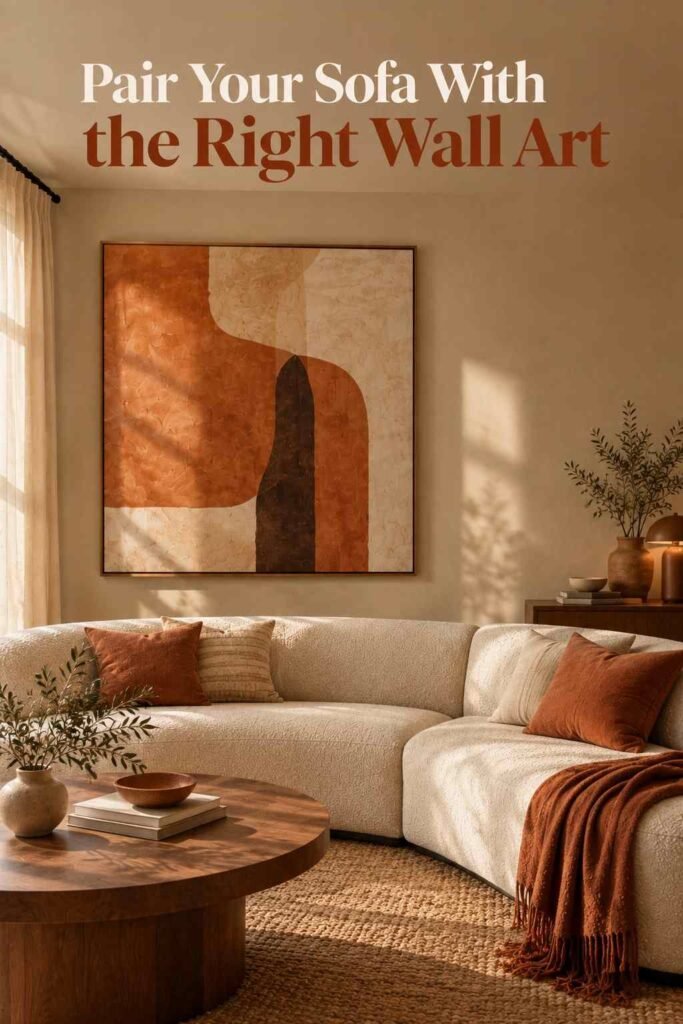
Neutral palettes — beige, oatmeal, and warm greige — remain the safest long-term choice because they adapt easily to changing decor. That said, deeper tones like olive green, warm chocolate, and terracotta are gaining ground for buyers who want their corner sofa design to act as a focal point rather than a backdrop. If you’re leaning toward a bolder color, balance it with neutral walls and let a luxury wall art living room display do the secondary work of tying the palette together, rather than competing with the sofa for attention.
Styling Tips for a Finished, Cohesive Look
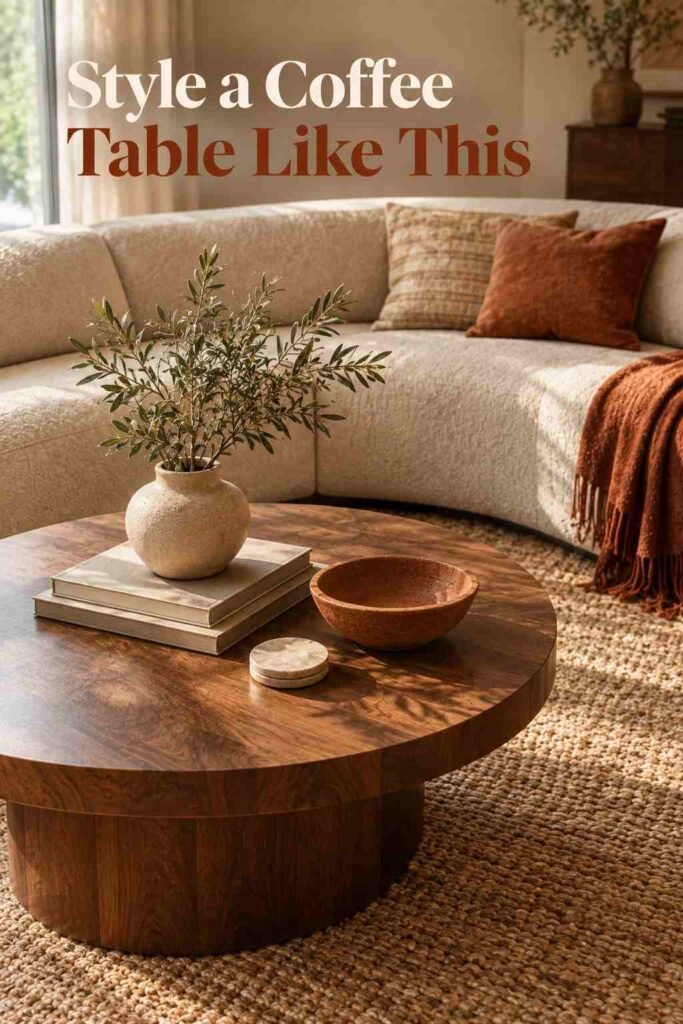
A corner sofa design shouldn’t sit in isolation. Anchor it with a rug large enough for at least the front legs of every section to rest on, which visually grounds the piece instead of letting it float. Layer in a mix of cushion sizes and textures rather than matching everything to the sofa fabric exactly, since a slight contrast reads as more intentional than a perfectly coordinated set. For sourcing accent pieces, lighting, and coffee tables that complement a new sectional without clashing with it, many homeowners turn to curated retailers like Outinteriors to fill in the smaller details once the main piece is chosen.
Caring for Your Corner Sofa Design Long-Term
Rotate and fluff cushions weekly to prevent uneven sagging, particularly on modular pieces where sections see different amounts of use. Vacuum fabric upholstery every one to two weeks to keep dust from settling into the weave, and address spills immediately with a clean cloth rather than rubbing, which can push liquid deeper into the fibers. For leather, a wipe-down with a slightly damp cloth followed by a leather-specific conditioner every few months prevents cracking. Check the manufacturer’s care tag before using any cleaning product, since fabric codes vary and using the wrong method can set a stain permanently rather than remove it.
Conclusion
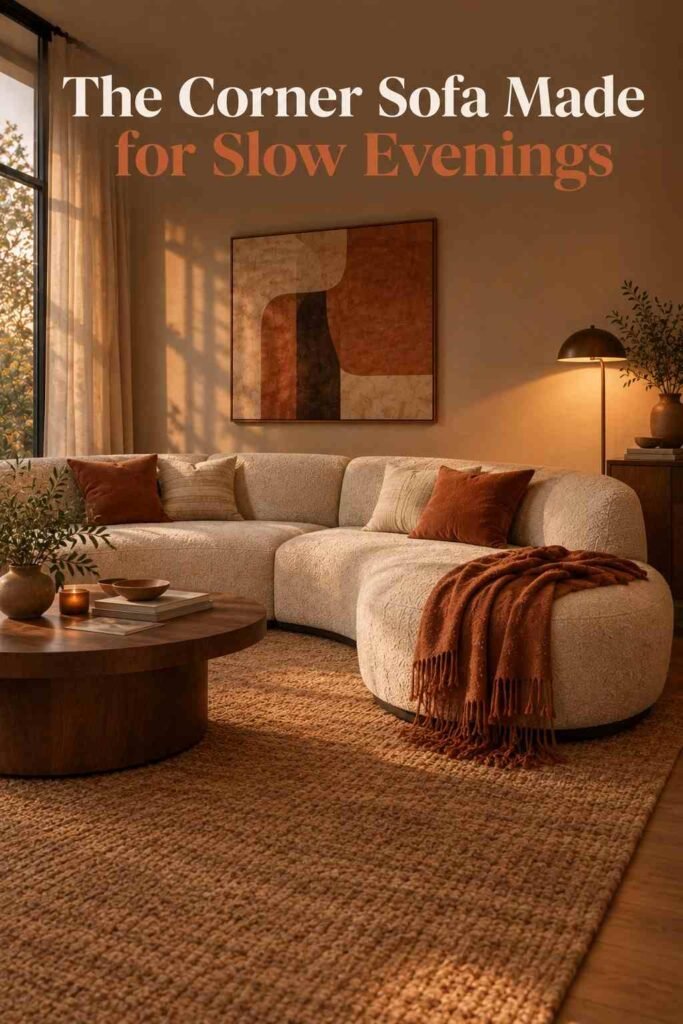
A corner sofa design is one of the few furniture decisions that shapes an entire room’s layout, so it’s worth getting right the first time. Whether you’re drawn to a sculptural curved silhouette, a practical modular set that grows with your household, or a warm-toned statement piece, the right choice comes down to matching the design to your actual room dimensions, lifestyle, and the materials that will hold up to how you really live. With 25 options spanning nearly every style and budget, there’s a fit for almost any living room heading into 2026.
Frequently Asked Questions
1. What is the difference between an L-shaped sofa and a corner sofa?
The terms are often used interchangeably, though a corner sofa can also include U-shaped or modular configurations with more than two seating arms, while an L-shaped sofa specifically has one main section and one chaise.
2. How much space do I need around a corner sofa?
Leave at least 80 centimeters, or roughly 24 to 30 inches, of clear walking space on any side people will regularly pass, so the room doesn’t feel obstructed.
3. What’s the best fabric for a corner sofa with kids or pets?
Performance fabric or a stain-resistant slipcovered design tends to hold up best, since both are built to resist moisture, staining, and frequent cleaning.
4. Are curved corner sofas practical for small rooms?
They can be, provided the overall footprint is measured carefully. Curved designs often need to be floated away from a wall to display their shape properly, which requires slightly more open floor space than an angular version.
5. Left-hand or right-hand facing — how do I know which one I need?
Stand where you’ll usually view the sofa from and look at which side the chaise or longer section extends toward. That side determines whether you need a left-hand or right-hand facing model.
6. Can a corner sofa work in an open-plan living and dining space?
Yes — this is one of its strongest use cases. Placing a corner sofa design perpendicular to a dining area creates a soft boundary between the two zones without needing a wall or partition.
7. How long does a good corner sofa design typically last?
A well-built frame with quality foam and durable upholstery generally lasts eight to fifteen years with normal use, though leather and higher-density foam options tend to hold their shape longer than budget fabric alternatives.