Victorian Living Room Ideas to Transform Your Space With Timeless Elegance
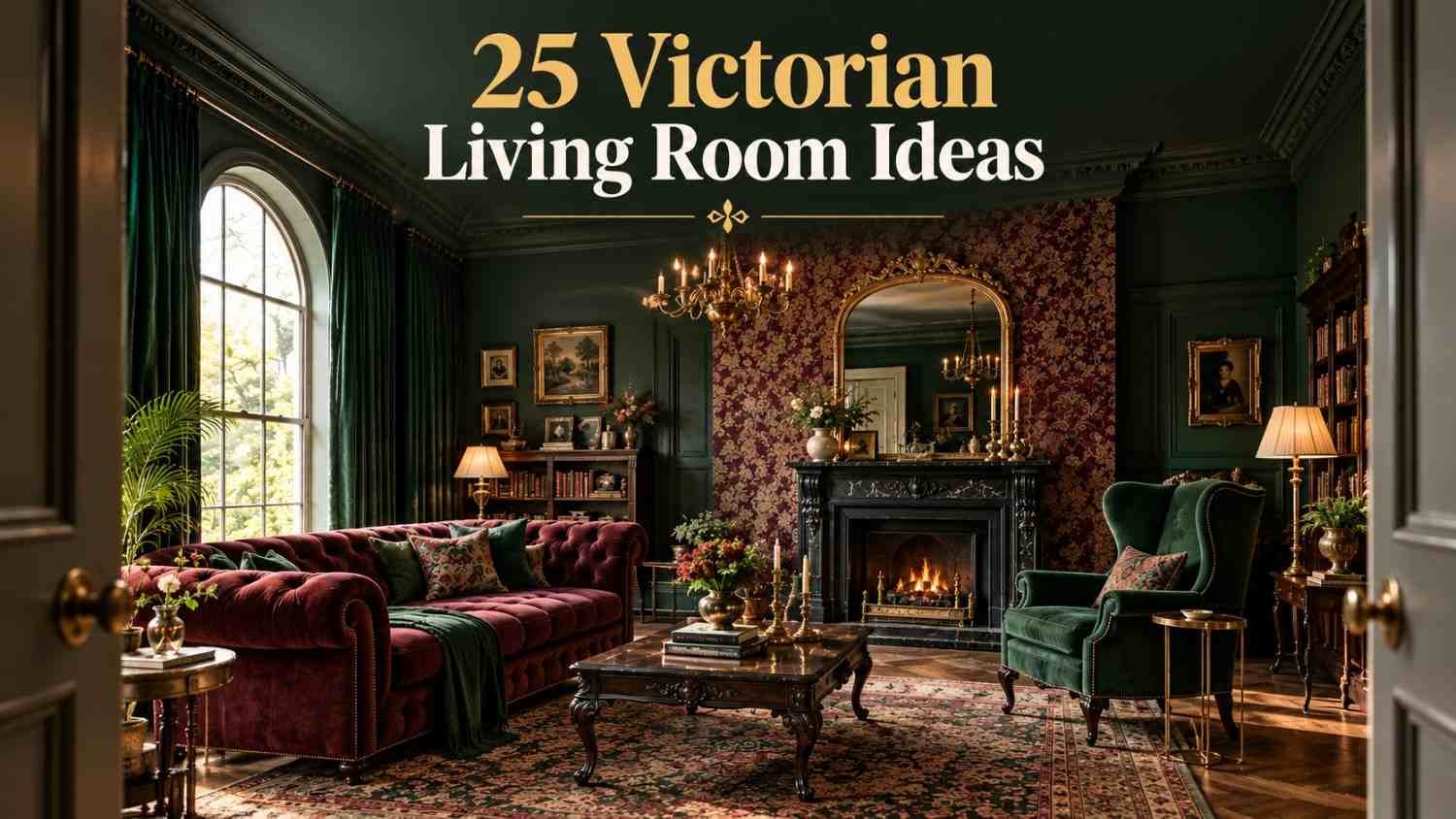
Step into a room with rich jewel tones, carved wood, and a fireplace that glows like it has a story to tell, and you’ll understand why the Victorian living room still captivates homeowners today. This style isn’t about turning your home into a museum piece. It’s about borrowing the drama, the craftsmanship, and the warmth of a bygone era and folding it into the way people actually live now.
Whether you have an entire parlor to redesign or just want to add a few statement pieces, this guide breaks down 25 Victorian living room ideas you can use right away. Along the way, you’ll find practical fixes for small spaces, budget-conscious swaps, and modern twists that keep the look from feeling stiff or overdone.
What Defines a Victorian Living Room?
The Victorian style takes its name from Queen Victoria’s reign, from 1837 to 1901, a period when industrial wealth trickled down to the middle class for the first time. Suddenly, ordinary families could afford the fabrics, furniture, and decorative objects that were once reserved for the aristocracy. The result was a design language built on abundance: layered patterns, deep colors, and rooms filled with meaningful objects rather than space.
A true Victorian living room leans on a few consistent traits. Think carved mahogany or walnut furniture, tufted upholstery, ornate mirrors, and heavy drapery. Architectural details like crown molding, ceiling medallions, and marble fireplace surrounds anchor the room, while gilded frames and patterned rugs add texture underfoot and on the walls. None of it is accidental — every surface was meant to say something about taste and status.
How to Blend Old-World Charm With Modern Comfort
Recreating a Victorian living room word-for-word can feel heavy in a contemporary home, and that’s rarely the goal anyway. The most livable interpretations pick two or three signature elements — a fireplace mantel, a tufted sofa, an ornate mirror — and let the rest of the room breathe with cleaner lines and lighter colors. This balance keeps the space from tipping into costume territory while still honoring the period’s craftsmanship.
A good rule of thumb: pair one ornate, historically inspired piece with two or three simpler, modern ones. A carved antique side table can sit comfortably next to a streamlined sofa. A gilded mirror can hang above a plain painted mantel. This contrast is what makes a Victorian living room feel curated rather than costumed, and it’s the approach most designers use when updating a period home for present-day living.
25 Victorian Living Room Ideas to Try in Your Home
Color and Wall Treatments
1. Deep, saturated wall colors
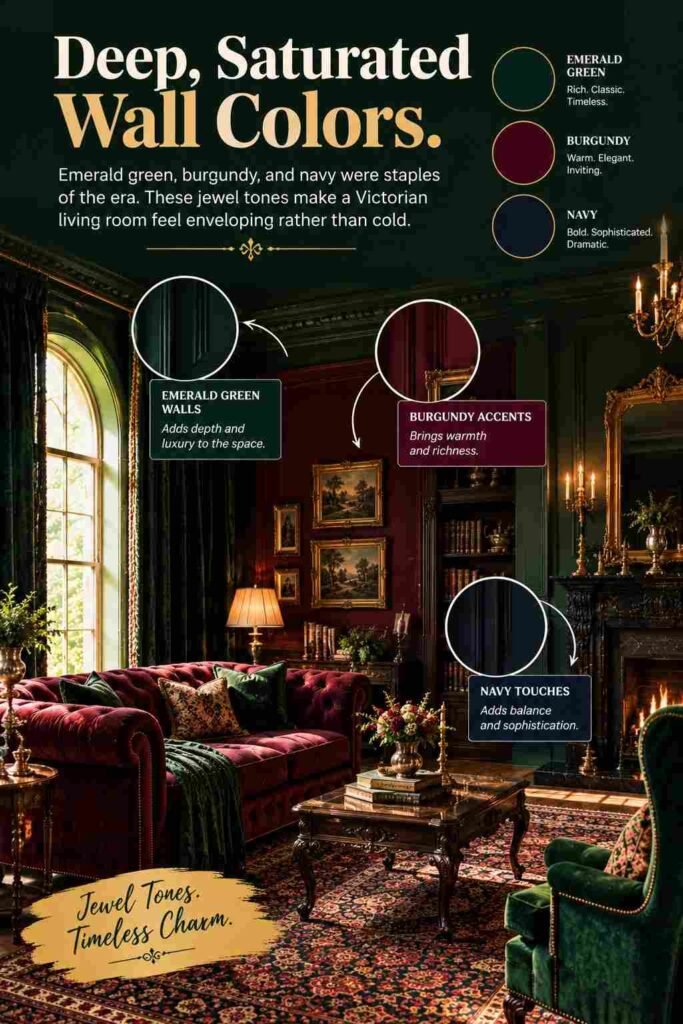
Emerald green, burgundy, and navy were staples of the era. These jewel tones make a Victorian living room feel enveloping rather than cold.
2. Damask or floral wallpaper. A single accent wall in a period-appropriate print adds instant history without overwhelming the whole room.
3. Two-tone wall paneling
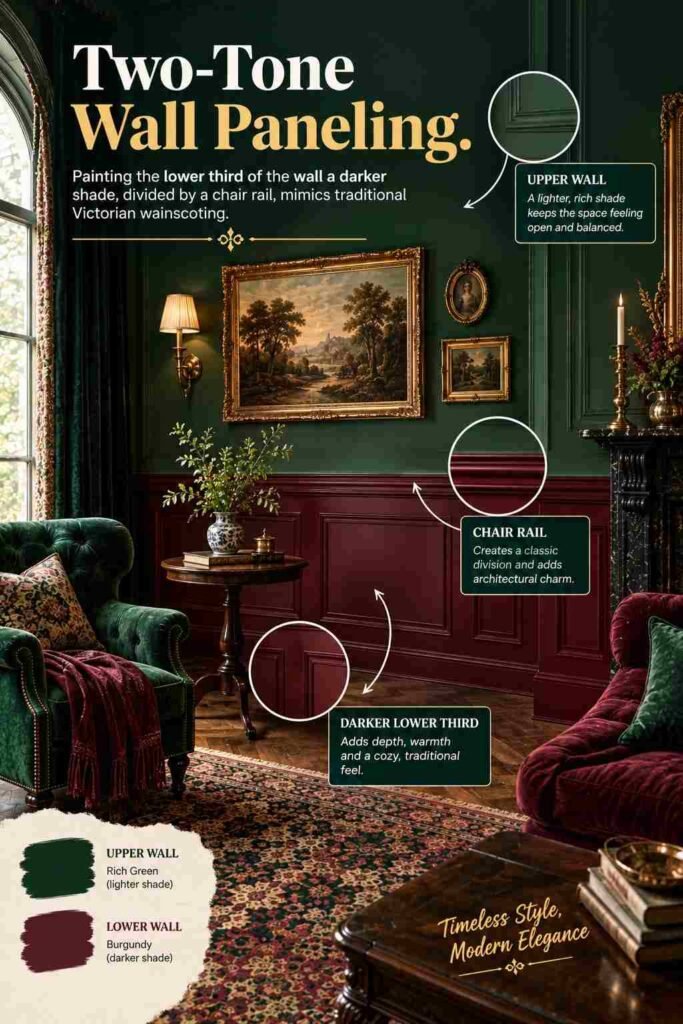
Painting the lower third of the wall a darker shade, divided by a chair rail, mimics traditional Victorian wainscoting.
4. Warm neutral backdrops. For a lighter approach, cream or soft taupe walls let ornate furniture and molding take center stage.
5. Ceiling medallions and crown molding. Even a modest room feels grander with plaster detailing around a light fixture or along the ceiling line.
Furniture Choices
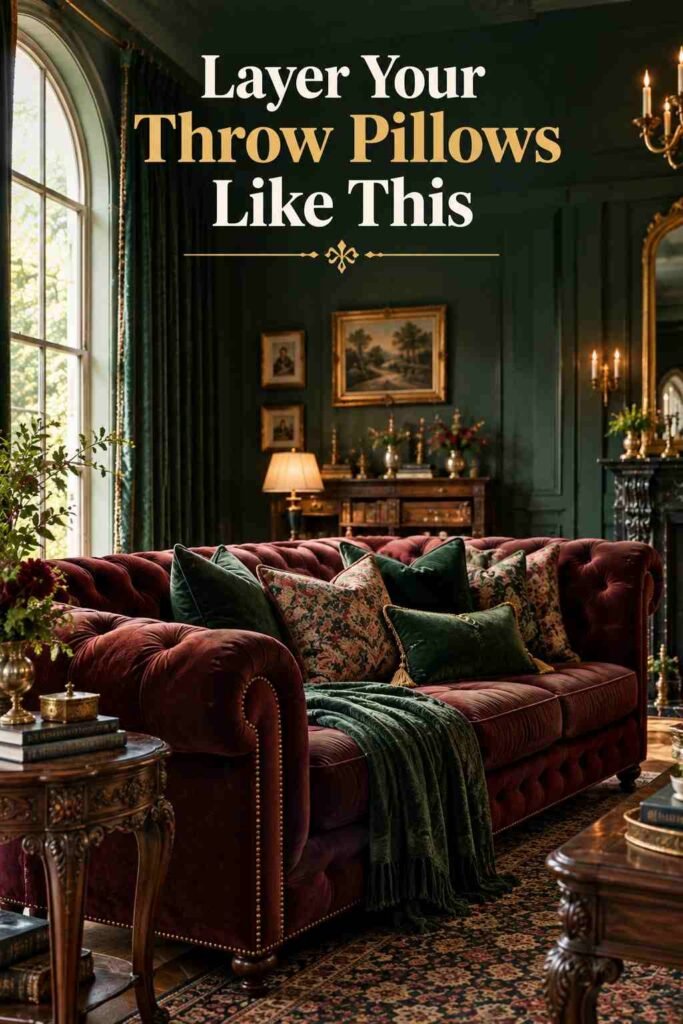
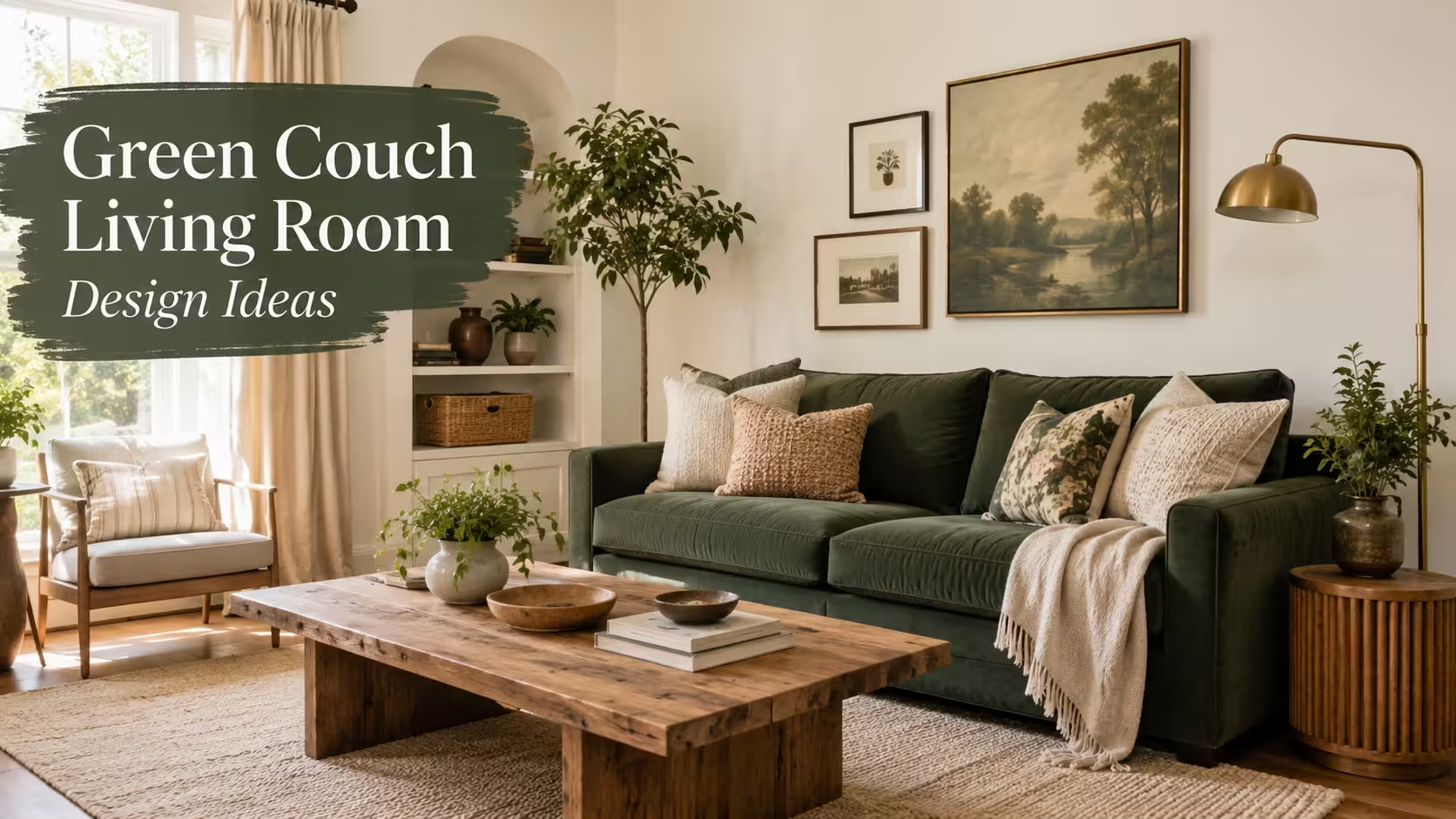
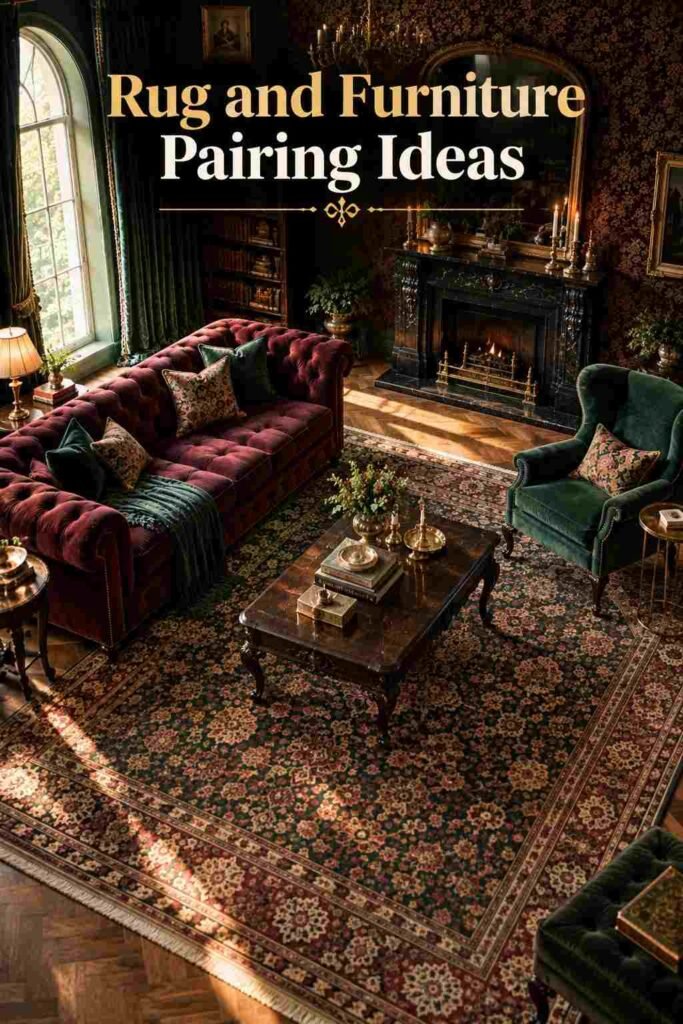
6. A tufted centerpiece sofa. Deep button-tufting and rolled arms remain the fastest way to signal Victorian influence. If you want an instant dose of period elegance, anchoring your seating arrangement with a Chesterfield sofa living room centerpiece lets the deep button-tufting do most of the design work for you.
7. High-backed accent chairs. Wingback or camelback chairs flanking the fireplace echo the formal seating arrangements common in Victorian parlors.
8. Carved wood side tables
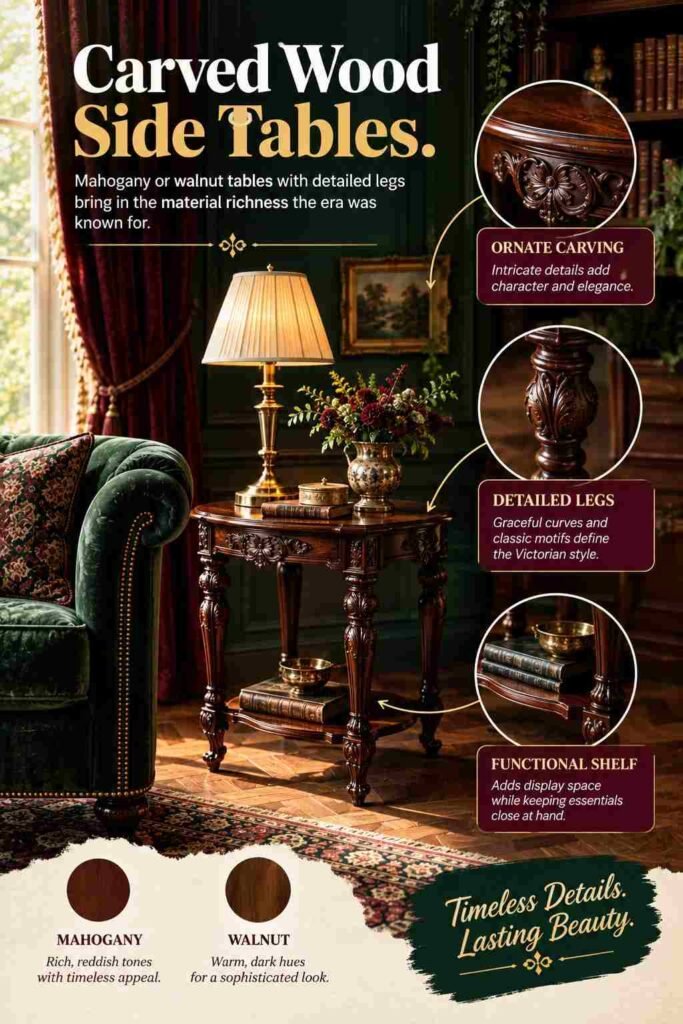
Mahogany or walnut tables with detailed legs bring in the material richness the era was known for.
9. A drink or tea cart. Small, mobile furniture pieces with brass fittings add function and a touch of old-world hospitality.
10. Antique writing desks. A small secretary desk in the corner nods to the era’s love of letter writing and correspondence.
Lighting and Fireplace Focal Points
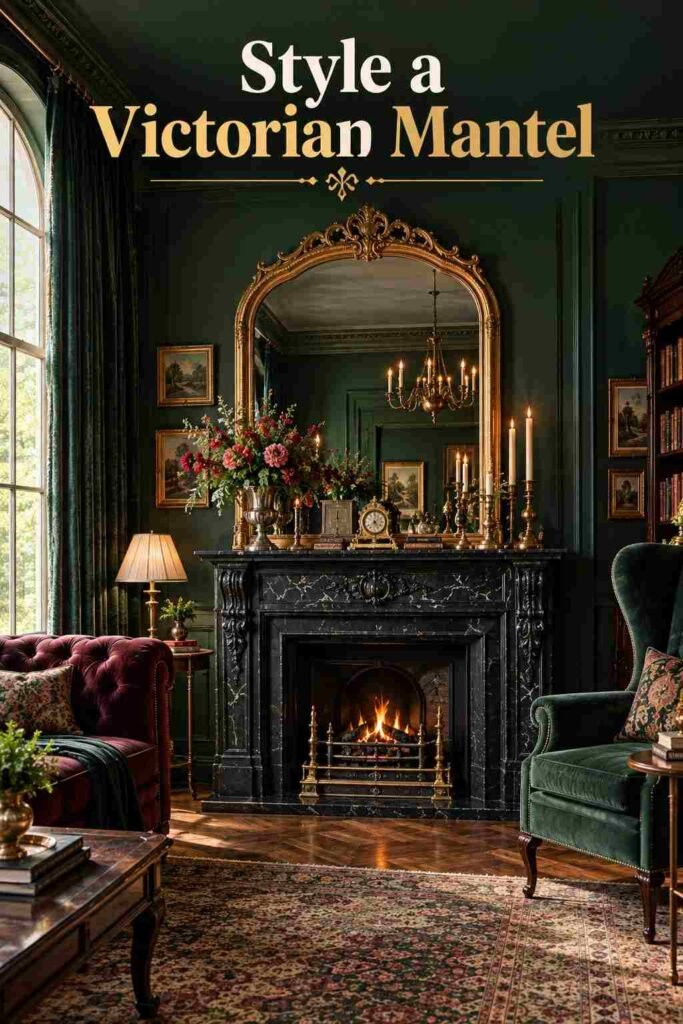
11. A carved marble or wood mantel. The fireplace was always the visual anchor of a Victorian living room, and it still works that way today.
12. Brass or crystal wall sconces. Soft, ambient lighting mounted at eye level replaces the flicker of gaslight with a warmer, layered glow.
13. A statement chandelier. Even a modestly sized fixture with crystal drops or candle-style bulbs elevates the whole room.
14. Candlesticks and candelabras on the mantel. These small details cost little but do a lot of work toward setting the mood.
Textiles, Rugs, and Patterns
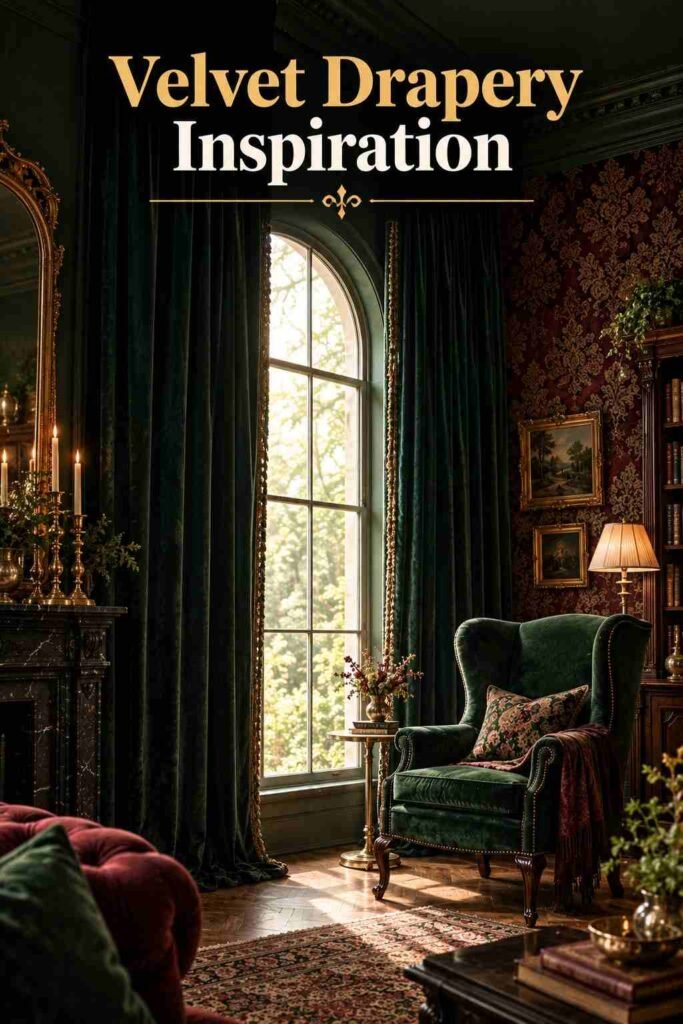
15. Oriental or Persian-style area rugs. Richly patterned rugs were a Victorian staple and remain one of the easiest ways to ground a room.
16. Velvet upholstery and drapery. Heavy, floor-length curtains in velvet or brocade add both warmth and drama to windows.
17. Layered throw pillows. Mixing damask, floral, and geometric patterns on pillows softens a room without a full furniture overhaul.
18. Fringed or tasseled trim. Small embellishments on curtains, lampshades, or upholstery hint at the era’s love of ornamentation.
Decorative Accents and Wall Art
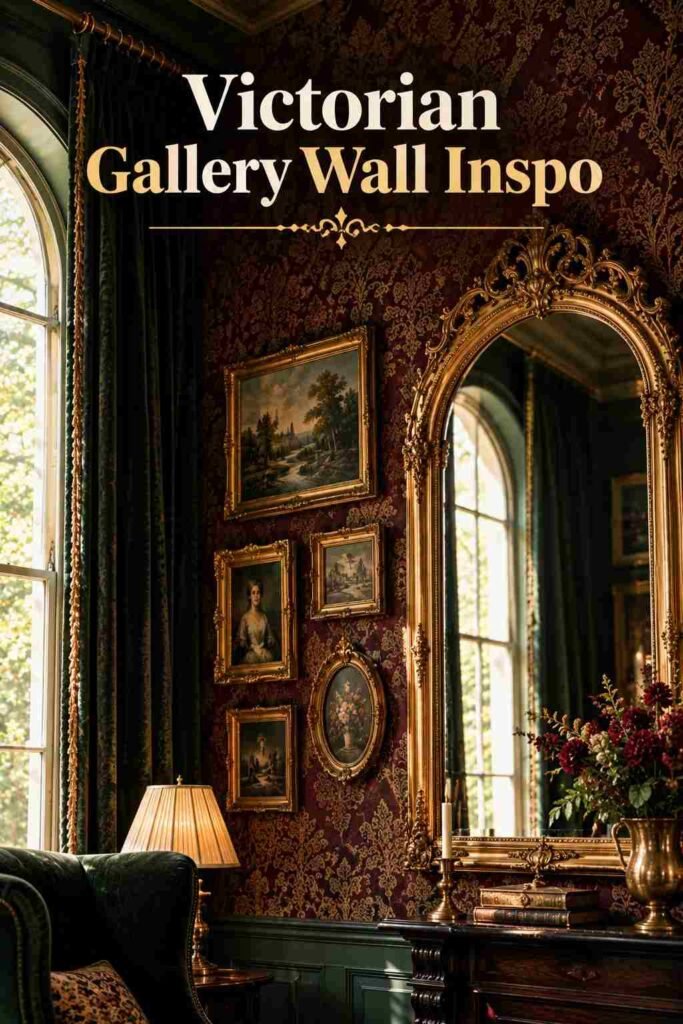
19. Gilded, ornate mirrors. A large gold-framed mirror above the mantel or sofa instantly reads as Victorian.
20. Gallery walls of oil paintings. Clustered frames in varied sizes recreate the curated, layered look of a period parlor.
21. Curio cabinets and display shelves
Victorians loved showing off collections — books, china, or travel trinkets all work well here.
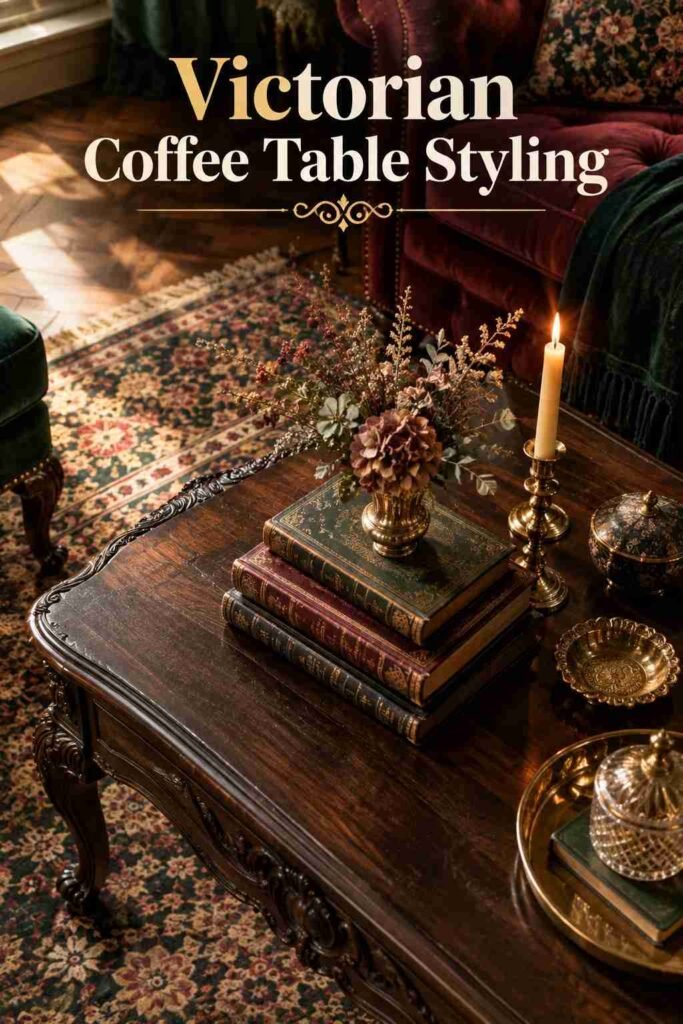
22. Fresh flowers or dried botanicals. A simple vase on the mantel or coffee table brings life into an otherwise formal space.
Modern Twists on Victorian Style
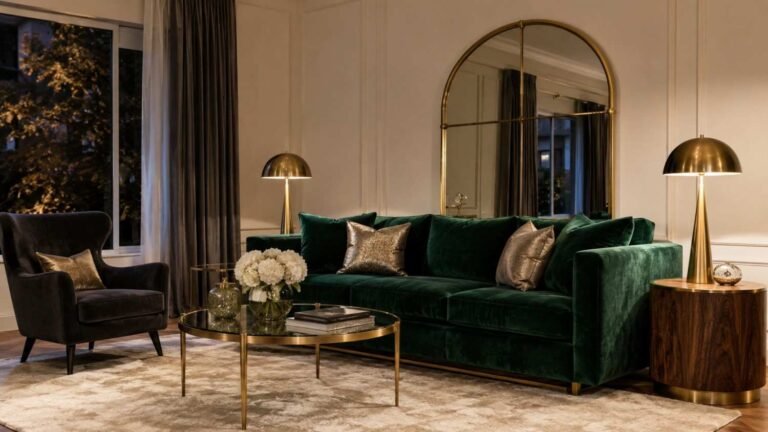
23. A moody, dramatic color scheme. Charcoal walls, brass fixtures, and velvet furniture create a moody glam living room effect that trades floral prints for a more contemporary kind of drama while still nodding to Victorian richness.
24. Minimalist Victorian styling. Keep the architectural bones — molding, a fireplace, a single ornate mirror — but pare back on pattern for a calmer, editor-approved take.
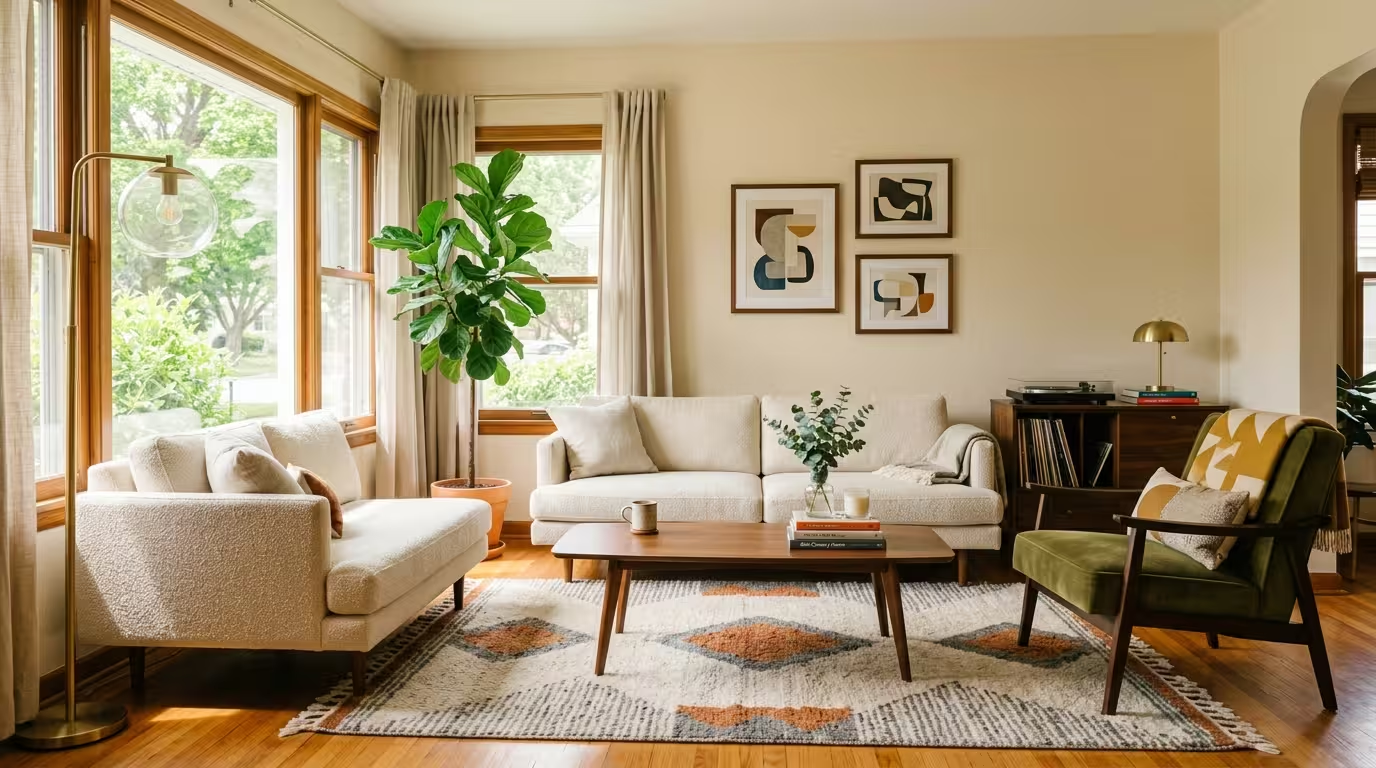
25. Mixed-era furniture pairings. Combine one antique or antique-style piece with clean-lined modern furniture so the room feels collected over time rather than staged all at once.
Small Victorian Living Room Ideas That Still Feel Grand
Not every home has room for a sprawling parlor, and that’s fine. A small Victorian living room can still deliver on atmosphere by focusing on vertical details — taller mirrors, floor-to-ceiling drapery, and molding that draws the eye upward. Skip oversized furniture in favor of a loveseat-sized tufted sofa and one statement chair rather than a full seating set.
Mirrors do double duty in tight spaces, bouncing light around the room while adding period character. A single bold wallpapered wall, rather than four, keeps a small Victorian living room from feeling cramped while still delivering the pattern-heavy look the style is known for. Scale, more than square footage, is what makes this era work in compact rooms.
Budget-Friendly Ways to Achieve the Victorian Living Room Look
You don’t need an interior designer’s budget to pull this off. Secondhand and estate sales are often the best source for carved wood furniture and gilded frames at a fraction of retail prices. A fresh coat of deep paint, paired with one or two well-chosen accent pieces, can shift an entire room’s mood without a full renovation.
Peel-and-stick wallpaper is another practical shortcut, letting renters and budget-conscious homeowners test a damask or floral print without committing to a permanent installation. Thrifted brass candlesticks, vintage picture frames, and inexpensive velvet throw pillows round out the look for very little cost, proving that a convincing Victorian living room is more about editing and intention than spending.
Where to Find Victorian-Inspired Pieces
Sourcing the right furniture is often the hardest part of this style, since true antiques can be expensive and hard to find locally. For curated, antique-inspired furnishings and décor that ship directly to your door, browsing a collection like OutInteriors is a practical starting point before committing to a full room refresh. Look for pieces with solid wood construction, detailed carving, and upholstery in velvet, damask, or brocade — the materials that made the original era so recognizable.
Conclusion
A well-designed Victorian living room isn’t about recreating history down to the last detail — it’s about borrowing the parts that still feel worth keeping: the warmth, the craftsmanship, and the sense that every object in the room was chosen on purpose. Whether you commit to a fully layered, pattern-rich parlor or a pared-back version with just a fireplace and a tufted sofa, these 25 Victorian living room ideas offer a flexible starting point. Pick a few, live with them, and let the room grow from there.
Frequently Asked Questions
1. What colors are typical in a Victorian living room?
Deep jewel tones like emerald green, burgundy, and navy are most associated with the style, though cream and soft neutral palettes work well for lighter, modern interpretations.
2. What furniture defines Victorian living room style?
Tufted sofas, high-backed chairs, and carved wood tables in mahogany or walnut are the most recognizable pieces, often paired with velvet or brocade upholstery.
3. Can a small room still look Victorian?
Yes. Focusing on vertical details like tall mirrors, floor-length drapery, and crown molding lets a small Victorian living room feel grand without overwhelming the space.
4. Is Victorian decor expensive to achieve?
Not necessarily. Secondhand furniture, peel-and-stick wallpaper, and a few well-chosen accent pieces can create the look without a full renovation budget.
5. How do I make a Victorian living room feel modern?
Pair one or two ornate, period-inspired pieces with simpler, contemporary furniture, and consider a moodier, pared-back color palette instead of heavy floral patterns throughout.
6. What’s the difference between Victorian and Gothic Victorian style?
Gothic Victorian leans darker and more dramatic, with pointed arches and heavier woodwork, while general Victorian style covers a broader range, including lighter, more ornate parlor looks.
7. What rugs work best in a Victorian living room?
Oriental or Persian-style rugs with rich, detailed patterns are the most historically accurate choice and remain a reliable way to ground the space.