Captivating 22 Bathroom Vanity Ideas to Transform Your Space in 2026
A bathroom vanity does more than hold a sink. It sets the tone for the entire room, shapes how much storage you have, and is often the first thing you notice when you walk in. If your current setup feels dated or cramped, exploring fresh bathroom vanity ideas is one of the fastest ways to update a bathroom without a full renovation. In 2026, homeowners are moving away from cookie-cutter cabinets and choosing pieces with real personality, from floating designs in warm wood tones to bold color statements. This guide walks through 22 bathroom vanity ideas that balance style, function, and budget, plus sizing, cost, and material guidance most roundups skip. Let’s find the vanity that fits your space.
What’s Driving Bathroom Vanity Trends in 2026?
Before diving into the list, it helps to understand what’s shaping bathroom vanity ideas this year. Floating vanities continue to gain ground, with several industry sources pointing to strong annual growth as more homeowners choose wall-mounted styles for their easy-clean floors and modern silhouette. Earth tones like sage green, terracotta, and deep navy are replacing the all-white cabinet, while warm metals such as brushed brass and champagne bronze are edging out matte black hardware. Smart features, including built-in USB charging and LED mirrors, are also becoming standard rather than a luxury add-on. These shifts shape nearly every idea below.
22 Bathroom Vanity Ideas for Every Style and Budget
From compact powder rooms to spacious primary suites, these bathroom vanity ideas cover a range of layouts, price points, and design personalities. Each one can be adapted to fit your existing plumbing and footprint.
Floating and Wall-Mounted Bathroom Vanity Ideas
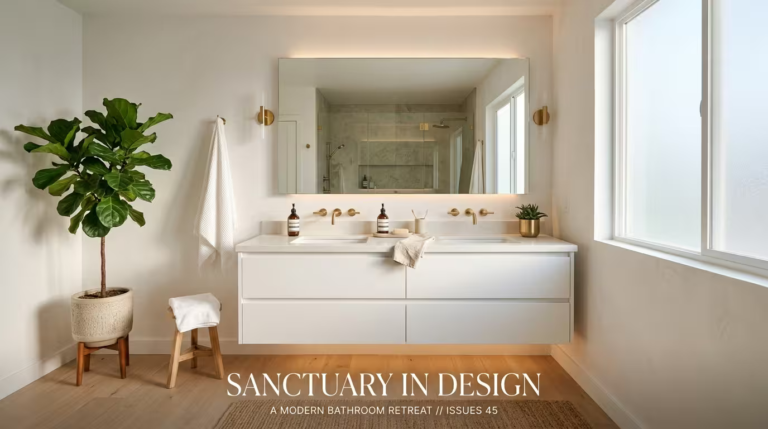
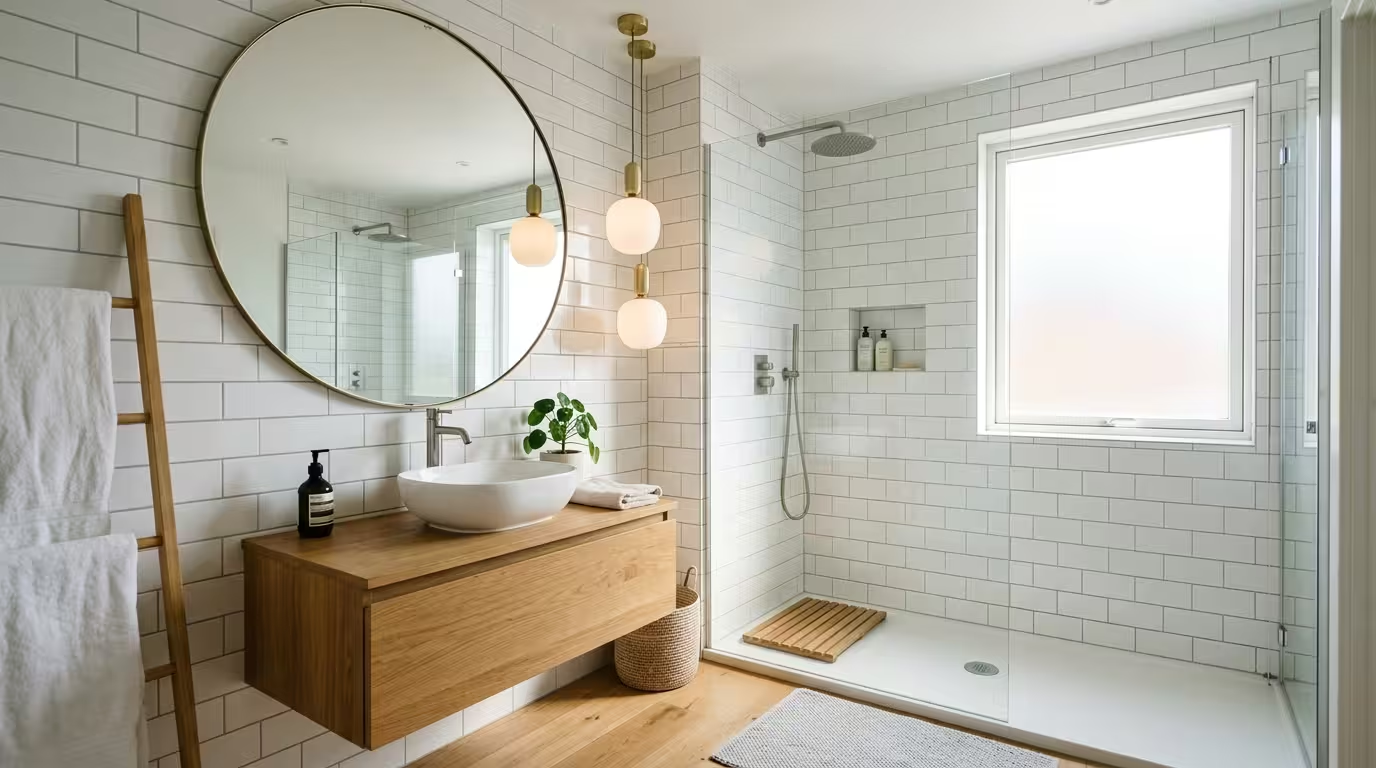
- Slim Floating Oak Vanity – A light oak floating vanity keeps a small bathroom feeling airy while adding warmth underfoot. Pair it with a wide, integrated sink for a seamless look.
- Toe-Kick LED Lighting – A soft LED strip beneath a wall-mounted vanity creates a nightlight effect and makes the cabinet appear to hover above the floor.
- Wall-Mounted Faucets – Mounting the faucet directly on the wall above a floating vanity frees up counter space and gives the setup a cleaner, architectural edge.
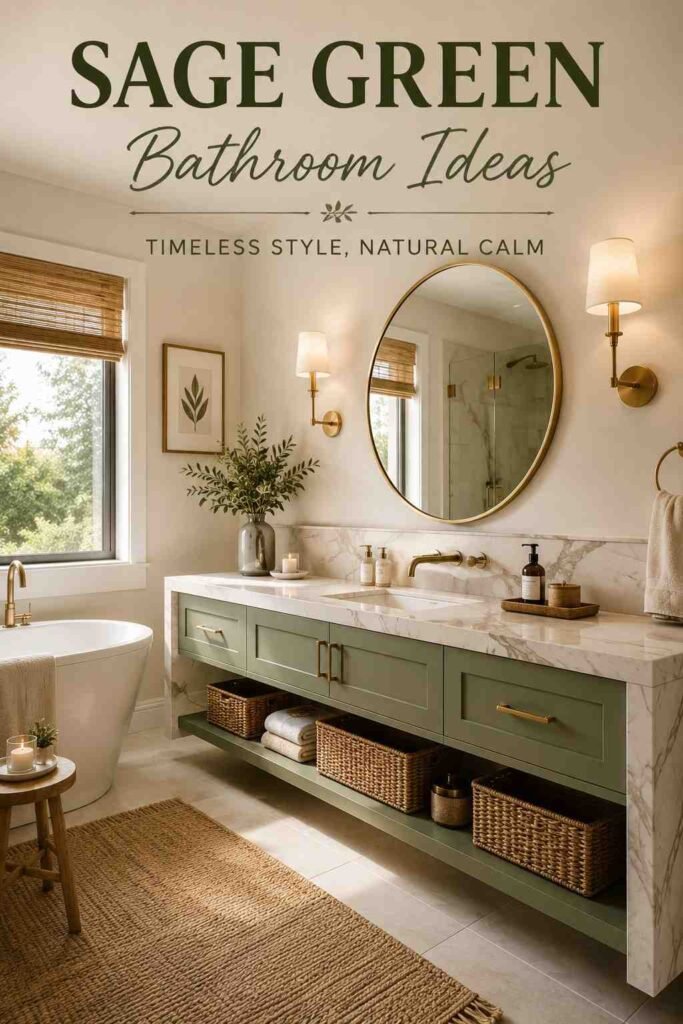
- Two-Tier Floating Vanity – Stack a slim open shelf beneath the main cabinet for towels or baskets, adding storage without extra bulk.
- Floating Vanity with Linen Tower – Pair a wall-mounted vanity with a tall adjacent tower to gain storage height instead of counter width.
Color and Statement Bathroom Vanity Ideas
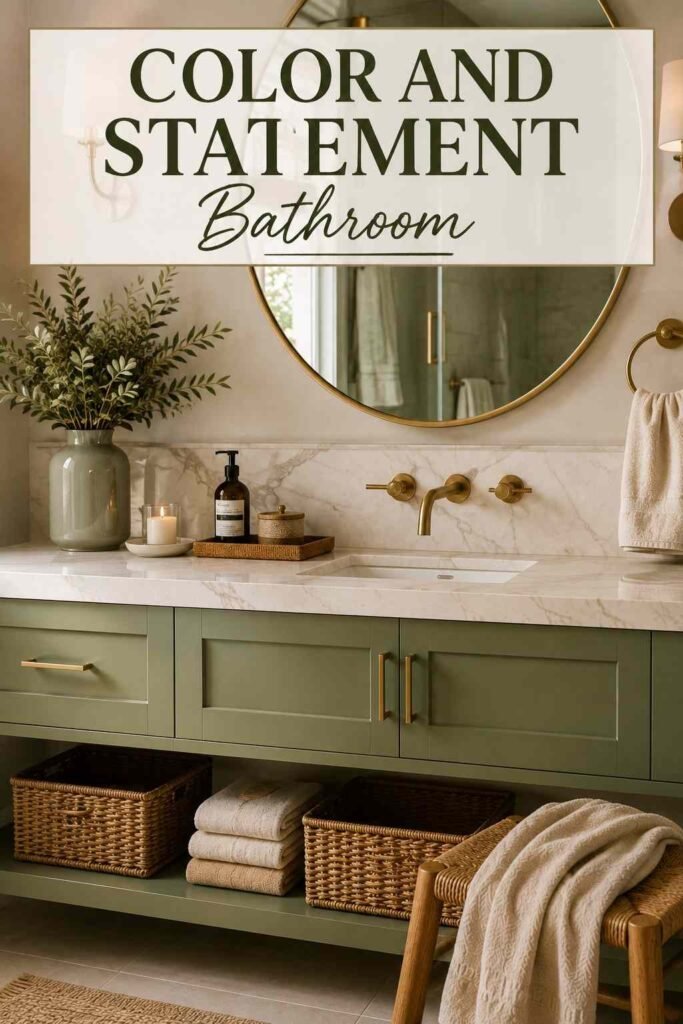
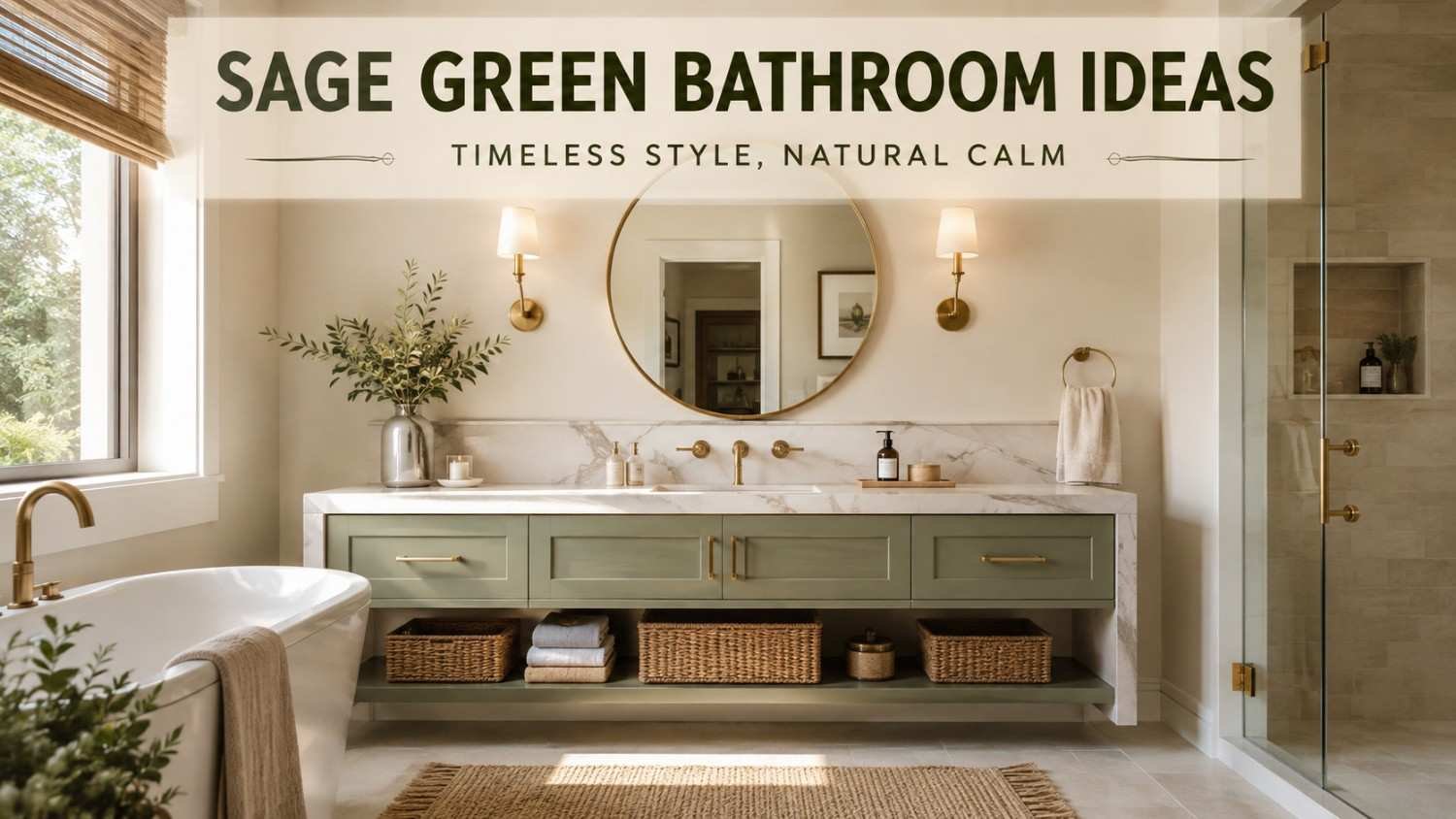
- Sage Green Shaker Vanity – Sage green is one of the most requested cabinet colors right now, pairing well with brass or nickel hardware for an earthy, timeless feel.
- Deep Navy Vanity with Brass Hardware – Navy cabinetry against a white countertop and brass fixtures creates a moody but polished contrast.
- Terracotta Vanity – A warm terracotta finish brings an unexpected, sunbaked richness that works beautifully with natural stone or woven textures.
- Scalloped Vanity Front – A scalloped cabinet skirt adds vintage charm and softens the boxy lines most vanities default to.
- Two-Tone Vanity Cabinet – Pairing a darker lower cabinet with a lighter upper drawer, or vice versa, adds visual interest without committing to one bold color throughout.
Material and Countertop Ideas
- Marble Waterfall Countertop – A countertop that wraps down the side of the cabinet in a continuous marble slab gives a vanity a custom, high-end look.
- Sintered Stone Top – More durable and stain-resistant than natural marble, sintered stone offers a similar visual richness with far less maintenance.
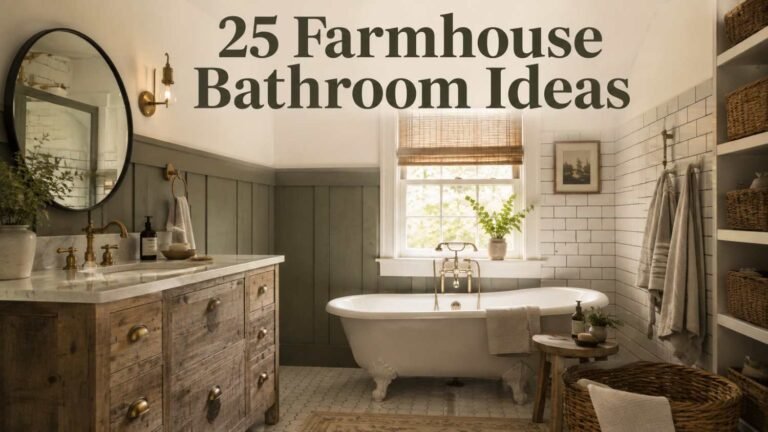
- Reclaimed Wood Vanity – A reclaimed wood cabinet adds texture and lived-in warmth, especially when paired with a simple vessel sink.
- Concrete Vanity – For an industrial or minimalist bathroom, a poured concrete countertop or integrated basin brings a raw, sculptural quality.
Storage-Smart Vanity Ideas
- Furniture-Style Vanity – Built to resemble an antique dresser, this style uses turned legs and vintage-inspired hardware to feel more like furniture than fixture.
- Appliance Garage Tower – A tall cabinet section with a built-in outlet keeps hair tools charged and hidden until needed.
- Pull-Out Hamper Drawer – Built into the base cabinet, a hidden hamper keeps laundry out of sight without taking up floor space.
- Open Shelving Display – Skipping doors on part of the cabinet creates a spot to display folded towels or curated decor, though it does require more frequent tidying.
Double and Small-Space Vanity Ideas
- One Long Trough Sink – Instead of two separate basins, a single wide trough sink under a shared countertop gives a double vanity a distinct farmhouse feel.
- His-and-Hers Vanity – Two separate cabinets with individual mirrors and lighting give each person their own zone, useful for shared primary bathrooms.
- 18-Inch Depth Vanity – In narrow bathrooms, a shallower vanity depth improves walking clearance while still offering enough counter space for daily use.
- Corner Vanity – Built to fit into an angled corner, this layout rescues awkward floor plans and puts otherwise wasted space to work.
Bathroom Vanity Sizes and Dimensions to Consider
Vanity width typically ranges from 18 to 72 inches for a single sink and up to 120 inches for double-sink layouts, so measuring your available wall space is the first step before choosing from these bathroom vanity ideas. Standard height sits around 32 to 36 inches, with taller “comfort height” cabinets becoming more common. Depth usually falls between 18 and 24 inches; the shallower option works well in tight bathrooms, while a deeper vanity offers more room for styling products. Always leave at least 24 inches of clearance in front of the vanity for comfortable movement.
How Much Does a Bathroom Vanity Cost?
Budget matters just as much as style when planning a bathroom update. Entry-level vanities typically run $150 to $500, covering basic cabinets with laminate or engineered stone tops. Mid-range options, priced between $500 and $1,500, usually include better hardware, soft-close drawers, and a wider material selection. Premium and custom vanities start around $1,500 and can climb past $4,000, especially with natural stone counters or furniture-grade cabinetry. Smart features like LED mirrors or built-in outlets typically add another $100 to $600. Setting a budget range early makes it easier to narrow down which bathroom vanity ideas are realistic before you fall for something outside your price range.
Comparing Bathroom Vanity Materials
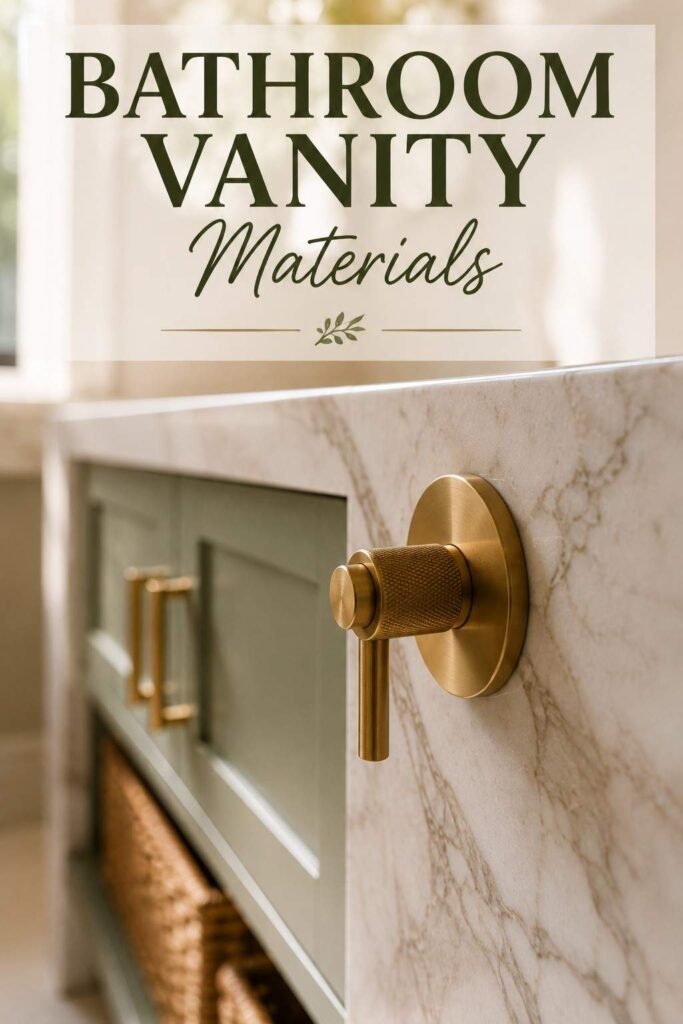
Solid wood offers warmth and durability but needs sealing to resist moisture over time. Plywood with a veneer finish costs less and holds up well in humid bathrooms when properly constructed. For countertops, natural marble is stunning but porous and prone to staining, while engineered or sintered stone delivers a similar look with far less upkeep. Quartz remains a reliable middle ground, resisting scratches and stains without the price tag of natural stone. Concrete and butcher block suit more casual, textured looks, but each comes with its own maintenance routine. Matching the material to your household’s daily habits matters more than matching a trend. And for more curated interior inspiration across every room in the house, Outinteriors is worth bookmarking. Once the practical details are settled, let color, material, and hardware reflect your personal style.
Bathroom Vanity Mistakes to Avoid
Even great bathroom vanity ideas can fall flat with the wrong execution. Skipping proper wall reinforcement before installing a floating vanity is a common and costly error, since the cabinet needs solid blocking to support daily use safely. Choosing a vanity that’s too deep for a narrow bathroom cuts into walking space and makes the room feel smaller, not bigger. Open shelving looks great in photos but requires real upkeep to avoid clutter. Finally, prioritizing trendy hardware over practical storage often leads to regret once daily routines settle in. Function should guide the final decision as much as style does.
How to Choose the Right Bathroom Vanity for Your Space
Start with your room’s layout and plumbing before browsing style boards. Measure the available width, depth, and door swing, then decide whether floating or freestanding suits your maintenance preferences. If you’re tackling a guest bathroom, our powder room ideas guide covers layouts built for compact footprints. For a primary bathroom with limited square footage, our roundup of the best small bathroom ideas offers layout tricks that pair well with any of these bathroom vanity ideas.
Conclusion
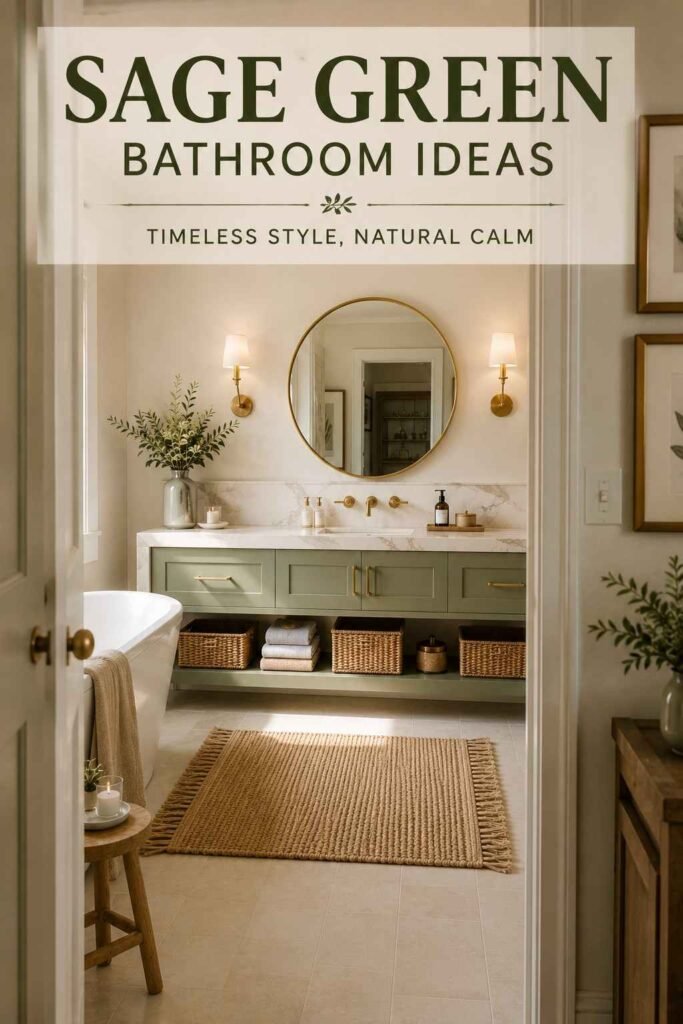
A bathroom vanity carries more design weight than its size suggests, shaping how the whole room feels and functions. Whether you’re drawn to a floating oak cabinet, a bold sage green finish, or a furniture-style piece with real character, the right choice comes down to matching your space, budget, and daily habits. These 22 bathroom vanity ideas offer a starting point, not a rulebook, so feel free to mix materials, colors, and storage solutions until the result feels like yours.
Frequently Asked Questions
What is the most popular bathroom vanity style in 2026?
Floating vanities remain the top choice this year, especially in warm wood tones. They make small bathrooms feel larger, simplify cleaning, and pair well with wall-mounted faucets and LED under-cabinet lighting.
How wide should a bathroom vanity be?
Single-sink vanities generally range from 18 to 72 inches, while double-sink versions can extend up to 120 inches. Measure your wall space and leave clearance for doors and drawers before choosing a size.
Are floating vanities harder to install than freestanding ones?
Yes. Floating vanities need proper wall blocking to support the weight safely, which usually requires professional installation. Freestanding vanities sit on the floor and are generally more straightforward for DIY projects.
What’s the best material for a humid bathroom?
Engineered or sintered stone countertops and moisture-sealed plywood cabinets hold up best in humid conditions. They resist warping and staining far better than untreated solid wood or porous natural stone.
Can I fit a double vanity in a small bathroom?
It depends on your width. A one-piece trough sink under a shared countertop can create a double-vanity feel in a space too narrow for two separate basins.
How much should I budget for a bathroom vanity?
Plan for $150 to $500 for a basic model, $500 to $1,500 for mid-range options, and $1,500 or more for premium or custom builds, not including installation labor.
Do I need a professional to install a bathroom vanity?
Freestanding vanities with existing plumbing connections are often manageable as a DIY project. Floating vanities, vessel sinks, or any job requiring plumbing changes are best left to a licensed professional.