26 Cottage Garden Ideas for a Fragrant, Pollinator-Friendly Yard Bring English Charm to Any Yard

Every great cottage garden begins with a feeling. It might be the scent of lavender on a warm path, or a bench half hidden by roses. This guide to cottage garden ideas turns that feeling into a clear, workable plan. Inside are 26 charming ways to shape your own retreat, from foxglove borders and clematis arbors to herb corners and lantern-lit paths. The look grew from English working households, where flowers, herbs, and vegetables shared the same small plot. Today, you can borrow that thrifty, generous spirit in almost any American yard. We focus on easy plants to find at local nurseries, simple to grow, and kind to bees and butterflies. Each section explains what to plant, where to place it, and how to keep it thriving. By the end, you will have a clear picture of your garden and the confidence to begin planting this season.
What Makes a Cottage Garden Special?

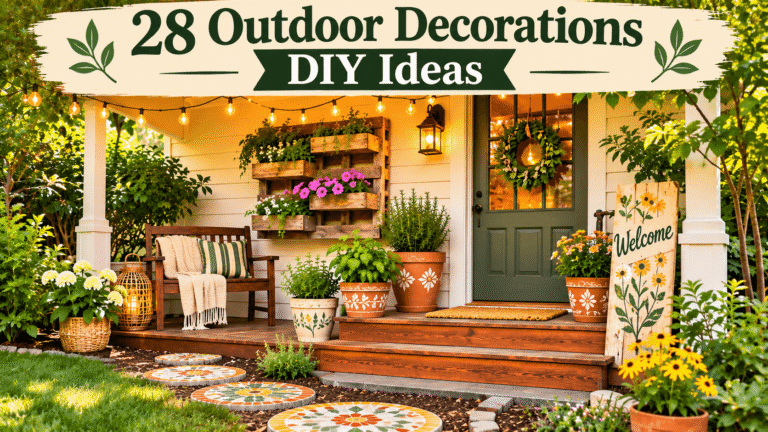
The style began in England, where working families grew vegetables, herbs, and flowers together in small plots near their homes. Nothing was wasted, and everything had a job. Designer Gertrude Jekyll later helped turn that practical habit into a celebrated design style in the late 1800s. Today, the look still rests on a few simple ideas: dense planting, soft color, self-seeding flowers, and a mix of beauty and use. For more creative projects, browse these outdoor decorations diy ideas to add handmade charm to your yard.
How to Plan Before You Plant
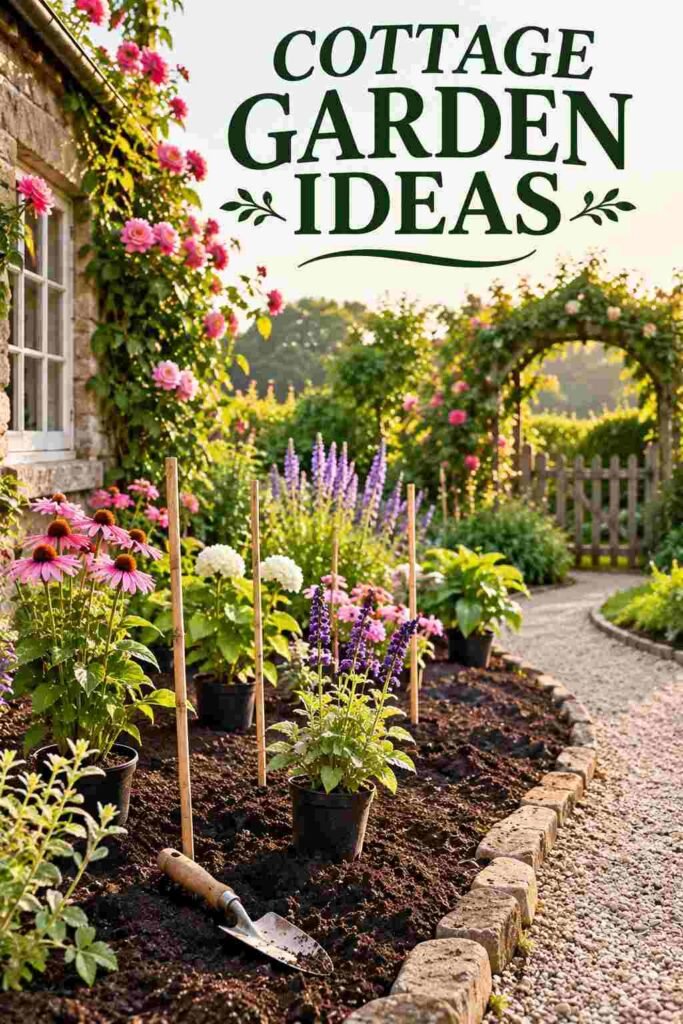
The best cottage garden ideas start with sunlight, soil, and your climate. Watch your yard for a full day and note where the sun lands. Most classic cottage flowers want six or more hours of direct sun. Check your USDA hardiness zone before buying perennials, and improve the soil with compost so roots can settle in. Start with a few bold anchors, such as an arbor or a rose, then fill the gaps with flowers you love.
Cottage Garden Ideas: Plants That Define the Style
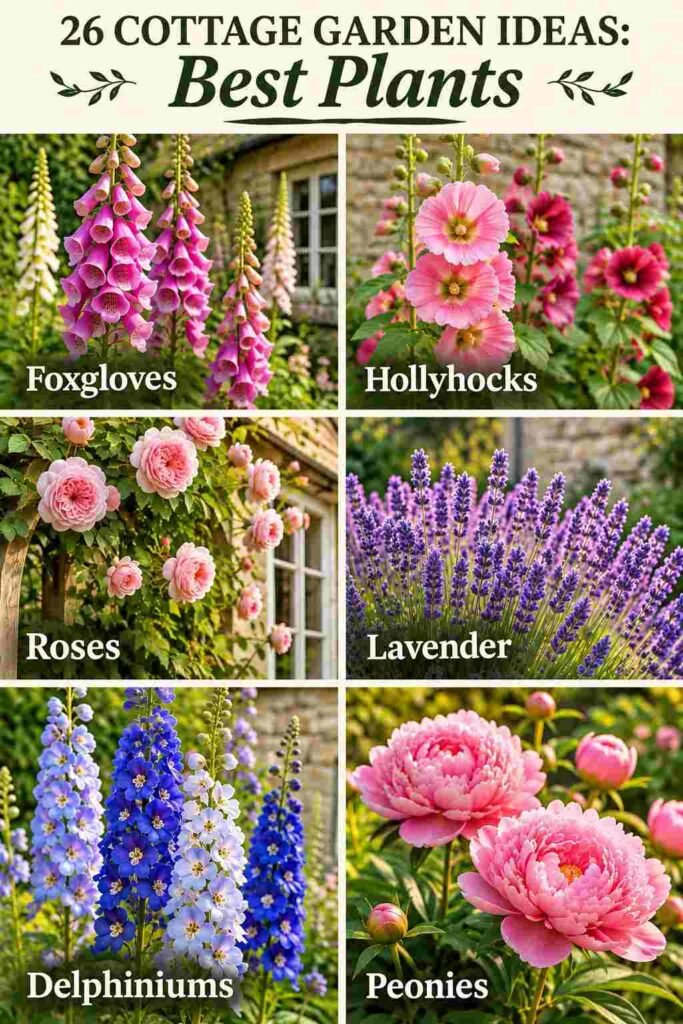
1. Foxgloves for Vertical Drama

Foxgloves send up tall spires of bell-shaped blooms in late spring and early summer. They are mostly biennial, so they flower in their second year, then drop seed for new plants. Tuck them at the back of a border or beside a doorway. Note that every part of the plant is toxic if eaten, so plant them with care around children and pets.
2. Hollyhocks Against a Fence

Hollyhocks can reach six to eight feet and bring old-fashioned charm to a plain fence or wall. Their wide, papery flowers come in pink, white, red, and near-black shades. Plant them where wind cannot knock them over. Leave a few seed pods at season’s end, and new plants will often appear on their own the following year.
3. Climbing Roses Over Doors and Walls

No cottage garden feels complete without roses. English roses from breeder David Austin are popular because they combine the full, ruffled look of antique varieties with repeat blooming. Train a climber over a doorway or along a porch rail. Give it sun, good airflow, and steady watering, and it will reward you with fragrance for months.
4. Lavender Along the Path

Lavender is a classic edging plant. Its silver-gray foliage looks tidy all season, and the purple spikes draw bees and butterflies. Most varieties want full sun and sharp drainage, so add grit or sand to heavy soil. Plant a row along a walkway so the scent rises when you brush past.
5. Sweet Peas on a Rustic Teepee

Sweet peas grow fast and smell wonderful. Build a teepee from bamboo canes or branches, plant seeds at the base, and watch the vines climb. Pick flowers often, because cutting encourages more blooms. They prefer cool weather, so sow early in spring or, in mild regions, in autumn.
6. Delphiniums and Lupines for Cool Color

Delphiniums and lupines provide the deep blues, purples, and pinks many cottage borders rely on. Both make tall, bold spikes that rise above softer plants. Stake delphiniums early to protect them from wind and rain. Lupines dislike hot, humid summers, so they do best in cooler climates.
7. Self-Seeding Annuals That Return Each Year

Cosmos, poppies, calendula, and love-in-a-mist scatter their own seed and pop up in new places each year. This gives the garden its loose, unplanned feeling. Scatter seed in fall or early spring, and pull out any seedlings that land where you do not want them. Part of the charm is letting the garden surprise you.
8. Peonies for Spring Glamour

Peonies produce huge, fragrant flowers in late spring and can live for decades with little fuss. Plant the crowns with the buds about one to two inches below the soil surface, since planting too deep can reduce blooms. Give them full sun and leave them undisturbed. Ants on the buds are harmless and do not need treatment.
9. Soft Edging with Catmint and Lamb’s Ear

Catmint offers a haze of lavender-blue flowers from late spring into summer, and it is a magnet for pollinators. Lamb’s ear adds velvety silver leaves that glow in evening light. Together they soften hard edges along a path or bed. Both handle dry spells well once established, which makes them easy, low-maintenance choices.
Structure and Pathway Ideas
10. A Winding Path of Brick or Gravel
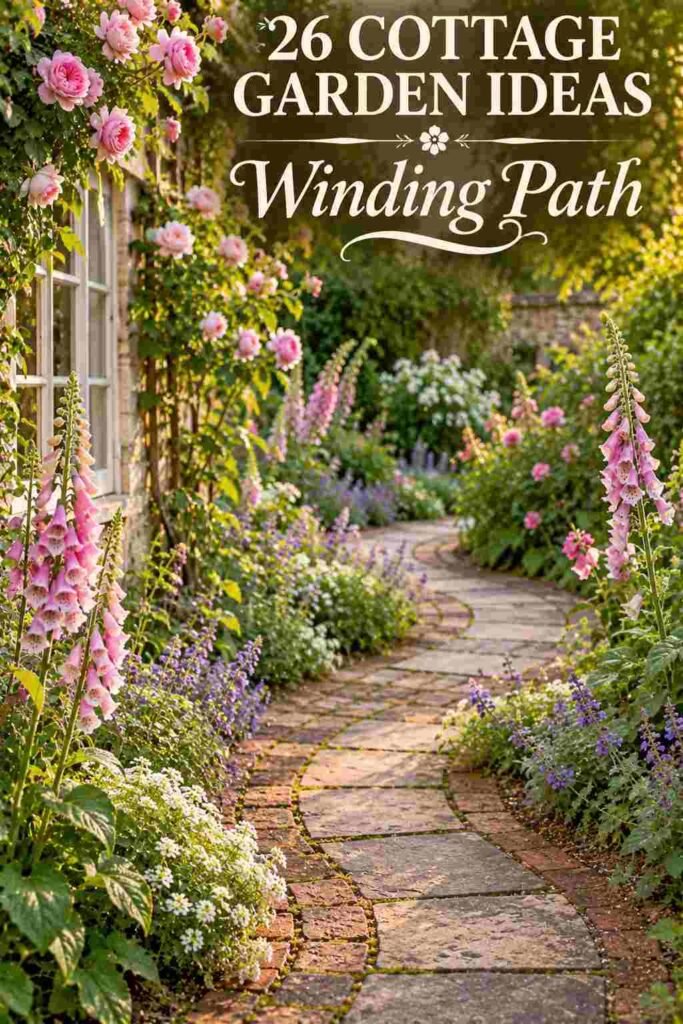
Cottage paths should curve, not run in straight lines. Old brick, flagstone, or simple gravel all suit the style. Let low plants spill over the edges to blur the line between path and bed. A bend also hides part of the view, which makes a small yard feel bigger and more mysterious. When the season turns, try Magical Christmas Pathway Lighting to keep your garden walkway glowing.
11. A White Picket Fence

A picket fence is the quintessential frame for cottage plantings. It marks the boundary without blocking the view, and it makes a perfect backdrop for climbing roses and tall flowers. Choose rot-resistant wood and repaint every few years. Weathered gray pickets are an equally lovely option if you prefer a quieter look.
12. An Arbor with Clematis

An arched arbor at the garden entrance gives guests a sense of arrival. Pair it with clematis, which climbs by twining leaf stalks and bursts into large flowers in summer. Many gardeners follow the rule that clematis likes “head in the sun, feet in the shade.” A low plant or mulch at the base keeps roots cool.
13. Rustic Obelisks and Trellises
Vertical supports add height and rhythm to a flat bed. Wooden or metal obelisks hold sweet peas, climbing beans, or clematis, and they look attractive even in winter. Place a few at intervals through the border. Odd-numbered groupings, such as three, tend to feel more natural than even ones.
14. Natural Stone or Brick Edging

Simple edging keeps soil and mulch in place while giving the bed a finished look. Reclaimed brick, fieldstone, or even a low woven willow border all suit the theme. Keep the lines gently uneven. Perfect symmetry works against the relaxed charm that makes these gardens so inviting.
15. Layered Borders from Front to Back

Plant in layers: low edgers in front, mid-height perennials in the center, and tall spires or shrubs behind. Pack plants closely so little soil shows, which also helps suppress weeds. Repeat a few key plants in several spots to tie the whole border together and guide the eye along the bed.
Decor and Garden Features
16. A Birdbath as a Focal Point
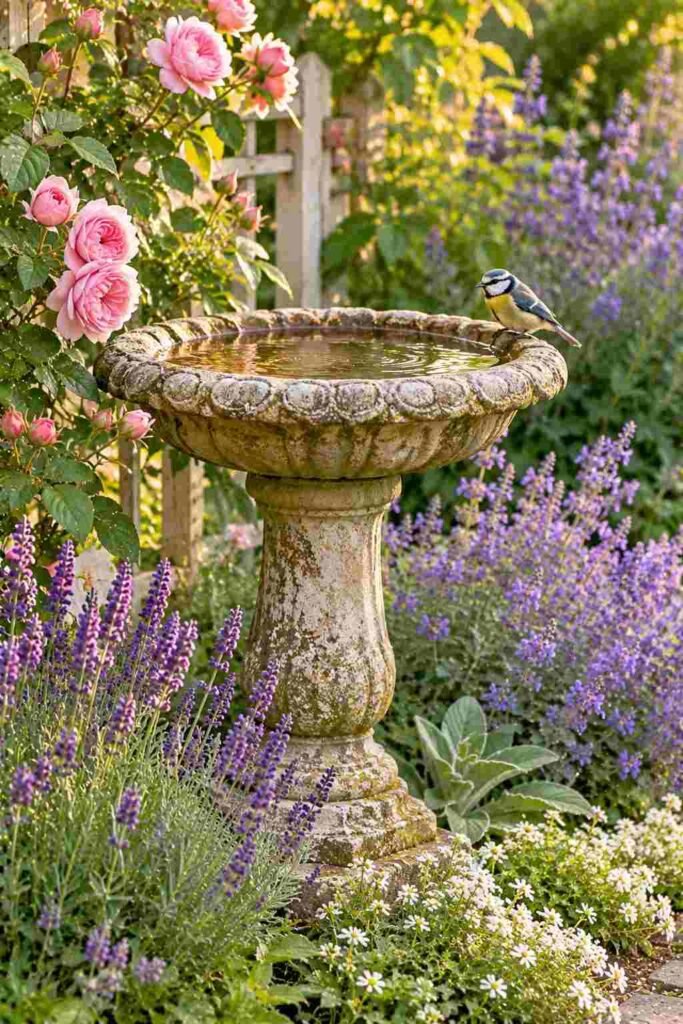
A simple birdbath draws wildlife and adds a quiet focal point. Place it where you can see it from a window or seat. Keep the water fresh and shallow, and clean the basin often. Surround it with low plants so birds feel safe while they drink and splash. A porch makes a lovely cozy spot, and Vintage Red Sleigh Porch Decor brings holiday nostalgia to it.
17. A Weathered Bench for Rest
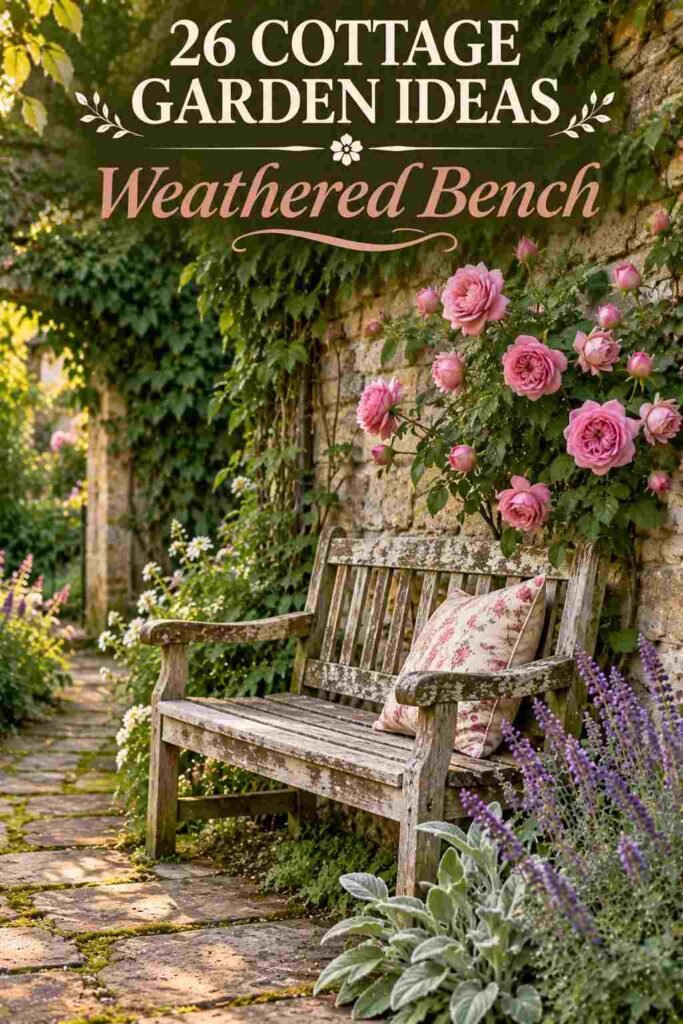
Every garden needs a place to sit. A worn wooden or wrought-iron bench tucked beside roses or under an arbor invites you to slow down. Set it where you can enjoy fragrance and the sound of bees. Over time, the bench will blend into the planting and look like it has always been there.
18. Terracotta Pots by the Door

Clay pots in mixed sizes bring color to steps and patios. Fill them with geraniums, pansies, or herbs. Terracotta is porous, so it dries out faster than plastic, and containers need regular watering in summer. As the pots age, they develop a soft patina that suits the style perfectly.
19. Bee-Friendly Planting

Cottage gardens naturally support pollinators because they offer many flower shapes and long bloom times. Choose single-flowered varieties where possible, since their nectar is easier for insects to reach. Plant in clusters, and include early and late bloomers so food is available across the seasons. Skip broad-spectrum pesticides to protect the insects you are inviting.
20. Found Objects and Garden Whimsy

An old watering can, a rusty gate, or a weathered ladder adds personality and a sense of history. Use these touches sparingly so they highlight the plants instead of competing with them. Many gardeners enjoy hunting for pieces at flea markets and estate sales. Anything with a story makes the space feel more personal.
21. Lantern Lighting for Evening Charm

Soft light turns a cottage garden into a magical place after dark. Hang lanterns from shepherd’s hooks or arbors, or set them along the path. Warm-toned solar lights are an easy, wire-free option. Keep the glow low and gentle, so it highlights pale flowers like white roses and phlox.
Small-Space and Edible Cottage Garden Ideas
22. A Kitchen Herb Corner

Herbs have always belonged in cottage gardens. Plant thyme, sage, chives, parsley, and oregano near the kitchen door so they are easy to snip while cooking. Most herbs prefer sun and well-drained soil. Mint spreads aggressively, so keep it in its own pot to protect nearby plants.
23. Vegetables Mixed with Flowers

Instead of a separate vegetable plot, weave edibles through the flower beds. Rainbow chard, kale, and runner beans look beautiful beside roses and daisies. Nasturtiums are edible, brightly colored, and easy to grow from seed. This mixed approach is faithful to the garden’s roots and gives you fresh produce and flowers in the same space.
24. A Container Cottage Garden
Even a balcony can hold a cottage-style display. Group pots of different heights and fill them with petunias, snapdragons, trailing ivy, and herbs. Use quality potting mix, and make sure each container has drainage holes. Water often, since pots dry out quickly, and feed regularly through summer for continuous bloom.
25. Dwarf Fruit Trees and Espaliers
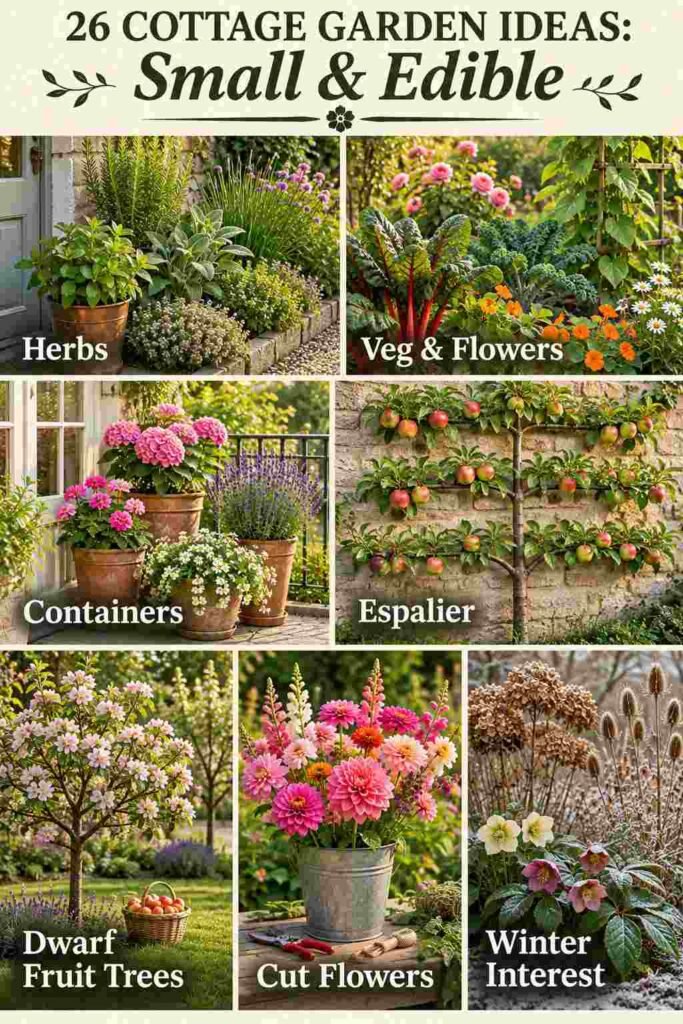
A small apple, pear, or fig tree adds height, spring blossom, and fruit. In tight spaces, train a tree flat against a wall or fence as an espalier, which saves room and looks elegant. Check that the variety suits your climate, and confirm whether it needs a partner tree for pollination before you buy.
26. A Cut-Flower Patch with Year-Round Interest
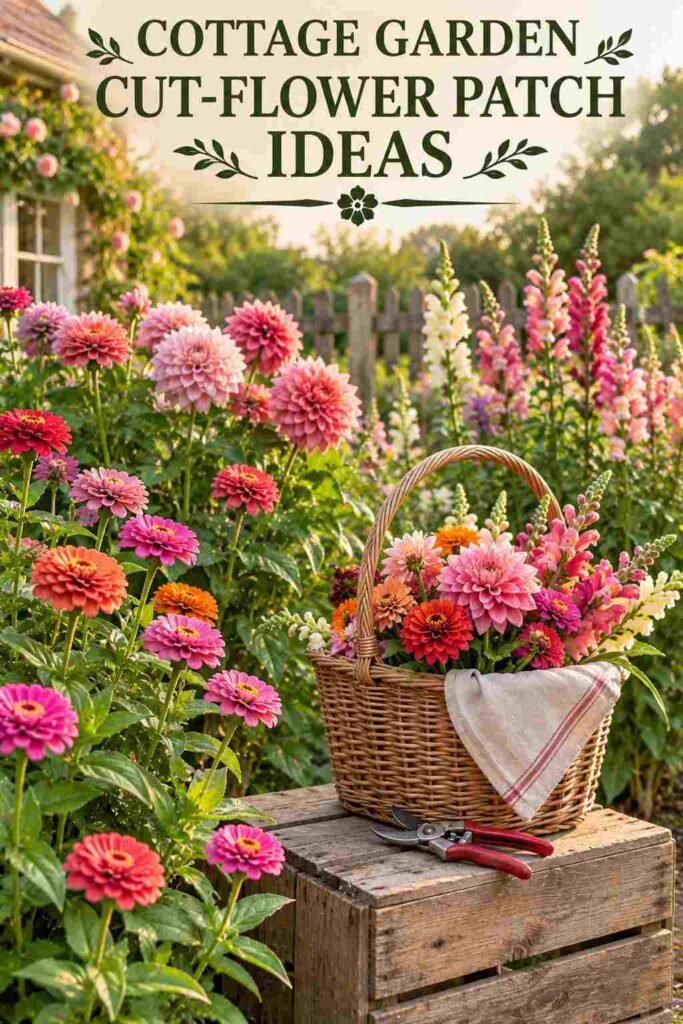
Set aside a corner for zinnias, dahlias, and snapdragons so you can cut bouquets without thinning your display. For winter interest, leave seed heads standing and add evergreens or hellebores. Birds will feed on the seeds, and frost makes the stems sparkle. A garden that looks good in every season earns its place in your yard. Fill empty containers for the colder months with these DIY Winter Planter Ideas.
Final Thoughts
A cottage garden is never finished, and that is its joy. Start with a handful of these 26 cottage garden ideas, such as a winding path, a few roses, and some self-seeding annuals, then add more each season. Watch what thrives in your soil and light, and let those plants guide your next choices. With a little patience, your yard will become a soft, fragrant place full of life. For more inspiration on styling your home and garden, visit outinteriors.