25 Dark Living Room Ideas to Brighten Your Home Without a Renovation
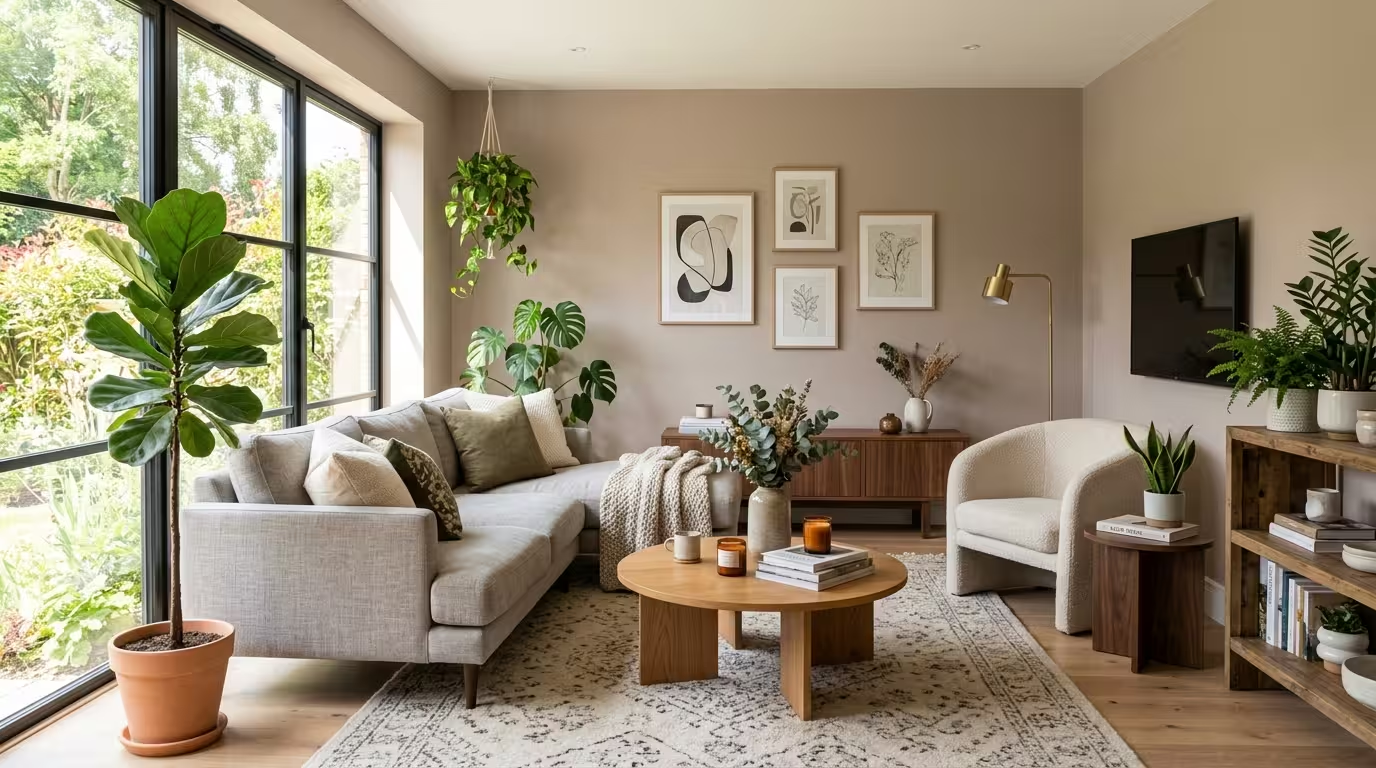
Walking into a dim, shadowy living room at 3 p.m. and reaching for a lamp is a familiar frustration. A dark living room can feel cozy on a rainy evening, but day after day, it starts to feel heavy and closed-in. The good news is that brightness isn’t only about square footage or window size. It’s about how light moves, bounces, and lingers in a space. Below are 25 dark living room ideas to brighten your home, grouped by category so you can build a plan instead of guessing room by room.
Why Some Living Rooms Feel Darker Than Others
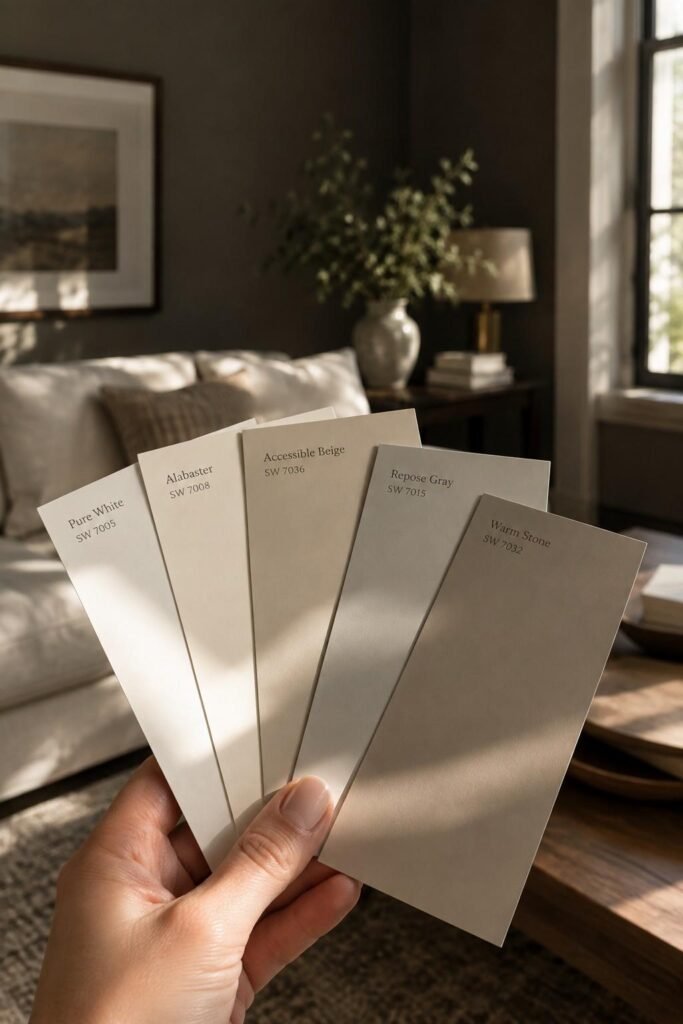
Before jumping into fixes, it helps to understand the problem. A room’s brightness depends on its Light Reflectance Value (LRV) — a measurement from 0 (pure black) to 100 (pure white) that describes how much light a surface bounces back. Dark paint, heavy wood furniture, and thick curtains all sit low on this scale, so they absorb light instead of spreading it. Add a north-facing window, a low ceiling, or nearby trees blocking sunlight, and even a well-lit bulb won’t fully compensate. Knowing this helps you target the actual cause instead of just adding more lamps.
Paint and Color Techniques That Open Up a Dark Living Room
1. Raise your wall LRV, not just your wall color. Two whites can look identical on a swatch but behave differently in real light. Choose a shade with an LRV above 70, such as Sherwin-Williams Alabaster or Benjamin Moore Simply White, to noticeably lift a shadowed room.
2. Paint the ceiling a shade lighter than the walls
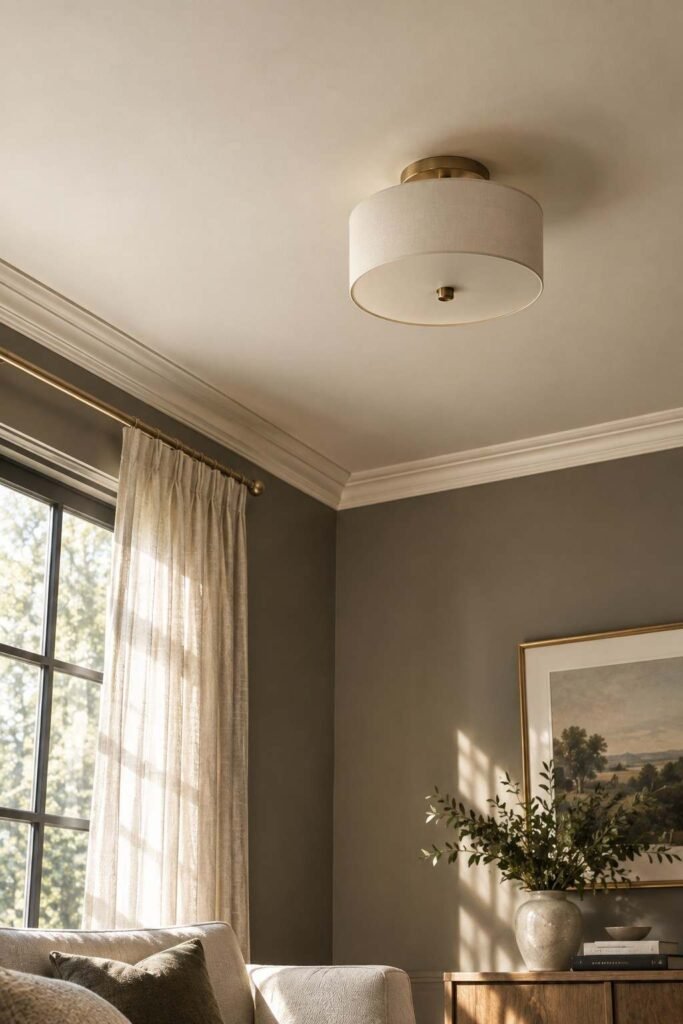
A bright “fifth wall” reflects overhead light downward, making the whole room feel taller and airier without repainting everything white.
3. Use a matte-to-satin finish on trim. Slightly glossy trim catches ambient light and outlines the room’s architecture, drawing the eye upward and outward instead of into dark corners.
4. Keep one accent wall warm instead of black
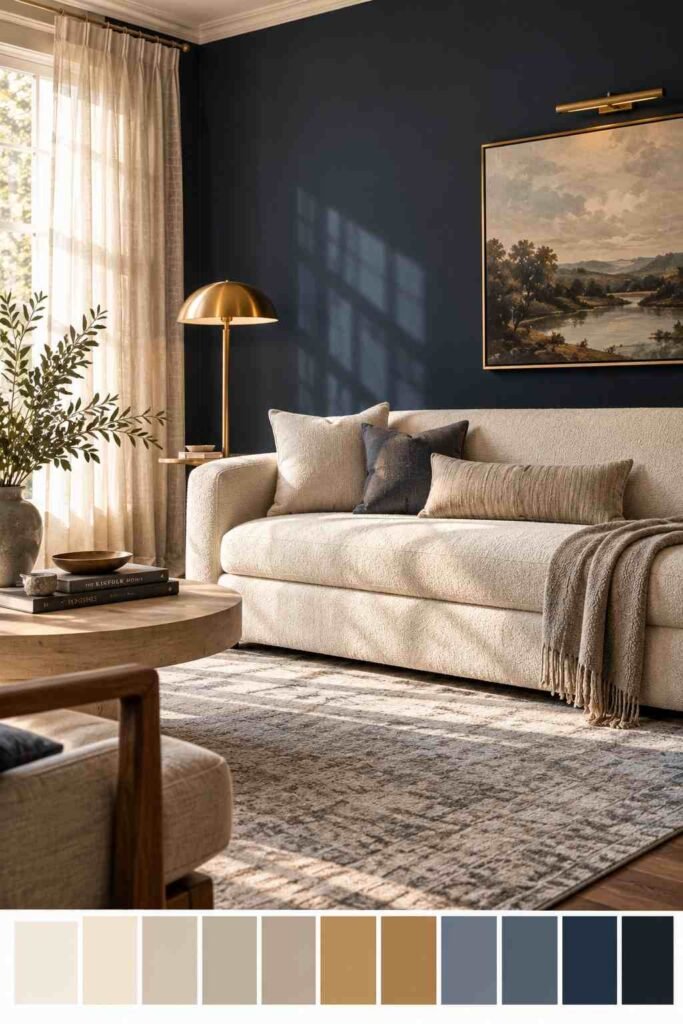
If you love drama, swap true black for a deep terracotta or forest green. These tones still feel moody but reflect more light than pure black ever will.
Lighting Solutions for a Brighter Dark Living Room
5. Layer three types of light
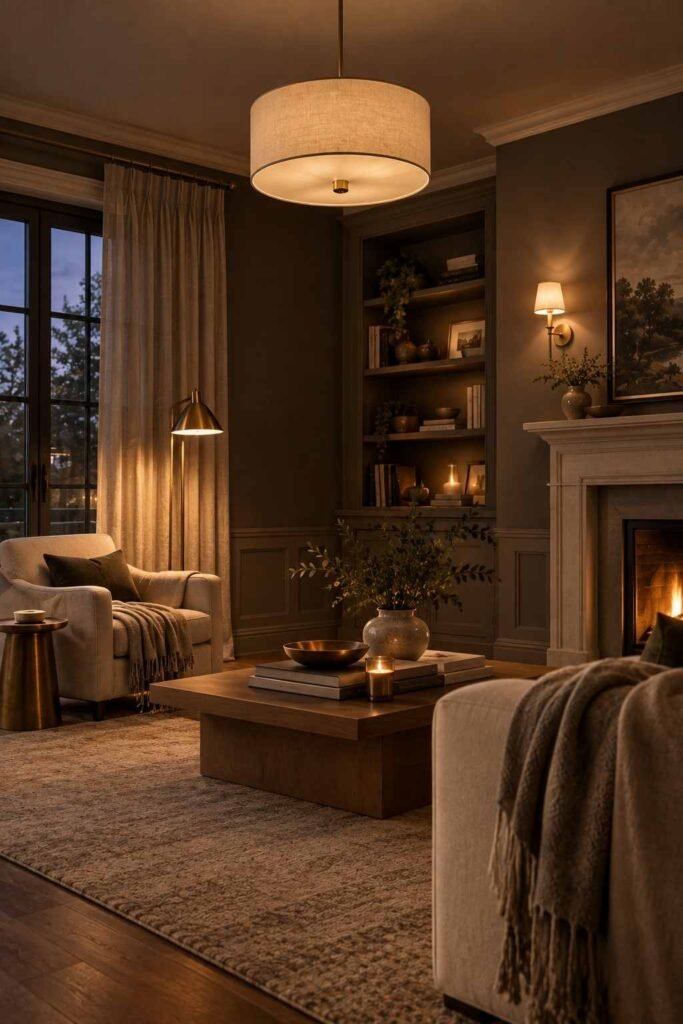
Ambient (ceiling), task (reading lamps), and accent (wall sconces) working together eliminate the flat, single-source shadows that make rooms feel dim.
6. Choose daylight-mimicking bulbs
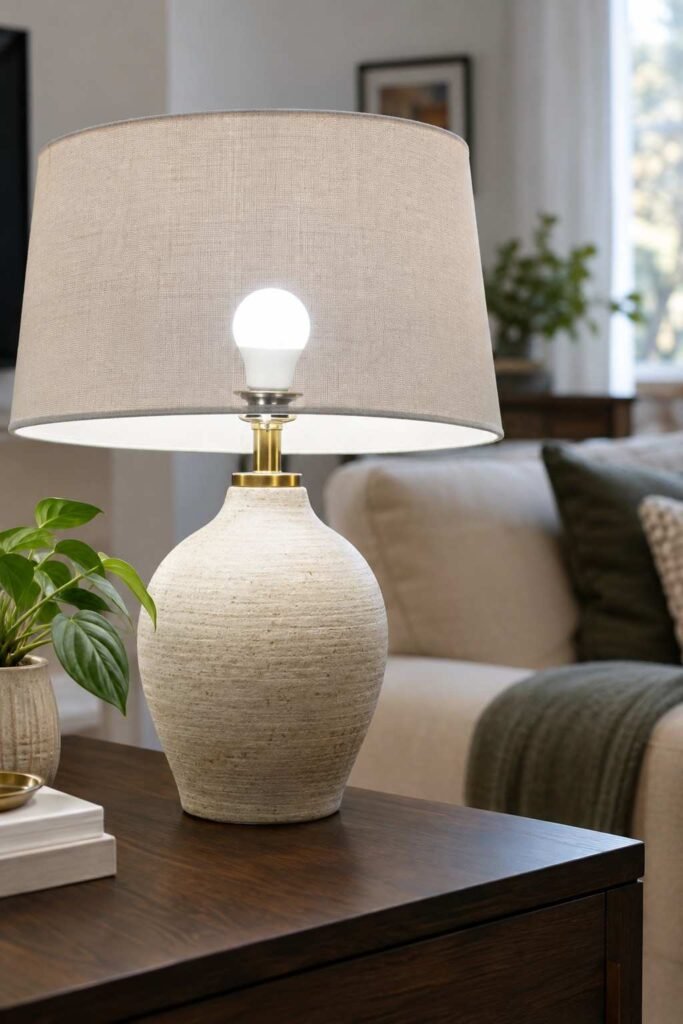
Bulbs rated between 4000K and 5000K replicate natural daylight far better than warm 2700K bulbs, which is especially useful in a dark living room with little sun exposure.
7. Install a statement pendant or chandelier
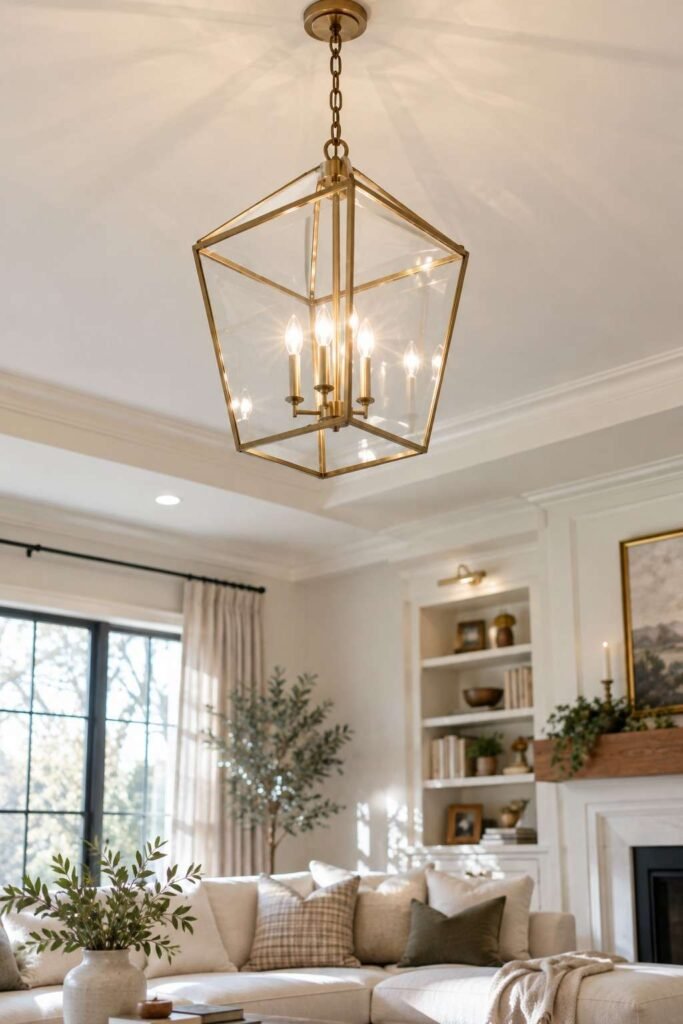
Beyond function, a fixture with an open or glass design scatters light in multiple directions rather than casting it straight down.
8. Consider a skylight or solar tube
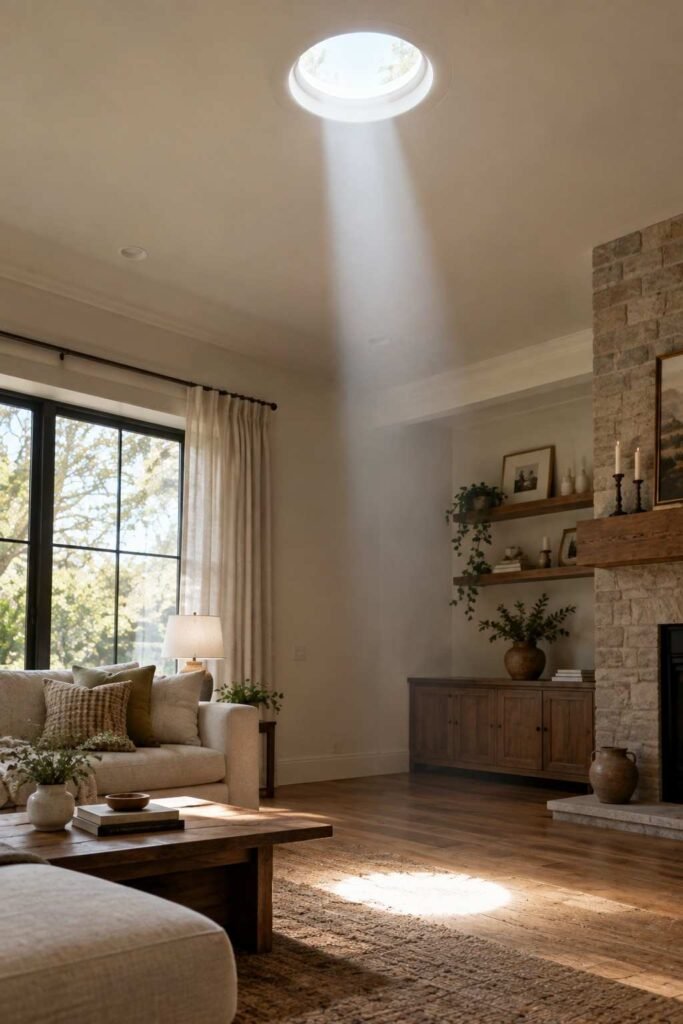
For rooms with roof access, a solar tube pipes daylight in through a small roof opening, making it a realistic option even without a full renovation.
9. Wash walls with uplighting
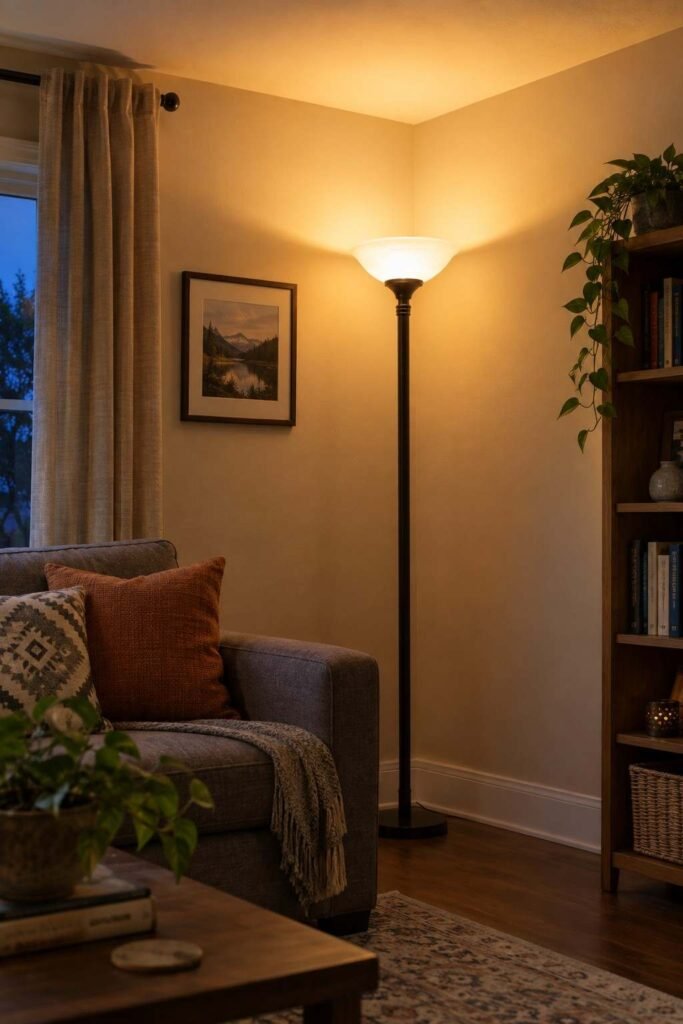
A floor-standing torchiere or hidden LED strip aimed at the ceiling spreads soft, even light across the whole room instead of one bright pool.
Reflective Surfaces and Glass Accents
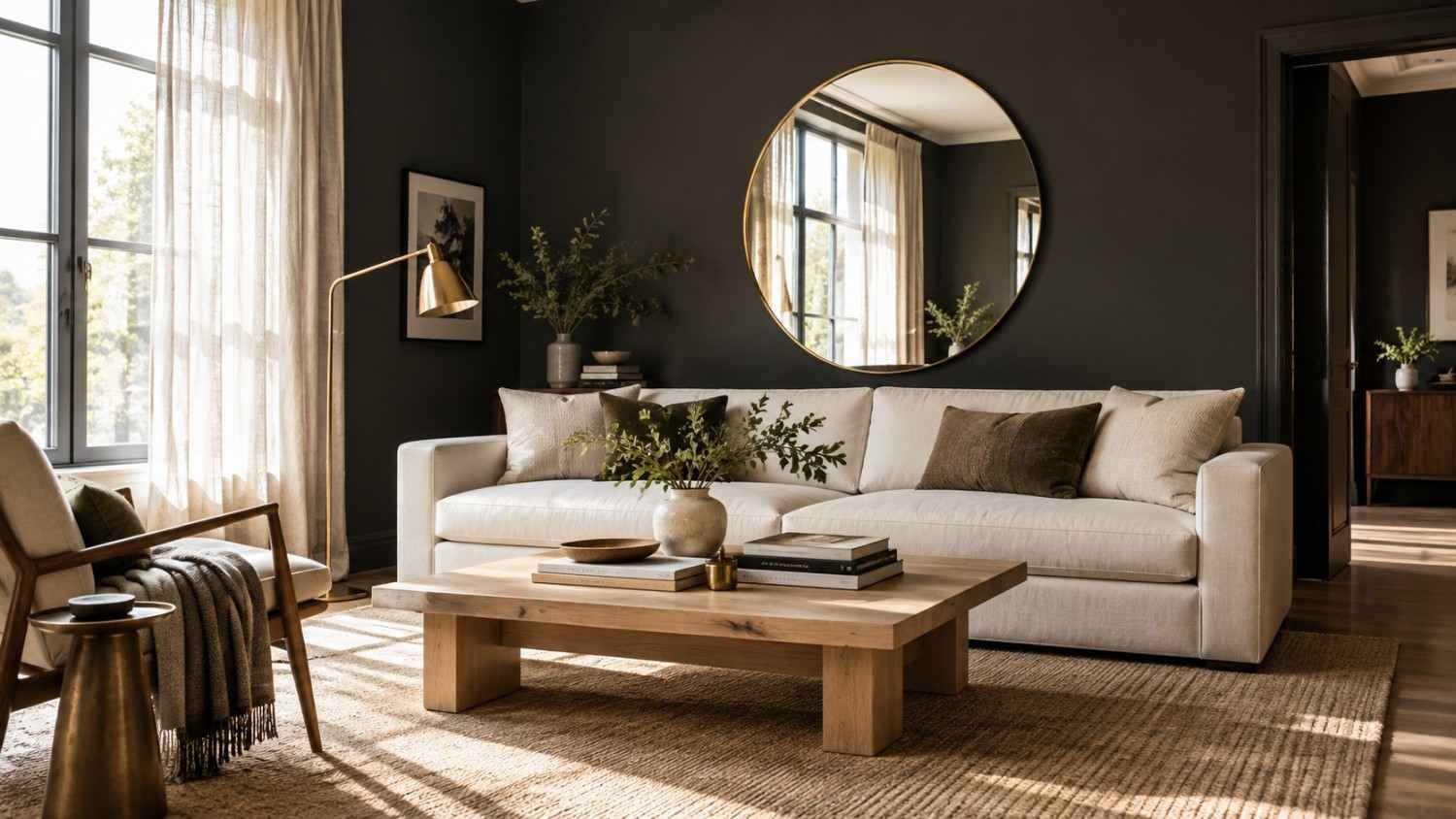
10. Hang a mirror opposite your main window
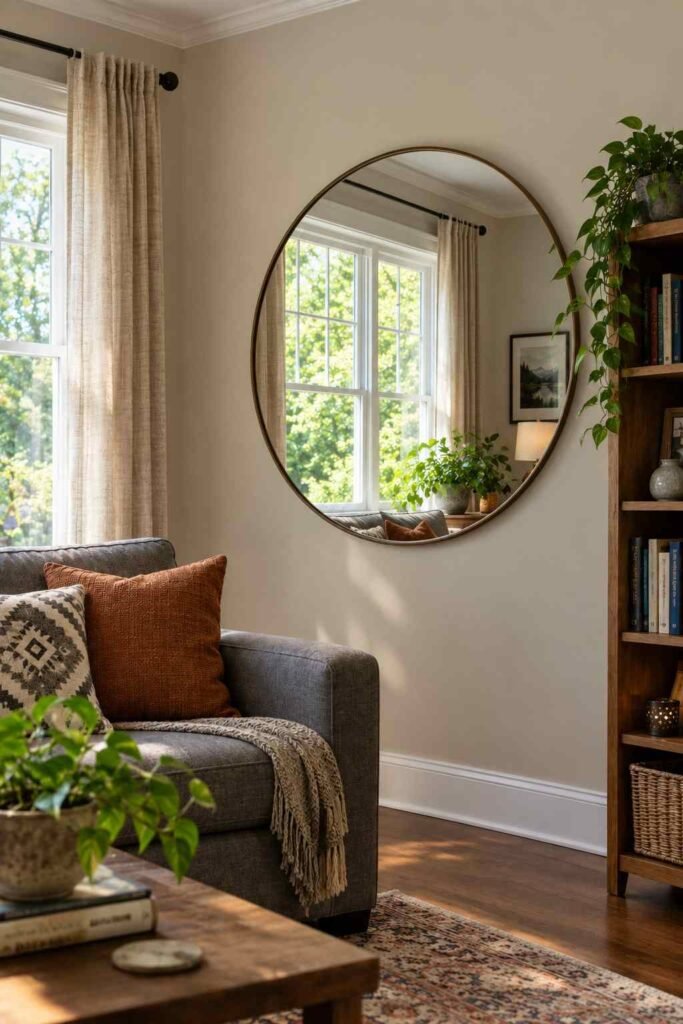
This is the single most repeated tip among designers, and for good reason: it doubles the perceived light source instantly.
11. Swap a solid coffee table for glass or acrylic
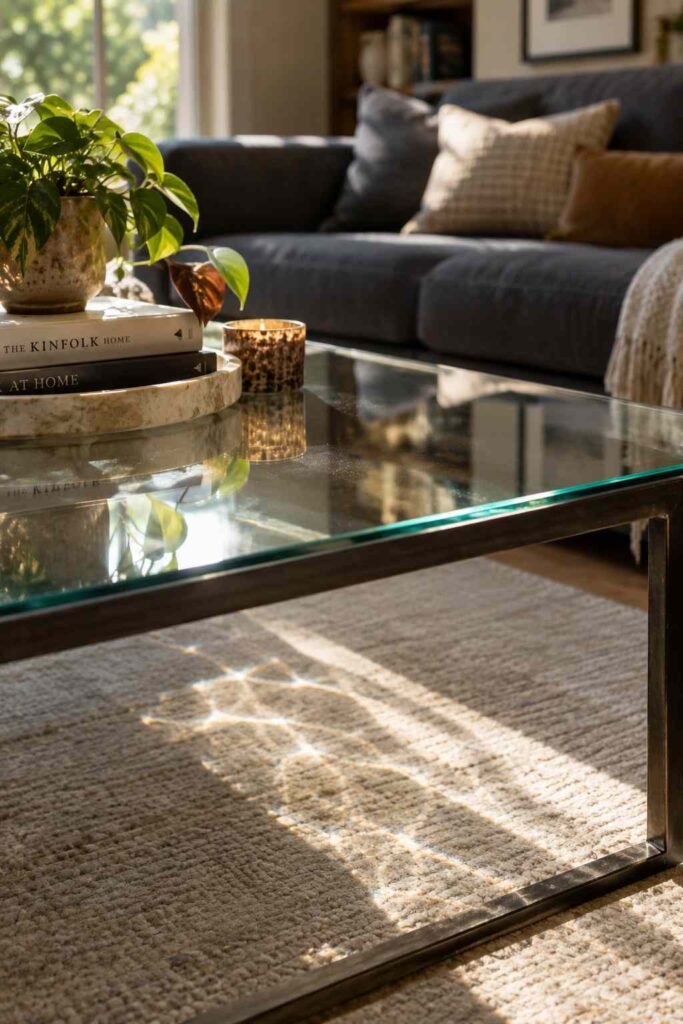
Transparent surfaces let light travel through instead of stopping at a dark wood tabletop.
12. Add brass or chrome accents

Metallic lamp bases, frames, and hardware catch and scatter light in ways matte black finishes cannot.
13. Use a high-gloss finish on one furniture piece
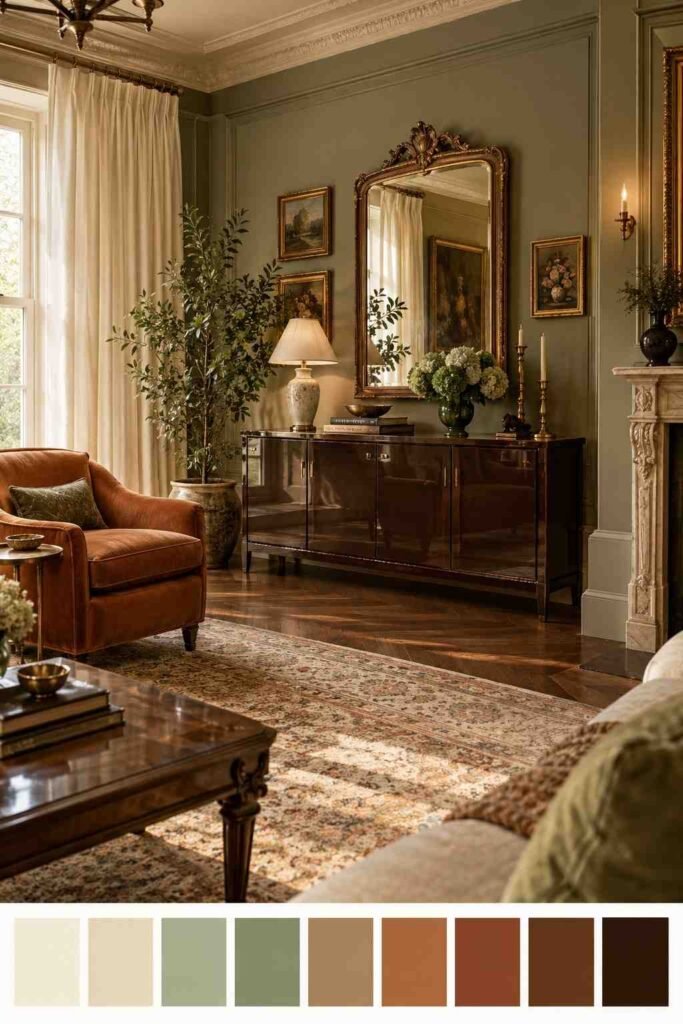
A lacquered sideboard or glossy media console reflects ambient light across the room, similar to what interior designers achieve in a well-styled Victorian living room, where polished wood and mirrored accents were traditionally used to offset heavy drapery and dark paneling.
Textiles and Soft Furnishings for a Lighter Feel
14. Layer a light-colored rug over dark flooring

A pale jute or wool rug breaks up dark floors and reflects light upward rather than absorbing it.
15. Switch to sheer or linen curtains
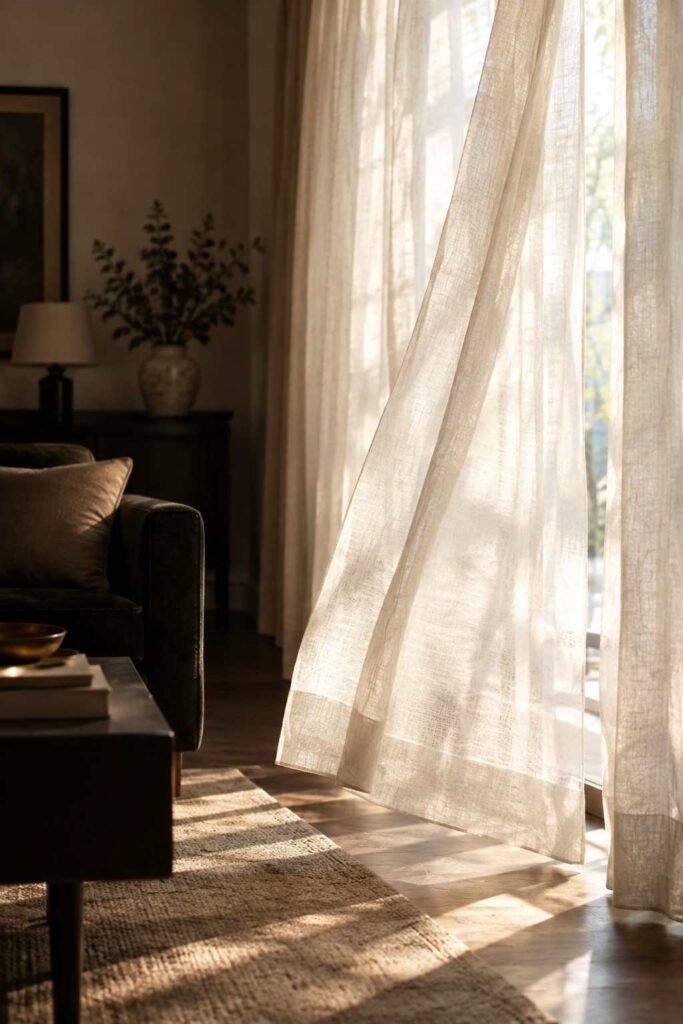
Heavy drapes block daylight even when open; sheer fabric diffuses sunlight softly across the room throughout the day.
16. Add pale cushions and throws in varied textures
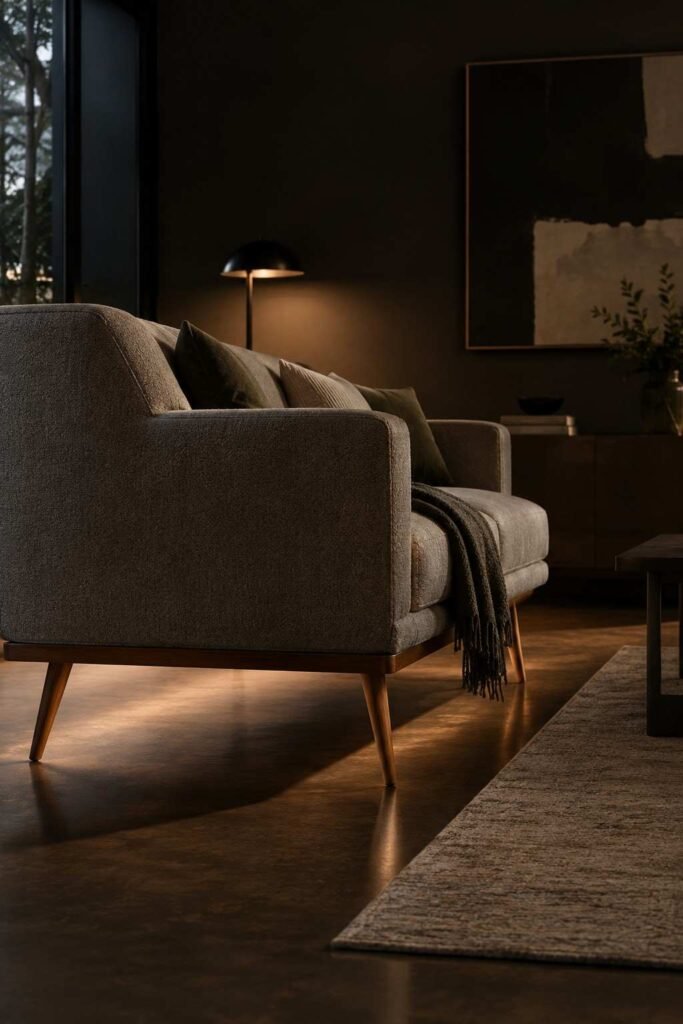
Cream, oatmeal, and soft gray textiles brighten dark sofas without requiring a full furniture replacement.
17. Choose furniture with visible, slender legs. Sofas and chairs that let light pass underneath them make the whole room feel more open than boxy, floor-hugging pieces.
Furniture Layout and Space Planning
18. Apply symmetry to your seating arrangement. Matching chairs or lamps on either side of a focal point create visual calm, which reads as “bright and organized” even in a dim room.
19. Streamline furniture size to the room. Oversized sofas swallow light and space; scaling down furniture opens sightlines across the floor.
20. Declutter surfaces and shelves. Every stacked book or knickknack creates a small shadow. Open shelving with fewer, larger objects lets light travel unobstructed.
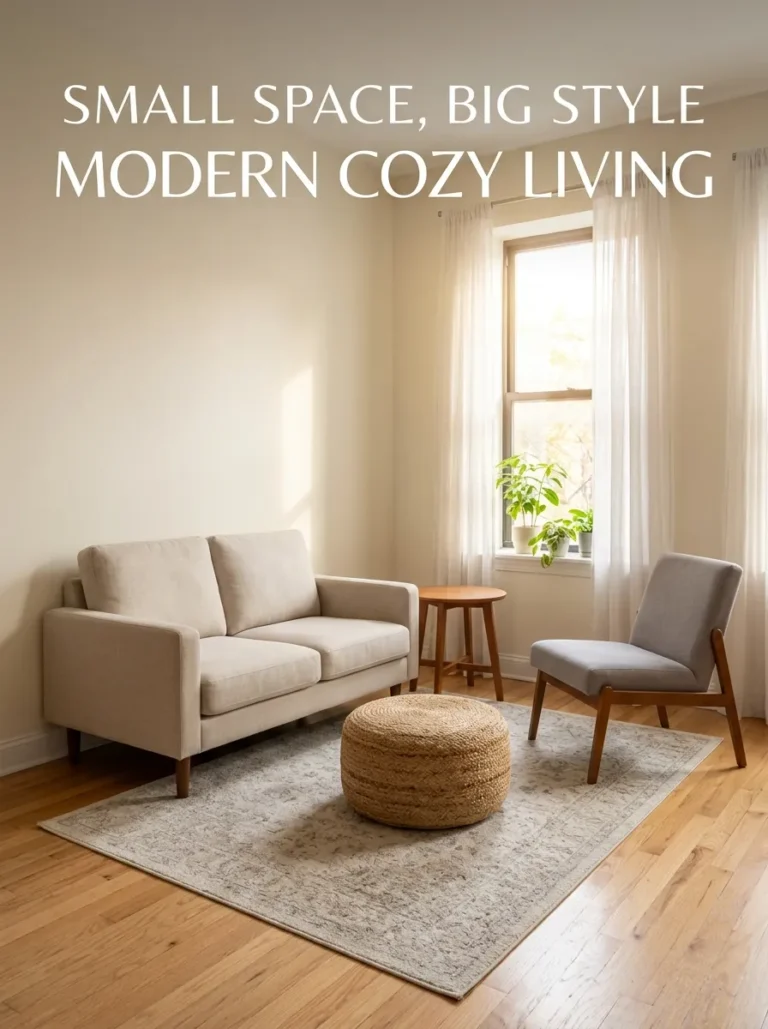
21. Create a multipurpose light zone. If your living room connects to an underused space, consider converting part of it into a sunroom den, where glazed walls and slim furniture invite daylight deeper into the adjoining room.
Bringing Nature Indoors
22. Add large-leafed houseplants near windows
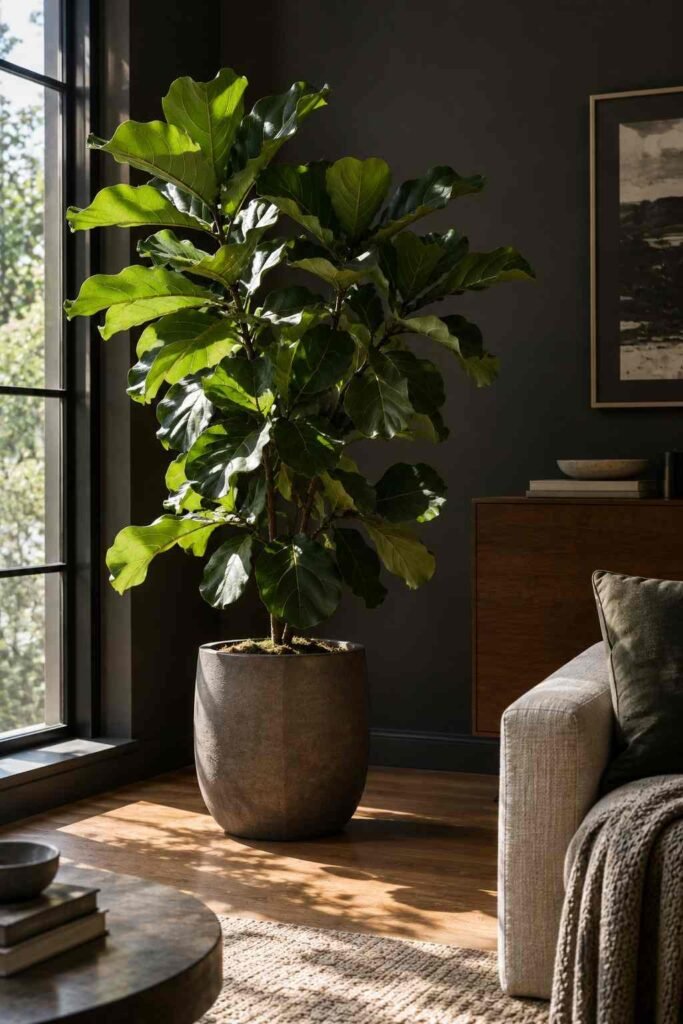
Plants like fiddle leaf figs or pothos soften dark corners and visually connect the room to natural light sources.
23. Choose light wood tones for new furniture. Ash, birch, and whitewashed oak reflect far more light than walnut or mahogany, instantly lifting a dark room’s palette.
24. Extend the living space outward
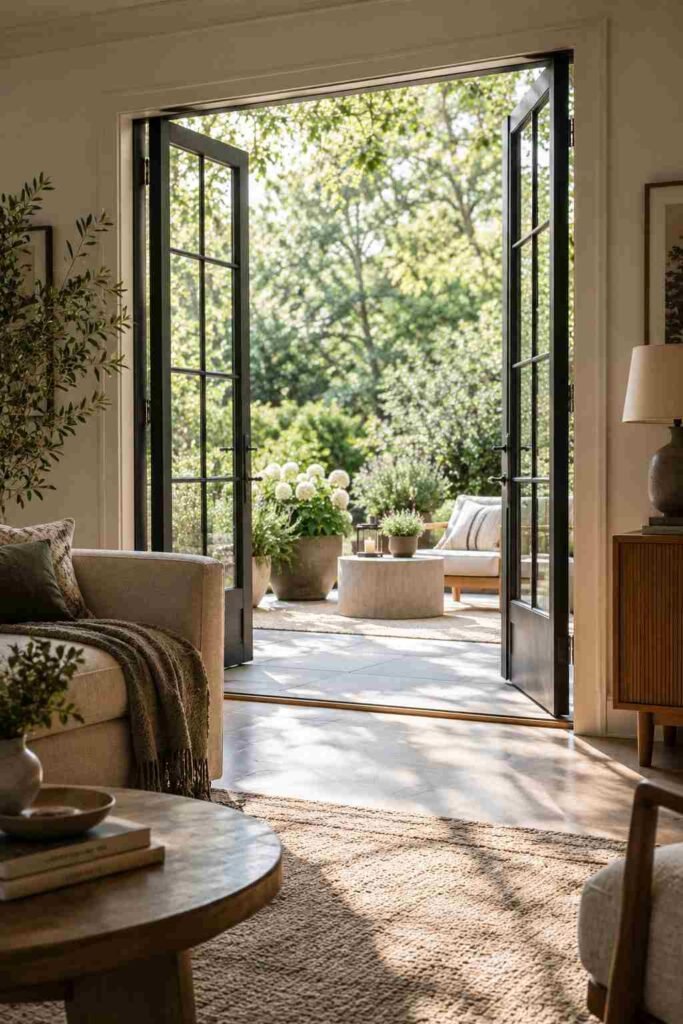
Where layout allows, opening a wall or adding French doors to a patio blurs the line between indoors and out — a concept covered in more detail by Outinteriors, which specializes in indoor-outdoor living transitions that maximize natural light flow.
Style Inspiration for Dark Rooms Done Right
25. Embrace a curated moody theme instead of fighting the darkness completely. Some dark living rooms don’t need to be fully brightened — they need better contrast. Pairing deep wall colors with gold accents, pale upholstery, and warm lighting creates a room that feels intentional and rich rather than gloomy, proving that “dark” and “dull” aren’t the same thing.
Common Mistakes to Avoid When Brightening a Dark Living Room
Many homeowners overcorrect by painting every surface stark white, which can feel sterile and cold rather than warm and bright. Others install bulbs with a color temperature that’s too warm, dimming the room further instead of energizing it. A frequent layout mistake is placing a mirror facing a wall instead of a window, which wastes its light-boosting potential entirely. Finally, filling a small, already-dark room with oversized furniture blocks both natural and artificial light paths, undoing every other improvement made to the space.
Conclusion
Brightening a dark living room rarely comes down to one fix. It’s the combination of smarter paint choices, layered lighting, reflective materials, lighter textiles, and thoughtful furniture placement that transforms a gloomy space into one that feels open and welcoming. Whether your room lacks windows entirely or simply needs better light distribution, these 25 ideas give you a realistic, room-specific plan rather than a single generic trick. Start with one or two changes — a mirror placement or a new bulb temperature — and build from there.