Inspiring 22 Farmhouse Living Room Ideas to Transform Your Space in 2026
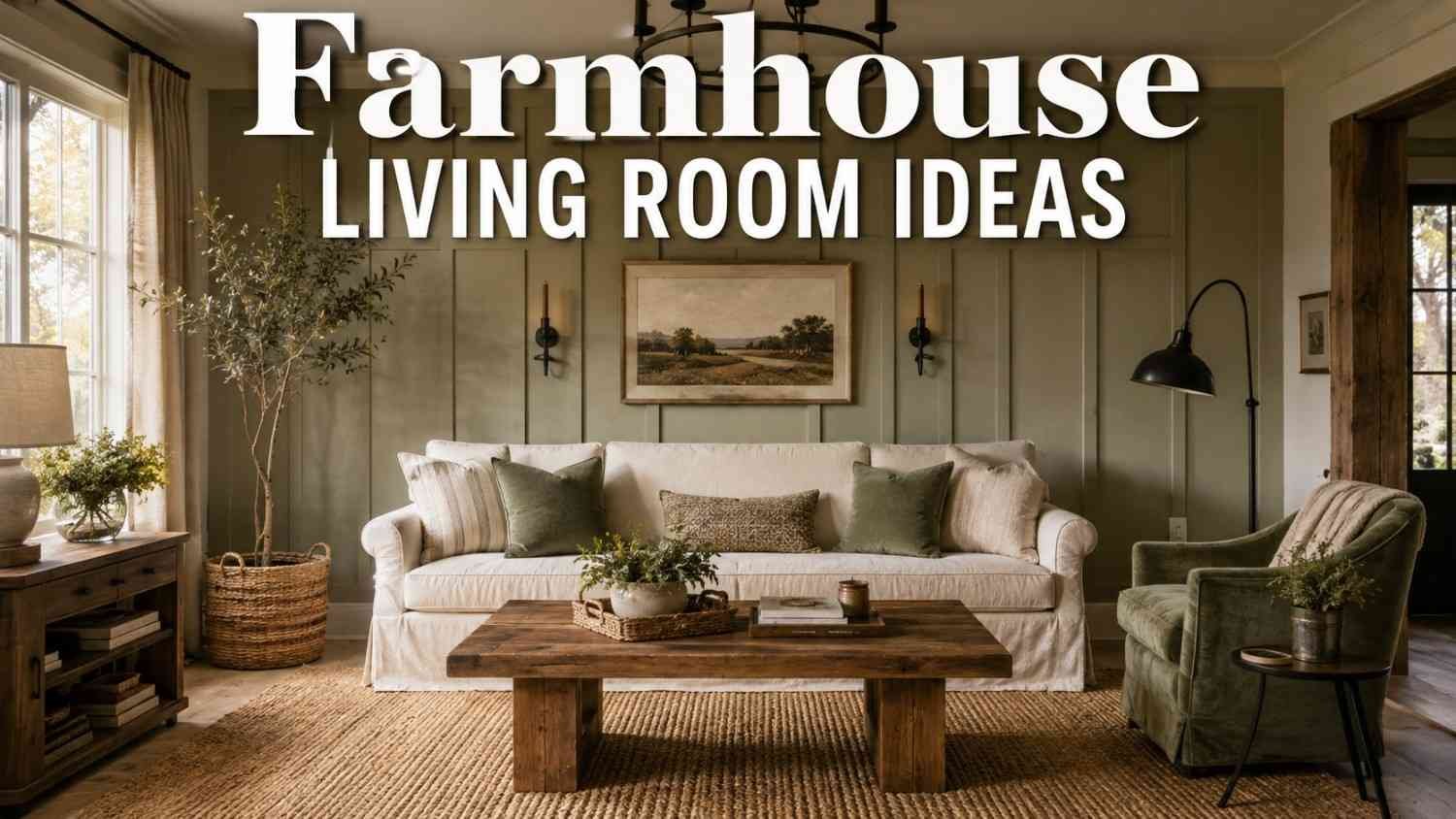
Farmhouse style has held its place as one of America’s most requested home aesthetics for nearly a decade, and it shows no sign of fading in 2026. The look pairs weathered wood, soft neutrals, and unpretentious comfort into a living room that feels lived-in from day one. But translating that feeling into your own home takes more than a shiplap wall and a jar of dried wheat on the mantel.
Below are 22 farmhouse living room ideas covering color, furniture, lighting, textiles, and budget — enough variety to fit a cottage, a suburban build, or a converted barn. Each idea reflects choices real homeowners and designers actually use, not a trend meant to photograph once and abandon.
Whether you’re starting from a blank room or refreshing one piece at a time, these farmhouse living room ideas are organized so you can find exactly the category you need — from paint colors to furniture layouts to lighting — without wading through pages of unrelated photos first.
What Makes a Farmhouse Living Room Feel Authentic?
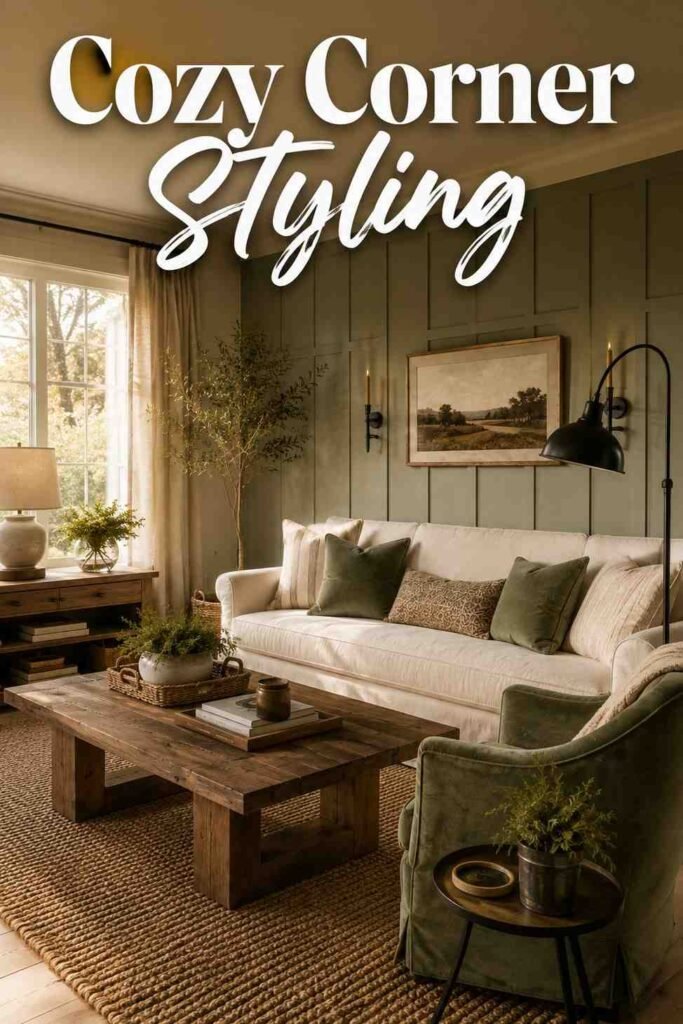
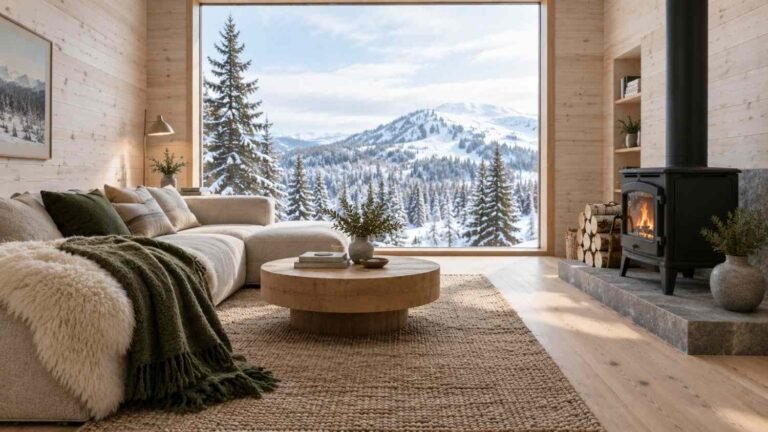
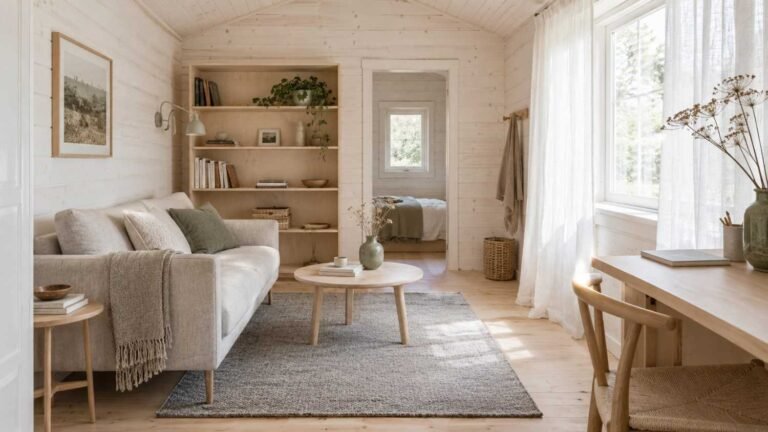
Before diving into individual farmhouse living room ideas, it helps to understand what ties them together. Authentic farmhouse design rests on three pillars: natural materials, a restrained color palette, and furniture that looks collected rather than matched. Reclaimed wood, wrought iron, linen, and cotton show up again and again because they age well and read as honest instead of manufactured. The palette usually stays within whites, warm grays, and soft browns, with occasional black accents for contrast. Nothing about a good farmhouse living room should look brand new — even in new-construction homes, designers borrow texture from salvaged barn wood, aged brass, or vintage-inspired hardware to avoid a sterile, showroom feel.
Understanding these fundamentals matters more than copying a single photo, because the best farmhouse living room decor comes from applying the same principles consistently across furniture, walls, and lighting rather than isolating them to one accent piece.
If your home leans closer to the water than the countryside, a guide to coastal living room ideas translates many of these same principles into a breezier, blue-and-white palette worth comparing before you commit to one direction.
22 Farmhouse Living Room Ideas for Every Style and Budget
These farmhouse living room ideas are grouped by category so you can jump to whichever part of your room needs the most attention, whether that’s color, furniture, lighting, or finishing touches.
Color Palette Ideas
1. Warm White Walls — Warm white remains the most common base for farmhouse living rooms because it reflects light without feeling clinical. Shades like Sherwin-Williams’ Alabaster or Benjamin Moore’s White Dove soften hard architectural lines and let reclaimed wood furniture stand out rather than compete for attention.
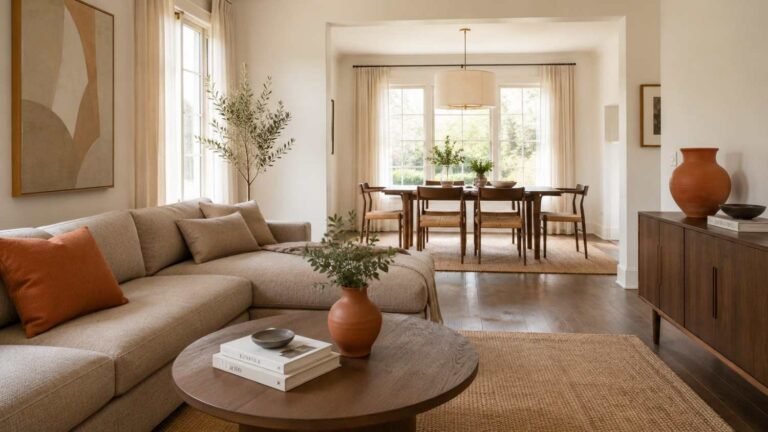
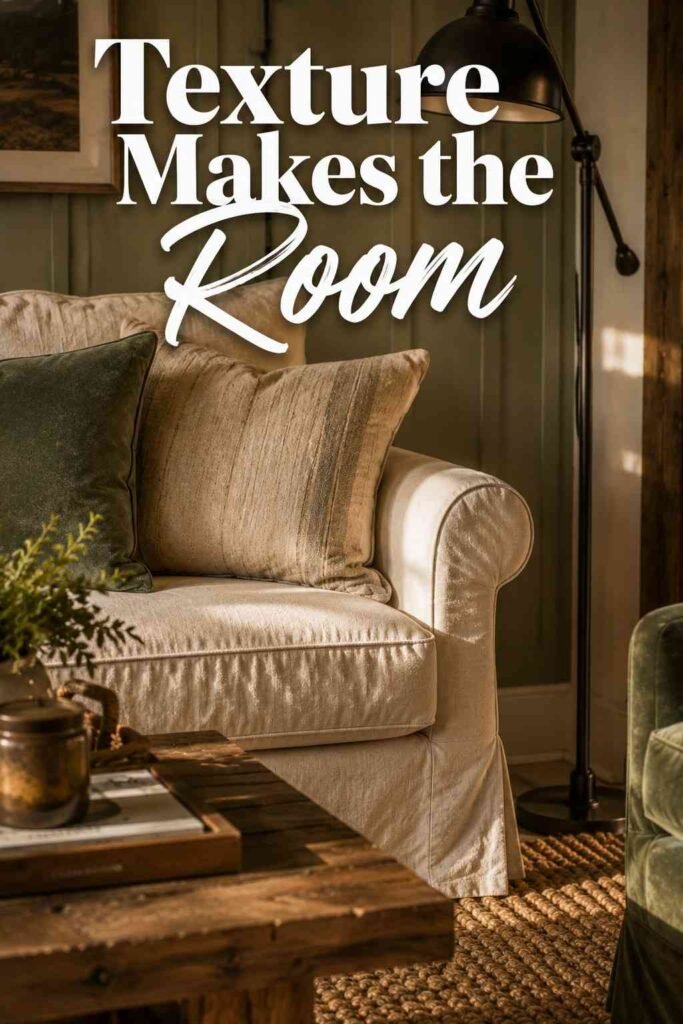
2. Layered Neutrals — Instead of one flat wall color, layer taupe, oatmeal, and dove gray across trim, walls, and upholstery. This builds depth without introducing pattern, keeping the room calm even when filled with textured accessories.
3. Black Accent Trim — A single black element — window frames, a door, or a fireplace mantel — grounds an otherwise pale room. Black trim gained popularity after Fixer Upper brought the contrast into the mainstream in the mid-2010s, and it still reads as fresh today.
4. Muted Sage or Olive Green — For homeowners who want color without straying from tradition, muted sage or olive on a single wall or cabinetry face adds warmth that pairs naturally with wood tones and brass hardware.
Furniture and Layout Ideas
5. Slipcovered Sofas — A slipcovered sofa in canvas or linen is a farmhouse staple because it’s washable, casual, and softens with wear, making it practical for households with kids or pets.
6. Reclaimed Wood Coffee Table — Choose a coffee table built from reclaimed barn wood or a live-edge slab. The imperfections — knots, saw marks, uneven edges — are the point, not a flaw to hide.
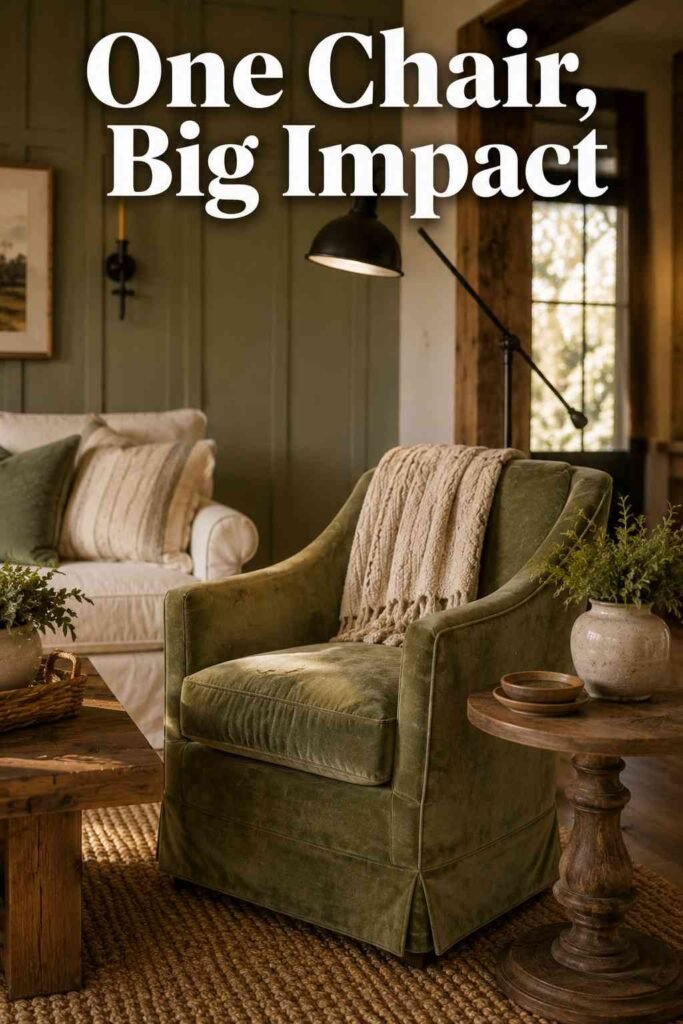
7. Mixed Seating Instead of a Matched Set — Swap a matching sofa-and-loveseat set for one sofa paired with two different accent chairs. Mismatched seating looks gathered over time rather than purchased in a single trip.
8. Open, Conversation-Friendly Layout — Farmhouse rooms favor pulling seating away from the walls and angling it toward a fireplace or window, rather than lining furniture along the room’s perimeter.
9. One Vintage or Antique Accent Piece — An inherited or thrifted item — a dough bowl, an old ladder, a trunk used as a side table — gives the room a sense of history that new furniture alone can’t replicate.
Wall and Ceiling Treatments
10. Shiplap Accent Wall — Shiplap is still the fastest way to signal farmhouse style, but limiting it to one wall keeps the room from feeling like a stage set.
11. Exposed Wood Beams — If ceiling height allows, add faux or reclaimed wood beams to bring architectural interest overhead, especially in rooms with flat or vaulted ceilings that otherwise feel plain.
12. Board and Batten Paneling — Board and batten brings texture below the chair rail and suits homes that can’t commit to full shiplap coverage.
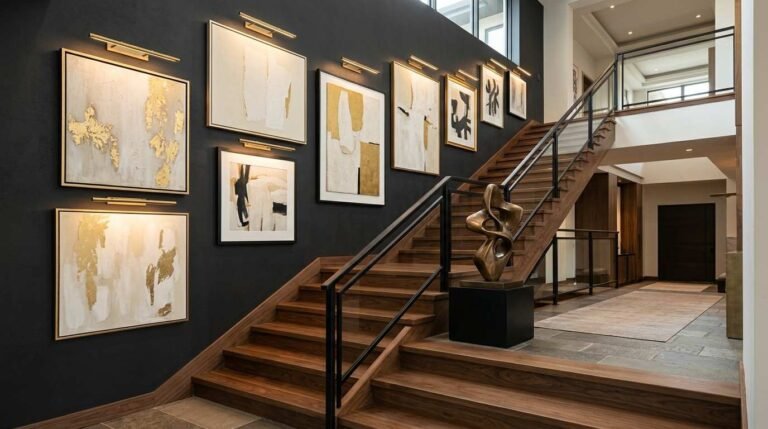
13. Gallery Wall With Framed Art and Mirrors — Group vintage-style frames, mirrors, and botanical prints into one curated gallery wall. For larger statement pieces above a sofa or mantel, luxury wall decor ideas can help you find oversized art and mirrors that anchor the space without overwhelming it.
Lighting Ideas That Set the Mood
14. Wrought Iron or Wood-Bead Chandeliers — A wrought iron chandelier or wood-bead pendant softens overhead lighting and reinforces the handmade feel farmhouse design depends on.
15. Layered Table and Floor Lamps — Rely on multiple light sources — a floor lamp near reading chairs, table lamps flanking the sofa — instead of one overhead fixture for a warmer evening glow.
16. Candle-Style Wall Sconces — Sconces shaped like candles, mounted beside a fireplace or bookshelf, add ambient light while echoing the style’s historical roots.
Textiles, Rugs, and Accessories
17. Jute or Wool Area Rugs — Natural-fiber rugs ground the room visually and hold up to daily foot traffic better than most synthetic blends.
18. Buffalo Check or Ticking Stripe Textiles — Throw pillows and blankets in buffalo check or ticking stripe are classic farmhouse shorthand — use them sparingly on one or two pieces rather than throughout the room.
19. Woven Baskets for Storage — Baskets double as blanket storage and decor, softening hard furniture lines while keeping remotes, magazines, or firewood out of sight.
Small-Space and Budget-Friendly Ideas
20. Multi-Functional Furniture — In smaller living rooms, a coffee table with storage or a console that doubles as a media stand prevents clutter without sacrificing style.
21. Paint Over Full Renovation — A fresh coat of warm white paint and swapped-out hardware can achieve much of the farmhouse look for a fraction of a full renovation’s cost.
22. Thrifted and DIY Accents — Estate sales, flea markets, and simple projects like whitewashing an old dresser let homeowners build the look gradually instead of buying everything new at once.
Farmhouse Living Room Ideas for Different Home Types
Not every house was built to naturally accommodate farmhouse style, and adapting these farmhouse living room ideas to your home’s existing architecture makes the result feel intentional rather than forced.
Ranch homes already have the low-slung, open footprint farmhouse style favors. Lean into it with exposed beams and a stone or shiplap fireplace surround, since ranch ceilings usually have the height to support both without feeling heavy.
Colonial and traditional homes often have more formal trim and taller ceilings, which pair well with layered neutrals and a black-accented mantel rather than a full shiplap wall — a lighter touch keeps the room from clashing with the home’s existing millwork.
Condos and apartments benefit most from the small-space and budget-friendly farmhouse living room ideas covered above, since paint, textiles, and furniture choices can be adjusted or reversed without violating a lease.
New-construction homes sometimes feel too polished for farmhouse style right away. Reclaimed wood furniture, a vintage rug, and one antique accent piece introduce the age and imperfection that new drywall and trim don’t yet have on their own.
Common Mistakes to Avoid When Designing a Farmhouse Living Room
Even the best farmhouse living room ideas can tip into cliché when overdone. The most common mistake is over-decorating with signage, mason jars, and novelty text until the room feels themed rather than lived-in. A second mistake is choosing furniture that’s too formal — farmhouse style depends on pieces that look comfortable and slightly worn, not stiff or brand-new.
Skipping texture is another issue; an all-white room without wood, iron, or woven elements reads flat instead of warm. Many homeowners also stop at a single wall of shiplap, missing the layering of color, lighting, and textiles that makes the style feel complete. Restraint, more than any single product, is what separates an authentic farmhouse living room from an imitation of one. When in doubt, remove one accessory rather than add another — most farmhouse living rooms improve by subtraction, not addition.
How Much Does a Farmhouse Living Room Makeover Cost?
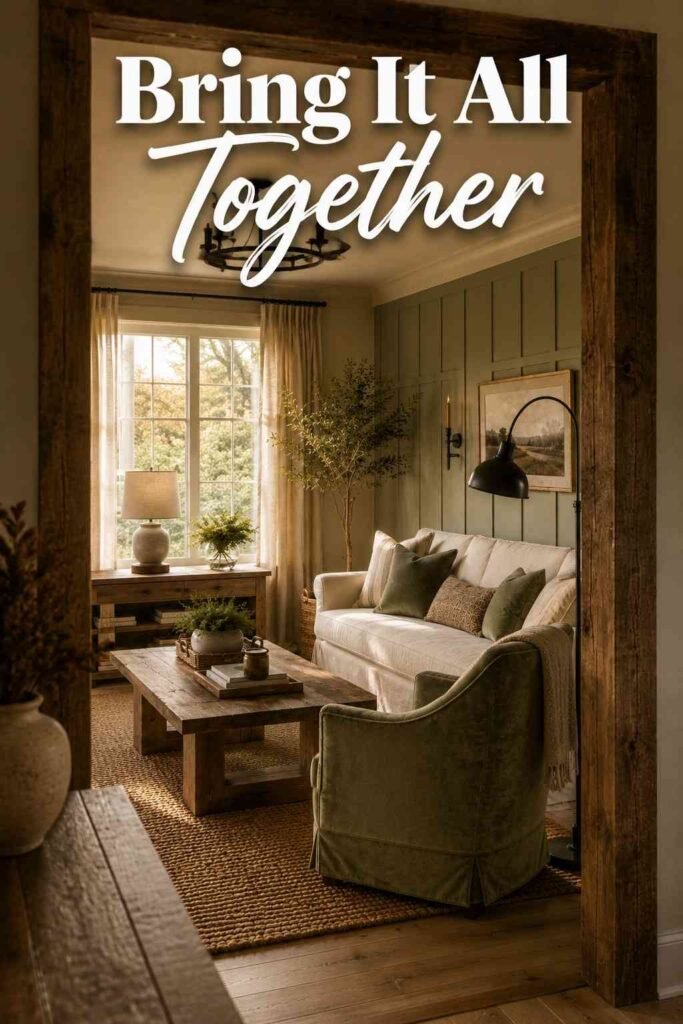
Not all farmhouse living room ideas carry the same price tag, and costs vary widely depending on how much of the room is being changed. A cosmetic refresh — new paint, pillows, a rug, and accessories — typically runs $500 to $1,500. Adding a statement piece like a reclaimed wood coffee table or a wrought iron chandelier can push a mid-range update to $2,000 to $5,000.
Structural changes, including shiplap walls, exposed beams, or a stone fireplace surround, often start around $5,000 and can exceed $15,000 depending on square footage and local labor rates. Homeowners on a smaller budget usually get the best return by focusing on paint, lighting, and one or two vintage or reclaimed pieces before considering built-ins or paneling, since these finishing touches carry the most visual weight relative to their cost. Spreading a farmhouse living room makeover across two or three phases, rather than buying everything at once, also makes it easier to stay within budget while still reaching a cohesive result.
Conclusion
Farmhouse style endures because it rewards patience rather than a single shopping trip. The 22 farmhouse living room ideas above — from warm white walls to thrifted accents — work best when combined gradually, layering color, texture, and a few meaningful pieces over time. Start with the changes that cost the least, like paint and textiles, then add structural elements such as beams or paneling once the smaller pieces feel right. Whichever farmhouse living room ideas you start with, consistency across color, texture, and furniture is what will make the final room feel finished rather than half-decorated.
For a broader look at how professional designers approach whole-home styling, resources like outinteriors are worth bookmarking alongside your farmhouse mood board as you plan the next phase of your redesign.
Frequently Asked Questions
What colors work best in a farmhouse living room?
Warm white, taupe, and soft gray form the base palette, with black or muted sage used sparingly as accents. These tones let natural wood and iron finishes stand out rather than compete for attention.
Is shiplap still popular for farmhouse living rooms in 2026?
Yes, though homeowners now use it more selectively — often on a single accent wall — rather than covering an entire room, which keeps the look current instead of dated.
How can I get a farmhouse living room look on a tight budget?
The most budget-friendly farmhouse living room ideas focus on paint, textiles, and one or two thrifted or reclaimed pieces before investing in structural changes like beams or paneling. These smaller updates typically cost under $1,500.
What’s the difference between farmhouse and modern farmhouse living rooms?
Traditional farmhouse leans rustic and vintage, while modern farmhouse blends the same materials with cleaner lines, mixed metals, and a slightly more polished furniture silhouette.
Do farmhouse living rooms work in small spaces or apartments?
Yes. Multi-functional furniture, light wall colors, and limiting heavy textiles to one or two pieces keep the style from overwhelming a smaller footprint.
What lighting fixtures fit a farmhouse living room?
Wrought iron chandeliers, wood-bead pendants, and candle-style sconces are the most common choices, often paired with layered table and floor lamps for evening warmth.
How do I keep a farmhouse living room from feeling outdated?
Avoid literal signage and over-themed decor, rotate textiles seasonally, and mix in a few contemporary pieces so the room evolves rather than staying frozen in one trend.