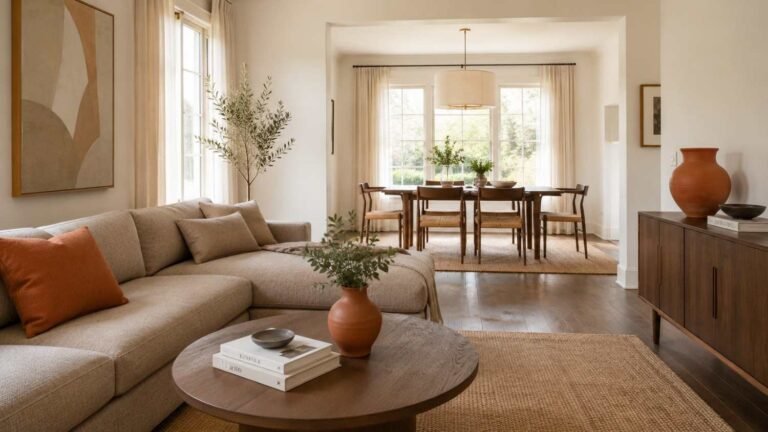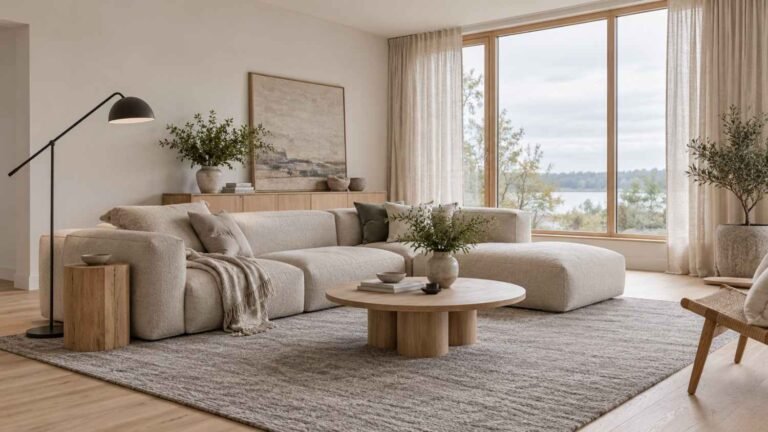
30 Scandinavian Minimalism Interior Design Ideas Inspired by Cozy Nordic Homes: Any Room Feels Calm
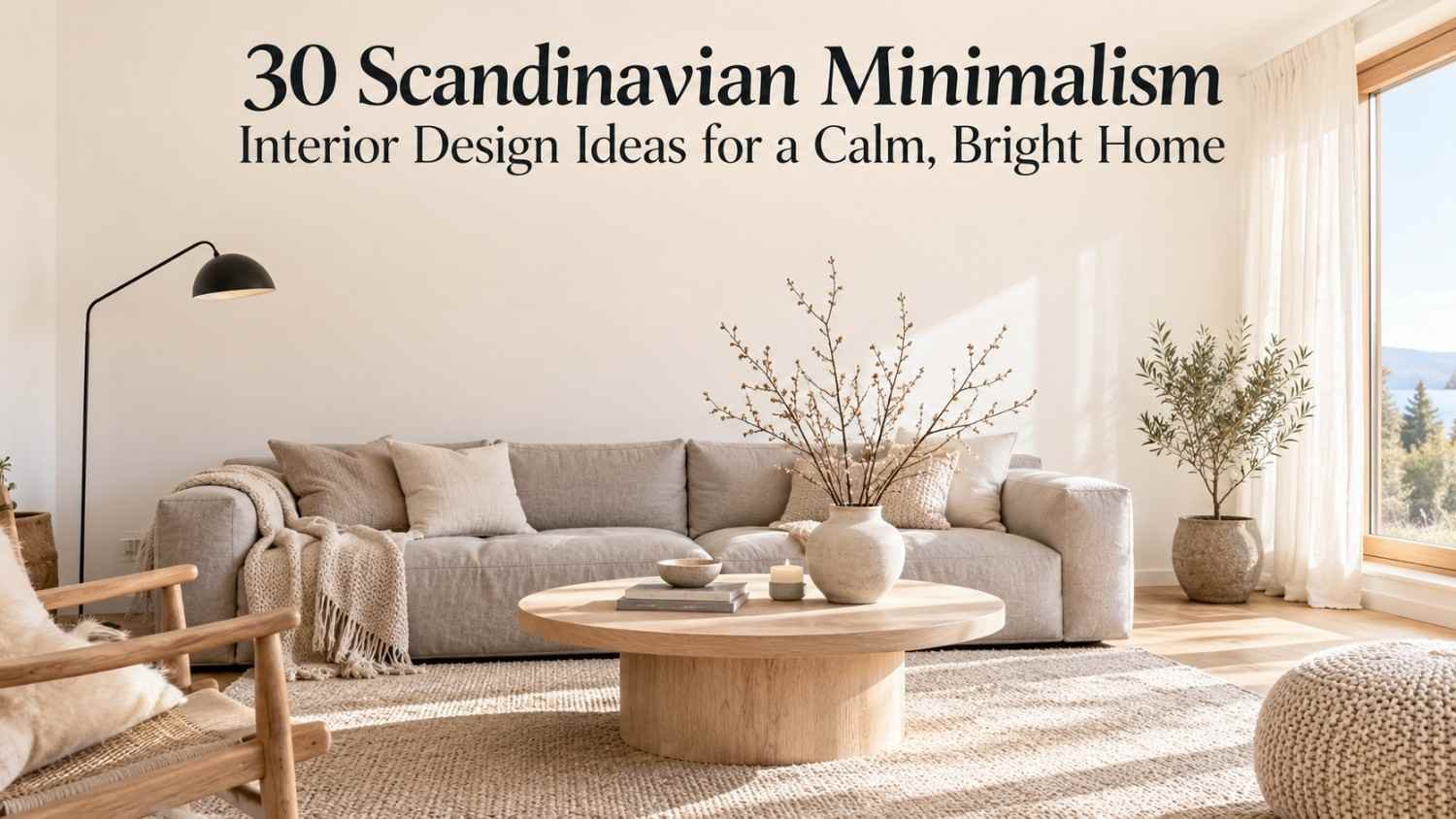
Walk into a well-planned Nordic home, and you feel it at once. The air seems lighter. The room breathes. Nothing shouts for attention, yet everything feels chosen. This calm is no accident. It grew from long, dark winters in Denmark, Sweden, Norway, and Finland, where people learned to make indoor spaces bright, warm, and useful. This guide gathers 30 Scandinavian minimalism interior design ideas you can use in a rented flat or a family house. Each idea is practical, easy to adapt, and rooted in how Nordic households actually live. Start with the principles, then move room by room.
Why Scandinavian Minimalism Interior Design Ideas Still Work
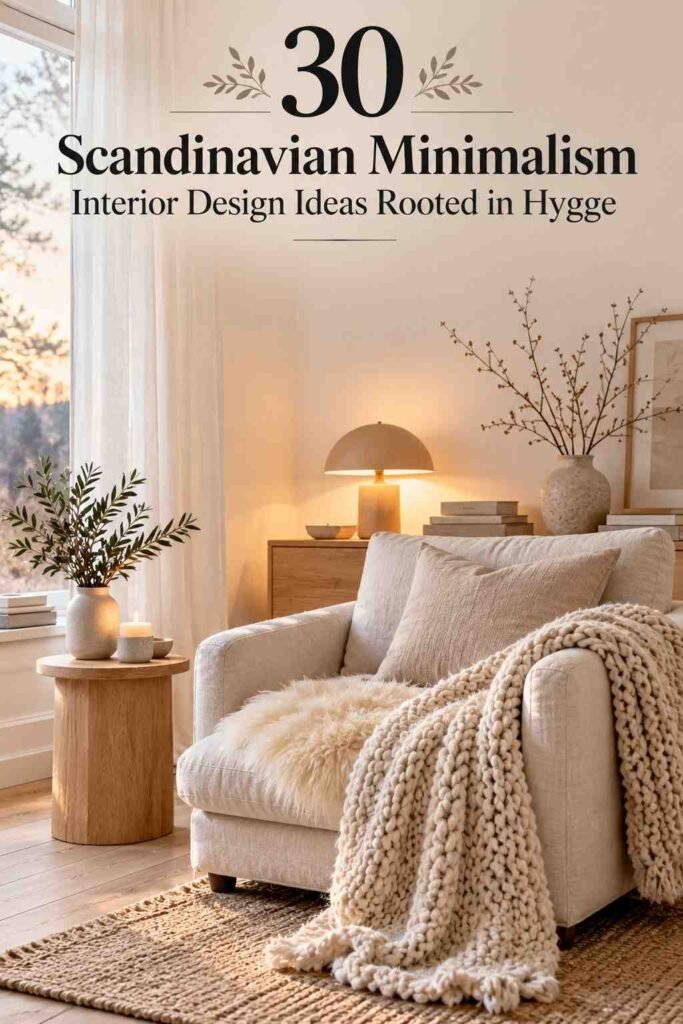
The style feels fresh because it solves real problems. Nordic homes must capture scarce daylight, stay warm, and serve busy families. In Stockholm, midwinter daylight lasts only about six hours, so designers lean on pale surfaces, simple shapes, and warm lamps. Two ideas shape the look. Hygge, a Danish word for cozy contentment, asks for soft textures and gentle light. Lagom, a Swedish concept meaning “just the right amount,” asks for restraint. The style reached a worldwide audience through the Design in Scandinavia touring exhibition, which crossed North America between 1954 and 1957. Today, Scandinavian minimalist interior design ideas still guide brands such as Hay, Muuto, and Artek, the Finnish company co-founded in 1935 by Alvar Aalto.
Scandinavian Minimalism Interior Design Ideas for Color

Nordic palettes borrow from the landscape: snow, fog, pale birch, and granite. The rule of thumb is simple. Pick three main tones and one accent, then repeat them across the room. Repetition creates calm. Because light values bounce daylight deeper into a space, they matter more than any single trendy shade. Test paint samples on two walls and look at them in morning and evening light before you commit. Undertones change dramatically as the sun moves, and a white that looks soft at noon can turn cold at dusk. If you love natural grain, see how Scandinavian interior design ideas with wood block flooring can add pattern to both small and large rooms.
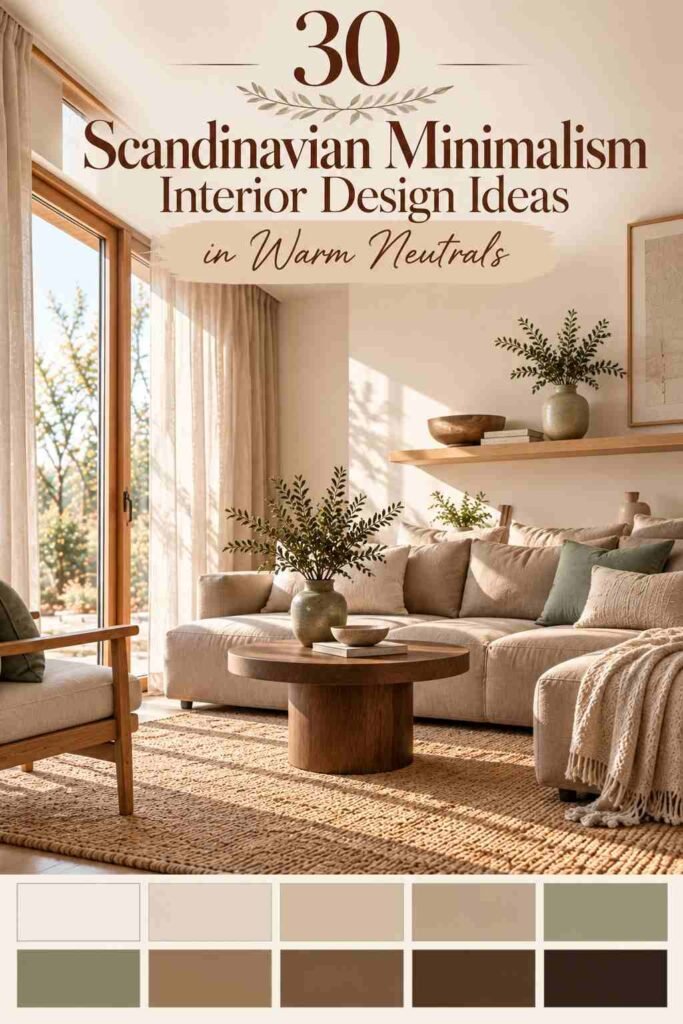
- Warm white walls. Choose an off-white with a creamy or light grey undertone instead of stark blue-white. It reflects light without feeling clinical.
- Soft grey layering. Pair a pale grey sofa with a light grey rug and charcoal cushions. The tonal range adds depth without adding clutter.
- Muted sage or dusty blue. One quiet wall in a forest or fjord shade brings nature indoors while keeping the room restful.
- Black as punctuation. Matte black picture frames, lamp stems, and window trim sketch crisp lines against light surfaces.
- Deep green as the single accent. A dark green sofa against white walls feels cozy and still minimal, provided everything else stays pale.
Light and Glow: Four Ideas for Brighter Rooms
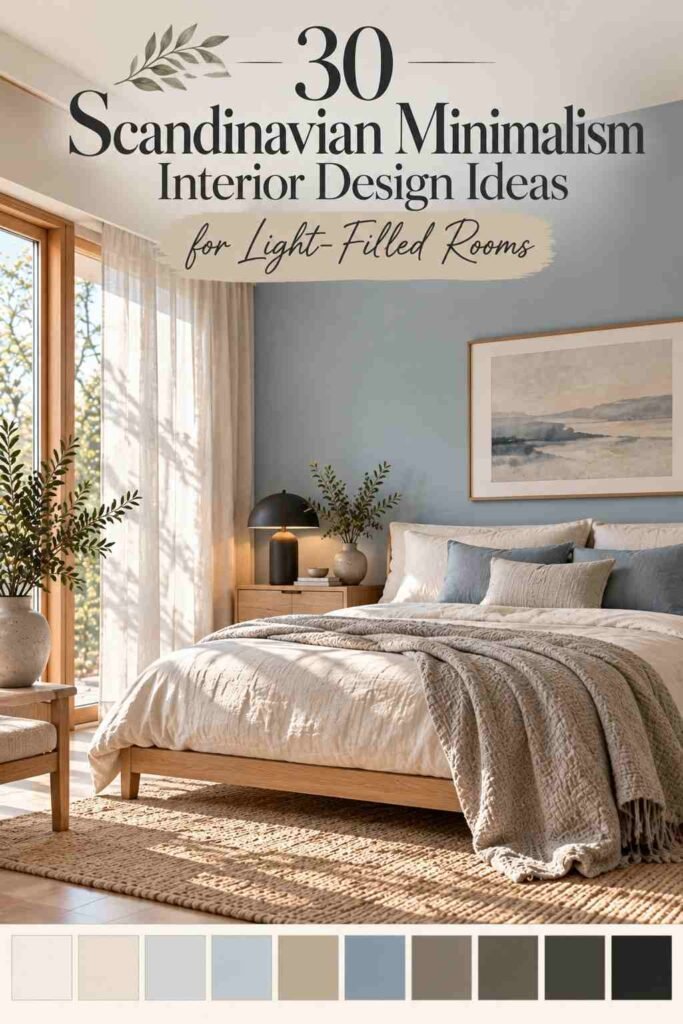
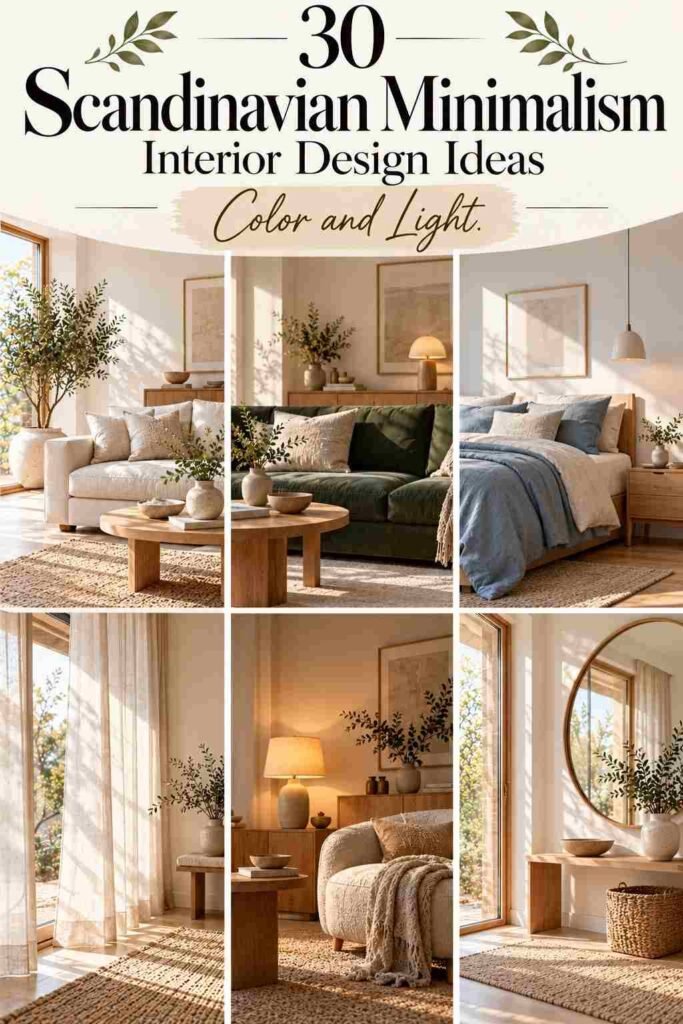
Daylight is the true luxury in Nordic design, so the best layouts protect it. Furniture sits away from windows. Window treatments are thin. Mirrors and glossy touches carry brightness across the room. After sunset, the strategy changes. Instead of one harsh ceiling fixture, Scandinavians build several small pools of warm light at different heights. This layered approach is kinder to the eyes and makes even a compact room feel generous. It also supports the calm mood that defines the style, because shadows soften and edges blur gently. Want a bolder seat that still feels calm? These living room designs with dark green couch examples show how to do it.
- Sheer linen curtains. They filter sun, hide nothing, and let the window frame become part of the design.
- Mirrors opposite windows. A simple wood-framed or frameless mirror doubles the daylight and visually widens narrow rooms.
- Layered lighting at 2700K
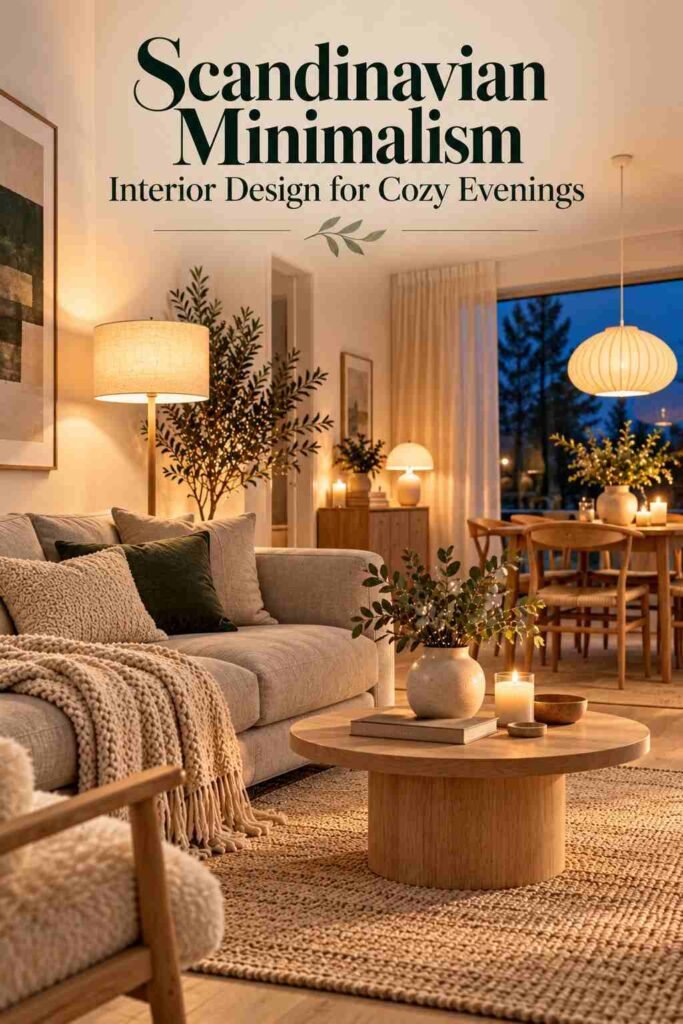
Combine a floor lamp, a table lamp, and a wall light. Warm bulbs around 2700K create the glow Danes call hygge.
- One sculptural pendant. Poul Henningsen’s PH 5, introduced in 1958, shows how a single well-shaped fixture can anchor a dining table.
Scandinavian Minimalism Interior Design Ideas for Floors and Walls
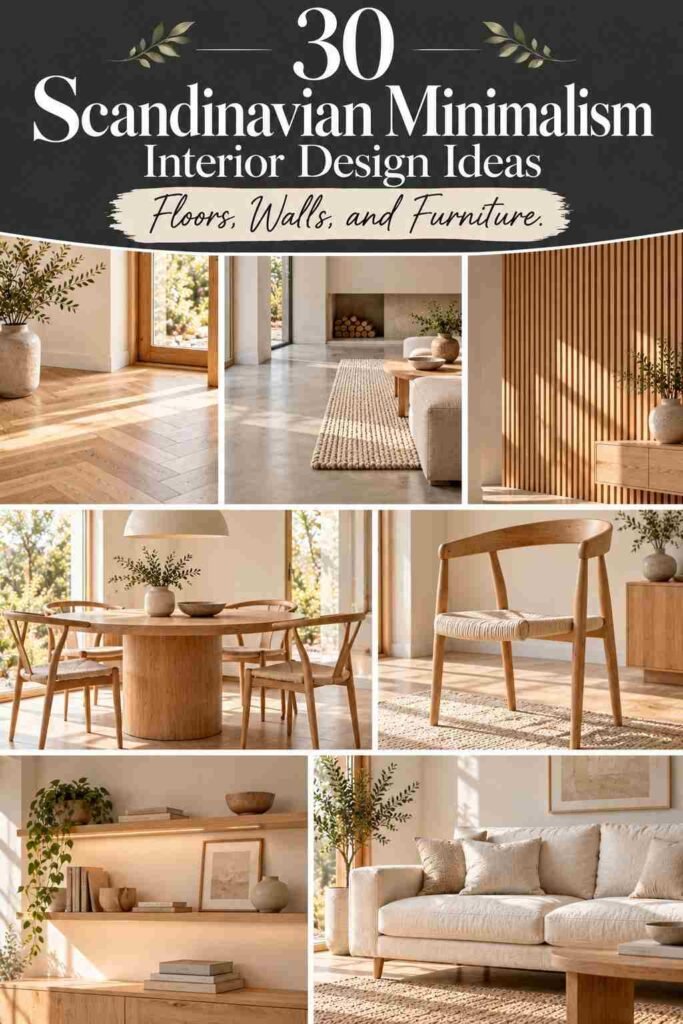
Surfaces set the tone before a single chair arrives. Nordic homes favor honest materials: wood, plaster, stone, and concrete. Finishes are matte or lightly oiled, never glossy or heavily stained. Texture does the decorative work that pattern does elsewhere. A pale oak floor, a limewashed wall, and a wool rug can fill a room with interest while using only three quiet materials. Choose products with low-sheen finishes, since high shine shows every scratch and breaks the soft look. If you rent, rugs and removable wall slats deliver much of the same effect. For a cooler, more urban mood, explore Scandinavian interior design ideas with concrete floors and the rugs that soften them.
- Pale plank floors

Oak, ash, or birch in wide boards brighten a room and hide dust better than dark wood.
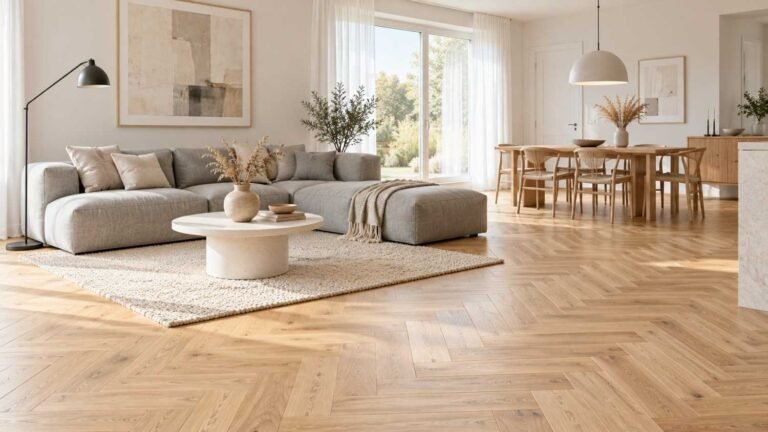
- Wood block or herringbone parquet. The pattern adds rhythm underfoot while the pale tone keeps the space quiet.
- Polished concrete
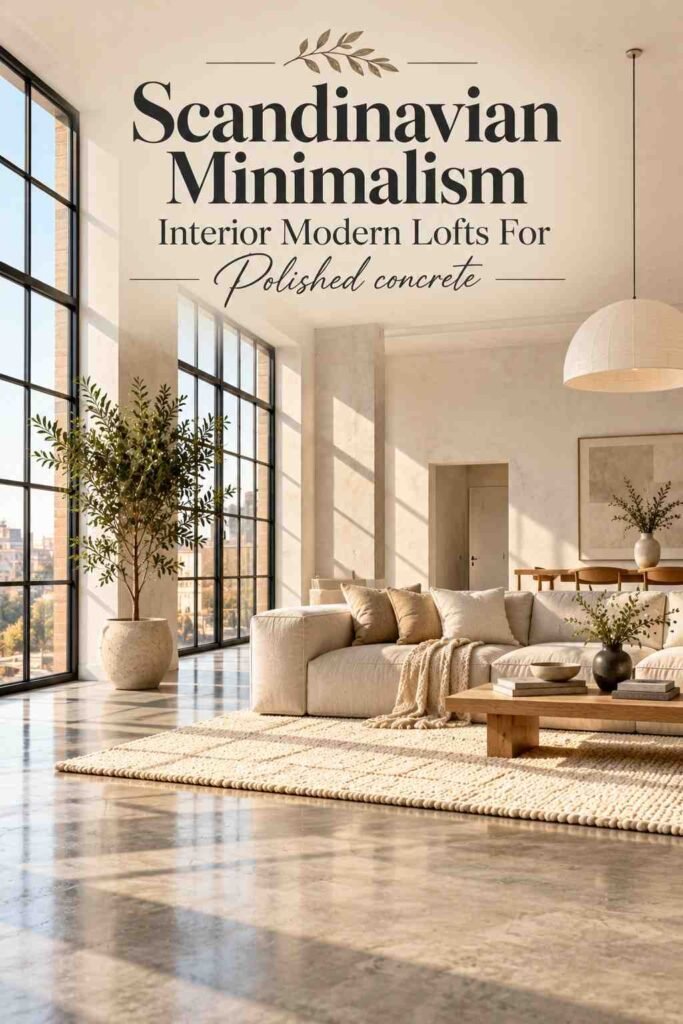
Cool and matte, it suits modern lofts. Soften it with a large wool or jute rug.
- Limewashed or matte plaster walls. Subtle movement in the finish catches light and avoids a flat, builder-white look.
- Vertical wood slat panels
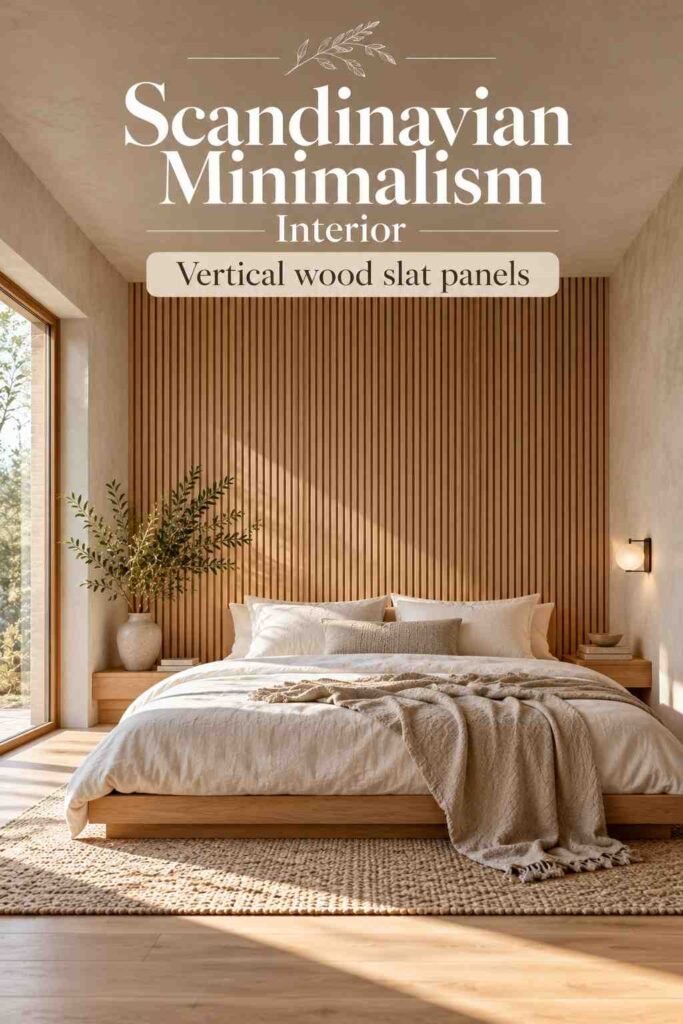
A slatted accent wall behind a bed or sofa adds warmth and absorbs sound.
Furniture and Materials: Six Ideas That Last
Minimalism here does not mean empty. It means every piece earns its place. Nordic homes often hold fewer items, but those items are sturdy, repairable, and shaped for daily use. Think of a chair your grandparents could have owned, and your children might inherit. That mindset keeps clutter out naturally. When shopping, check the joinery, the finish, and the fabric weight. A modest piece in solid wood usually outlasts a trendy one made of thin veneer, and it develops a pleasing patina rather than looking worn.
- Buy fewer, better pieces. Set a budget for one quality sofa or table instead of several short-lived items.
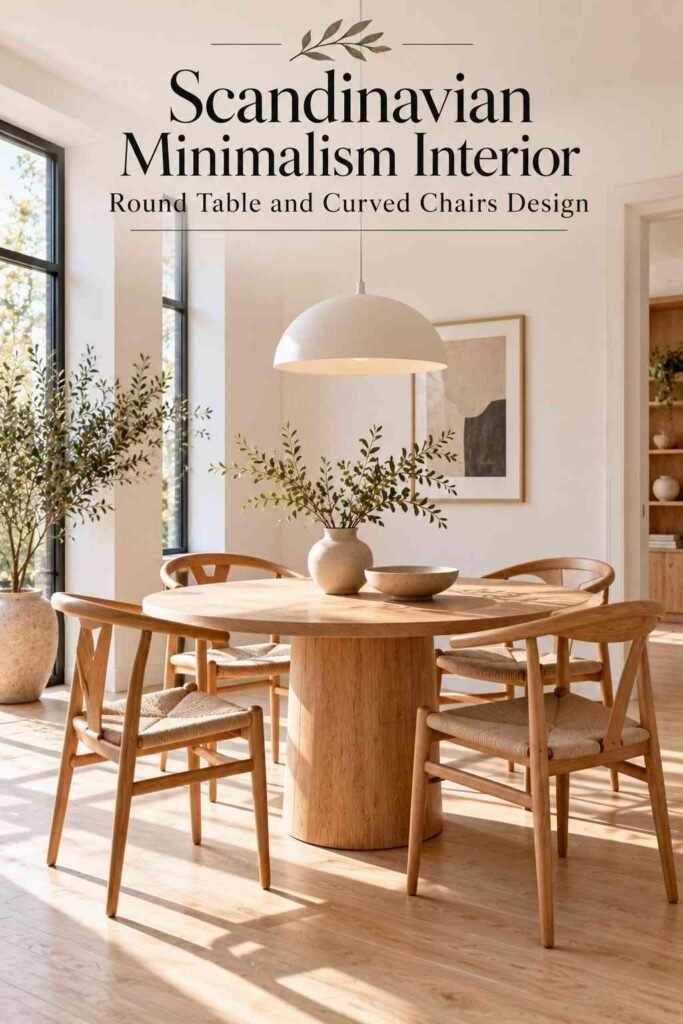
- Choose design classics. Hans Wegner’s Wishbone Chair (1949) and Arne Jacobsen’s Egg Chair (1958) remain benchmarks of Danish craft.
- Low-profile sofas. Slim arms and raised legs show more floor, which makes small rooms feel larger.
- Natural textiles. Wool throws, linen cushions, and a sheepskin over a chair add warmth without visual noise.
- Edited open shelving
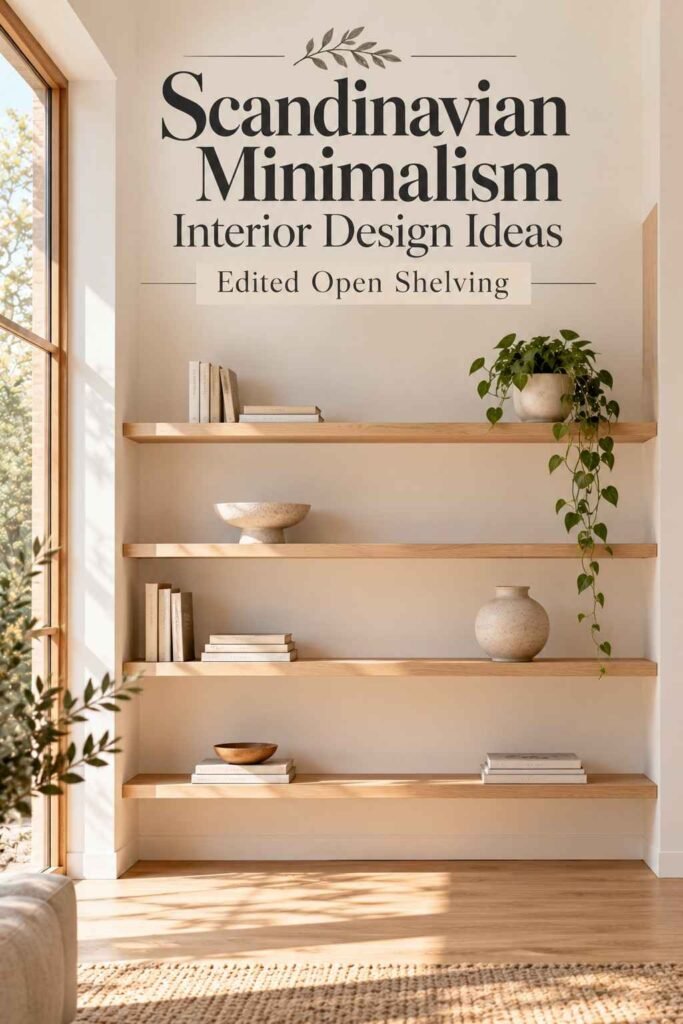
Display a few books, one ceramic piece, and leave generous gaps between them.
- Hidden storage
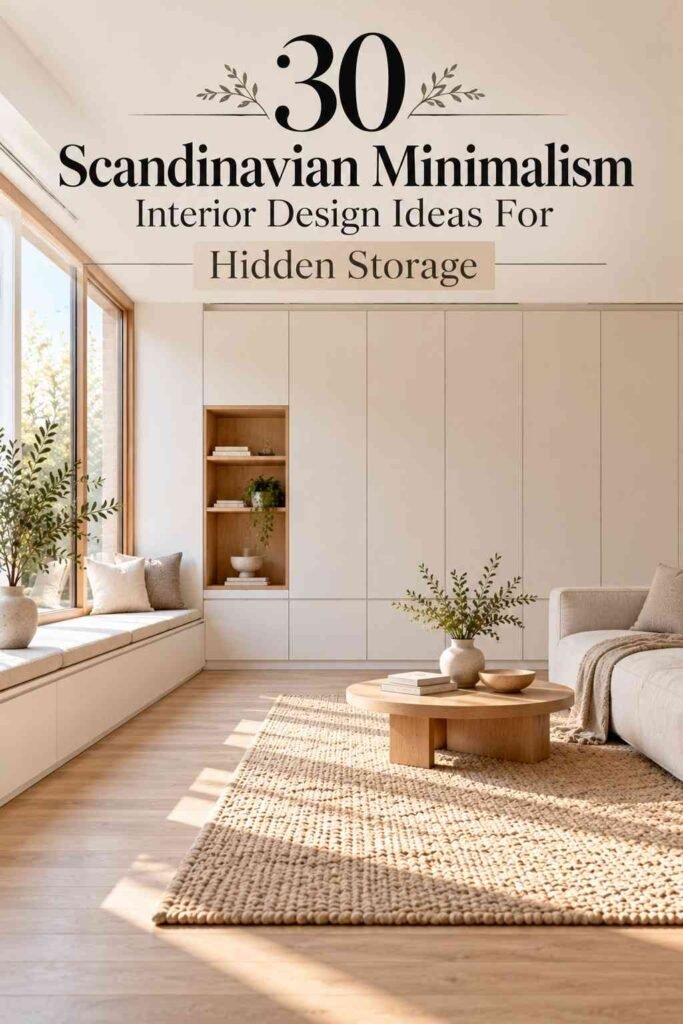
Built-in benches, wall-to-wall cabinets, and bed drawers keep surfaces clear.
Scandinavian Minimalism Interior Design Ideas for Living Rooms and Bedrooms
In social and sleeping spaces, comfort leads. A Nordic living room is arranged for conversation, not TV. Seating faces inward, a rug defines the zone, and a side table sits within every reach. Bedrooms follow the same logic, with restful colors and very little on view. Sleep research widely supports cooler, darker, quieter rooms, and Nordic bedrooms deliver those conditions with heavy curtains, natural bedding, and almost no electronics. The result feels more like a retreat than a display.
- Define the zone with a rug. A large neutral rug anchors the seating and visually separates it from the dining area.
- Build around one focal point
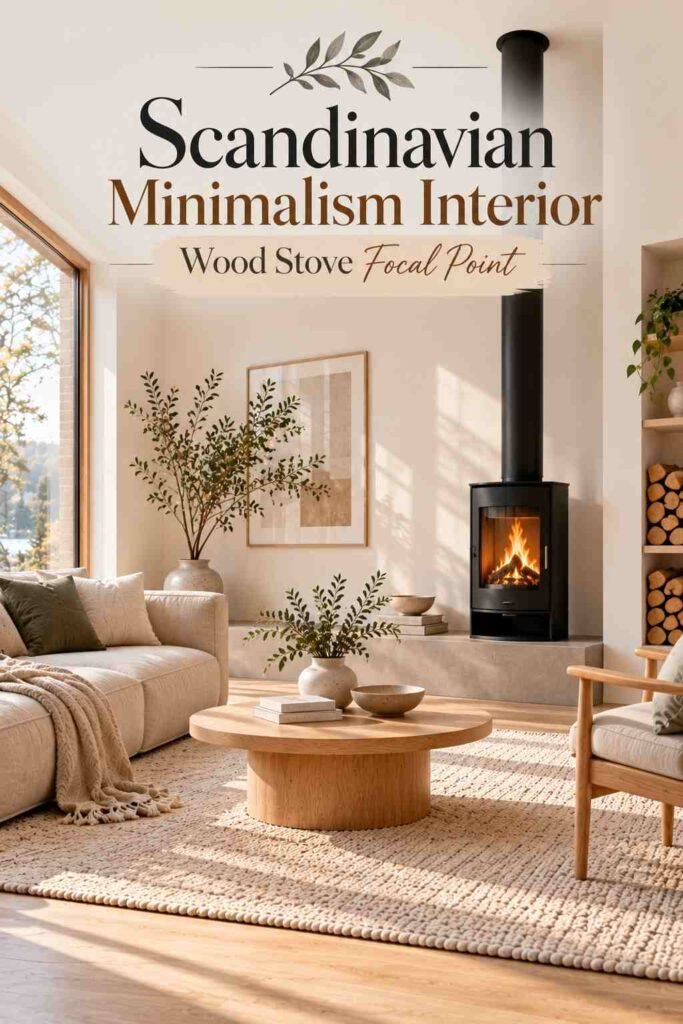
A wood stove, a fireplace, or a single large artwork gives the eye a place to rest.
- Hang a small, edited gallery
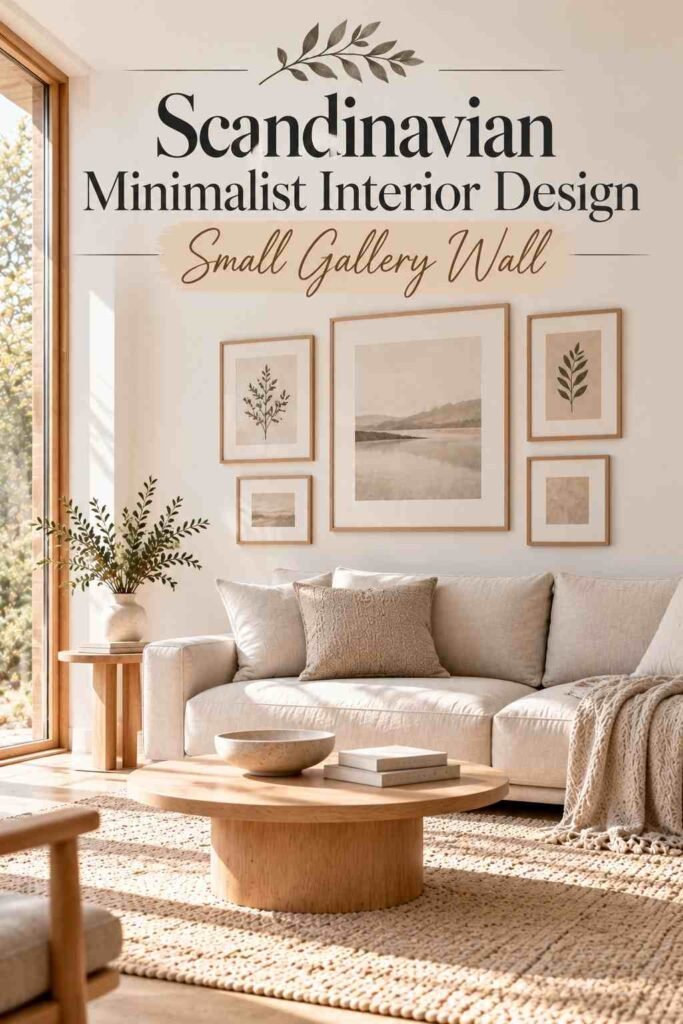
Three to five frames with wide mats look intentional; twenty look busy.
- Keep the bed low and simple
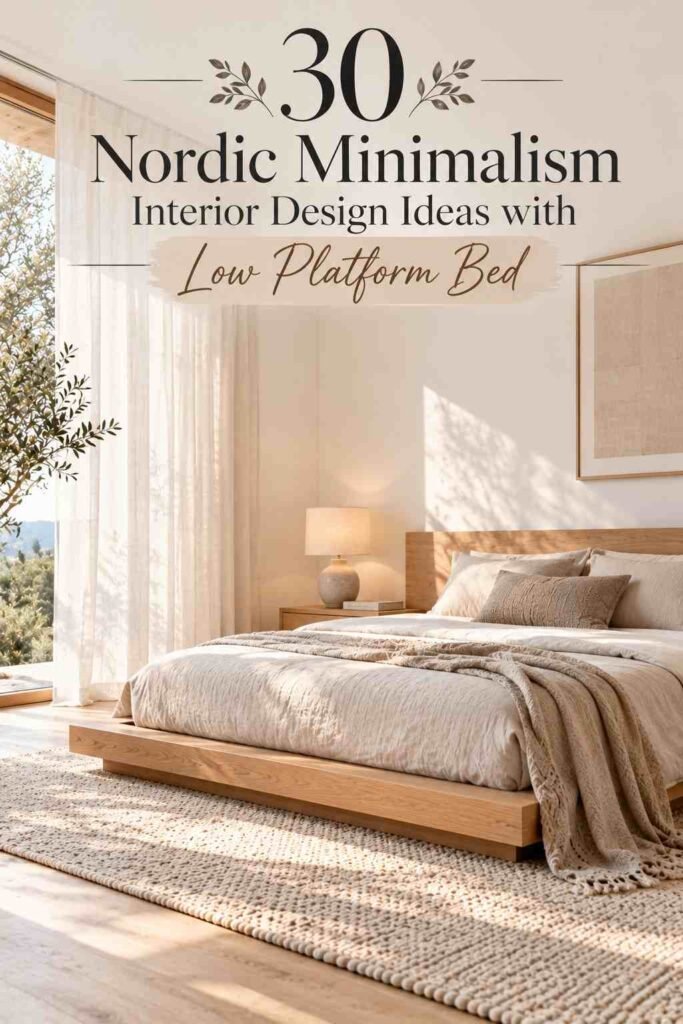
A platform or low wooden frame with white or oatmeal linen bedding sets a spa-like mood.
- Limit the nightstand. One lamp, one book, and one glass of water are enough.
Kitchens, Bathrooms, Entryways, and Greenery
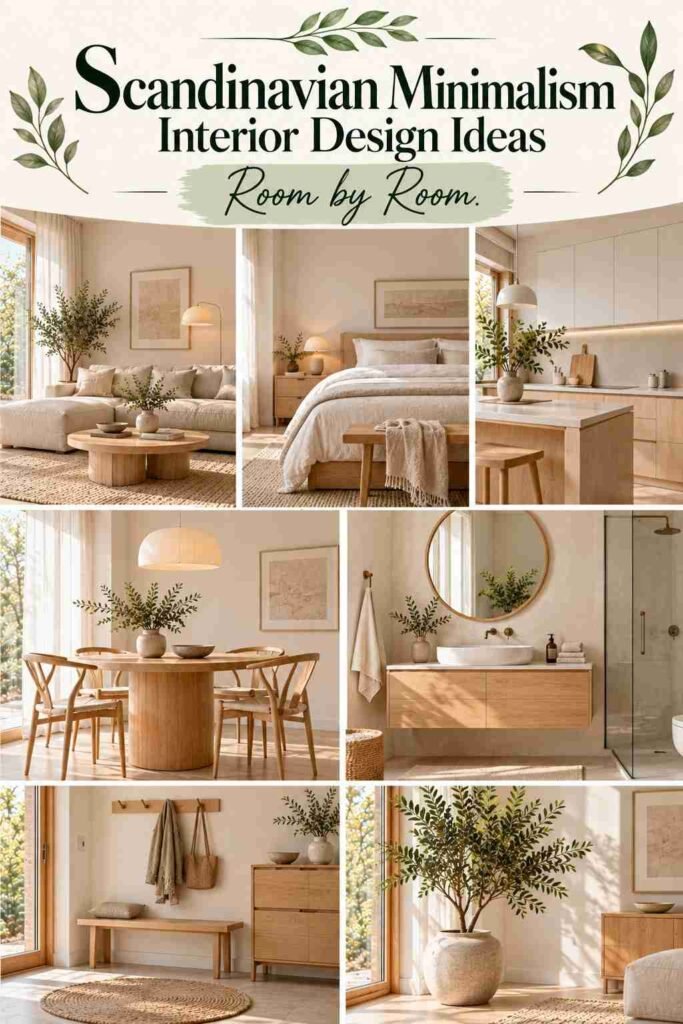
Working rooms get the same treatment: clean lines, strong function, and a touch of nature. Nordic kitchens favor flat-front cabinets and visible craftsmanship. Bathrooms stay simple, with light tile and a single warm material. Entryways receive special care because many Scandinavian households remove shoes at the door, so a tidy landing zone is essential. Finally, a plant or two softens hard edges and brings living color into a pale scheme. Keep arrangements loose and uneven, since symmetrical, staged displays can feel stiff. Planning a bathroom refresh? Browse vintage bathroom vanity ideas that mix heritage charm with clean lines.
- Flat-front kitchen cabinets
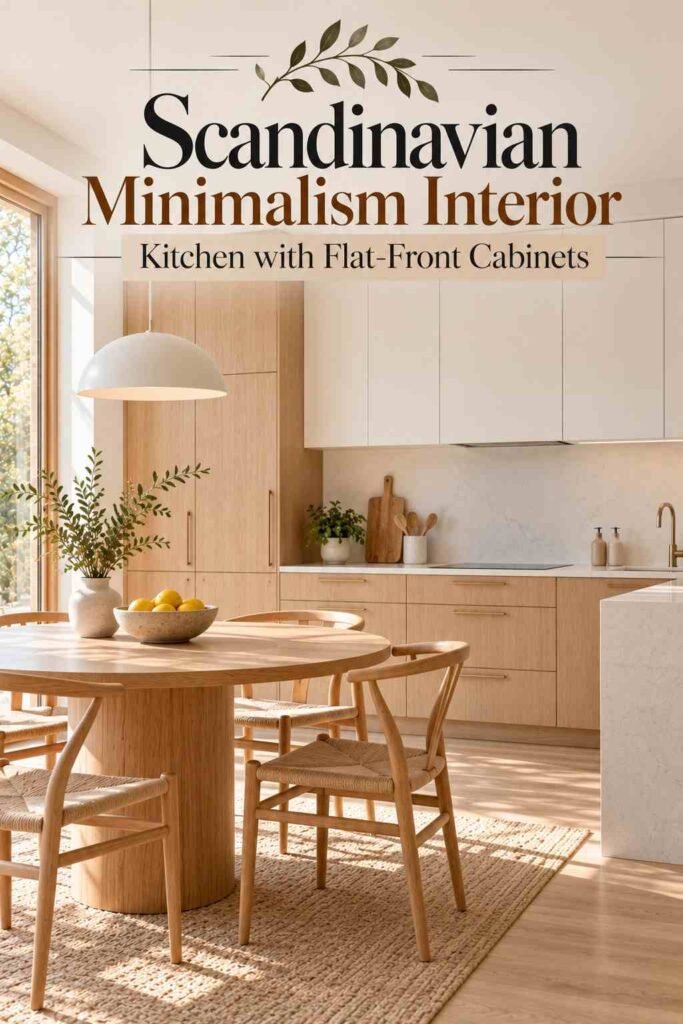
White, pale grey, or light oak doors with slim handles keep the room visually quiet.
- A round dining table. It softens a room’s straight lines and makes conversation easier.
- A wall-hung bathroom vanity
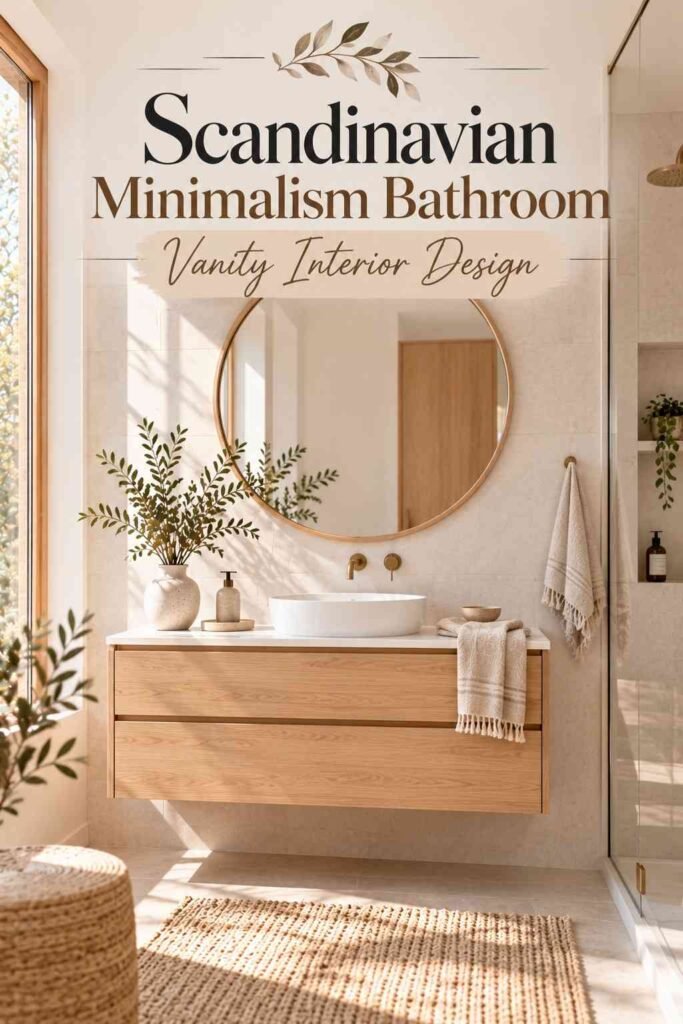
A floating wood vanity with a white basin frees floor space and looks light.
- A working entryway
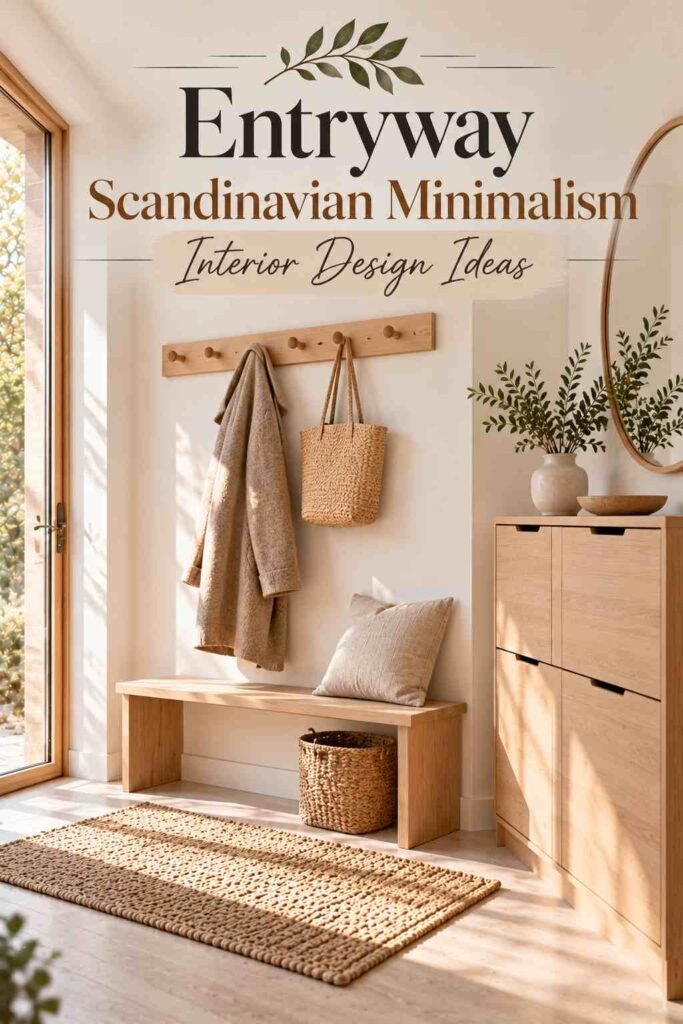
Add sturdy hooks, a slim bench, and a closed shoe cabinet to keep the rest of the home clear.
- One or two statement plants. A single leafy plant in a plain ceramic pot adds life without breaking the palette.
Common Mistakes When Using Scandinavian Minimalism Interior Design Ideas

The most frequent error is going too cold. All-white rooms with no wood, wool, or warm lighting feel sterile, not Nordic. The second is copying a photo piece by piece. Real homes need personal items, so keep a few meaningful objects out. The third is buying cheap lookalikes of famous designs; they rarely last. Finally, avoid overcrowding. If a surface collects clutter daily, add closed storage nearby instead of more decor. Edit slowly. Remove one item at a time, live with the change for a week, and keep only what you miss.

Conclusion
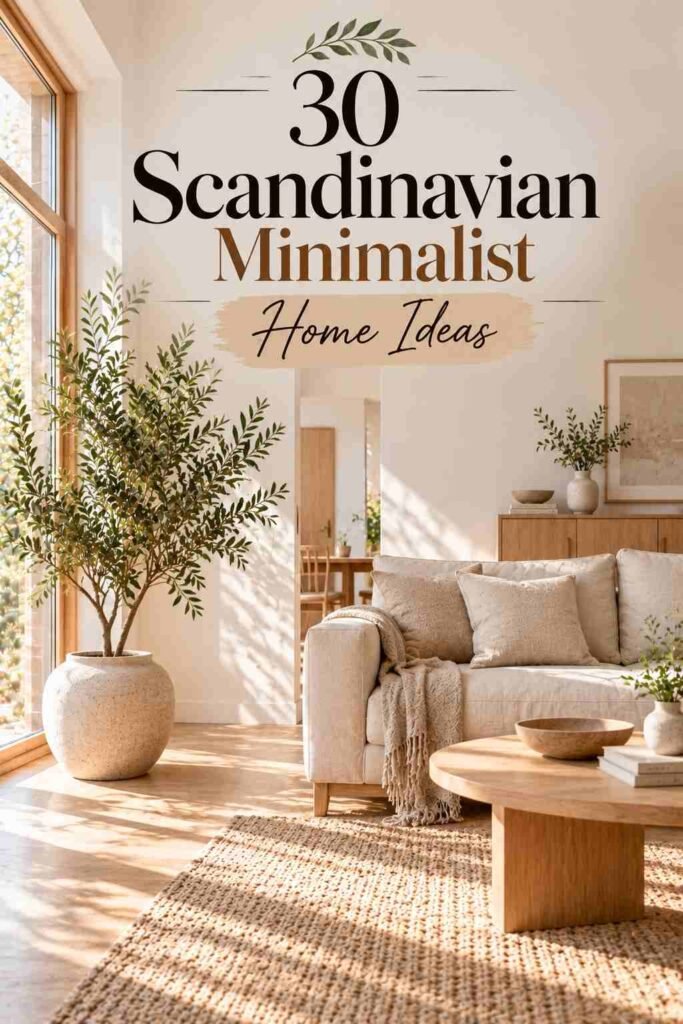
Nordic style succeeds because it respects daily life. It values light, honest materials, and a sense of ease. You do not need a full renovation to start. Repaint one wall, swap a harsh bulb for a warm one, or clear a single shelf. Then build gradually, room by room. The best Scandinavian minimalism interior design ideas share one purpose: they make home feel calmer. Choose the ideas that fit your climate, your budget, and your habits, and let your space grow quietly around them. A restful home is rarely finished in a weekend, but every small, thoughtful change moves it closer. For more room-by-room inspiration, visit outinteriors and keep exploring.