Living Room Lighting Design Ideas for a Warm, Functional, and Beautiful Home
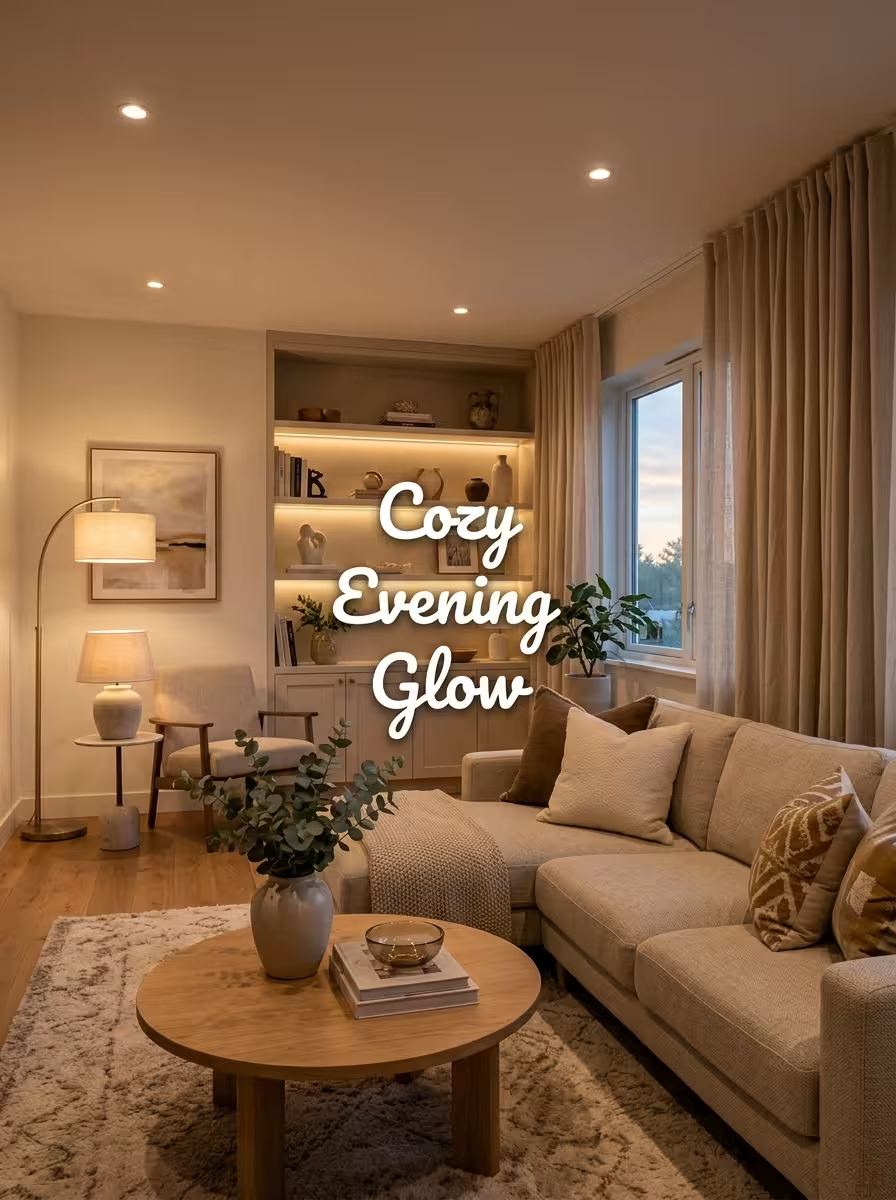
A living room changes throughout the day. In the morning, it may be a quiet coffee place. By afternoon, it may become a reading corner, work zone, play area, or family gathering space. At night, it turns into the heart of the home, where soft light can make conversations feel warmer and movie nights more relaxing. That is why living room lighting design ideas matter more than many people realize.
Good lighting is not about placing one bright ceiling fixture in the middle of the room. It is about balance, comfort, mood, and function. The right plan helps every corner feel useful without making the room look harsh or flat. With the right mix of ceiling lights, lamps, sconces, accent lighting, and warm bulbs, your living room can feel polished, welcoming, and easy to use every day.
Why Living Room Lighting Matters
Lighting affects how a room looks, but it also changes how it feels. A sofa can look inviting under a warm floor lamp and uncomfortable under a cold overhead bulb. Artwork can disappear on a dark wall or become a focal point with a picture light. A small room can feel larger when light reaches the corners, while a large room can feel more intimate when lighting is divided into zones.
The best living room lighting design ideas solve real problems. They reduce dark corners, support daily activities, flatter furniture, and create a mood without relying on decoration alone. Instead of choosing fixtures only because they look beautiful, think about how each light will work. Ask what it lights, when it will be used, and how it changes the feeling of the room.
Start With Layered Lighting
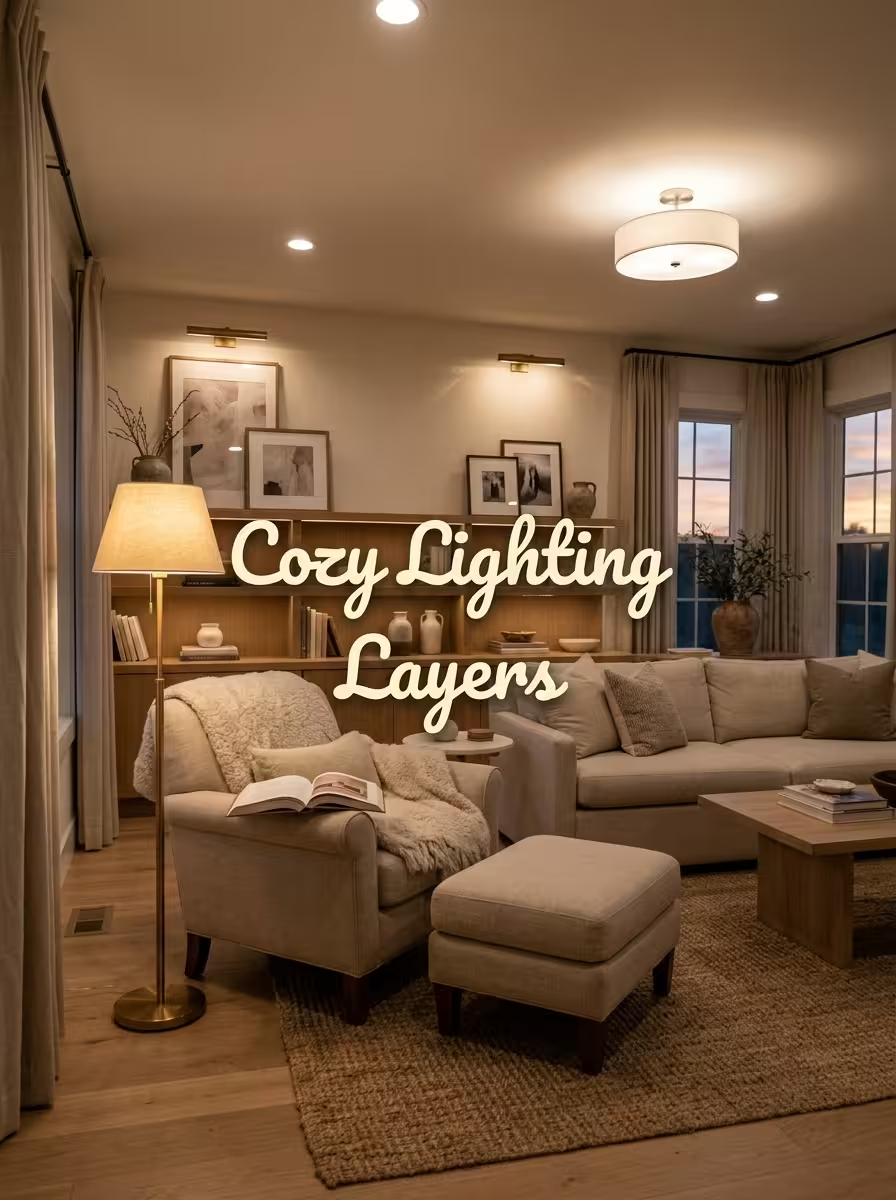
Layered lighting means using more than one type of light in the same space. A strong living room plan usually includes ambient lighting, task lighting, and accent lighting. Each layer has a different job. Together, they make the room more flexible, more comfortable, and more visually interesting.
This is one of the most reliable living room lighting design ideas because it works in almost every home style. A modern apartment, a traditional family room, a farmhouse living room, and a compact rental can all benefit from layers. The goal is not to add too many fixtures. The goal is to make sure the room has enough light at different heights and in different areas.
Pair soft lamp lighting with living room curtain ideas that filter daylight and make the room feel calm from morning to evening.
Ambient Lighting for Overall Comfort
Ambient lighting is the general light that fills the room. It may come from a chandelier, flush mount, recessed lights, track lighting, or a large pendant. In some rooms, daylight from windows also plays a strong role during the day. Ambient lighting should make the room easy to move through, but it should not feel harsh or clinical.
For most living rooms, ambient lighting works best when it is soft and spread evenly. A dimmable ceiling light is often more useful than a very bright fixed fixture. If the room has recessed lights, place them carefully so they do not create glare on the TV, shine directly into people’s eyes, or leave the corners too dark.
Task Lighting for Reading and Activities
Task lighting helps with specific activities. This includes reading, working on a laptop, playing board games, knitting, doing puzzles, or helping children with homework. Table lamps, swing-arm wall lights, floor lamps, and adjustable reading lamps are all good choices.
A common mistake is expecting ceiling lights to handle every task. They often cast shadows, especially when someone is sitting under or beside them. A lamp placed near a chair or sofa gives better control and makes the activity more comfortable. For reading, choose a lamp that sends light toward the page without creating glare. A shade that diffuses light can also make the space feel softer.
Accent Lighting for Depth and Mood
Accent lighting highlights the parts of the room you want people to notice. It can draw attention to artwork, bookshelves, plants, a fireplace, textured walls, built-ins, or decorative objects. This layer adds depth because it creates a gentle contrast between light and shadow.
Some of the best living room lighting design ideas come from accent lighting because it makes a room feel designed rather than simply furnished. A picture light over art, LED strips inside shelves, or a small uplight behind a plant can change the entire mood. Accent lighting should be subtle. It should guide the eye, not overpower the room.
A well-lit seating area feels more complete when styled with coffee table decor ideas that match the mood of the room.
Living Room Lighting Design Ideas for Small Rooms
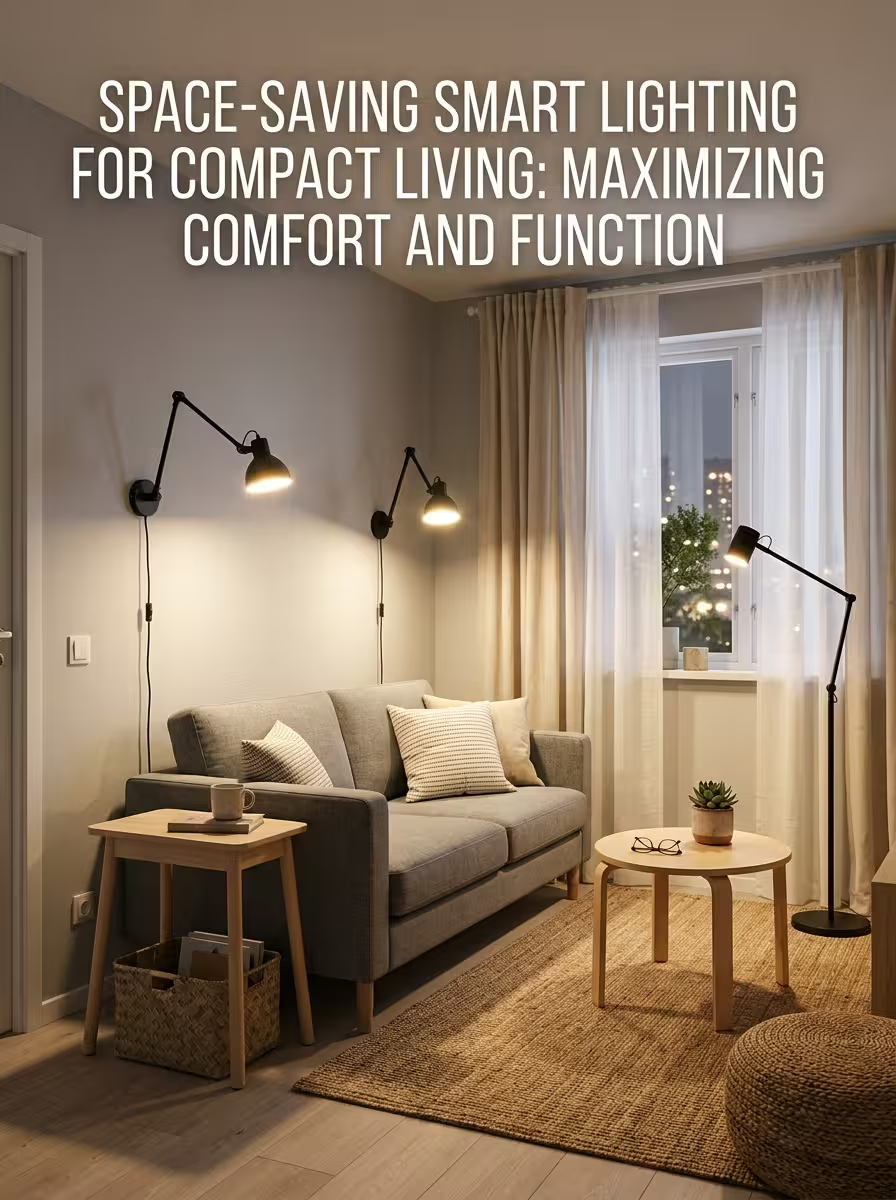
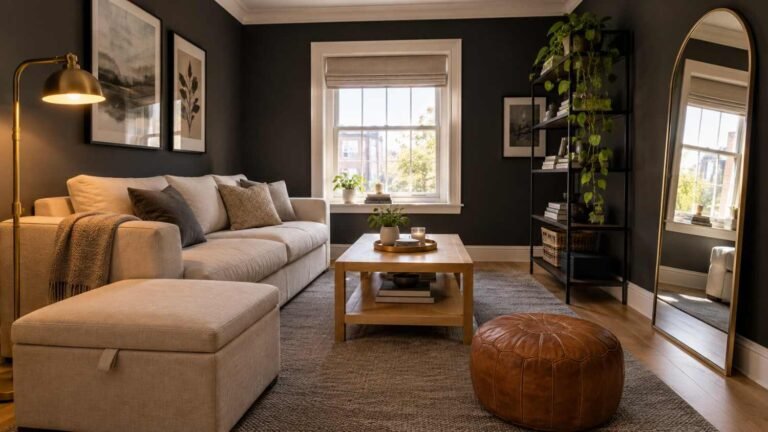
Small living rooms need lighting that opens the space without adding clutter. Instead of relying on one ceiling fixture, use a mix of wall lights, slim floor lamps, and compact table lamps. Light should reach the corners because dark corners can make a small room feel even tighter.
Wall sconces are useful when floor space is limited. A plug-in sconce can work well for renters because it does not always require hardwiring. A narrow floor lamp beside the sofa can add height without taking up much space. If you use a ceiling light, choose a flush-mount or semi-flush-mount that suits the ceiling height. Avoid oversized chandeliers unless the room has enough space around them.
Mirrors can also help small spaces when placed thoughtfully. A mirror opposite or near a light source can reflect brightness and make the room feel more open. Keep the bulb temperature consistent so the room does not feel patchy. For a cozy living area, 2700K to 3000K bulbs usually create a warm and comfortable tone.
Living Room Lighting Design Ideas for Large Rooms
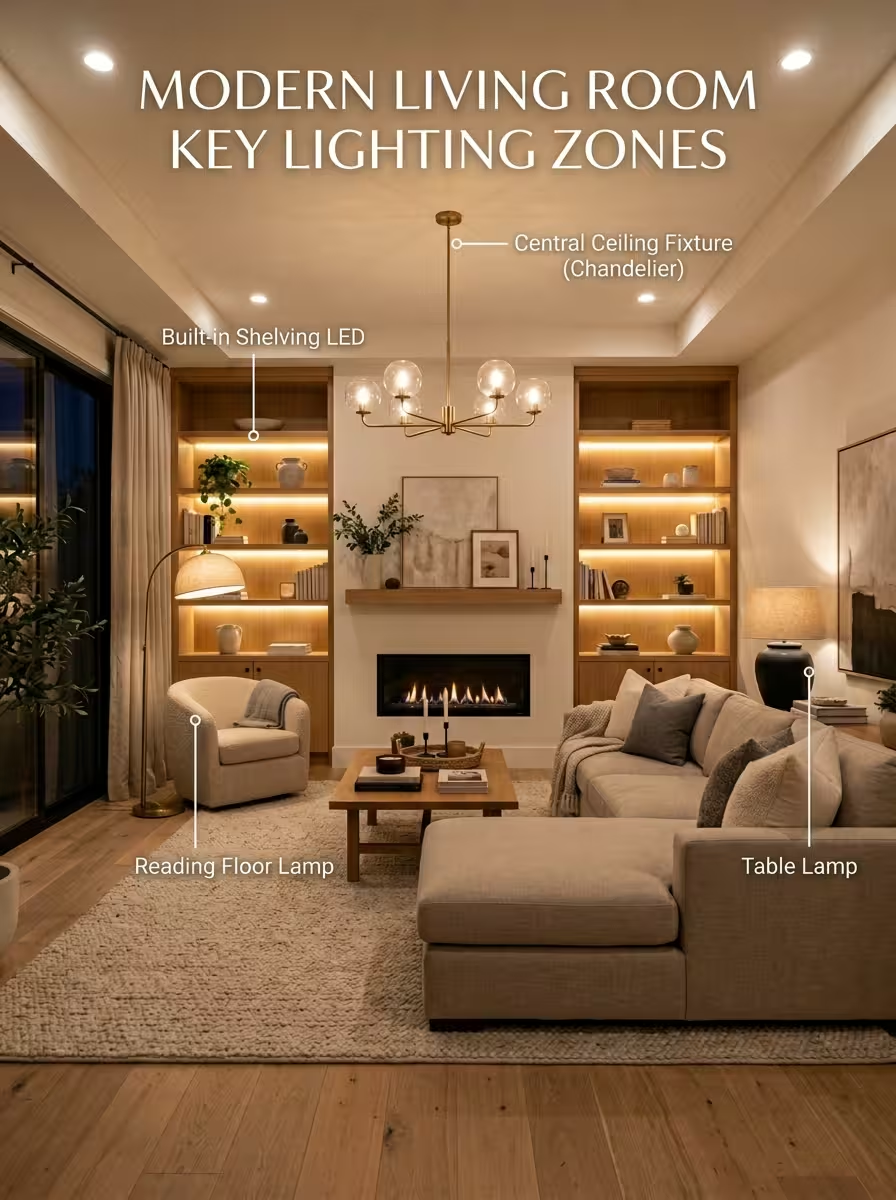
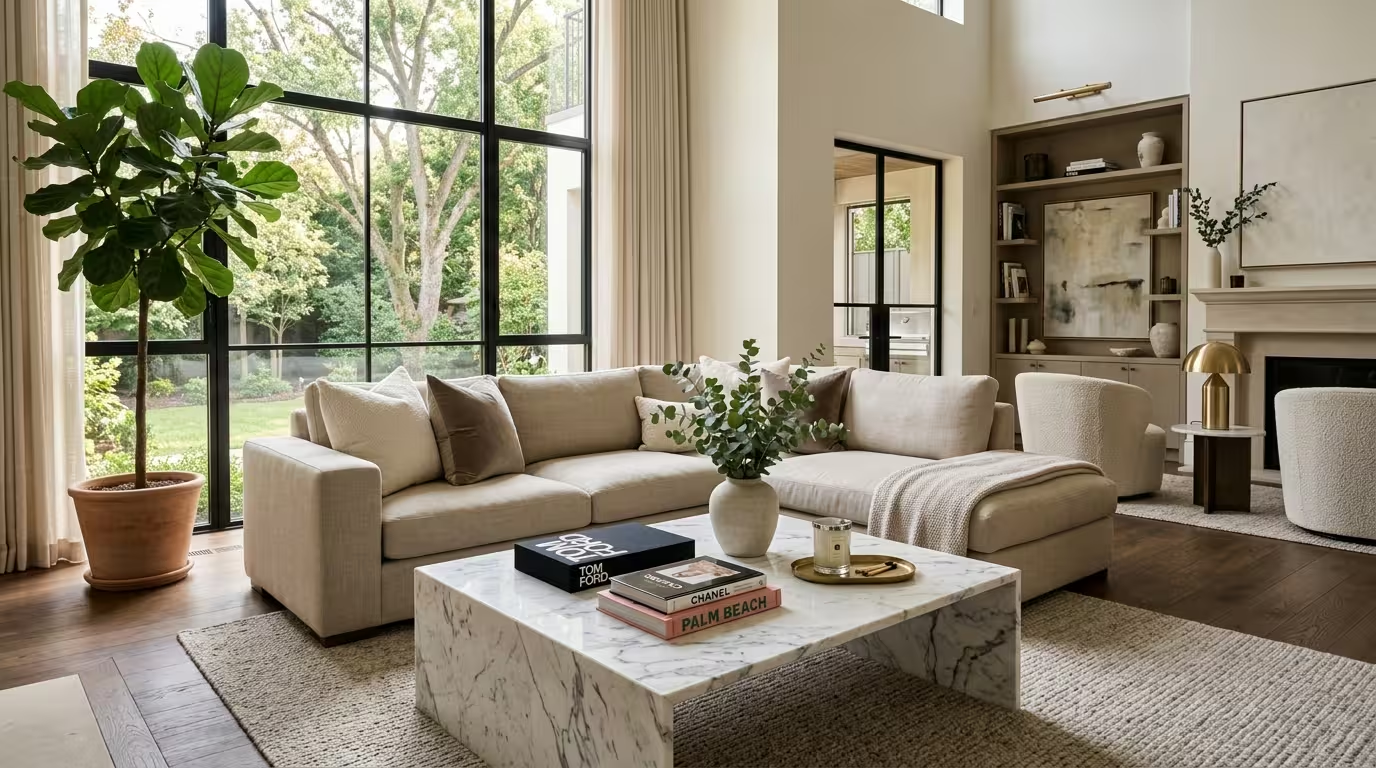
Large living rooms need zones. A single bright ceiling light will not make the space feel complete. It may light the center but leave seating areas, corners, shelves, and walls feeling disconnected. Divide the room according to how it is used, then give each zone its own light source.
A large family room may need a central ceiling fixture, lamps near the sofa, a reading light beside an accent chair, shelf lighting near built-ins, and soft accent lighting around the fireplace. Open-plan living rooms may also need lighting that separates the sitting area from the dining or kitchen space. This helps the room feel organized without adding walls.
In large rooms, scale matters. Tiny lamps can look lost beside large sofas or tall ceilings. Choose fixtures that match the size of the furniture and the height of the room. A substantial floor lamp, wide lampshade, or larger chandelier can help the lighting feel balanced.
For more home styling inspiration, outinteriors can guide readers toward practical ways to improve comfort, layout, and visual balance.
Choose the Right Ceiling Light
Ceiling lighting is often the first thing people notice, but it should not be the only light in the room. The right ceiling fixture depends on ceiling height, room size, furniture placement, and style. A flush mount works well for low ceilings. A semi-flush mount adds more presence while keeping enough headroom. A chandelier or pendant can create a focal point in rooms with higher ceilings.
When using living room lighting design ideas around ceiling fixtures, think about proportion. A fixture that is too small can look accidental. One that is too large can crowd the room. If the ceiling light hangs above a coffee table or central seating area, make sure it does not block views or feel too low when people stand or walk nearby.
Dimmers are especially helpful for ceiling lights. They allow the same fixture to support cleaning, entertaining, relaxing, and watching TV. Before buying bulbs or dimmer switches, check that both are compatible. Not all LED bulbs work smoothly with every dimmer.
Use Floor Lamps to Add Height
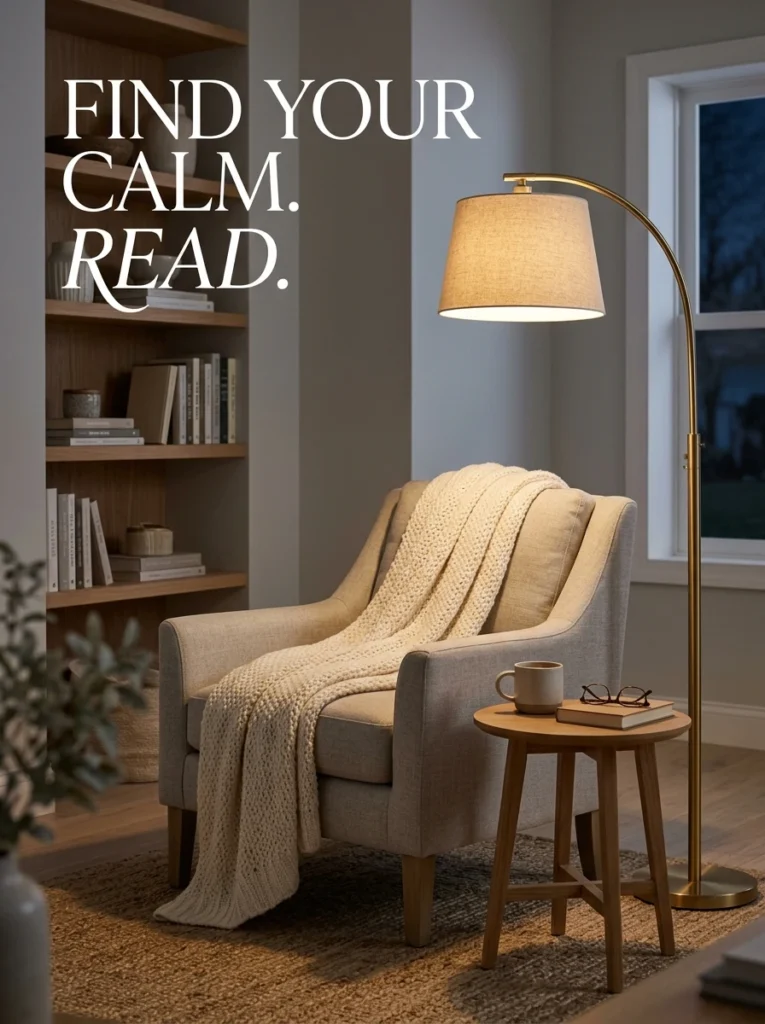
Floor lamps are one of the easiest ways to improve a living room. They add vertical interest, brighten dark corners, and help create a warm evening mood. A floor lamp can sit beside a sofa, behind an accent chair, near a reading nook, or in an empty corner that needs purpose.
Arc floor lamps work well when there is no ceiling fixture above the seating area. They can bring light over a coffee table or sofa without electrical work. Tripod lamps add visual structure and suit modern, transitional, and mid-century spaces. Slim metal lamps are better for tight corners. Fabric shades soften the glow and reduce glare, while metal shades often direct light more strongly.
When choosing a floor lamp, consider the height of the shade. The bulb should not shine directly into the seated eye level. A slightly diffused shade usually feels more comfortable in a living room than a bare exposed bulb.
Use Table Lamps for Warmth and Balance
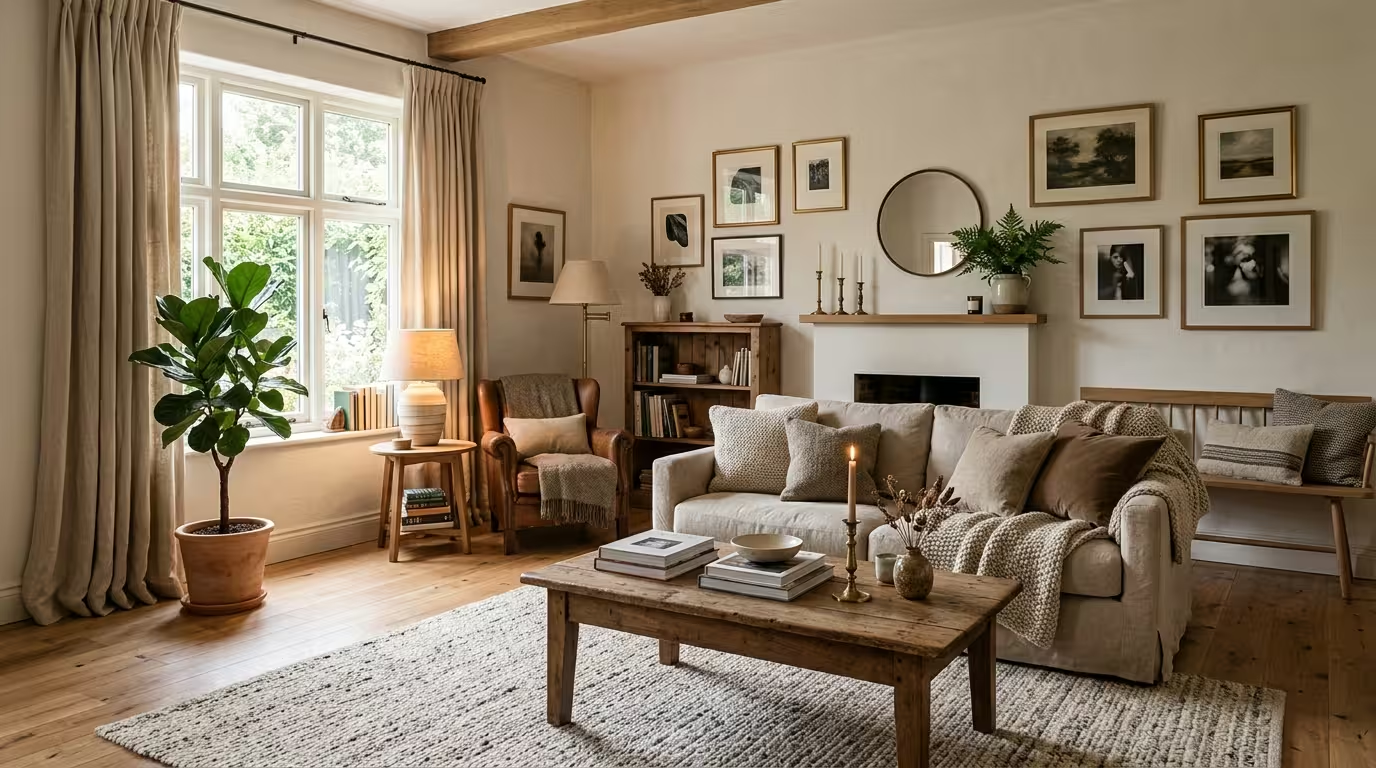
Table lamps make a room feel lived-in. They are practical, decorative, and easy to update. Place them on side tables, consoles, cabinets, or shelves where they can support both function and mood. A pair of matching lamps can add symmetry, while two different lamps can make the room feel collected and personal.
One useful approach is to place table lamps at different points around the room instead of grouping all light on one side. This spreads warmth and avoids heavy shadows. If the room has a sofa against one wall, place a lamp on at least one side. If there is a console behind the sofa, a pair of lamps can create an elegant backdrop.
Table lamps also let you introduce texture. Ceramic, wood, glass, stone, linen, and woven shades all affect how the light feels. A cream linen shade creates a softer glow than a dark opaque shade.
Add Wall Sconces for Style and Space Saving
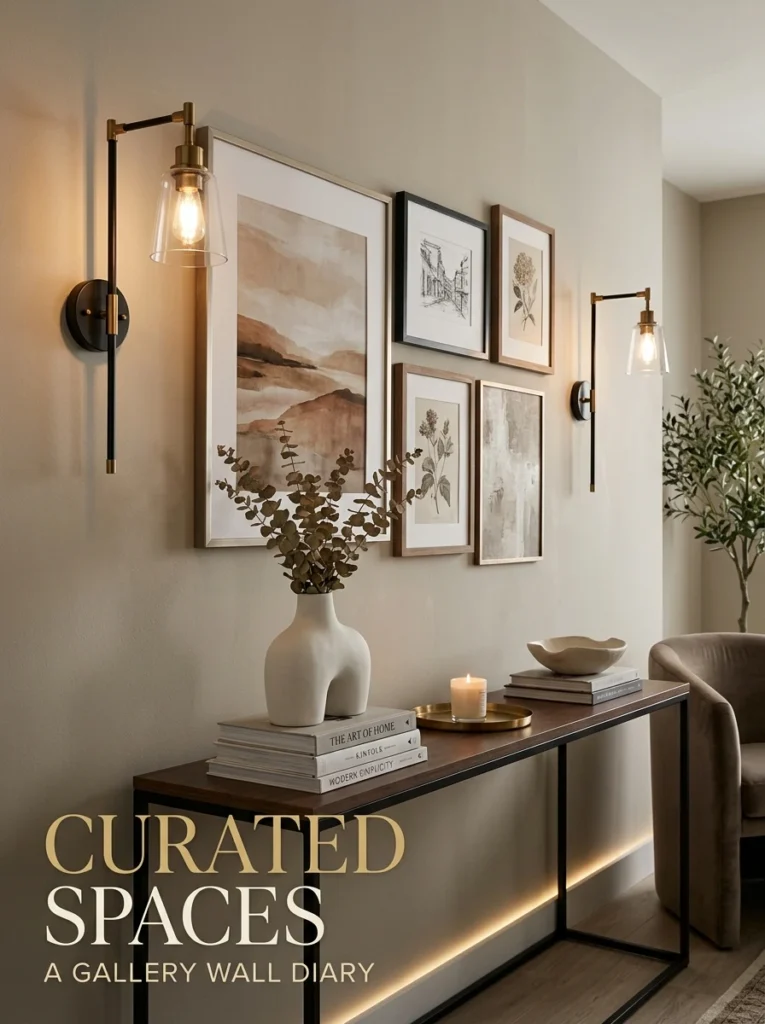
Wall sconces are ideal when you want light without using floor or table space. They can frame a fireplace, sit on either side of artwork, brighten a reading chair, or add balance beside built-ins. Hardwired sconces look clean and permanent, while plug-in versions are easier for rentals and quick updates.
Among practical living room lighting design ideas, sconces are especially helpful for narrow rooms. They keep surfaces clear and add light at eye level, which makes the room feel warmer. Adjustable sconces are useful near reading chairs or sofas because they can direct light where needed.
The height of sconces matters. If they are too high, they may feel disconnected. If they are too low, they can create glare. A good rule is to place them around eye level when standing, then adjust based on furniture, ceiling height, and the fixture shape.
Highlight Art, Shelves, and Architectural Details
Accent lighting can make personal details feel intentional. A picture light above a painting, small spotlights on a gallery wall, or LED strips inside built-ins can bring depth to the room. This is especially useful in neutral spaces where texture and shadow create interest.
Bookshelves often benefit from subtle lighting. Small shelf lights can help books, ceramics, frames, and collected pieces stand out. If the living room has a fireplace, soft lighting on both sides can make it feel like a natural focal point even when the fire is not on. Textured walls, stone, paneling, and arches can also look more dramatic when light grazes across them.
The key is restraint. Accent lighting should not turn every object into a display. Choose a few meaningful areas and let the rest of the room breathe.
Living Room Lighting Design Ideas for TV Areas
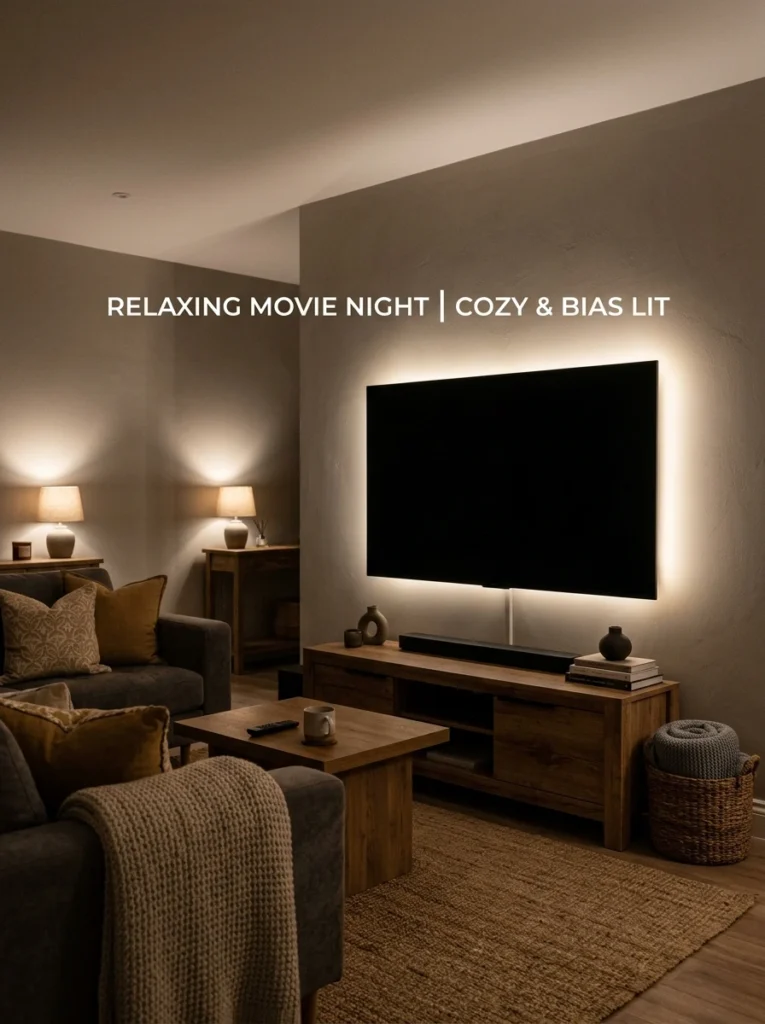
TV lighting needs careful planning. Bright ceiling lights can reflect on the screen, while a completely dark room can strain the eyes. The goal is a soft background light that supports comfort without distracting from the screen.
Bias lighting behind the TV can reduce the sharp contrast between the bright screen and the dark wall. A dim table lamp behind or beside the seating area can also work well. Avoid placing a lamp directly opposite the screen if it creates a reflection. If recessed lights are already installed, dim them during movie nights or use only the lights behind the seating area.
These living room lighting design ideas are especially useful for family rooms where the TV is often used. A room should be bright enough for movement and snacks, but soft enough for a relaxed viewing experience.
Pick the Right Bulb Color
Bulb color temperature has a major effect on comfort. For living rooms, warm white bulbs in the 2700K to 3000K range are usually the safest choice. They create a soft, inviting tone that works well for relaxing, hosting, and evening use. Cooler bulbs can feel too sharp in a lounge space, especially at night.
Brightness should be measured in lumens, not watts. Watts tell you energy use, while lumens tell you brightness. Instead of putting one very bright bulb in the ceiling, spread brightness across several fixtures. This creates a softer and more flexible room.
Color rendering also matters. A bulb with a higher CRI, often 90+, helps colors look more natural. This is useful if your living room includes artwork, wood tones, colorful textiles, or carefully chosen paint colors.
Use Smart Lighting Without Making the Room Complicated
Smart lighting can be helpful when it solves a real problem. It can let you dim lights from the sofa, set scenes for movie night, turn lamps on before you arrive home, or adjust brightness throughout the day. The best smart setup feels simple, not fussy.
Smart bulbs are easy for renters because they do not require wiring. Smart plugs can control regular lamps. Smart switches may be better for homeowners who want wall control for ceiling lights. Choose one system that fits your habits instead of mixing too many apps and devices.
Modern living room lighting design ideas often include preset scenes. You might use “Bright” for cleaning, “Reading” for task lighting, “Relax” for evening lamps, and “Movie” for low background light. These small changes make the room more useful without changing the furniture.
Match Lighting to Your Interior Style
Lighting should support the style of the room, but it does not need to match every finish perfectly. A modern living room may look better with sculptural pendants, slim floor lamps, or simple globe sconces. A farmhouse room may suit lantern-style fixtures, warm brass, wood bases, and woven shades. A traditional room can handle pleated lampshades, picture lights, chandeliers, and classic sconces.
For a minimalist space, choose fixtures with clean lines and soft diffusion. For an eclectic room, mix vintage lamps with modern ceiling lights, but repeat one detail such as brass, black metal, round shapes, or warm fabric shades. Repetition keeps the mix from feeling random.
The best living room lighting design ideas respect both beauty and comfort. A statement fixture should still provide useful light. A practical lamp should still feel connected to the room’s materials, colors, and scale.
Plan Lighting Around Natural Daylight
Daylight is part of the lighting plan. Notice how sunlight enters the room in the morning, afternoon, and evening. A bright south-facing room may need softer lamps at night but less artificial light during the day. A north-facing or shaded room may need more warm light to avoid feeling dull.
Window treatments affect lighting, too. Sheer curtains can soften bright sunlight without making the room dark. Heavier curtains can make a living room feel cozy at night, but may require stronger lamps. If the room has dark walls or deep-colored furniture, it may need more light than a pale room because dark surfaces absorb more light.
Good lighting works with daylight instead of fighting it. The goal is a room that feels comfortable in every season and at every hour.
Avoid Common Living Room Lighting Mistakes
The most common mistake is using only one overhead light. This creates flat lighting, harsh shadows, and limited mood control. Another mistake is choosing bulbs that are too cool for a relaxing space. Cool white bulbs may work in garages or task-heavy areas, but they can make a living room feel less welcoming.
Glare is another issue. Exposed bulbs, shiny surfaces, low pendants, and poorly placed recessed lights can make the room uncomfortable. Always check how a fixture looks when you are sitting, standing, and watching TV. A beautiful fixture is not successful if it shines directly into your eyes.
Also, avoid placing every lamp at the same height. A room feels richer when light comes from the ceiling, walls, tables, and floor level. This creates movement and depth.
Budget-Friendly Living Room Lighting Updates
You do not need a full renovation to improve the room. Start by changing the bulb temperature. Replacing cool bulbs with warm white bulbs can make the space feel calmer. Add dimmable bulbs where possible, but check compatibility first. Then bring in one floor lamp for height and one table lamp for warmth.
Plug-in sconces are another affordable upgrade. They can frame a sofa, reading corner, or fireplace without major electrical work. LED strip lights can improve bookshelves, media units, or cabinets when used carefully. Choose warm strips and hide the source so the glow looks built-in rather than harsh.
Some of the most effective living room lighting design ideas are small. A better shade, a warmer bulb, a dimmer, or a lamp in a dark corner can change the way the whole room feels.
When to Call a Professional
Simple updates like lamps, bulbs, shades, and smart plugs are usually easy to handle. Electrical changes are different. If you want to install hardwired sconces, add recessed lights, move a ceiling fixture, or install new dimmer switches, it is safer to call a qualified electrician.
A professional can also help with fixture placement. This matters if you are renovating, opening walls, changing the ceiling, or planning built-ins. Wiring should match how you actually live. For example, a switch near the room entrance may not be enough if you also want lamp control from the sofa.
Safe installation protects the home and keeps the lighting plan reliable. Good design should look beautiful, but it should also work safely every day.
Conclusion:
The best living rooms do not depend on one perfect fixture. They use layers, warmth, scale, and control. Ceiling lights provide general brightness, lamps add comfort, sconces save space, and accent lights bring attention to the details that make the room personal.
Start with how you use the space. Then add light where life actually happens: beside the sofa, near the reading chair, around the TV, across the shelves, and in the corners that feel forgotten. With thoughtful choices, living room lighting design ideas can make your home feel softer, more functional, and more beautiful from morning to night.
Frequently Asked Questions:
1. What is the best lighting for a living room?
The best lighting for a living room is layered lighting. Use ambient light for overall brightness, task light for reading or activities, and accent light for artwork, shelves, or architectural details. This mix makes the room flexible and comfortable.
2. How many lights should a living room have?
Most living rooms need at least three to five light sources, depending on size. A small room may need a ceiling light, a floor lamp, and a table lamp. A larger room may need several lamps, sconces, and accent lighting.
3. What color temperature is best for living rooms?
Warm white bulbs around 2700K to 3000K are usually best for living rooms. They create a cozy and relaxed feeling without making the space look too yellow or too cold.
4. Are recessed lights good for living rooms?
Recessed lights can work well when they are placed carefully and controlled with dimmers. They should not be the only light source. Pair them with lamps, sconces, or accent lighting to avoid a flat or harsh look.
5. How can I light a living room with no ceiling light?
Use floor lamps, table lamps, plug-in sconces, and smart plugs. An arc floor lamp can bring light over a seating area, while plug-in wall lights can brighten corners or reading spots without ceiling wiring.
6. What are the easiest living room lighting design ideas for renters?
Renters can use plug-in sconces, floor lamps, table lamps, smart bulbs, smart plugs, rechargeable lamps, and LED shelf lights. These options improve comfort without permanent electrical changes.
7. How do I make my living room lighting feel cozy?
Use warm bulbs, dimmable fixtures, fabric lampshades, and several low-level light sources. Turn off harsh overhead lighting in the evening and rely on lamps, sconces, and accent lights for a softer mood.