Dreamy 21 Accent Wall Ideas for Your Living Room: The Complete 2026 Style Guide

Walk into a living room with a well-planned accent wall, and you feel it before you can explain it. One surface pulls your eye in, the furniture suddenly makes sense, and the room feels finished instead of flat. That’s the quiet power of a good feature wall — it doesn’t shout for attention, it earns it.
If you’ve been staring at a blank wall wondering where to start, you’re in the right place. Below are accent wall ideas for your living room, organized by style, so you can find the one that actually fits your space instead of copying a trend that doesn’t.
What Is an Accent Wall, and Why Does Your Living Room Need One?
An accent wall is simply one wall treated differently from the rest — through color, texture, material, or pattern — so it becomes the natural focal point. In a living room, it usually sits behind the sofa, frames the fireplace, or faces the entryway.
Beyond looks, it does real work. It adds depth to a room that would otherwise feel like a flat box, gives your eye a place to land, and can make a small living room feel larger by creating a sense of layered distance. It’s also one of the few upgrades that changes a room’s entire mood for a fraction of the cost of a full renovation.
How to Choose the Right Wall Before You Start
Picking the wrong wall is the single most common mistake people make, and it’s almost always avoidable. Before you touch paint or panels, walk into your living room and notice which wall your eyes land on first. That’s usually your answer.
In most layouts, the best candidate is the wall behind the sofa or the one anchoring the fireplace, since both already act as natural gathering points. If your living room has no obvious focal point, choose the wall opposite the main entrance — it’s the first surface every guest sees. Avoid walls broken up by doorways or windows, since a feature wall needs an uninterrupted surface to read as intentional rather than accidental.
21 Accent Wall Ideas for Your Living Room
Paint and Color Accent Wall Ideas
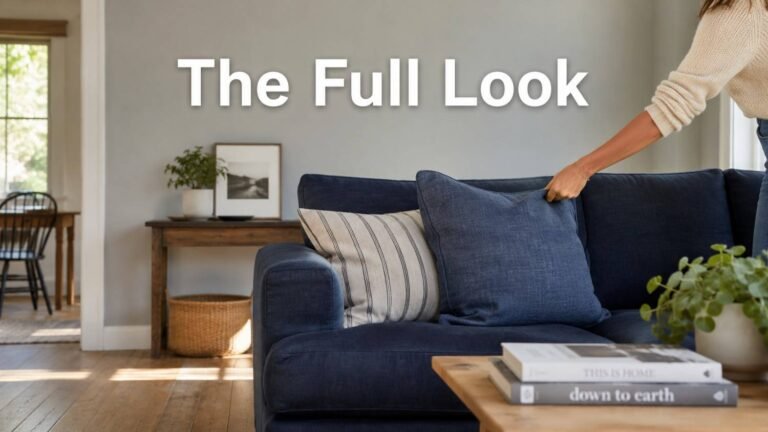
1. Deep Navy Paint Navy blue remains one of the most reliable accent wall colors because it reads as dramatic without feeling cold. It pairs well with warm wood tones, brass fixtures, and cream upholstery, and it works in both traditional and modern living rooms.
2. Color Drenching in a Single Hue Instead of picking a single feature wall, color drenching paints the walls, trim, and even the ceiling in one shade. It’s a bigger commitment, but it creates an immersive, cocoon-like effect that feels intentional rather than half-finished.
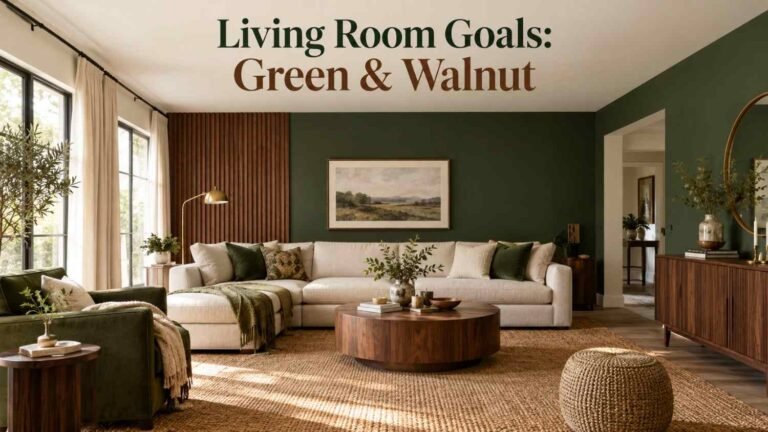
3. Sage or Muted Green Soft, muted greens have moved from bedrooms into living rooms because they feel calming without being boring. Paired with natural wood furniture and linen textiles, a sage accent wall gives a room a grounded, nature-inspired feel that’s easy to live with long-term.
4. Warm Terracotta or Clay Tones Earthy, sun-baked tones like terracotta and burnt clay bring warmth into rooms that lack natural light, especially north-facing spaces where cooler colors can feel flat.
5. Two-Tone Color Block Wall Splitting a wall horizontally or diagonally between two complementary colors creates visual interest without needing wallpaper or texture. It’s a budget-friendly way to make a plain wall feel custom-designed.
6. Hand-Painted Geometric Shapes Arches, circles, and abstract blocks painted directly onto the wall are having a real moment. This idea works particularly well behind a sofa, where furniture naturally breaks up the pattern and keeps it from feeling overwhelming.
Textured and Material Accent Wall Ideas
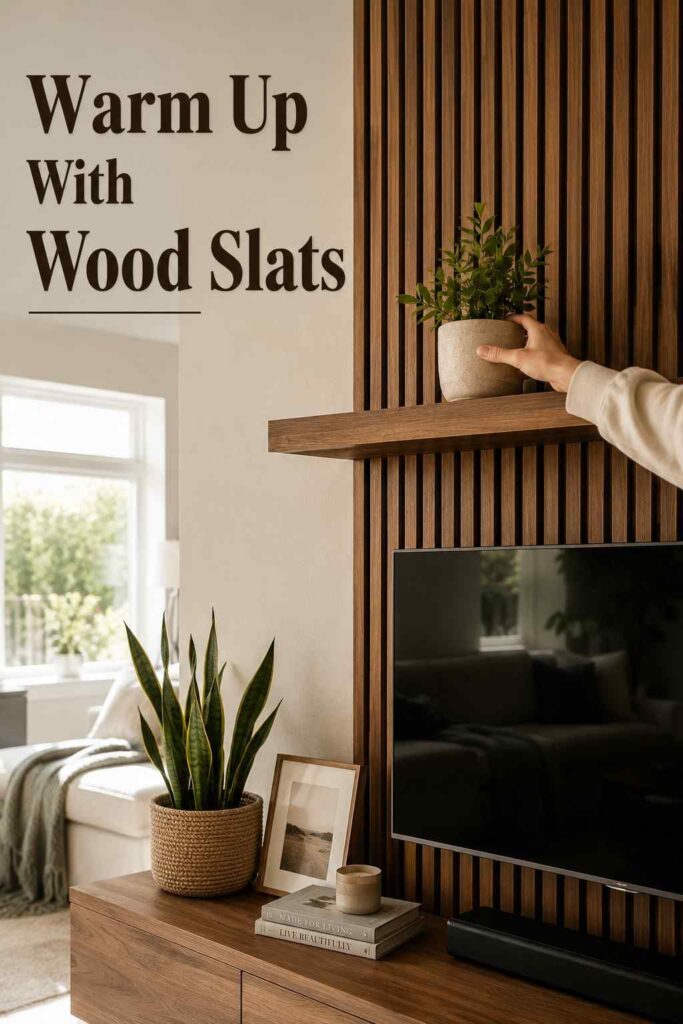
7. Vertical Wood Slats Slat walls have become the default choice behind TVs and media consoles in modern living rooms, and for good reason. Walnut and smoked oak finishes add warmth, create shadow lines that shift throughout the day, and conveniently hide TV wires behind the panel.
8. Board and Batten This is one of the most cost-effective and enduring styles, using vertical wood strips over painted drywall to create dimension. It suits traditional, farmhouse, and transitional living rooms equally well.
9. Fluted or Reeded Panels Fluted panels bring a soft, ribbed texture to a wall and pair beautifully with curved furniture and rounded lighting fixtures. They’re increasingly popular because they add architectural interest without requiring bold color.
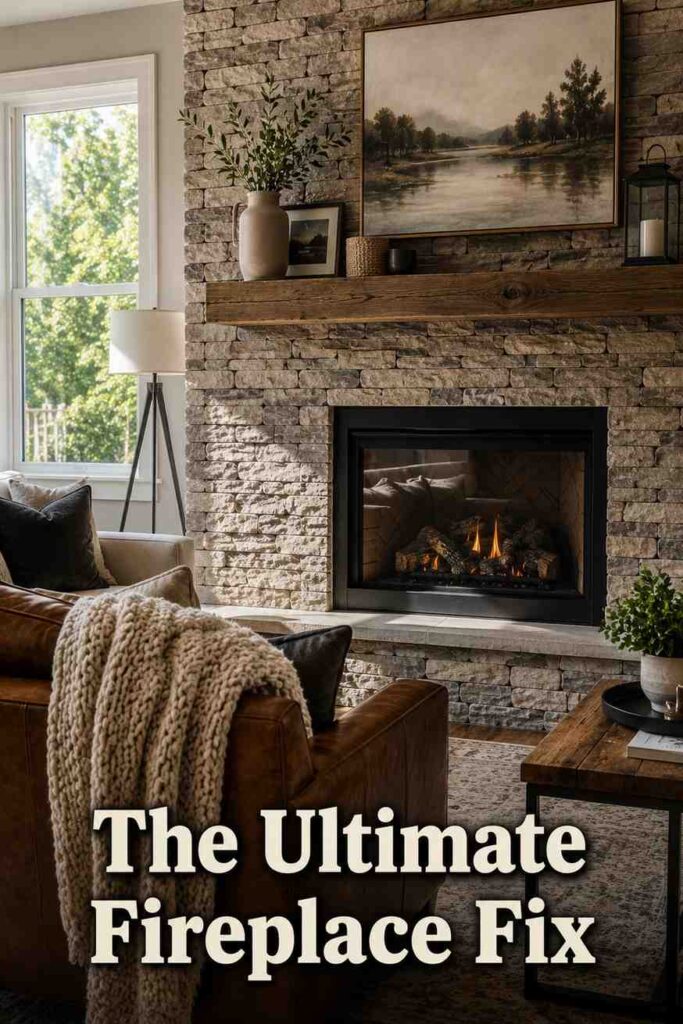
10. Stone or Marble Cladding Once reserved for high-end builds, stone and marble cladding behind fireplaces has become a standard upgrade in many new living rooms. It’s a bigger investment, but few materials deliver the same sense of permanence and luxury.
11. Limewash Plaster Finish Limewash creates a soft, cloud-like texture with subtle color variation that flat paint simply can’t replicate. It photographs beautifully in natural light and adds an Old World, handcrafted quality to modern living rooms.
12. Statement Wallpaper Mural A large-scale mural — botanical, abstract, or landscape — can turn one wall into the room’s entire story. Choose a design that complements your existing furniture rather than competing with it, and keep surrounding walls neutral to let the mural breathe.
13. 3D Textured Wall Panels Organic, sculptural panels with an almost geological texture add serious visual weight to a room. These work best as a true focal point — think behind a sectional sofa — since they’re bold enough to anchor a space entirely on their own.
Statement and Decorative Accent Wall Ideas
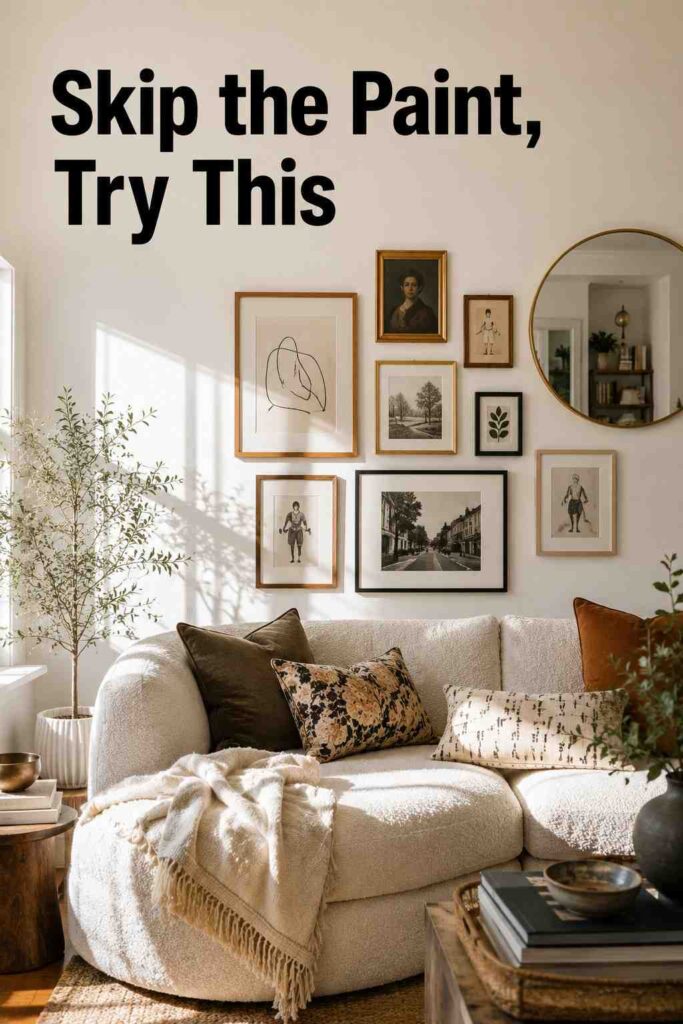
14. Curated Gallery Wall A well-arranged collection of framed art, mirrors, and objects can function as a full accent wall without a drop of paint. If you want inspiration beyond a basic frame grid, browsing collections of luxury wall decor ideas can help you mix scale, texture, and metals the way professional stylists do.
15. Built-In Shelving or Bookcase Wall Floor-to-ceiling built-ins turn a plain wall into both storage and display space. Styled with books, plants, and a few personal objects, this treatment adds warmth and function in equal measure.
16. Mirror Accent Wall A wall of mirrored panels bounces natural light around the room and makes a small living room feel noticeably larger. It works especially well opposite a window, where it can double the amount of visible daylight.
17. Upholstered or Fabric Wall Padded, fabric-wrapped panels add softness and even a bit of acoustic benefit, muffling sound in open-concept living rooms. Bouclé, velvet, and linen are the most popular choices for this treatment right now.
18. Ceiling-Extended “Fifth Wall” Accent Carrying your accent color or material from the wall up onto the ceiling creates a cocooning effect that makes low ceilings feel taller and rooms feel more intentional. It’s a subtle trick that professional designers use often but homeowners rarely try.
19. LED-Integrated Panel Wall Slatted or geometric panels with built-in LED lighting add a layered glow that transforms a living room after dark. This idea suits contemporary spaces best, especially when paired with warm, dimmable bulbs rather than stark white light.
20. Renter-Friendly Peel-and-Stick Wall Peel-and-stick wallpaper and wood-look panels have improved dramatically, making them a realistic option for renters who can’t paint or install permanent fixtures. Many versions now mimic slats, marble, and grasscloth convincingly at a fraction of the cost.
21. Sustainable and Reclaimed Material Wall Cork, reclaimed barn wood, and recycled tile are gaining ground as eco-conscious alternatives to new materials. Beyond the environmental benefit, reclaimed wood in particular brings a texture and history that new lumber can’t fake.
Common Accent Wall Mistakes to Avoid
Even a great idea can fall flat if it’s executed poorly. The most frequent misstep is choosing a wall with no natural focal point, which leaves the finished result looking random rather than deliberate. A close second is picking a color or material that clashes with existing flooring or furniture.
Overdoing texture on a small wall can also backfire, making a compact room feel cramped rather than cozy. Finally, skipping proper lighting is an easy oversight — even the best idea loses impact under flat, overhead light alone.
Budget Breakdown: What Accent Walls Typically Cost
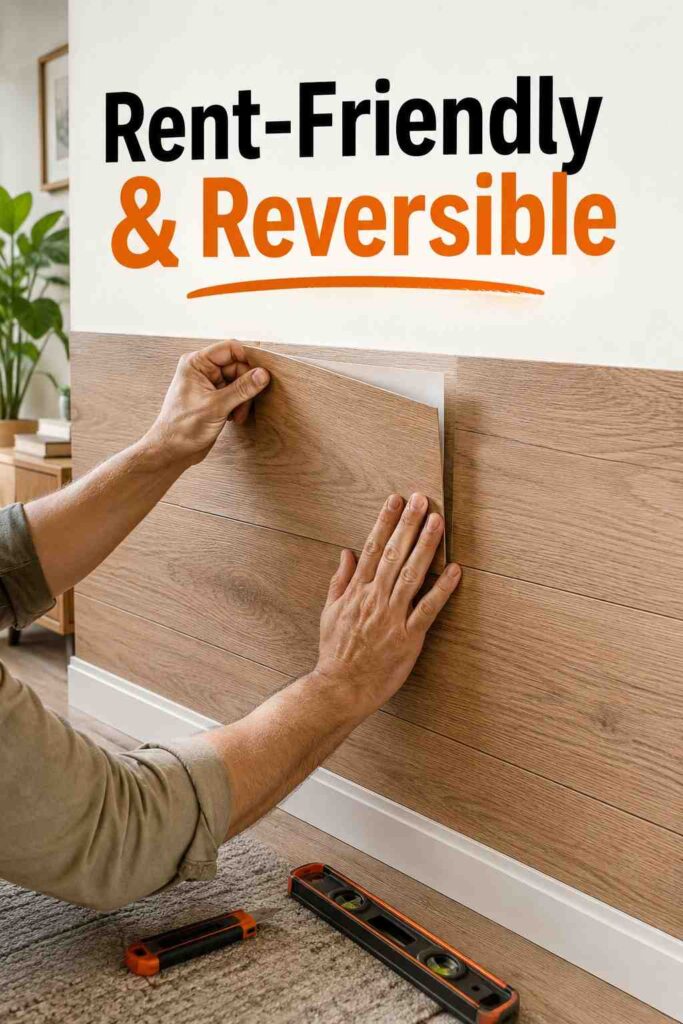
Costs vary widely depending on material and whether you DIY or hire a professional. Paint-based ideas are the most affordable, often achievable in a weekend for the price of a few cans of paint and painter’s tape. Peel-and-stick paper and slat-panel kits typically fall in the mid range, since materials cost more than paint but installation is still manageable without a contractor.
Stone cladding, custom millwork, and professionally installed limewash sit at the higher end, both because of material cost and skilled labor. If you’re planning a full room refresh rather than a single wall, browsing a roundup of contemporary living room designs can help you budget the project as part of the bigger picture. For broader inspiration across every room in the house, resources like Outinteriors are worth bookmarking before you commit to a direction.
Final Thoughts
A living room accent wall is one of the highest-impact changes you can make without moving a single piece of furniture. Whether you lean toward a bold navy paint job, a textured slat wall, or a stone-clad fireplace, the goal stays the same: choose a wall that strengthens the room instead of just standing out from it. Start with the wall your eyes already land on, and let the rest of the room follow its lead.
Frequently Asked Questions
1. Which wall should I choose in my living room?
Choose the wall your eyes naturally land on first — usually the sofa wall, the fireplace wall, or the one directly facing the entrance.
2. How many feature walls should one living room have?
One is almost always enough. A second statement wall in the same room tends to compete for attention and weakens the overall effect.
3. Are accent walls still popular in 2026?
Yes, though the style has matured. Instead of a single bold statement wall, 2026 trends favor textured, material-driven surfaces that feel integrated with the rest of the room.
4. What’s the cheapest option?
A painted wall in a bold or contrasting color remains the most budget-friendly choice, often completed in a single weekend.
5. Can renters add one without damaging the walls?
Yes. Peel-and-stick wallpaper and lightweight panel kits are specifically designed to be removable without damaging paint or drywall underneath.
6. Do accent walls make a small living room look bigger or smaller?
Done correctly, they make a room feel larger by adding depth and a clear focal point. Mirror accent walls in particular are effective for small spaces, since they reflect light and visually extend the room.
7. What color accent wall works best with a neutral living room?
Deep navy, sage green, and warm terracotta all pair well with neutral furniture and flooring, since they add contrast without clashing with existing tones.