
9 Coastal Bedroom Ideas for a Calm, Sunlit Retreat You’ll Never Want to Leave
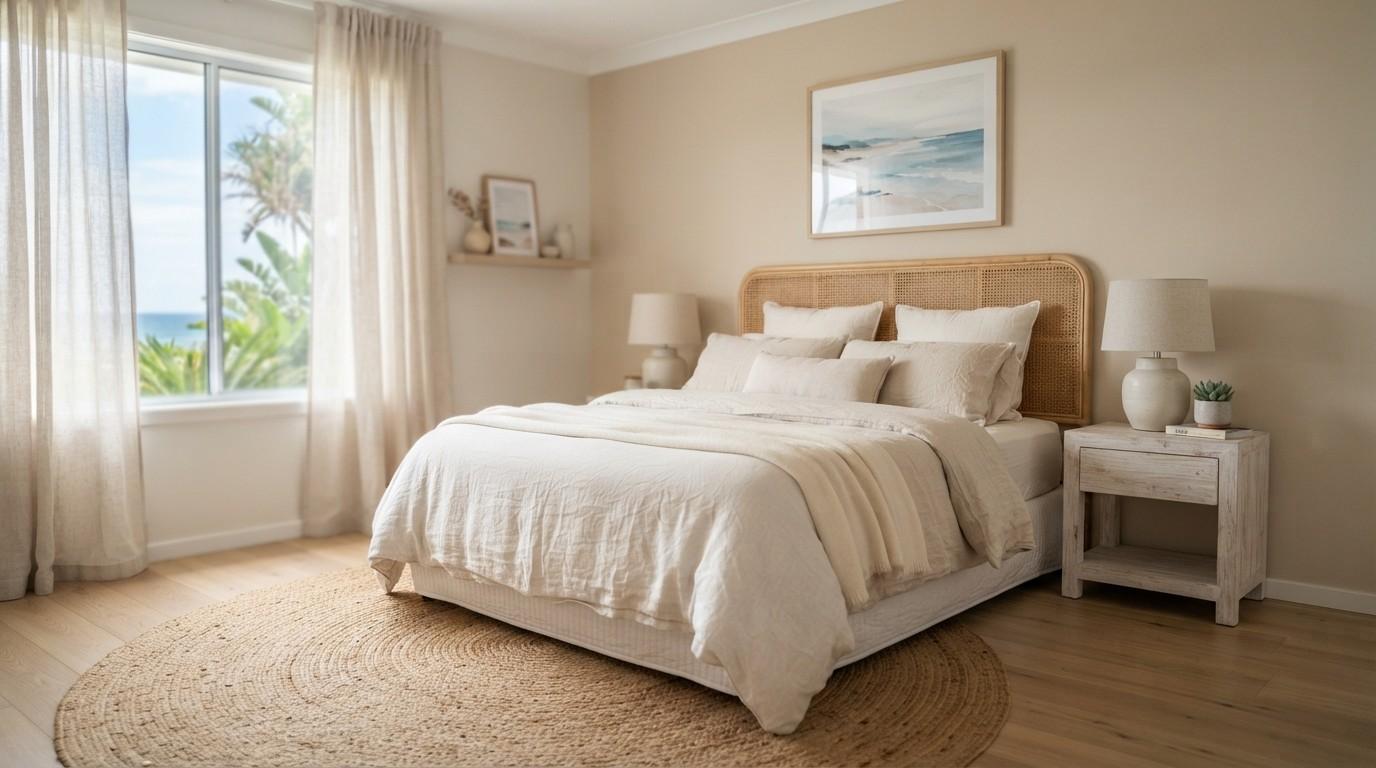
There’s a reason people come home from a beach vacation and immediately want to redecorate. Something about sun-bleached wood, salt-heavy air, and rumpled linen sheets makes a room feel lighter — less like a place you sleep and more like a place you actually want to be. A well-designed coastal bedroom captures that feeling and keeps it going all year long, no ocean view required. This guide breaks down what actually separates a genuine version from a themed one, walks through nine practical ideas you can adapt to almost any budget or floor plan, and covers the details most guides skip — palette logic, material upkeep, and the mistakes that quietly make one look dated.
What Makes a Bedroom Feel Coastal (Not Just Beachy)
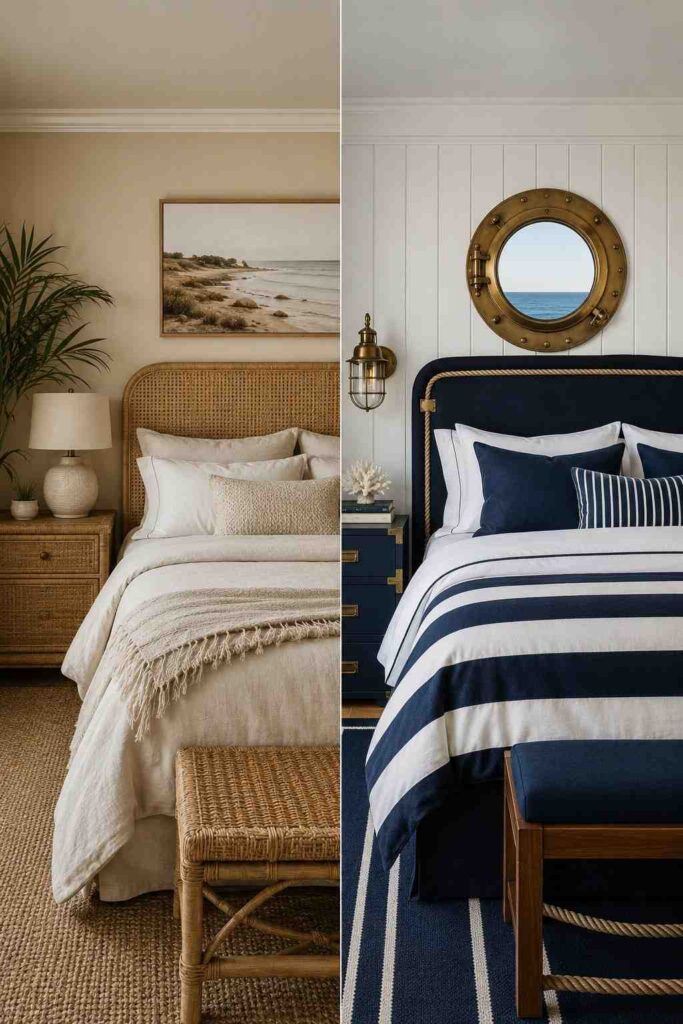
A true coastal bedroom rarely leans on literal beach props like shells, anchors, or ship wheels. Those belong to the nautical style, which is more structured and built around navy, red, and rope detailing. Coastal design instead borrows its mood from the shoreline itself — bleached wood, gauzy linen, and a palette lifted from sand and sea rather than a gift shop.
A few offshoots are worth knowing before you shop. Coastal grandmother style, a term coined by TikTok creator Lex Nicoleta in 2022 and loosely inspired by Diane Keaton’s character in the film Something’s Gotta Give, leans into cream, beige, and slipcovered furniture instead of blue. Boho coastal adds rattan, macramé, and layered patterns for a more collected, lived-in look. Modern coastal trims things down further, favoring clean lines and a small handful of natural materials over decorative clutter. Deciding which lane fits your taste before you buy anything keeps the room from turning into a mismatched pile of driftwood and rope.
Building a Coastal Bedroom Color Palette
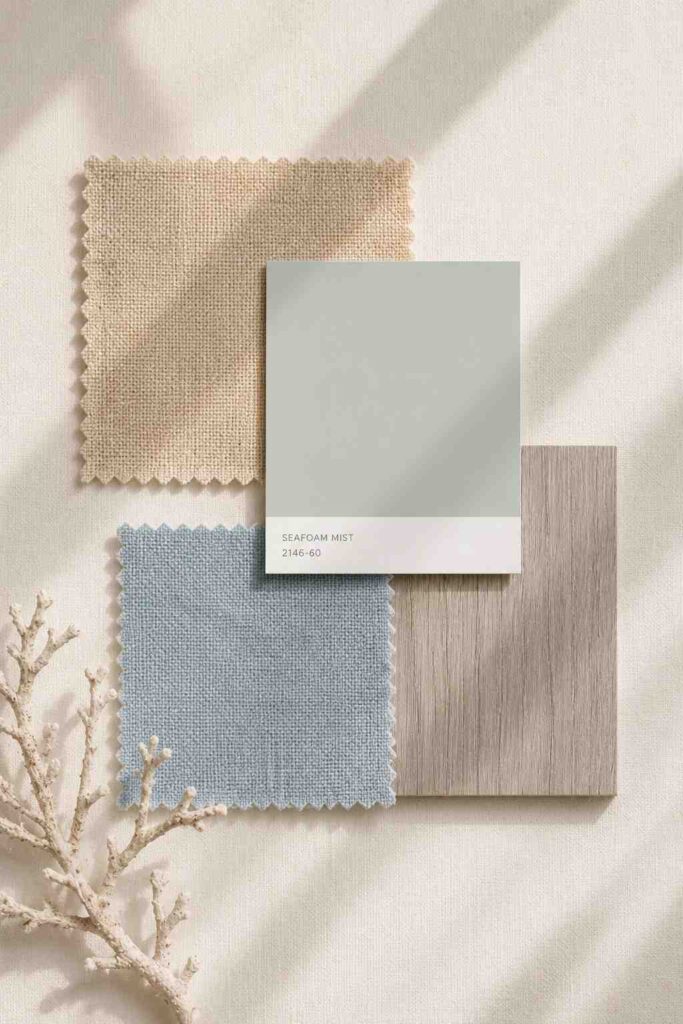
Color does more work in a coastal bedroom than any single piece of furniture. Start with a base of warm white or sandy beige on the walls, then layer in one or two supporting tones — soft seafoam, muted sky blue, or driftwood gray — so the room shifts with the light throughout the day instead of sitting flat. Skip saturated, poster-blue shades; they read more nautical than coastal.
If you want a stronger accent, a deep indigo on a single wall or headboard adds contrast without taking over the room. Keep ceilings and trim bright white to bounce daylight around, and let texture, not extra color, do the rest of the work. Most rooms in this style use no more than three wall or fabric colors in total — the restraint is part of what makes the look feel calm rather than busy.
9 Coastal Bedroom Ideas to Try
Once the palette is settled, these nine ideas turn a plain bedroom into a genuine one, whether you’re starting from scratch or slowly updating what’s already there.
1. Layer Linen Bedding in Tonal Whites
Swap crisp cotton sheets for stonewashed linen in two or three shades of white or oatmeal. Linen wrinkles naturally and drapes loosely, which is exactly what gives the room its relaxed, just-back-from-vacation look. Mixing slightly mismatched tones — rather than one flat white — adds depth without adding color.
2. Bring In a Woven or Rattan Headboard
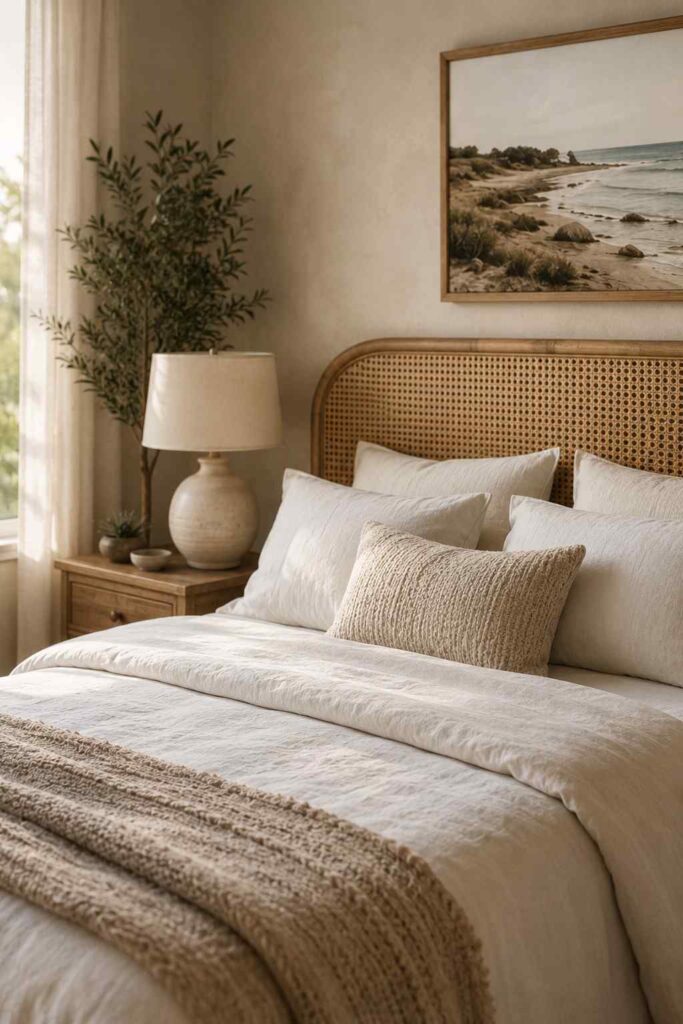
A cane or rattan headboard softens the room instantly and reads as coastal without a single blue accent. It pairs well with both crisp, tailored bedding and more relaxed linen, so it works whether your bedroom leans modern coastal or boho coastal.
3. Add a Natural Fiber Rug Underfoot
Jute, sisal, or seagrass rugs bring texture and warmth without introducing pattern or color. They’re also budget-friendly compared to wool, making them one of the easiest upgrades on a limited budget.
4. Choose Weathered or Whitewashed Wood Furniture
Painted furniture can look themed; natural or whitewashed wood tends to look collected. A weathered nightstand or a simple wood bench at the foot of the bed grounds the room without competing with softer textiles.
5. Hang Airy, Unlined Curtains
Sheer or lightweight linen curtains let daylight filter through rather than block it, which is central to the mood here. Mount rods close to the ceiling to make windows — and the room — feel taller.
6. Pick Lighting With Texture
A woven rattan pendant, a jute-wrapped lamp base, or simple black sconces adds character without turning into decor. Texture in lighting does a lot of the visual work that shells and beach signs used to do in older seaside trends.
7. Keep Artwork Abstract, Not Literal
Skip framed starfish and anchor prints. An abstract wave, horizon line, or simple botanical print gives the same seaside feeling without tipping into cliché — a small swap that instantly makes the room feel more current.
8. Add One Statement Textural Piece
Choose a single standout — a macramé wall hanging above the bed, a woven bench, or an oversized basket for extra linens. One statement piece reads as intentional; three or four competing ones start to feel cluttered.
9. Edit Down to Three Core Materials
Pick three materials total — for example, linen, rattan, and pale wood — and repeat them throughout the room instead of introducing new ones with every purchase. This single habit is what separates a cohesive room from one that just has a lot of beach-adjacent stuff in it.
Materials, Furniture, and Room Aesthetics That Tie It Together
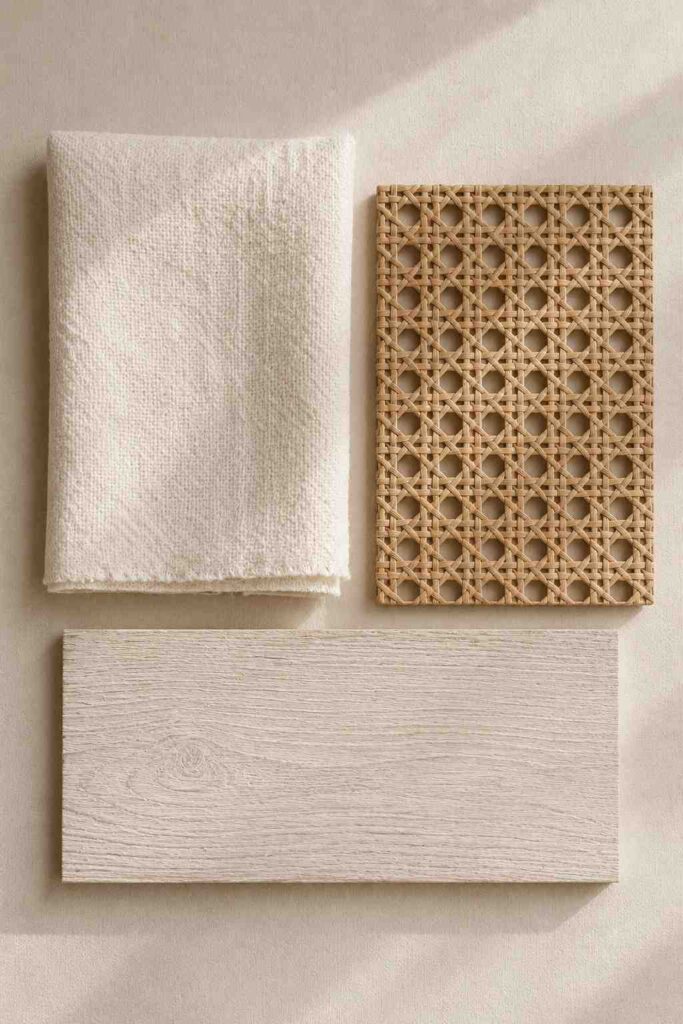
A coastal bedroom works best when it doesn’t try to do everything alone. If your home has an awkward nook or spare corner nearby, turning it into a small craft room office lets you keep hobbies and work tucked away while still borrowing the same woven baskets and linen textures used in the bedroom next door, so the two spaces feel connected rather than mismatched. Getting the room aesthetics consistent across adjoining spaces usually comes down to repeating the same three or four materials — rattan, linen, pale wood — instead of introducing a new theme in every room you touch.
When it’s time to shop for pieces sized correctly for smaller layouts, retailers like Outinteriors carry weathered-wood nightstands and compact woven furniture built to fit the room without overwhelming it, which is especially useful if you’re furnishing a starter home or a rental.
Small Coastal Bedroom Ideas and Budget Tips
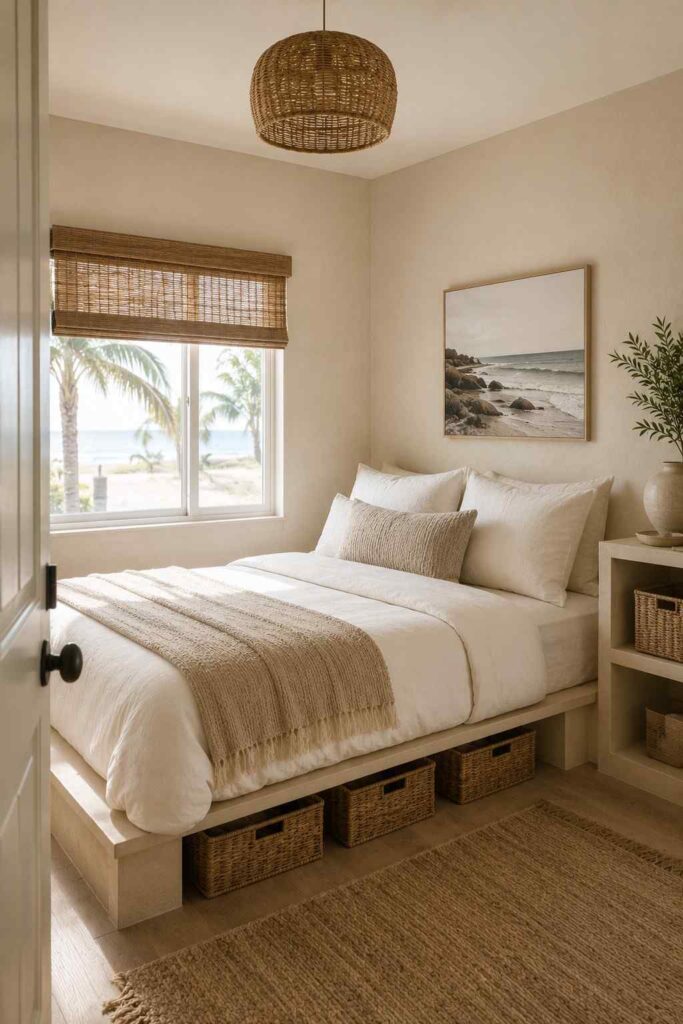
A small coastal bedroom benefits from restraint more than a large one does. Choose a platform bed instead of a bulky frame to keep sightlines open, and use one pale wall color throughout rather than an accent wall, which can make a tight room feel chopped up. Woven baskets under the bed or on open shelving add storage without the visual weight of a dresser.
On a budget, paint is the highest-impact, lowest-cost change you can make in this style. After that, prioritize bedding and one textural furniture piece before decor — a beautiful throw pillow can’t fix flat, mismatched sheets, but great linens can carry a room even with secondhand furniture underneath them.
Mistakes to Avoid in a Coastal Bedroom
The most common misstep is over-committing to literal beach motifs — shell frames, anchor pillows, and rope mirrors stacked together read as a gift shop, not coastal at all. A second mistake is leaning too heavily on navy and white stripes, which quickly tips a room into nautical territory instead. Overly glossy, mass-produced “beach decor” furniture is another trap; it tends to look disposable next to natural materials like real rattan or solid wood.
Finally, ignoring your climate is an easy oversight. A bedroom filled with natural fiber rugs and unsealed wood in this style can struggle in genuinely humid regions, so it’s worth choosing more moisture-resistant finishes if you live somewhere the air stays damp.
Caring for Natural Materials in a Coastal Bedroom
Natural materials make a coastal bedroom feel authentic, but they need a bit more upkeep than synthetic alternatives. Jute and sisal rugs should be vacuumed regularly and kept away from standing water, since they can stain or mildew if soaked. Rattan and cane furniture benefit from an occasional wipe-down with a barely damp cloth — fully saturating it can cause the fibers to warp over time. Linen bedding actually improves with washing and gets softer with age, but it fades in direct, constant sunlight, so rotating pillowcases and shams every few months keeps color even across a well-used room.
Conclusion
A coastal bedroom isn’t about how many beach references you can fit into one room — it’s about restraint, texture, and light doing more work than decor. Pick a simple palette, commit to two or three honest materials, and resist the urge to add “just one more” shell frame or anchor pillow. Whether you’re working with a primary suite or a small guest room, the same principles hold: natural fiber, soft neutral tones, and a few well-chosen pieces will always read as more coastal — and more timeless — than a room full of themed decor ever could.
Frequently Asked Questions
What colors work best in a coastal bedroom?
Warm white, sandy beige, soft seafoam, and muted sky blue form the core of most palettes in this style. Keep saturated, bright blues to a minimum, since they tend to read as nautical rather than coastal.
What’s the difference between a coastal and a nautical bedroom?
A coastal bedroom draws from natural, sun-bleached materials and a soft neutral palette, while a nautical bedroom is more structured, built around navy, red, and rope or anchor motifs.
Can a small bedroom pull off a coastal look?
Yes. Small coastal bedrooms often look better than large ones because the restrained palette and limited furniture count suit tight spaces naturally — just avoid bulky furniture and stick to one dominant wall color.
How do I keep a coastal bedroom from looking dated?
Skip literal beach props like shells and anchors, choose abstract rather than literal artwork, and limit your material palette to two or three items repeated throughout the room.
What fabric is best for coastal-style bedding?
Linen and cotton are the standard choices. Linen wrinkles naturally and has a relaxed drape that suits the style, while cotton offers a crisper, slightly more tailored look.
Is coastal grandmother style the same as coastal bedroom style?
They overlap but aren’t identical. Coastal grandmother style, popularized in 2022, leans into cream and beige tones with slipcovered furniture, while general coastal style often includes more blue and green accents.
Do I need natural fiber rugs and furniture, or can I use synthetic alternatives?
Synthetic alternatives can work, especially in humid climates where natural fiber needs more upkeep, but genuine jute, rattan, and solid wood generally look more authentic and age better than synthetic look-alikes.