Elegant 22 Navy Kitchen Cabinet Ideas to Transform Your Kitchen in 2026
Walk into almost any newly renovated kitchen this year, and there’s a good chance you’ll spot navy somewhere — on the island, the perimeter cabinets, or tucked into a butler’s pantry. Navy has quietly overtaken black and forest green as the deep tone homeowners reach for when white starts to feel flat. It photographs beautifully, works with nearly any countertop, and ages gracefully instead of looking dated after a few years.
This guide rounds up 22 navy kitchen cabinet ideas that go beyond a simple photo gallery. You’ll find real paint color names, hardware pairings, countertop guidance, budget considerations, and small-kitchen strategies that most roundups skip entirely — everything you need to plan a navy kitchen with confidence, not just admire one.
Why Navy Kitchen Cabinets Work So Well
Navy sits in a rare sweet spot. It reads as a neutral because it borrows the versatility of black and gray, yet it still delivers the personality of a true color choice. Unlike charcoal or matte black, navy reflects a touch more light, so rooms feel grounded rather than closed in.
Design associations, including the National Kitchen & Bath Association, have pointed to a broader move away from all-white kitchens toward richer, more saturated cabinet colors — and navy consistently leads that shift. It also tends to hold resale value better than trendier hues like terracotta or mustard, because it reads as classic rather than of-the-moment.
22 Navy Kitchen Cabinet Ideas Worth Considering
Two-Tone Navy and White Combinations
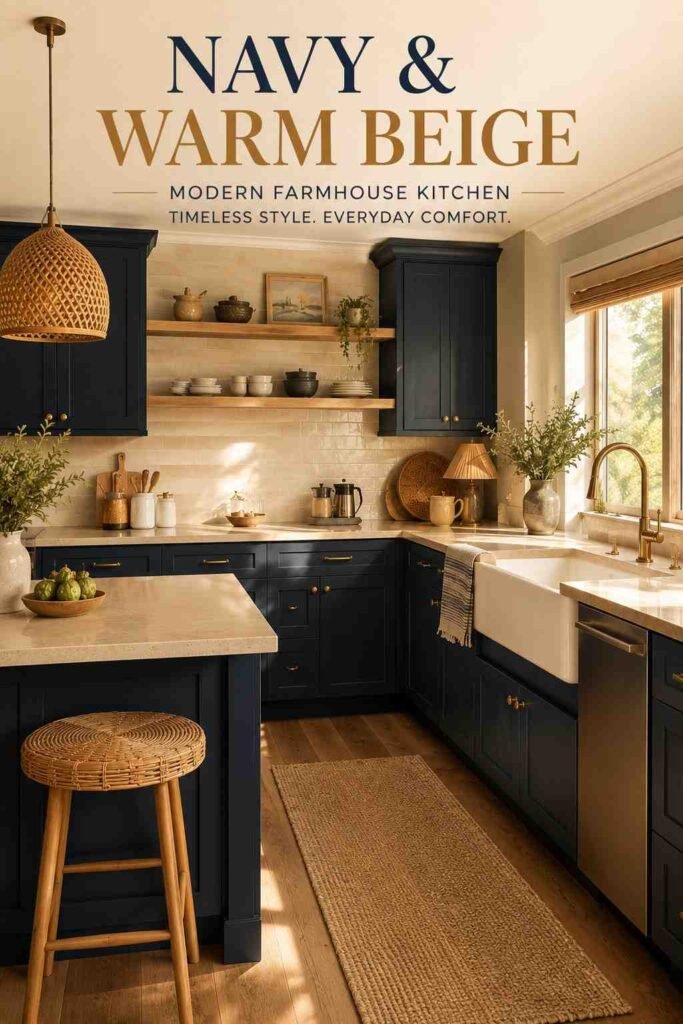
1. Navy Base, White Uppers. The most requested layout: navy on the lower cabinets, crisp white on top. It keeps the room bright while still giving you the depth of navy at eye level, and it’s forgiving for kitchens with limited natural light.
2. Navy Island, White Perimeter. Instead of two-toning every cabinet, paint only the island navy. This turns the island into a built-in focal point without committing the whole room to a dark palette — ideal for open-concept spaces.
3. Navy Uppers, White Lowers (Reversed). Flipping the usual formula draws the eye upward and can make ceilings feel taller. It works particularly well in kitchens with statement crown molding or exposed beams.
Full-Color Navy Kitchens
4. Wall-to-Wall Navy Cabinetry. Painting every cabinet — uppers, lowers, and island — in one navy shade creates an immersive, restaurant-quality look. This idea needs strong natural light or layered lighting to avoid feeling cave-like.
5. Navy with Matching Navy Walls. Extending the same shade from cabinets to walls, sometimes called a “tone-on-tone” kitchen, removes visual breaks entirely. Keep trim and ceiling in a warm white like Benjamin Moore White Dove to stop the room from feeling flat.
Hardware Pairings
6. Navy with Brass Hardware. Warm brass pulls soften navy’s coolness and add a traditional, collected feel. This pairing is especially popular with shades like Hale Navy (HC-154), which carries a subtle green undertone that flatters brass.
7. Navy with Unlacquered Brass or Gold. Living finishes that patina over time give navy cabinets an heirloom quality rather than a showroom-new look, and they age alongside the paint instead of staying static.
8. Navy with Matte Black Hardware. For a more modern, graphic edge, matte black pulls sharpen navy’s lines and read especially well against Sherwin-Williams Naval (SW 6244), one of the deepest, most saturated navy paints available.
Navy as an Island Statement
9. Navy Island with Wood Perimeter. Pairing a navy island against warm oak or walnut cabinetry creates contrast without going full two-tone. It’s an easy way to test navy before committing to a larger renovation.
10. Navy Island with Waterfall Countertop. Wrapping a quartz or marble countertop down the sides of a navy island (a “waterfall edge”) turns the island into sculpture. The continuous stone reads as an investment piece against the deep cabinet color.
Navy Paired with Wood Tones
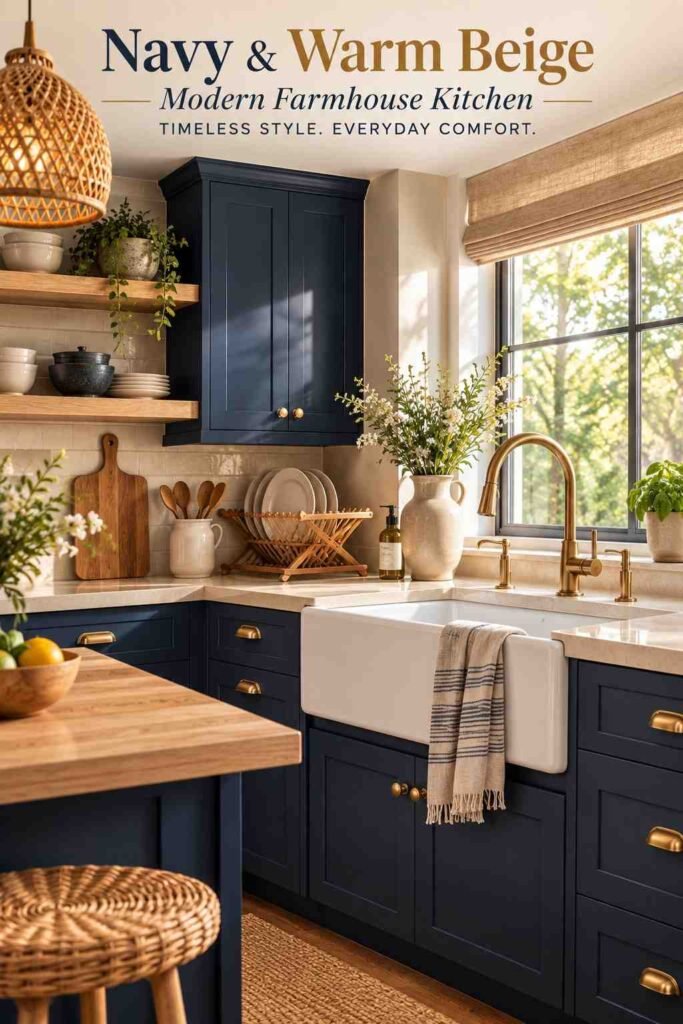
11. Navy Cabinets with White Oak Open Shelving. Swapping a section of upper cabinets for white oak shelving breaks up a heavy navy run and adds warmth and storage flexibility for everyday dishware.
12. Navy Lowers with a Wood Hood. A wood range hood against navy lower cabinets adds a natural focal point and keeps an all-navy kitchen from feeling monochromatic or overly formal.
Navy in Small Kitchens
13. Navy Below, Light Above. In small kitchens, keep navy confined to base cabinets and use pale upper cabinets or open shelving to preserve ceiling height and daylight.
14. Single Navy Accent Wall of Cabinets. Painting just one run of cabinets navy — rather than the whole galley — adds depth without shrinking a compact footprint visually.
15. Navy with High-Gloss Countertops. Reflective quartz or polished marble countertops bounce available light around a small navy kitchen, preventing the space from feeling boxed in.
Countertop and Material Pairings
16. Navy with White or Carrara Marble. The classic combination. White marble’s soft veining keeps navy from feeling too heavy and remains one of the safest, most timeless pairings available.
17. Navy with Butcher Block. Wood countertops warm up navy instantly and suit farmhouse or transitional kitchens that want depth without a cold, showroom feel.
18. Navy with Warm Gray Quartz. For a moodier, more contemporary kitchen, medium-gray quartz reduces contrast with navy cabinets and creates a cohesive, tonal palette.
Backsplash Pairings
19. Navy with Zellige or Handmade Tile. Textured, slightly imperfect tile catches light differently across each piece, adding movement against a flat navy cabinet finish.
20. Navy with Patterned Cement Tile. A graphic, patterned backsplash gives an all-navy kitchen a focal point and keeps the eye moving instead of settling entirely on one dark plane.
Navy Across Kitchen Styles
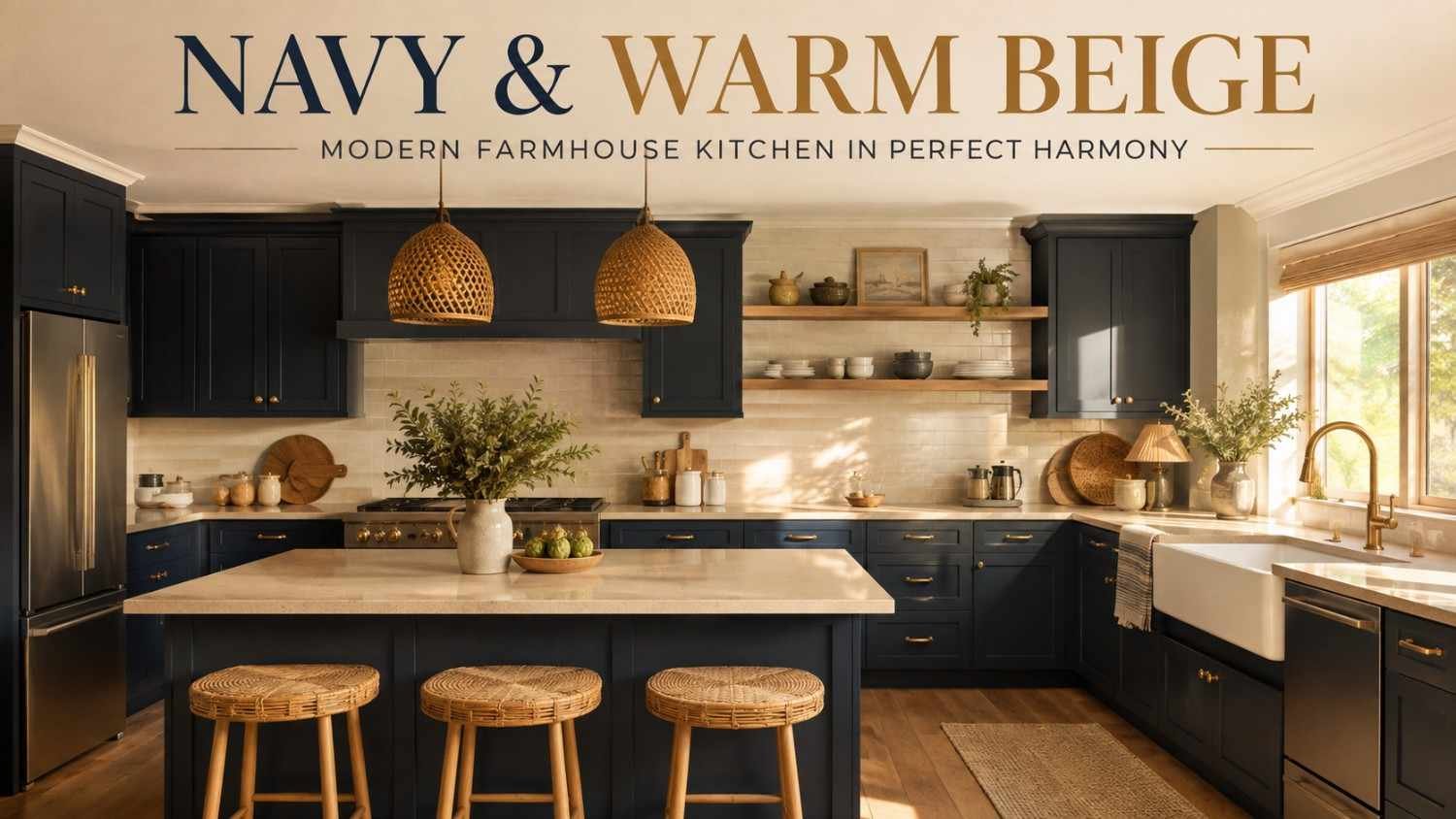
21. Modern Farmhouse Navy Kitchen. Shaker-style navy cabinets, a farmhouse sink, and brass or black hardware combine navy’s boldness with cozy, lived-in details like open shelving and woven textures.
22. Coastal or Transitional Navy Kitchen. Lighter navy shades such as Van Deusen Blue (HC-156) pair with white beadboard, natural rattan seating, and brass fixtures for a softer, breezier take on the trend.
How to Choose the Right Shade of Navy
Not all navy paints behave the same way. Some, like Sherwin-Williams Naval, are darker and more saturated, holding to a jewel-tone navy in most lighting. Others, like Benjamin Moore Hale Navy, carry a subtle green undertone that softens slightly under warm bulbs. Lighter options such as Newburyport Blue or Van Deusen Blue work well when a kitchen gets limited daylight and true navy would read as black.
Before committing, test large sample boards — at least 12 by 12 inches — on the actual cabinets, and view them morning, midday, and evening. North-facing kitchens tend to cool a navy down, while south-facing rooms warm it up.
Pairing Navy Cabinets with Countertops, Backsplash, and Flooring
Countertops do the heavy lifting in balancing a navy kitchen. Light surfaces — white quartz, Carrara marble, or butcher block — keep the room from feeling closed in, while medium grays create a more tonal, moody effect for kitchens that lean contemporary.
Flooring matters just as much. Warm wood floors, especially white oak, soften navy’s coolness, while light or whitewashed floors amplify contrast and make the cabinetry the clear focal point. Cool-toned porcelain tile tends to make navy feel colder, so it’s worth testing flooring and cabinet samples side by side before ordering either.
Hardware Finishes That Complement Navy Cabinets
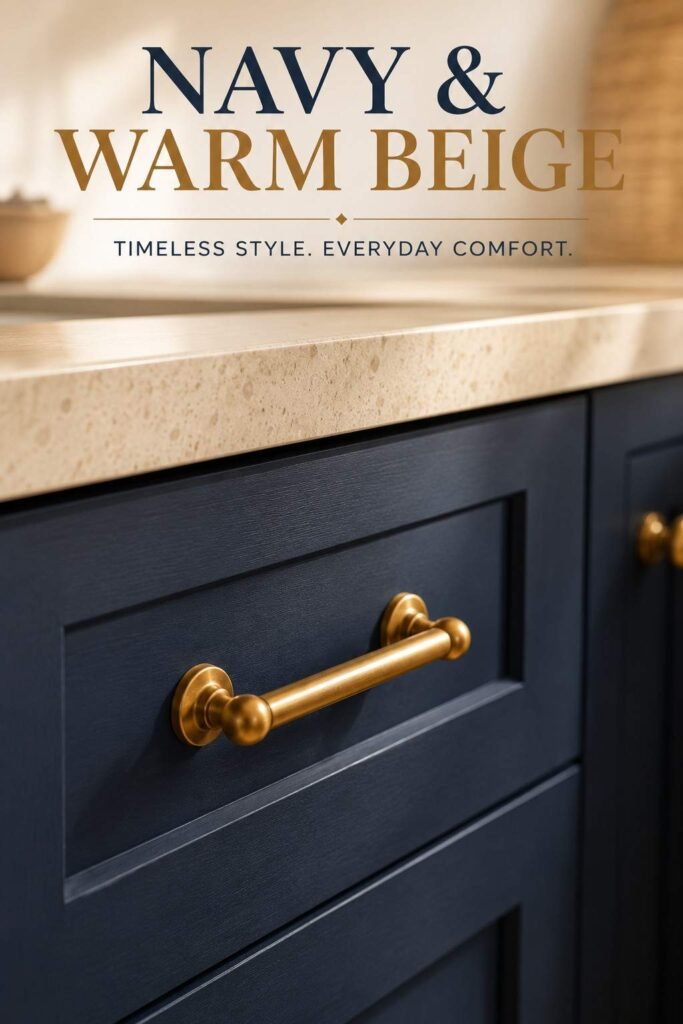
Hardware finish changes the entire mood of navy cabinetry. Brass and gold tones lean traditional and warm, softening navy’s formality. Matte black sharpens the look for a modern kitchen. Brushed nickel or chrome keeps things classic and low-contrast, which works well if you’re pairing navy with stainless steel appliances. As a rule, pick one dominant metal and use a second only as a light accent — mixing several finishes at equal weight can make a navy kitchen feel busy rather than intentional.
Cost and Maintenance Considerations
Painting existing cabinets navy typically runs less than a full cabinet replacement, though a professional spray finish costs more than a DIY brush-and-roll job. New navy cabinetry, by contrast, is priced the same as any other custom or semi-custom color — navy carries no inherent premium over white or gray.
For durability, use a satin or semi-gloss finish rather than matte on cabinet doors and drawer fronts; darker matte paints show fingerprints and scuffs more readily in high-traffic kitchens. Semi-gloss also wipes clean more easily, which matters around a stove or sink where splatters are constant. For more curated room inspiration across styles and budgets, browse the collections at outinteriors before finalizing your palette.
Navy vs. Other Trending Cabinet Colors
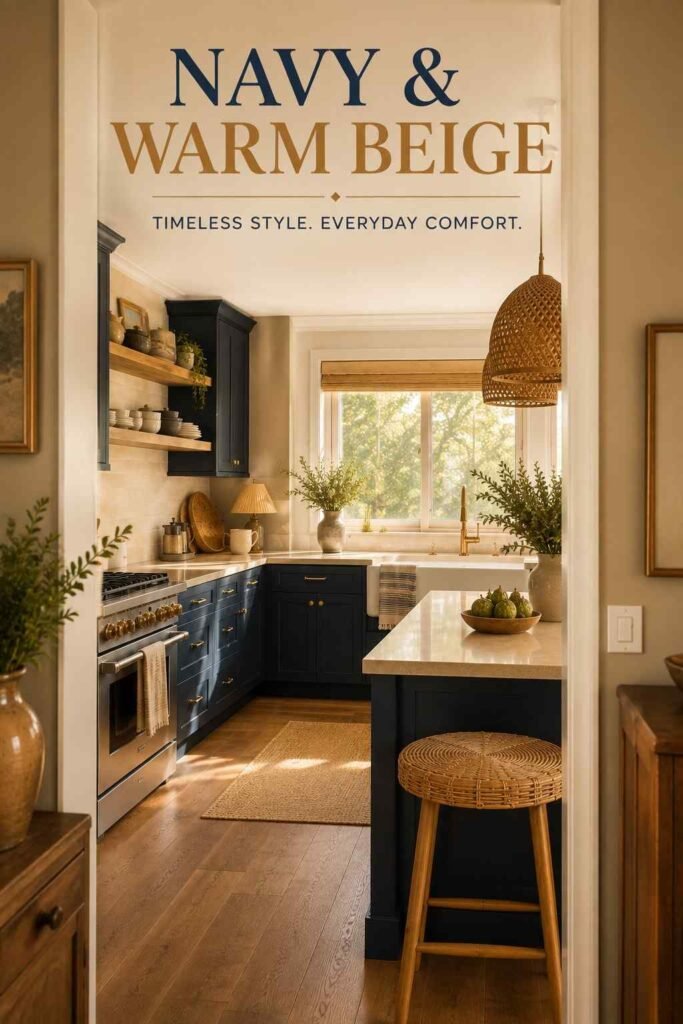
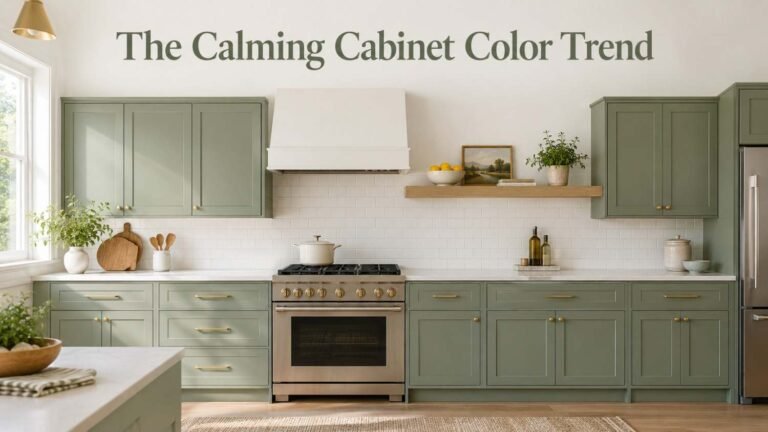
Navy isn’t the only deep color gaining ground. Muted greens have also become a favorite for homeowners who want warmth without navy’s coolness — if that palette appeals to you, our roundup of sage green kitchen ideas covers pairings and paint picks in the same depth as this guide. If your kitchen is on the smaller side, our dedicated guide to designing small kitchens walks through layout and color strategies that make compact spaces feel larger.
Compared to charcoal or matte black, navy keeps a kitchen feeling open rather than heavy. Compared to sage or olive green, navy reads slightly more formal and works better in traditional or transitional homes. There’s no universally “correct” choice — the right depth of color depends on your kitchen’s light, layout, and the mood you want the space to carry.
Conclusion
Navy earns its place as one of the most dependable cabinet colors available right now because it adapts — to small kitchens and large ones, to brass hardware and black, to marble and butcher block alike. Whether you paint a single island or commit to wall-to-wall cabinetry, these 22 navy kitchen cabinet ideas give you a practical starting point rather than just inspiration to scroll past. Test your shade in your own light, choose hardware that matches the mood you want, and treat the countertop and backsplash as equal partners in the design rather than an afterthought.
Frequently Askes Questions
Is navy a good color for kitchen cabinets in a small kitchen?
Yes, as long as it’s balanced with light countertops, ample lighting, and either a partial application (island only, or lowers only) or a high-gloss finish that reflects available light.
What is the most popular navy paint color for cabinets?
Benjamin Moore Hale Navy (HC-154) and Sherwin-Williams Naval (SW 6244) are the two most frequently used shades, with Hale Navy reading slightly softer and Naval reading darker and more saturated.
Do navy kitchen cabinets go out of style?
Navy has held steady as a design choice for over a decade because it functions as a neutral. It’s considered far more durable as a trend than niche colors like terracotta or bright teal.
Should I paint my cabinets navy or buy new navy cabinetry?
Painting is generally the more budget-friendly route if your existing cabinet boxes are in good condition. New cabinetry makes more sense if you’re also changing the layout or cabinet style.
What countertop color goes best with navy cabinets?
White or light gray quartz and marble are the safest, most versatile choices. Butcher block works well for a warmer, more traditional look, while medium-gray stone suits moodier, contemporary kitchens.
What hardware finish looks best with navy cabinets?
Brass and gold tones create a warm, traditional look, while matte black gives navy a sharper, modern edge. Brushed nickel is the most neutral option if you’re pairing navy with stainless steel appliances.
Can I mix navy cabinets with wood cabinets in the same kitchen?
Yes — pairing a navy island or lower cabinets with warm wood uppers or open shelving is one of the most popular ways to balance color and warmth without committing to an all-navy room.