Cozy 25 Covered Outdoor Kitchen with Fireplace and Seating Area Ideas for Every Backyard Style
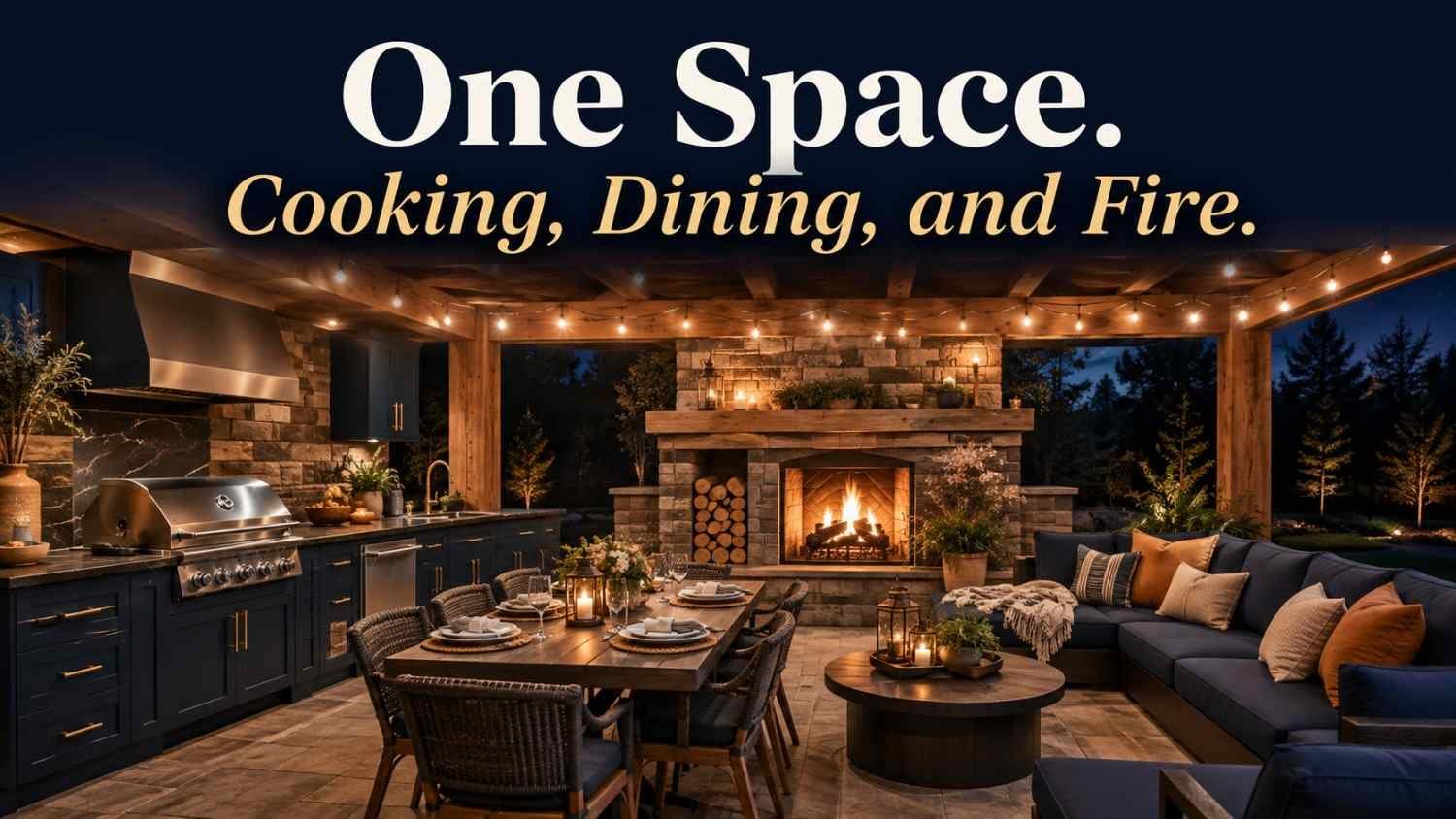
A backyard cookout used to mean a folding table and a rain check. Homeowners across the country are now building something closer to a second living room outside — one with a roof overhead, a fire crackling nearby, and enough seating for the whole family to linger long after dinner is done. A well-planned covered outdoor kitchen with fireplace and seating area turns a patio into a destination, protecting the cook from sun and drizzle while giving guests a warm spot to gather once the grill goes quiet. Below are 25 real, buildable ideas, organized by style, along with the planning details most guides skip: realistic costs, material choices, code clearances, and how to keep the space usable through every season.
What Makes a Covered Outdoor Kitchen with Fireplace and Seating Area Actually Work
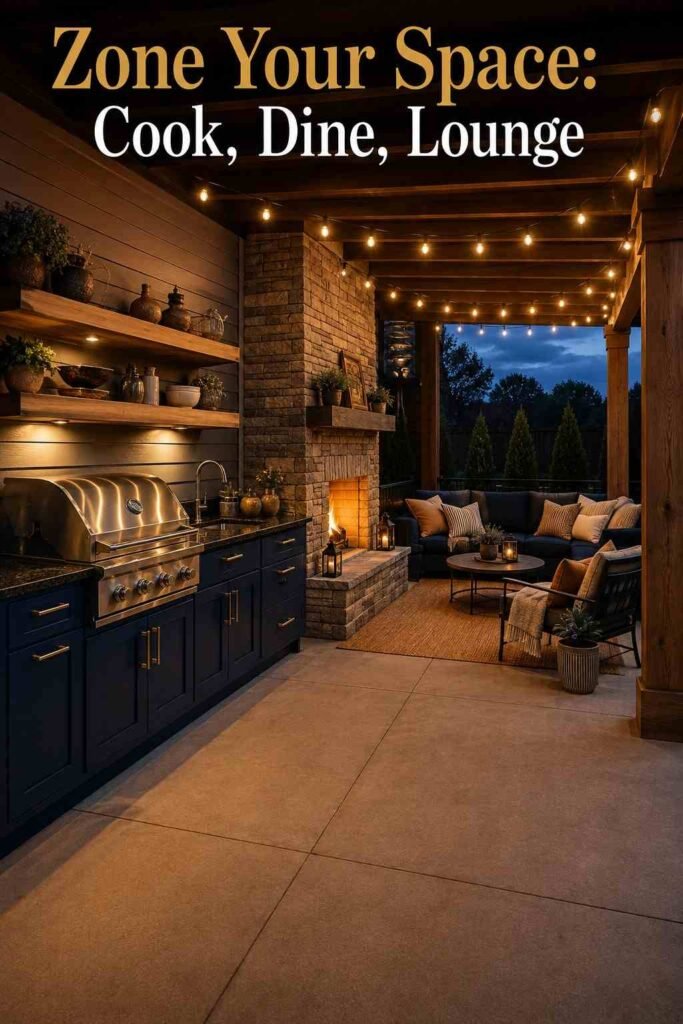
Before choosing a style, get the bones right. Start by mapping three zones — cooking, dining, and lounging by the fire — so smoke and foot traffic never cross paths. Check the direction of prevailing wind before placing the fireplace; nobody wants smoke drifting straight into the grill station or back door. Choose a roof type based on climate: a pergola offers filtered shade but little rain protection, a gazebo adds partial walls, and a solid, insulated roof turns the space into a true four-season room. Finally, size the countertop and seating for how you actually entertain — a couple who hosts twice a year needs far less than a family that grills every weekend. Skipping this planning stage is the single biggest reason a covered outdoor kitchen with fireplace and seating area feels cramped or unfinished once it’s built.
25 Covered Outdoor Kitchen with Fireplace and Seating Area Ideas to Steal for Your Backyard
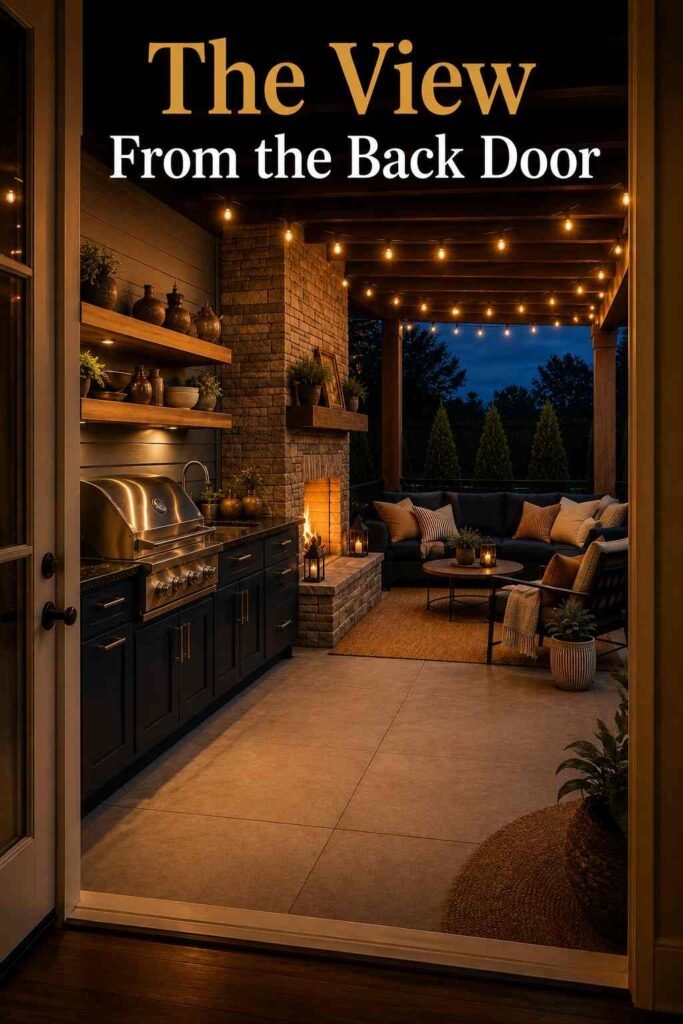
From weekend-project simple to full architectural statement, these 25 layouts cover nearly every lot size, climate, and budget.
Rustic and Farmhouse-Inspired Layouts
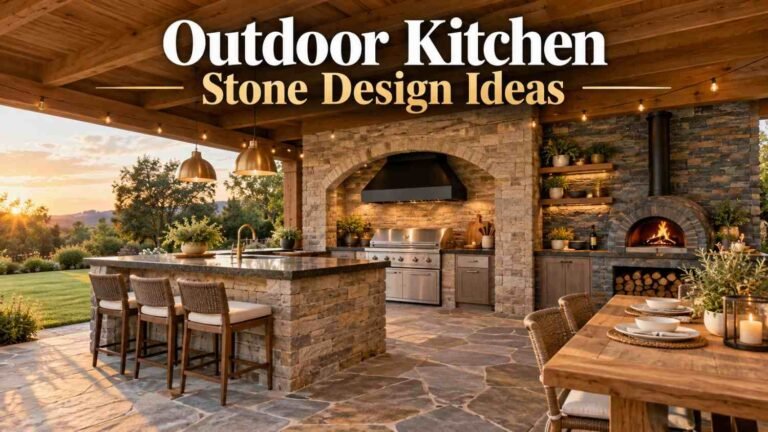
- A Stacked-Stone Grill Wall with a Corner Hearth pairs rough-cut fieldstone cabinetry with a matching corner fireplace, so the whole structure reads as one continuous mass rather than two separate builds.
- A Timber-Frame Pavilion with exposed beams and a metal roof shelters a brick fireplace and a long farmhouse table, ideal for families who eat outdoors often.
- A Reclaimed Brick Fireside Nook uses weathered, secondhand brick on both the kitchen face and the fireplace surround for an old-world patina that new material can’t fake — pair it with rocking chairs instead of a standard sectional.
- A Board-and-Batten Enclosure closes off two sides of the structure, cutting wind around the fireplace while keeping the grill side open to the yard.
- A Wagon-Wheel Chandelier Over a Cast-Iron Firebox adds rustic lighting without competing with the stone hearth below it.
- A Barn-Door Pass-Through Kitchen uses sliding wood doors to close the cooking zone in winter while the fireplace and seating area stay open year-round. Anyone drawn to this look should study a Rustic Covered Outdoor Kitchen Ideas gallery before choosing stone versus brick, since the two materials weather very differently outdoors.
Modern and Minimalist Designs
- A Linear Concrete Fireplace with a Floating Hearth sits flush against a matte-black grill island, creating one continuous horizontal line under a flat steel roof.
- Deep-Toned Cabinetry with a Ribbon Fireplace brings indoor color trends outside; anyone who liked navy kitchen cabinet ideas in their indoor kitchen will find the same moody, saturated tone works beautifully against light stone or porcelain paving outdoors.
- A Cantilevered Roof with No Visible Posts keeps sightlines open between the kitchen, the fireplace, and the pool beyond it, a favorite in warm-climate builds.
- A Glass-Wall Wind Break replaces a solid fourth wall with tempered glass, blocking breeze around the fire without blocking the view.
- Floating Steel Shelving Beside a Ribbon Burner swaps a bulky masonry fireplace for a slim linear gas unit, freeing floor space for a bigger seating area.
- A Monochrome Poured-Concrete Bench wraps three sides of the fireplace, doubling as seating and a low retaining wall for planters.
Luxury and Resort-Style Retreats
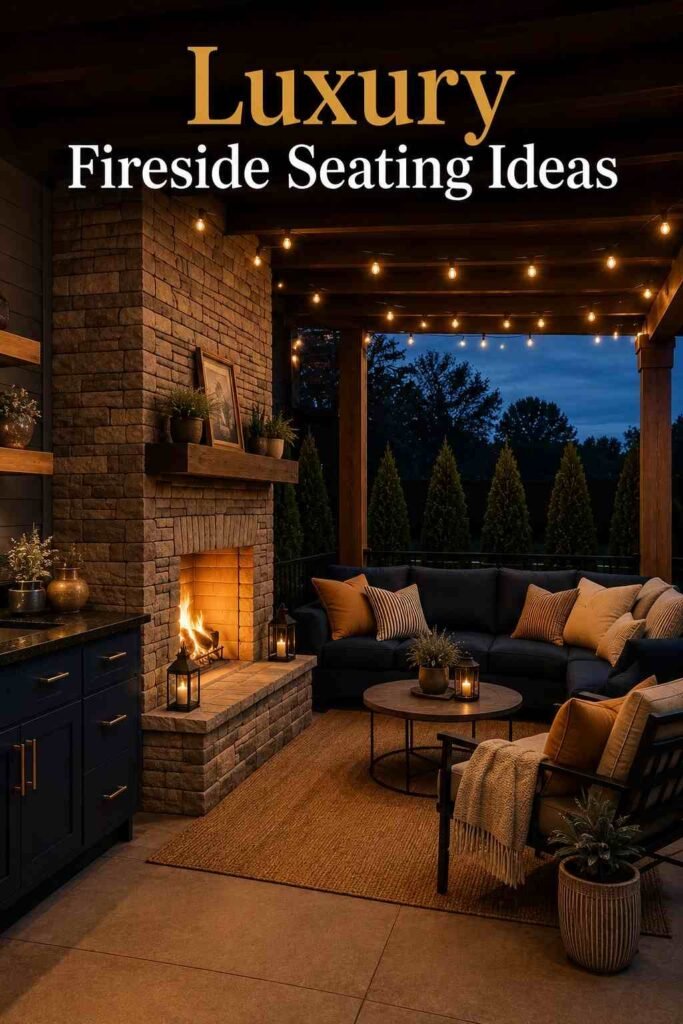
- A Two-Sided See-Through Fireplace separates the outdoor kitchen from a sunken lounge, so both zones share the same fire feature.
- A Pool Cabana Kitchen with a Stacked-Stone Chimney combines a full bar, pizza oven, and fireplace under one gable roof for true resort-style entertaining.
- A Vaulted Wood-Ceiling Pavilion with recessed lighting and a stone fireplace mimics an indoor great room, right down to a mounted television above the mantel.
- Heated Sectional Seating Around a Gas Fire Table replaces a traditional fireplace with a low, wide fire table so guests can rest drinks on its edge.
- A Wet Bar and Wine Fridge Wing extends the kitchen counter into a separate service bar, keeping prep mess away from fireside seating.
- A Retractable Screen Enclosure adds bug and weather protection without permanent walls, useful in humid Southern climates.
- A Double-Height Chimney with Uplighting turns the fireplace into a nighttime focal point visible from across the yard.
Small-Space and Budget-Friendly Solutions
- A Modular Grill Cart Beside a Portable Fire Pit lets renters or first-time homeowners build the look in phases without pouring a permanent foundation.
- A Corner Fireplace Kit Under a Retractable Awning uses a prefabricated firebox and a fabric cover instead of a full roof, cutting both cost and build time.
- A Built-In Bench Seat That Doubles as Storage saves floor space in tight backyards by tucking cushions and firewood underneath the seating itself.
- A Tabletop Fire Bowl on a Small Bistro Set works for patios too small for a full fireplace, but that still want a flicker of flame nearby.
- A Single-Wall Grill Station with an Adjacent Chiminea separates cooking and fire into two lightweight, low-cost elements rather than one large structure.
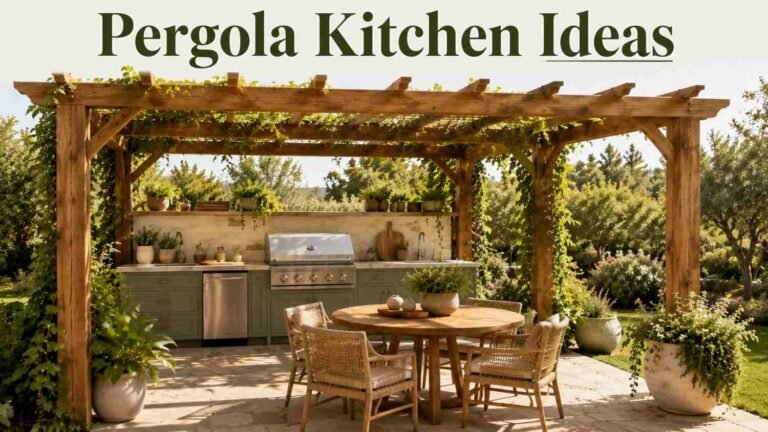
- A Pergola with String Lights and a Freestanding Fire Pit remains the simplest, most affordable version of this whole idea — no masonry required, just a shaded frame, comfortable chairs, and a portable flame. For more layout comparisons across budgets, the project galleries at outinteriors are worth reviewing before finalizing a design.
What a Covered Outdoor Kitchen with Fireplace and Seating Area Costs
Budget shapes almost every decision above. A modest build around a modular grill cart, a portable fire pit, and a simple pergola often lands in the $8,000–$18,000 range. Mid-range projects with a masonry counter, built-in grill, and a prefabricated fireplace typically run $20,000–$45,000, largely driven by the roof structure and gas or plumbing lines. Full luxury versions — stone chimneys, wet bars, vaulted roofs — regularly exceed $60,000. Whatever the budget, cost guides consistently point to the roof and utility hookups, not the fireplace itself, as the biggest swing factor, so get quotes on those two line items first.
Materials and Fireplace Fuel Types Worth Comparing
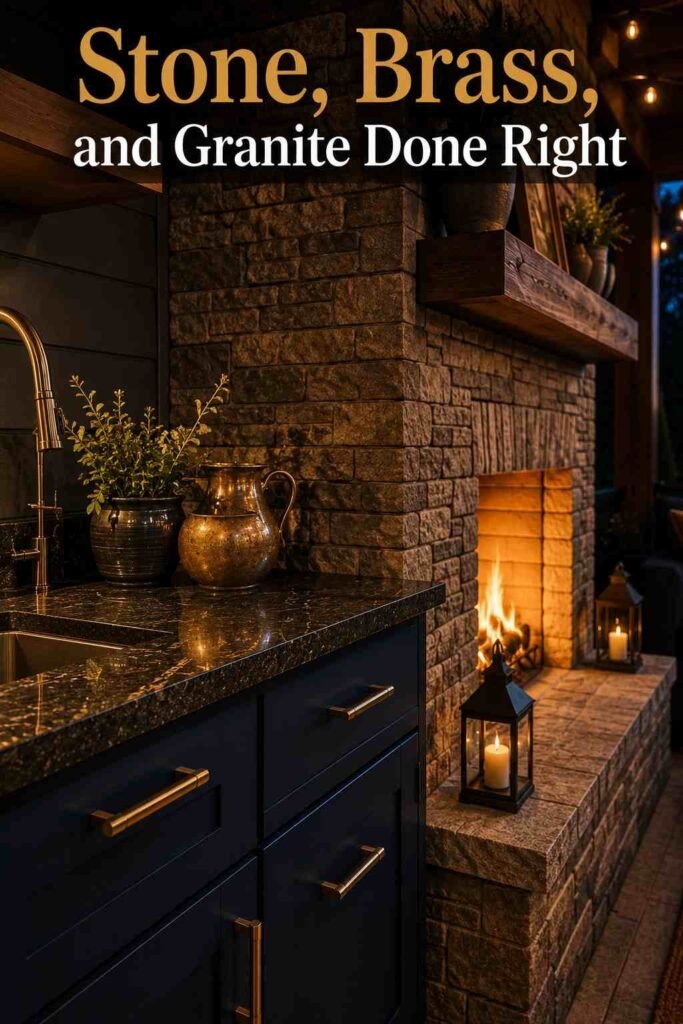
Material choice affects both looks and upkeep. Natural stone and brick age gracefully and need little maintenance beyond occasional resealing, while stucco and painted block cost less upfront but require repainting every few years in harsh climates. For countertops, granite and porcelain slab resist heat and staining better than tiled surfaces, which trap grease in the grout lines. On fuel, a wood-burning fireplace gives the strongest ambiance and crackling sound but produces smoke and needs storage space for logs; a natural gas or propane fireplace lights instantly, burns cleaner, and suits homeowners who want fire without daily maintenance. Choose appliances rated specifically for outdoor use — indoor-rated grills and refrigerators rust quickly once exposed to weather. A covered outdoor kitchen with fireplace and seating area only looks good long-term if every component is chosen for the local climate, not just for how it photographs.
Permits, Clearances, and Safety Basics
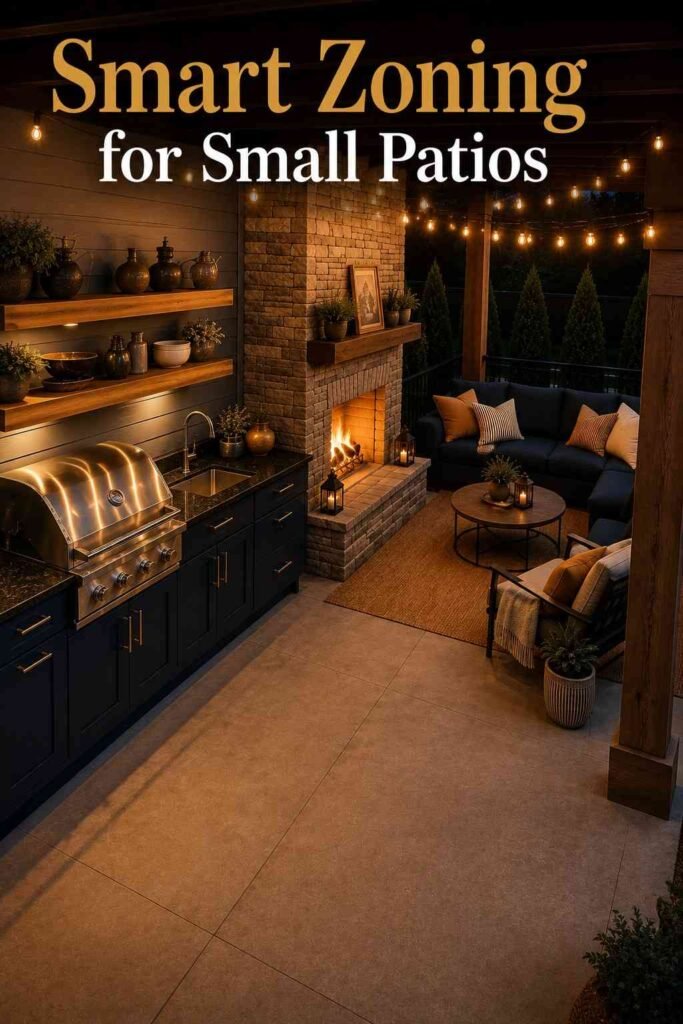
Most municipalities require a permit for any built-in fireplace or gas line, and many enforce minimum clearance distances between a fireplace, the house, and combustible roofing material. Rules vary significantly by city and county, so confirm exact requirements with the local building department before pouring a foundation. A licensed contractor should handle gas line connections and any electrical work tied to lighting or appliances. If the structure will have a solid roof, also ask about spark arrestors and chimney height requirements — details that are easy to overlook during design but expensive to fix once construction is finished. Skipping this step is the most common reason a covered outdoor kitchen with fireplace and seating area project stalls partway through construction.
Keeping It Usable in Every Season Across the U.S.
Climate should guide roof and wall decisions more than style preference alone. In colder regions of the Northeast and Midwest, a solid, insulated roof paired with radiant heaters and partial walls keeps the fireplace usable well into winter. In humid Southern states, retractable screens or louvered roofs manage both bugs and sudden downpours. Hot, dry climates across the Southwest benefit more from open pergolas, shade sails, and misting systems than from heavy masonry, since summer evenings rarely call for extra warmth. Matching the structure to regional weather, rather than copying a photo built for a different climate, is what actually determines how often a covered outdoor kitchen with fireplace and seating area gets used once the novelty wears off.
Maintenance That Keeps the Space Looking New
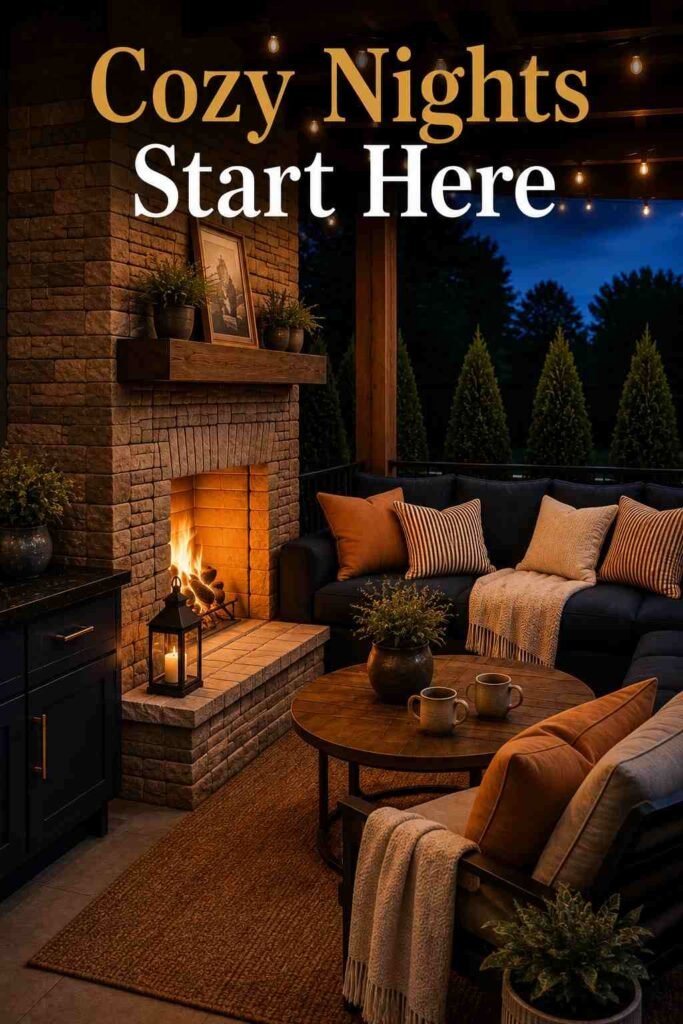
A little seasonal upkeep protects the investment. Cover or store cushions before winter, brush out the fireplace firebox after heavy use, and reseal natural stone or concrete countertops roughly once a year. Wood-burning fireplaces need the chimney or flue checked periodically for creosote buildup, while gas units should have burner ports inspected for debris before the first use each spring. Wipe down stainless steel appliances with a non-abrasive cleaner to prevent surface rust, and check that any fabric or screen covers are free of mildew before rehanging them for the season. A little routine care each spring and fall is really all a covered outdoor kitchen with fireplace and seating area needs to stay looking new for years.
Conclusion
Whether the goal is a simple fire pit beside a grill cart or a full stone pavilion with a wet bar, a well-planned covered outdoor kitchen with fireplace and seating area earns its keep in almost any backyard. Start with the zoning and roof type, match materials to the local climate, and confirm permits before any concrete is poured. From there, the 25 ideas above offer a starting point for nearly every style, lot size, and budget — the details, not the price tag, are what make the space feel finished.
Frequently Asked Questions
1. How much does a covered outdoor kitchen with fireplace and seating area cost?
Budgets typically range from around $8,000 for a simple modular setup to $60,000+ for a full stone pavilion with a built-in fireplace and bar.
2. Do I need a permit for an outdoor fireplace?
Most areas require a permit for any built-in fireplace or gas line — check with the local building department before construction begins.
3. Is a gas or wood-burning fireplace better for an outdoor kitchen?
Gas lights instantly and burns cleaner; wood offers stronger ambiance but needs storage space and more regular cleanup.
4. What roof type works best for year-round use?
A solid, insulated roof with partial walls performs best in cold climates, while open pergolas and shade sails suit hot, dry regions.
5. How close can a fireplace be built to the house?
Clearance requirements vary by city and county, so always confirm exact distances with the local building department before finalizing plans.
6. Can I build a covered outdoor kitchen with fireplace and seating area on a budget?
Yes — a modular grill cart, a portable fire pit, and a fabric awning can achieve a similar layout for a fraction of the cost of masonry construction.
7. What materials need the least maintenance outdoors?
Natural stone, brick, and porcelain slab hold up best with minimal upkeep compared to stucco, tiled grout lines, or painted surfaces.