25 Entryway Organization Shortcuts to End Front-Door Clutter for Good
Picture a Tuesday evening. You walk in with groceries, a backpack, and a damp umbrella. Shoes sit in a heap. Mail slides off a table. Your keys have vanished again. The entryway is the busiest few square feet in your home, and it takes the most abuse.
The good news is that you do not need a renovation. These 25 entryway organization shortcuts are small, fast, and affordable. Most take under an hour. Many cost nothing. They work in a roomy foyer, a narrow hallway, or an apartment with no foyer at all.
Why Simple Systems Beat Big Makeovers
Most entryways fail for one reason. The space asks you to do too much with too few places to put things. When coats, shoes, bags, and mail have no obvious home, they pile up wherever there is room.
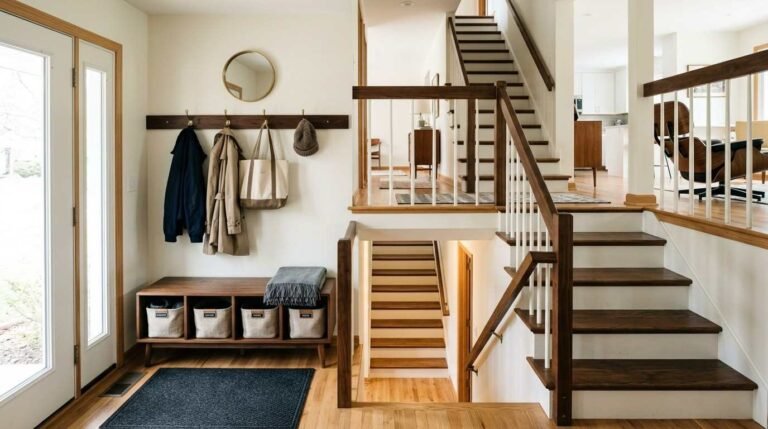
A good system follows one rule: put items where your hands naturally drop them. If you shed your bag the moment you step in, a hook should be right there. If you kick off shoes by the door, a tray should wait below. If your home has staggered levels at the front door, these organization hacks for a split foyer entryway will help you use every step and landing wisely.
Use the entryway organization shortcuts below as a menu. Pick the ones that match your habits, and skip the rest.
Shoe Storage Shortcuts
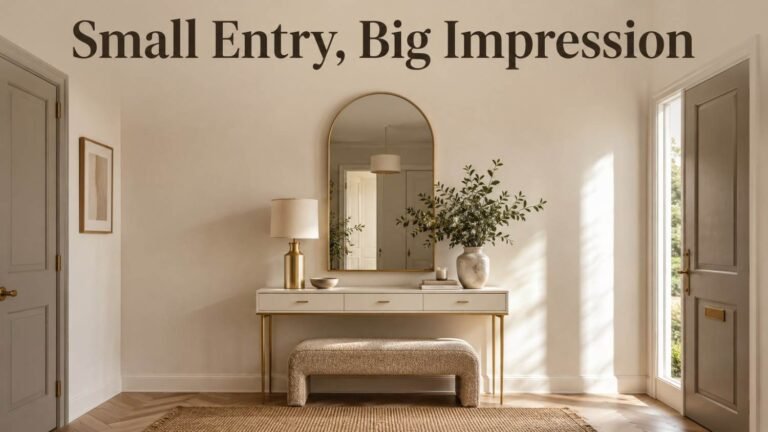
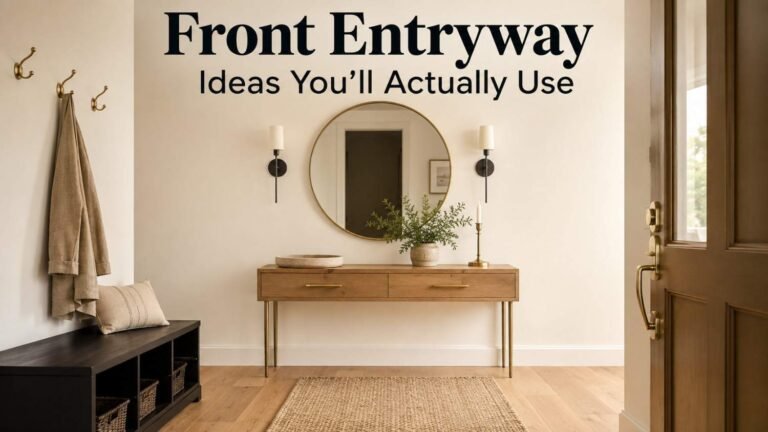
Shoes cause more entryway chaos than anything else. A family of four can drop eight pairs in a minute. These five fixes keep footwear contained. For a fresh look once your space is tidy, browse these Modern Entryway Decor Ideas to add style without adding clutter.
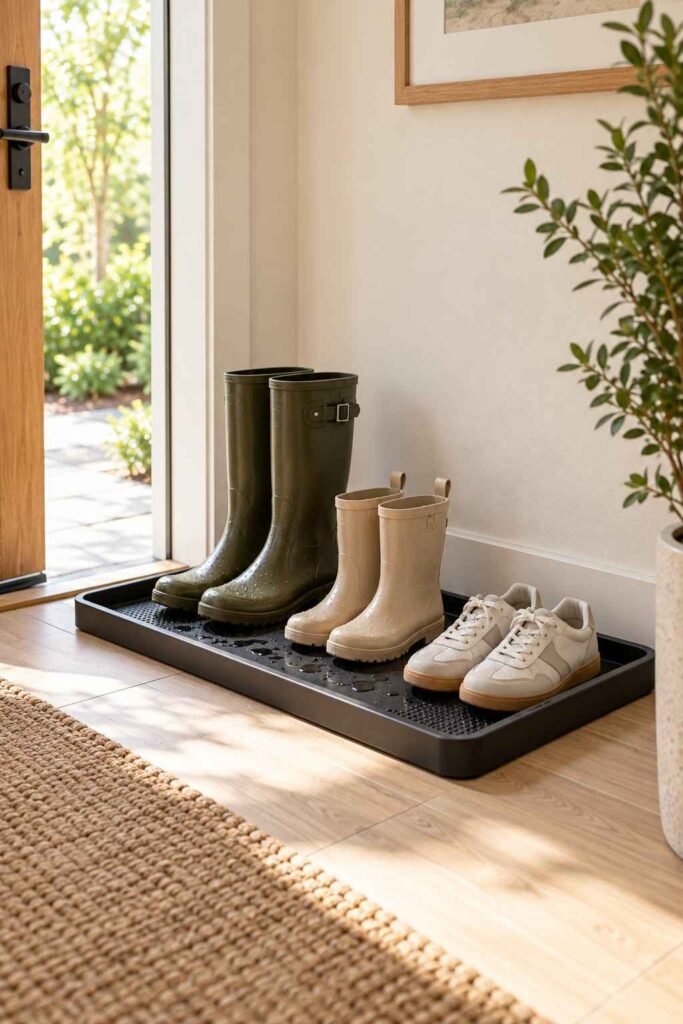
1. Use a Boot Tray With a Raised Lip
A rubber tray with a raised edge of about one inch catches snow, mud, and puddles. It protects your floor and gives wet shoes one clear landing zone. Wipe it weekly. Choose a tray wide enough to hold the pairs your household wears daily, and store the rest elsewhere.
2. Add a Slim Shoe Cabinet
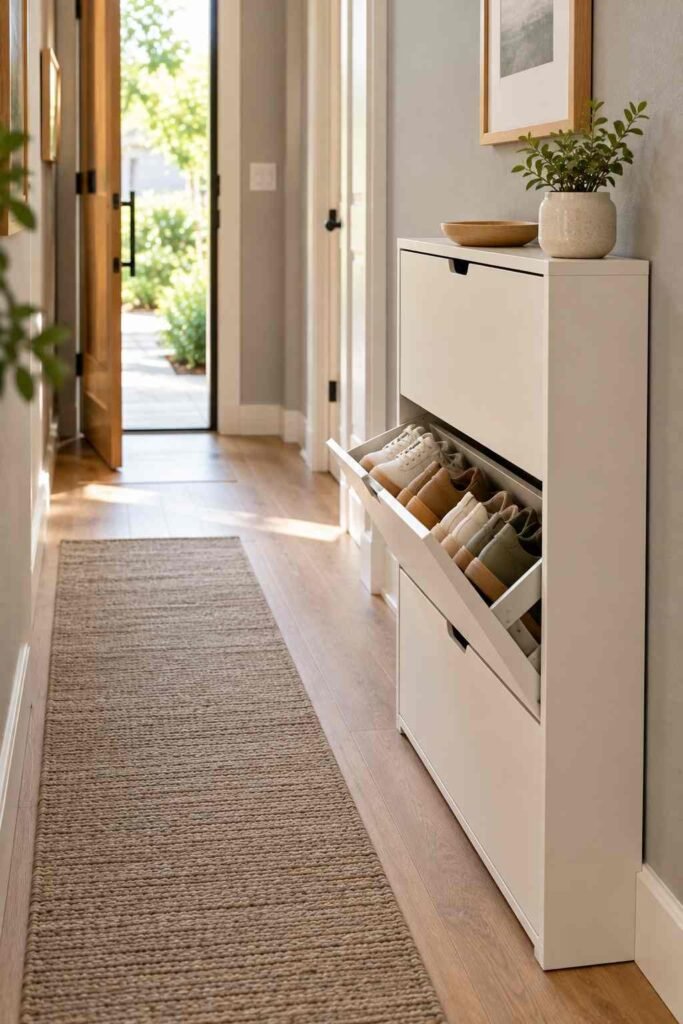
Cabinets only 8 to 12 inches deep fit narrow halls without blocking foot traffic. Tilting drawers hold shoes at an angle, which saves space. Closed doors hide the mess, which makes the whole area look calmer even when it is in use.
3. Stack Shoes With Tiered Racks
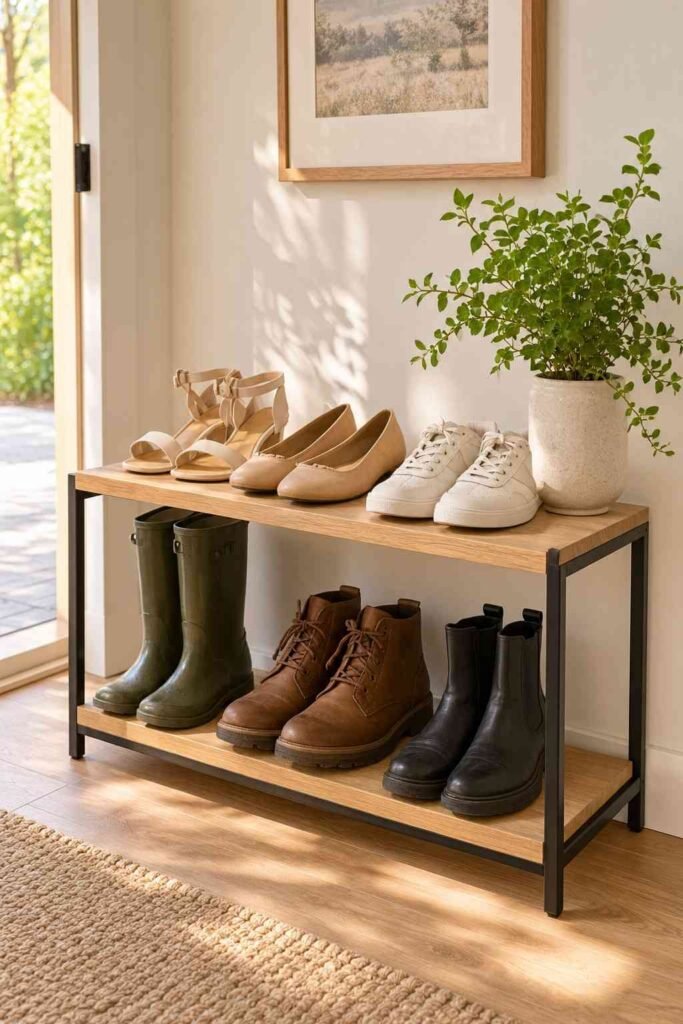
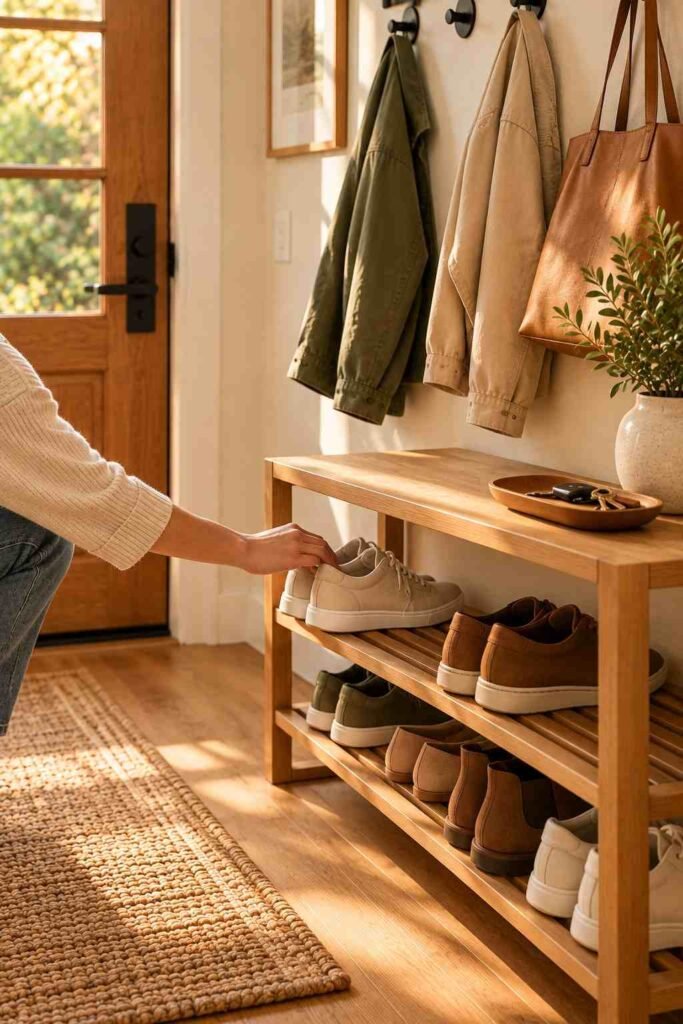
A two-tier rack doubles floor capacity without taking more floor. Place heavy boots on the bottom and light sandals on top. Limit each person to one rack level, so everyone knows their own zone, and the pile cannot spread.
4. Try Over-the-Door Shoe Pockets
Clear pockets hang on the back of a closet or entry door and use space you already own. They suit kids’ shoes, slippers, and flip-flops well. Label the rows by person if several people share the door.
5. Rotate Shoes by Season
Only three to four pairs per person should live in the entryway at once. Move off-season pairs to a bedroom closet or under-bed bin twice a year. This one habit shrinks the shoe pile more than any new furniture can.
Coat, Hat, and Bag Shortcuts
Outerwear is bulky, and a pile of it can swallow a small entry. Vertical storage solves most of the problem.
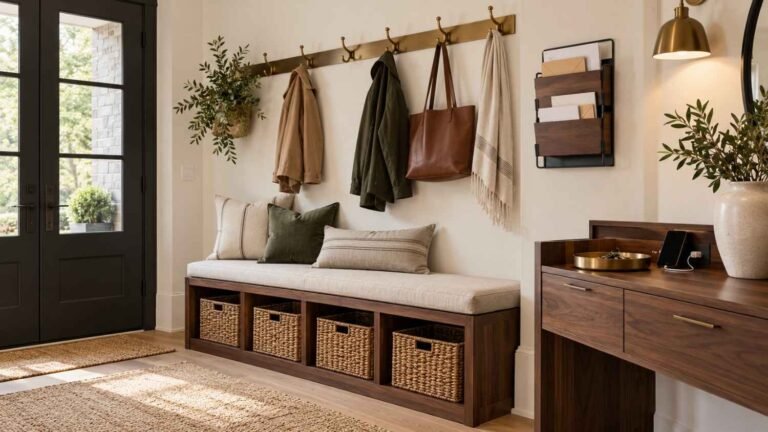
6. Install a Row of Wall Hooks
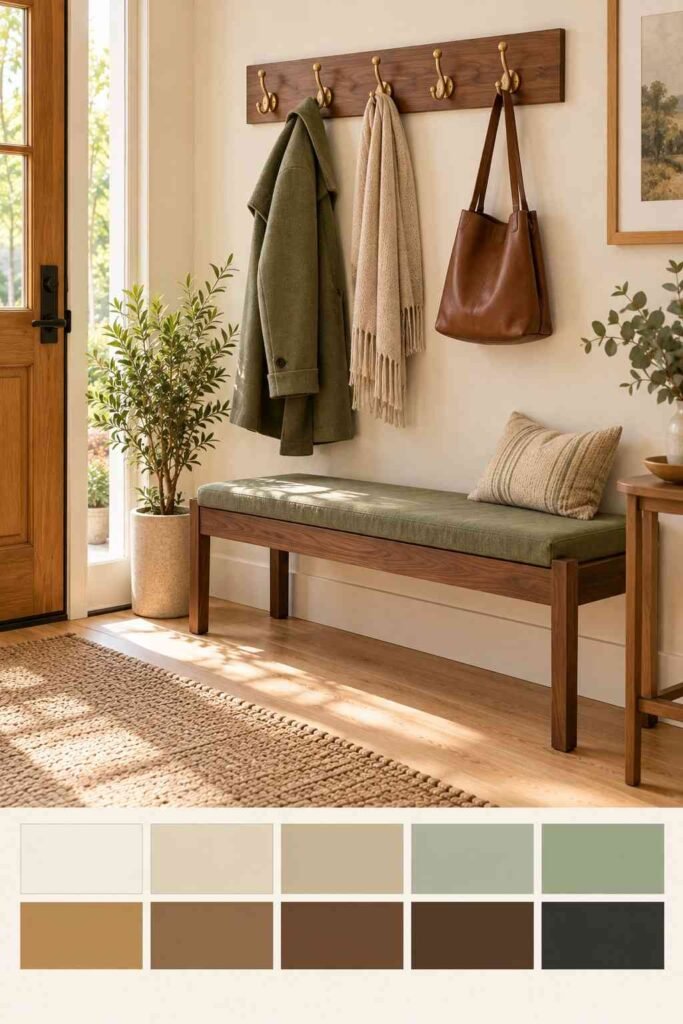
A single row of sturdy hooks gives each person a personal spot. Mount adult hooks at roughly 60 to 66 inches from the floor. Use studs or proper anchors, because a loaded coat rack is heavier than it looks.
7. Lower the Hooks for Kids
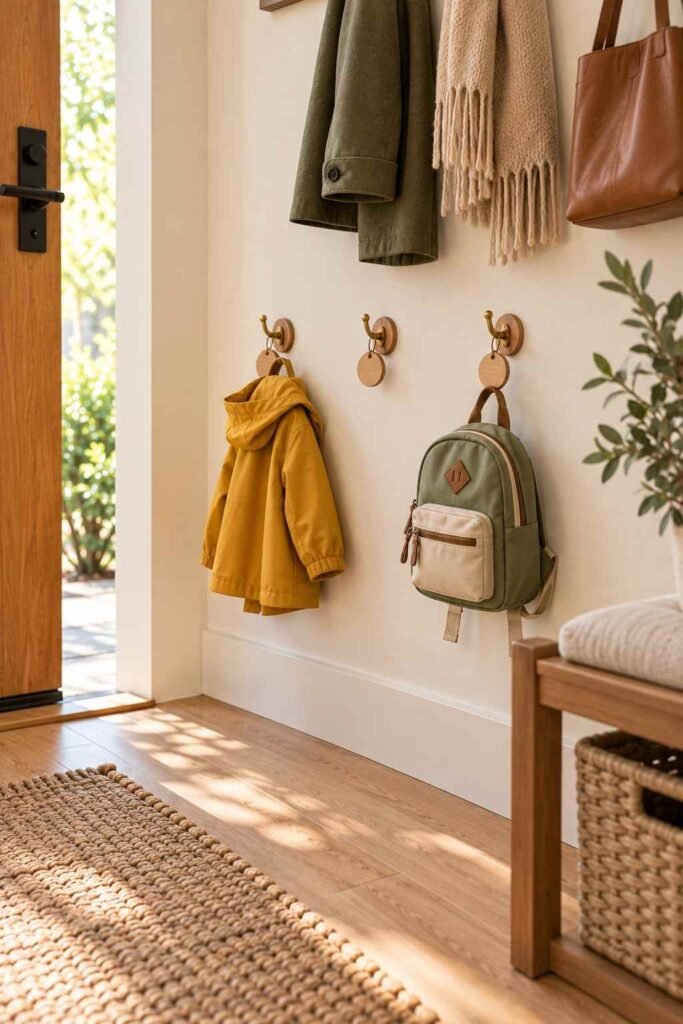
Children hang up their own things when they can reach. Mount a second row at about 40 to 48 inches, depending on their height. Add a picture or name label so even small kids know which hook is theirs.
8. Choose a Freestanding Coat Rack for Renters
If drilling is off the table, a freestanding rack works well. Pick one with a heavy, wide base so it will not tip. Keep it in a corner, and limit it to one coat per arm to avoid a tangled tower of jackets.
9. Hang Baskets Above for Hats and Gloves
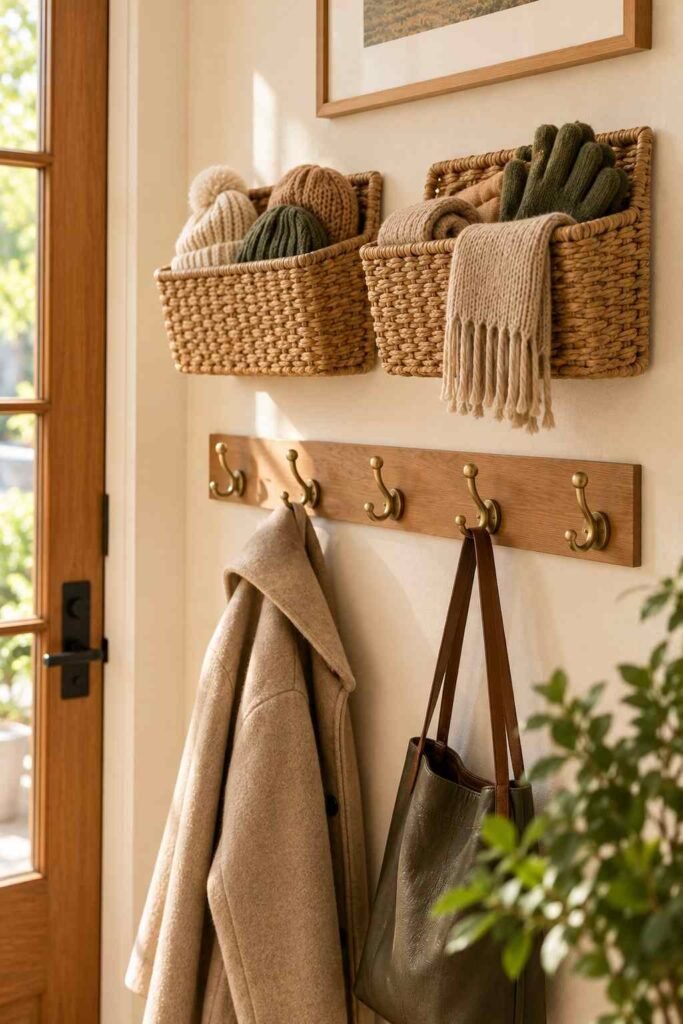
Wire or woven baskets mounted above the hooks hold beanies, scarves, and gloves. Everything stays visible and within reach. Rinse the winter gear out in spring, and the baskets can hold sunhats and caps for summer.
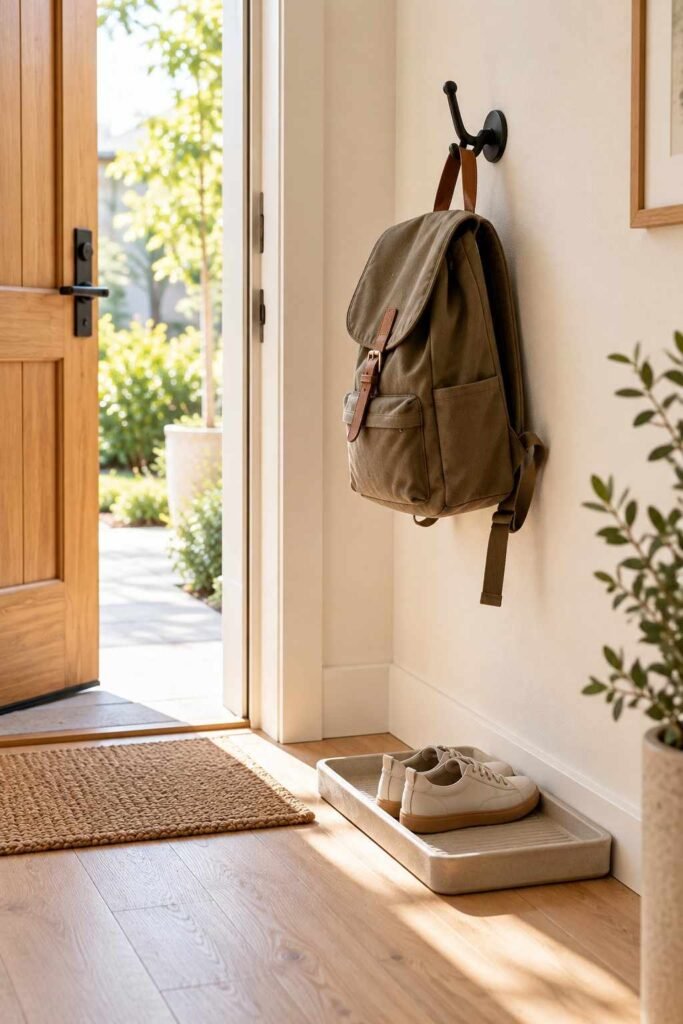
10. Give Bags Their Own Hook
Backpacks, totes, and purses often end up on the floor. Dedicate one heavy-duty hook per bag. This keeps the straps from tripping anyone and stops bag contents from spilling across the floor.
Keys, Mail, and Small Item Shortcuts
Small items vanish easily. A few visible, designated spots end the daily hunt.
11. Mount a Key Rack by the Door
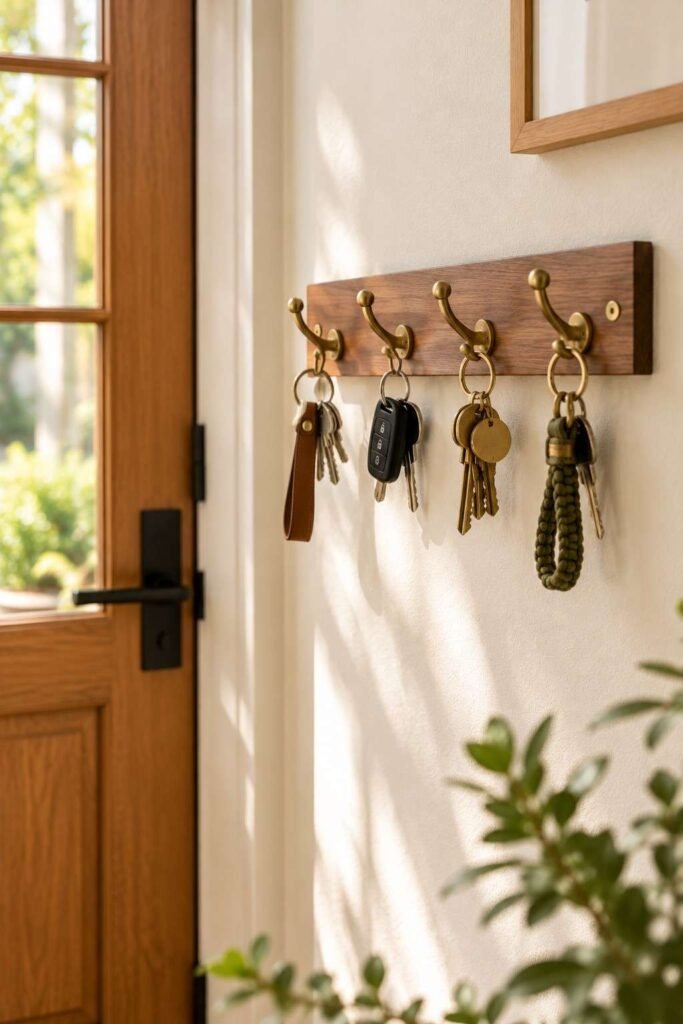
Hang a key rack at eye level, right where you enter. Use one hook per household member. Keys that always return to the same spot are rarely lost, and spare sets stay easy to find.
12. Set Up a Catch-All Dish
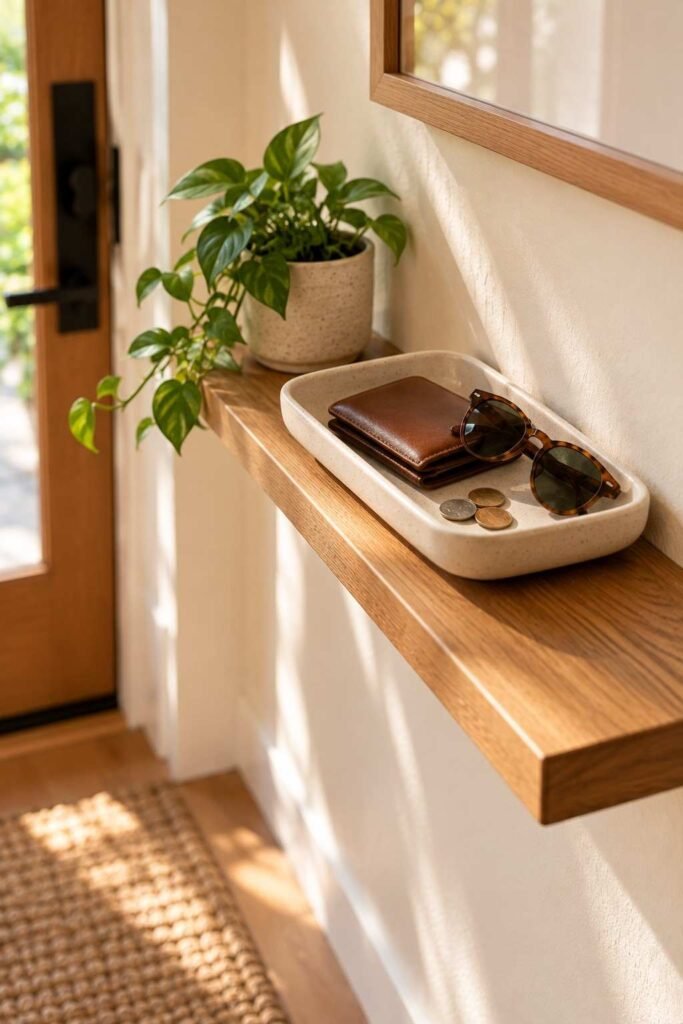
A small ceramic or wooden dish on a shelf holds wallets, sunglasses, and loose change. Pick one with a shallow rim so items are easy to grab. Empty it weekly so it stays a landing pad and never becomes a junk bowl.
13. Sort Mail Immediately
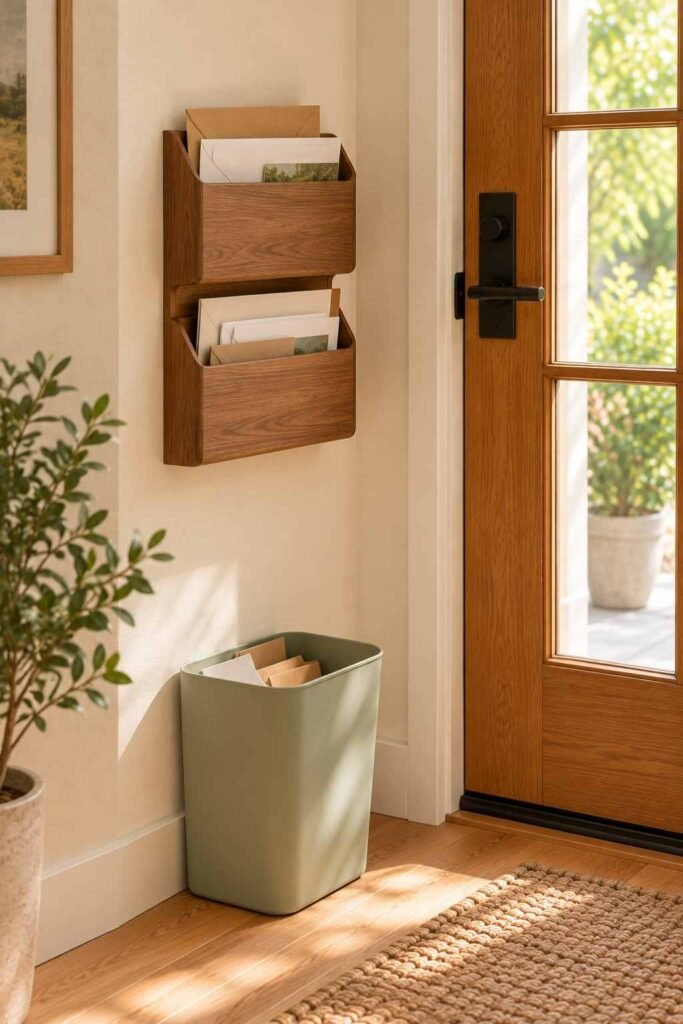
Place a small recycling bin or paper tray near the door. Sort mail the moment you walk in: toss junk, keep bills, and act on anything urgent. A two-slot wall file separates “to do” from “to file.”
14. Add a Charging Drawer or Station
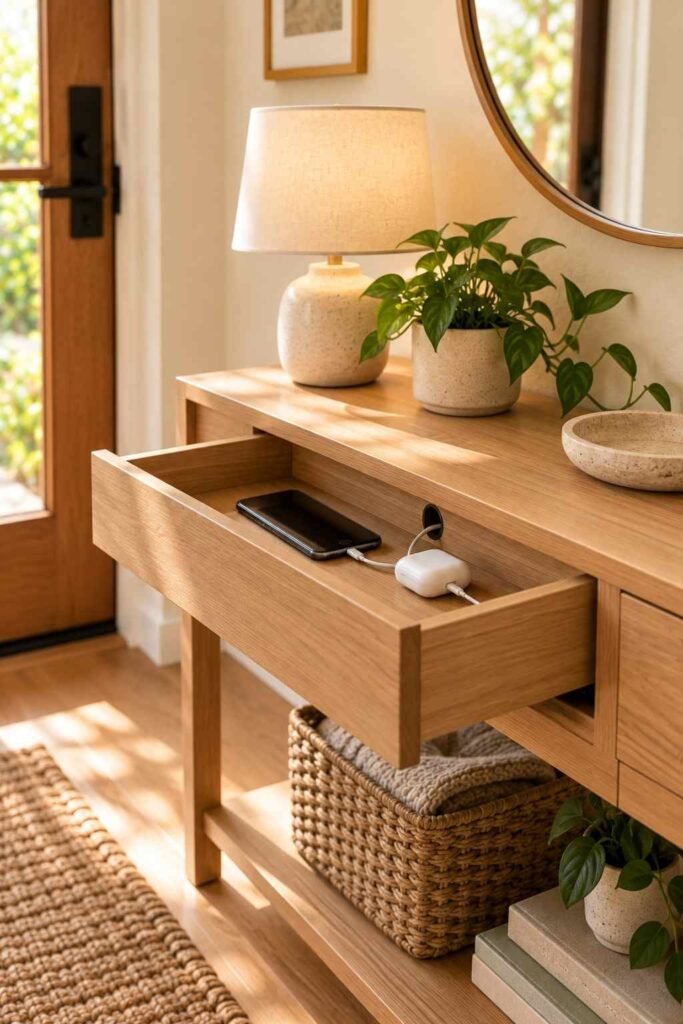
A shallow drawer or small box with built-in cable routing keeps phones and earbuds charged and out of sight. Place it near an outlet. Dropping devices here on arrival also helps everyone unplug from screens at the door.
15. Hang a Family Calendar or Message Board
A small whiteboard or cork board turns the entry into a quick command center. Post appointments, chores, and reminders. Use one color per family member, and keep the board small so it does not crowd the wall.
Entryway Organization Shortcuts for Small Spaces
Tight spaces call for tighter thinking. These ideas use height, doors, and corners rather than floor area.
16. Choose a Wall-Mounted Shelf With Hooks
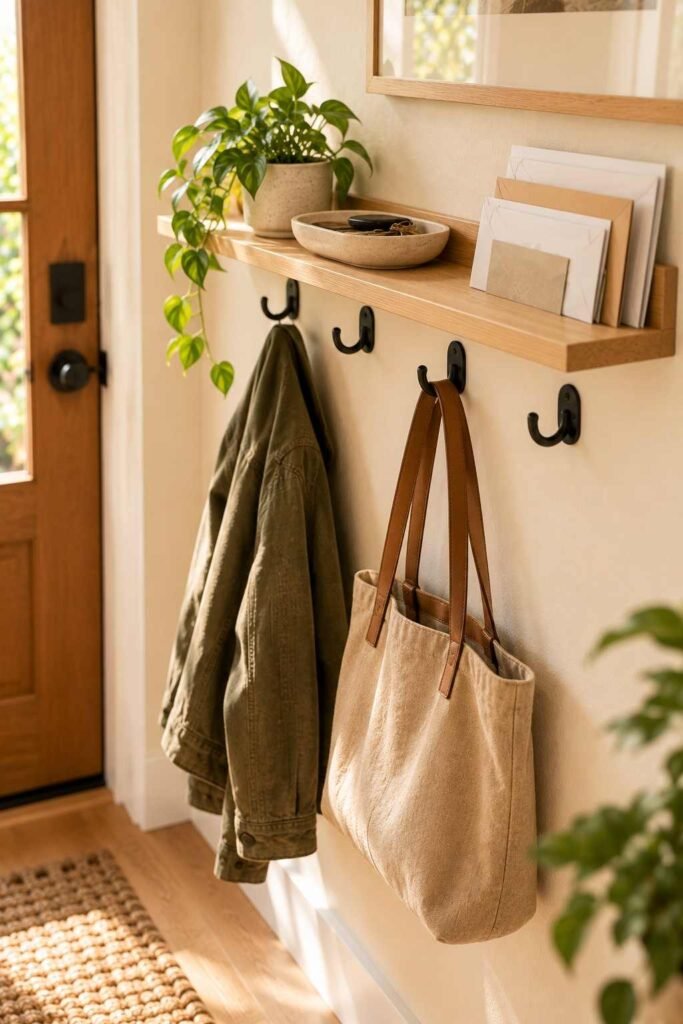
A narrow shelf with hooks beneath it combines a drop zone, a display spot, and coat storage in one footprint. Look for shelves under 8 inches deep. They stay out of the walkway and still hold keys, mail, and a small plant.
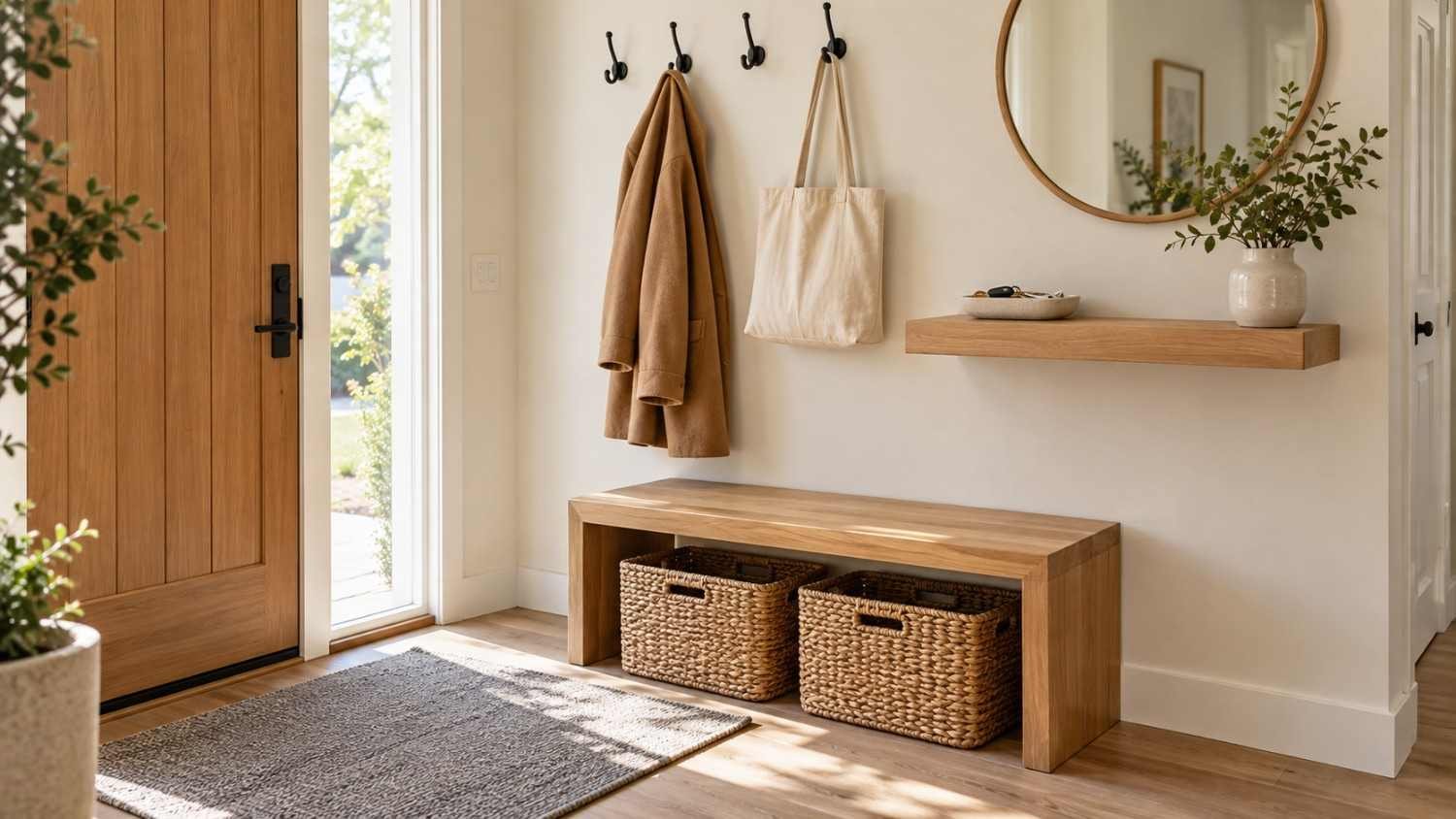
17. Add a Fold-Down Bench or Seat
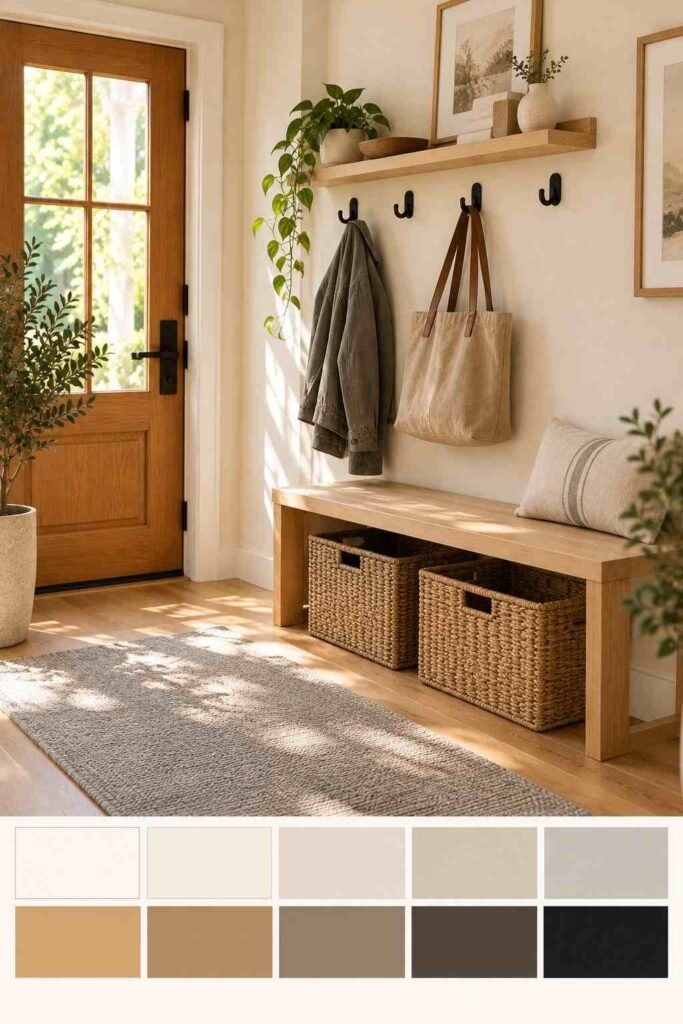
A bench makes putting on shoes easier and adds storage underneath. Standard seat height sits around 17 to 19 inches. In very tight spots, a wall-mounted fold-down seat gives you a place to sit without permanent floor use.
18. Use a Mirror to Open the Space
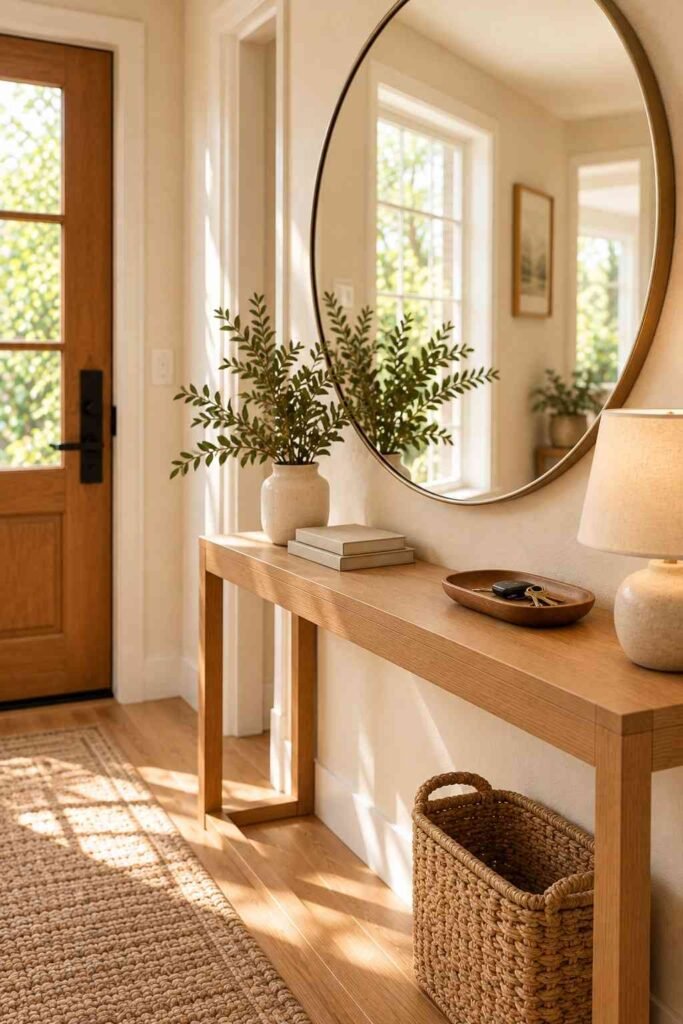
A large mirror bounces light and makes a small entry feel wider. Hang it above a narrow console or shelf. Check yourself on the way out, then grab your keys from the dish below.
19. Turn the Back of the Door Into Storage
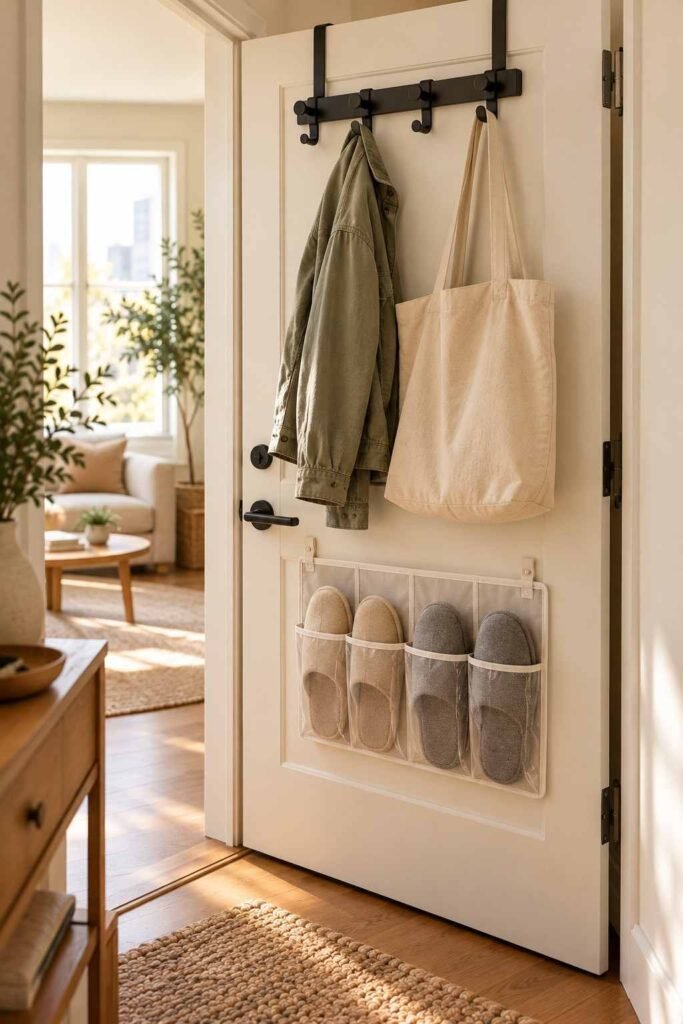
Over-the-door hooks, racks, or pocket organizers use space that is otherwise wasted. This works especially well in apartments where the entry is only a door and a sliver of wall. Keep the load light, so the door still closes smoothly.
20. Go Vertical With a Tall, Narrow Unit
A slim unit that reaches upward holds far more than a wide one. Stack shelves, hooks, and baskets from the floor to about head height. Put daily items at waist-to-shoulder level and rarely used items on top.
Family, Pet, and Seasonal Shortcuts
Real homes include kids, dogs, and changing weather. A system that ignores these will not last the week.
21. Create One Zone Per Person
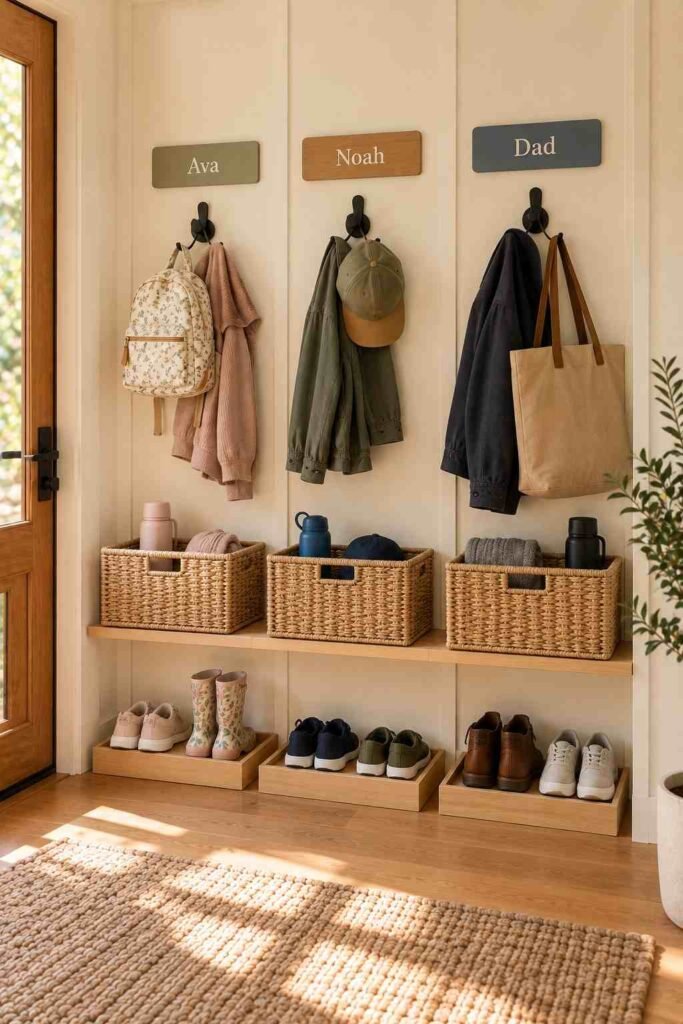
Give each family member a hook, a basket, and a shoe spot. Use color, labels, or name tags. When everyone has a clear zone, nobody has to ask where things go, and cleanup takes seconds instead of minutes.
22. Keep Pet Supplies in a Lidded Bin
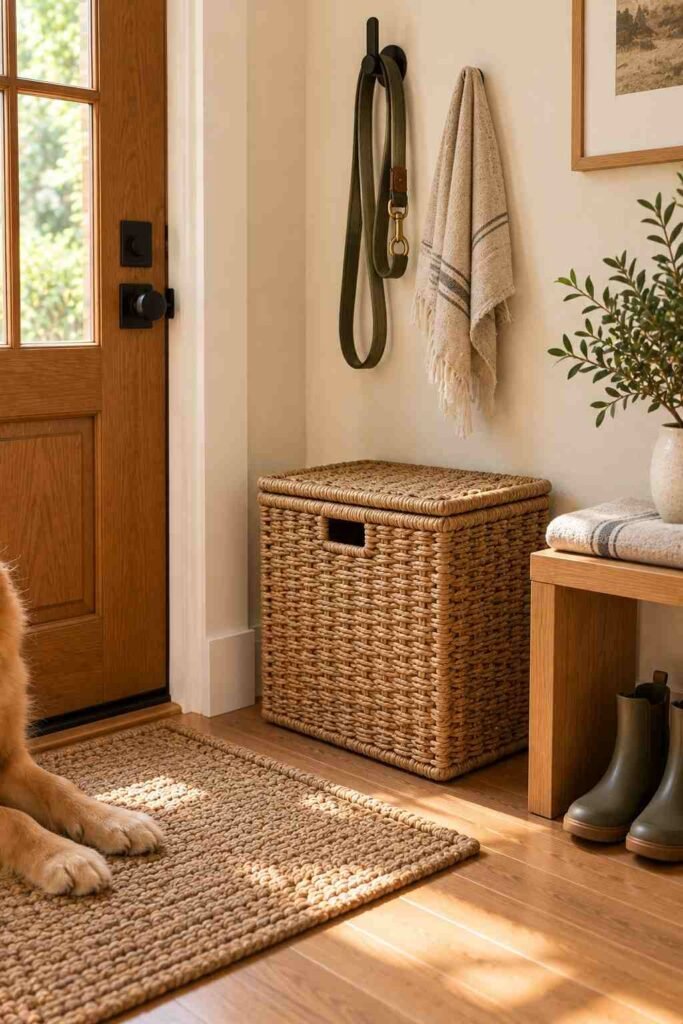
Leashes, waste bags, and a towel for muddy paws belong near the door. Store them in a lidded bin or on dedicated hooks. A small mat inside the door catches paw prints before they reach your floors.
23. Build a Grab-and-Go Basket
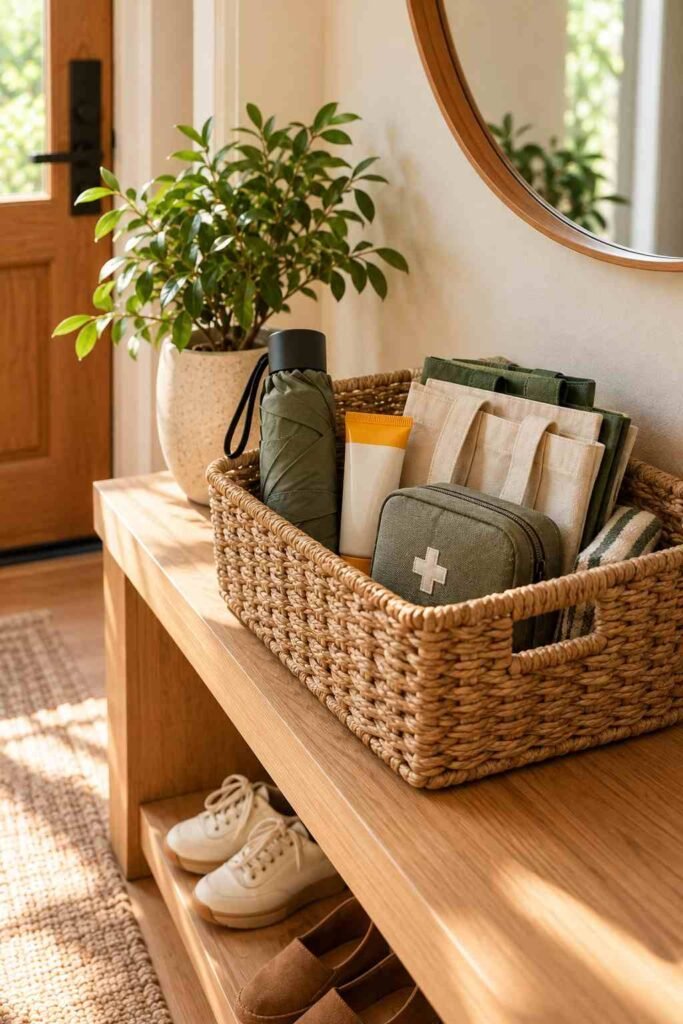
Fill a basket with items you reach for on the way out: sunscreen, masks, umbrellas, reusable shopping bags, and a small first-aid kit. Check it each month for expired items. This one basket can save you from many forgotten errands.
24. Store Seasonal Gear in Labeled Bins
Keep winter hats, rain gear, and sports equipment in clear bins on a high shelf or in a nearby closet. Swap them at the start of each season. Labels on the front mean you never have to dig for the right bin.
25. Follow a Two-Minute Daily Reset
No system holds without upkeep. Spend two minutes each evening returning items to their places, emptying the catch-all dish, and straightening the hooks. Once a month, clear the whole area and wipe surfaces. This short habit protects every shortcut above.
How to Choose Where to Start
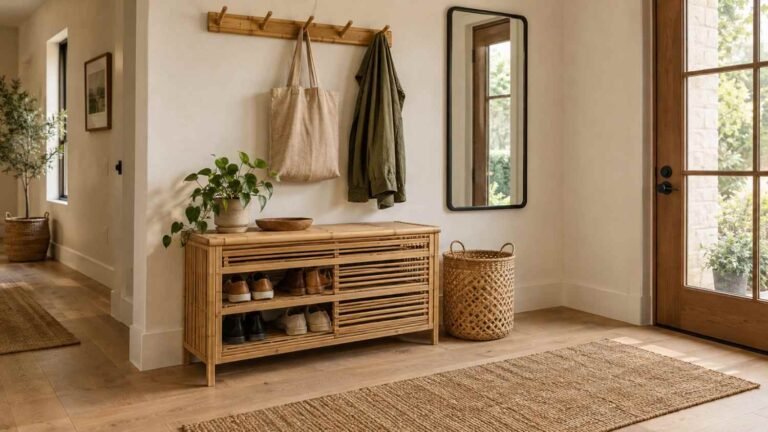
Trying all 25 ideas at once leads to burnout. Instead, spend one day watching where clutter lands. Notice what gets dropped, where, and by whom. Natural materials add warmth and function, as this Beautiful Bamboo Entryway Storage Idea shows.
Then pick the top three problems. If shoes dominate, begin with a tray and a rack. If keys disappear, hang a rack and add a dish. Fix those first, live with them for two weeks, and adjust. Add new ideas only when the old ones feel automatic. Slow progress sticks better than a big overhaul.
Conclusion
A tidy entry does more than look good. It sets the tone for the whole house. You arrive calmer, you leave faster, and you stop losing small things. These 25 entryway organization shortcuts show that real change comes from small, smart moves rather than expensive projects.
Start with the trouble spot that annoys you most. Add a hook, a tray, or a dish this week. Build from there, and keep the two-minute reset going. Within a month, your front door can feel like a calm welcome rather than a daily obstacle. With a few of these entryway organization shortcuts in place, the clutter has nowhere left to settle.