
Front Entryway Ideas to Elevate Every Home’s First Impression
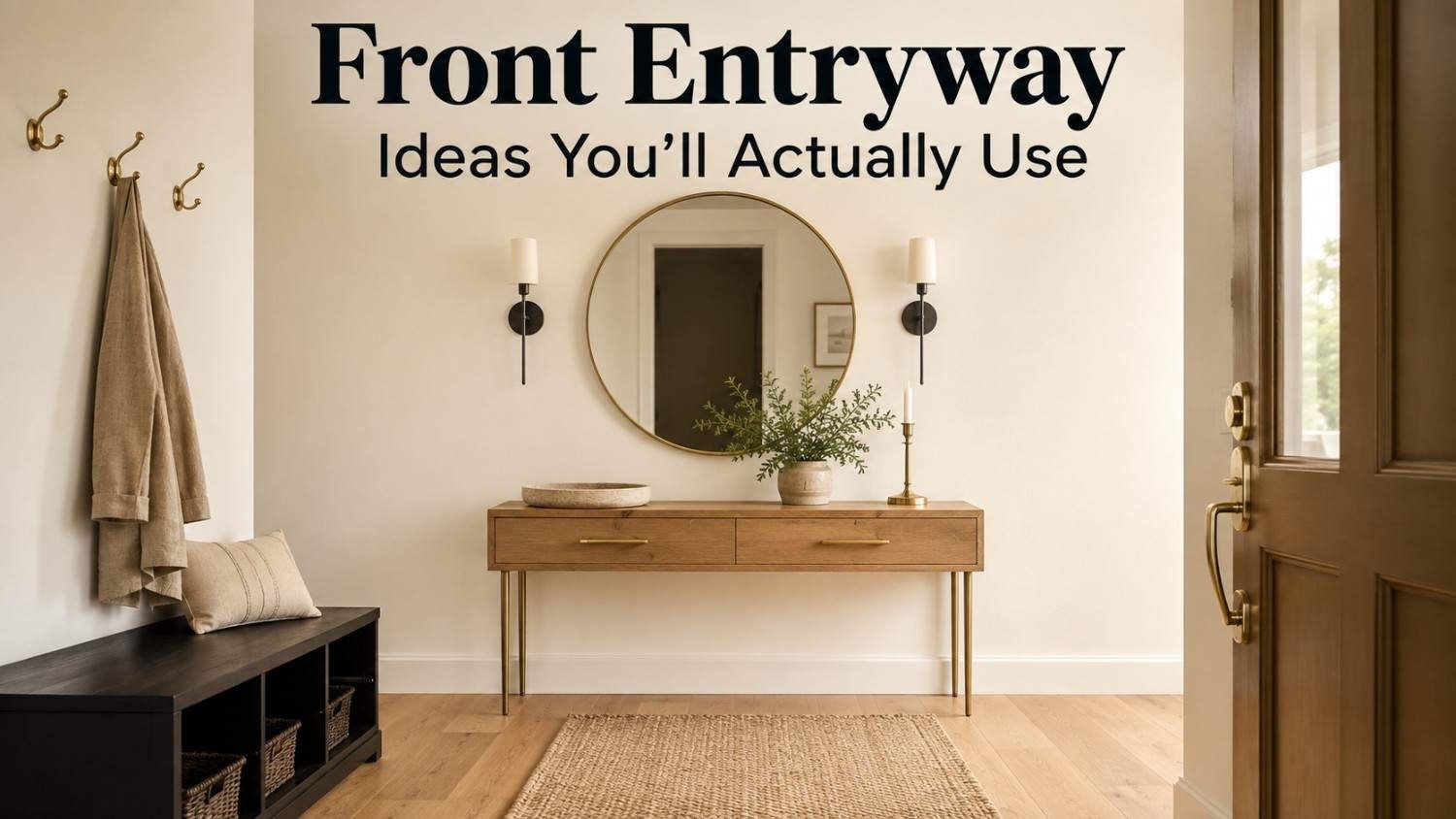
The moment someone steps through your door, they’re already forming an opinion about your home. That first few feet of floor space — the drop zone for keys, shoes, and rain-soaked umbrellas — carries more weight than most homeowners realize. A cluttered, dim, or forgotten entry can undercut even the most beautifully designed living room just beyond it.
The good news is that transforming this space doesn’t require a full renovation. With the right mix of furniture, lighting, and small styling choices, you can turn a chaotic landing zone into a functional, welcoming introduction to your home. Below are 23 front entryway ideas, organized by function and space size, so you can find solutions that actually fit your home rather than a generic showroom photo.
What Makes a Front Entryway Design Actually Work
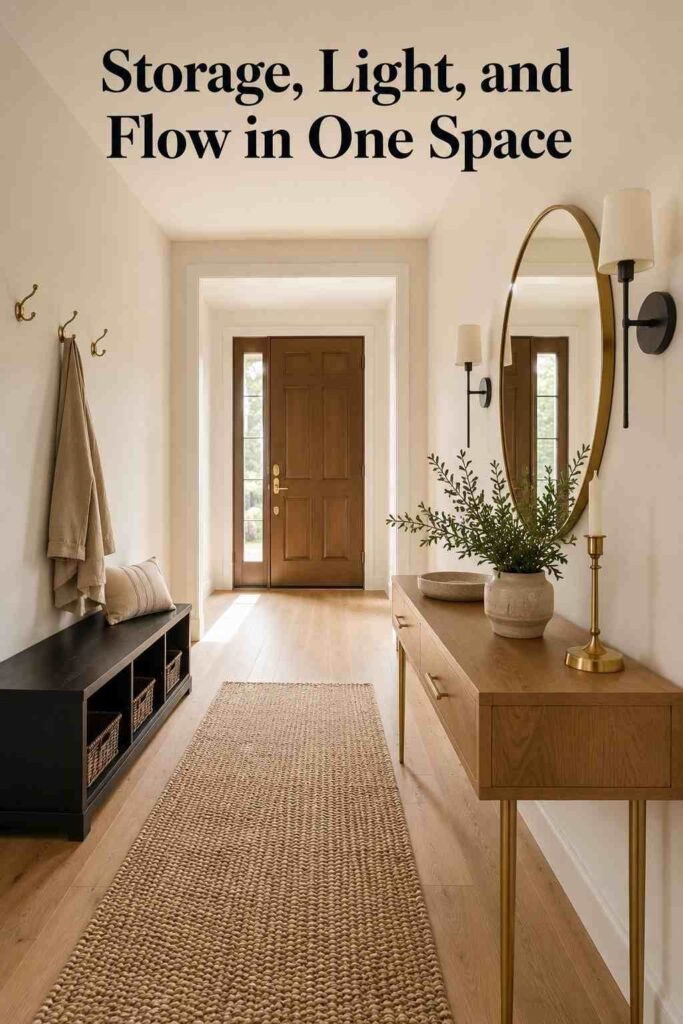
Before jumping into specific looks, it helps to understand the three jobs every entry has to perform: storage, style, and traffic flow. A design that photographs well but blocks the door, or a bench that looks perfect but offers no storage, will frustrate you within a week. The strongest front entryway ideas balance all three — giving guests a warm visual welcome while giving your family a practical place to land after a long day. Keep this framework in mind as you work through the list, and adapt each idea to your home’s actual traffic pattern rather than copying a layout wholesale.
Front Entryway Ideas for Furniture and Storage
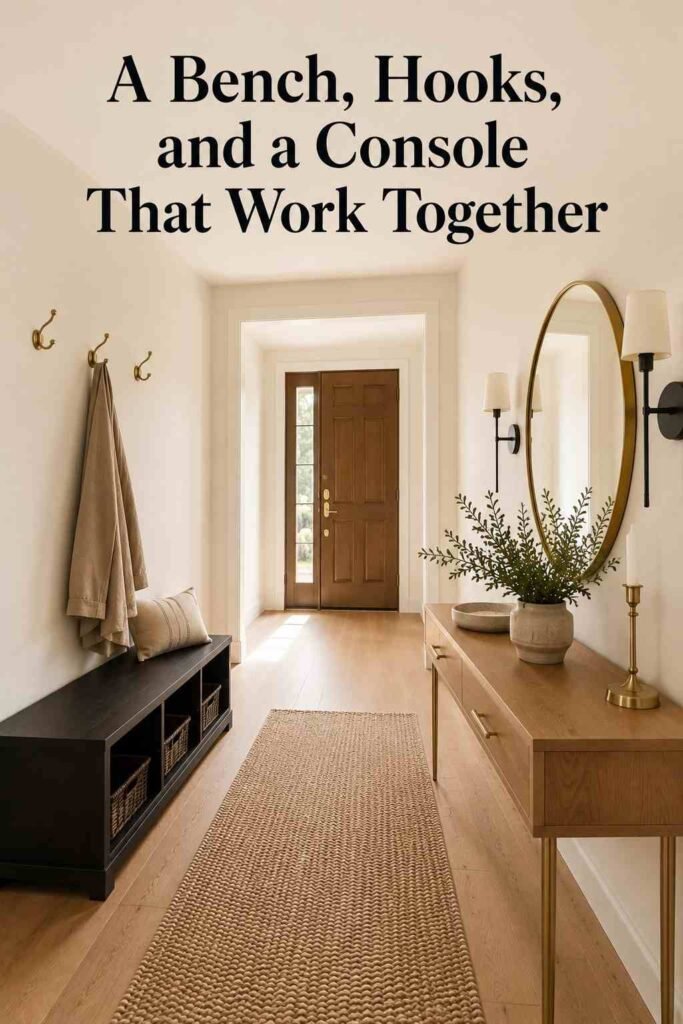
1. Add a console table
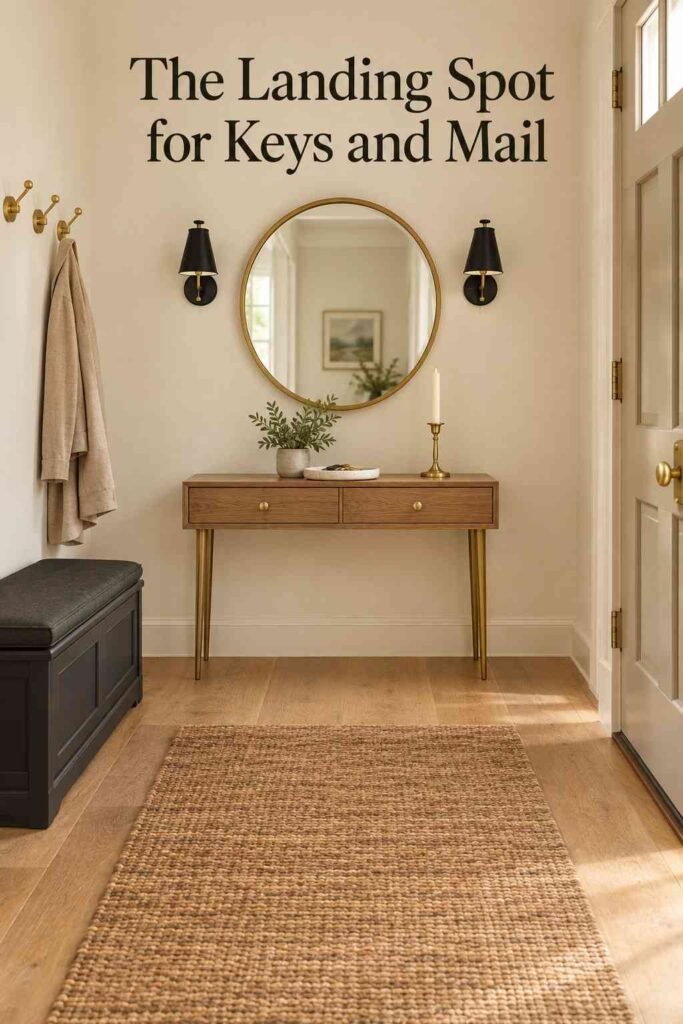
A slim console table just inside the door gives you a landing spot for mail, keys, and a decorative tray without eating up walking space. Choose a depth of 12–16 inches for narrow entries.
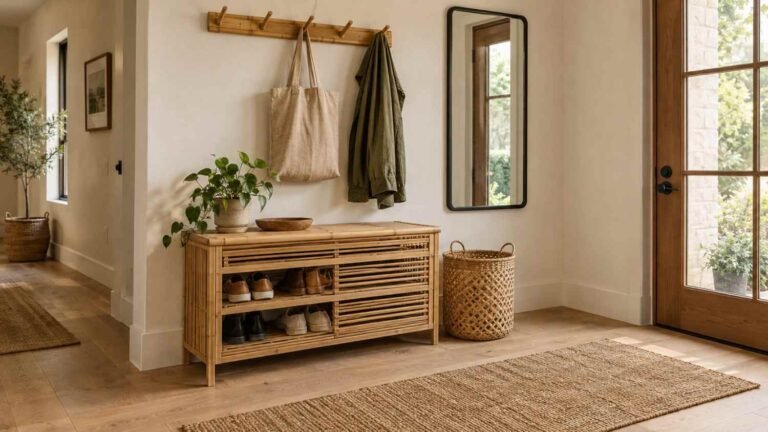
2. Install a storage bench
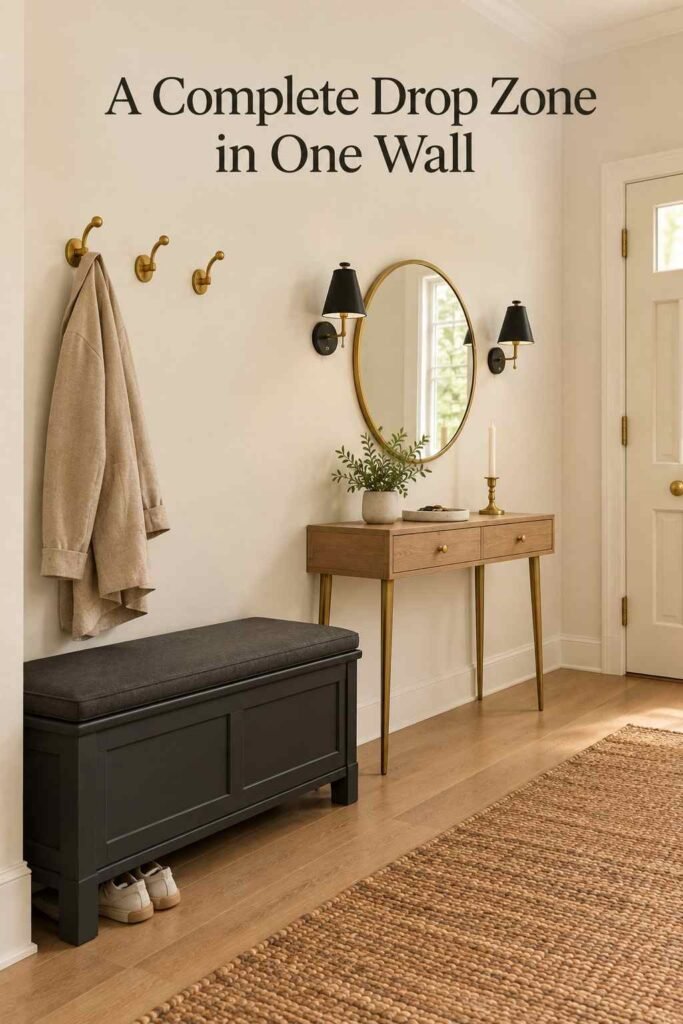
A bench with a lift-up seat or built-in cubbies solves the classic shoe-pile problem while giving guests somewhere to sit while removing boots.
3. Use a bench-and-hook combo. Pairing a bench with wall-mounted hooks above it creates a complete “drop zone” — coats hang up top, bags and shoes stay below, and nothing lands on the floor.
4. Mount floating shelves. For entries too narrow for furniture, floating shelves hold baskets, keys, or small plants without touching the ground, keeping the floor clear for foot traffic.
5. Bring in a slim cabinet. A tall, narrow cabinet with doors hides clutter completely — useful for households that want a “grab and go” system for everyday items like sunglasses and dog leashes.
6. Add a designated umbrella stand. A simple ceramic or metal stand by the door keeps wet umbrellas contained instead of dripping across your entry floor, especially valuable in rainier regions of the country.
Front Entryway Ideas for Lighting and Ambiance
7. Layer your lighting
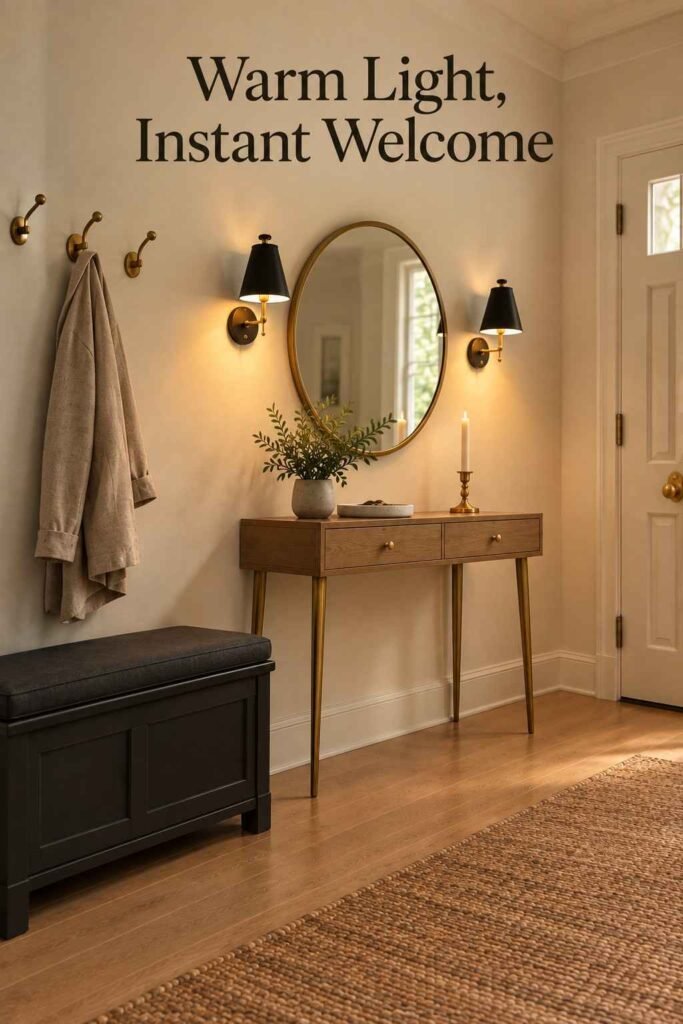
Combine an overhead fixture with a table lamp or wall sconce. A single ceiling light often leaves shadows in corners, while layered lighting makes the space feel finished.
8. Hang a statement pendant. A sculptural pendant light instantly elevates a foyer with higher ceilings, acting as a focal point the moment the door opens.
9. Install wall sconces. Sconces free up console table space that would otherwise be taken by a lamp, and they add a soft, flattering glow at eye level.
10. Add a dimmer switch. This is one of the simplest, most overlooked upgrades — a dimmer lets you shift from bright practical light in the morning to a warmer glow when guests arrive in the evening.
Front Entryway Ideas for Walls, Mirrors, and Art
11. Hang an oversized mirror
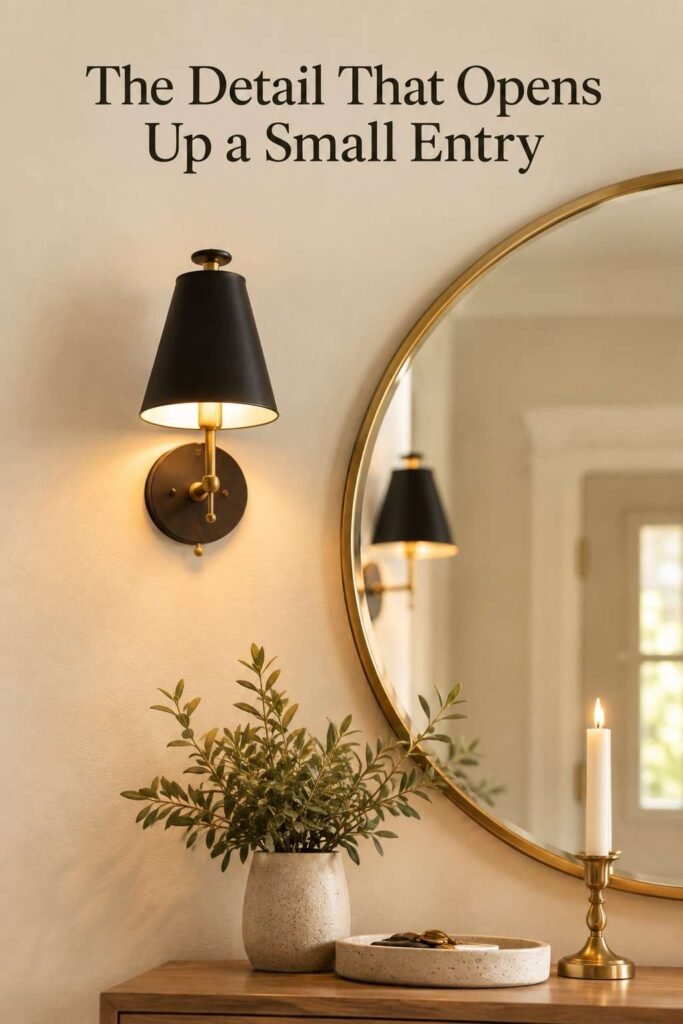
A large mirror bounces natural light around the space and makes even a small entry feel more open. Lean it against the wall for a relaxed, editorial look, or mount it for stability in high-traffic homes.
12. Build a gallery wall. A curated arrangement of framed photos or art gives the entry personality and is easy to refresh seasonally without any structural changes.
13. Try a bold wallpaper moment. Because entryways are typically small, they’re an ideal place to experiment with a wallpaper pattern that might feel overwhelming in a larger room.
14. Add wall paneling or wainscoting. Millwork like board-and-batten or shiplap adds architectural texture and a tailored, custom feel — particularly effective in traditional and transitional homes.
Front Entryway Ideas for Flooring, Rugs, and Textures
15. Use a durable, washable rug
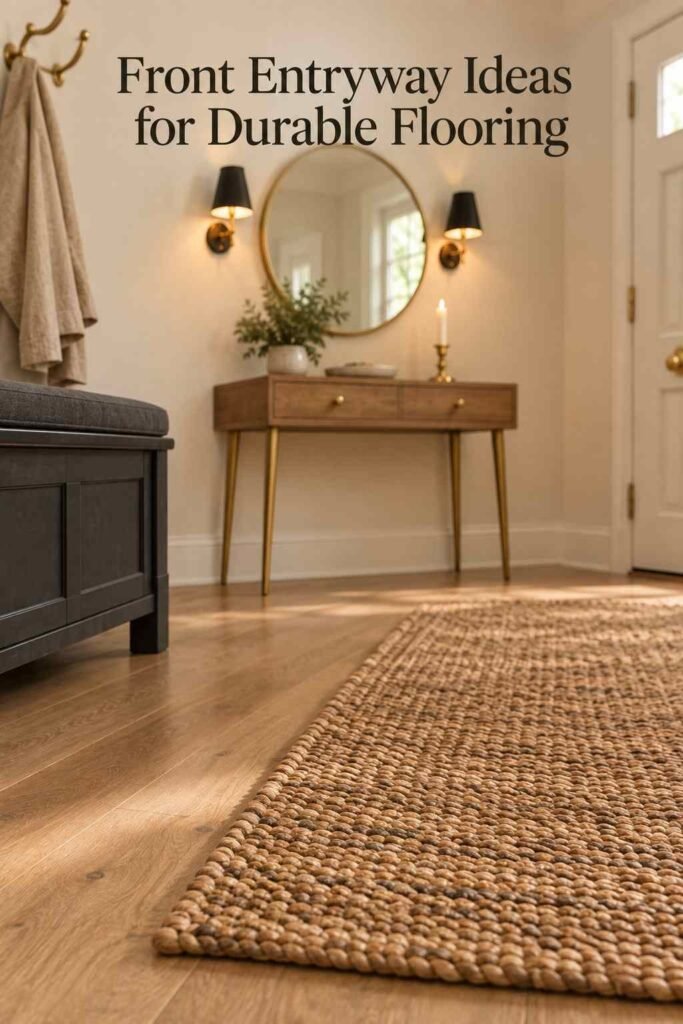
Entryways see more dirt and moisture than almost any other room, so a low-pile, machine-washable rug or a natural-fiber runner holds up far better than delicate materials.
16. Choose slip-resistant flooring. Tile, sealed stone, or luxury vinyl plank stand up to wet shoes and muddy paws better than hardwood, and they’re easier to wipe clean during winter months.
17. Layer a runner down a hallway entry. In long, narrow entries, a patterned runner draws the eye forward and adds warmth underfoot, especially over hard flooring.
Front Entryway Ideas for Small Spaces and Apartments
Not every home has a dedicated foyer, and that’s where many design lists fall short. If you’re working with a sliver of space by an apartment door, these front entryway ideas are built for constraint rather than square footage.
18. Create a “landing strip” with a shallow shelf. Even six inches of depth is enough for a slim shelf that holds keys and mail without blocking the door swing.
19. Use vertical space instead of floor space
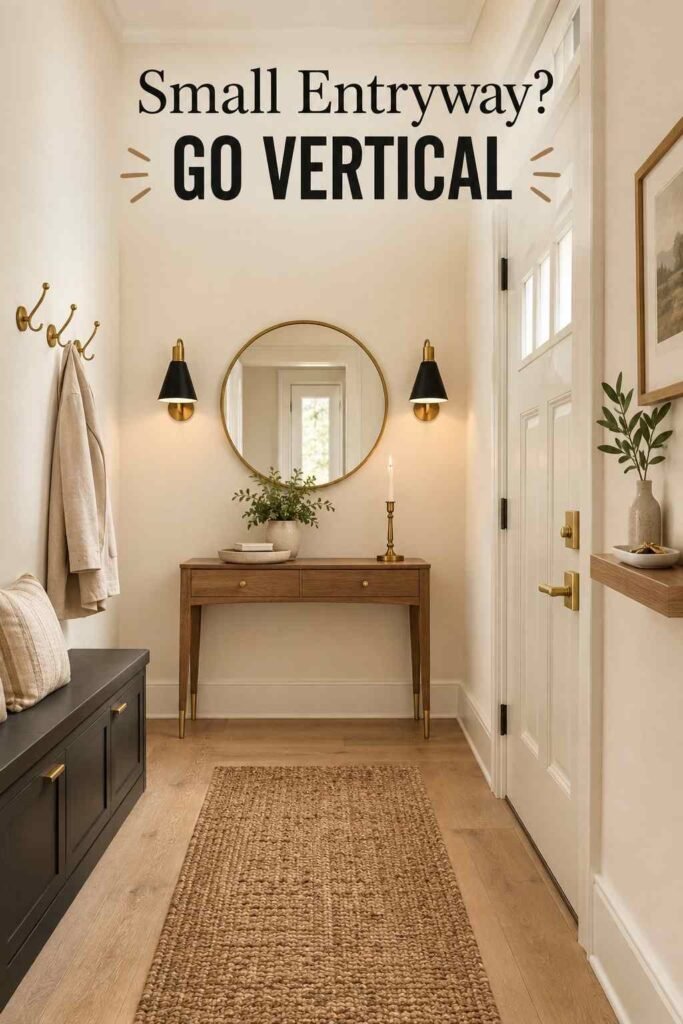
Hooks, pegboards, and tall narrow cabinets let you store coats and bags upward rather than outward — ideal when there’s no room for a bench.
20. Define the zone with a rug alone
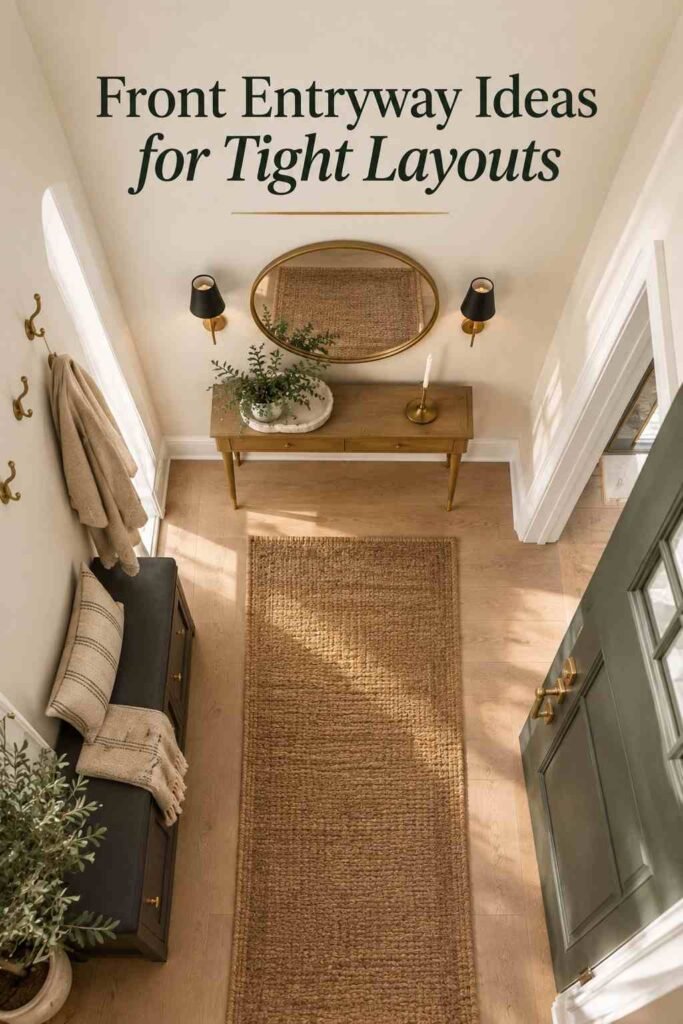
If you have no separate entry room, a single well-placed rug visually marks “this is the entry” even when it opens directly into a living space.
Smart and Sustainable Front Entryway Ideas
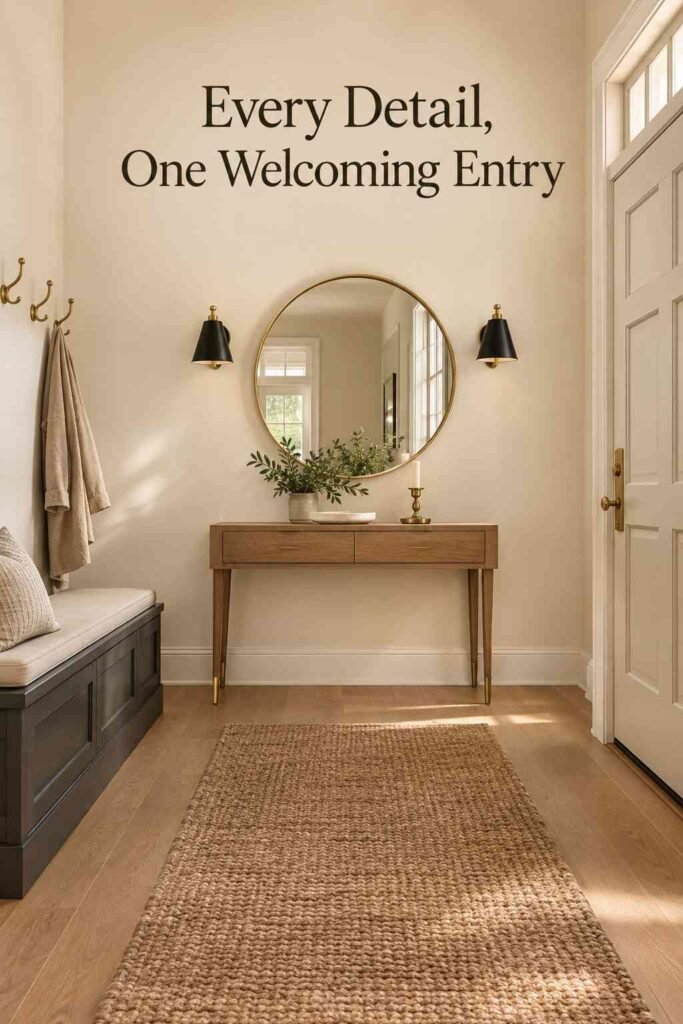
Two categories are consistently missing from most entryway roundups: technology and material sustainability. Here’s how to fold both in without sacrificing style.
21. Add a smart lock or video doorbell
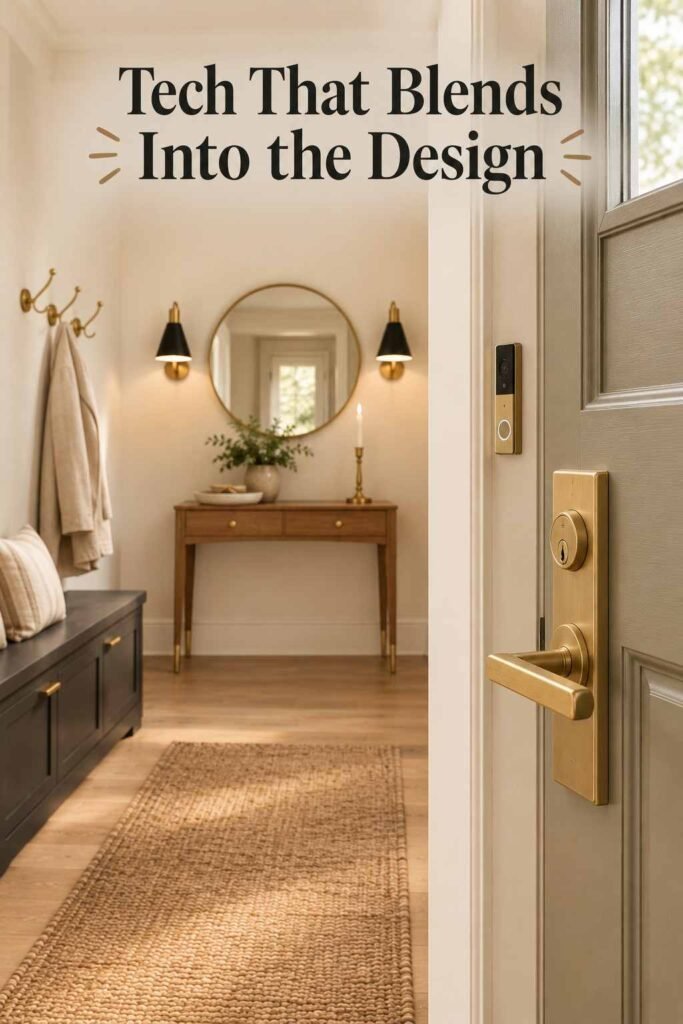
Beyond convenience, a smart lock or doorbell camera integrates neatly into a styled entry when mounted thoughtfully rather than treated as an afterthought.
22. Choose reclaimed or FSC-certified wood furniture. Console tables and benches made from reclaimed wood or sustainably certified materials add character while reducing environmental impact — a growing priority for many homeowners in 2026.
23. Set up a seasonal rotation system. Keep a small bin of seasonal decor — wreaths, lantern inserts, doormats — so you can refresh the entry for each season in minutes rather than starting from scratch every time.
Front Entryway Styles to Match Your Home
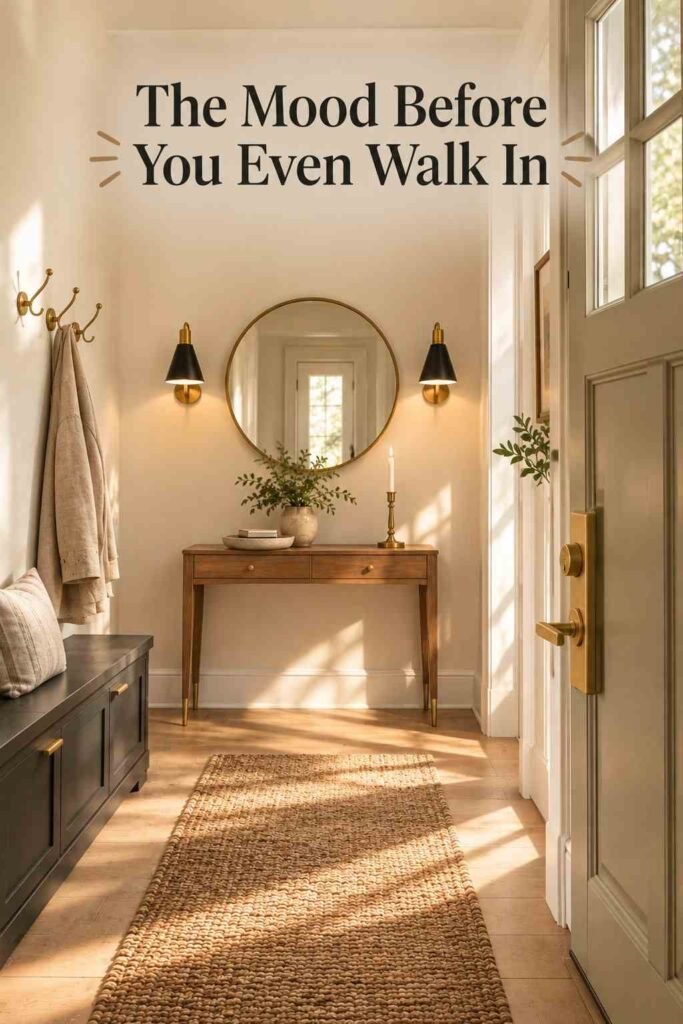
Ideas only work when they match your home’s existing architecture. A farmhouse entryway leans on shiplap, black metal hooks, and warm wood tones. A modern entryway favors clean lines, a single statement light fixture, and minimal decor on the console. Coastal-style entries use light woods, woven textures, and airy colors, while traditional foyers often incorporate wainscoting, a chandelier, and richer wood furniture. If you’re unsure where to start, browsing curated Modern Entryway Decor Ideas can help you narrow down a direction before you buy a single piece of furniture.
Common Front Entryway Mistakes to Avoid
Even well-intentioned updates can backfire. Oversized furniture in a narrow hallway blocks the door swing and creates a bottleneck. Skipping a rug or durable flooring means dirt and moisture spread into adjoining rooms. Choosing a single overhead light without any layering leaves the space feeling flat and uninviting after dark. Finally, treating the entryway as purely decorative — with no actual storage — guarantees the clutter simply relocates to the closest closet or countertop instead of disappearing.
Front Entryway Ideas by Budget
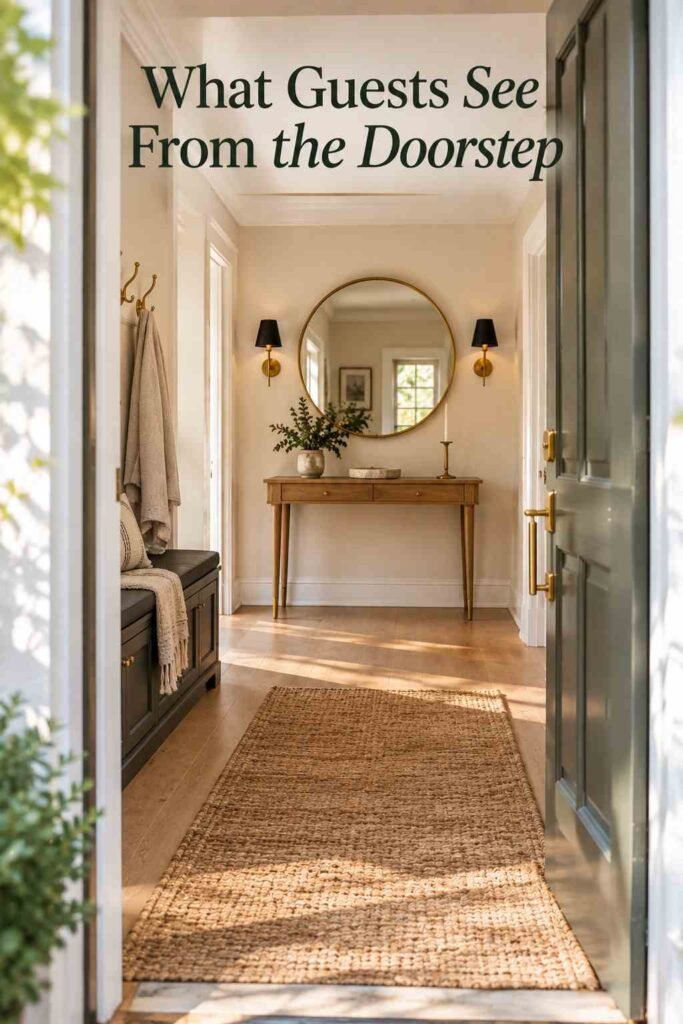
You don’t need a large budget to make a noticeable difference. A new doormat, a tray for keys, and a fresh coat of paint on the door can transform the space for well under $100. A mid-range refresh — a storage bench, a rug, and updated lighting — typically falls in the few-hundred-dollar range depending on materials. A full furniture and lighting overhaul, including custom millwork or a statement mirror, represents the higher end of the spectrum. Prioritizing storage first and decor second tends to deliver the most noticeable improvement per dollar spent. For more room-by-room design inspiration beyond the entry, Outinteriors offers additional guides worth exploring.
Bringing It All Together
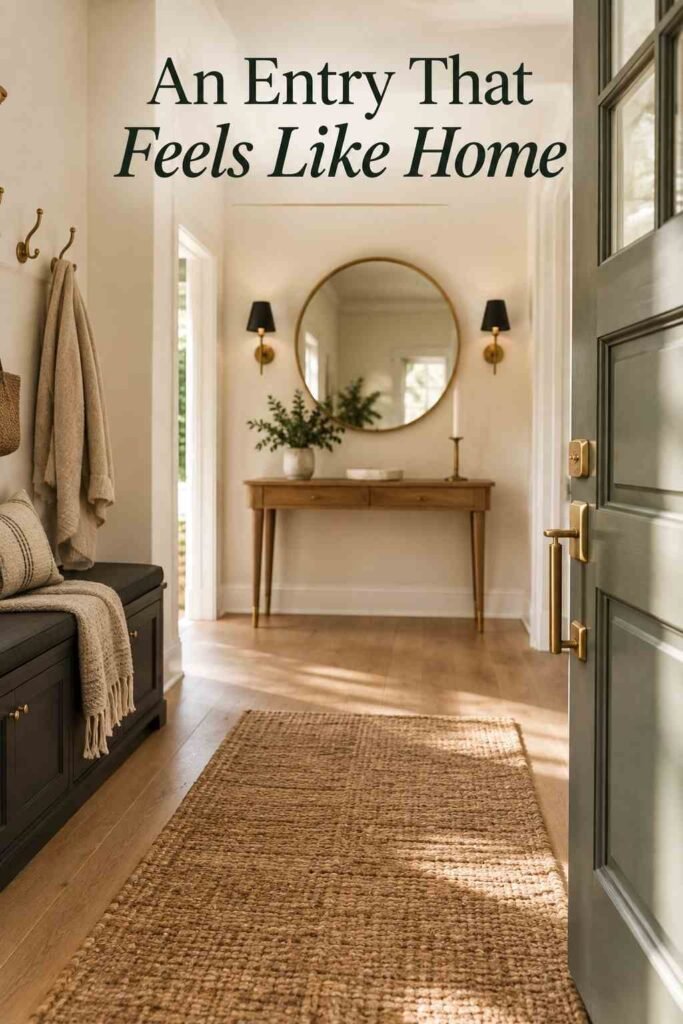
A great entryway isn’t about matching a single trend — it’s about solving the daily friction points in your household while still making a strong first impression. Start with function: storage, lighting, and flooring that can handle real foot traffic. Then layer in the personality — a mirror, a gallery wall, a bold rug — that makes the space feel like yours. Whether you’re outfitting a grand foyer or a six-inch sliver by an apartment door, at least a few of these 23 front entryway ideas will fit your space, your budget, and your style.
If your entry connects directly to a back door or garage drop zone, it’s worth thinking about that space together with these mudroom ideas so storage stays consistent throughout the house.
Frequently Asked Questions
1. What is the difference between an entryway and a foyer?
An entryway is the general transition space just inside any door, while a foyer typically refers to a larger, more formal entry area — often with higher ceilings — found in bigger homes.
2. How do I decorate a small entryway with no closet?
Focus on vertical storage: wall-mounted hooks, a slim shelf, and a shallow bench or shoe rack. A mirror also helps the space feel larger than it is.
3. What is the best flooring for a front entryway?
Tile, sealed stone, and luxury vinyl plank are the most practical choices because they resist water damage and are easy to clean, unlike untreated hardwood.
4. How much does it cost to update a front entryway?
Simple updates like a rug, tray, and paint can cost under $100, while a full furniture and lighting refresh may run several hundred dollars or more depending on materials chosen.
5. What colors work best for a front entryway?
Warm neutrals, soft greens, and deep navy are popular because they feel welcoming without overwhelming a typically small space; lighter tones also help brighten entries with limited natural light.
6. Do I need a rug in my entryway?
Yes — a durable, washable rug protects flooring from dirt and moisture while visually defining the space, especially in open floor plans without a separate entry room.
7. How can I make my entryway feel more welcoming?
Layered lighting, a mirror, and one or two personal touches — like framed photos or fresh greenery — make the biggest difference without requiring major renovation work.



One Comment