Mudroom Ideas to Transform Your Entryway Into an Organized Family Hub
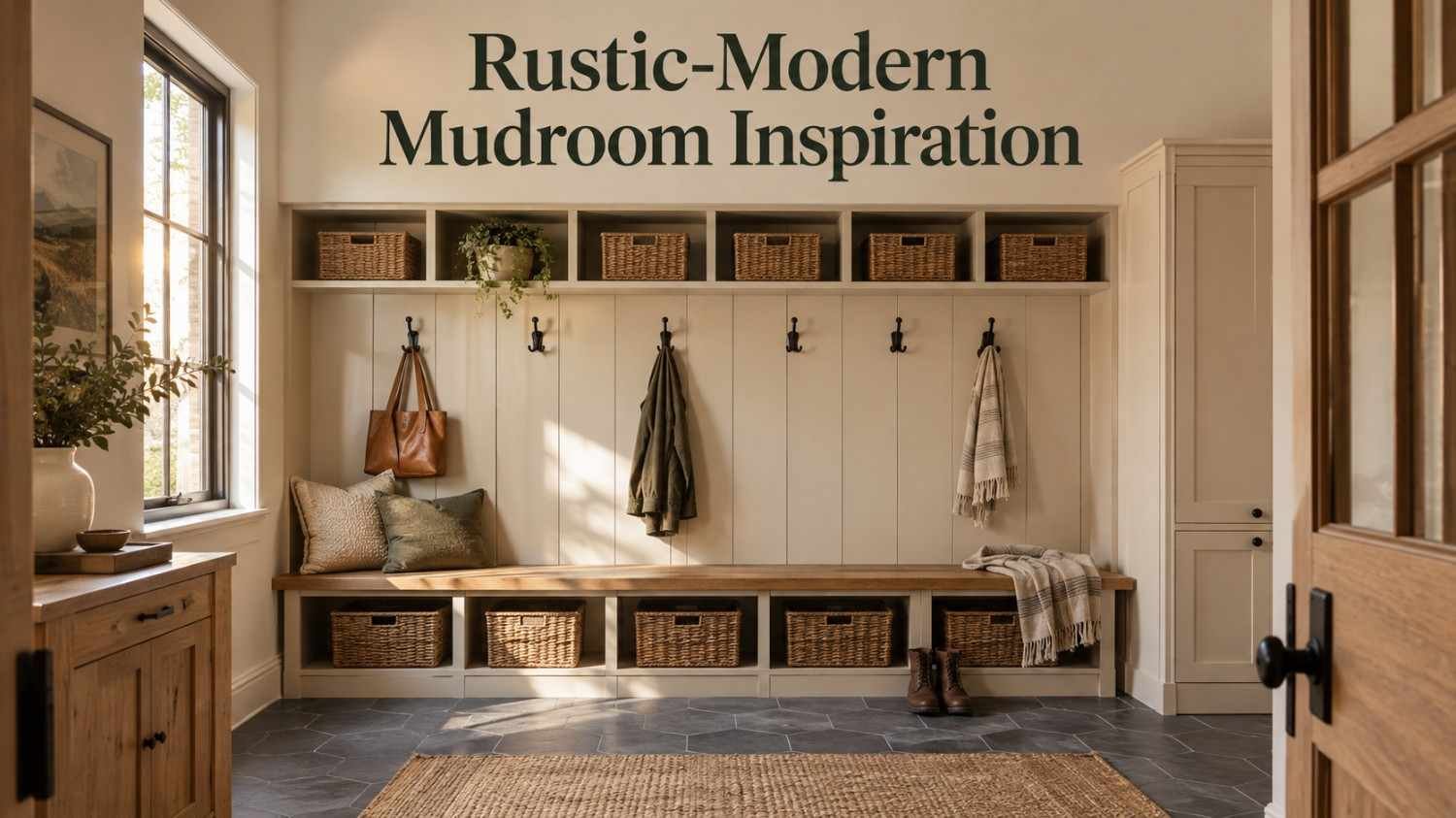
Every home has one chaotic corner: shoes piled by the door, coats sliding off a single overworked hook, backpacks and dog leashes tangled together on the floor. A well-planned mudroom fixes all of it. Whether you have a full room off the garage or just a few feet of hallway near the back door, the right mudroom ideas bring order to the daily rush of coming and going. This guide walks through 25 mudroom ideas that combine genuine function with real style, from small apartment entries to full family command centers. Along the way, you’ll find planning details many roundups skip, including sizing guidelines, material comparisons, and honest budget ranges, so you can build a space that actually holds up to daily life.
What Makes Great Mudroom Ideas Work Before You Start
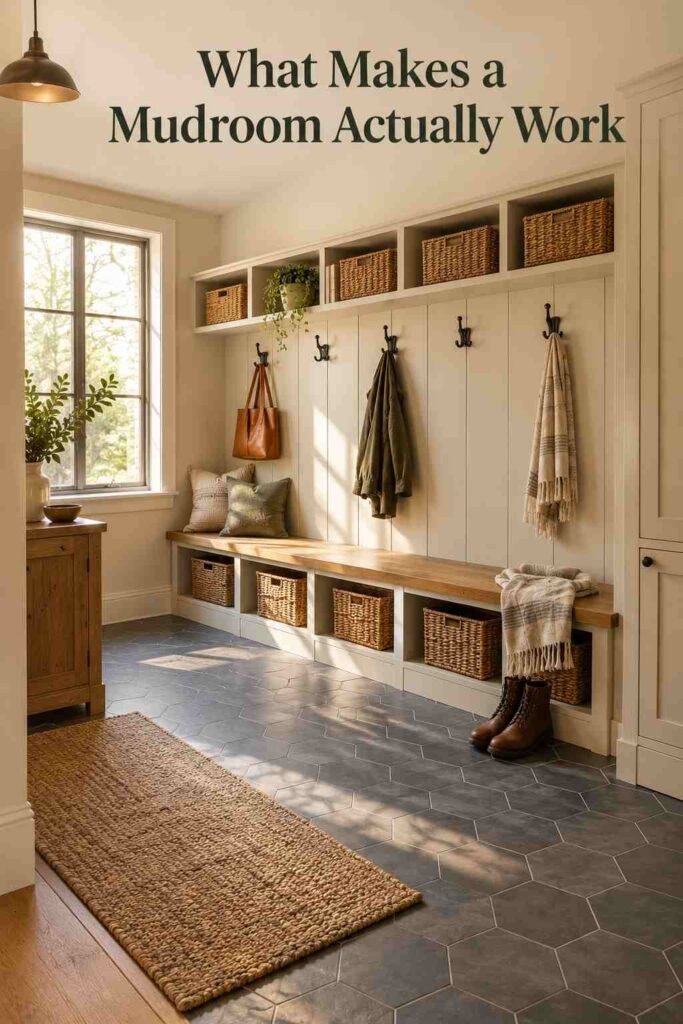
Before pinning inspiration photos, it helps to understand the bones of a functional mudroom. Designers generally split the space into three zones: a wet zone near the door for boots, umbrellas, and floor mats; a dry zone with benches and hooks for coats and bags; and a clean zone for laundry baskets, cleaning supplies, or a small closet. Even a narrow mudroom benefits from this structure, because it keeps damp, muddy items away from clothing that’s already clean and ready to wear.
Sizing matters more than most mudroom idea guides admit. A single-person entry can work in as little as 5 by 6 feet, while a family of four is usually comfortable in 6 by 8 feet, and any layout that includes a laundry hookup or pet-washing station should aim for 8 by 10 feet or larger. For seating, a bench between 17 and 19 inches high suits most adults and kids alike, and wall hooks placed 60 to 66 inches off the floor work well for grown-ups, with a second, lower row around 42 to 48 inches for children. Aim for at least 36 inches of clear walking space, closer to 48 inches if two people need to pass at once. A dim mudroom also hides the very mud and moisture it’s meant to catch, so bright, even lighting is worth prioritizing from day one.
25 Mudroom Ideas for Every Home and Budget
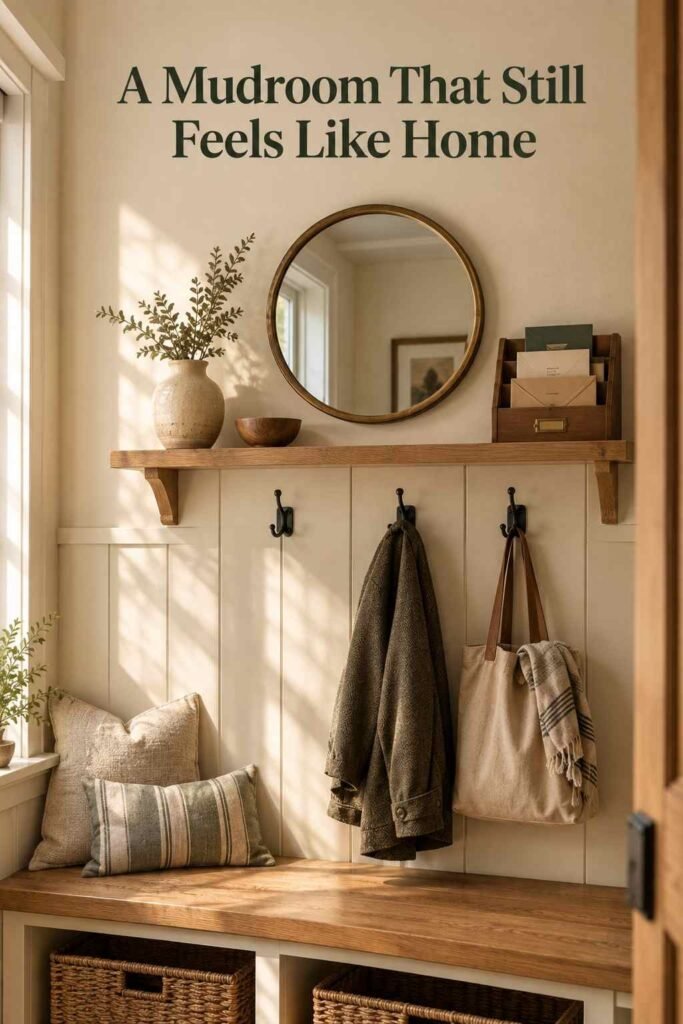
Small-Space Mudroom Ideas
Not every home has a dedicated room to spare, and that’s fine — several of the best mudroom ideas work in just a few square feet near the back door or garage entry.
- Repurpose a coat closet. Remove the doors, add a low bench at the base, and mount hooks on the side walls to turn dead closet space into an open, easy-access mudroom.
- Build a narrow wall-mounted locker
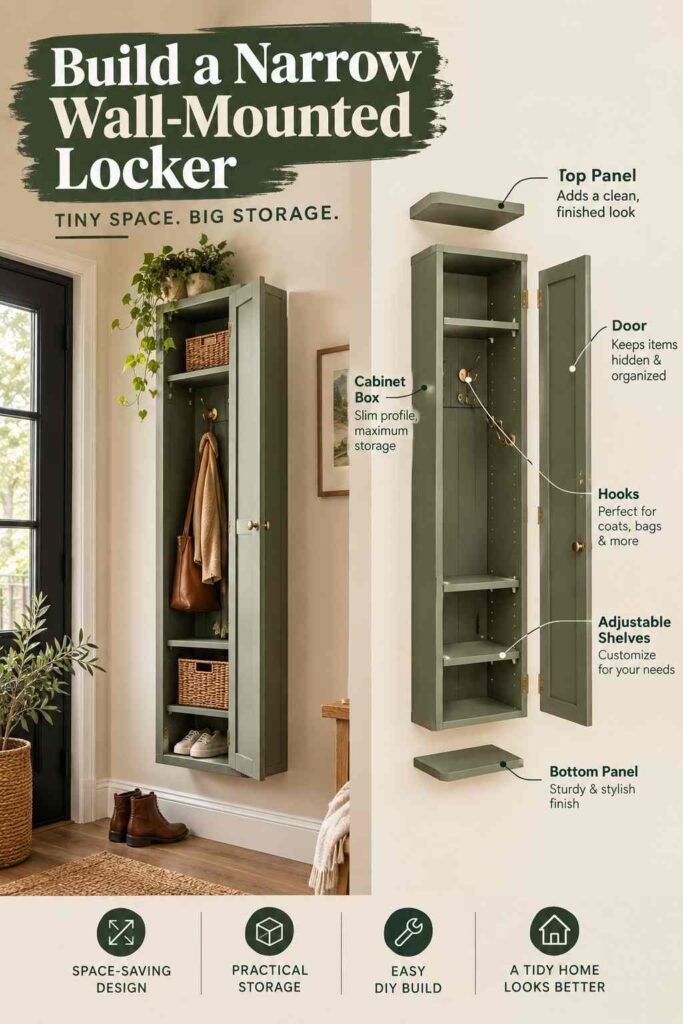
A slim, 12-inch-deep locker unit with a single hook, a small shelf, and a shoe cubby fits almost any leftover wall.
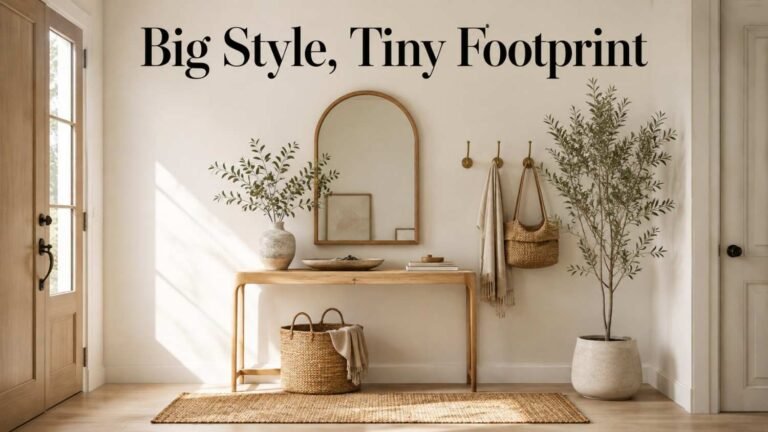
- Use a slim console table with baskets. Woven baskets tucked beneath a console catch shoes and bags without requiring any built-in carpentry.
- Turn a hallway into a mini mudroom. If your entry is really just a strip of floor by the back door, our narrow hallway ideas guide covers layouts that make three feet of space feel intentional rather than cramped.
- Add an over-the-door organizer. A canvas pocket organizer on the back of a utility door holds gloves, dog leashes, and sunscreen without touching the floor plan at all.
Farmhouse & Rustic Mudroom Ideas
Rustic materials and warm tones remain some of the most requested mudroom ideas because they hide daily wear while still feeling welcoming.
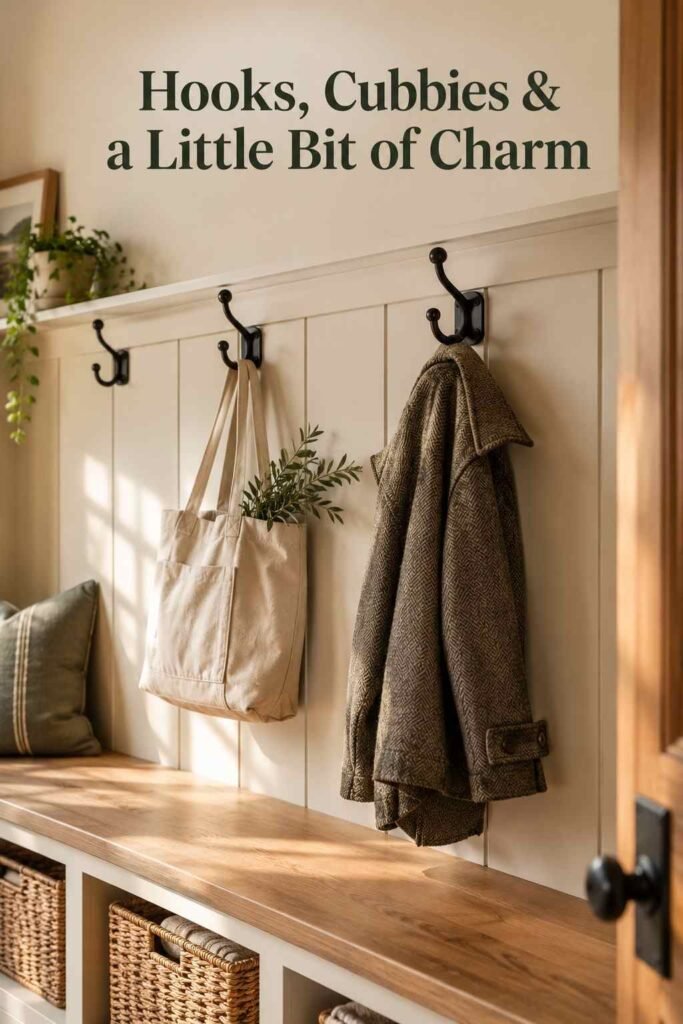
- Reclaimed wood bench with iron hooks
Rough-sawn planks paired with black iron hardware give an entry instant character and age gracefully with scuffs.
- Shiplap walls with painted beadboard. Horizontal shiplap below a chair rail, topped with a durable painted finish, is easy to wipe down and endlessly popular.
- Vintage crates as open cubbies
Stacked wooden crates make flexible, low-cost storage for shoes and sports gear, and they can be rearranged as your family grows.
- Farmhouse sink wash station. A deep apron-front sink is ideal for muddy boots, garden tools, or rinsing off a dog after a walk. For more on pairing this style with warm textures and vintage hardware, see our Farmhouse Entryway Decor Ideas.
- Woven baskets and galvanized bins. Mixed textures — wicker, metal, and wood — keep a farmhouse mudroom from feeling one-note while sorting hats, scarves, and mail.
Modern & Minimalist Mudroom Ideas
For homeowners who prefer clean lines, these mudroom ideas trade rustic texture for streamlined storage.
- Floating shelves with hidden hooks. A single slim shelf with hooks tucked underneath keeps the wall looking uncluttered while still holding daily coats.
- Monochrome locker wall
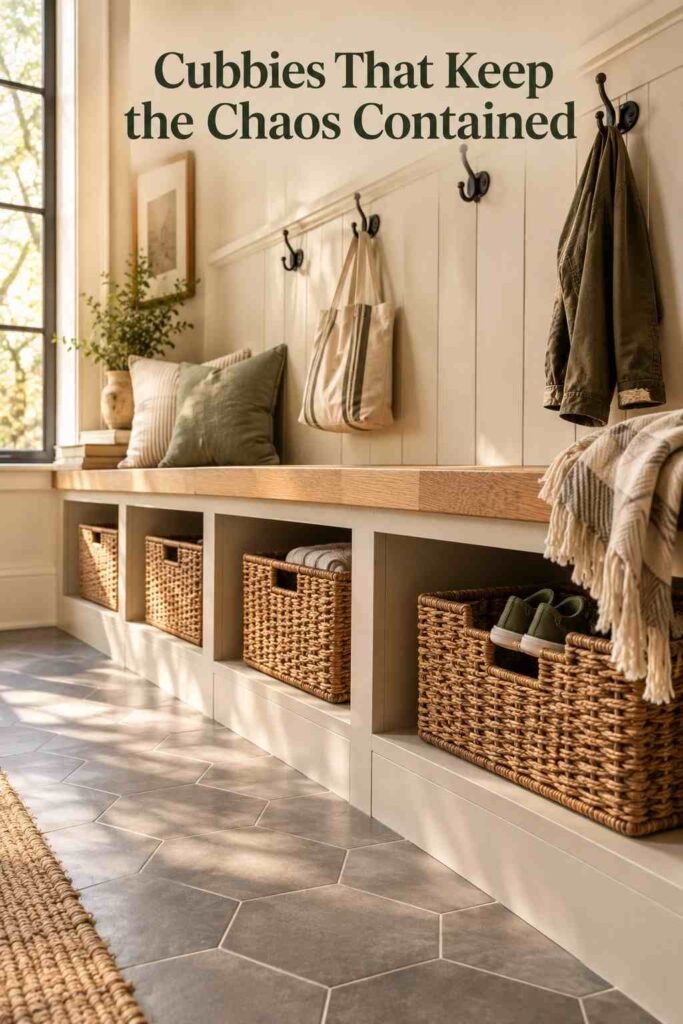
Matching cabinet fronts in one color, each with a hook and cubby, give a family of any size a personal “locker” without visual noise.
- Built-in desk nook. A fold-down or fixed desk surface handles mail, keys, and homework, turning a transition space into a small command center.
- Glass-front cabinets. Frosted or clear glass doors add a lighter, less bulky look than solid wood while still concealing clutter.
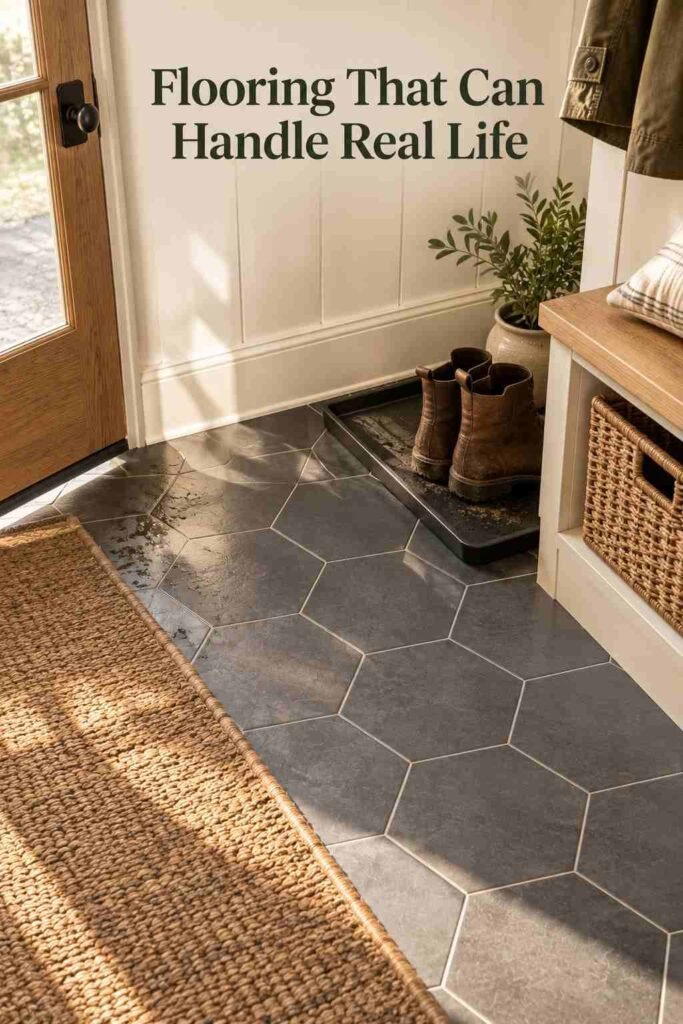
- Large-format tile or polished concrete flooring. Bigger tiles mean fewer grout lines to scrub, and concrete resists moisture and salt stains through an entire winter.
Storage-First Mudroom Ideas
If your priority is function over form, these mudroom ideas focus on maximizing every inch of storage.
- Cubby system with labeled bins. Assigning one cubby per family member — labeled by name — cuts down on the daily “whose shoes are these” scramble.
- Drawer-bench combo. A bench with pull-out drawers underneath hides seasonal items like hats and gloves that don’t need daily access.
- Overhead cabinets for seasonal gear
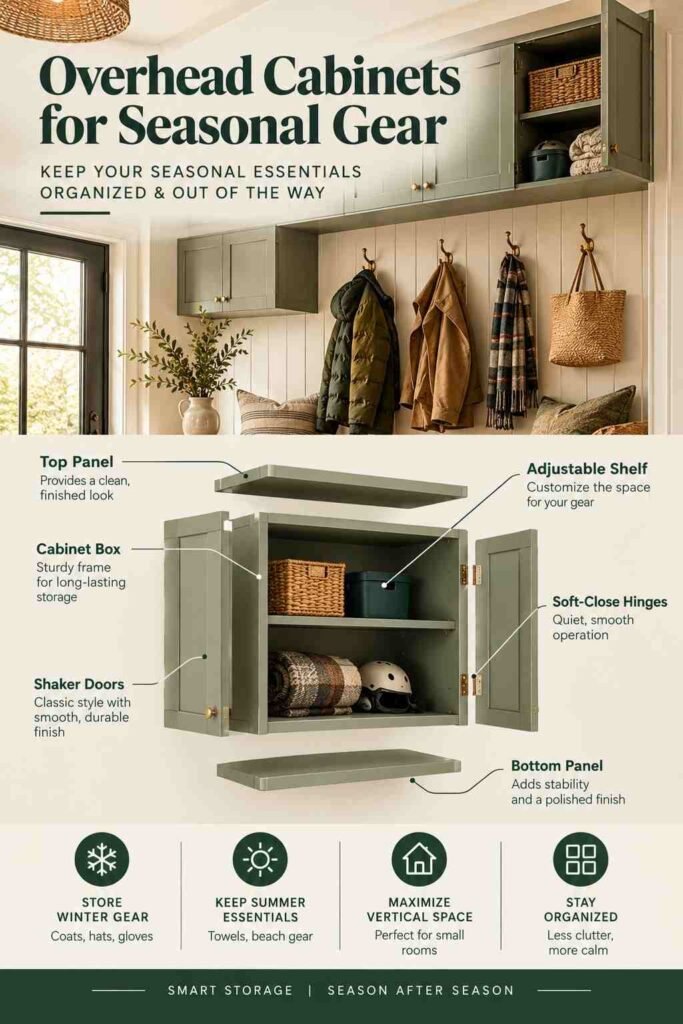
Storing beach towels, ski gear, or holiday items above eye level frees up prime lower storage for everyday use.
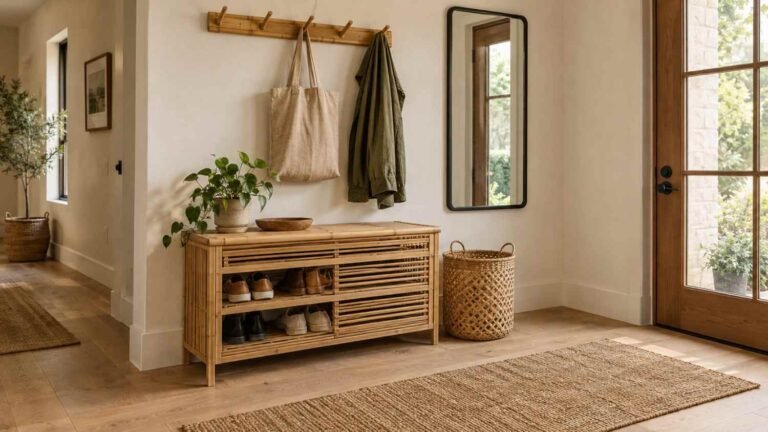
- Shoe cabinet with ventilated doors. Perforated or louvered cabinet fronts let damp shoes air out instead of trapping moisture and odor.
- Charging station and mail sorter. A small drawer with built-in outlets keeps phones, tablets, and mail organized right where everyone walks in.
Pet-Friendly & Multi-Purpose Mudroom Ideas
Many households now ask for mudroom ideas that do double duty as a laundry room, pet station, or workspace.
- Built-in dog-washing station. A low, tiled basin with a handheld sprayer saves your bathtub and keeps muddy paws contained near the door.
- Combo laundry-mudroom layout. Placing the washer and dryer along one wall means dirty clothes and gear go straight into the wash, no extra trips through the house.
- Pet food and leash cubby. A dedicated shelf for food bins, bowls, and leashes keeps pet supplies from spreading into the kitchen.
- Home office corner. A compact desk and shelf, tucked beside the entry storage, works well for households that need a landing spot for a laptop and paperwork.
- Drop zone with a message board. A chalkboard or corkboard for reminders, schedules, and permission slips turns the mudroom into the household’s real hub of information.
Choosing Materials That Actually Last
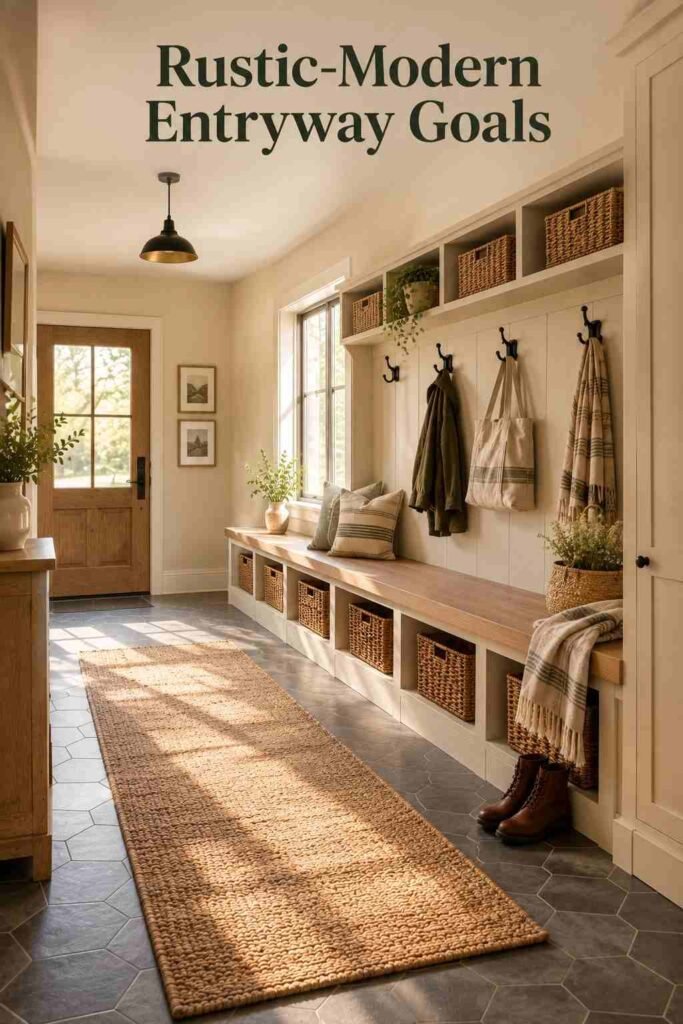
Mudrooms take more daily abuse than almost any other room, so material choice matters as much as layout. Porcelain tile, luxury vinyl plank, and sealed concrete all resist water, salt, and grit better than hardwood, which can warp under repeated moisture exposure. For benches and cabinetry, powder-coated steel, marine-grade plywood, and moisture-resistant MDF hold up better than raw particleboard, especially near a wash station or laundry hookup. Hardware finishes like matte black or brushed nickel also resist fingerprints and rust better than polished chrome in a high-traffic entry.
Wall finishes deserve the same scrutiny. A semi-gloss or satin paint wipes clean far more easily than flat finishes, and washable wallpaper has become a durable option for adding pattern without sacrificing practicality. Whichever mudroom ideas you choose to combine, prioritizing wipeable, water-resistant surfaces will save far more time than any organizational system alone.
What Mudroom Ideas Really Cost
Budget realism separates a Pinterest board from a finished room. A simple DIY refresh — paint, hooks, and a storage bench — typically runs under $500. A mid-range project with custom cubbies, a bench with cushions, and upgraded flooring generally falls between $1,500 and $5,000, depending on square footage and materials. A full custom build with built-in lockers, a laundry hookup, and a pet-washing station can range from $8,000 to $25,000 or more, particularly if plumbing or structural changes are involved. Knowing your budget range before browsing mudroom ideas helps you avoid falling for a layout that’s simply out of reach.
Common Mistakes That Undermine Good Mudroom Ideas
Even well-designed mudroom ideas fail in practice when a few basics get overlooked. Skipping a durable floor transition strip between the mudroom and the rest of the house lets moisture creep further inside than intended. Placing hooks too high for children encourages coats to end up on the floor instead. Choosing open shelving without any closed storage leaves everyday clutter constantly on display, which can make even a well-organized room feel messy. Finally, underestimating how much footwear, sports equipment, and bags a household actually owns is one of the most common planning errors — measure your current pile before finalizing cubby or hook counts. For extra styling inspiration once the layout is set, Outinteriors is a useful resource for furniture and accessory picks that fit these kinds of everyday spaces.
Final Thoughts
A great mudroom isn’t about square footage — it’s about matching the layout to how your household actually moves through the door each day. Whether you borrow a single idea, like a labeled cubby system, or combine several, such as a farmhouse bench with a built-in dog wash, these 25 mudroom ideas offer a realistic starting point for nearly any home and budget. Start with the zone that causes you the most daily frustration, whether that’s shoes, coats, or pet gear, and build outward from there. Small, consistent upgrades often make a bigger difference than one expensive overhaul.
Frequently Asked Questions
What is the ideal size for a mudroom?
Most single-person entries work well at 5 by 6 feet, while a family of four typically needs 6 by 8 feet or more, especially with a bench and full-height storage included.
How high should mudroom hooks be placed?
Adult hooks generally sit between 60 and 66 inches from the floor, with a second row around 42 to 48 inches for children so they can hang up their own coats.
What flooring holds up best in a mudroom?
Porcelain tile, luxury vinyl plank, and sealed concrete are the most water- and salt-resistant options, outperforming hardwood in high-moisture entries.
Can I create a mudroom without a dedicated room?
Yes. A repurposed closet, a narrow hallway wall, or even a console table with baskets can deliver most of the same organization as a full mudroom.
How much does a mudroom renovation typically cost?
DIY refreshes often stay under $500, mid-range builds run $1,500 to $5,000, and full custom installations with plumbing can reach $8,000 to $25,000 or more.
Do mudrooms need their own lighting?
Yes. Bright, even lighting makes it easier to spot tracked-in mud or moisture and makes the space feel welcoming rather than like an afterthought.
What’s the difference between a mudroom and an entryway?
A mudroom is typically built for heavier-duty use — boots, coats, and pet or sports gear — while a traditional entryway often focuses more on first impressions and lighter storage.