Beige and Black Living Room Ideas for a Warm, Sophisticated Space in 2026

A living room painted entirely in beige can feel safe but flat. A living room built entirely around black can feel bold but cold. Put the two together, and something better happens — warmth meets structure, softness meets edge. That balance is exactly why the beige and black living room has become one of the most requested color pairings among homeowners who want a space that looks curated rather than default.
Whether you’re working with a small apartment or an open-concept great room, this neutral duo scales to fit almost any budget, architectural style, or furniture collection you already own. Below are 25 practical beige and black living room ideas, organized from the walls up, along with the mistakes worth avoiding and answers to the questions homeowners ask most before starting a project like this.
Why Beige and Black Work So Well Together
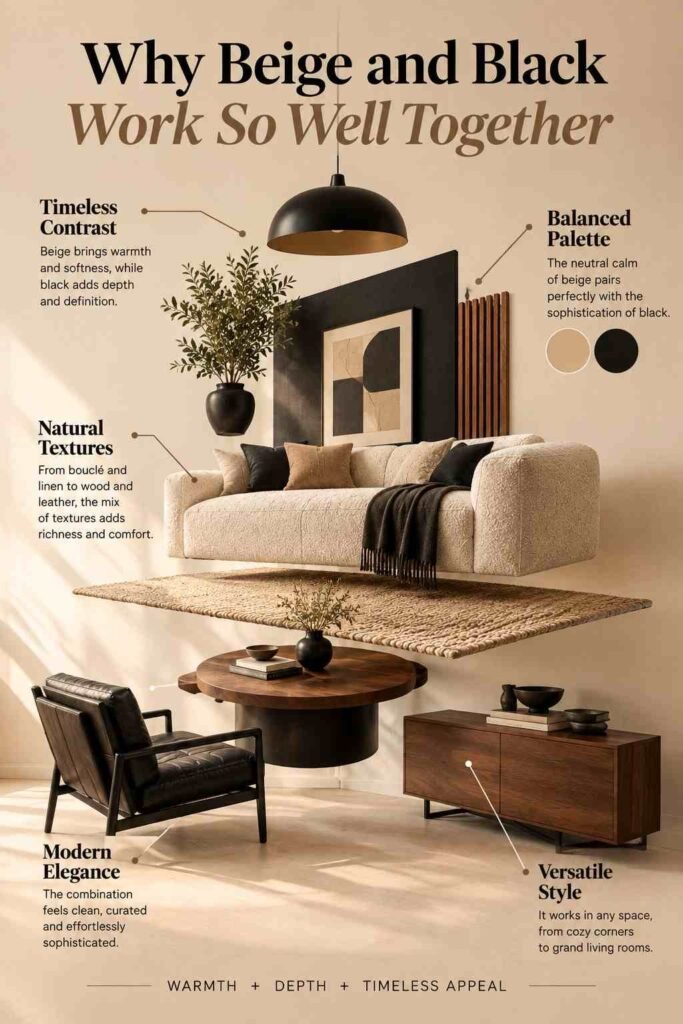
Beige is a warm neutral built from small amounts of yellow, red, and brown pigment, which is why it reads as inviting rather than sterile. Black is the absence of reflected light, making it one of the most efficient contrast colors available. When paired, beige gives a black-and-beige living room its temperature, and black gives it its shape.
Many designers follow a 60-30-10 approach: roughly 60% beige across walls and large upholstery, 30% black in furniture or millwork, and 10% in fine details like hardware or picture frames. That ratio keeps a beige and black living room from tipping into monotony on one side or heaviness on the other — the most common complaint homeowners raise about high-contrast palettes.
Setting the Foundation: Walls, Trim, and Architecture
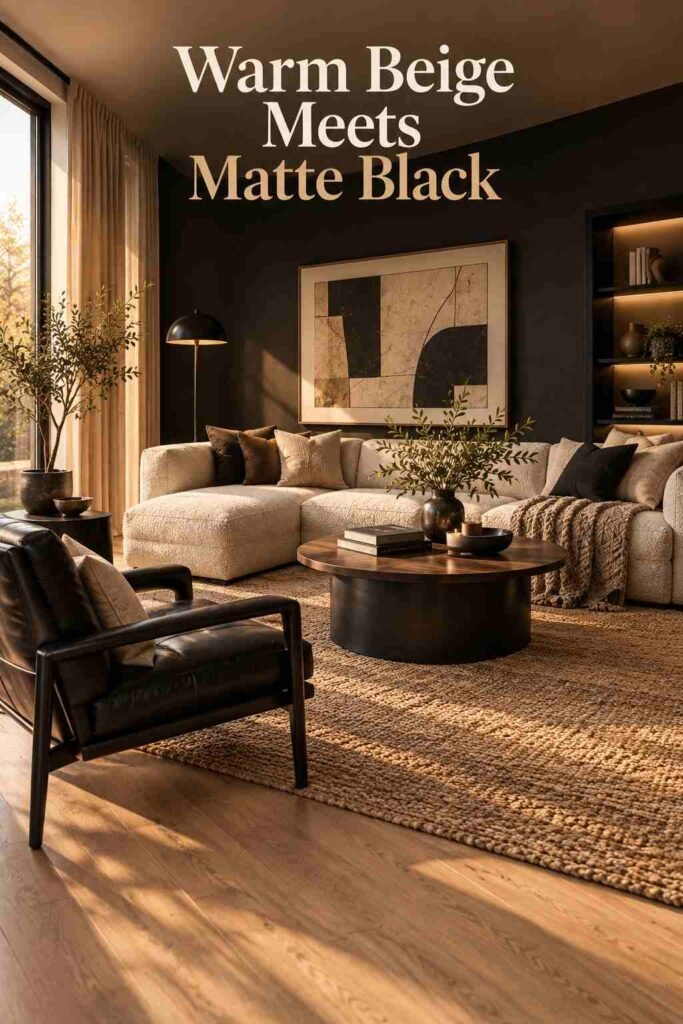
1. Warm Beige Walls as a Base Coat. Choose a beige with warm undertones — something closer to sand or oat than gray-beige — so the room doesn’t feel washed out once black furniture is added. Warm bases photograph better in both daylight and evening lighting.
2. A Black Accent Wall. A single black wall living room feature, usually behind the sofa or fireplace, adds depth without darkening the whole space. Matte finishes hide imperfections better than gloss and keep the wall from looking harsh under overhead light.
3. Black Window Frames or Trim

If repainting every wall feels like too much commitment, start smaller. Black window casings, baseboards, or door frames outline the architecture and give the beige backdrop a crisp, intentional edge.
4. A Black Fireplace Surround. Painting or refacing a fireplace in matte black instantly makes it the focal point of the room, especially when surrounded by lighter beige walls and mantel decor.
5. Beige Plaster or Limewash Texture. Textured wall finishes like limewash or Venetian plaster add dimension to beige surfaces, so the wall itself becomes a design feature rather than a flat backdrop for the black furnishings.
Furniture & Layout That Anchor the Room

6. A Black Leather or Bouclé Sofa. Leather brings a tailored, slightly formal feel, while black bouclé softens the contrast and feels warmer against beige walls and rugs.
7. A Beige Sectional with a Black Base. For larger families, a beige sectional on a black metal or wood frame keeps the seating light and comfortable while grounding it visually.
8. A Black Coffee Table as a Grounding Piece

Placed at the center of a beige rug, a black coffee table in wood, stone, or metal becomes the anchor that pulls the whole layout together.
9. Mixed Metal and Black Furniture Frames. Combining matte black frames with brass or brushed nickel legs on side tables and lamps prevents the black elements from reading as one flat block of color.
10. Curved Furniture Silhouettes. Rounded armchairs, oval tables, and a black accent wall– curved chairs soften the strong lines that black naturally creates, keeping the room from feeling too rigid or corporate.
Textiles, Rugs, and Layered Textures
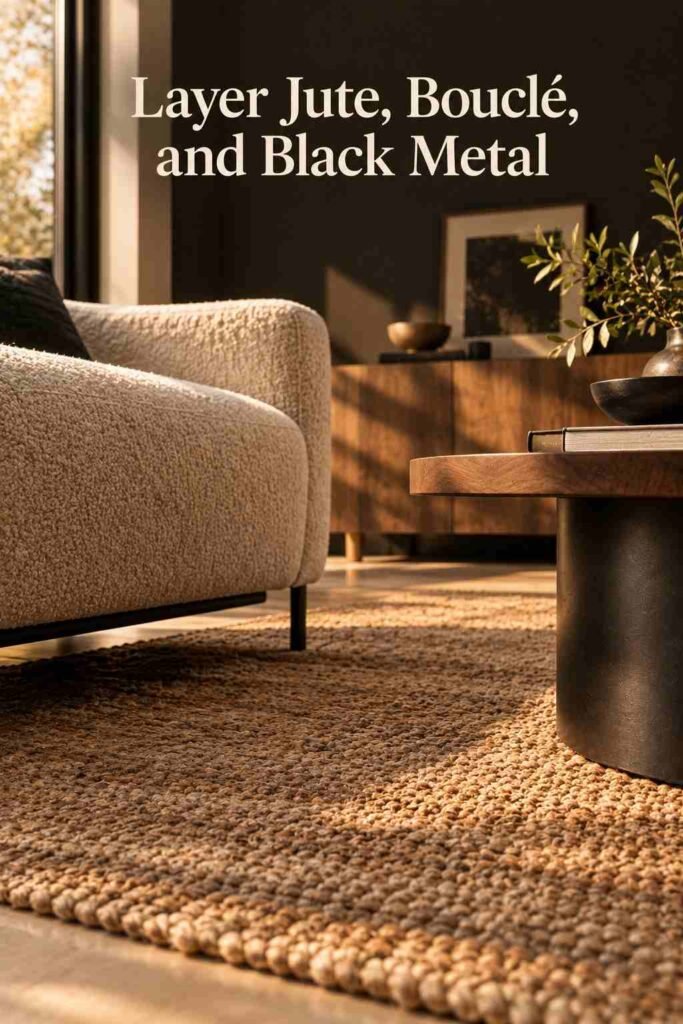
11. A Black-and-Beige Striped or Checkered Rug. Patterned rugs blend both colors underfoot and visually connect furniture pieces that might otherwise sit in separate color zones.
12. Bouclé and Linen Throw Pillows. Mixing black bouclé cushions with beige linen ones on the same sofa adds tactile variety without introducing a third color.
13. A Chunky Wool Throw Blanket

Draped over the arm of a black sofa, an oatmeal-toned wool throw adds instant coziness and breaks up large, flat upholstery surfaces.
14. Sheer Beige Curtains with Black Rods. Black curtain hardware frames the window like a piece of art, while sheer beige fabric keeps the room bright and filters harsh sunlight. If you rotate your soft furnishings seasonally, this is one of the easiest spring home decor ideas to apply here — simply swap heavier drapes for lighter linen once the weather warms.
15. Mixed Textures: Velvet, Rattan, and Leather. Layering different materials in the same color family — a velvet black ottoman, a rattan beige basket, a leather black bench — keeps a monochrome-adjacent room from feeling one-dimensional.
Lighting and Statement Accents
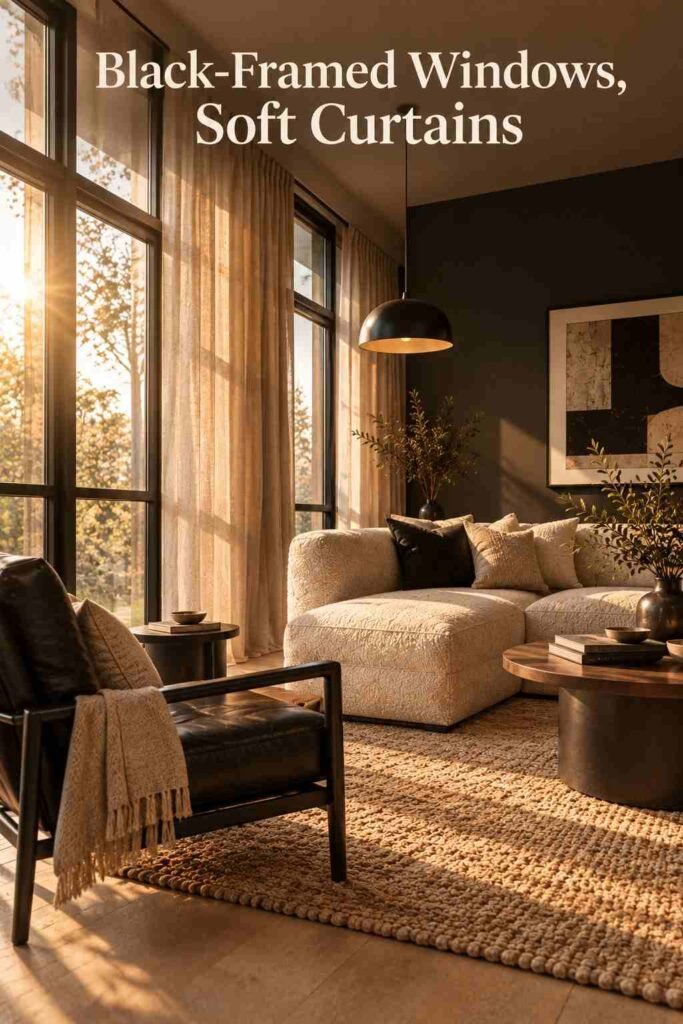
16. A Black Matte Pendant or Chandelier. Overhead lighting in matte black draws the eye upward and adds a sculptural element without competing with the wall colors.
17. Warm-Toned Bulbs. Bulbs in the 2700K to 3000K range cast a golden, residential glow that flatters beige tones and prevents black surfaces from looking flat or industrial under cooler light.
18. A Black Floor Lamp with a Linen Shade. This combination repeats the room’s two core colors in a single fixture and works well in a reading corner or beside a sofa.
19. Brass or Gold Accents to Soften Contrast. A few brass candlesticks, picture frames, or a gold-rimmed mirror add warmth between the beige and black, preventing the palette from feeling stark.
20. A Black-Framed Mirror to Bounce Light. Placed opposite a window, a large black-framed mirror reflects natural light into the room, which is especially useful in a beige and black living room with limited windows.
Final Styling Touches: Art, Plants, and Personal Objects
21. A Black-and-White Gallery Wall. Framed prints in black frames against a beige wall create a gallery effect that ties directly into the room’s existing palette without adding new colors to manage.
22. Large Leafy Plants in Black Planters. Greenery is the easiest way to soften a high-contrast room. A fiddle leaf fig or snake plant in a matte black pot adds life and organic texture.
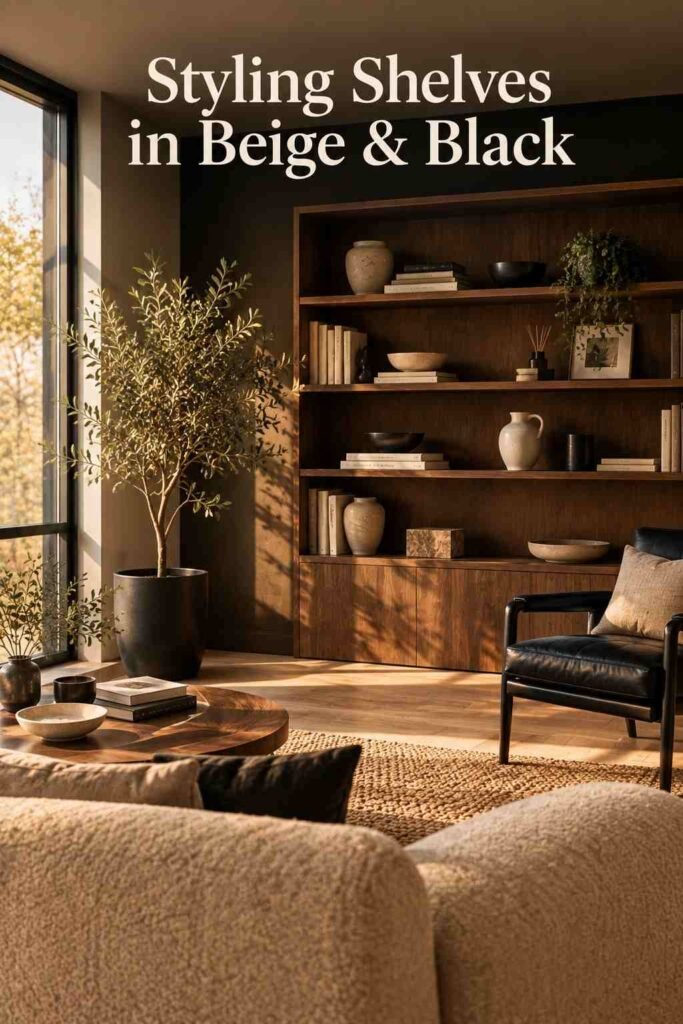
23. Beige Ceramic Vases and Bowls. Grouped on a coffee table or shelf, unglazed ceramic pieces in oatmeal and sand tones add quiet texture that photographs well and never goes out of style.
24. Black Bookshelves Styled with Beige Objects. Painting built-in shelving black and styling it with beige books, baskets, and pottery creates contrast at eye level, which pulls attention through the room.
25. Sourcing Curated Pieces Instead of Matching Sets. Rather than buying an entire matching living room set, mix pieces from different sources for a collected-over-time look. Independent furniture and decor platforms such as Outinteriors are useful for finding one-off black and beige accent pieces that don’t look mass-produced.
Common Mistakes to Avoid in a Beige and Black Living Room
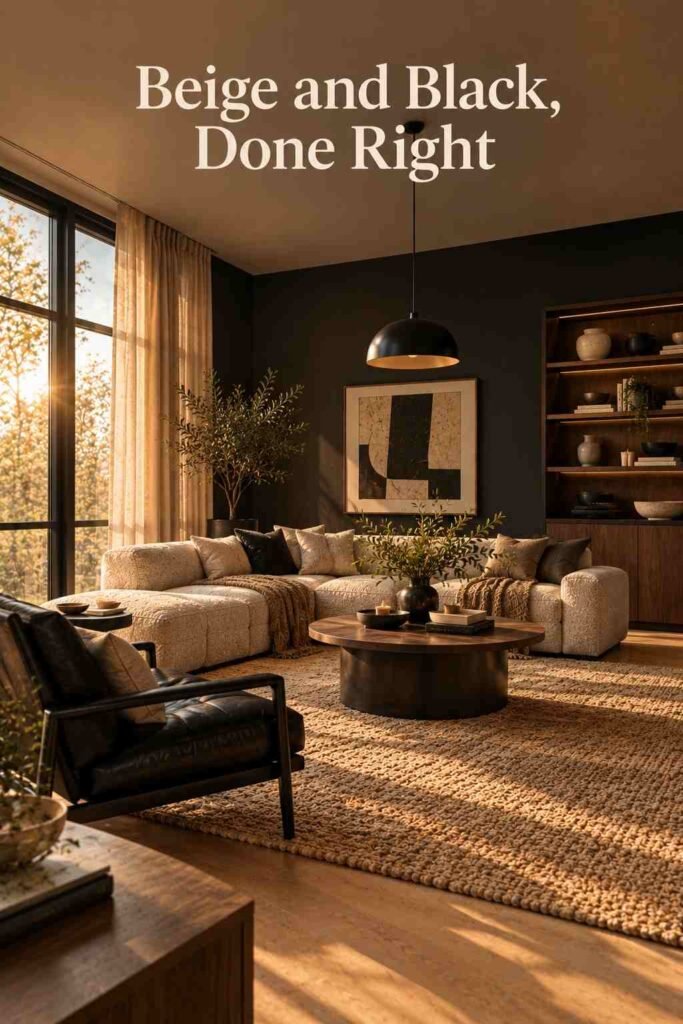
- Using too much black on large surfaces. Black sofas, black walls, and black flooring together will almost always feel heavier than intended, especially in rooms without much natural light.
- Choosing a cool, gray-based beige. This can clash with black and read as muddy rather than warm; test paint swatches in the room’s actual lighting before committing.
- Skipping texture. Two flat colors with no variation in material will look unfinished, no matter how well the colors are matched.
- Ignoring lighting temperature. Cool white bulbs (5000K and above) can make black furniture look dull and beige walls look gray.
- Ignoring room size. In smaller rooms, keep black to furniture and accents only; reserve full black walls for rooms with high ceilings or strong natural light.
Conclusion
A well-executed beige and black living room doesn’t rely on one dramatic gesture — it’s built from dozens of small, deliberate choices: the undertone of the paint, the finish on the trim, the weight of the rug, the temperature of the light bulb. Used together, these 25 ideas give you a framework rather than a rigid formula, so the result still feels like your home and not a showroom. Start with the walls and one anchor furniture piece, then layer in texture, lighting, and personal objects over time. The pairing is flexible enough to grow with you, whether your taste leans minimalist, traditional, or somewhere in between.
Frequently Asked Questions
Is beige and black living room decor still in style?
Yes. Because both colors are neutrals rather than trend-driven hues, this pairing has stayed consistently popular and tends to age well compared to more saturated color schemes.
What beige undertone pairs best with black furniture?
A warm beige with yellow or red undertones — often labeled “greige-warm” or “sand” on paint charts — generally pairs better with black than a cool, gray-based beige, which can look muddy together.
Will too much black make a small living room feel smaller?
It can, if black is used on multiple large surfaces at once. In compact rooms, limit black to one or two furniture pieces or a single accent wall, and keep the majority of the space in beige.
What rug works best in a beige and black living room?
A rug that includes both colors, such as a striped, checkered, or subtly patterned design, helps visually connect black furniture to beige walls and flooring rather than leaving them as separate zones.
Do I need warm or cool lighting for this color combination?
Warm lighting, generally in the 2700K to 3000K range, is recommended. It flatters beige tones and keeps black surfaces from looking flat or overly stark.
Can this color palette work in a rental apartment?
Yes. Renters can achieve the look through furniture, rugs, curtains, and black-framed art or mirrors without repainting walls, then add a black accent wall later if the lease allows it.
What accent colors pair well with beige and black?
Brass, gold, and warm wood tones are the most common additions, since they bridge the contrast between beige and black without competing for attention.