Cream and Terracotta Kitchen Ideas for a Warm, Timeless Look
There’s a reason a cream and terracotta kitchen keeps showing up on renovation mood boards from coast to coast. After more than a decade of stark white kitchens and cool gray everything, homeowners are craving color that feels lived-in rather than sterile. Cream brings the softness and light-reflecting quality that makes a kitchen feel open, while terracotta adds the warmth, texture, and personality that white alone can’t deliver. Together, they read as both elegant and grounded — a palette that suits a 1920s bungalow just as easily as a brand-new build.
This guide goes beyond the usual roundup of pretty photos. Below, you’ll find real paint names, specific tile and material choices, mistakes worth avoiding, and honest answers about cost, maintenance, and whether this combination is a passing trend or a genuine design classic. If you’ve been searching for a cream and terracotta kitchen that actually holds up in daily life, this is the practical version of that search.
Why Cream and Terracotta Work So Well Together
Color pairing isn’t random — it comes down to undertone and contrast. Cream carries a soft yellow or beige base, which keeps it warmer and less clinical than pure white. Terracotta sits in the orange-brown family, drawing from fired clay and sun-baked earth. Because both colors live on the warm side of the spectrum, they never fight each other the way, say, a cool gray and a warm orange would. The result is a kitchen that feels cohesive in almost any lighting condition, from early morning sun to warm evening bulbs.
This pairing also has staying power because it’s rooted in materials rather than pure trend cycles. Terracotta pottery, clay tile, and unglazed brick have been used in kitchens for centuries across the Mediterranean, the American Southwest, and Latin America. A cream and terracotta kitchen borrows from that history, which is part of why designers keep returning to it instead of chasing the next fleeting color moment.
Choosing the Right Shades for Your Cream and Terracotta Kitchen
Not every “terracotta” or “cream” reads the same on a wall or a cabinet door. Undertones matter enormously, and picking the wrong pairing can push your kitchen toward looking dated or muddy instead of warm and intentional.
Terracotta Tones to Consider
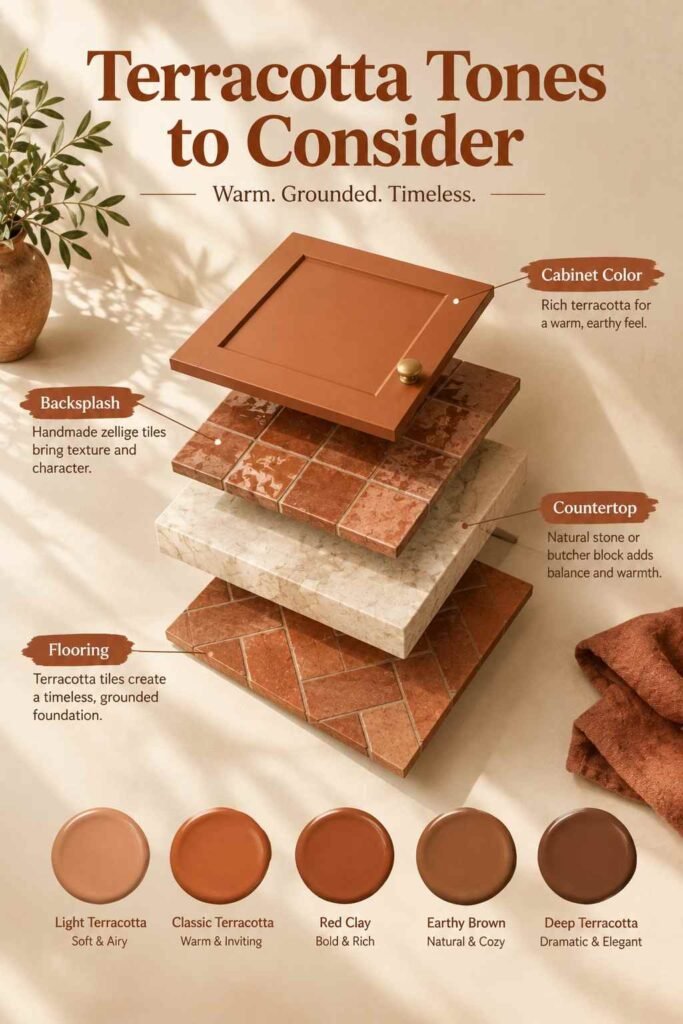
For cabinetry or an accent wall, look for shades with brown or clay undertones rather than a straight orange. Sherwin-Williams Cavern Clay (SW 7701) is a popular mid-depth, burnt terracotta that reads as an easygoing neutral rather than a bold statement color. Fired Brick, another Sherwin-Williams option, leans redder and works well against warm wood tones. On the Benjamin Moore side, Baked Terra Cotta and Terra Cotta Tile are both softer, more muted options that pair easily with warm whites without overwhelming a smaller room.
Cream Shades That Pair Best
For the cream half of the palette, avoid anything too stark or blue-based. Benjamin Moore Navajo White and White Dove both carry enough warmth to sit comfortably next to terracotta cabinetry or tile. Sherwin-Williams Downy works similarly, offering a soft, linen-like backdrop. Testing large swatches on your actual walls — not just a paint chip — is worth the extra day, since natural light changes these undertones throughout the day.
25 Cream and Terracotta Kitchen Ideas to Steal
Here are 25 specific ways to bring this palette into your own kitchen, organized by the element you’re actually renovating.
Cabinet Color Combinations
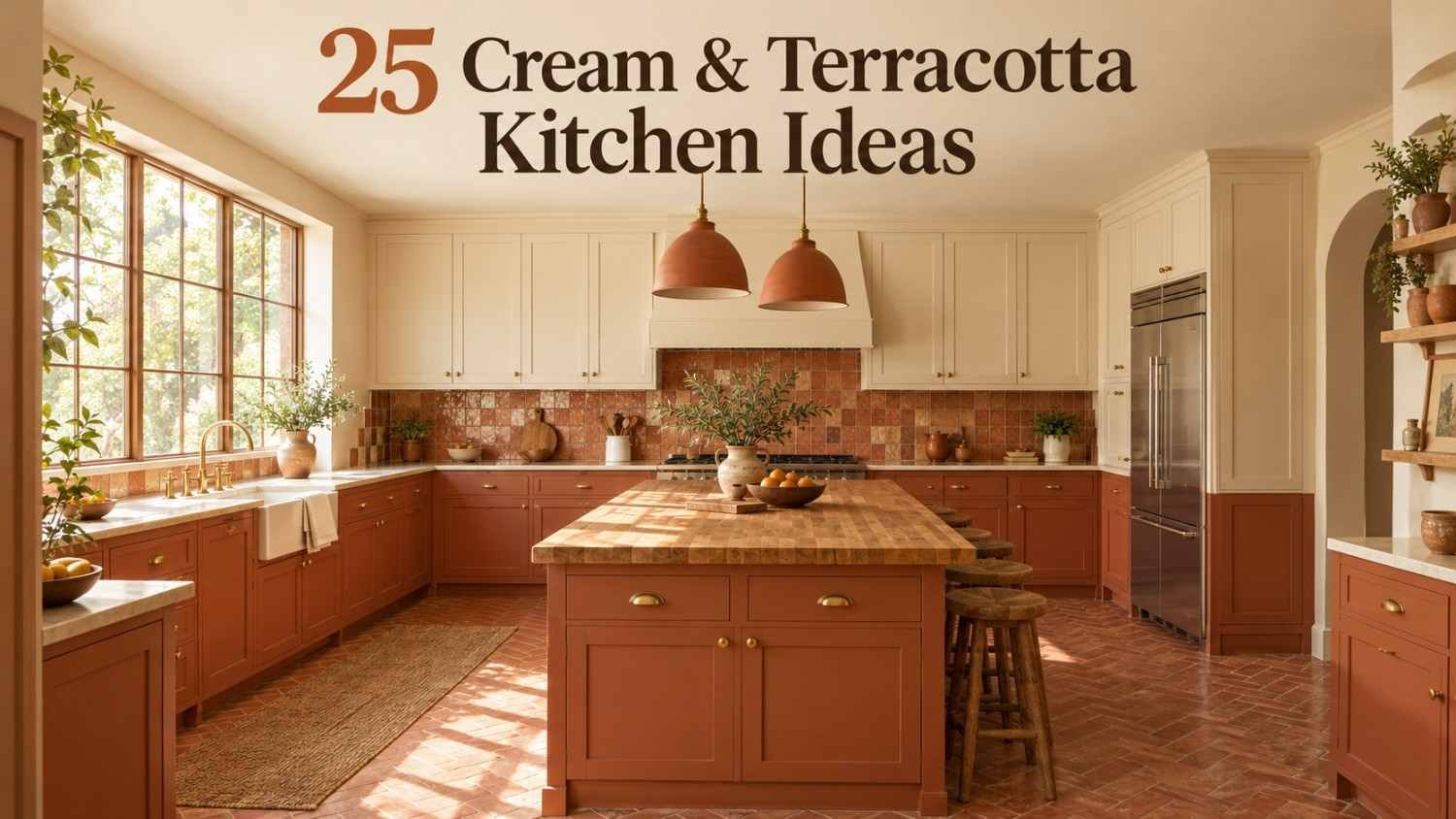
- Terracotta lower cabinets, cream uppers
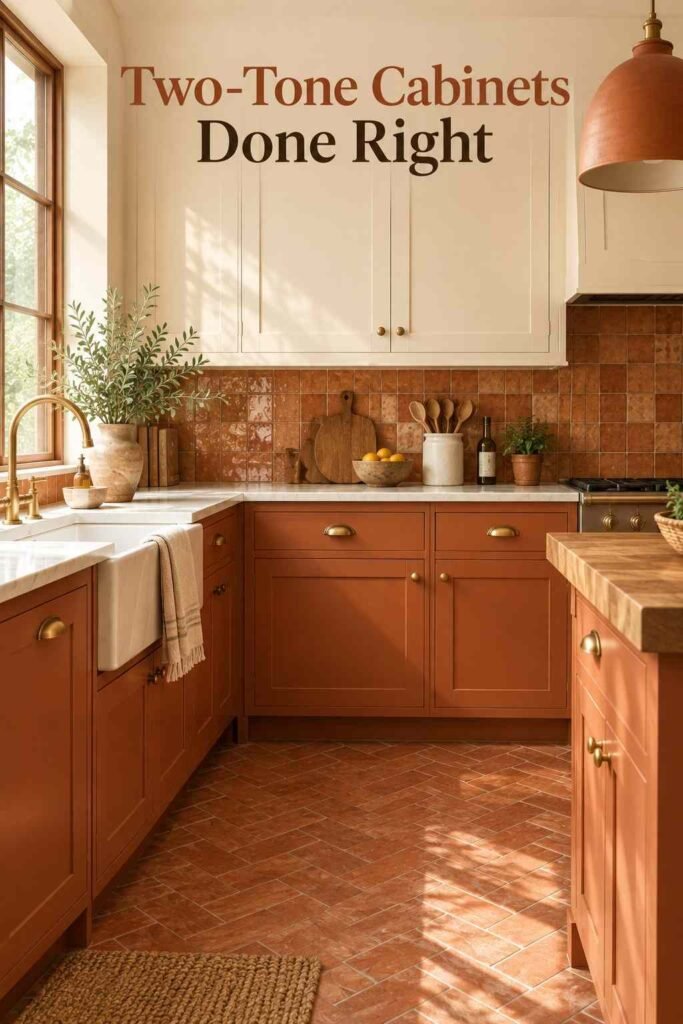
This two-tone approach is one of the most popular combinations in kitchen design right now. The darker terracotta grounds the room visually while cream uppers keep the space from feeling heavy.
- All-cream cabinetry with a terracotta island. Keeping the perimeter cream and reserving terracotta for the island creates a clear focal point without committing the whole room to a bold color.
- Terracotta on the island only, cream everywhere else. A subtler version of the above — paint just the island base, leaving the countertop and surrounding cabinets cream for contrast.
- Cream shaker cabinets with terracotta open shelving
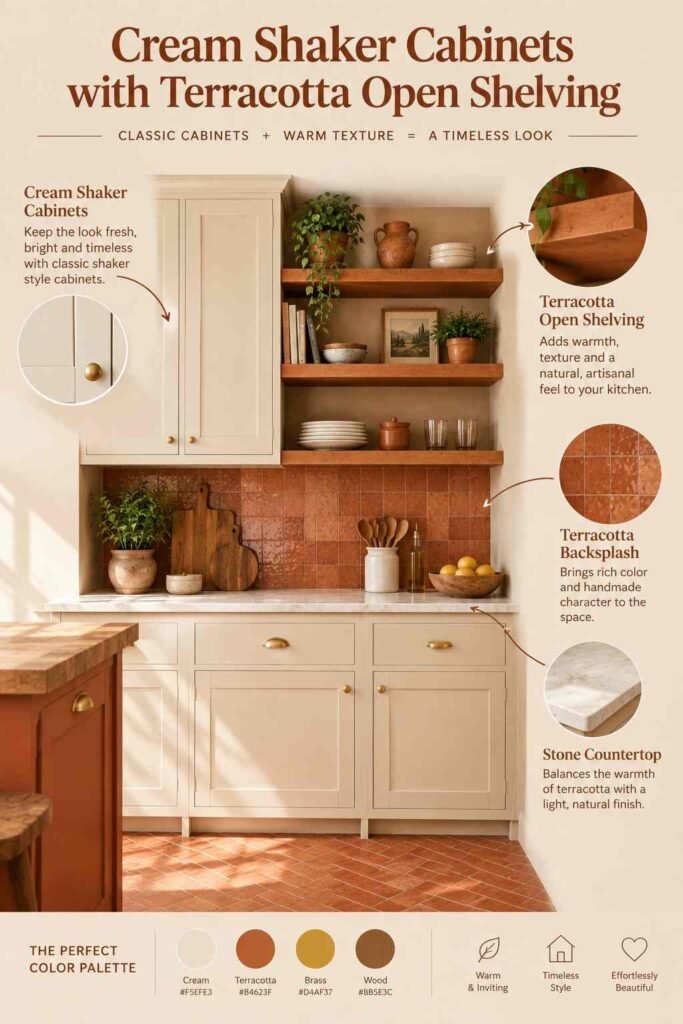
Swap a few upper cabinet doors for open shelves painted or lined in terracotta to add warmth without repainting the whole kitchen.
- An ombré effect, graduating from deeper terracotta at the base to soft cream near the ceiling, which visually raises low ceilings while keeping the room warm underfoot.
Backsplash and Tile Ideas
- A handmade zellige terracotta backsplash
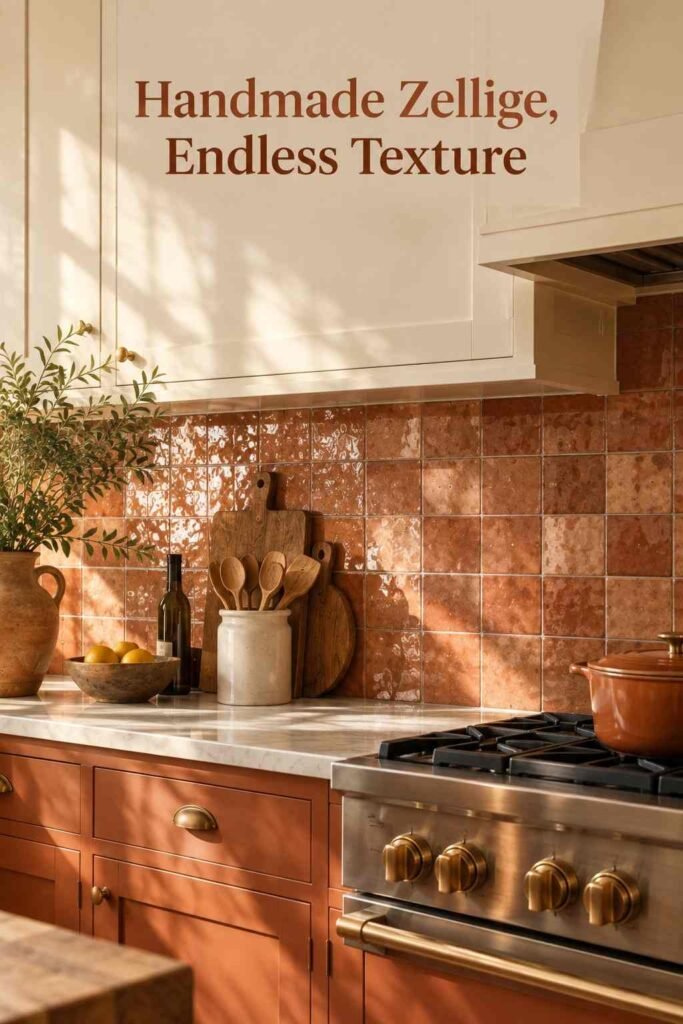
Behind cream cabinetry — the natural variation in tone from tile to tile keeps the wall feeling alive rather than flat.
- A skinny, soldier-set terracotta tile backsplash, which reads as more refined and modern than a full-height application.
- Diagonally set terracotta tile, a simple change in layout that adds movement to an otherwise plain backsplash.
- Terracotta tile behind the range only, used as a focal point while the rest of the backsplash stays cream or white.
- Hexagonal terracotta tile with warm cream grout — avoid stark white or gray grout, which cuts the warm flow of the tile into a harsh grid.
Flooring Options
- Unglazed terracotta quarry tile, the classic choice, brings rustic texture underfoot that anchors the whole room.
- A herringbone terracotta floor pattern
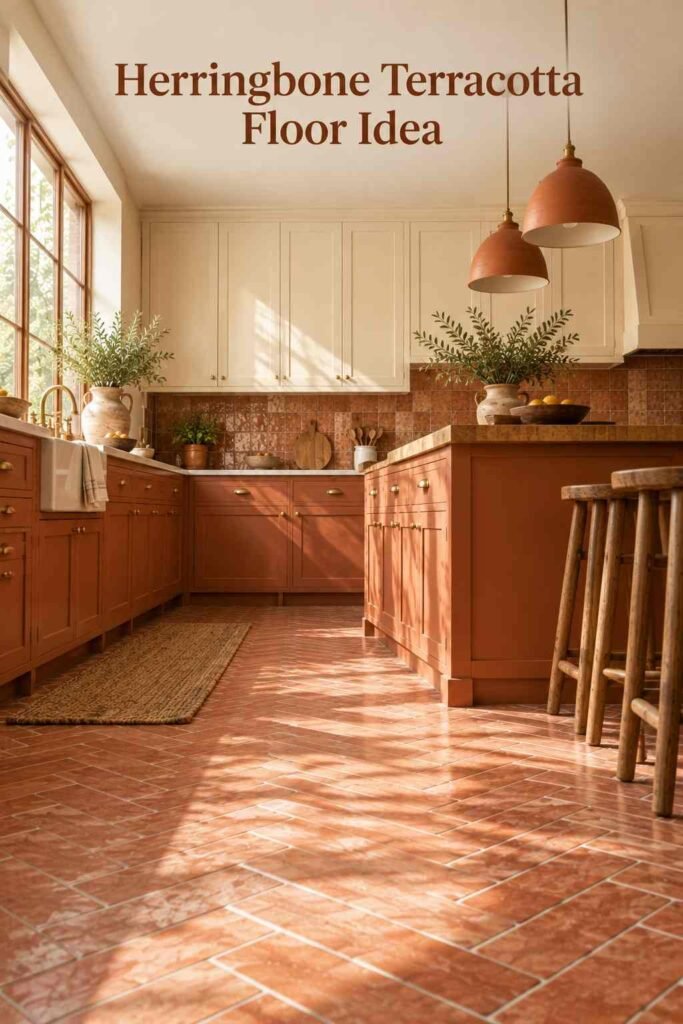
which adds instant sophistication and works especially well in open-concept kitchens.
- Large-format terracotta tile, ideally 40cm or bigger, which makes even a compact cream and terracotta kitchen read as more open and less busy.
- Terracotta-look porcelain or luxury vinyl tile, a budget-friendly and highly durable alternative to authentic clay for households with kids, pets, or a tight renovation budget.
Countertops and Surfaces
- Butcher block countertops
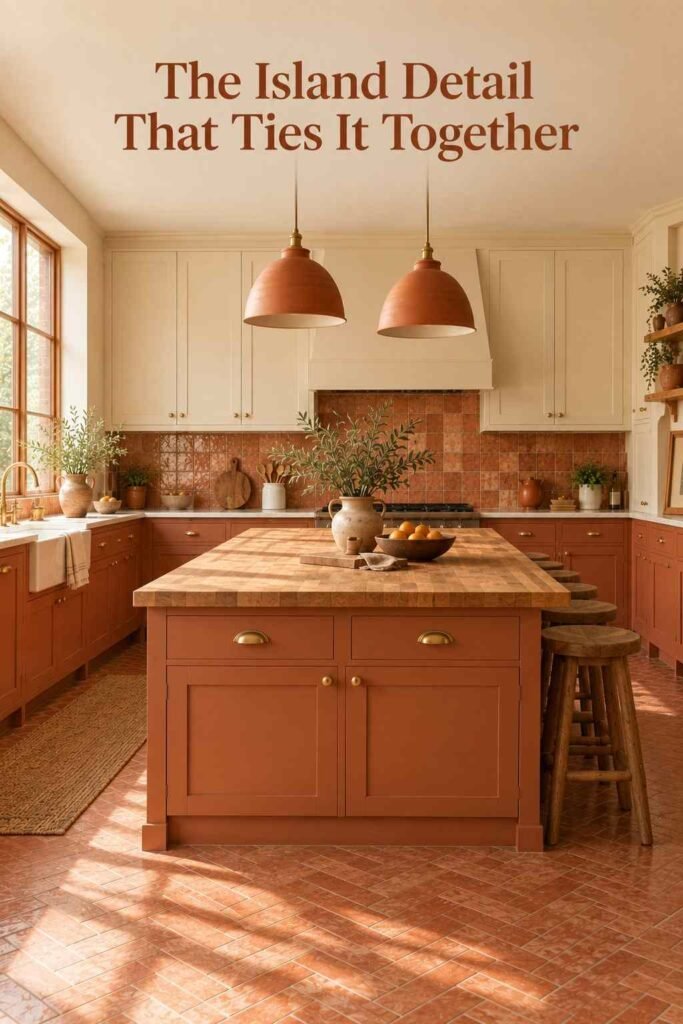
- Butcher block countertops, which soften the palette with a natural wood tone and pair equally well with cream or terracotta cabinetry.
- Travertine or limestone countertops, adding texture and visual movement while staying firmly within the warm color family.
- Warm white or cream quartz with subtle veining, a low-maintenance option that keeps the surface from competing with a bold terracotta backsplash or floor.
Hardware, Lighting, and Fixtures
- Brushed or unlacquered brass hardware, which develops a soft patina over time and complements both cream and terracotta beautifully.
- Matte bronze or black pendant lighting
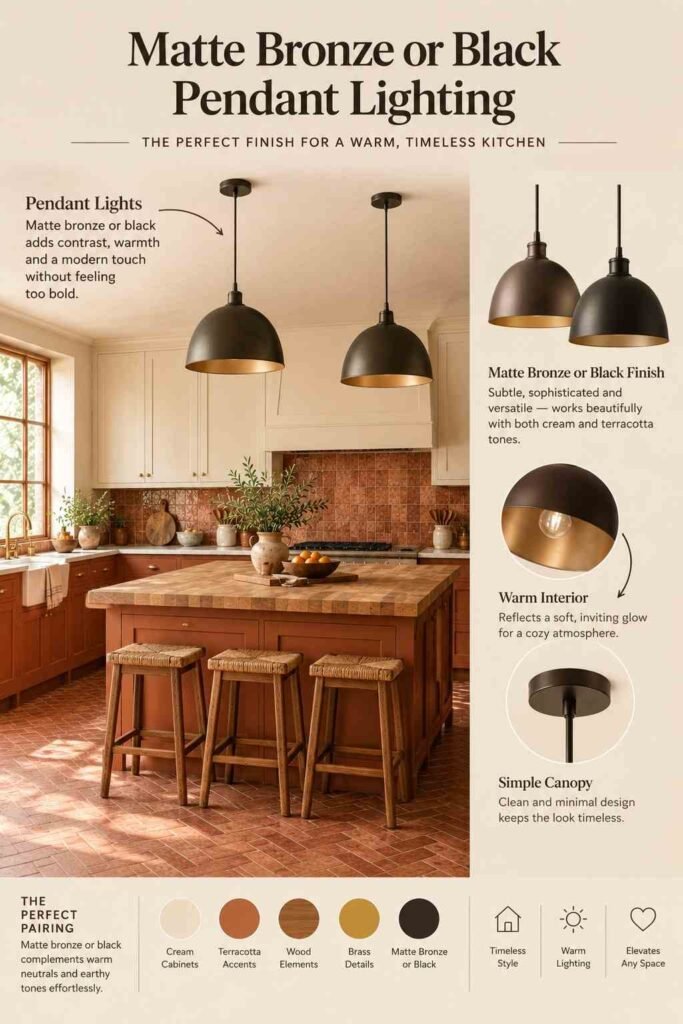
- Matte bronze or black pendant lighting, adding a grounding, modern edge to an otherwise soft palette.
- Terracotta pendant shades, a smaller commitment than painted cabinetry that still brings the color story to the ceiling.
- Warm-toned bulbs around 2700K, which enhance both cream and terracotta far more flatteringly than cooler daylight bulbs.
Styling, Accents, and Small-Space Tricks
- Terracotta pots and planters
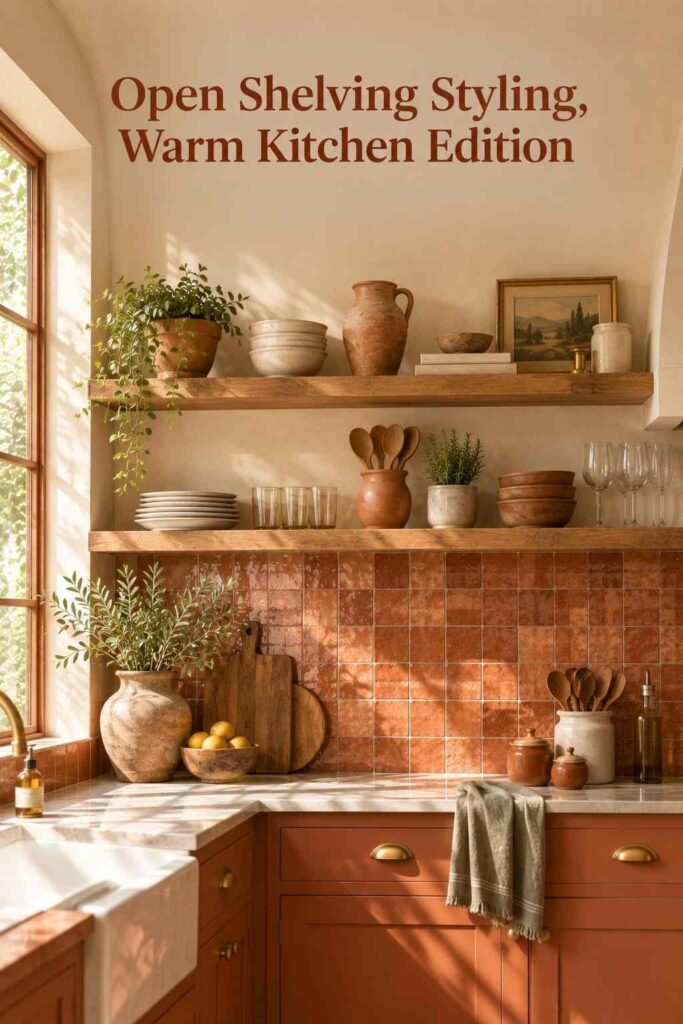
- Terracotta pots and planters on open shelving or windowsills, an easy, renter-friendly way to test the palette before committing to paint or tile.
- Layering in sage green accents through dish towels, ceramics, or a single painted wall. This muted green softens terracotta’s warmth beautifully, and if you want a deeper dive into how the two work together, our guide to sage green and terracotta decor covers pairing ratios room by room.
- Adding black accents — a matte black faucet, light fixture, or window frame — for contrast that keeps the warm palette from feeling too soft. The same warm-meets-moody trick works beyond the kitchen, and it’s the same idea behind a well-balanced beige and black living room.
- Open shelving in place of a few upper cabinets, which lightens a terracotta-heavy kitchen and gives you a spot to display cream ceramics against the warm wall color behind them.
Common Mistakes to Avoid
The most frequent misstep in a cream and terracotta kitchen is choosing a terracotta with too much straight orange in it, rather than one with brown or clay undertones — this is what makes a kitchen feel dated within a few years rather than timeless. A second common mistake is pairing terracotta with a stark, blue-based white instead of a true cream, which creates visual tension instead of harmony. Finally, many homeowners go too heavy on terracotta, covering cabinets, floor, and backsplash all at once. Choosing one or two surfaces to carry the terracotta, while letting cream do most of the visual work, keeps the room feeling balanced rather than overwhelming.
Is a Cream and Terracotta Kitchen Trendy or Timeless?
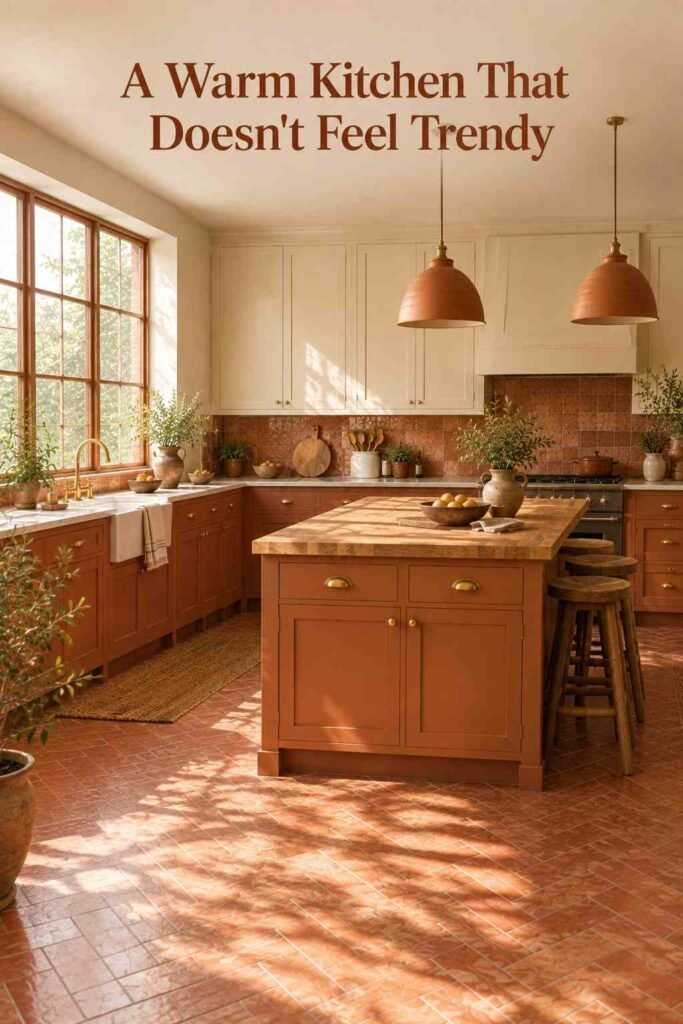
This is a fair question, since kitchen colors have cycled quickly over the past fifteen years — from all-white, to gray, to two-tone navy, to today’s earth tones. What sets terracotta apart is that it isn’t a manufactured trend color; it comes directly from natural clay and fired brick, materials that have been used in kitchens for centuries. A cream and terracotta kitchen built around genuine materials — real tile, natural stone, unlacquered brass — tends to age far better than one built entirely around a single trendy paint color. If you’re renovating for the long term, lean on material choices over paint alone, and treat terracotta paint as the easiest element to update later if your taste shifts.
Budget-Friendly Ways to Get the Look
A full terracotta tile floor or custom cabinetry isn’t within every renovation budget, and that’s fine — this palette scales down easily. Start with a terracotta accent wall or painted island instead of full cabinetry. Swap real terracotta tile for a porcelain or vinyl look-alike, which now closely mimics the texture and color variation of handmade clay at a fraction of the cost and with far less maintenance. Renters can lean entirely on accessories: terracotta cookware, planters, table linens, and a cream-toned rug deliver the same warm feeling without touching a single wall or cabinet.
Final Thoughts
A cream and terracotta kitchen works because it pairs a light, airy neutral with a color that has real material history behind it. Whether you commit fully with clay tile floors and painted cabinetry, or start small with accessories and a single accent wall, this combination rewards a slow, considered approach more than an all-at-once renovation. For more curated color-palette inspiration across every room in the house, Outinteriors is a solid place to keep exploring once your kitchen plan is set.
Frequently Asked Questions
Is a cream and terracotta kitchen hard to keep clean?
Not particularly. Glazed terracotta tile and quartz countertops wipe clean easily. Unglazed terracotta floor tile does need periodic sealing to resist stains, but this is a simple maintenance task, not a daily concern.
What wall color goes best with terracotta cabinets?
A soft, warm cream or off-white — something like Benjamin Moore Navajo White or White Dove — keeps the room bright while letting terracotta cabinetry stand out as the focal point.
Does terracotta make a kitchen feel smaller?
It can, if overused across every surface. Using terracotta on just one or two elements — an island, a backsplash, or a floor — while keeping walls and upper cabinets cream avoids this issue entirely.
Can I get this look without a full renovation?
Yes. Painting a single accent wall or island, updating hardware to brushed brass, and adding terracotta accessories can transform the feel of a kitchen without touching tile or countertops.
What countertop pairs best with cream and terracotta?
Warm white quartz, travertine, and butcher block all work well. Avoid stark white or cool gray countertops, which can clash with terracotta’s warm undertone.
Is terracotta tile expensive?
Authentic handmade terracotta tile sits at the higher end of flooring costs due to its labor-intensive production. Porcelain or vinyl versions offer a similar look at a significantly lower price point.
Will this color combination go out of style?
Because it’s rooted in natural materials rather than a manufactured trend, a well-executed cream and terracotta kitchen tends to age more gracefully than color choices tied purely to a passing paint trend.