13 Bookshelf Styling Ideas to Turn Cluttered Shelves Into a Calm, Curated Display

Every shelf starts the same way. A few books, a charger, a stray plant, and suddenly the whole unit feels crowded. If that sounds familiar, these 13 bookshelf styling ideas will help you edit, organize, and decorate without starting over. They are built for real homes, including rentals, kids’ rooms, and home offices. You will find fixes for common problems, such as how to hide cords in lidded boxes, how to anchor tall bookcases safely, and how to leave negative space so nothing feels cramped. You will also see how to use peel-and-stick wallpaper, puck lights, and bookends to add polish without drilling into walls. Each idea is short, specific, and easy to test. Try one this afternoon, step back, and see what changes. Small edits often make the biggest difference, and your shelves will start to feel calm, intentional, and truly yours.
Before You Start: Three Rules That Shape Every Shelf
Great shelves follow a few quiet rules. First, balance matters more than symmetry. Heavy items on one side need a visual partner on the other. Second, variety keeps the eye moving, so mix heights, textures, and shapes. Third, breathing room makes everything look intentional. Before using any of these bookshelf styling ideas, empty the shelf, wipe it down, and sort items into piles: books, art, plants, baskets, and keepsakes. Starting from a clean slate shows you what you really have and what can go. Once your shelves are done, pull the room together with these living room rug ideas that add warmth underfoot.
13 Bookshelf Styling Ideas to Try Today
1. Group Books by Color

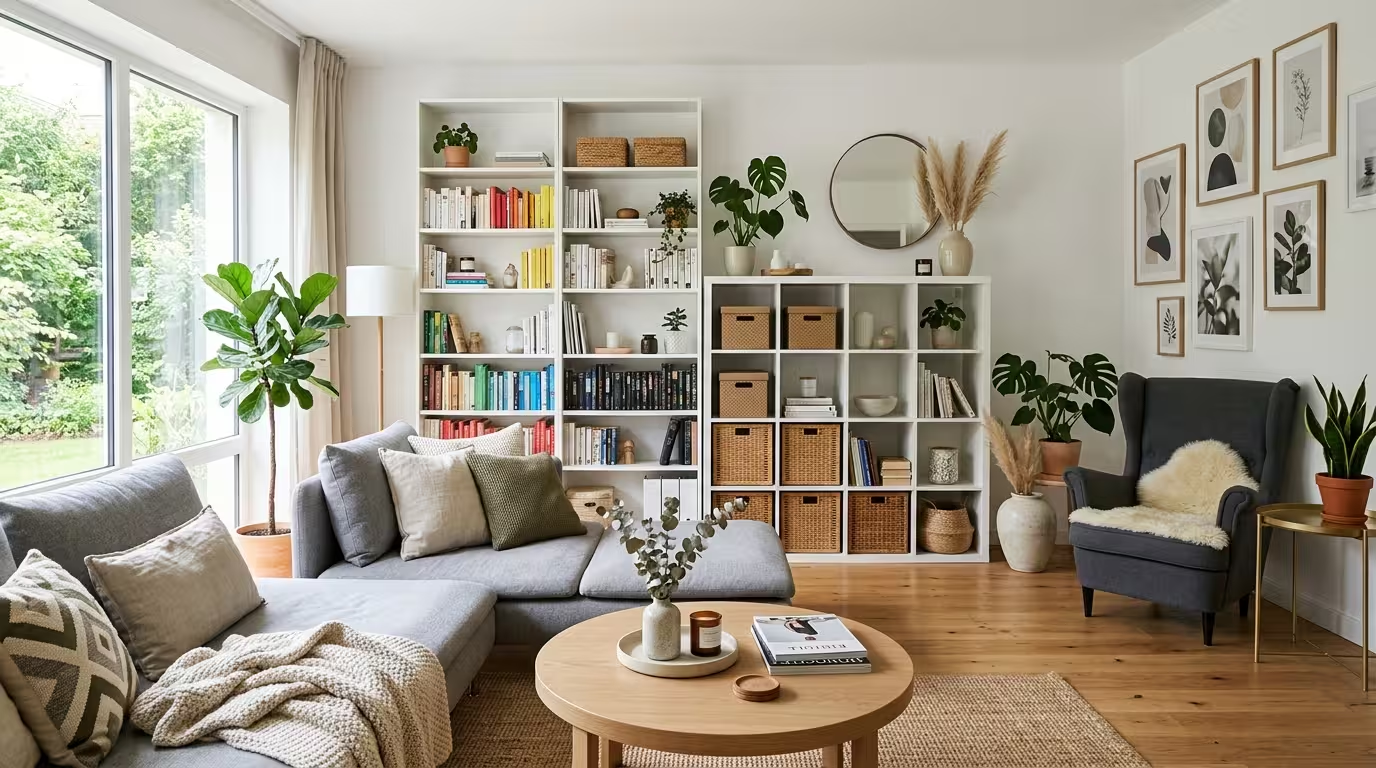
A color-sorted shelf looks calm and curated. Arrange books from light to dark, or group them into blocks of white, blue, green, and warm tones. The effect is like a soft gradient across the wall. If your collection is mostly black and white, add one or two colorful spines as accents. Keep the system loose, though. A slightly imperfect rainbow looks more relaxed than a rigid one. If you need to find a title fast, keep reference or daily-use books in a separate, easy-to-reach section.
2. Mix Vertical and Horizontal Stacks
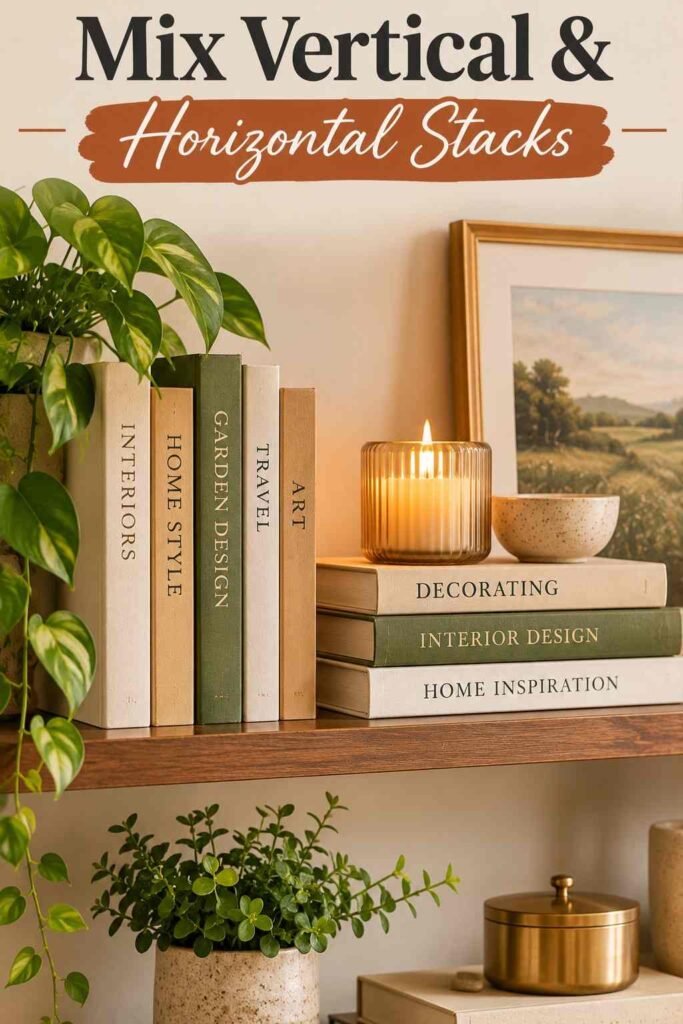
Rows of upright books can look stiff. Break them up by laying a few books flat in a short stack, then placing a small object on top. This is one of the simplest bookshelf styling ideas because it adds height variation without buying anything new. Try a stack of two to four books, largest on the bottom. Top it with a candle, a small bowl, or a framed photo. The flat stack also works as a natural bookend, so upright books stay in place.
3. Use the Rule of Three
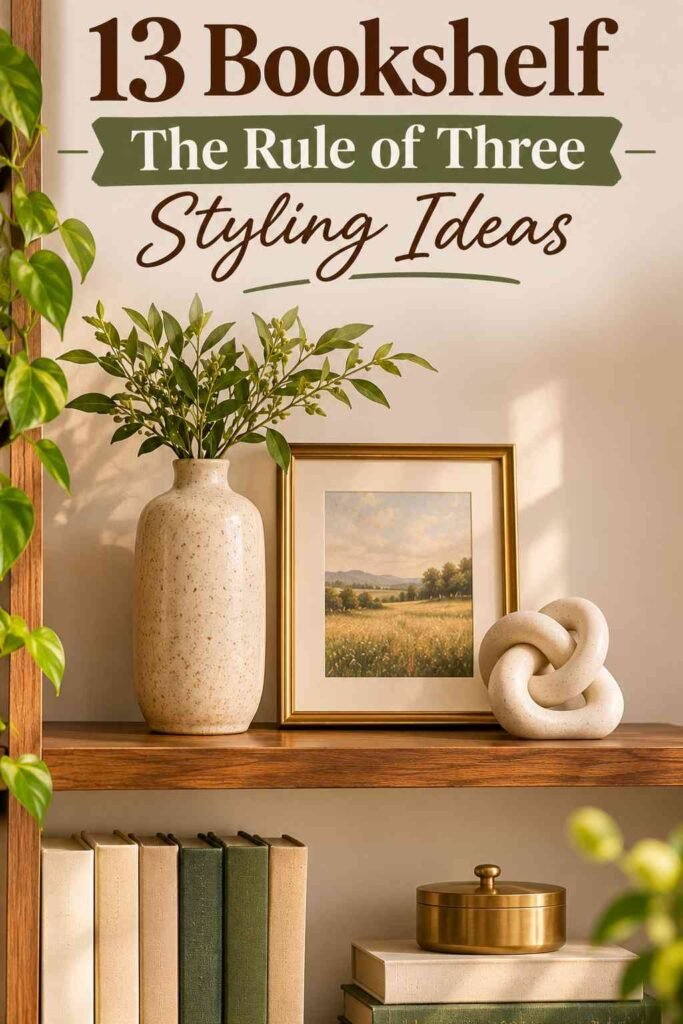
Designers often group objects in odd numbers, especially threes. Three items of different heights feel balanced and natural, while pairs can look formal. Try a tall vase, a medium frame, and a small sculpture together. Vary the materials too: ceramic, wood, and glass make a pleasing mix. Place each trio slightly off-center on a shelf, and repeat the pattern lower or higher on the unit. This repetition ties the whole display together without making it look matched.
4. Layer Art Behind and in Front
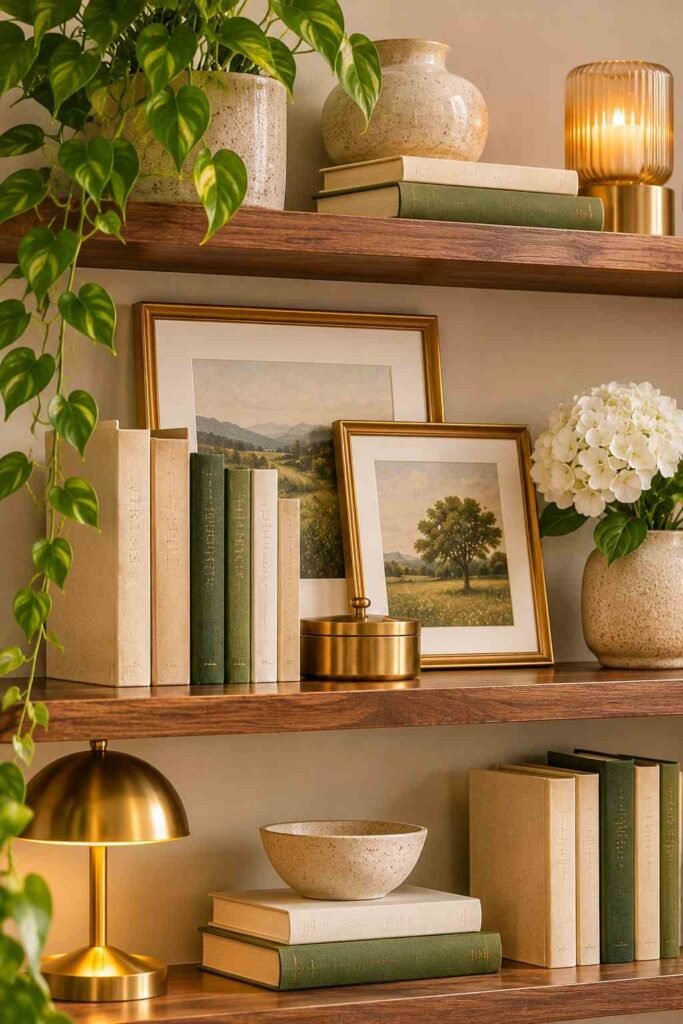
Art does not have to hang on the wall. Lean framed prints or small canvases against the back of a shelf, then place books or objects partly in front. This layering adds depth, which is a hallmark of professional bookshelf styling ideas. Choose frames in two or three finishes, such as black, brass, and natural wood. Mix sizes, and let a few overlap slightly. If you rent and cannot drill into walls, this approach also protects your deposit while still giving the shelf a gallery feel.
5. Add Greenery and Trailing Plants

Plants soften the hard lines of shelves and books. A trailing pothos or philodendron spills over the edge and draws the eye down. A small snake plant or ZZ plant suits shelves with less light. If your space is dim, faux stems in a ceramic pot work well too, and many look convincing today. Place greenery on the top shelf or at the end of a row, and avoid crowding. One or two plants per unit are usually enough to add life without stealing attention from the books.
6. Hide Clutter in Baskets and Boxes
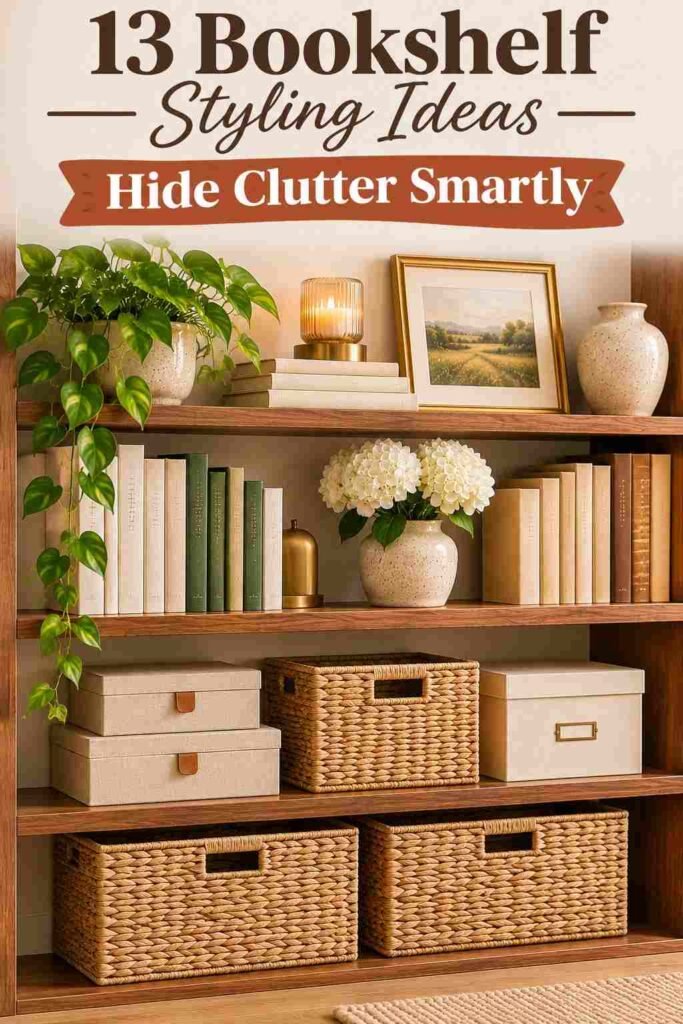
Every home has items that are useful but not pretty: chargers, remotes, toys, and loose papers. Closed storage solves this. Woven baskets, fabric bins, and lidded boxes keep them out of sight while adding texture. Choose containers in a shared tone, such as natural rattan or soft gray, so they read as one family. These bookshelf styling ideas are especially helpful in family rooms and home offices, where function matters daily. Label the inside of each box so everyone knows where things belong.
7. Leave Negative Space on Purpose
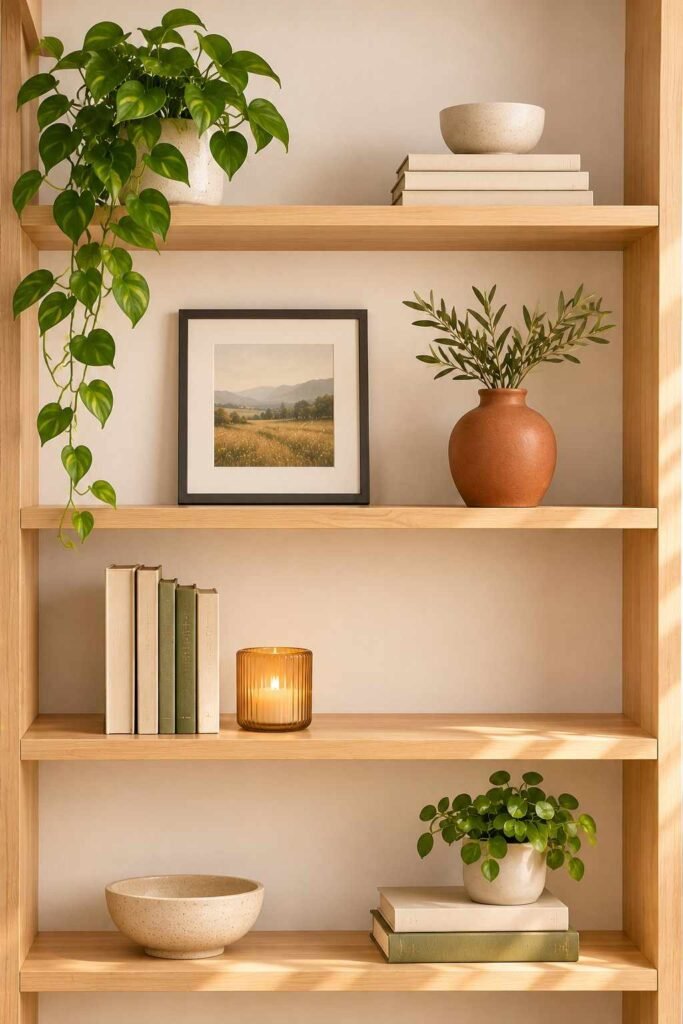
The most common styling mistake is filling every inch. Space gives each object room to be noticed. Aim to leave roughly one-third of each shelf open, or at least keep a few gaps between groups. Think of it as pauses in a song. A shelf with a single vase and a short stack of books can look richer than one packed edge to edge. If a shelf feels messy, remove two items before adding anything else, and then look again. If you love a relaxed, breezy look, explore our coastal decor ideas for shells, linen, and soft blues.
8. Display Personal and Meaningful Objects
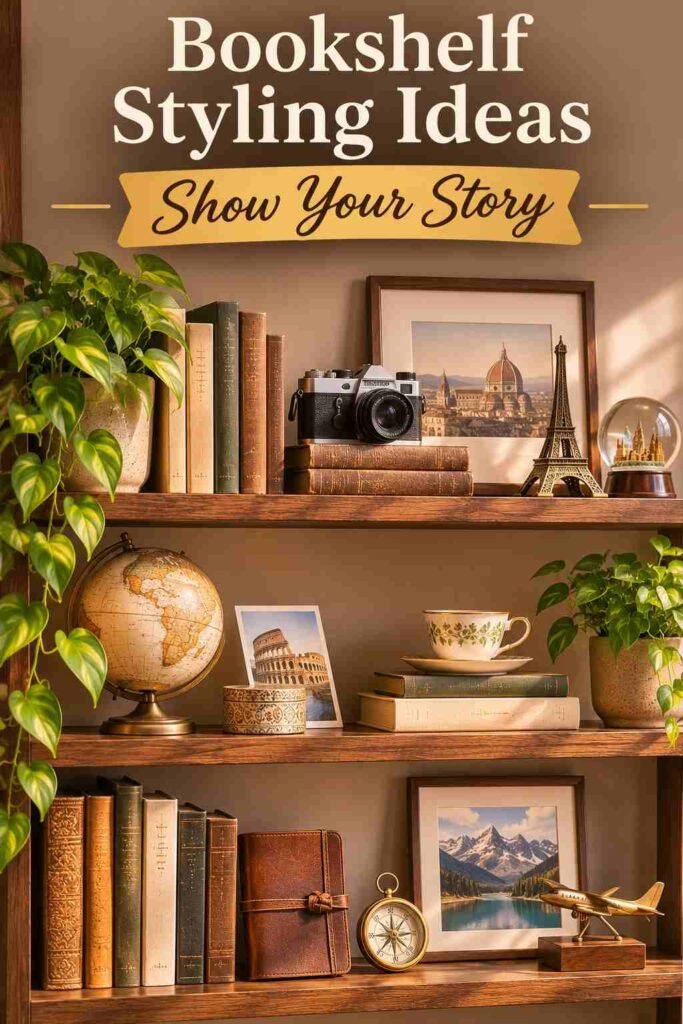
A shelf should tell your story. Travel finds, a grandparent’s teacup, a child’s clay pot, or a vintage camera give the display character that no store can sell. Mix these with decorative pieces so the effect feels collected, not cluttered. Keep scale in mind: one meaningful item per group works better than many small ones competing. Among all bookshelf styling ideas, this one is the most personal, and it makes guests ask questions, which is exactly what a good shelf should do.
9. Try Neutral Book Covers or Turned Spines
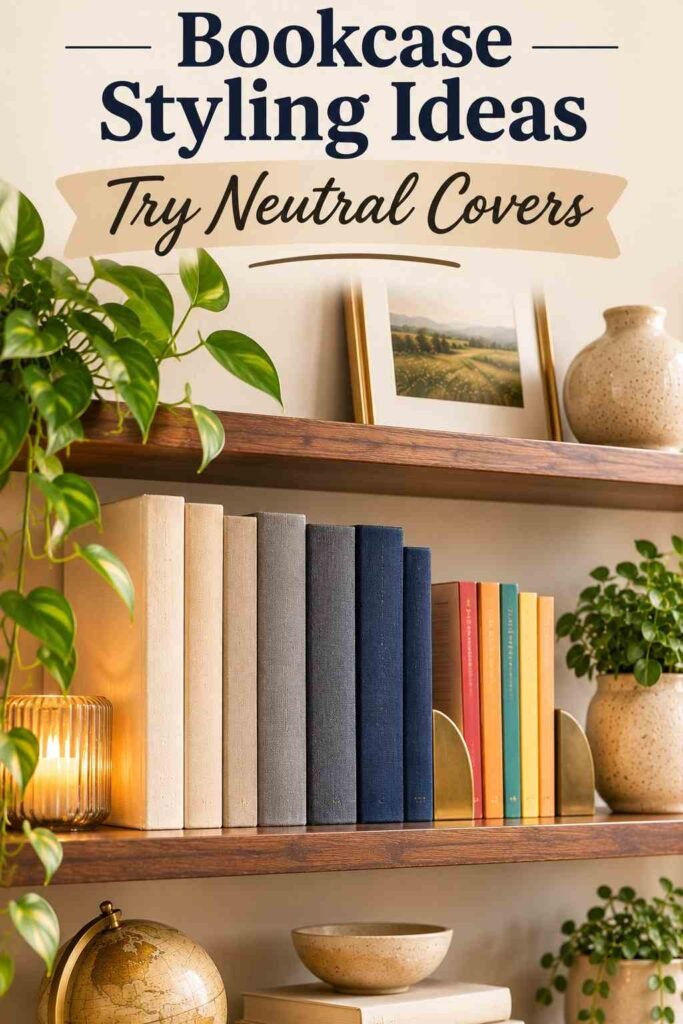
If your books are a mix of bright paperbacks, a unified look can feel soothing. Some people remove the dust jackets of hardcovers to reveal plain cloth bindings in cream, gray, or navy. Others wrap covers in plain paper. Be mindful, though. Turning spines inward makes books harder to find and can hide the very titles you love. A balanced approach works best: neutralize a section for display, and keep the rest of your library in its natural, readable state.
10. Add Soft Lighting
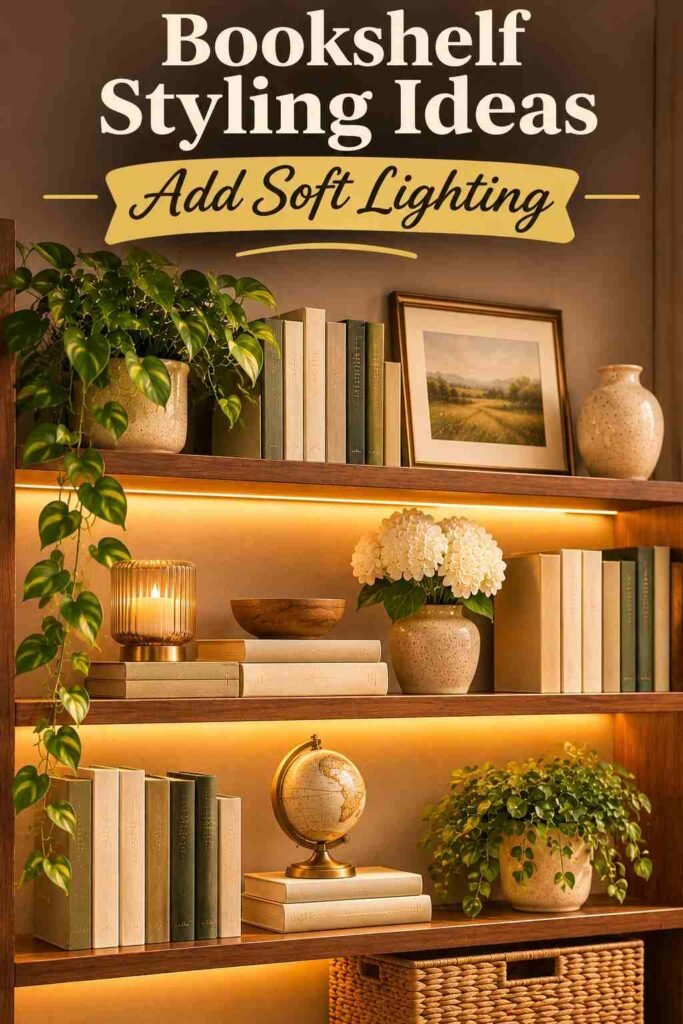
Light turns a shelf into a feature after dark. Battery-powered LED strip lights under shelf edges, small puck lights, or slim picture lights above the top shelf all create a warm glow. Choose a warm white tone of about 2700K for a cozy feel. Wireless options with remotes or timers need no electrician. Good lighting is among the most dramatic bookshelf styling ideas because it highlights art and textures at night. Hide cords behind frames or along the shelf’s back edge for a clean finish.
11. Paint or Wallpaper the Back Panel
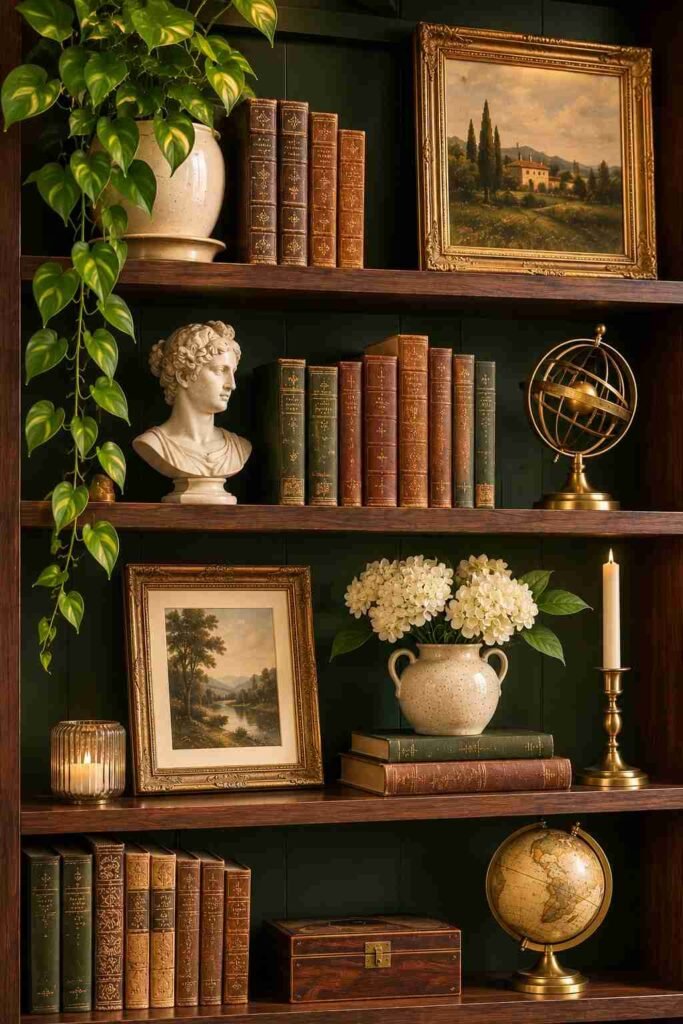
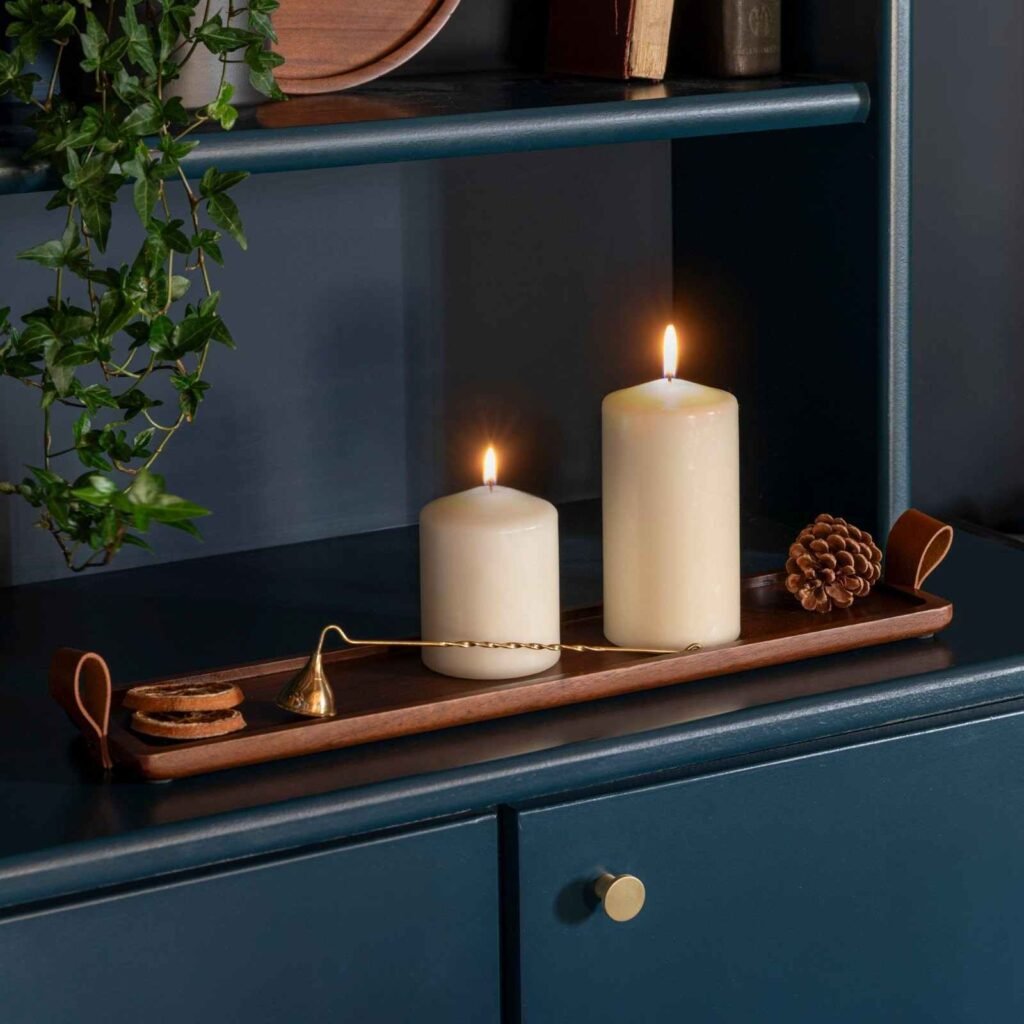
Color behind the shelves makes everything pop. A deep navy, forest green, or charcoal gives a rich backdrop for light objects, while a soft patterned wallpaper adds personality. For rental-friendly updates, use peel-and-stick wallpaper cut to fit each section. Measure carefully and test a small area first. If you prefer a quieter look, paint the back panel one shade darker than the wall. The subtle contrast adds depth, and the effect holds up as you swap items over time.
12. Use Bookends, Risers, and Small Stands
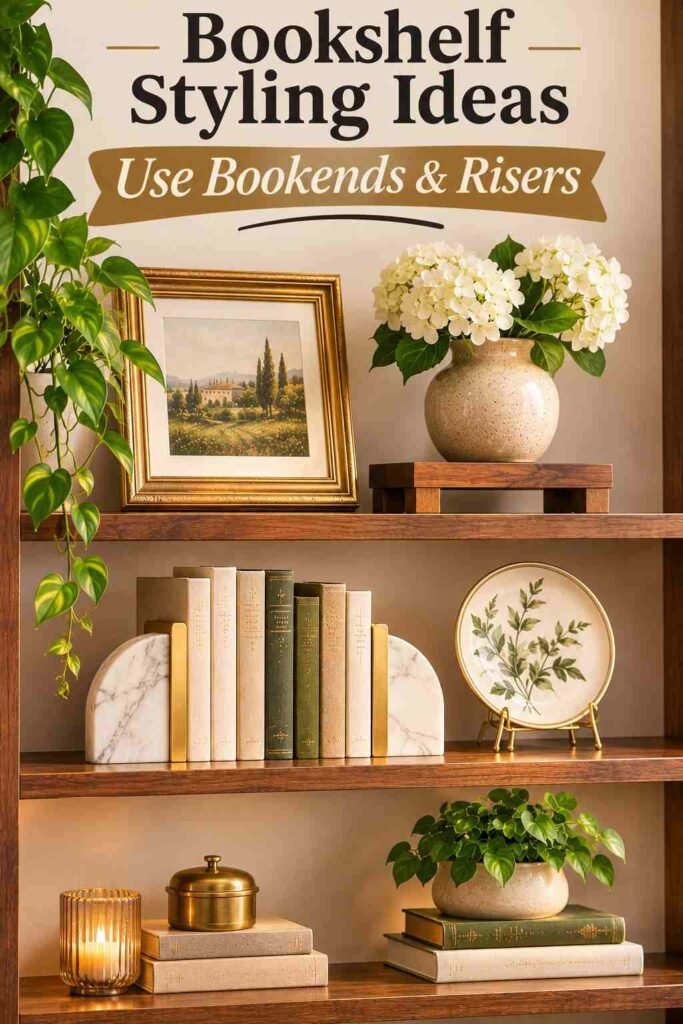
Small tools help you shape a shelf. Sturdy bookends in marble, brass, or wood keep rows tidy. Risers and low stands lift a favorite object so it sits above a stack, creating a layered look. Plate stands show off decorative dishes, while a slim tray groups small objects together. These practical bookshelf styling ideas cost little and last for years. Choose pieces with weight, since flimsy stands tip easily. Keep finishes consistent across the unit so the display feels planned rather than random.
13. Refresh With the Seasons
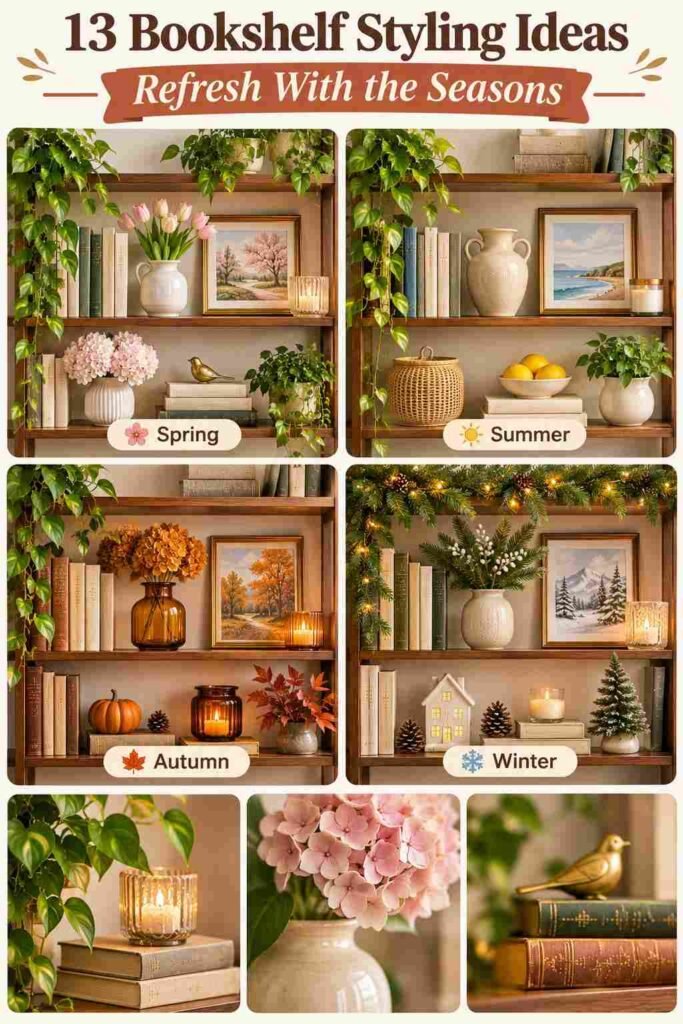
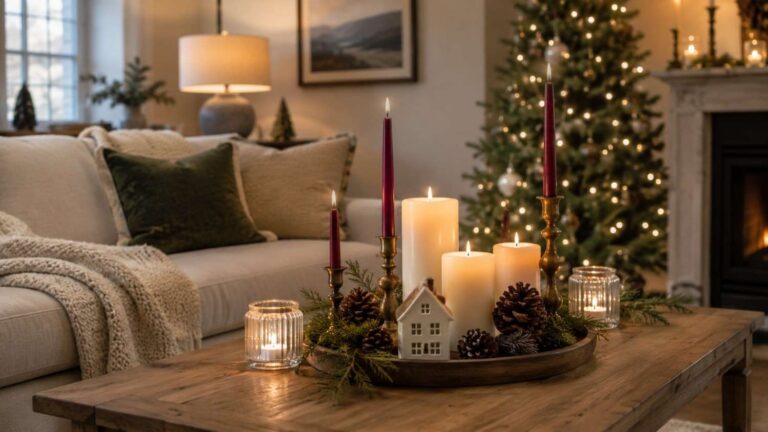
A shelf does not need to stay the same all year. Swap just a few items each season to keep it fresh. In spring, add pale flowers and light ceramics. In autumn, bring in warm candles, dried stems, and amber glass. In winter, try evergreen sprigs, neutral textiles, and soft white lights. Keep your core books and larger pieces constant. Rotating three to five accents takes about ten minutes and gives the room a new mood without a full restyle.
Common Bookshelf Styling Mistakes to Avoid
Even good ideas can go wrong in a few predictable ways. Overcrowding is the biggest one, so edit often. Matching everything too closely can feel like a showroom, so allow a little contrast. Ignoring weight is another problem: heavy items belong on lower shelves, especially in homes with children or pets. Finally, always anchor tall bookcases to the wall with the hardware provided. It is a simple safety step that protects both your family and your display. Extend the cozy mood outdoors with these backyard lighting ideas for evening gatherings.
How to Style a Shelf Step by Step
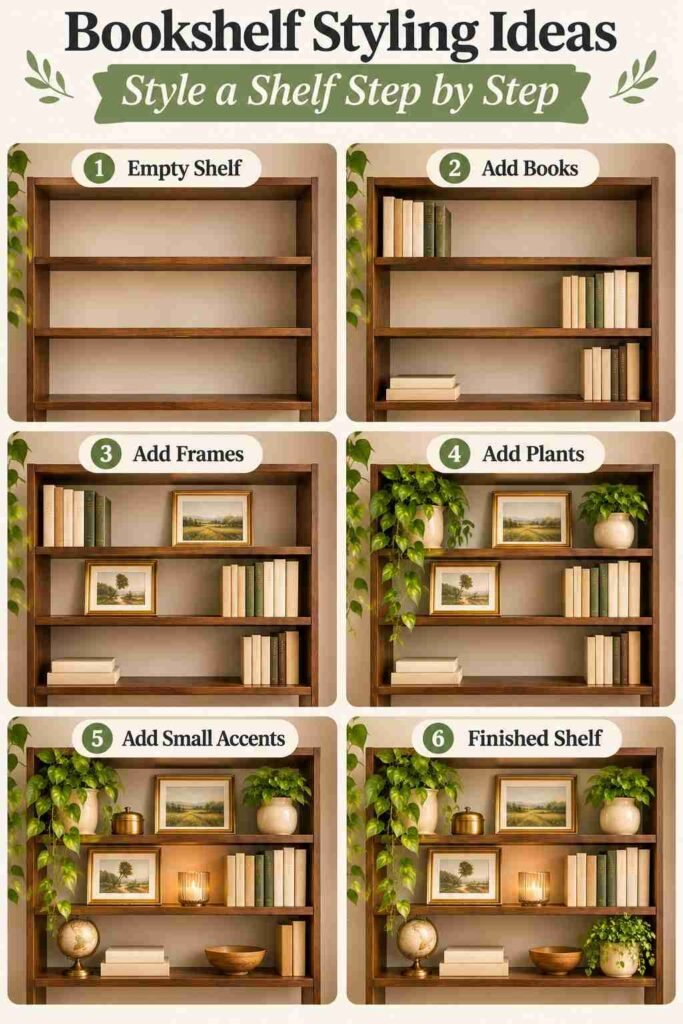
Start with the largest items, such as big books and baskets, and place them first. Add medium pieces like frames and vases next, then finish with small accents. Step back after each shelf and view it from across the room. Move one item at a time. Work from the middle shelves outward, since eye-level shelves matter most. Take a quick photo when you are done. Photos reveal gaps and imbalance that are easy to miss in person, and they give you a record to return to later. When December arrives, our aesthetic Christmas inspiration offers gentle ways to refresh your seasonal shelf accents.
Conclusion

Styling a shelf is less about rules and more about confidence. Start with one or two changes, such as grouping books by color or adding a plant, and build from there. These 13 bookshelf styling ideas work because they respect balance, space, and personality, and they suit any budget. Remember that your shelves should reflect how you live. Keep what you love, edit what you do not, and enjoy the way a few thoughtful choices can change the feel of an entire room. For more thoughtful design inspiration, browse the latest features from outinteriors.