25 Entryway Organization Tips for a Calm, Clutter-Free Front Door
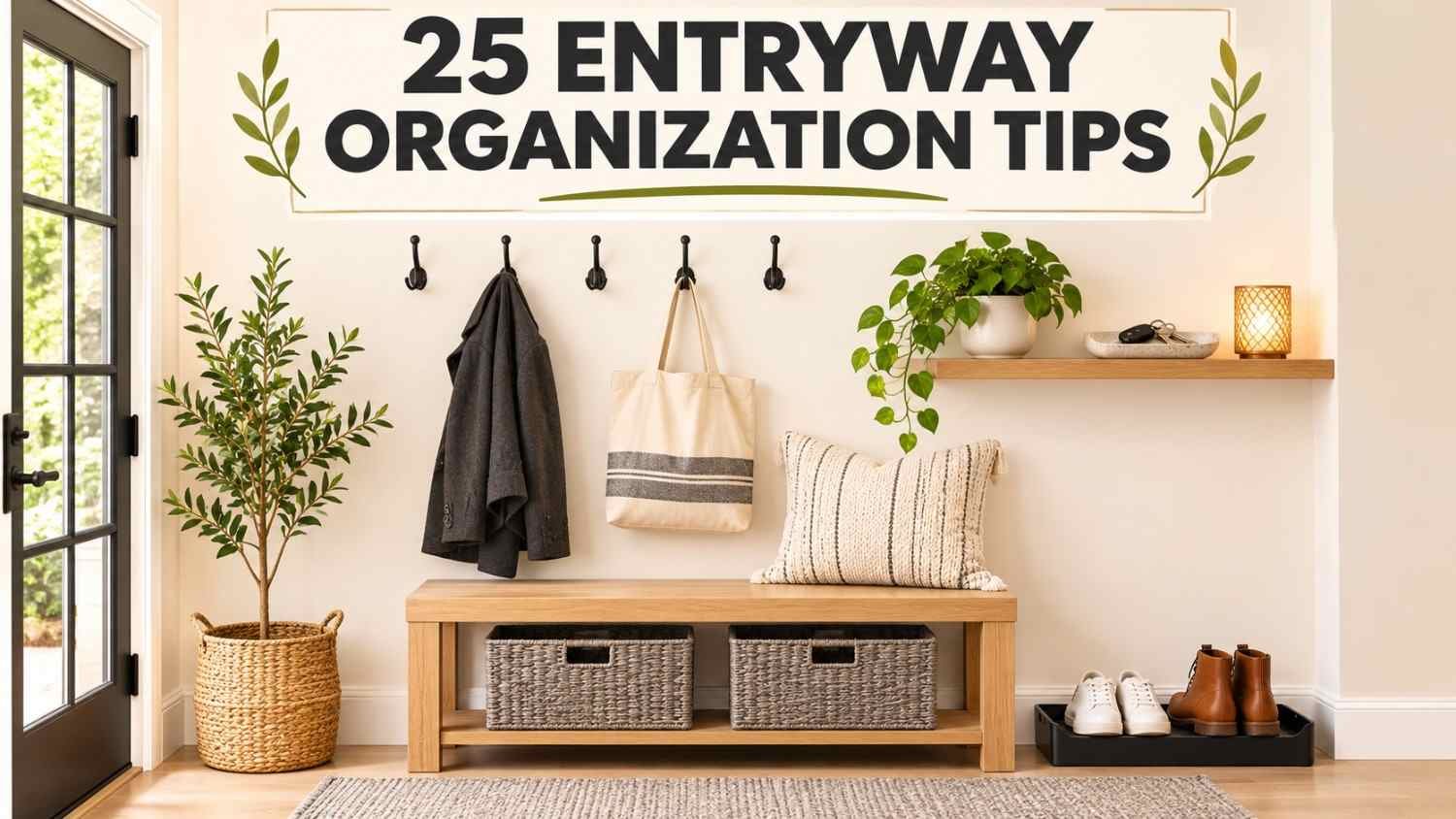
A tidy entryway sets the tone for the whole home. It is the first space guests see and the last space you pass before leaving. When it works, mornings feel calmer, and arrivals feel warmer. When it does not, shoes pile up, mail spreads, and coats land on the nearest chair. This guide shares 25 entryway organization tips you can start today, even on a small budget. You will see how a slim console, a peg rail, a flip-down shoe cabinet, and an over-the-door organizer each solve a different problem. We include real measurements, simple zones for hanging, sitting, dropping, and storing, and a five-minute weekly reset. Pick two or three ideas for this weekend. Then add more as you go. Soon, your entry will stay neat without constant effort, and everyone in the household will know exactly where things belong.
Plan Your Entryway Before You Buy Anything
A good system starts with observation. Spend a week noticing what lands in your entry zone, and you will save money and avoid clutter later. If you have little ones at home, explore these entryway organization ideas for kids to give every child a reachable hook and a labeled bin.
1. Audit What Actually Lands There

Empty the area and sort every item into three piles: daily use, seasonal, and belongs elsewhere. Most entryways hold far more than they need. Bills, toys, and old shoes often drift in and stay. Once you see the true list, you can choose storage that fits real habits instead of guesses.
2. Measure the Space Carefully
Write down the width, depth, and height of your wall, nook, or hallway. Include door swing space, because a door that cannot open fully makes any setup frustrating. Leave at least 36 inches of clear walking path where possible, which is a widely used guideline for comfortable passage. Measure twice before you order furniture.
3. Assign One Zone Per Task

Divide the area into simple zones: hang, sit, drop, and store. Each zone gets one job. Coats hang on hooks. Shoes go in a tray or cabinet. Mail goes in a tray. When every item has a clear home, family members stop guessing, and the space stays tidy longer.
4. Match Storage to Your Household
A single person needs less than a family of five. Count the coats, bags, and shoes your household uses every day. Then add a little room for guests. Pet owners should add space for leashes and towels. A tailored setup beats a trendy one every time.
Entryway Organization Tips for Small Spaces

Tight entries need clever thinking. Go vertical, choose slim furniture, and keep surfaces clear.
5. Choose a Slim Console Table
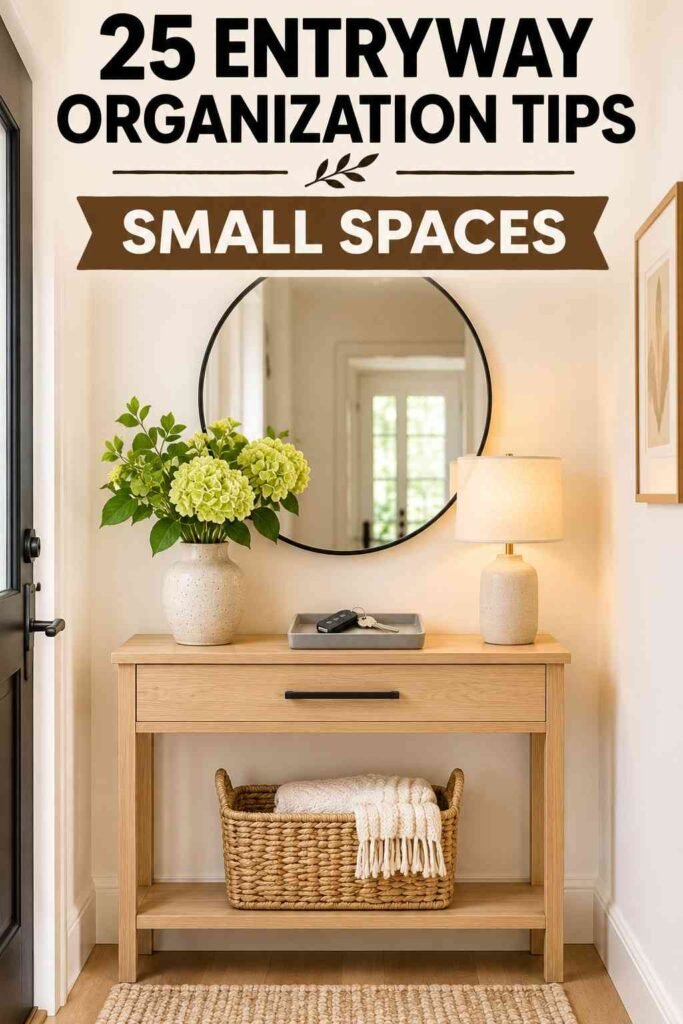
A narrow console, about 10 to 12 inches deep, gives you a landing spot without blocking the path. Look for one with a shelf or drawer below. Place a small tray on top for keys and sunglasses. The drawer hides smaller items, so the surface stays calm and open.
6. Use a Wall-Mounted Shelf With Hooks
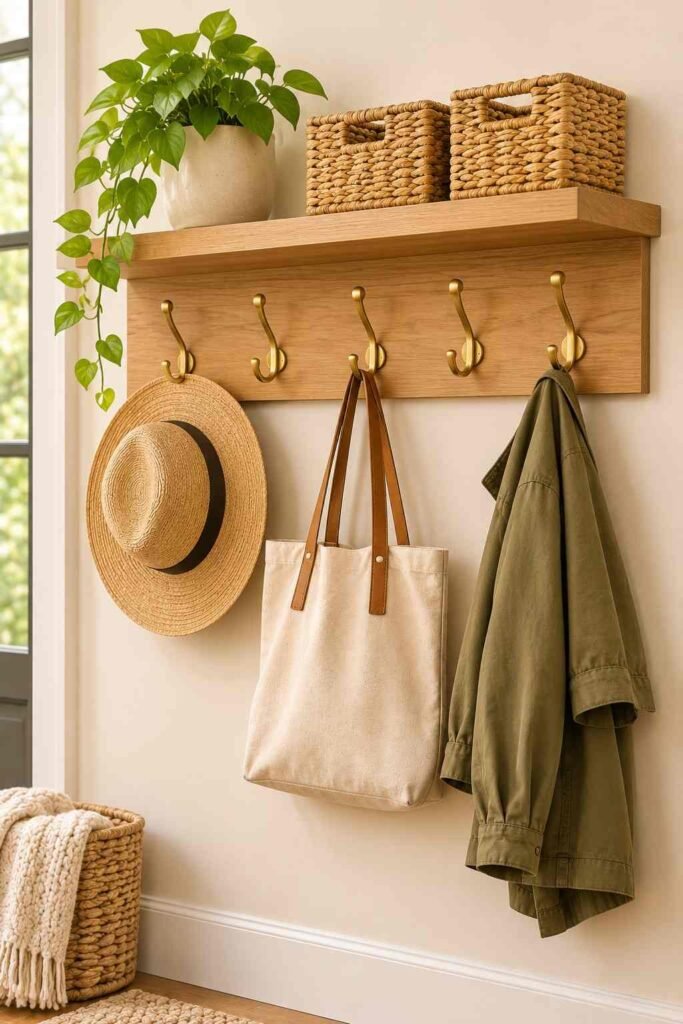
When floor space is tight, use the wall. A shelf with built-in hooks holds hats and bags below and decor or baskets above. It works well beside a door. Install it into wall studs or use proper anchors, especially if heavy winter coats will hang there.
7. Try a Corner Solution

Corners are often wasted. A tall, narrow cabinet, a corner bench, or a stacked set of shelves can turn dead space into storage. Choose pieces with closed doors if the corner is visible from the living area. Hidden storage keeps the room looking intentional.
8. Add a Mirror to Open the Space
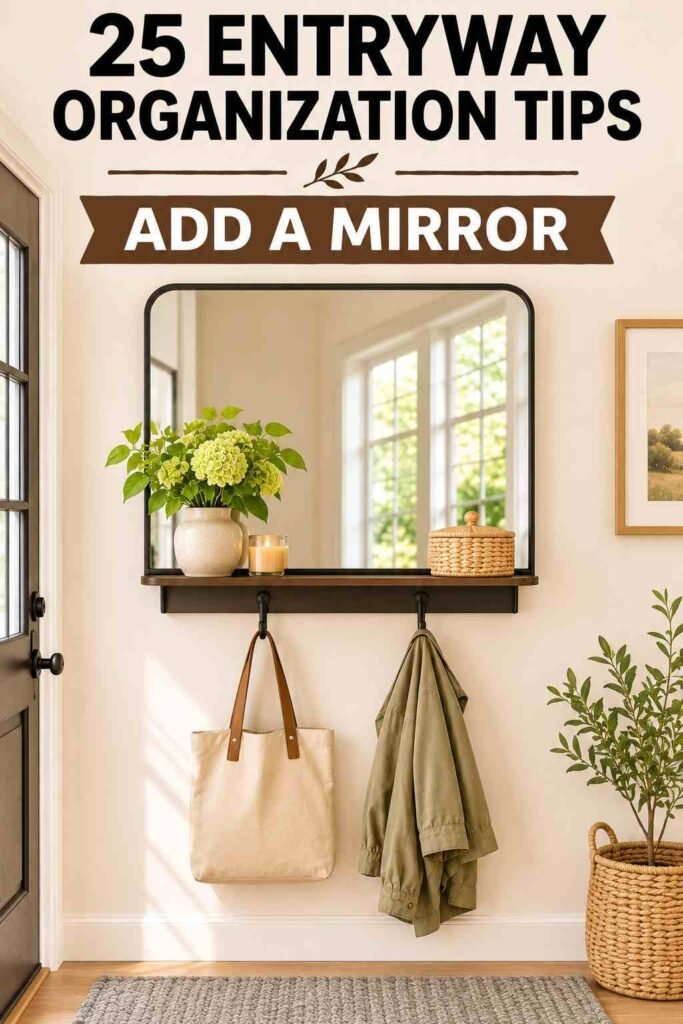
A large mirror bounces light and makes a small entry feel wider. It also gives everyone a last-second check before leaving. Hang it near the door at eye level. A mirror with a shelf or hooks attached does double duty and saves wall space.
9. Use the Back of the Door

The back of the entry door is free real estate. An over-the-door organizer can hold scarves, umbrellas, gloves, and dog leashes. Fabric pockets and metal racks both work. Check that the door still closes smoothly, and avoid overloading it.
Entryway organization tips: Wall, Door, and Vertical Storage Ideas
Walls give you storage without costing floor space. Think in layers: hooks, shelves, and rails.
10. Install Hooks at the Right Height

Hook height matters. For adults, around 60 to 66 inches from the floor suits most coats. For children, mount a lower row at roughly 40 to 48 inches, depending on their age, so they can hang items alone. Two rows at different heights make the wall useful for everyone.
11. Add a Peg Rail

A peg rail is a long board with evenly spaced pegs. It looks tidy, holds a lot, and suits many styles. Paint it to match your wall for a quiet look, or choose natural wood for warmth. Space pegs about 6 to 8 inches apart so bulky coats do not crowd each other.
12. Hang a Floating Shelf Above the Hooks

A shelf above the coat hooks can hold baskets, plants, or a small lamp. Use it for items you need less often, such as spare gloves or reusable bags. Keep it lightly styled. Too many objects will make the entry feel busy again.
13. Set Up a Key and Mail Station

Mount a small key rack and a slim letter holder near the door. Sort mail the moment it arrives: keep, shred, or recycle. Many households stop losing keys once they have one dedicated hook. This tiny station also prevents paper piles on kitchen counters.
14. Create a Family Command Center

Hang a small magnetic board or chalkboard for schedules, notes, and reminders. Add a calendar and a pen on a string. When everyone checks the same spot on the way out, missed appointments drop. It also gives the space a warm, lived-in personality.
Entryway organization tips: Floor, Seating, and Shoe Storage Solutions
Shoes cause the most entryway chaos. A few simple pieces can bring order fast.
15. Pick a Storage Bench

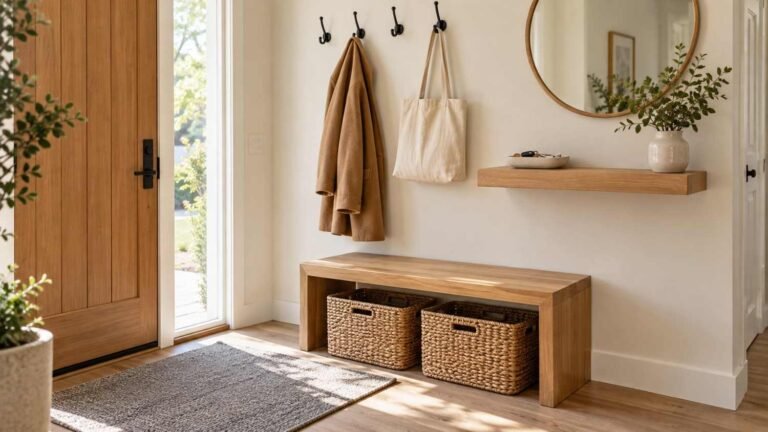
A bench lets you sit to put on shoes, and it hides bins or cubbies below. Choose one around 17 to 19 inches high, which is a comfortable seat height. Use baskets inside to separate each family member’s items. Label them so everyone knows where things go.
16. Use a Shoe Rack or Tray

Open racks are easy for daily shoes. A boot tray catches mud and snow. Limit the rack to what fits, perhaps one or two pairs per person. Extra pairs go to a closet or under-bed box. This one rule stops shoe piles from growing.
17. Try a Flip-Down Shoe Cabinet

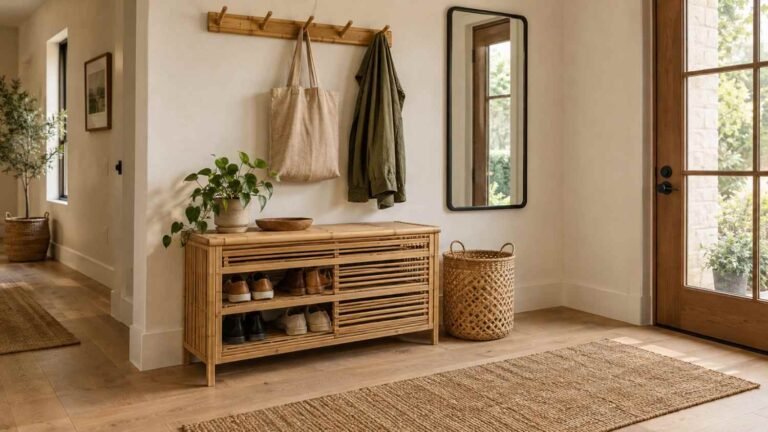
Slim cabinets with tilting drawers can hold many pairs in very little depth. They are ideal for narrow halls. Look for a model with vents, so damp shoes can dry. A flat top surface also works as a spot for a lamp or a bowl.
18. Lay Down a Durable Rug
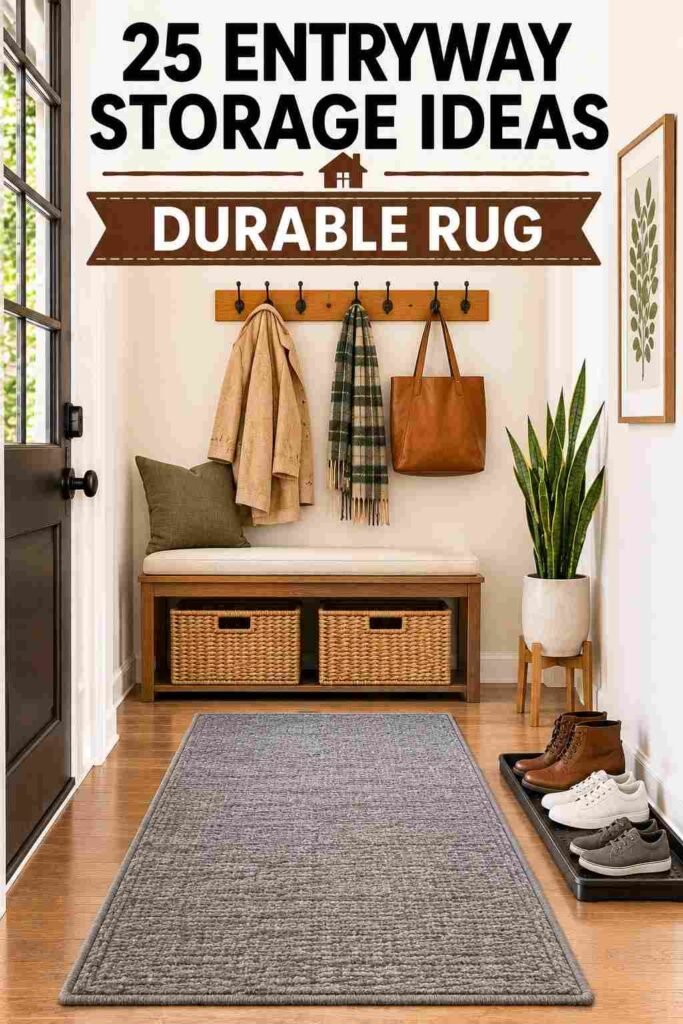
A washable, low-pile rug protects floors and traps grit. Choose materials made for high traffic, such as polypropylene or a tight-woven wool blend. Add a non-slip pad underneath for safety. Shake it out weekly, and wash or vacuum it on a steady schedule.
19. Add Baskets for Flexible Storage

Baskets are easy, affordable, and forgiving. Use woven ones for hats and scarves and sturdier bins for sports gear. Keep a few empty baskets for guests’ items. Pick a consistent color or material so the entry looks planned, not scattered.

Smart Systems and Daily Habits That Keep It Tidy
Even the best storage fails without simple routines. These habits keep your setup working. Fans of budget-friendly furniture will enjoy these stylish Kallax hacks for entryway organization, which turn a simple cube shelf into a bench or shoe station.
20. Build a Drop Zone

A drop zone is a clear spot where bags, keys, and mail land every time you walk in. It can be a shelf, a bench, or a single hook. The key is repetition. After a few weeks, putting things down in the same place becomes automatic.
21. Rotate Seasonal Items
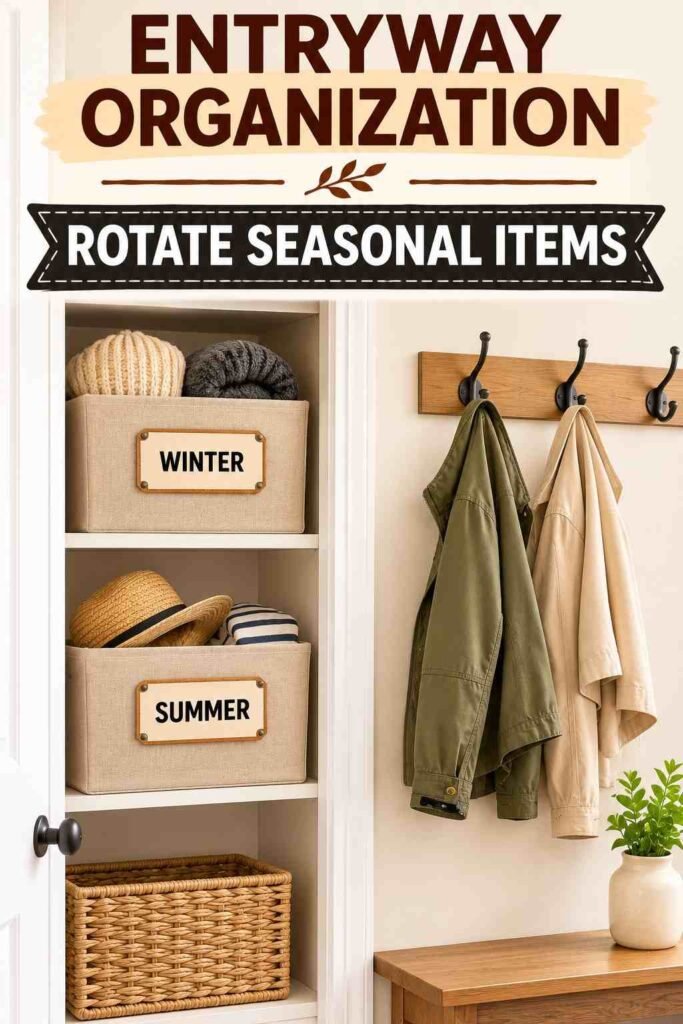
Store only current-season gear in the entry. Move heavy coats, boots, and umbrellas in and out as weather changes. Keep off-season items in labeled bins in a closet or attic. This single step can free up half your space.
22. Give Each Person a Cubby or Hook

Assign a personal spot to each family member. Use name labels, color codes, or simple icons for young children. Ownership builds responsibility. People are far more likely to keep their own space tidy than a shared pile.
23. Keep a Small Cleaning Kit Nearby
A mini broom, a lint roller, and a microfiber cloth stored in a basket make quick cleanups easy. Wipe the floor and bench once a week. A small amount of regular care stops dirt from spreading deeper into the house.
24. Add Light and a Touch of Style

Good lighting makes an entry feel safe and welcoming. A wall sconce or a small table lamp helps during dark evenings. Add one meaningful object, such as a plant or framed photo. Function comes first, but a little personality makes people want to keep the space neat.
25. Do a Five-Minute Weekly Reset

Choose one day each week to clear the space. Return stray items, shake out the rug, and empty the mail tray. Five minutes is enough when you do it regularly. This habit protects every other change you have made.
Conclusion
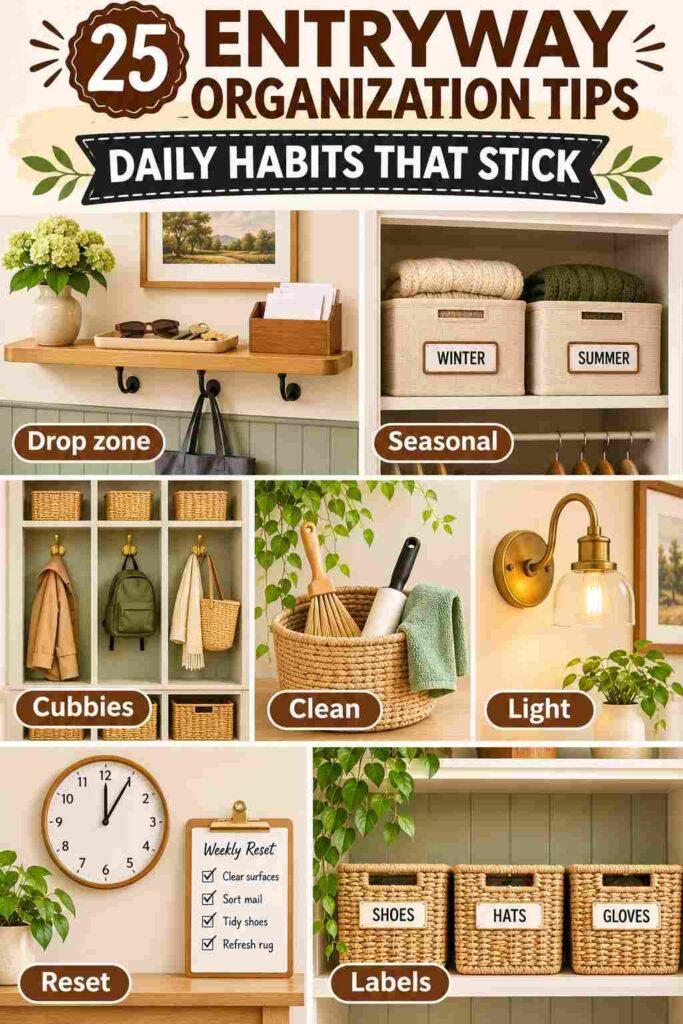
A tidy entry does not happen by accident. It comes from honest observation, smart storage, and small daily habits. Start by auditing what lands in your space, then add hooks, a bench, and a clear drop zone. Choose a few of these entryway organization tips to try this weekend, and build from there. Need a clear landing area? These entryway organization ideas and drop zone layouts show how to keep keys, bags, and mail in one place.
Every home is different, so adjust each idea to your own routines. Soon, mornings will feel calmer, and arrivals will feel warmer. Your entryway can become the easiest, most welcoming spot in the house. For more design inspiration, browse the home décor guides at outinteriors.