Inspiring 21 Upstairs Hallway Ideas to Brighten an Overlooked Space
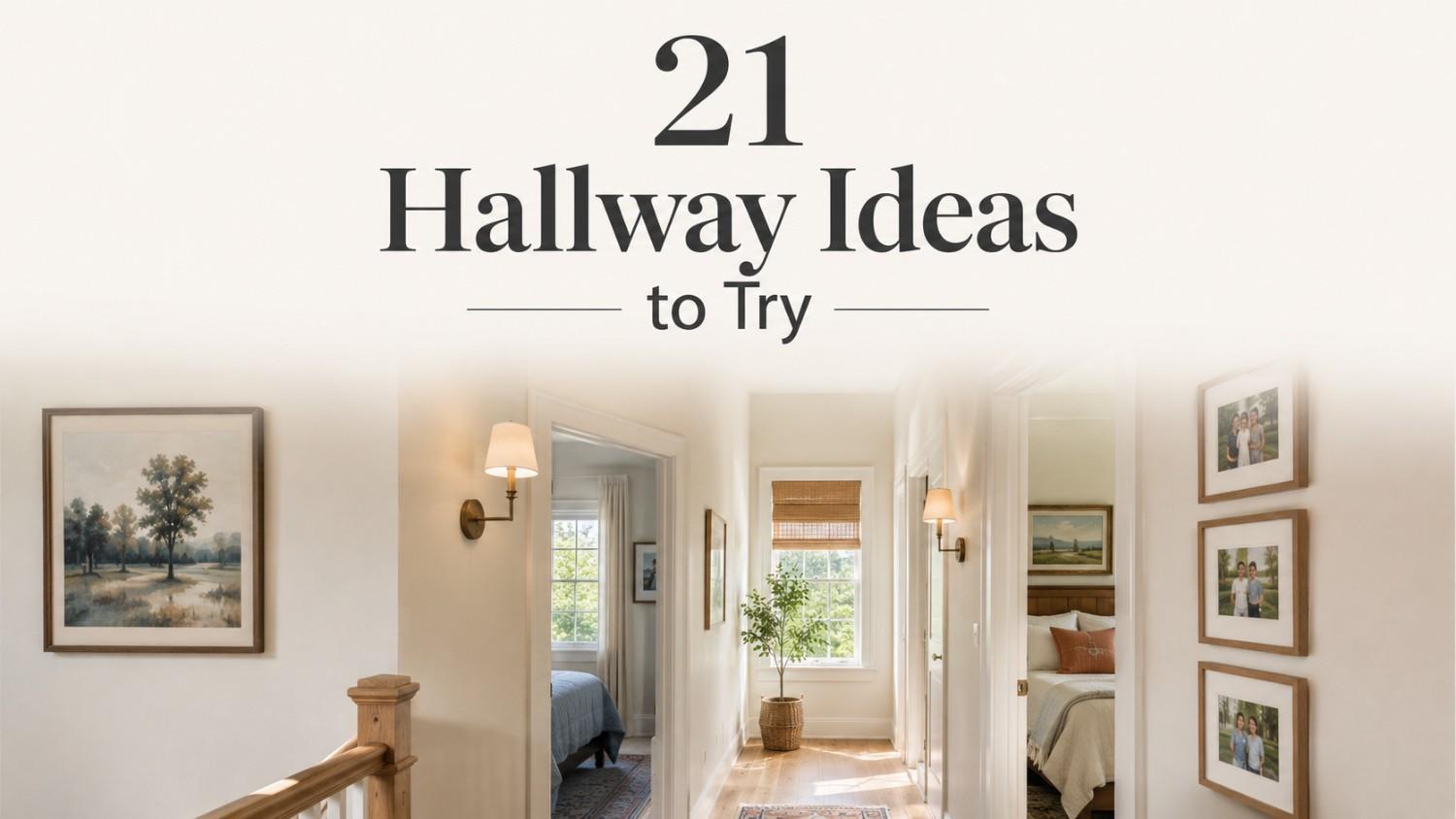
An upstairs hallway is easy to overlook because it is neither a bedroom nor a living room. Yet you pass through it every morning and walk along it before bed. The best inspiring upstairs hallway ideas turn that daily route into a thoughtful part of the home without restricting movement. A successful plan balances light, scale, storage, personality, and safety while connecting the staircase with nearby rooms. These options include weekend updates, renter-friendly changes, and larger projects for narrow corridors, square landings, and open second-floor galleries.
How to Choose Among 21 Inspiring Upstairs Hallway Ideas
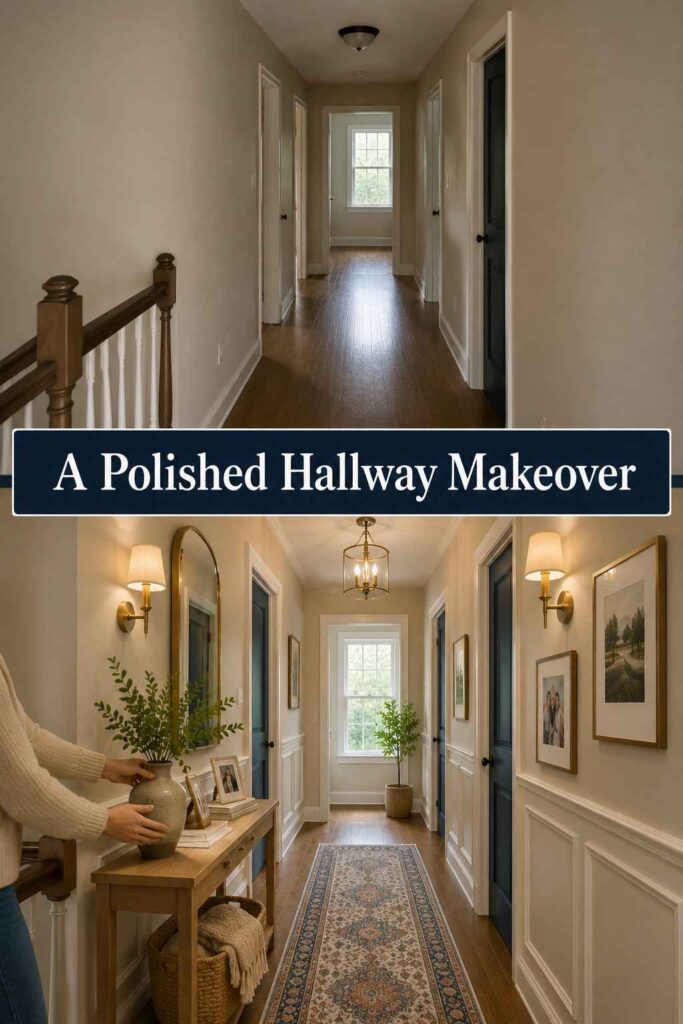
Measure the hallway at its narrowest point and note door swings, vents, windows, and the top stair. Then identify the main problem. A dark passage needs layered light. A blank landing may need art or architectural detail. A busy family hallway may benefit from closed storage and washable finishes. Keep the route clear where people turn, carry laundry, or enter bedrooms. These inspiring upstairs hallway ideas work best when function guides decoration. outinteriors can link the hallway with adjoining bedrooms and stairs.
Inspiring Upstairs Hallway Ideas to Try
1. Create a Personal Gallery Wall
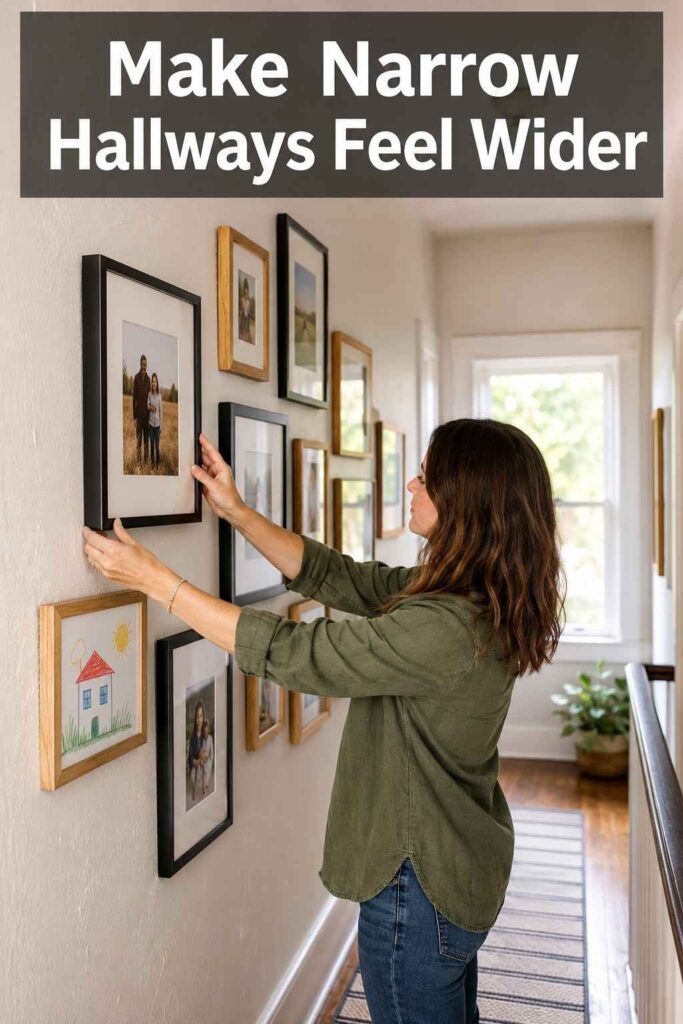
Use family photographs, children’s artwork, travel prints, or inherited sketches. Matching frames create order, while two related finishes feel collected. Lay the arrangement on the floor first and keep spacing even. In a narrow corridor, one horizontal row often looks calmer than a packed display.
2. Hang One Oversized Artwork
A large painting or photograph can be stronger than several small frames, especially on a long passage’s end wall. Choose a piece that repeats colors from nearby rooms. This is among the easiest 21 inspiring upstairs hallway ideas for creating a polished focal point without furniture or clutter.
3. Add a Properly Fitted Runner
A runner brings softness, color, and a clear visual path. Leave visible flooring around it so the rug appears intentionally sized. Flat-weave and low-pile styles usually allow doors to open freely. Use a suitable non-slip pad and replace curling rugs. The U.S. Consumer Product Safety Commission advises keeping walking surfaces clear and using non-skid rugs or mats.
4. Layer the Lighting
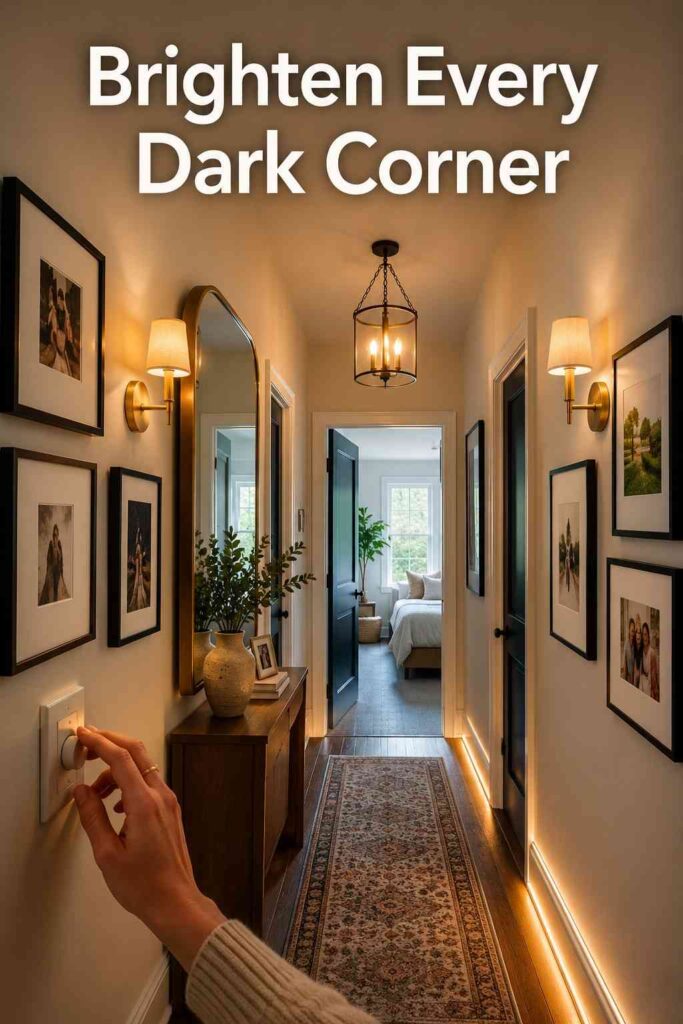
Combine a ceiling fixture with sconces, picture lights, or low-level night lighting instead of relying on one harsh source. Dimmers allow brighter daytime use and a softer evening glow. Dimmable LEDs are useful because they support flexible controls while using efficient lighting technology. Layered light also gives artwork and molding greater depth.
5. Position a Mirror to Reflect Light
Place a mirror where it can reflect a window, open doorway, or attractive fixture. A tall shape suits a narrow corridor, while a wider mirror works above a console on a large landing. Avoid confusing reflections near the top stair. Among 21 inspiring upstairs hallway ideas, this one combines decoration with everyday usefulness.
6. Paint the Ceiling
A soft blue, warm cream, muted blush, or deeper version of the wall color can make the passage feel finished. Use low contrast when the ceiling is low. A stronger shade can emphasize a tall or vaulted ceiling. This update adds character without using any floor space, making it useful in tight layouts.
7. Try Color Drenching
Paint walls, trim, doors, and sometimes the ceiling in the same or closely related colors. This reduces visual interruptions and can make a door-filled corridor feel more cohesive. Deep green, clay, navy, and warm taupe create an enveloping look. Test samples throughout the day and choose a washable finish for high-contact walls.
8. Install Wainscoting or Molding
Wainscoting can protect lower walls from scuffs, while picture-frame molding gives a plain corridor architectural rhythm. Relate panel widths to nearby doors for a balanced result. Painting trim and walls one color creates subtle depth. Contrasting trim produces a more traditional effect. This is one of the inspiring upstairs hallway ideas that adds lasting character.
9. Use Wallpaper Strategically
Wallpaper can work above paneling, on an end wall, or inside framed molding. Small repeating patterns suit narrow passages, while scenic murals need more viewing distance. Compare samples with the flooring and bedroom doors before ordering. If several doors already break up the walls, choose a quieter pattern with enough open space.
10. Add a Slim Console
A shallow console gives a broad landing a focal point and a place for a lamp, tray, or vase. Drawers can hide small items that travel between bedrooms. Check the depth carefully so it does not affect door swings or circulation. In a narrow corridor, use a wall-mounted ledge instead of floor-standing furniture.
11. Build Closed Storage Into an Alcove
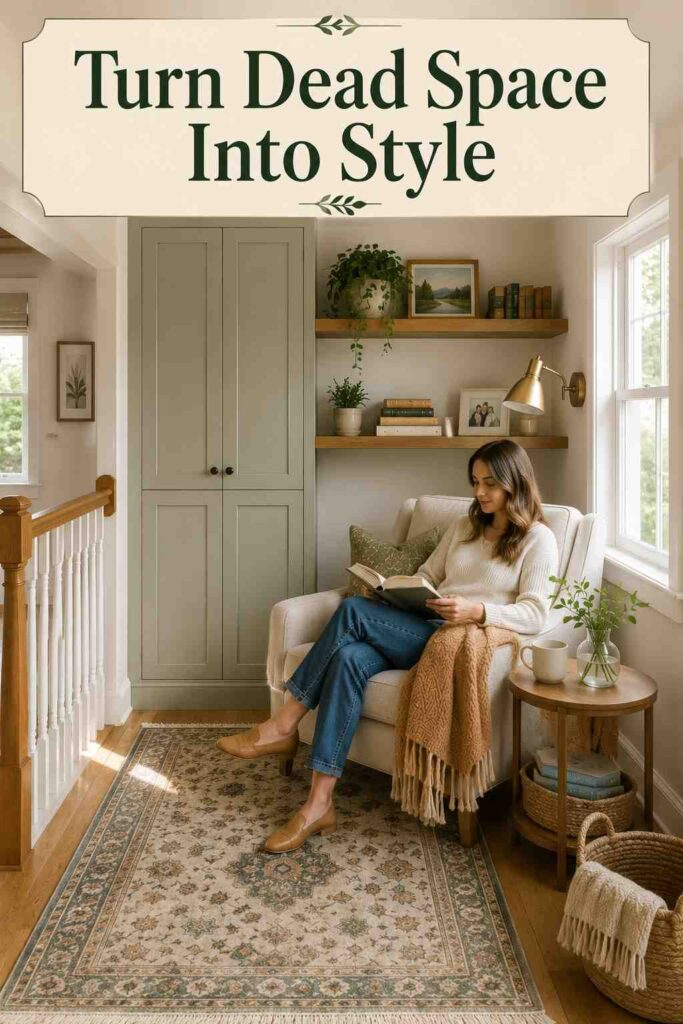
Turn an unused recess into a linen cabinet or household storage station. Full-height doors painted like the walls help the unit feel built-in rather than bulky. Adjustable shelves can hold bedding, towels, or seasonal items. Of the inspiring upstairs hallway ideas, this one requires more planning but solves a genuine problem while reducing clutter.
12. Create a Reading Nook
A wide landing with natural light may support a compact chair, wall lamp, and small table. Keep every piece outside the route between the staircase and bedrooms. A shallow book ledge can hold current reads without the depth of a bookcase. Choose seating that will not become a permanent laundry drop.
13. Install a Picture Ledge
A picture ledge lets you rotate photographs, postcards, and art without making new holes. Use one long ledge for a clean line or two shorter ledges for an informal arrangement. Keep objects shallow and secure. This flexible treatment belongs among 21 inspiring upstairs hallway ideas because it can evolve with seasons and family milestones.
14. Highlight the End Wall
The wall seen from the staircase is a natural focal point. Paint it a deeper shade, add a mural, hang a textile, or display one sculptural piece. Repeat a small amount of the same color in the runner or nearby art. If the wall contains a door, painting the door and trim together creates unity.
15. Introduce Warm Wood Tones
Wood adds warmth and natural variation without a strong pattern. Try oak picture ledges, walnut frames, a vintage bench, or simple ceiling beams where suitable. Two related wood tones can feel relaxed and collected. When the floor already provides plenty of timber, repeat wood sparingly in frames or hardware instead of covering every surface.
16. Display Textiles as Art
Framed fabric, woven baskets, quilts, or a narrow tapestry can soften hard walls and floors. Choose pieces that sit close to the wall and secure them properly. Avoid loose fringe near handles or stairs. A handmade textile gives the hallway history and personality without requiring shelves filled with small decorative objects.
17. Make Bedroom Doors Part of the Scheme
Doors occupy much of an upstairs corridor, so include them in the design. Paint them a soft contrasting color, match them to the walls, or update mismatched knobs with one hardware finish. In older homes, restoring original wood doors may be the strongest choice. These inspiring upstairs hallway ideas should work with existing architecture, not ignore it.
18. Add Plants Where Light Allows
A bright landing can support a floor plant, a trailing plant on a secure shelf, or a small group near a window. Choose varieties according to the actual light and your care routine. Keep leaves away from doors and walking areas. In a dark corridor, botanical art or dried branches provide a natural note with less maintenance.
19. Create a Family Command Point
A compact calendar, covered pinboard, and concealed charging drawer can organize upstairs routines. Place the station near bedrooms but away from the stair opening. Limit the board to current schedules so it remains useful rather than becoming visual clutter. Hide cords and chargers to maintain a quiet atmosphere, particularly near sleeping areas.
20. Add Motion-Sensitive Night Lighting
Soft, low-level lighting helps people move between bedrooms and bathrooms without switching on a bright overhead fixture. Consider plug-in night-lights, baseboard illumination, or discreet motion-sensitive wall lights. Keep the route free of baskets, cords, and toys. The CPSC recommends well-lit stairs and clutter-free walking surfaces to reduce fall risks.
21. Style One Seasonal Display
Use one ledge, console, or end wall for seasonal changes. Red christmas living room ideas can inspire red ribbon, framed art, or berry branches that connect both floors. Borrow one motif from spooky halloween outdoor ideas, such as silhouette art, for fall.
Keep Essential Safety Features Visible
Decoration should never block vents, rails, alarms, or an escape route. Review fire and carbon-monoxide protection near sleeping rooms. The U.S. Fire Administration recommends smoke alarms inside and outside sleeping areas and on every level; it also advises carbon-monoxide alarms outside sleeping areas and on every level. Follow product instructions and local requirements.
Conclusion
The best hallway does not need every trend. It should support movement, connect nearby rooms, and give the upper floor a clear identity. Start with one problem—poor light, blank walls, clutter, or unused space—and choose two or three improvements that solve it. A runner and layered lighting may suit a narrow passage, while a generous landing may support seating or built-in storage. Adapt these inspiring upstairs hallway ideas to your measurements, architecture, and routines to create a space that feels complete.
Frequently Asked Questions
What color makes an upstairs hallway look larger?
Soft whites, warm neutrals, and muted colors can feel airy when trim and doors have limited contrast. Dark shades can also work with good lighting and an uncluttered layout.
How can I decorate a very narrow upstairs hallway?
Keep the floor clear and use art, mirrors, molding, shallow ledges, or sconces. Choose one strong feature and avoid furniture that interrupts doors or circulation.
Should the upstairs hallway match the downstairs hallway?
They need not be identical. Repeat one element—such as a paint undertone, frame finish, flooring material, runner color, or lighting style—to create continuity.
What type of rug works best in an upstairs corridor?
Choose a low-pile or flat-weave runner with a non-slip pad. Ensure doors open freely, corners stay flat, and damaged rugs are replaced promptly.
How can I brighten a dark upstairs landing?
Layer ceiling light with sconces, picture lights, or low-level illumination. Add a well-positioned mirror and reduce clutter so heavy shadows do not crowd the space.
Can I place furniture at the top of the stairs?
Furniture can work on a generous landing, but it must not crowd the top step, block rails, interfere with doors, or narrow the route.
What is the easiest low-cost update?
Paint often creates the fastest visible change. Other affordable options include adding a mirror, updating a fixture, or arranging existing photographs in matching frames.