Indoor Sunroom Furniture Ideas to Transform Your Sunlit Space in 2026
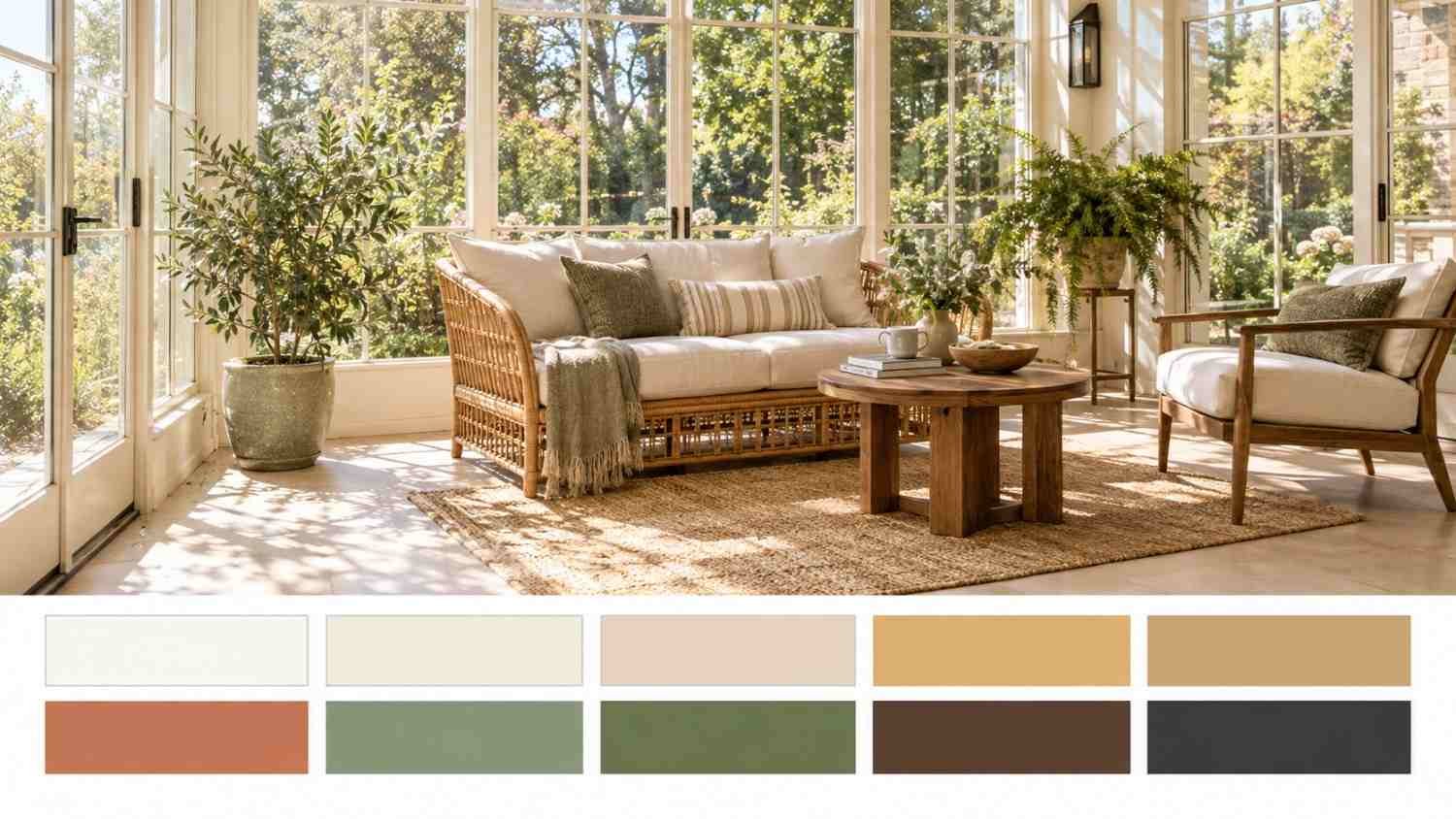
A sunroom is one of the few rooms in a house that changes personality by the hour. Morning light turns it into a quiet reading nook, afternoon sun makes it a gathering spot, and evening shadows can make it feel like a cozy retreat. But none of that works without the right pieces. Choosing indoor sunroom furniture is different from furnishing any other room in your home, because it has to handle heat, glare, and humidity while still looking like it belongs indoors.
This guide walks through 26 indoor sunroom furniture ideas organized by material, seating style, space size, design style, and finishing details. Along the way, you’ll find practical notes on durability, upkeep, and budget that most furniture guides skip entirely.
Why Indoor Sunroom Furniture Needs Special Consideration
A sunroom sits in a strange middle ground between your living room and your patio. It gets more direct sunlight than a standard indoor space, which means fabrics fade faster, wood can dry out, and metal frames may heat up in summer. At the same time, it’s usually attached to the house and expected to feel finished, not like an afterthought porch. That’s why indoor sunroom furniture typically borrows durability tricks from outdoor pieces — UV-resistant fabric, moisture-tolerant wood, rust-proof hardware — while keeping the comfort and finish of indoor design. Getting this balance right is the foundation for every idea below.
Best Materials for Indoor Sunroom Furniture
Material choice matters more in a sunroom than almost anywhere else in the house. The wrong fabric or finish can look worn out within a single summer.
1. Wicker and Rattan Furniture
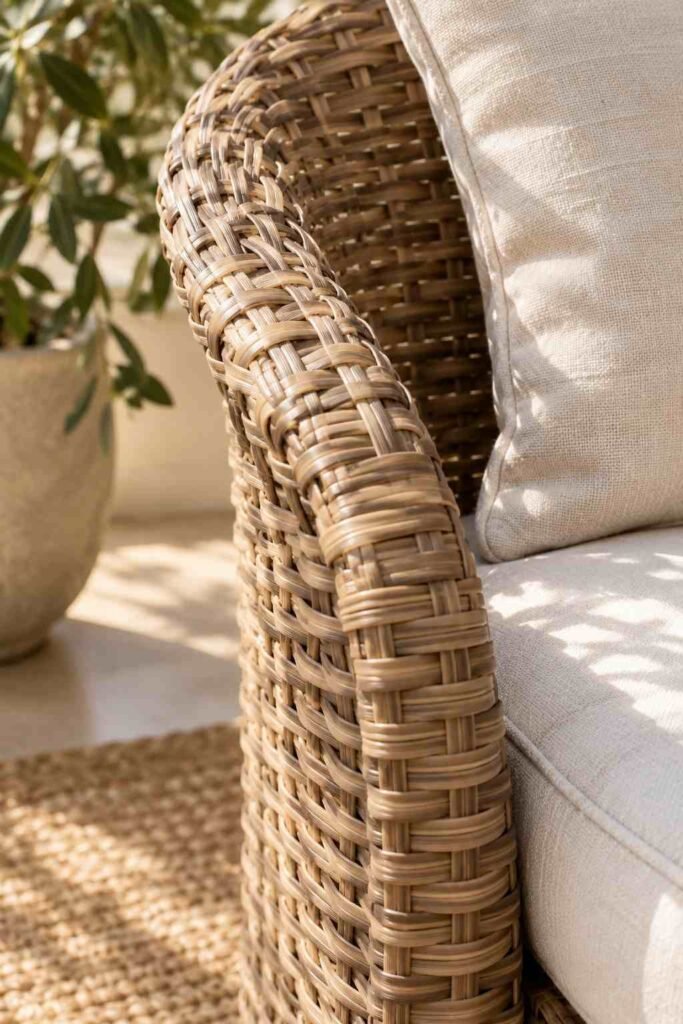
Natural wicker and synthetic rattan are lightweight, breathable, and visually soft, which suits the airy feel of a glass-walled room. Synthetic versions resist moisture better than natural fiber and are a safer long-term choice for high-humidity rooms.
2. Teak Wood Furniture
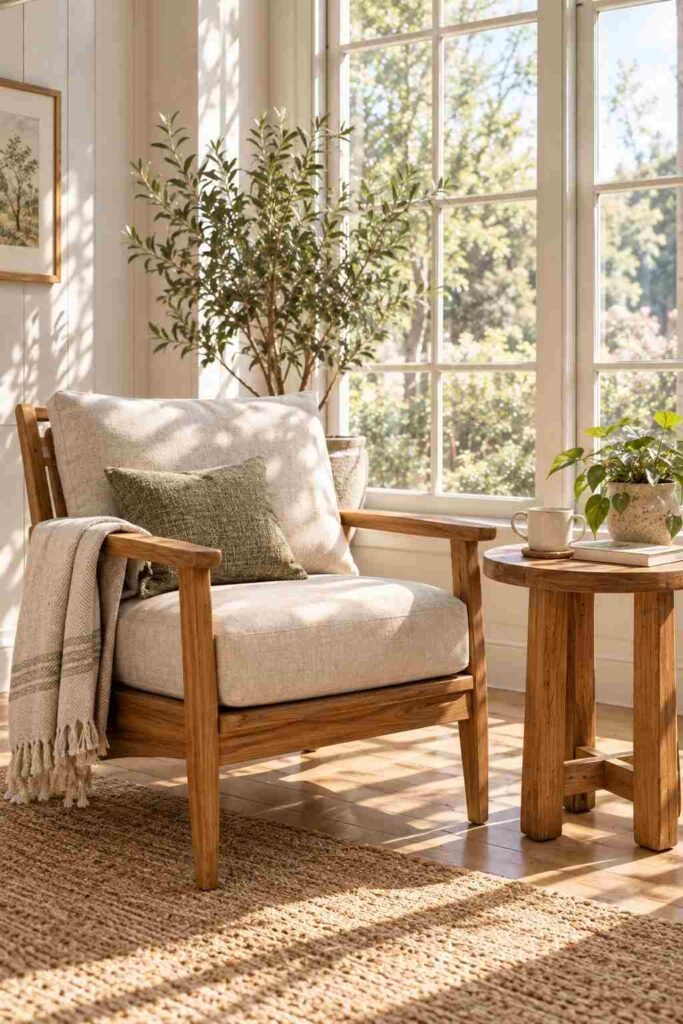
Teak contains natural oils that resist rot, pests, and warping, making it one of the most durable hardwoods for sun-exposed rooms. It also develops an attractive silver-gray patina over time if left untreated, or can be oiled yearly to keep its warm honey tone.
3. Powder-Coated Aluminum Pieces
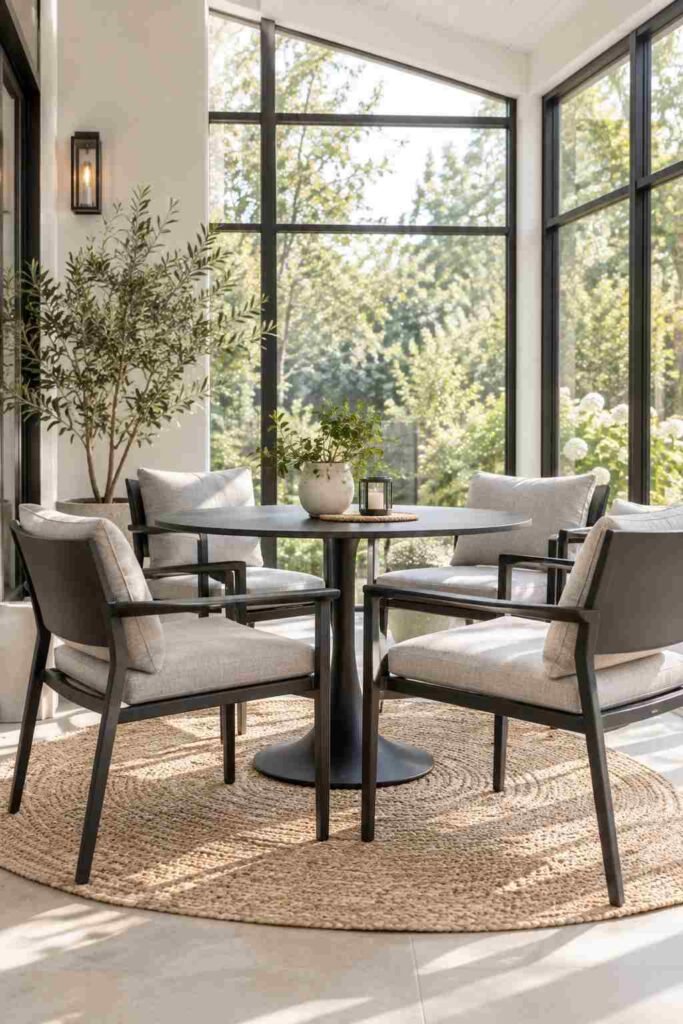
Aluminum frames finished with a powder coating resist rust and hold up well against temperature swings between day and night. They’re a strong option for anyone who wants a modern, low-maintenance look without the weight of wood.
4. Solution-Dyed Acrylic Cushions
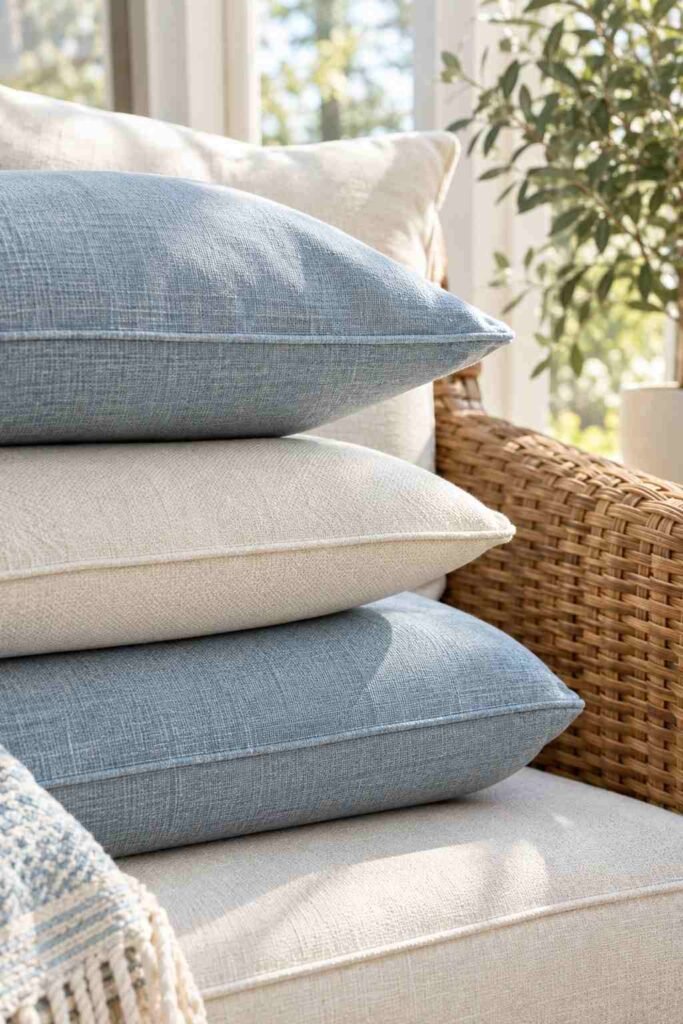
Instead of dyeing fabric on the surface, solution-dyed acrylic locks color into the fiber itself, which means cushions resist fading even under strong, direct sunlight for years.
5. Glass-Top Tables
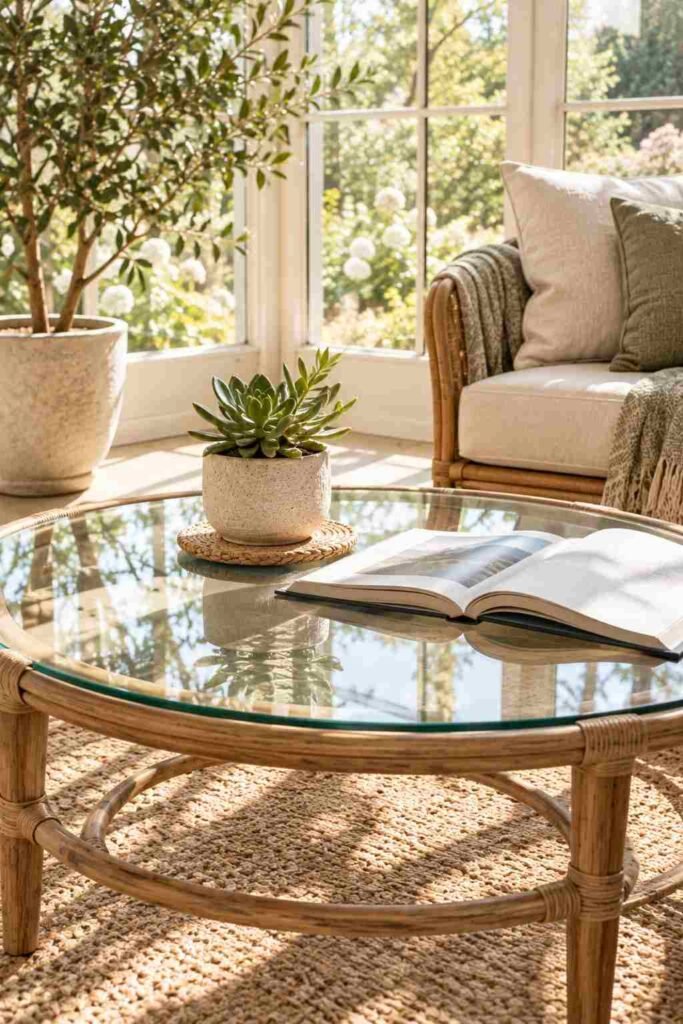
Glass tabletops don’t fade or warp, and they let light travel through the room rather than blocking it, which keeps a small or narrow sunroom feeling open.
6. Weather-Resistant Storage Benches
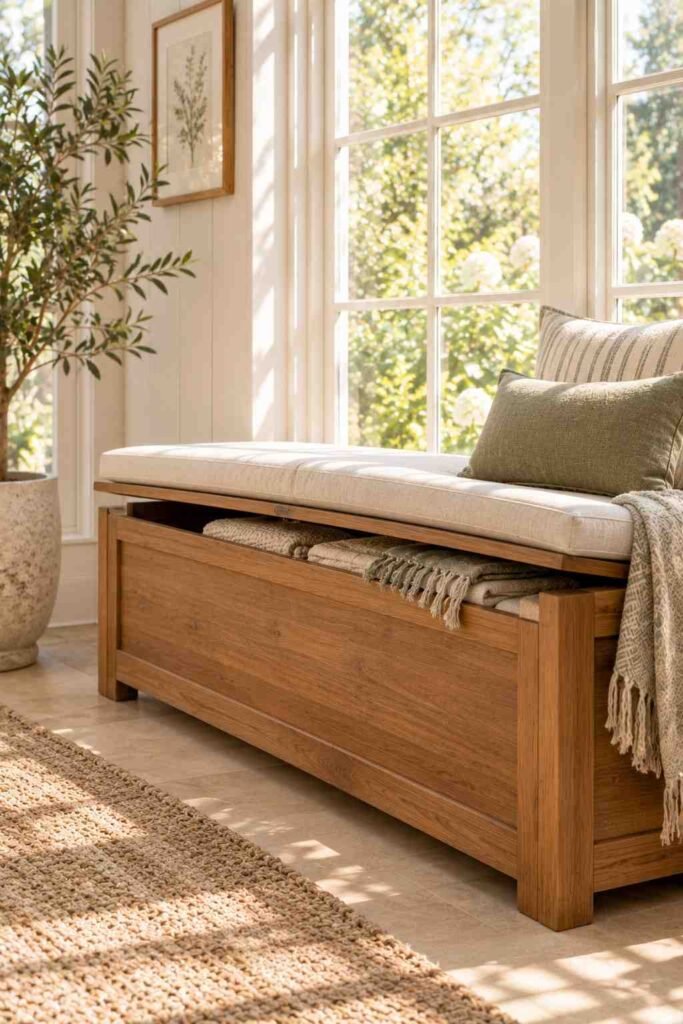
A storage bench with a sealed or powder-coated finish gives you seating and hidden storage for blankets, cushions, or gardening tools without introducing a material that struggles in sunlight.
Seating Ideas for Every Sunroom Layout
Seating is the heart of any sunroom, and the right combination depends on how you actually plan to use the space — reading alone, hosting guests, or both.
7. A Sectional Sofa
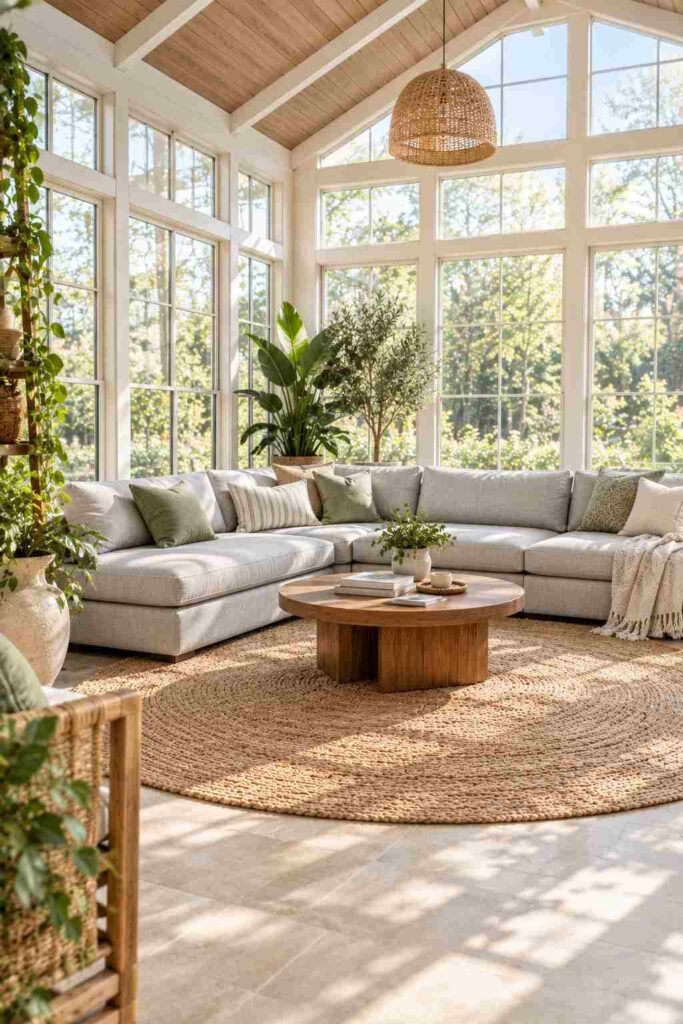
For larger sunrooms, a low-profile sectional creates a defined lounge area without crowding the windows. Choose one with removable, washable cushion covers since sun exposure means more frequent cleaning.
8. A Chaise Lounge
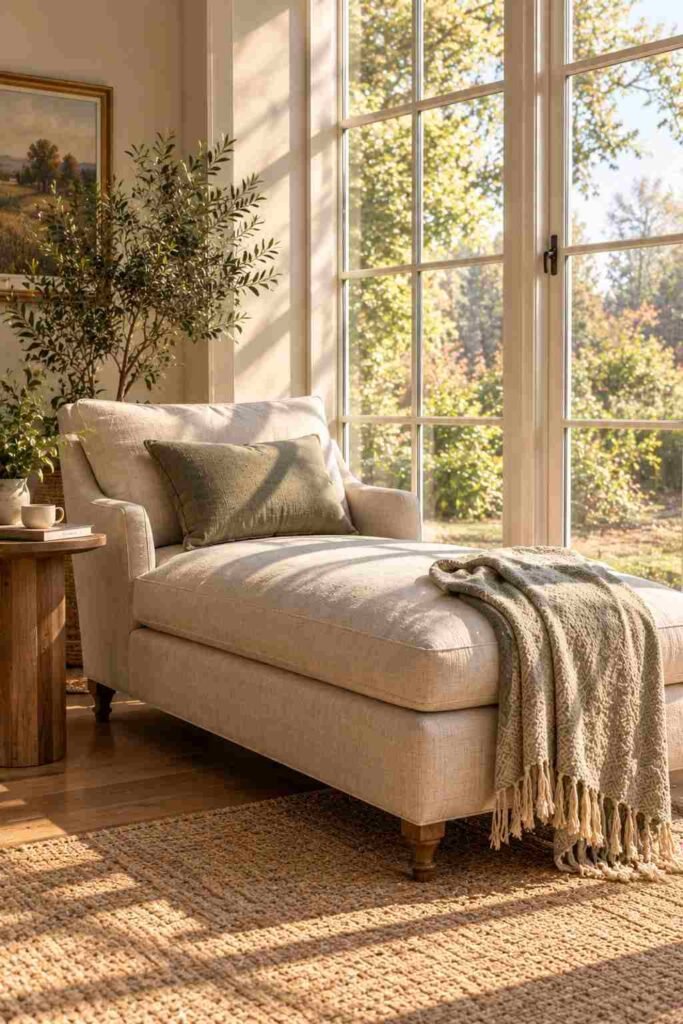
A single chaise near a window turns unused corner space into a dedicated spot for napping or reading, and it works well in rooms too small for a full sofa.
9. Swivel Accent Chairs
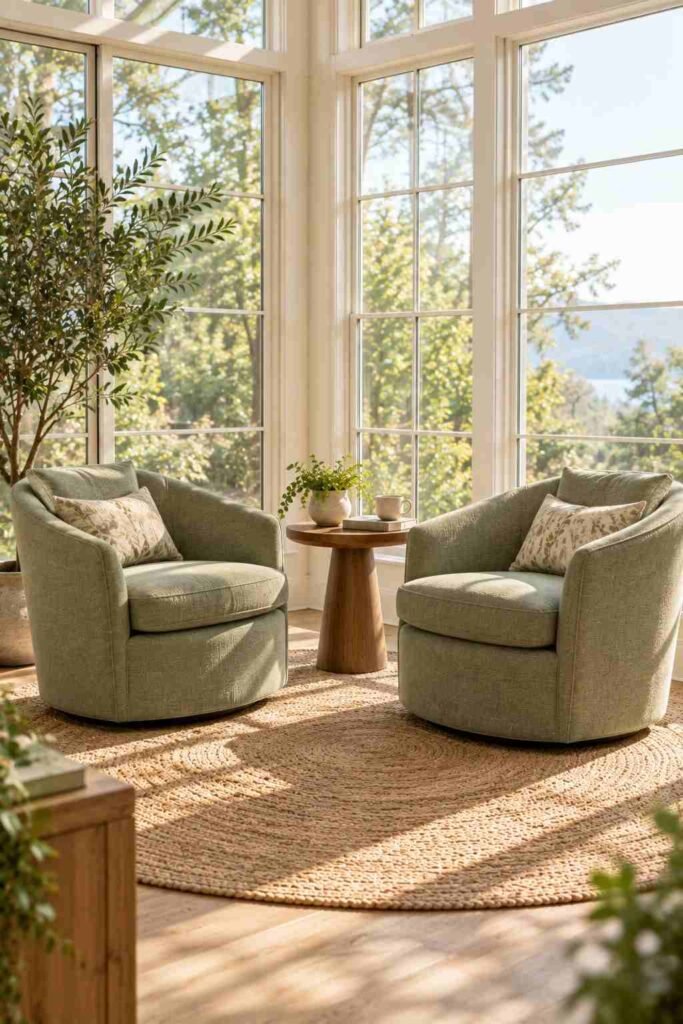
Swivel chairs let guests turn to follow the view or the conversation, which is especially useful in a room with windows on more than one side.
10. A Loveseat With Matching Armchairs
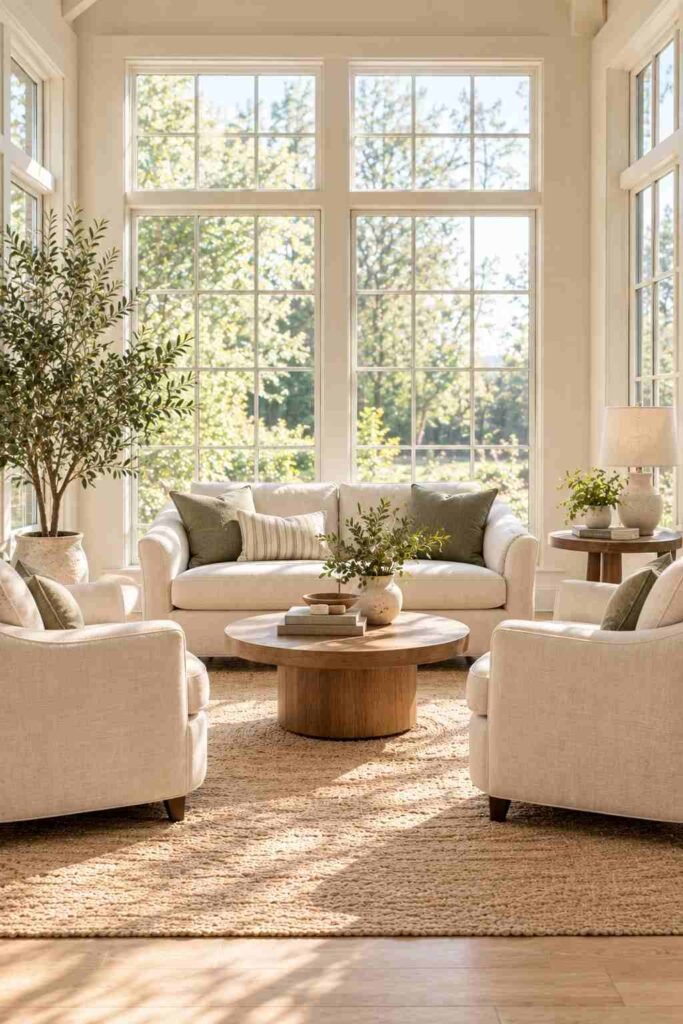
This classic combination anchors a mid-sized sunroom and works for both quiet afternoons and small gatherings, especially when paired with a round coffee table.
11. A Hanging Egg or Swing Chair
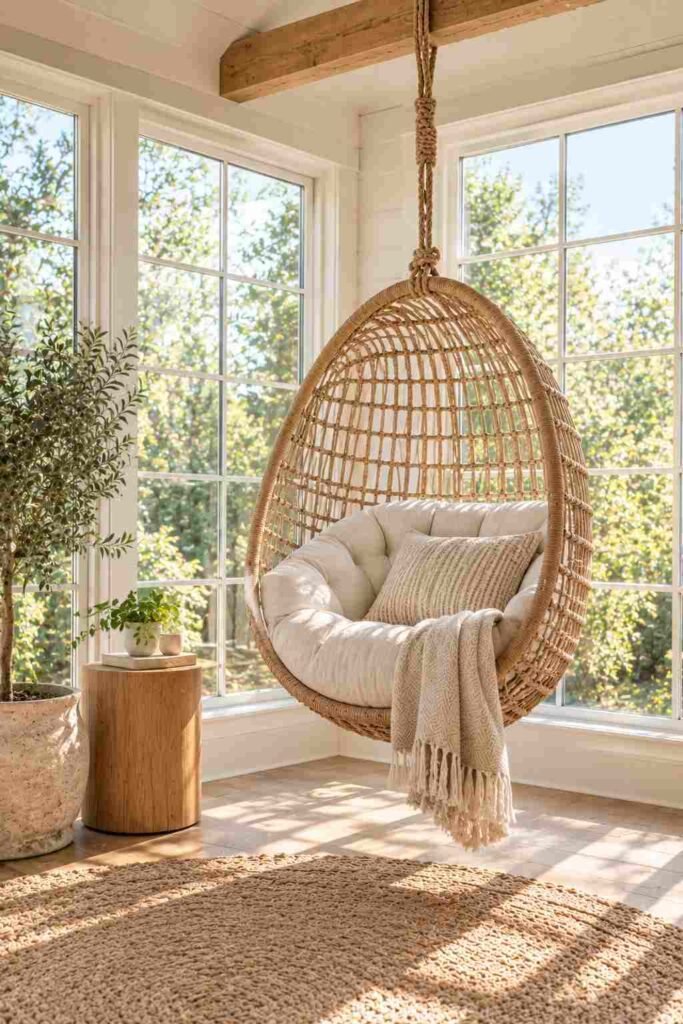
A hanging chair adds a playful focal point and works particularly well in sunrooms with exposed beams strong enough to support the mounting hardware.
12. Floor Poufs and Bean Bags
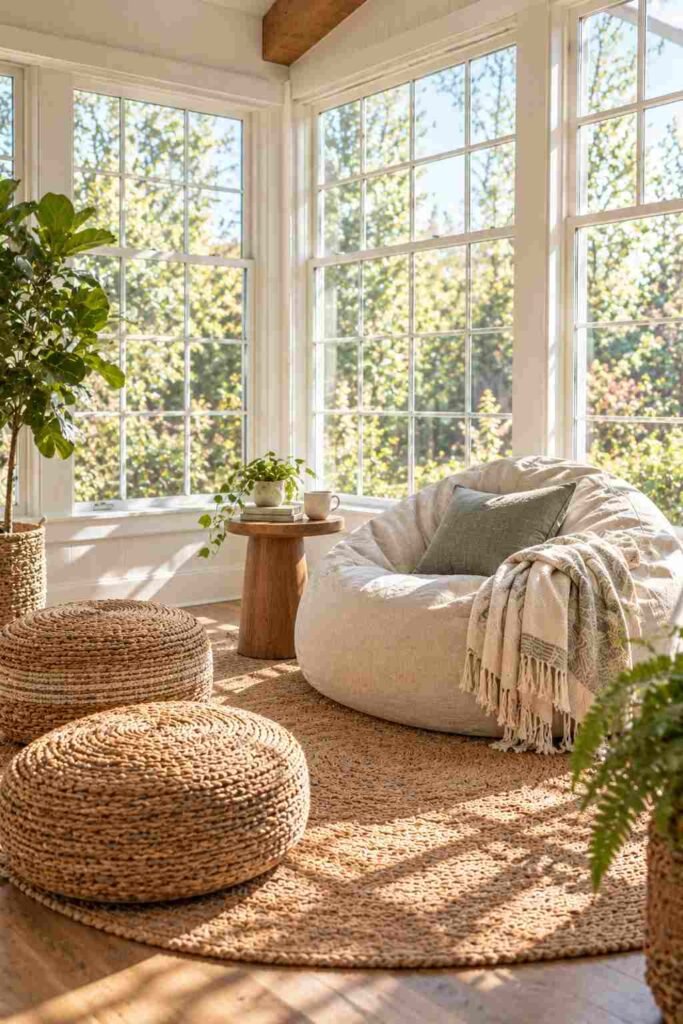
For small sunrooms, floor poufs or bean bags add flexible seating that can be tucked away or rearranged without the bulk of traditional furniture.
13. A Bar Cart or Beverage Console
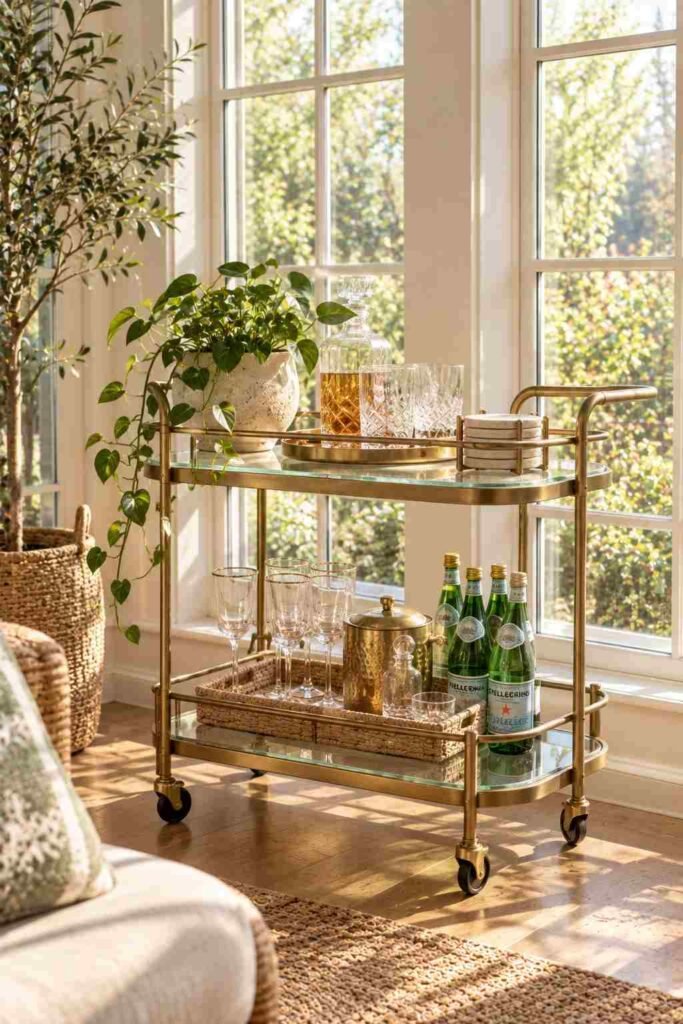
A rolling bar cart doubles as a serving station during gatherings and a display shelf the rest of the time, making it one of the more flexible indoor sunroom furniture picks on this list.
Small and Narrow Sunroom Furniture Ideas
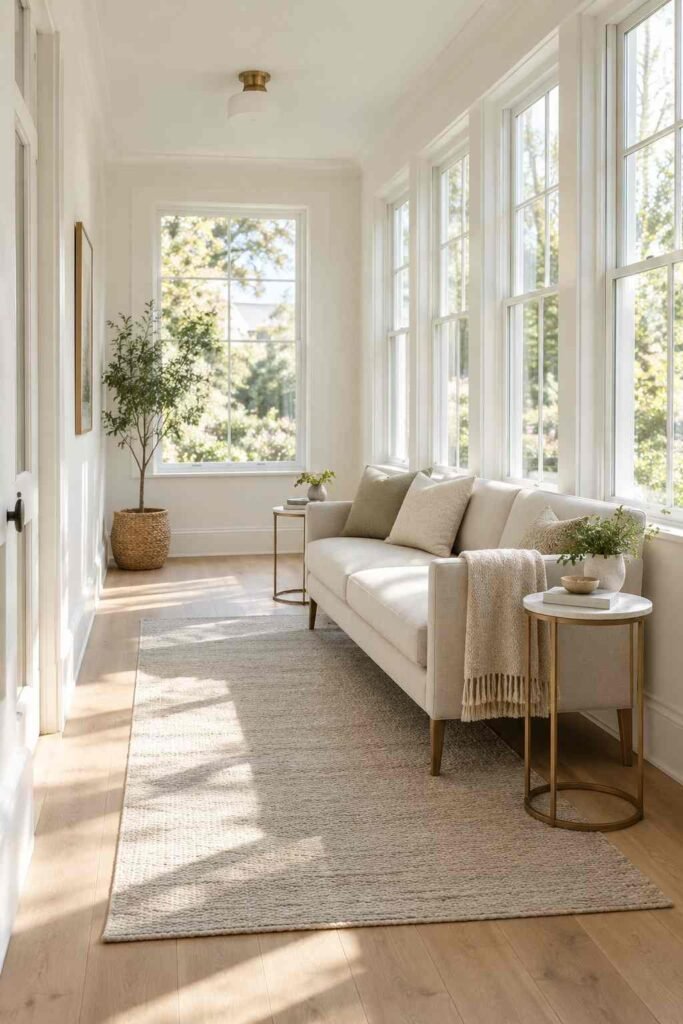
Not every sunroom is spacious, and narrow or oddly shaped rooms need furniture that earns its footprint.
14. Nesting Side Tables
Nesting tables separate for extra surface space when needed and tuck together the rest of the time, which is ideal for rooms too tight for a full coffee table setup.
15. Foldable or Stackable Chairs
Foldable chairs let a small sunroom flex between everyday use and occasional entertaining without permanently committing floor space to extra seating.
16. Corner Banquette Seating
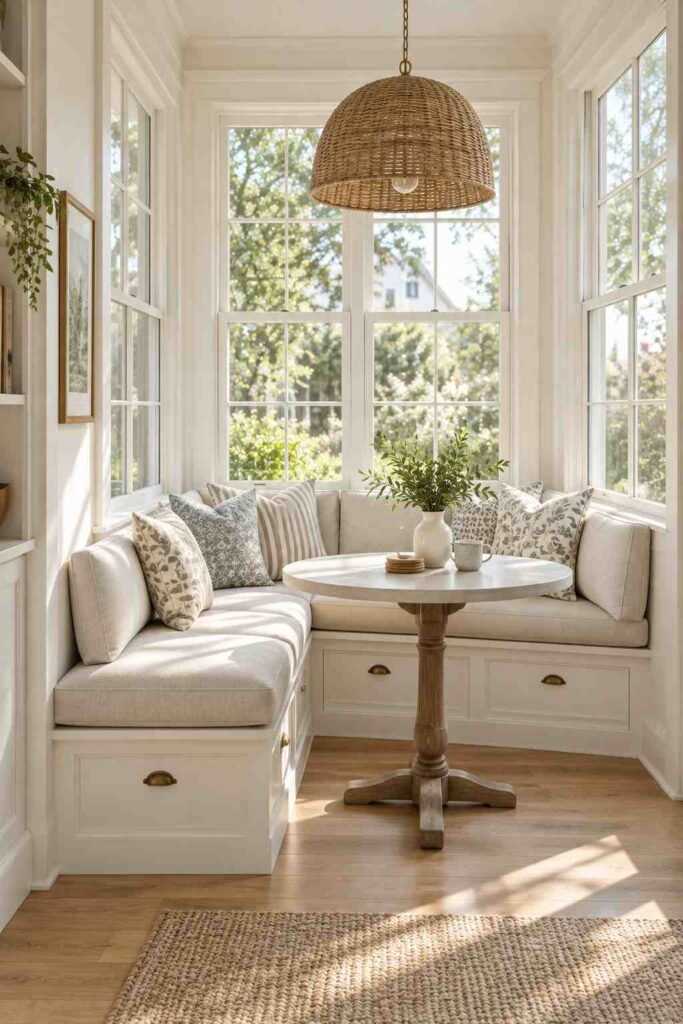
Built-in or freestanding banquette seating uses corner space efficiently and can include storage underneath, which is especially useful in narrow sunrooms where walkways need to stay clear.
17. A Multi-Functional Storage Ottoman
An ottoman that opens for storage works as a footrest, extra seat, or side table, giving small spaces three functions from one piece of furniture.
Style-Specific Indoor Sunroom Furniture Ideas
Once the basics are covered, style is what makes a sunroom feel intentional rather than accidental.
18. Boho-Inspired Pieces
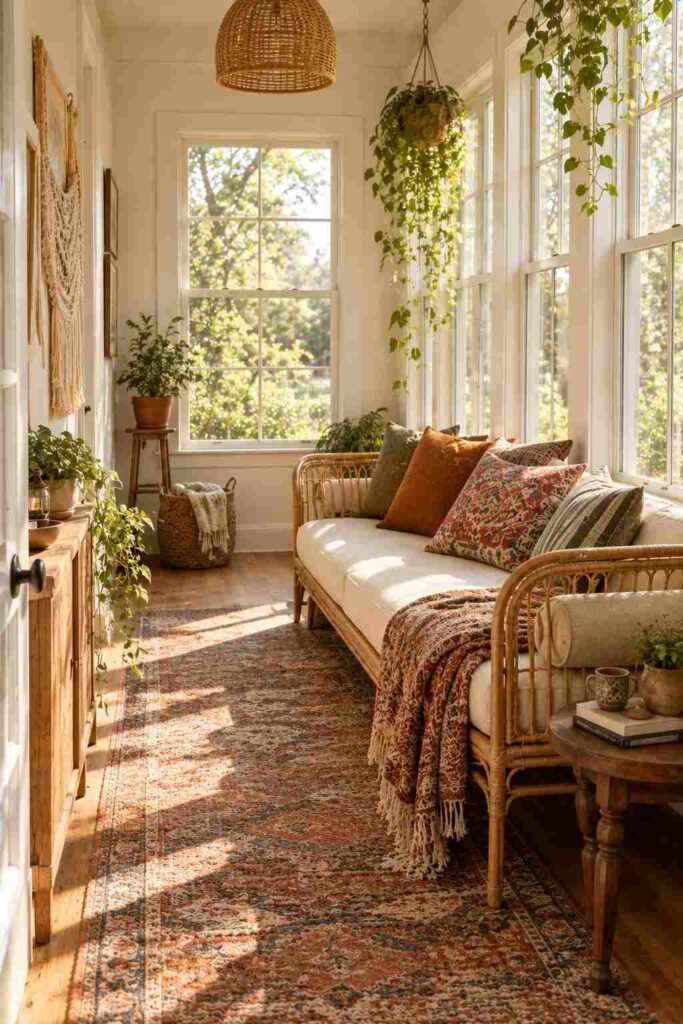
Layered textiles, macrame accents, and mixed wood tones create a relaxed, collected look. For a deeper dive into this direction, this Boho sunroom ideas vintage guide breaks down how to combine vintage rattan pieces with modern textiles without the room feeling cluttered.
19. Coastal and Farmhouse Furniture
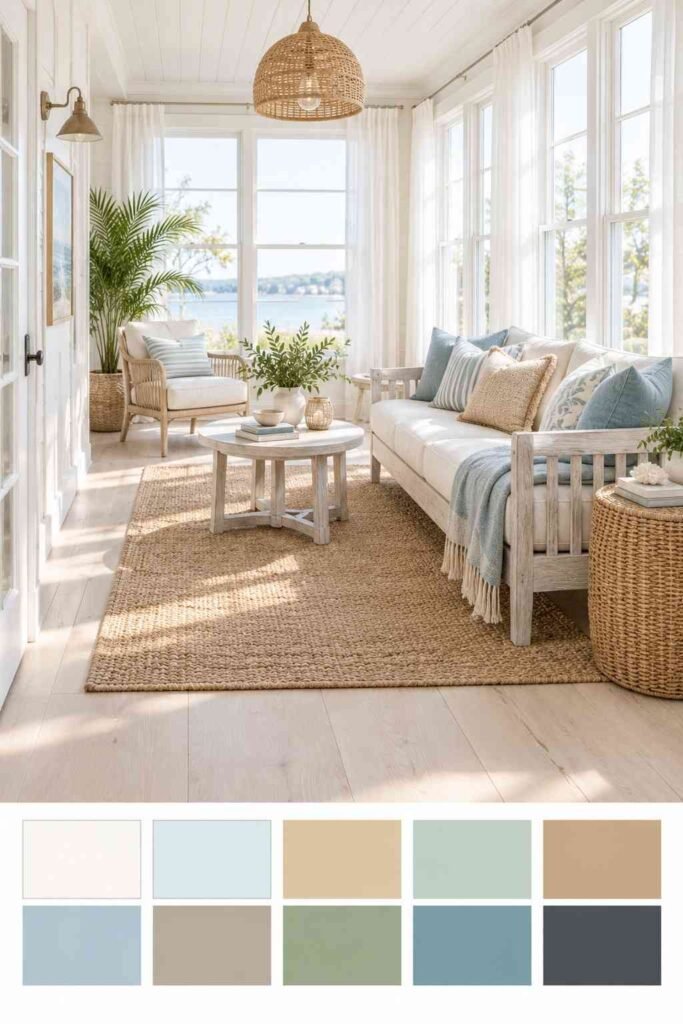
Weathered wood finishes, slipcovered sofas, and light, neutral palettes bring a relaxed coastal or farmhouse feel that pairs naturally with a sunroom’s abundant natural light.
20. Modern Minimalist Pieces
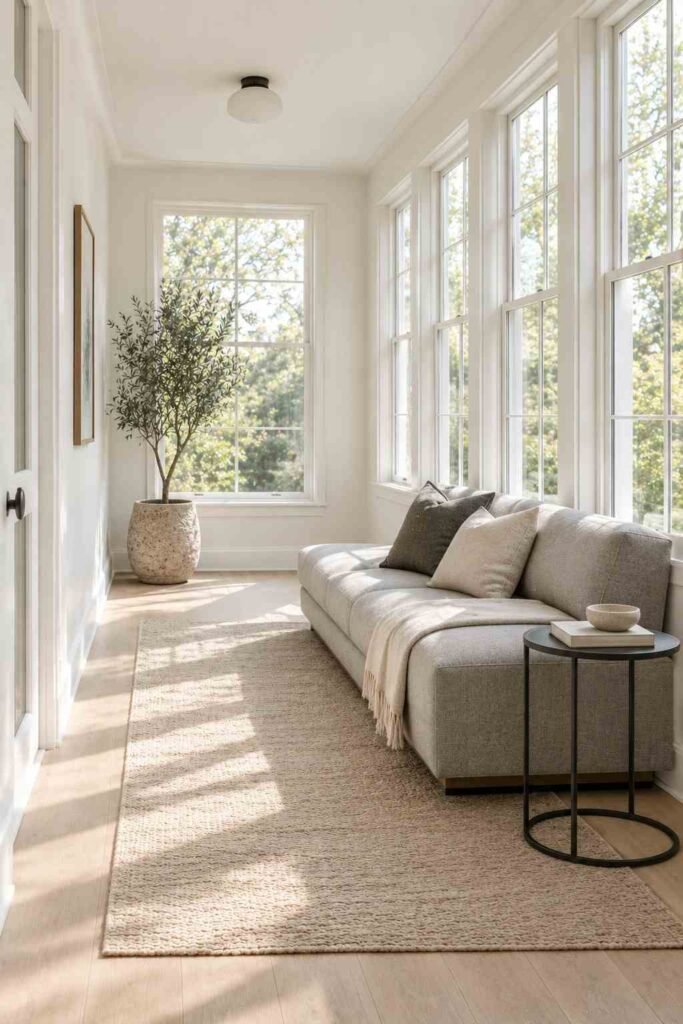
Low-profile frames, clean lines, and a limited color palette keep a modern sunroom feeling calm rather than busy, especially useful when the view outside is the real focal point.
21. Square Sunroom Layouts
Square-shaped rooms have their own arrangement logic, since there’s no obvious “long wall” to anchor furniture against. This breakdown of square sunroom ideas covers layout patterns that keep a symmetrical room from feeling boxy.
22. Scandinavian Light Wood Furniture
Pale wood tones, simple silhouettes, and soft neutral fabrics create a bright, uncluttered look that photographs especially well in a naturally sunlit room.
Finishing Touches That Complete an Indoor Sunroom
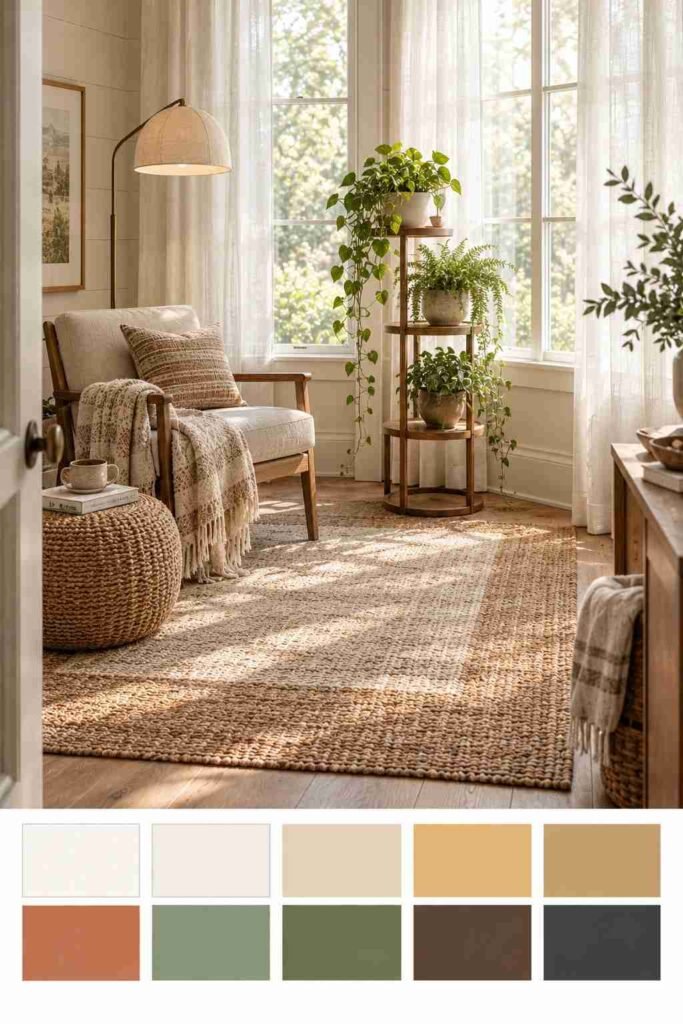
Furniture sets the structure, but a few smaller details determine whether the room actually feels finished.
23. Layered Area Rugs
A rug grounds furniture groupings and softens hard flooring, which is common in sunrooms originally built with tile or vinyl to manage moisture.
24. Adjustable, Dimmable Lighting
Since natural light disappears at night, dimmable floor lamps or pendant lighting let the same room function as a bright daytime space and a relaxed evening one.
25. Plant Stands and Greenery Displays
Tiered plant stands take advantage of a sunroom’s light levels while keeping greenery off furniture surfaces that might otherwise be scratched or stained.
26. Sheer or UV-Filtering Window Treatments
Sheer curtains or UV-filtering shades protect fabric and wood finishes from direct sun while still letting daylight into the room, extending the life of every other piece on this list. For a curated selection built specifically for sun-exposed rooms, the collection at Outinteriors groups pieces by material so you can shop by durability rather than guesswork.
How to Protect Indoor Sunroom Furniture From Sun Damage
Even the most durable indoor sunroom furniture benefits from a little upkeep. Rotate cushions every few weeks so fading happens evenly rather than on one exposed side. Wipe down glass and metal surfaces regularly, since dust becomes more visible under direct light. Oil wood furniture like teak once or twice a year to prevent it from drying out, and vacuum upholstery often, since sun-heated rooms can also attract more dust and pet hair. None of these steps take more than a few minutes, but skipping them for a year or two is usually when damage becomes noticeable and hard to reverse.
Budget Considerations for Sunroom Furniture
You don’t need to furnish an entire sunroom at once. A practical approach is to prioritize seating and one durable table first, since these see the most daily use, then add accent pieces like plant stands or a bar cart later. Synthetic wicker and powder-coated aluminum tend to offer strong durability at a moderate price point, while solid teak and custom banquette seating sit at the higher end. Buying performance fabric cushions upfront, even at a higher cost, is usually cheaper long-term than replacing faded ones every year or two.
Conclusion
Furnishing a sunroom well comes down to one core idea: choose pieces built to handle sunlight, then let your personal style guide everything after that. Whether you lean toward a boho-inspired mix of textures, a clean modern layout, or a classic wicker-and-rattan look, the 26 indoor sunroom furniture ideas above cover materials, seating, small-space solutions, and finishing details that hold up season after season. Start with the fundamentals — durable frames, fade-resistant fabric, and a layout that fits your room’s shape — and the styling choices become much easier to make with confidence.
Frequently Asked Questions
What is the best material for indoor sunroom furniture?
Teak, powder-coated aluminum, and synthetic wicker are among the most reliable choices because they resist fading, moisture, and temperature swings better than standard indoor materials.
Can I use regular indoor furniture in a sunroom?
You can, but standard indoor fabrics and untreated wood may fade or warp faster under direct sunlight, so it’s worth choosing performance fabric or sealed wood finishes even for indoor-style pieces.
How do I arrange furniture in a small or narrow sunroom?
Keep larger pieces like a loveseat or sofa along the longest wall, use round or slim tables to avoid blocking walkways, and add one movable chair rather than a bulky second sofa.
How often should I replace sunroom furniture cushions?
With solution-dyed, UV-resistant fabric, cushions typically last several years with regular rotation and cleaning; standard fabric cushions may need replacing sooner if they see daily direct sun.
Is wicker or rattan better for indoor sunrooms?
Synthetic rattan generally holds up better in humid or high-sun sunrooms, while natural wicker suits rooms with more moderate light and controlled temperature.
What style works best for a small sunroom?
Minimalist or Scandinavian styles tend to work well in small sunrooms because low-profile furniture and light colors keep the space feeling open rather than cluttered.
Do I need special lighting for a sunroom?
Yes — since natural light disappears at night, dimmable lamps or pendant fixtures help the room stay functional and comfortable after sunset.