12 Japandi Interior Design Ideas for a Calm, Warm Home
A great Japandi room is built from a few honest materials. Pale oak brings Nordic light. Dark walnut adds Japanese depth. Linen softens every edge, while stoneware and paper lanterns finish the look with quiet craft. Designers like Hans J. Wegner in Denmark and Isamu Noguchi, the sculptor behind the Akari lamps, showed how simple forms can feel both useful and beautiful. That thinking still shapes the style today. In this guide, you will find 12 Japandi interior design ideas for the living room, kitchen, bedroom, and bathroom. Each one explains what to buy, what to skip, and how to keep the space calm and comfortable. We also flag common mistakes, so you avoid a cold, empty look. You do not need a big budget or a perfect floor plan. You need a clear palette, fewer objects, and a willingness to let natural materials do the work.
What Is Japandi Style, and Why Does It Work?

Japandi is a blend of the words Japan and Scandinavia. The look draws on two traditions that value simple forms, natural materials, and useful objects. From Japan comes wabi-sabi, the appreciation of imperfect, aged, handmade things. From the Nordic countries comes hygge, the habit of making a home feel snug and welcoming. Together they create rooms that are minimal but never sterile. Think low furniture, pale wood, soft textiles, and generous space. These Japandi interior design ideas work because they ask you to own fewer things and choose better ones. That approach suits small apartments and large houses alike. If you like bolder contrast, explore these Art Deco interior ideas for a dramatic change of pace.
12 Japandi Interior Design Ideas to Try at Home
1. Start With a Warm, Muted Color Palette

Colors drawn from nature set the tone. Think soft white, oatmeal, clay, warm grey, and sage. Add depth with charcoal or deep forest green in small doses. Keep contrast gentle so the eye can rest. A useful rule is to pick three main shades and repeat them across the room. Paint walls in a matte or chalky finish, since glossy surfaces tend to feel sharp. If your room gets little daylight, lean toward creamy whites rather than stark, cool ones. Of all the Japandi interior design ideas here, this is the base for every other one, so settle it first. You can find textured baskets and ceramics through our guide to affordable home decor finds.
2. Mix Light and Dark Woods
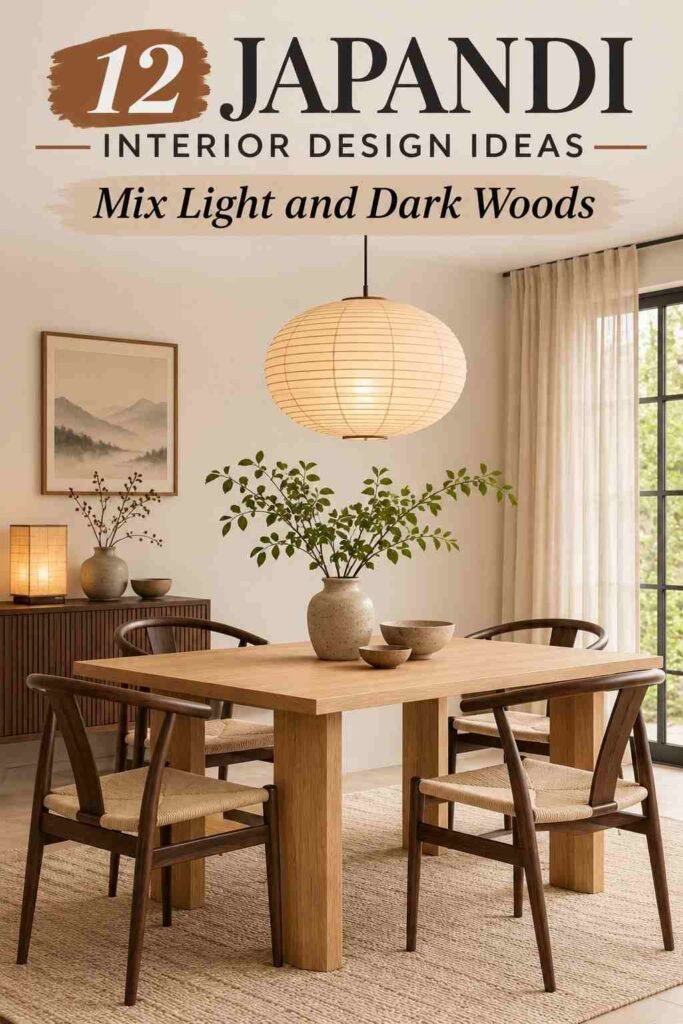
Wood is the backbone of Japandi. Scandinavian rooms favor pale oak, ash, and birch. Japanese interiors often lean on darker tones, such as walnut or stained cedar. Mixing both gives a room depth without extra decoration. Try a light oak dining table with dark walnut chairs. Or pair a pale floor with a darker coffee table. Keep the grain visible and the finish natural. Avoid heavy ornament or high-gloss varnish. If you cannot replace large pieces, small wooden items such as trays, stools, and picture frames can bring in the same warmth.
3. Choose Low-Profile Furniture With Clean Lines
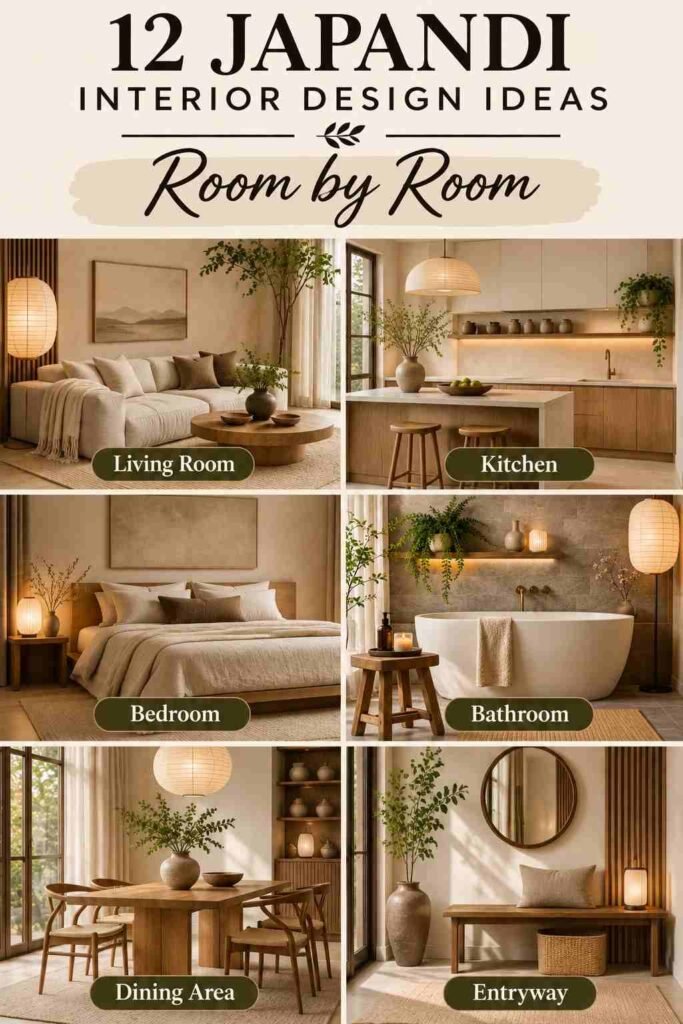
Furniture sits closer to the ground in Japandi homes, which makes ceilings feel higher and rooms feel calmer. Look for low sofas, platform beds, and compact coffee tables with simple legs. Choose pieces with softly rounded edges rather than sharp corners. Quality joinery matters more than decoration. Danish designers such as Hans J. Wegner showed how a chair can be both beautiful and useful, and that thinking still guides this style. Buy fewer pieces, and make sure each one earns its place. Leave visible floor space around every item so the room can breathe. For calm, simple wall styling, see our framed print wall ideas.
4. Embrace Negative Space

Japanese design has a concept called ma, meaning the meaningful pause or space between things. In practice, it means you do not fill every wall or shelf. Leave a blank stretch of wall. Keep one shelf half empty. Place one vase on a console instead of five objects. Empty areas make the items you do display feel more valuable. Start by removing a third of what sits on your surfaces, then see how the room feels. Add back only what you love or use daily. Among Japandi interior design ideas, this one costs nothing and often changes a room more than any purchase.
5. Layer Natural Textures
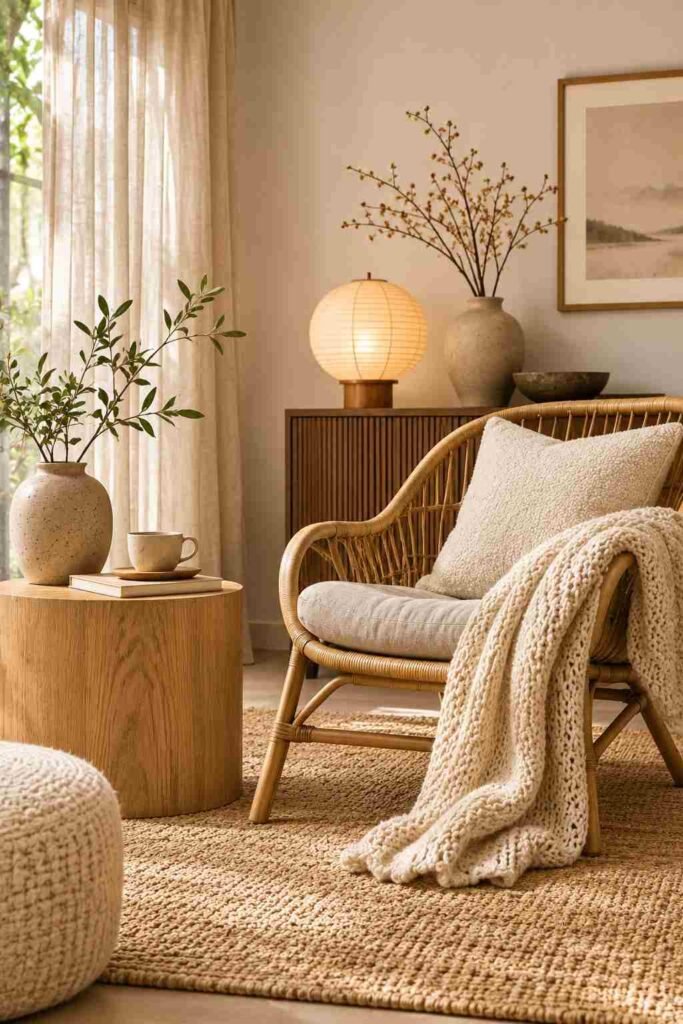
Without bold patterns or bright colors, texture does the work. Combine linen curtains, a wool throw, a jute or sisal rug, and a rattan chair. Add ceramic and stoneware for a cool, smooth contrast against soft fabrics. Aim for variety in feel rather than variety in color. A nubby bouclé cushion beside a smooth wooden side table is enough to create interest. Keep fabrics in undyed or earthy shades. Natural fibers also age gracefully, which fits the wabi-sabi view that wear adds character. In bedrooms, choose breathable materials so the room stays comfortable through every season.
6. Add Slatted Wood Accents
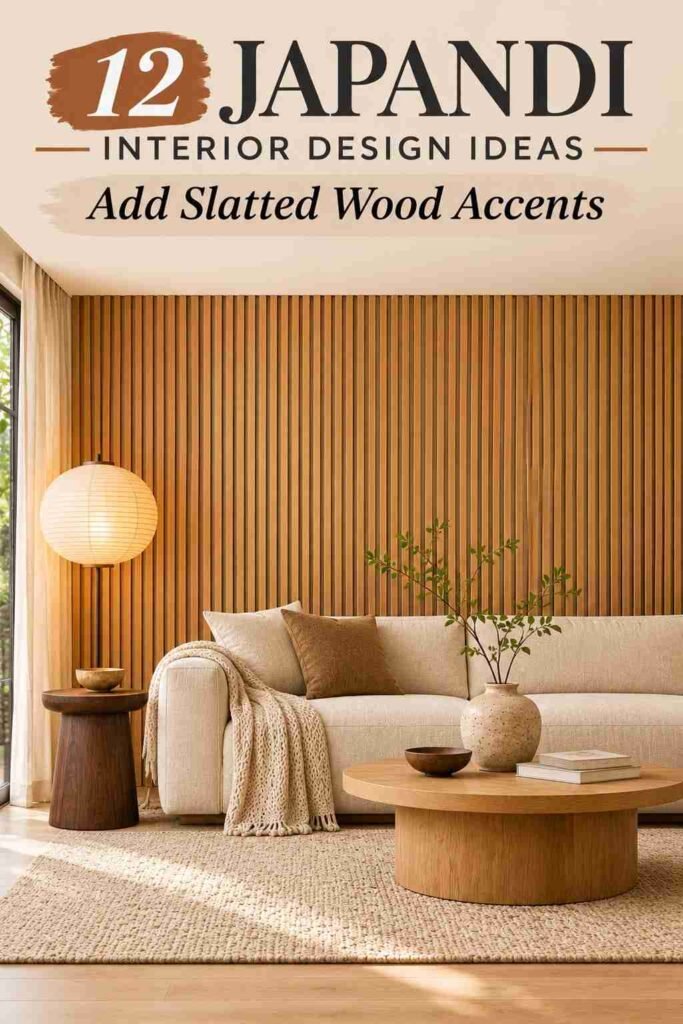
Vertical slats are one of the most recognizable features in modern Japandi rooms. They echo traditional Japanese lattice work while adding the clean, rhythmic lines Nordic designers love. Use slatted panels behind a sofa, along a staircase, on a headboard wall, or as a room divider. They add texture without color, so they suit minimal spaces. Slim oak or walnut battens work well, and ready-made panels with felt backing can speed up installation. If a full wall feels like too much, try slatted cabinet doors or a narrow screen to soften an open-plan layout.
7. Bring in Plants and Natural Light
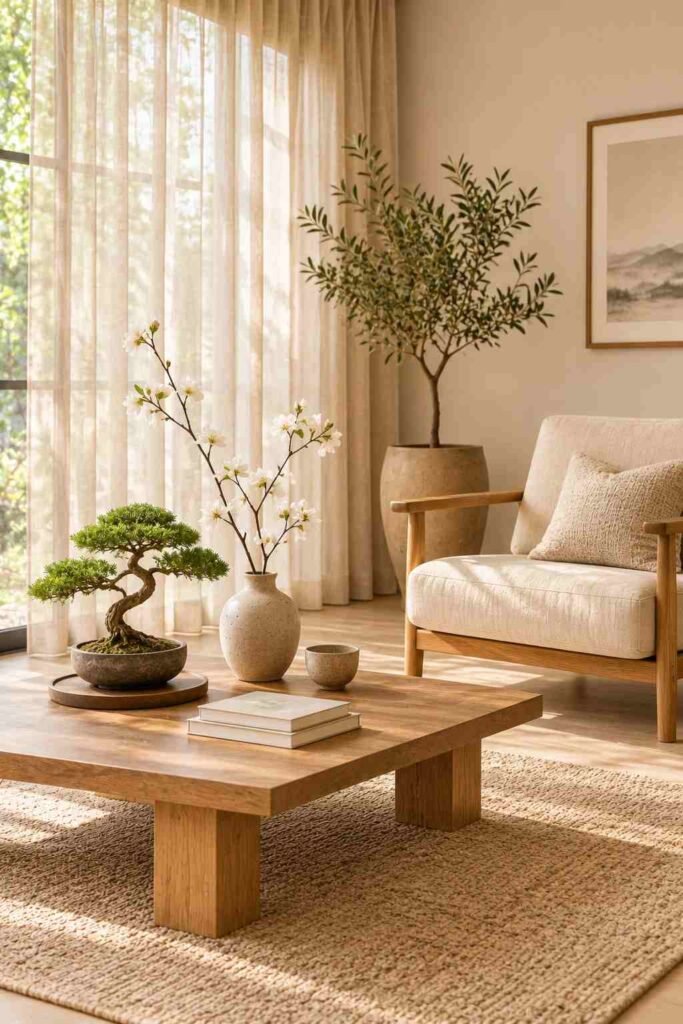
Nature is central here. Use sheer linen or paper-style window coverings so daylight spreads gently. Keep windows clear of heavy drapery. Then add greenery with intention. A single bonsai, olive tree, or branch in a ceramic vase is often enough. Japanese ikebana shows how a few stems can look more graceful than a crowded bouquet. Place plants where they can be seen and cared for, not scattered everywhere. In low-light rooms, choose hardy options such as snake plants or pothos. Real plants matter because they add life and slight irregularity that artificial ones lack.
8. Design a Japandi Kitchen With Simple Cabinetry
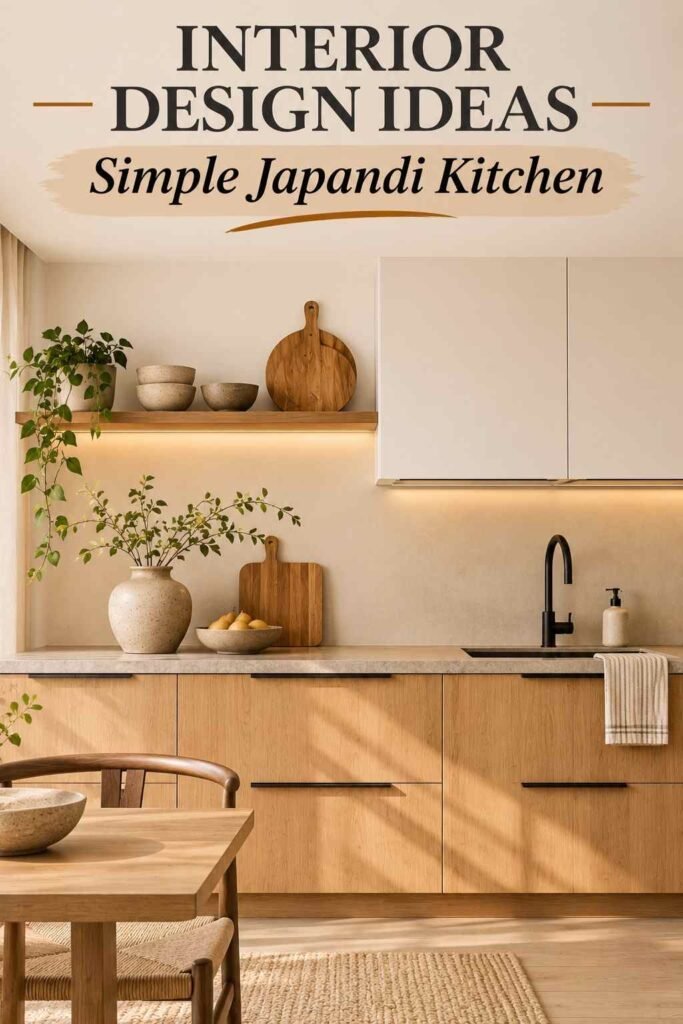
Kitchens suit this style because they reward order and function. Choose slab-front cabinets in matte white, soft grey, or natural wood. Hide small appliances behind doors. Use wooden or stone countertops, and add open shelves only for a few handsome pieces, such as stoneware bowls or a wooden cutting board. Keep hardware minimal, with finger pulls or slim matte black or brass handles. Choose warm under-cabinet lights to make the room inviting in the evening. Keep the backsplash simple, such as plain ceramic tile or the same stone as the counter. Few Japandi interior design ideas are as practical as this one. Planning bigger changes to your layout? Browse these home remodeling ideas modern homeowners love.
9. Create a Restful Bedroom
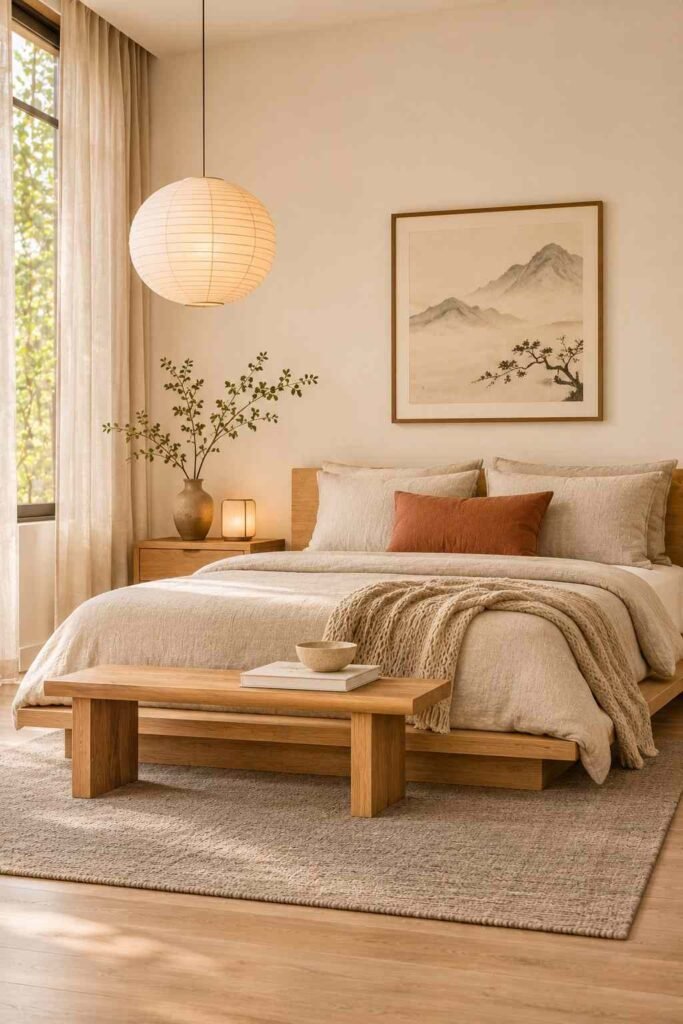
The bedroom is where this style pays off most. Choose a low platform bed in light wood, and dress it in linen bedding in soft neutrals. Keep nightstands slim and clutter-free. Use a paper or fabric pendant, or a floor lamp with warm light, in place of harsh overhead fixtures. Hang one calm piece of art, such as a simple ink-style print, over the bed. Skip the television and keep clothing off chairs. Add a small bench at the foot of the bed for folding a throw. The goal is a room that signals rest the moment you walk in.
10. Build a Spa-Like Bathroom
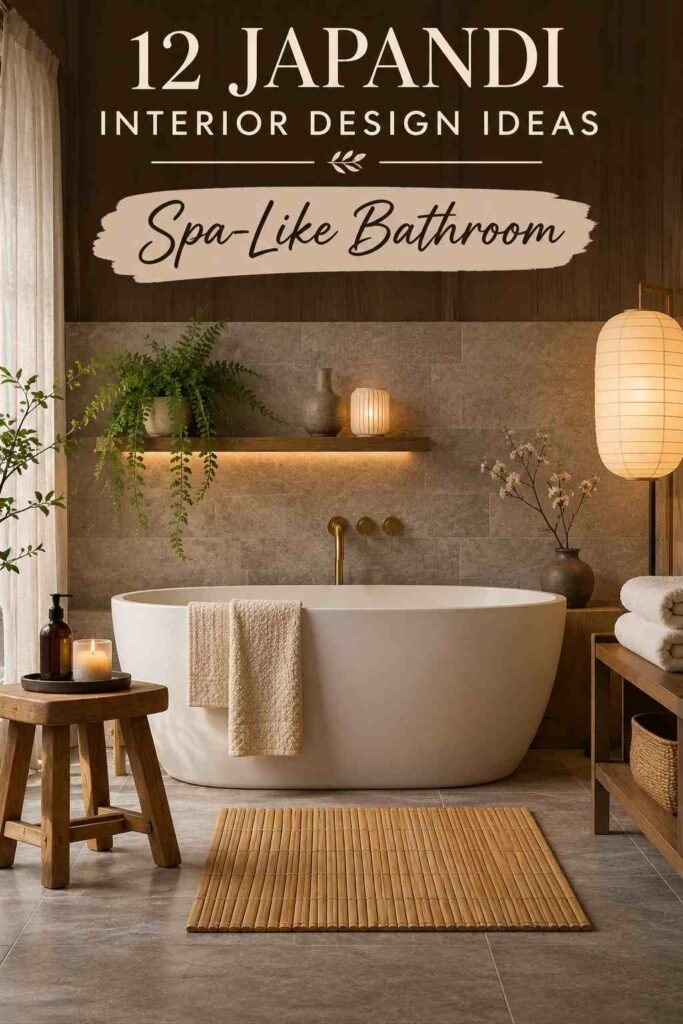
Japanese bathing culture centers on calm and cleanliness, and Nordic design adds practical simplicity. Combine both with a deep soaking tub if space allows, or a simple walk-in shower with textured, stone-look tile. Use a wooden stool, a bamboo bath mat, and teak or cedar accents, which handle moisture well. Choose matte black or brushed brass fixtures. Store toiletries in lidded containers or closed cabinets to keep surfaces clear. Add a humidity-friendly plant, such as a fern. Soft, warm lighting and a neat stack of white towels finish a room meant for slowing down.
11. Choose Soft, Sculptural Lighting
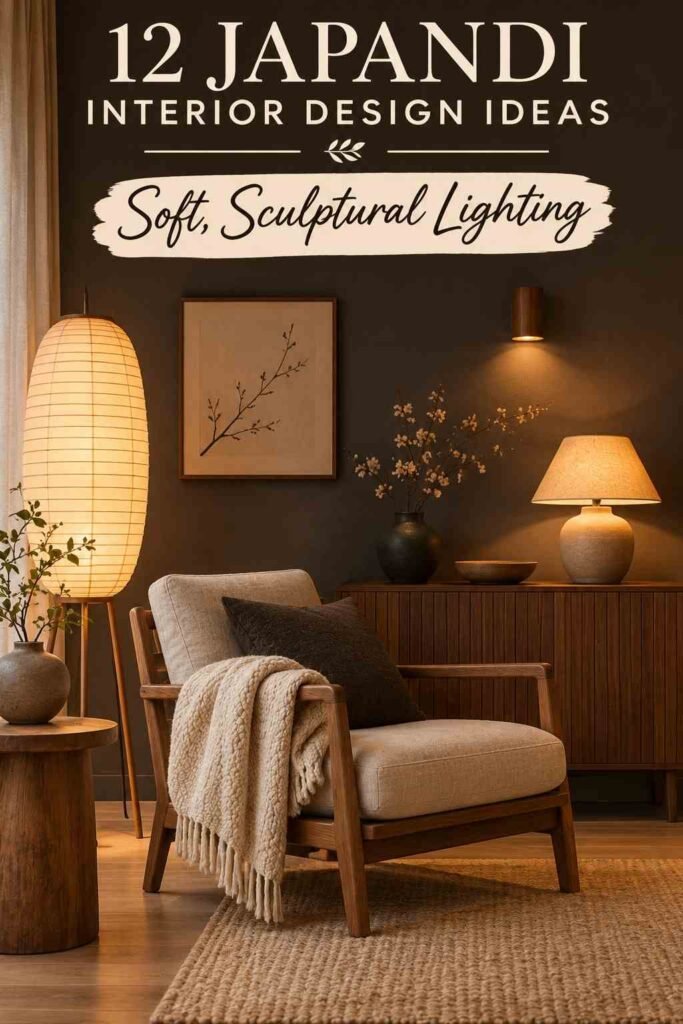
Light shapes mood more than any other element. Instead of one bright central fixture, layer several low sources. Paper lanterns, such as the Akari lamps designed by sculptor Isamu Noguchi, spread a gentle glow. Add a ceramic table lamp, a floor lamp with a linen shade, and perhaps a wall sconce near the reading chair. Choose warm bulbs, around 2700K, for evenings. Use dimmers where you can. Daytime should rely on natural light, and nighttime should feel like a quiet glow. Sculptural lamps also double as decor, so you can skip extra objects.
12. Add Handmade Ceramics and Imperfect Details

This last idea is where wabi-sabi shows itself. Choose handmade ceramics with uneven glazes, a hand-thrown vase, or a woven basket with visible stitching. Display them in small groups of one to three. Look for local potters, craft fairs, and secondhand shops, which often hold well-made pieces at fair prices. Pair a rough stoneware bowl with a smooth wood tray for contrast. A mended cup or a worn wooden stool brings story and warmth. Perfection is not the goal. Instead, you want objects that look cared for and used, because they make a home feel human. These Japandi interior design ideas all lead here.
Common Japandi Mistakes to Avoid

Many people confuse minimal with empty. A room with no warmth feels like a showroom, not a home. Avoid going all white, which can look cold without wood and texture to balance it. Resist buying matching furniture sets, since a collected look feels more natural. Do not skip comfort for style; a sofa should invite you to sit. Finally, do not copy a photo exactly. Use it as a guide, then edit for your light, your layout, and your daily habits. Good Japandi interior design ideas should fit how you live.
Final Thoughts on Japandi Interior Design Ideas
Japandi works because it is gentle. It does not ask you to chase trends or fill every corner. It asks you to slow down, choose well, and let simple things shine. You do not need to try all twelve ideas at once. Start with one room, one palette, and one or two good pieces. Remove clutter, add warm wood, and let daylight in. Over time, your home will feel calmer and more personal. That is the real value of these Japandi interior design ideas: they help you build a space that supports everyday life. For more inspiration and room guides, visit outinteriors.