26 Kitchen Open Shelving Ideas for Corners: Styles, Sizes and Layouts
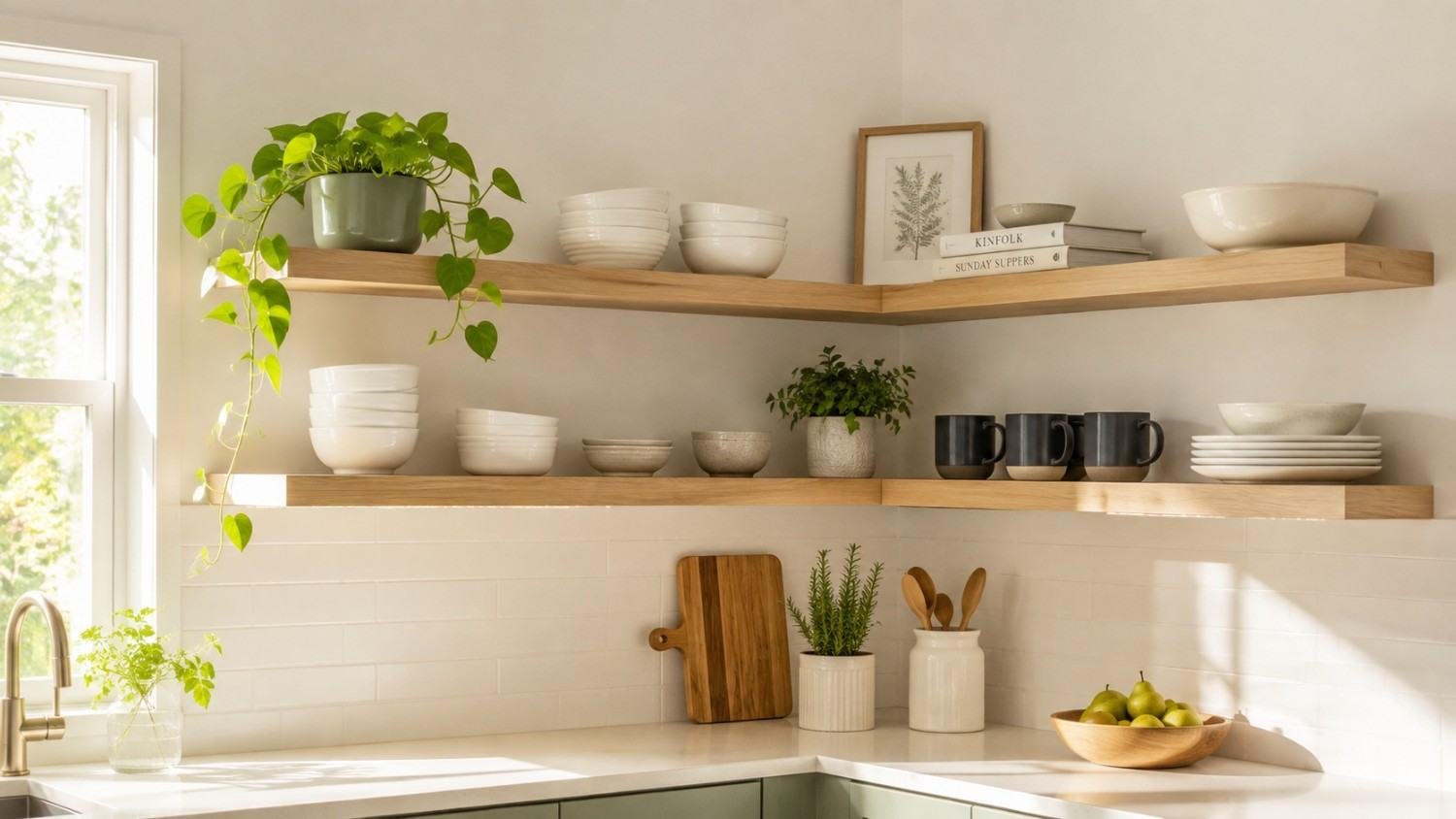
Corners are the quiet problem of most kitchens. Cabinets meet at an angle, doors bump into each other, and the deepest part of the cupboard swallows anything you put in it. Many of us have lost a favorite bowl to that dark corner.
Open shelving changes the story. It turns a dead zone into a display, a coffee bar, or a spot for the pans you grab daily. This guide shares 26 kitchen open shelving ideas for corners along with the sizes, materials, and styling rules that make them work in real homes.
Before You Start: Corner Shelving Basics
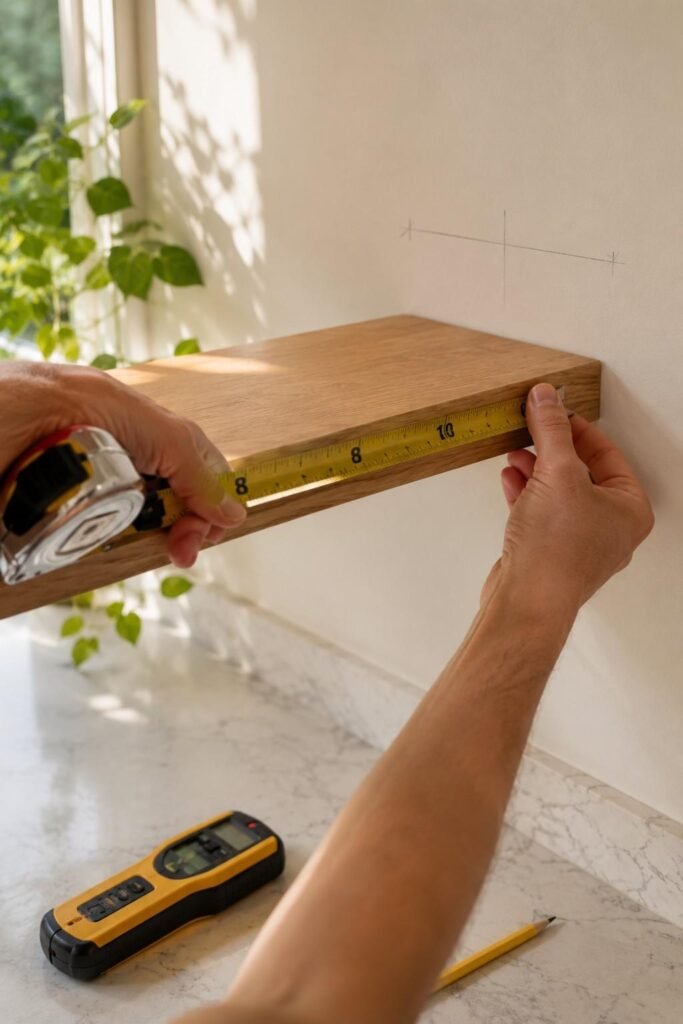
A shelf that looks great but sags in six months is no bargain. Plan the basics first.
Standard shelf depth for dishes is 8 to 10 inches. Go shallower, around 6 inches, for spices and small jars. Keep the first shelf about 15 to 20 inches above the countertop so you can work below it without bumping your head. Measure your tallest mug and your widest plate before you cut anything.
Weight matters most. Solid wood shelves about 1.25 to 1.5 inches thick carry stacked dishes well when mounted into wall studs, which are usually spaced 16 inches apart. Use heavy-duty anchors only when you can’t hit a stud. Corners are often well supported, but always check with a stud finder.
Kitchen Open Shelving Ideas for Corners: Floating Corner Shelf Ideas
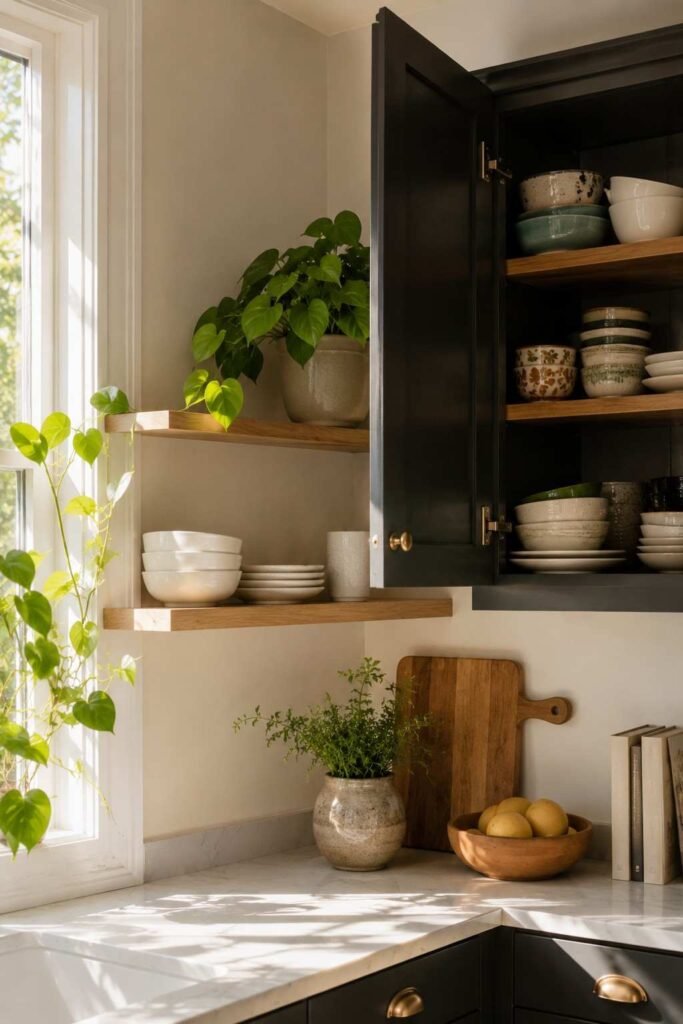
Floating shelves have no visible brackets, so they feel light. They work best where the wall is solid, and the load is modest.
1. Floating L-Shaped Corner Shelves
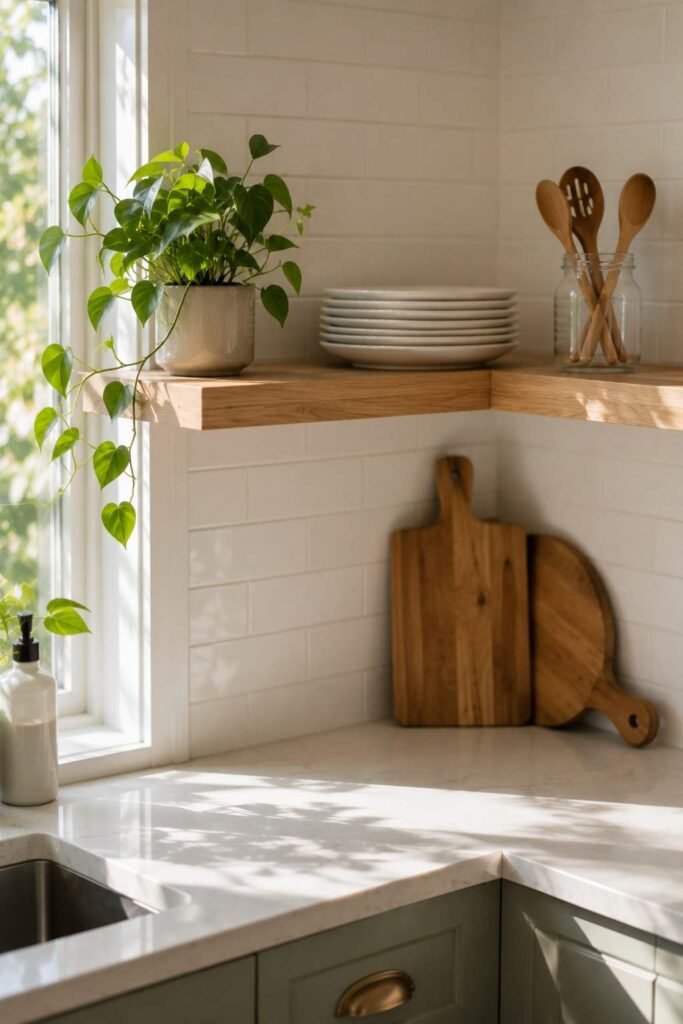
One board bent at a right angle wraps the inside corner in a single clean line. It looks custom but costs far less than a built-in. Keep the arms at least 24 inches long so the corner reads as intentional.
2. Staggered Triangular Corner Shelves
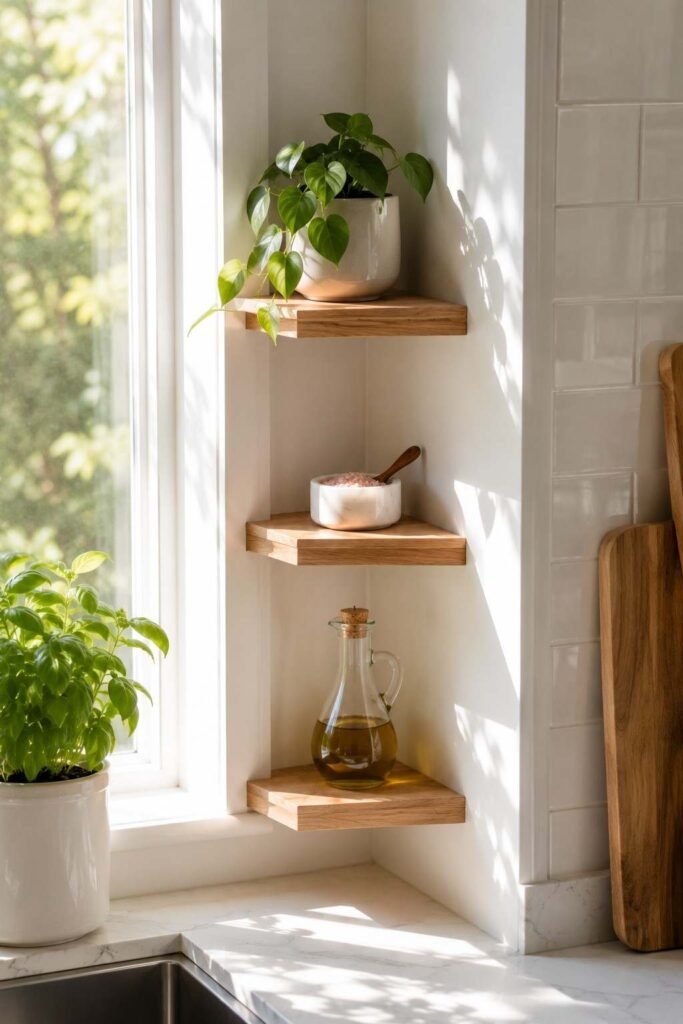
Small triangle-shaped shelves fit tightly into the corner and sit at alternating heights. They suit narrow kitchens where deep shelves would crowd the aisle. Use them for small plants, salt cellars, and oils.
3. Wraparound Floating Shelves
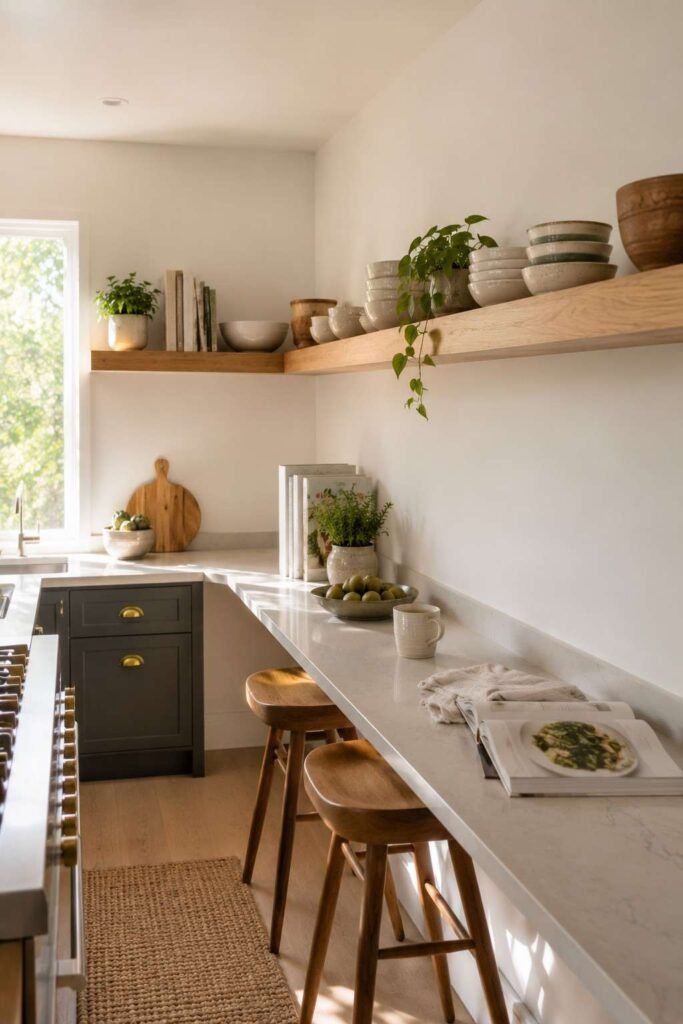
Let one shelf run along two walls and turn the corner without a break. This gives a long display line that ties both walls together. It works well in galley kitchens and above a breakfast counter.
4. Stacked Floating Column
Mount three or four short shelves in a vertical stack directly in the corner. The eye travels upward, which makes a low ceiling feel taller. Space the shelves 12 to 14 inches apart for everyday dishes.
5. Floating Shelves With Under-Lighting
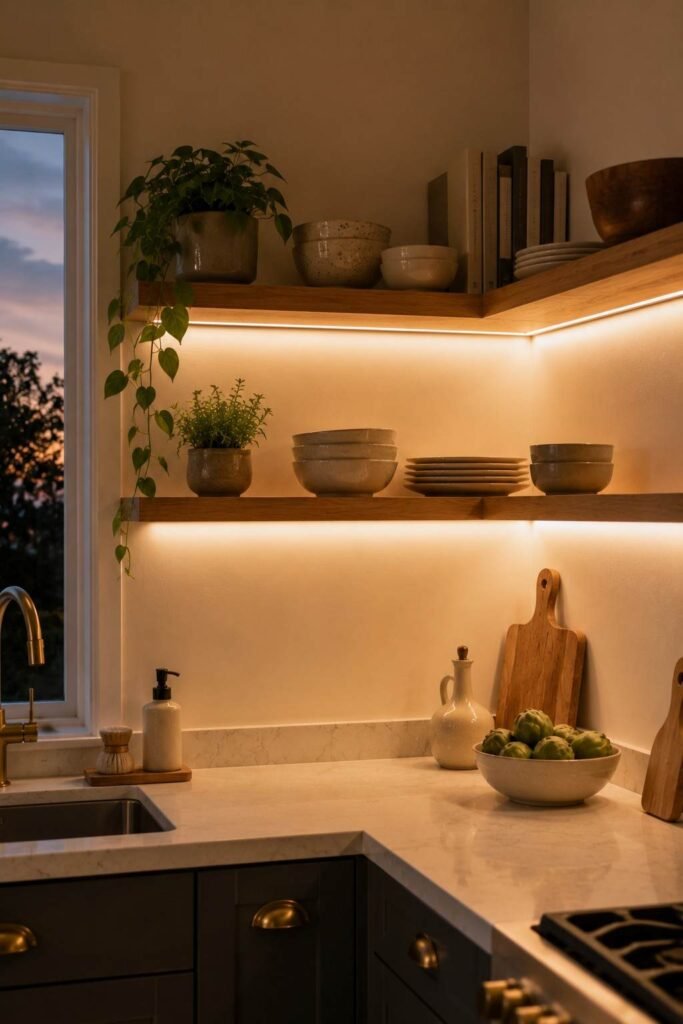
Add a slim LED strip beneath each shelf, and the corner glows at night. Warm white light, around 2700K to 3000K, keeps wood and ceramics looking rich. Choose plug-in or hardwired strips designed for kitchen use.
6. Rounded-Edge Corner Shelves
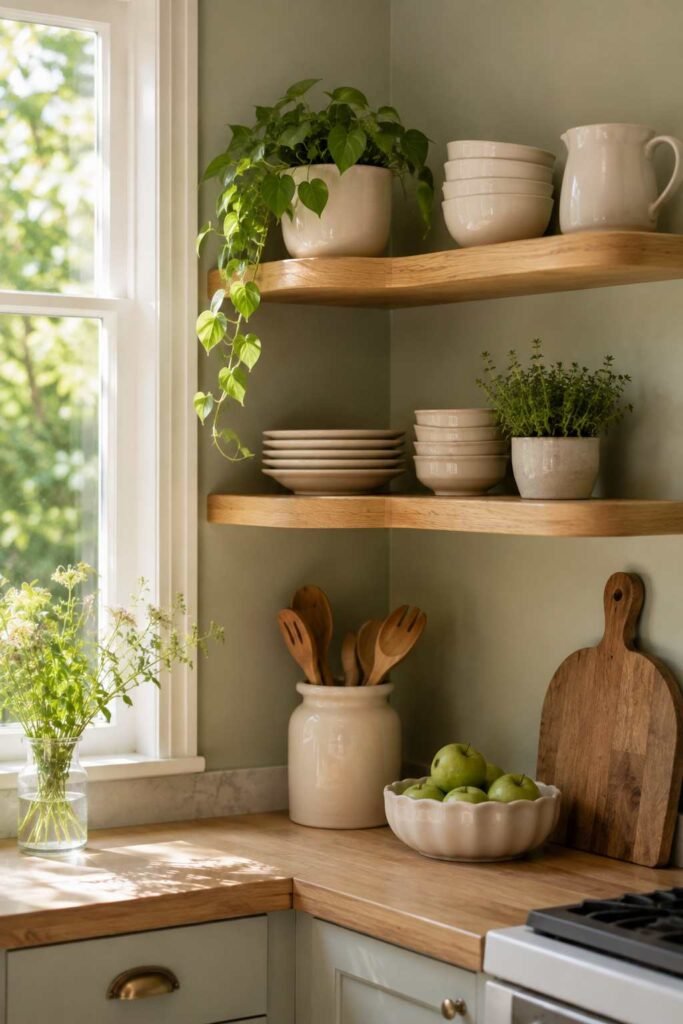
A bullnose or curved edge softens sharp angles and is safer in tight spaces. It suits homes with young children. Pair it with cream or sage walls for a gentle, cottage feel.
Replacing Upper Cabinets With Open Shelves
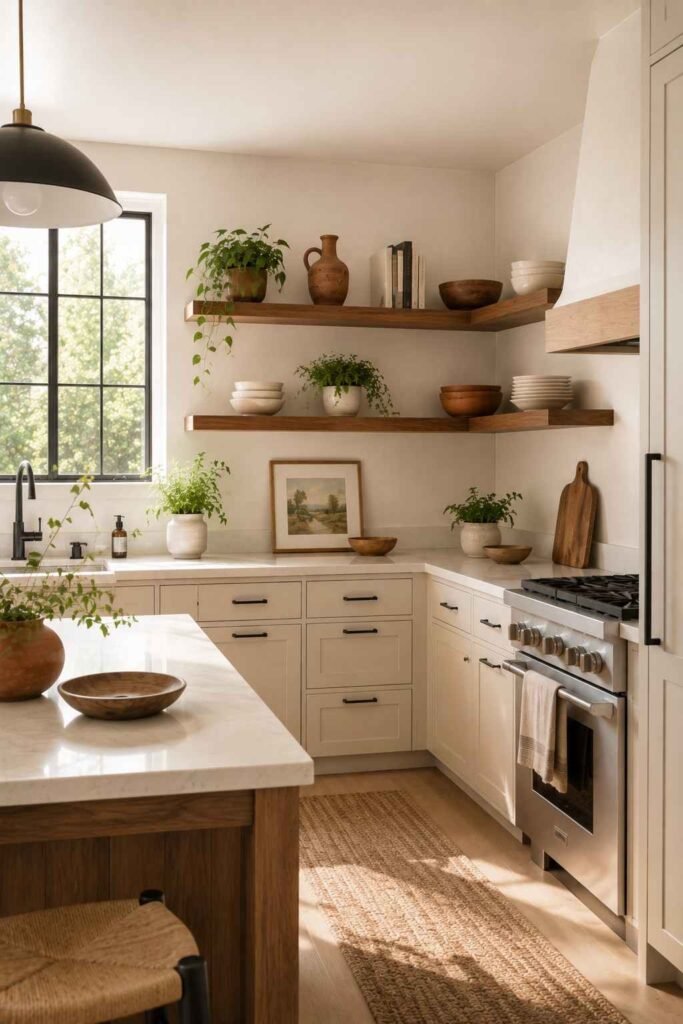
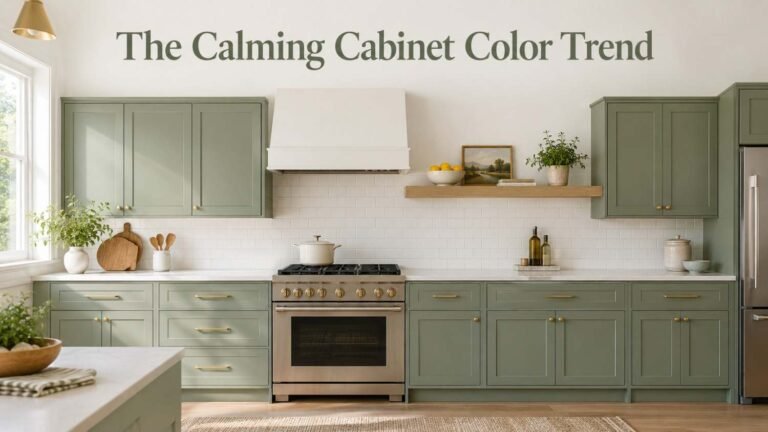
Removing a corner upper cabinet is one of the boldest kitchen open shelving ideas, and it often gives the biggest payoff. It opens sight lines and lets in light. For more warm, playful touches to pair with your shelves, browse our roundup of trending and cute kitchen decor.
7. L-Shaped Shelf Where a Cabinet Used to Be
Take out the awkward corner upper and install two shelves that meet at the angle. Patch and paint the wall first. This is a good weekend project if the cabinet wasn’t holding wiring.
8. Open Shelf Beside the Range Hood
Place a pair of shelves in the corner next to the hood. Store oils, salt, and go-to pans within arm’s reach. Keep a safe gap from the burners, and follow your hood manufacturer’s clearance guidance.
9. Shelves Flanking a Corner Window
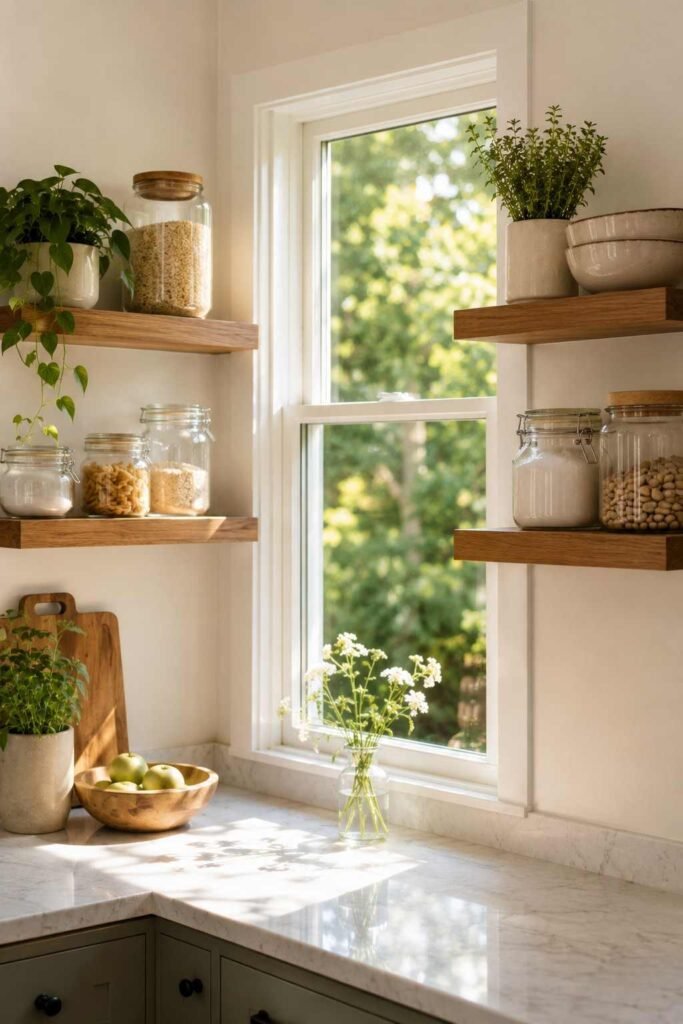
When a window sits near the corner, short shelves on each side frame the view. Glass jars catch daylight and add sparkle. This idea makes a small kitchen feel wider.
10. Corner Shelves Above the Sink
Rinse a dish and place it on the shelf above to dry. Use a stainless steel or sealed wood shelf here, since moisture is constant. Keep it about 18 inches above the faucet.
11. Corner Coffee Station
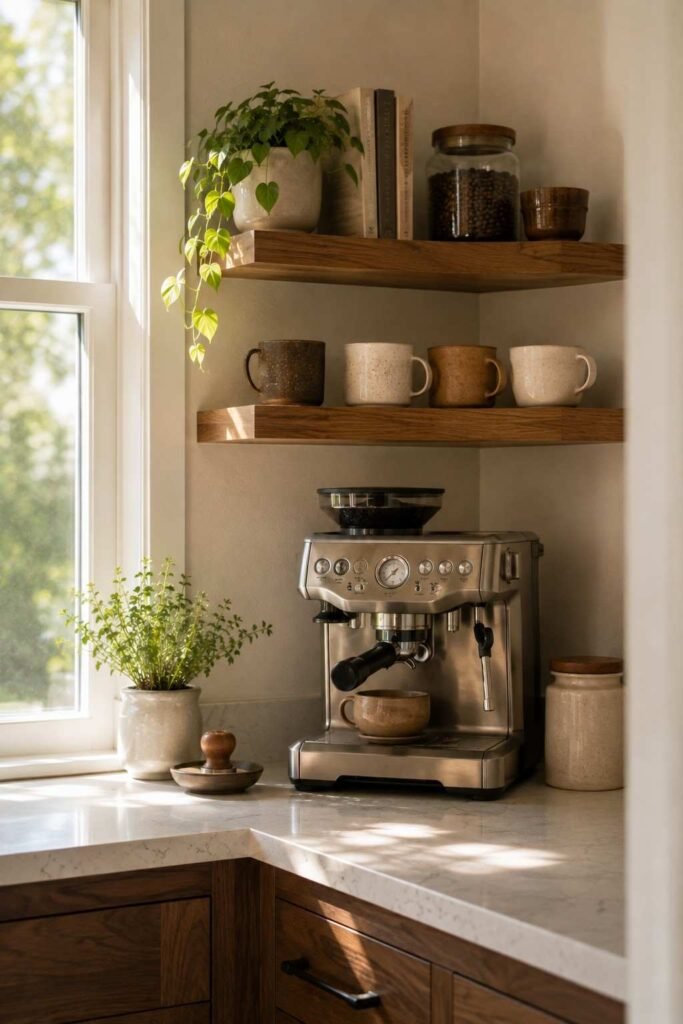
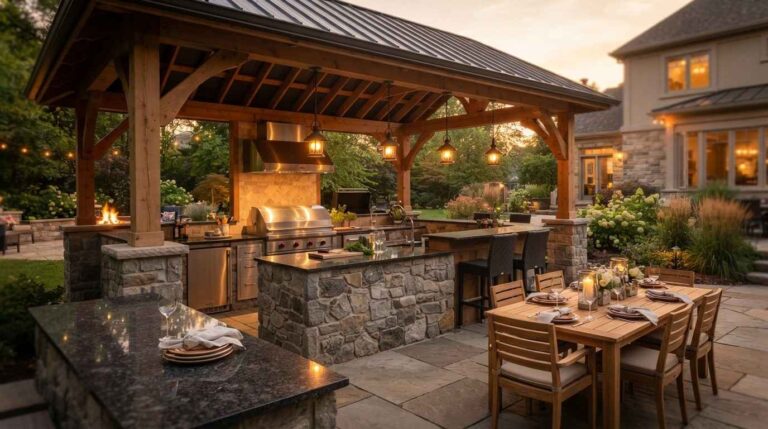
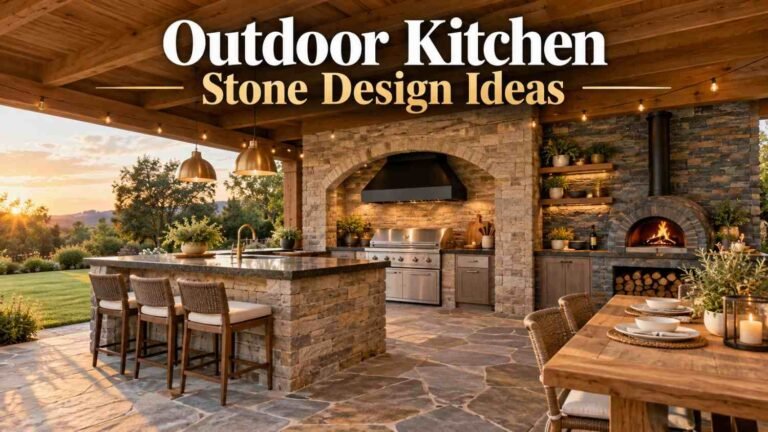
Dedicate the corner to your morning routine. A machine sits on the counter while mugs, beans, and a small canister live on the shelves above. Everything sits together, which saves steps. If your cooking space extends beyond the walls of your home, take a look at these Outdoor Kitchen Stone Design Ideas.
12. Corner Bar Shelves
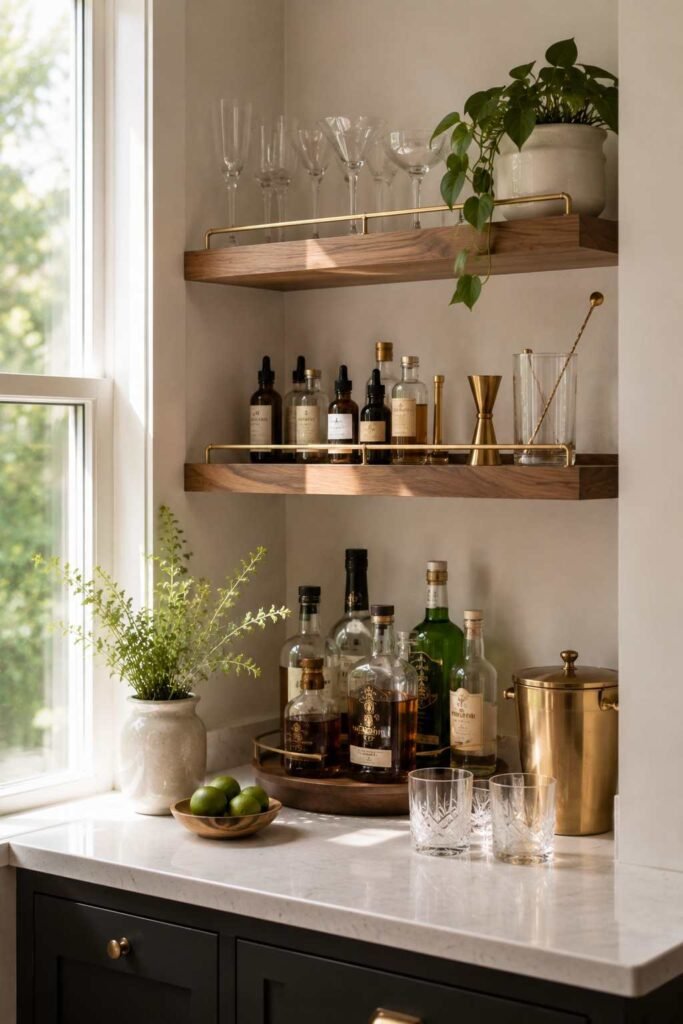
Glasses, bitters, and a few bottles turn a corner into a tiny bar. Add a narrow rail to keep stems from sliding. Store heavier bottles on the lowest shelf.
Built-In and Freestanding Corner Options
Not every corner needs floating hardware. Some deserve a piece with more presence.
13. Arched Built-In Nook
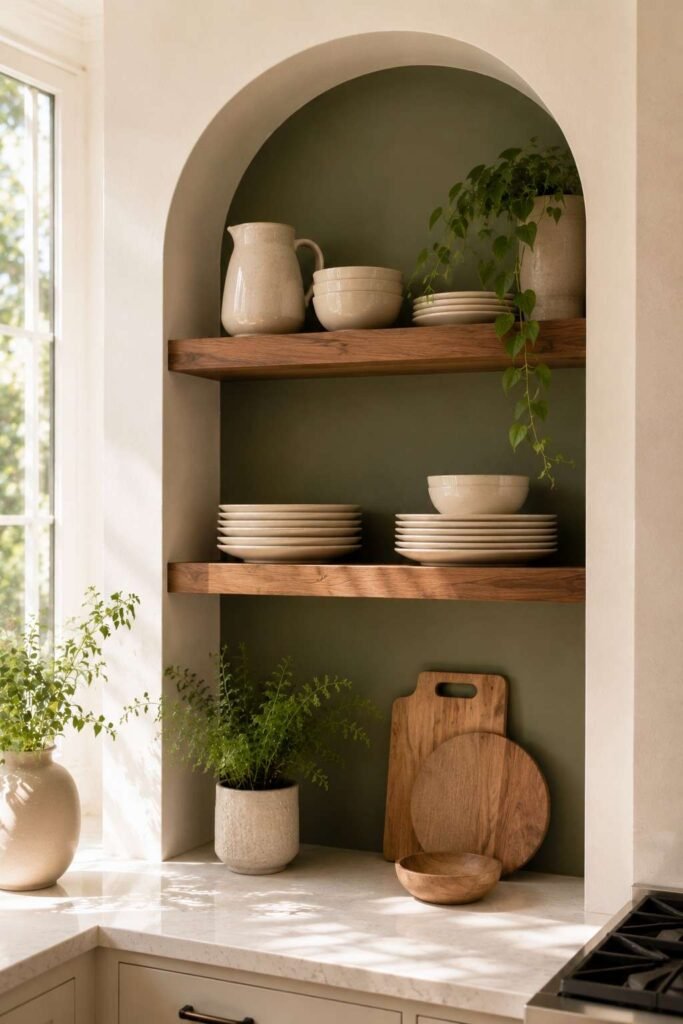
A carpenter can frame an arched niche with shelves inside. The curve adds character to modern kitchens. Paint the inside a deeper shade to make dishes stand out.
14. Freestanding Corner Étagère
A tall, tiered unit sits on the floor and needs no wall drilling. This is ideal for renters. Look for a sturdy base and anchor it to the wall so it can’t tip.
15. Ladder-Style Corner Shelf
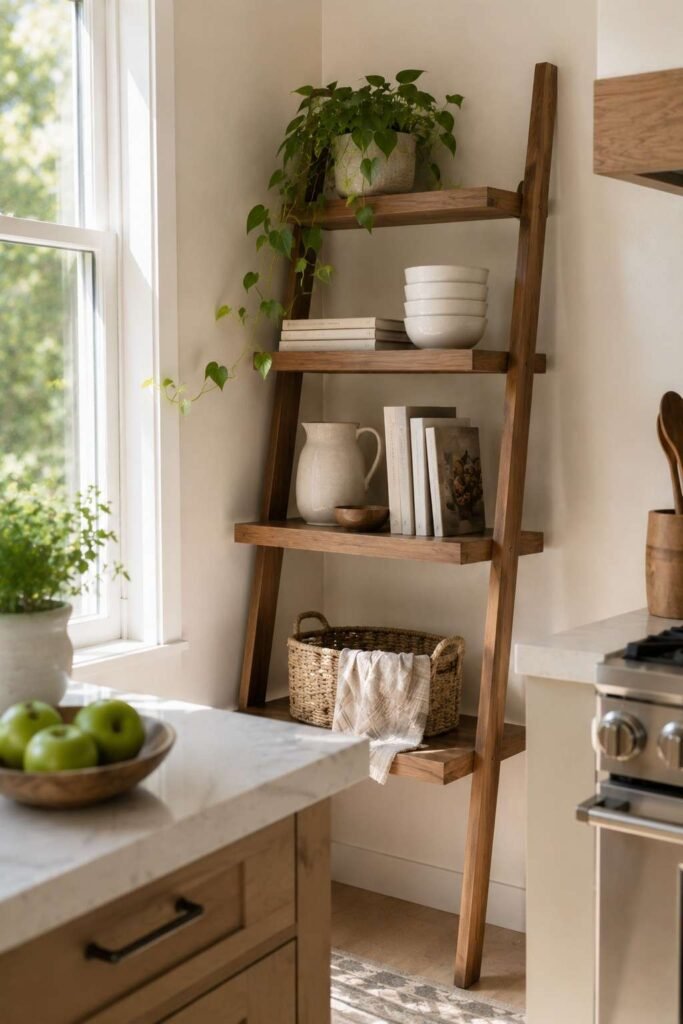
A leaning ladder shelf brings casual charm and holds cookbooks, baskets, and plants. Its angled frame fits neatly into a corner. Choose one with wide, flat rungs for stability.
16. Open Corner With Lazy Susan
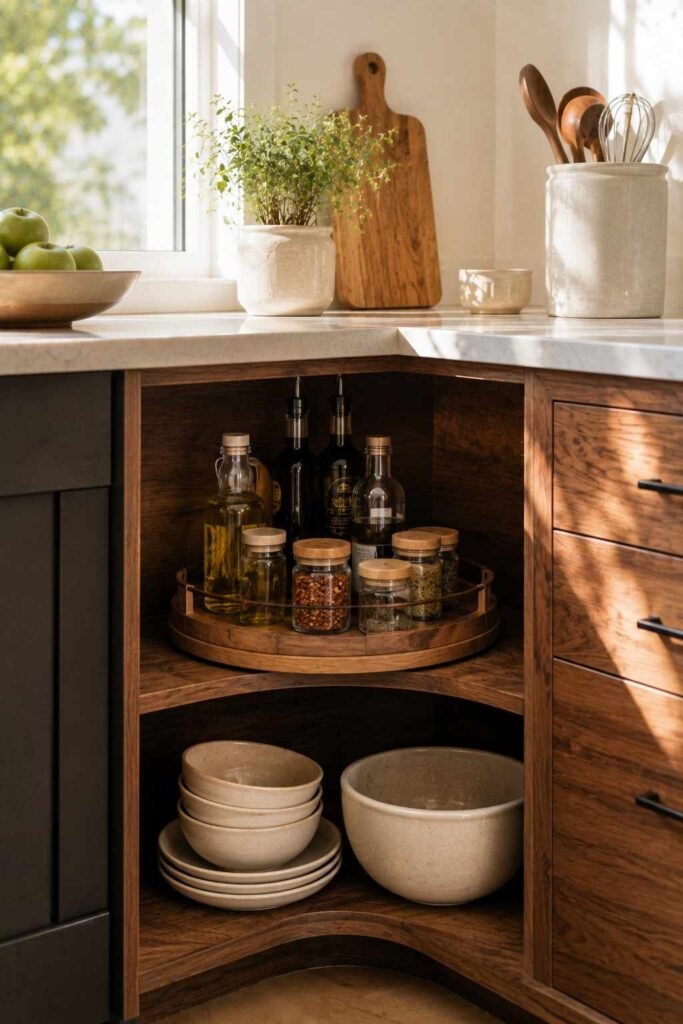
Place a rotating tray on a base-level open shelf. Spin it to reach oils and jars at the back. It solves the classic deep-corner problem without doors.
17. Open Corner Pantry Shelves
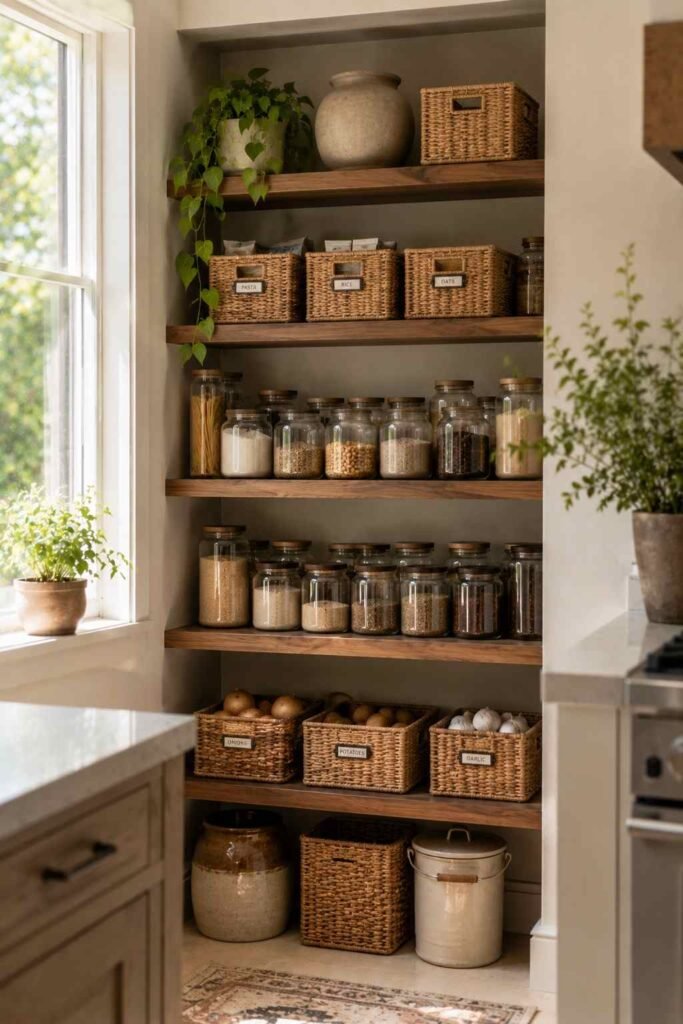
In a walk-in or a tall corner alcove, run shelves from floor to ceiling. Group items by type and keep heavy goods low. Use labeled bins to keep the look calm.
18. Corner Baker’s Rack
This metal or wood rack often includes a work surface and hanging hooks. It doubles as extra counter space. It fits farmhouse and industrial kitchens equally well.
Materials and Finishes That Elevate a Corner
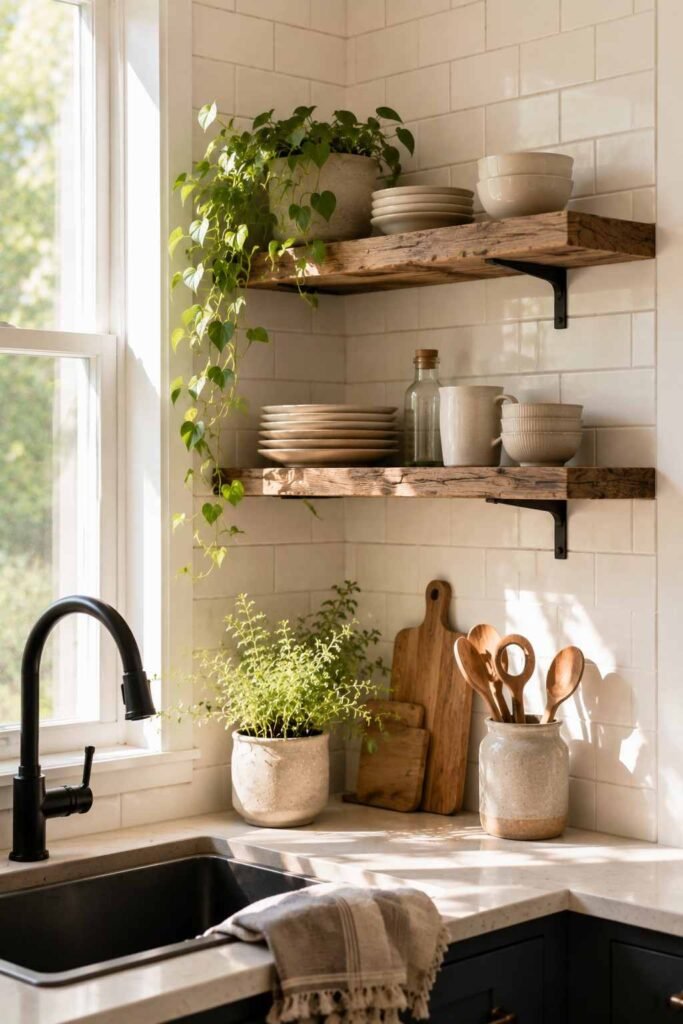
Material sets the mood. It also decides how much care your shelves need.
19. Reclaimed Wood Shelves
Aged planks bring texture and a story. Seal them well, since old wood can hold dust and stains. They pair beautifully with white subway tile.
20. Black Metal and Wood Combos
Slim black brackets under a warm wood board create a crisp, industrial look. The dark metal grounds the corner. Match it to your faucet or cabinet pulls for a cohesive feel.
21. Stone or Marble Slabs
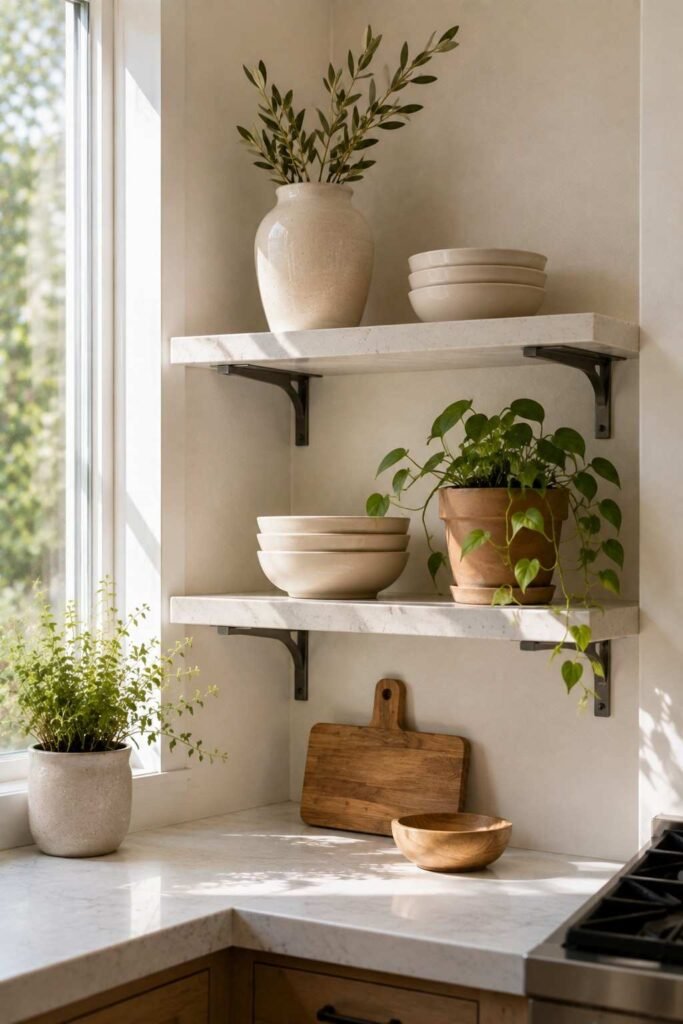
A thin slab of marble or quartz looks luxurious. Stone is heavy, so use strong brackets and confirm your wall can carry it. It wipes clean easily, which suits busy kitchens.
22. Glass Shelves
Tempered glass keeps a corner airy and bright. It suits small kitchens where visual weight is a concern. Fingerprints show, so keep a cloth close.
23. Butcher Block Shelves
Thick, food-safe boards feel warm and are easy to refinish. A light coat of mineral oil now and then keeps them healthy. They match nearly every color scheme.
Styling and Function Upgrades
The best corner shelves look good and work hard. These finishing touches make that happen.
24. Hooks and Rails Under the Shelf
Hang mugs, ladles, and towels beneath the lowest board. This frees shelf space above. Stainless rails are simple to wipe down.
25. Colored or Tiled Back Wall
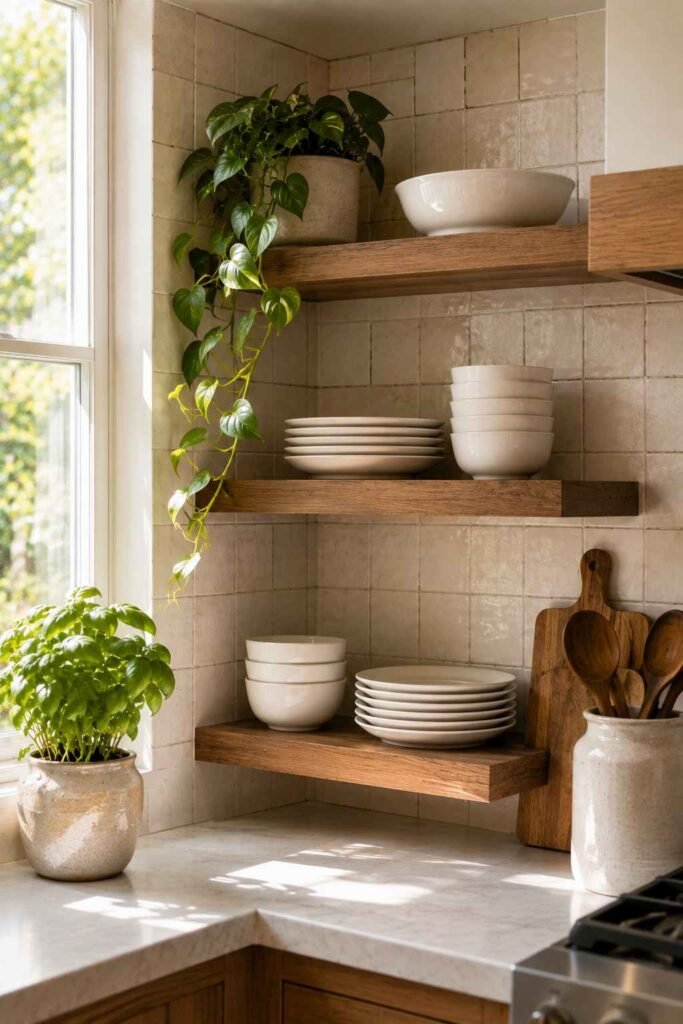
Paint the wall behind the shelves a bold tone, or run tile up to the top board. The backdrop makes plain white dishes pop. It also shields paint from splashes.
26. Plants and Trailing Greenery
A pothos or herb pot in the corner adds life and softness. Choose plants that suit your light, and skip sprays near open dishes. Herbs like basil double as ingredients.
Common Mistakes to Avoid
Even good kitchen open shelving ideas fail when the details slip. Learn from these frequent errors.
Overloading is the first. Heavy cast iron on a thin floating shelf is asking for trouble. Match load to board thickness and mounting. Placing shelves too close to the stove is the second; grease and heat shorten their life. Keep them away from direct flame and follow safety clearances.
Ignoring dust and grease is the third. Open dishes collect a light film, especially near cooking. Store what you use often, and keep rarely used items in closed cabinets. Finally, avoid clutter. Group items in threes, leave breathing room, and rotate seasonal pieces. You can find more room-by-room inspiration from the design team at outinteriors.
How to Style Your Corner Shelves
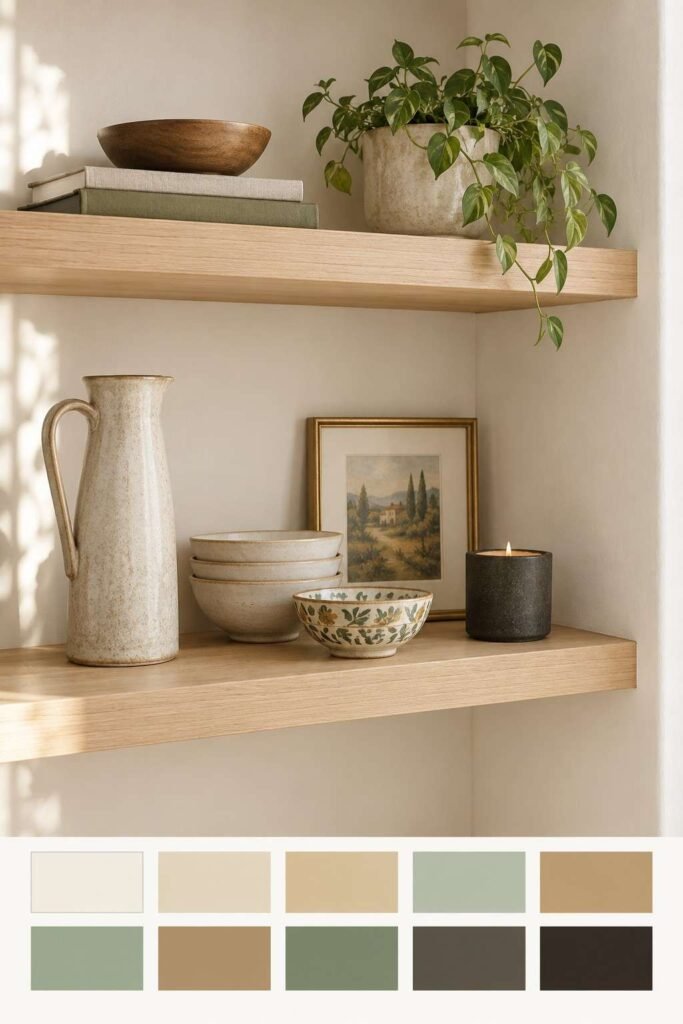
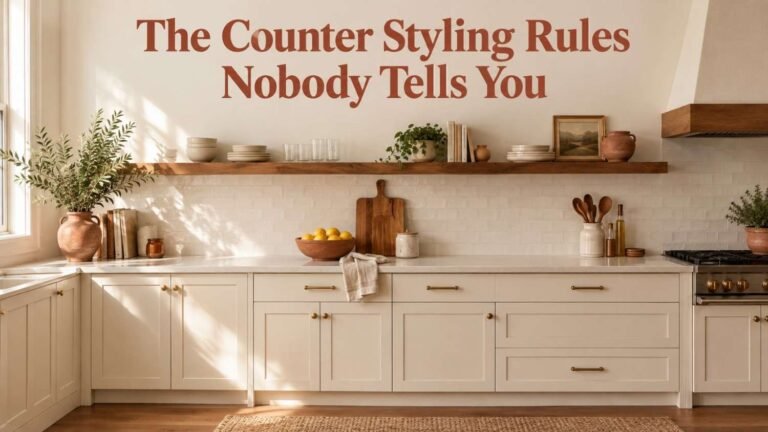
Start with a base of everyday items, such as white plates and glasses. Add one or two personal pieces, like a hand-painted bowl or a small framed print. Repeat a color at least twice so the arrangement feels planned.
Vary height and shape. Place a tall pitcher beside a low stack of bowls. Leave a bit of space, because the gaps let the eye rest. If you enjoy cute, cozy touches, add a tiny plant or a wooden cutting board leaning at the back.
Conclusion
A corner doesn’t have to be wasted space. With the right depth, sturdy mounting, and a clear plan, it can become the most useful and beautiful part of your kitchen. Start with one idea that suits your layout, whether a simple floating L or an arched nook, and build from there.
Choose materials you can maintain, and keep daily items within reach. Small choices, made with care, turn these kitchen open shelving ideas into a space that feels like yours.