Round Dining Table Ideas to Transform Your Dining Space in 2026
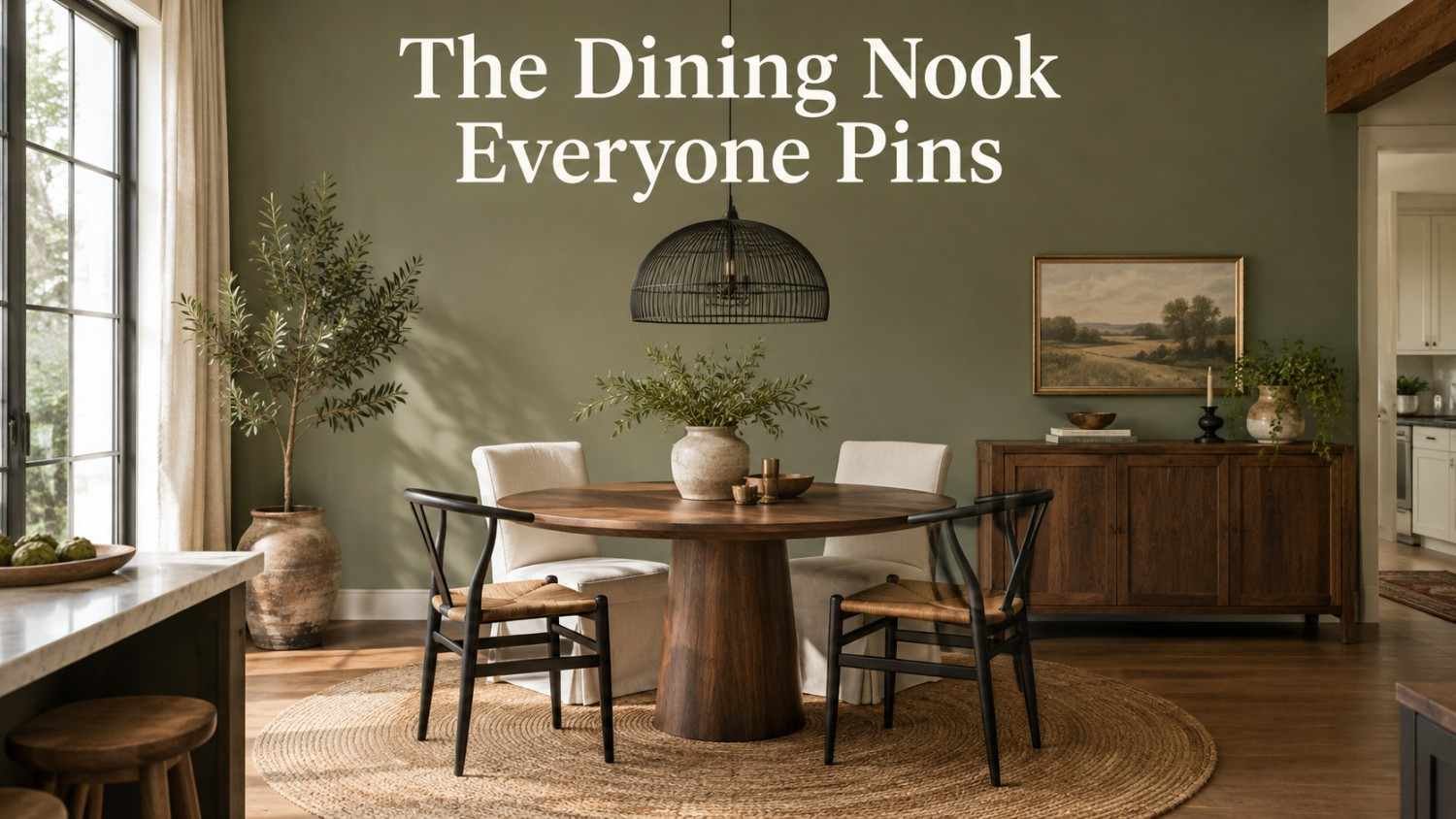
Picture a Sunday dinner where every face is in view and no one is stuck at an awkward “corner” seat. That is the quiet magic of a round dining table. It has no head, no foot, and no hierarchy — just a shared circle that pulls people closer together and keeps conversation flowing naturally around the room. Whether you are furnishing a first apartment, upgrading a family home, or rethinking a cramped breakfast nook, the right circular table can genuinely change how a space feels and functions from the very first meal you share at it.
This guide collects 25 practical, design-backed ideas for choosing, sizing, styling, and placing this table shape, built around real sizing standards, material comparisons, and small-space solutions that many buying guides skip over entirely. Instead of generic advice, you will find specific diameters, spacing rules, and placement tips you can use the moment you start shopping. Let’s walk through all 25, one section at a time.
Why This Table Shape Keeps Gaining Popularity
Circular tables are not a passing trend. The idea of a shared circle carrying equal weight for every seat goes back centuries — the legend of King Arthur’s Round Table is built entirely on that symbolism of equality among guests. In modern homes, the same principle shows up in a more practical form: smaller households, open-concept layouts, and multi-purpose rooms all favor a shape that saves floor space while still feeling social. Interior designers frequently point to this style as one of the easiest ways to make a compact kitchen or dining nook feel intentional rather than cramped, which is part of why demand for these tables has climbed steadily over the past several years.
How to Size a Round Dining Table for Your Room
Sizing mistakes are the most common regret with this furniture style, so getting the numbers right from the start matters more than almost any other decision.
1. Measure your room before you shop
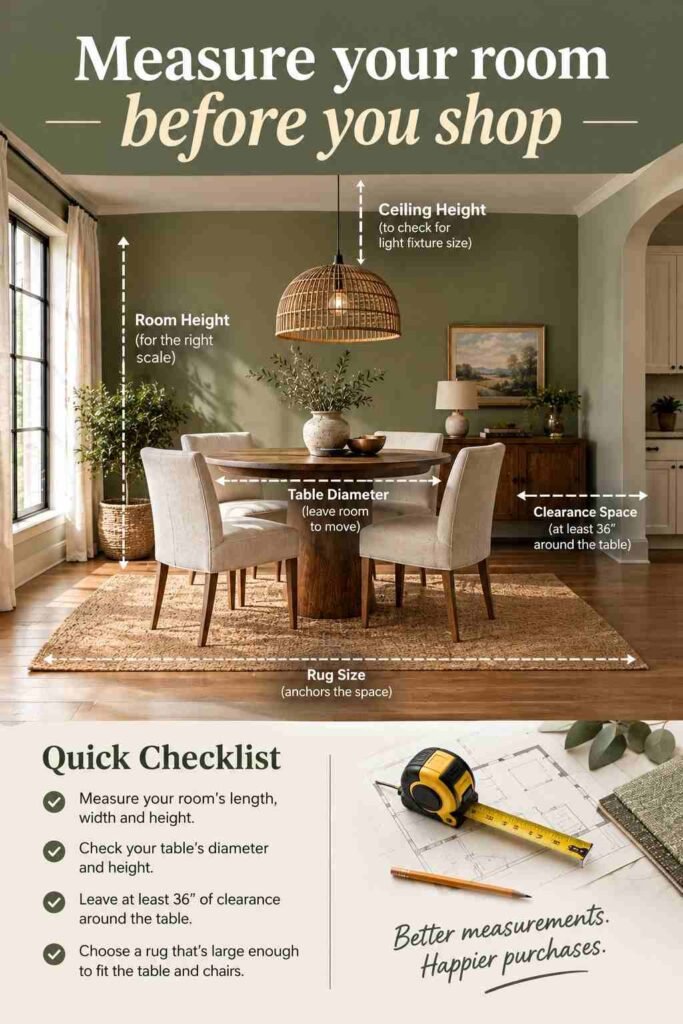
Leave at least 36 inches of clearance between the table’s edge and the nearest wall or furniture piece so chairs can slide out and people can walk past without squeezing by. In tighter rooms, 42 to 48 inches of clearance is better if the layout allows it, since it gives guests room to stand and serve food comfortably.
2. Match the diameter to your seating needs. As a general rule, a table between 36 and 42 inches comfortably seats two to four people, one between 44 and 54 inches fits four to six, a 60-inch surface handles six to eight, and anything from 66 to 84 inches accommodates eight to twelve guests. Keep this range in mind while comparing listings, since retailers rarely list seating capacity consistently.
3. Budget 24 to 28 inches of edge space per person. This is the general spacing furniture designers use when calculating how many chairs will realistically fit without elbows colliding mid-meal. Narrower chairs allow for one or two extra seats around the edge; wider upholstered chairs usually mean subtracting one from your original count.
4. Consider an extendable design. A round-to-oval extension or a table with a removable leaf lets a smaller table grow for holidays without permanently taking up floor space the rest of the year. It is one of the most useful features that many buying guides mention only in passing, if at all.
Round Dining Table Shapes and Base Styles Worth Considering
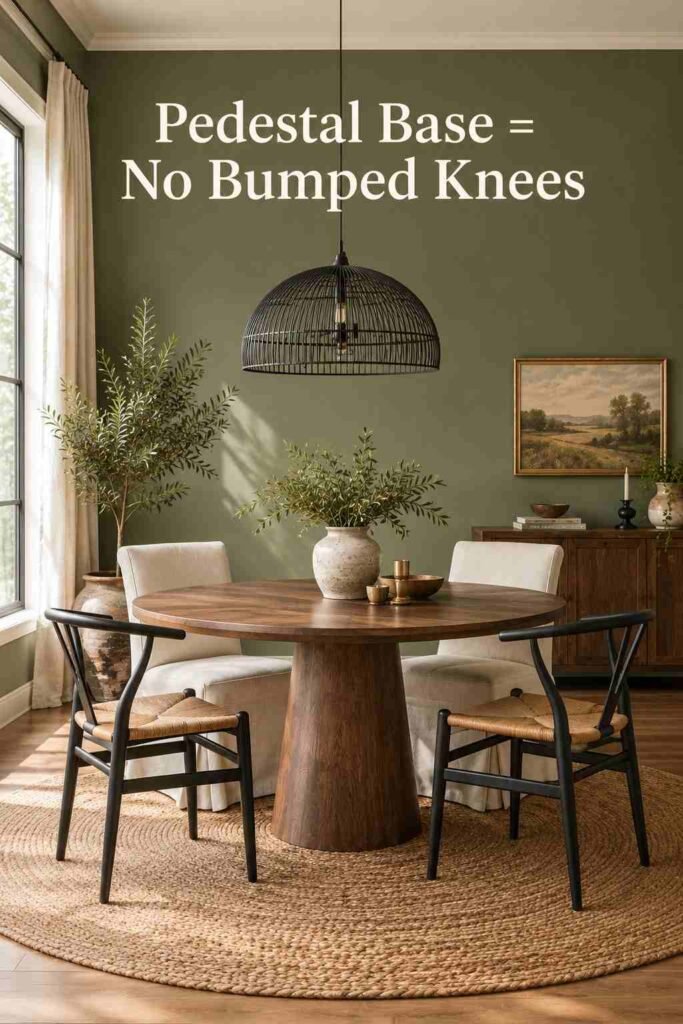
The base beneath the top affects legroom, stability, and overall style just as much as the surface material does, so it deserves equal attention.
5. Choose a pedestal base for maximum legroom. A single center column, sometimes called a trumpet or column base, avoids the tangle of individual table legs and makes it far easier to seat people evenly around the whole circle without anyone’s knees knocking a support.
6. Try a trestle or cross base for farmhouse charm. This sturdy, X-shaped support pairs naturally with reclaimed wood tops and works particularly well in casual, rustic-leaning kitchens where warmth matters more than polish.
7. Pick a four-leg base for outdoor or heavy-use settings
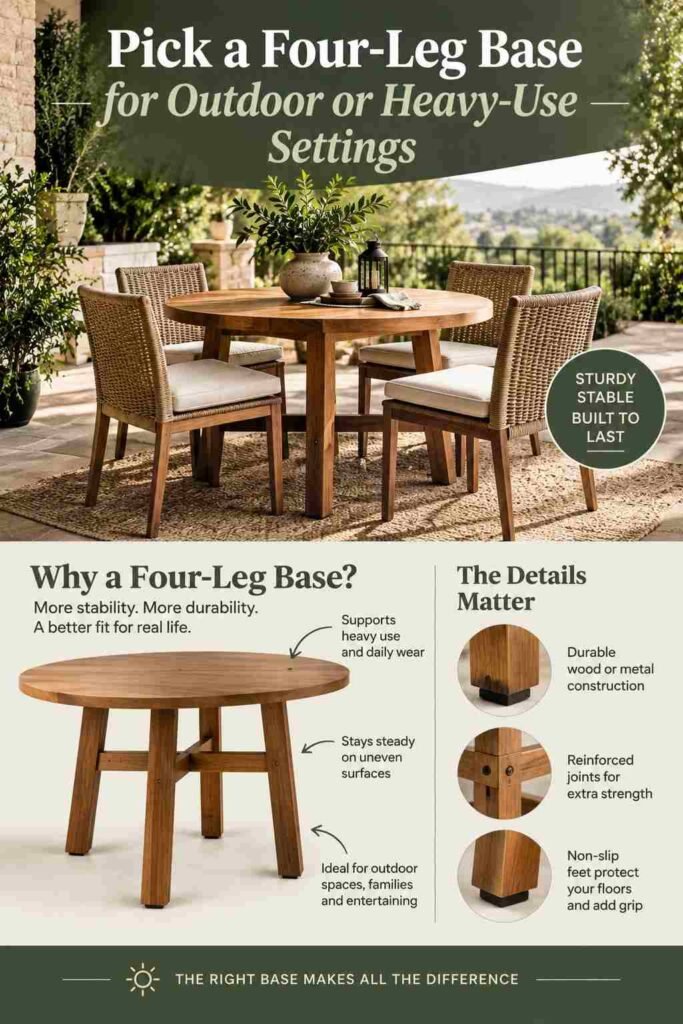
Four sturdy legs, often finished in metal, offer excellent stability on uneven patio surfaces or in households with active kids and pets who tend to bump furniture often.
8. Go with a tulip or drum base for a modern look. These flared, single-post designs read as sculptural and minimalist, making them a favorite choice in contemporary and mid-century-inspired dining rooms that favor clean lines.
9. Mix wood and metal for an industrial-chic base. A wooden or stone top paired with black iron legs adds visual contrast and suits loft-style apartments or open-concept homes with exposed brick or steel accents nicely.
Choosing the Best Material for a Round Dining Table
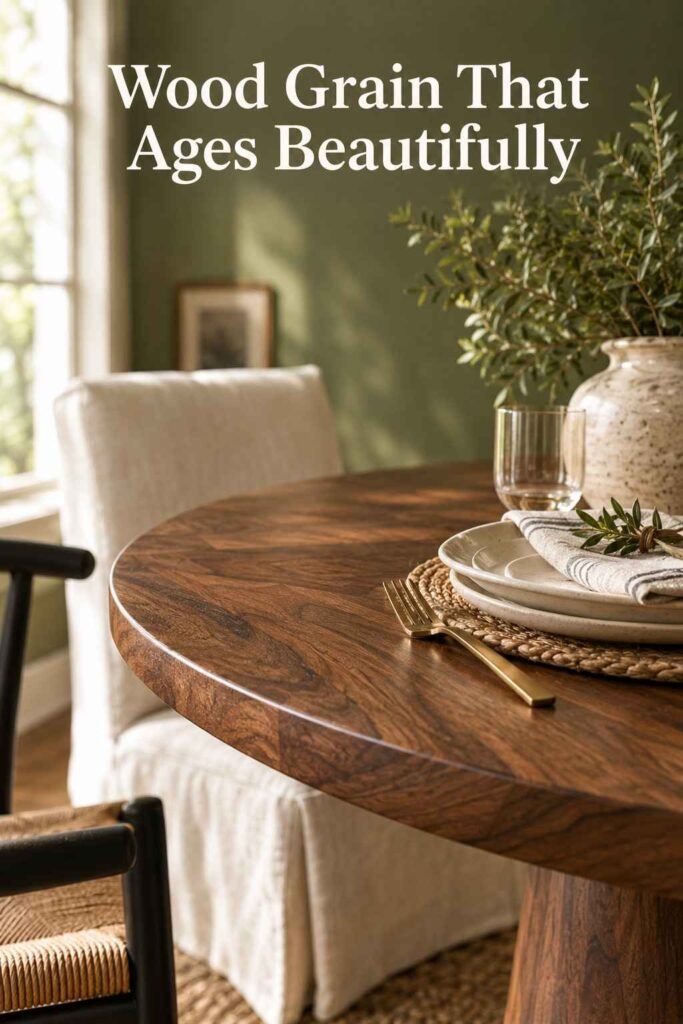
10. Solid wood remains the most durable long-term choice. Oak, walnut, and teak all resist daily wear well and can be sanded and refinished after years of use, which is why they appear so consistently in higher-end furniture collections year after year.
11. A glass tabletop visually opens up a small room. Because glass has no visual mass, it works beautifully in rooms with limited natural light or lower ceilings — a similar principle to how a Luxury Corner Glass Wall widens the feel of a living area by letting sightlines travel further across the space.
12. Faux marble and stone composite tops offer elegance at a lower price. These surfaces mimic the veining of genuine marble while resisting stains and scratches better than natural stone, making them practical for households with everyday family meals and frequent guests.
13. Reclaimed or FSC-certified wood suits eco-conscious households. These tables reduce demand for newly harvested timber and often carry more character, from visible knots to subtle color variation, than mass-produced alternatives on typical showroom floors.
Round Dining Table Ideas for Small Spaces and Dining Nooks
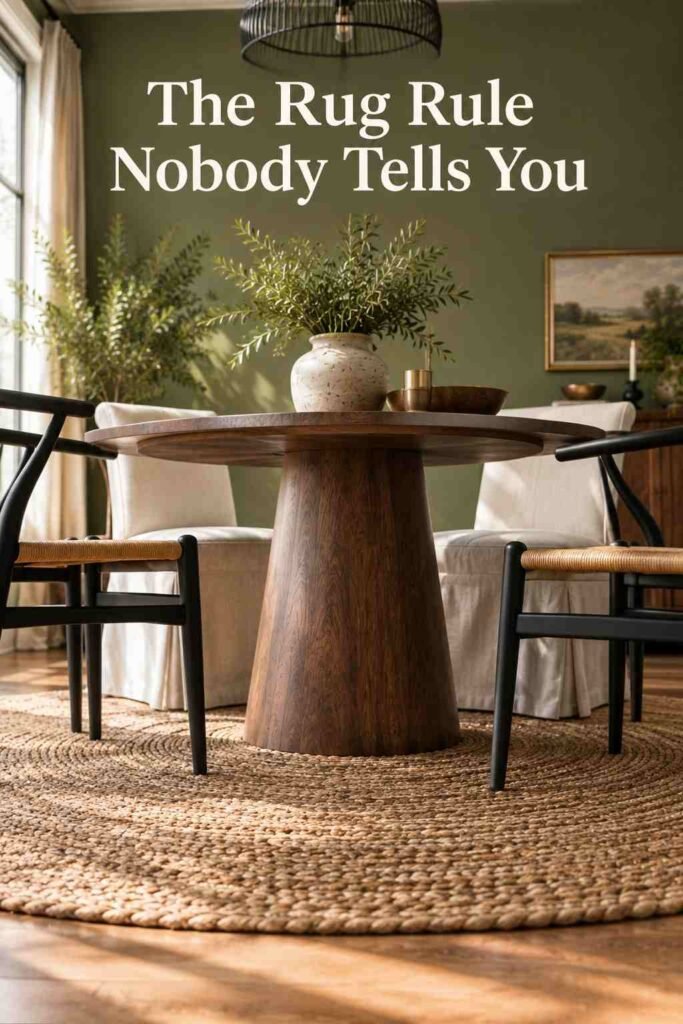
A circular shape is often the single best option for a tight footprint, since it has no sharp corners to navigate around while moving through the kitchen.
14. Stick to a 30 to 42-inch diameter in apartments. This range comfortably seats two to four people without dominating a small kitchen or studio layout, leaving enough floor space for everyday movement.
15. Pair the table with a built-in or freestanding bench. Sliding a bench against the wall frees up floor space compared to pulling out chairs on every side, which matters most in galley-style kitchens.
16. Anchor a corner with a round table for an instant breakfast spot
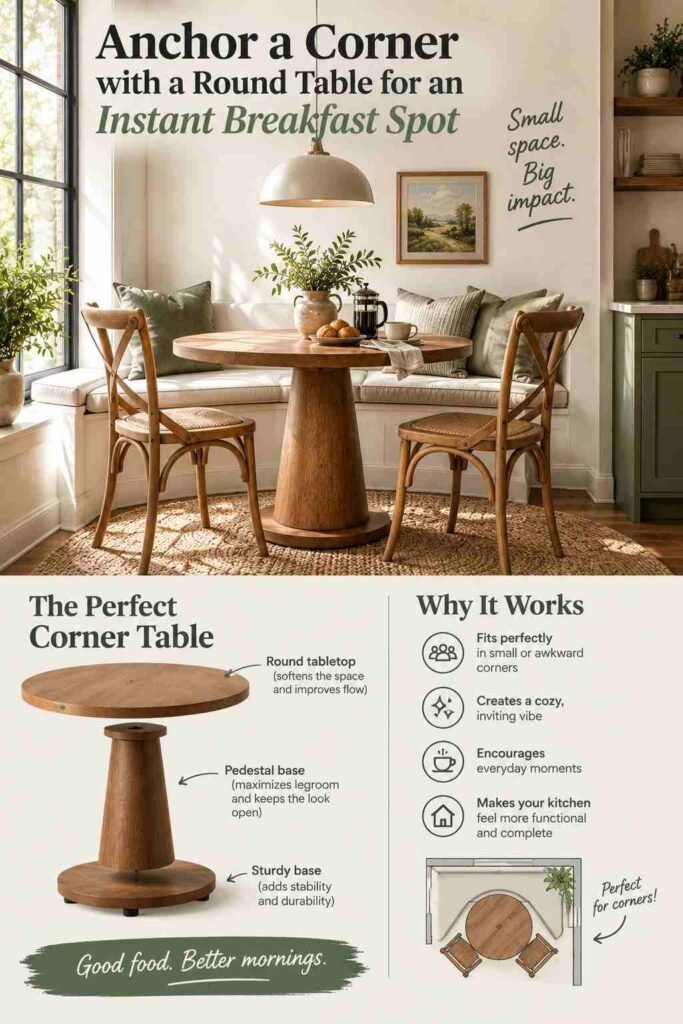
This shape fits diagonally into corners far better than rectangular options, making it ideal for dining nook ideas in kitchens where square footage is genuinely limited.
17. Choose a drop-leaf or gateleg design for added flexibility. These fold down to a slim profile against a wall and open fully when guests come over, solving the everyday-versus-entertaining size problem many small households face.
18. Add a mirror on the nearby wall. Placed behind or beside the seating area, a mirror bounces light around the room and makes a compact nook feel noticeably larger and airier than it actually is.
Styling and Decorating a Round Dining Table
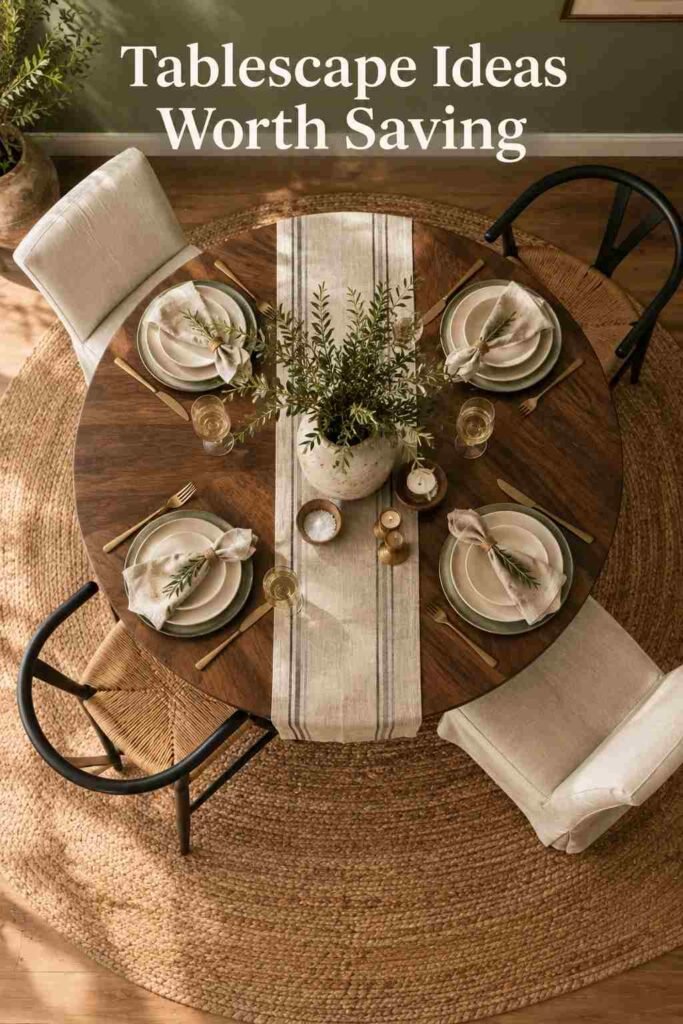
19. Size your rug about 24 inches wider than the table on every side. This allows chairs to stay on the rug even when pulled out for guests to sit, which keeps the whole arrangement from looking visually mismatched or unfinished.
20. Hang a single pendant light roughly 30 to 34 inches above the tabletop
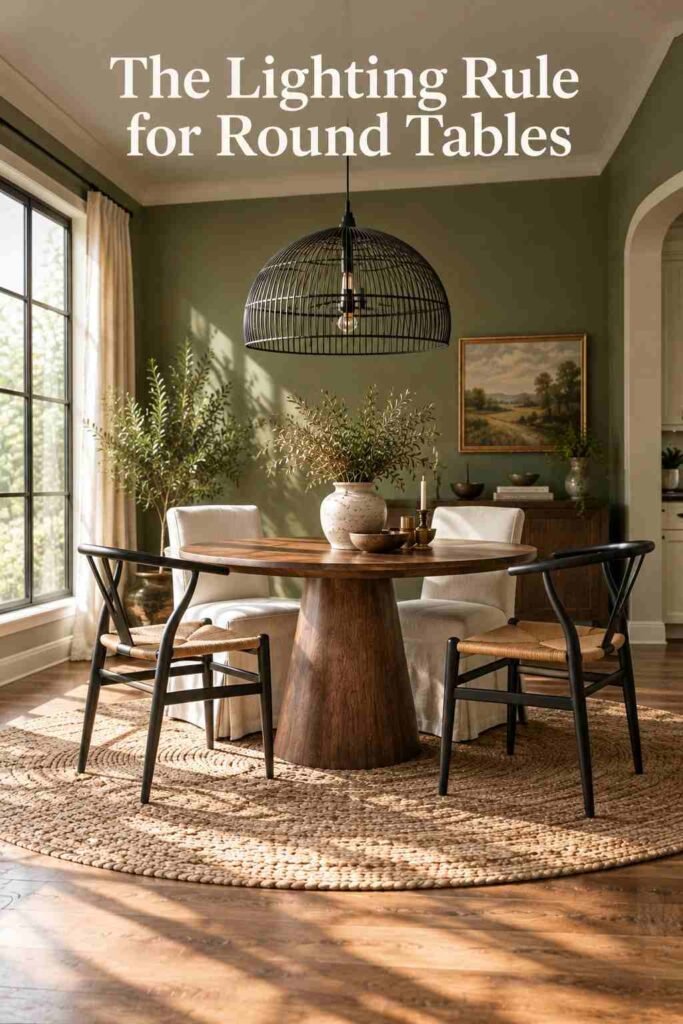
One centered fixture suits the symmetry of a circle far better than a linear chandelier that was originally designed for rectangular surfaces.
21. Mix chair styles instead of matching every seat exactly. Two or three chair designs — say, wood dining chairs with one upholstered captain’s chair — add personality without looking chaotic, since the round shape keeps everything visually balanced regardless.
22. Use a lazy Susan or turntable centerpiece for larger tables. On surfaces 54 inches and up, a rotating tray makes shared dishes and condiments easy to reach from any seat, which is especially useful for family-style meals with several dishes.
Placement Tips: Where a Round Dining Table Excels in Modern Homes
23. Center the table near a window when possible. Natural light highlights the tabletop’s grain or finish and makes everyday meals feel brighter, particularly with wood or glass surfaces that reflect ambient light well.
24. Use it to soften an open-concept kitchen
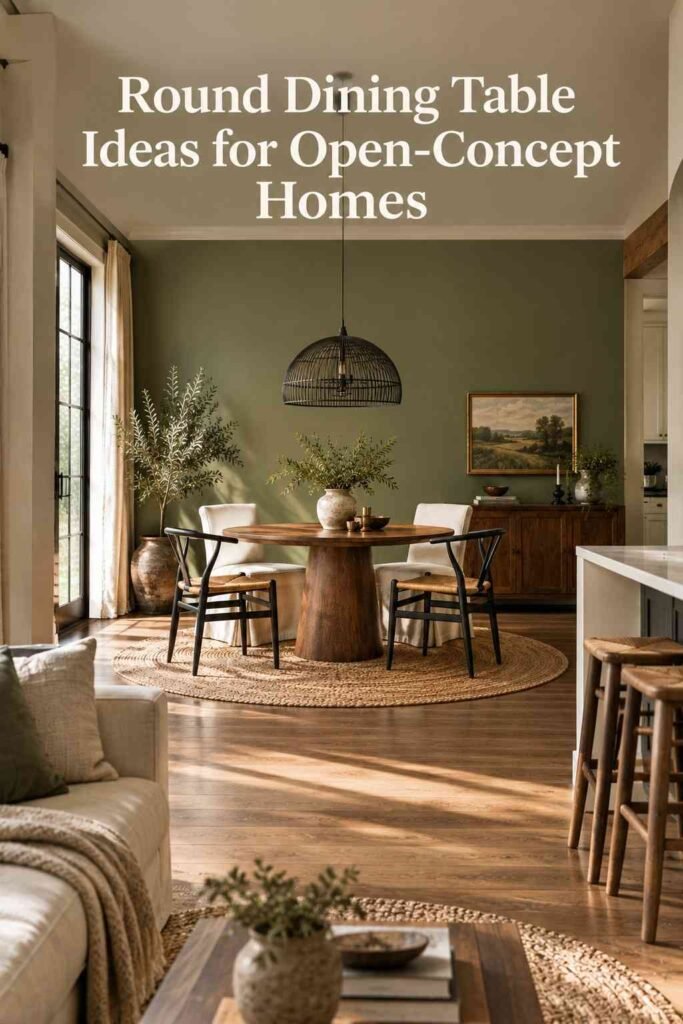
Placed near an island, its curved edges create a natural transition between cooking and eating zones without the visual bulk that a large rectangular table usually adds.
25. Consider a round dining table for covered patios and sunrooms. Weather-resistant materials such as teak, aluminum, or all-weather wicker extend the same conversation-friendly layout outdoors — a look that outdoor furniture specialists like Outinteriors have built entire collections around for exactly this kind of indoor-outdoor living.
Conclusion
A well-chosen dining table does more than fill a room — it changes how people sit, talk, and linger over a meal together. From getting the diameter right to picking a base that suits your space and choosing a material that will hold up for years, the 25 ideas above cover the decisions that actually matter, not just the ones that photograph well. Whether you are outfitting a cozy apartment nook or a sunlit patio, there is a size, shape, and material combination that fits your home.
Before you buy, walk through your own space with a tape measure in hand rather than relying on a listing’s photos alone. Note your doorway width, your walking paths, and how many people you realistically feed on a normal week versus a holiday. Matching those everyday numbers to the sizing and material guidance above will save you from the two most common regrets buyers report: a table that is slightly too large for the room, and a surface that shows wear faster than expected. Shop with real confidence instead of guesswork.
Frequently Asked Questions
1. What size round dining table do I need for 6 people?
A table between 54 and 60 inches in diameter typically seats six people comfortably, allowing roughly 24 to 28 inches of space per seat around the edge.
2. Is a round dining table better than a rectangular one for small rooms?
Generally, yes. This shape has no corners to navigate, so it fits more efficiently into tight kitchens, corners, and dining nooks than a rectangular table of similar seating capacity.
3. How much space should I leave around a round dining table?
Leave at least 36 inches of clearance between the table’s edge and the nearest wall or furniture so chairs can be pulled out and guests can walk around freely.
4. What is the best material for a round dining table with kids?
Solid wood and faux marble composite tops tend to hold up best against scratches, spills, and daily wear, and both are easy to clean with routine care.
5. Can a round dining table extend for more seating?
Yes. Many designs include a drop-in leaf or a round-to-oval extension mechanism, allowing the table to grow from a four-person size to six or eight when needed for guests.
6. What size rug works under a round dining table?
Choose a rug that extends about 24 inches beyond the table’s edge on all sides so chairs remain on the rug even when pulled out during use.
7. Do round dining tables work well outdoors?
Yes. A table made from weather-resistant materials such as teak, aluminum, or all-weather wicker holds up well on patios and in sunrooms while keeping the same space-efficient, conversation-friendly layout you get indoors.