
14 Space-Saving Furniture Ideas to Make Studios, Rentals & Small Rooms Feel Bigger With Real Measurements
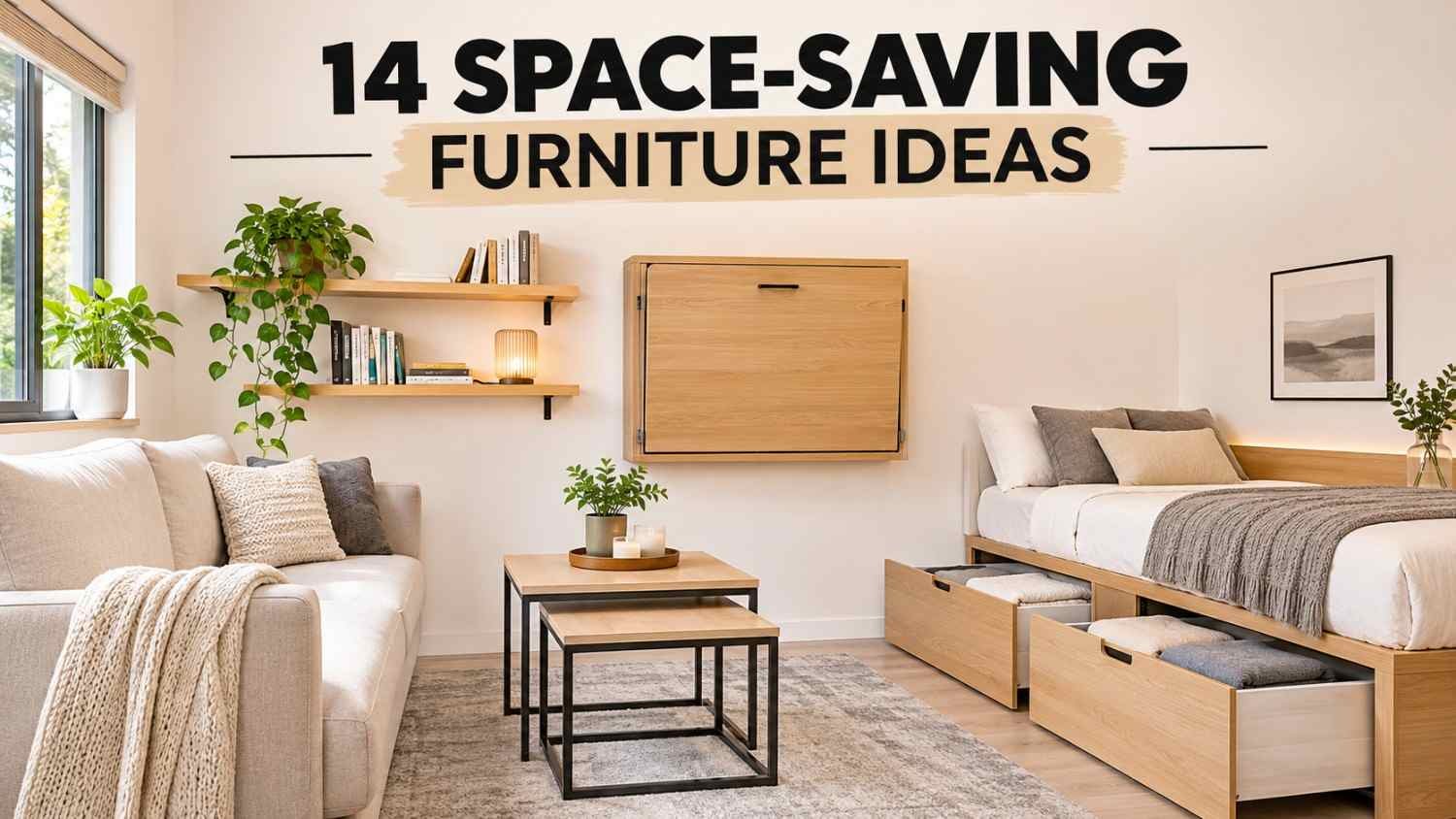
Is your small apartment working against you? If your bed fills the bedroom and your desk lives on the dining table, the problem is rarely the square footage. It is the furniture. The right pieces can make a 300-square-foot studio feel organized and calm. In this guide, you will find 14 space-saving furniture ideas for every room, from a Murphy bed and a loft bed to a drop-leaf table and a rolling kitchen cart. We explain how each piece works, who it suits, and where it can go wrong, so you can avoid costly mistakes. You will also get simple measuring rules, such as keeping main walkways at 30 to 36 inches. Whether you rent, own, or share a home, there is a fix here that fits your budget. Read on, pick one idea that solves your biggest daily frustration, and build from there, one smart piece at a time.
The goal is not to cram more into a room. It is to free up floor, keep the walkways open, and let the space breathe. Smart pieces, whether folding, stacking, or hiding storage, can make a 300-square-foot studio feel calm and usable. Let’s start in the room where most of us need help first.
Bedroom Space-Saving Furniture Ideas
The bed is usually the largest object in a small home. That makes it the best place to start. A few clever choices here can give you back a surprising amount of floor.
1. Murphy Bed (Wall Bed)
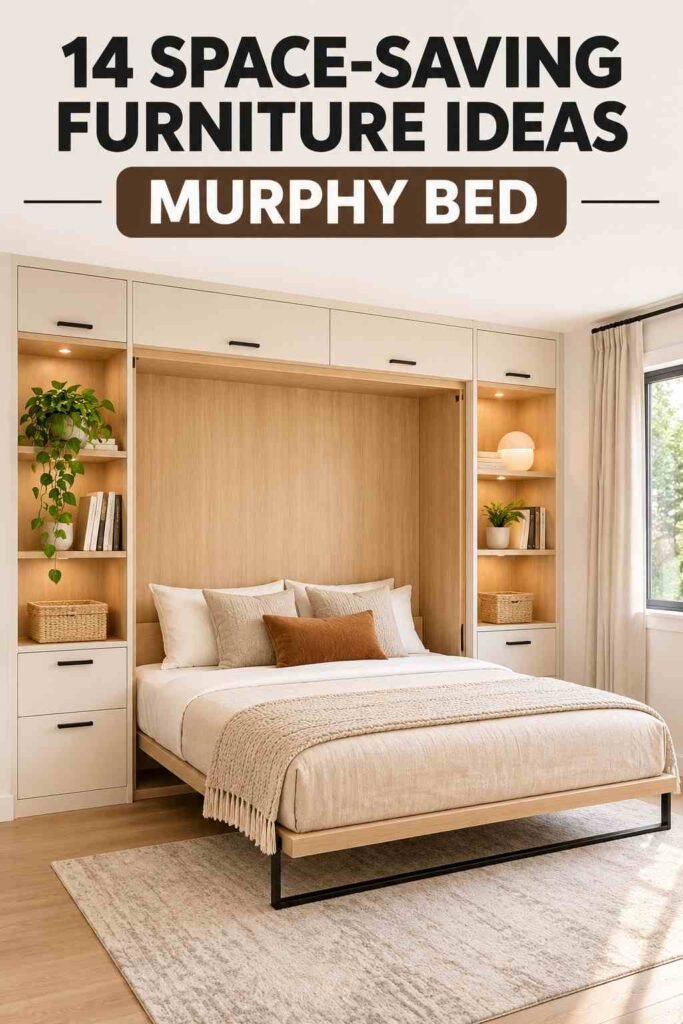
A Murphy bed folds up into a wall cabinet and disappears during the day. The idea dates back to the early 1900s and William Murphy of San Francisco, who reportedly wanted a way to host guests in a one-room apartment. Today’s versions come with built-in shelves, desks, and even sofas. They suit studios and guest rooms best. Look for a quality piston or spring mechanism, and check that the wall can hold the load. Leave about three feet of clear floor in front when the bed is open. Once your bedroom layout works, add a cozy finish with these Christmas bedroom decor ideas.
2. Storage Bed with Drawers or Lift-Up Base
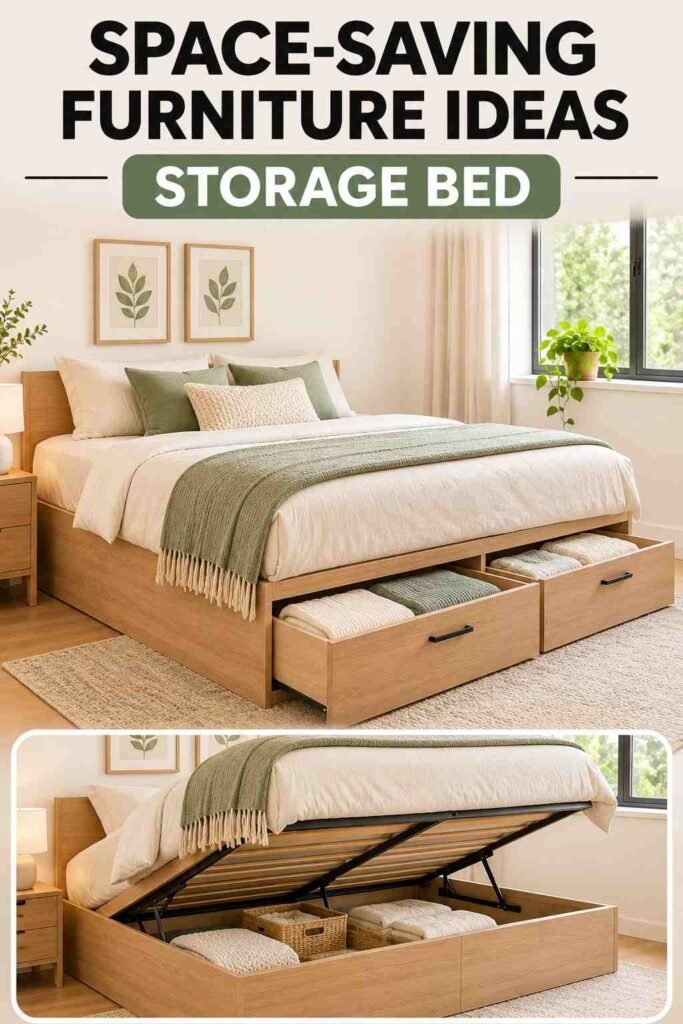
A storage bed turns dead space under the mattress into a closet. Drawer versions slide out like a dresser. Lift-up versions use gas struts to raise the whole platform, which is ideal for bulky items such as winter blankets and suitcases. Drawers need floor space to open, so measure first. If your room is tight, choose the lift-up style. This single swap can often replace an entire dresser, which frees up another wall.
3. Loft Bed with a Workspace Below

A loft bed lifts your sleeping area and gives the floor below a second job. Think desk, reading nook, or wardrobe. It works well in kids’ rooms, dorms, and rooms with ceilings of nine feet or higher. Be honest about headroom, though. If you sit up in bed and bump your head, you will not enjoy it. Pick a model with sturdy rails and a safe ladder, and skip it for anyone who sleeps restlessly.

Living Room Space-Saving Furniture Ideas
The living room often has to be a lounge, a dining area, and a guest room at once. Flexible pieces make that possible without clutter. If your living room needs a pop of comfort, browse these affordable accent chair ideas that fit tight corners.
4. Sleeper Sofa or Daybed

A modern sleeper sofa is far more comfortable than the old fold-out models many of us remember. Better mattresses and slimmer frames have changed the category. A daybed is another option. It works as a sofa by day and a bed at night, and many have a trundle underneath. Choose a model with a firm seat and washable cushion covers. If guests are rare, a daybed is lighter and cheaper to run than a full sleeper.
5. Nesting Tables

Nesting tables are the easiest upgrade on this list. They stack together when not in use and spread out when you need extra surfaces for drinks, laptops, or snacks. A set of two or three takes the footprint of one small table. Pick tables with different heights and finishes for a layered look. They also move easily, so you can pull one next to a chair for a quick reading corner. If you love clean lines and calm spaces, these Japandi interior design ideas pair beautifully with compact furniture.
6. Storage Ottoman or Lift-Top Coffee Table
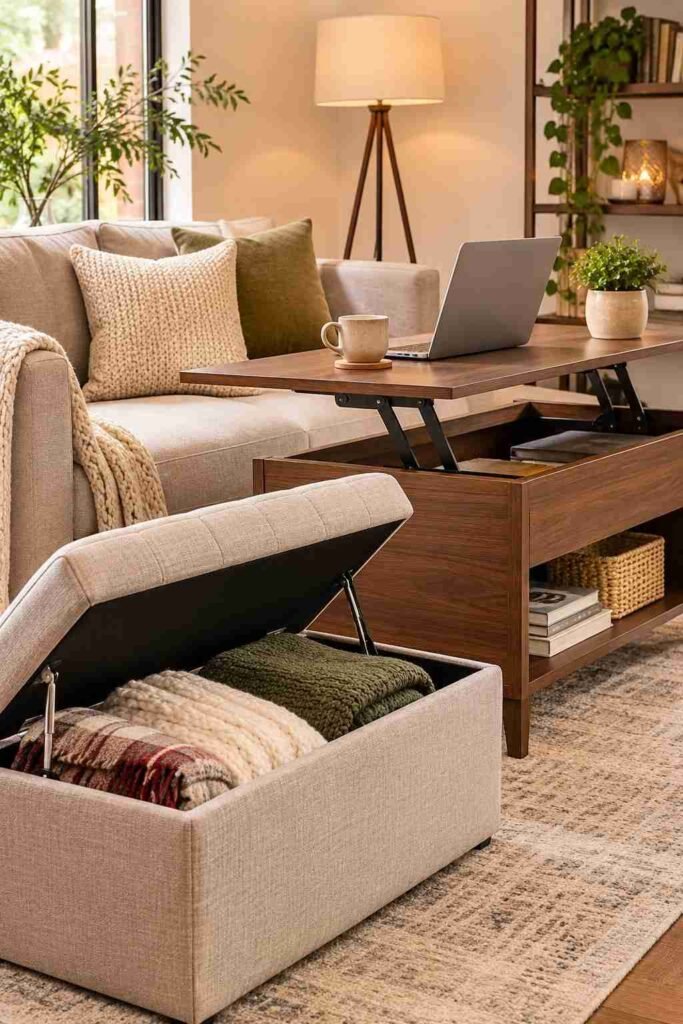
A storage ottoman is a footstool, extra seat, and hidden closet in one. A lift-top coffee table rises to desk height, so you can work or eat without leaving the sofa. Both hold throws, remotes, board games, and kids’ toys. Look for sturdy hinges that hold the lid open, and choose a wipeable fabric or finish. If you want a little more style on a budget, add a tray on top to turn it into a clean, flat surface.
7. Wall-Mounted Shelves and Floating Units
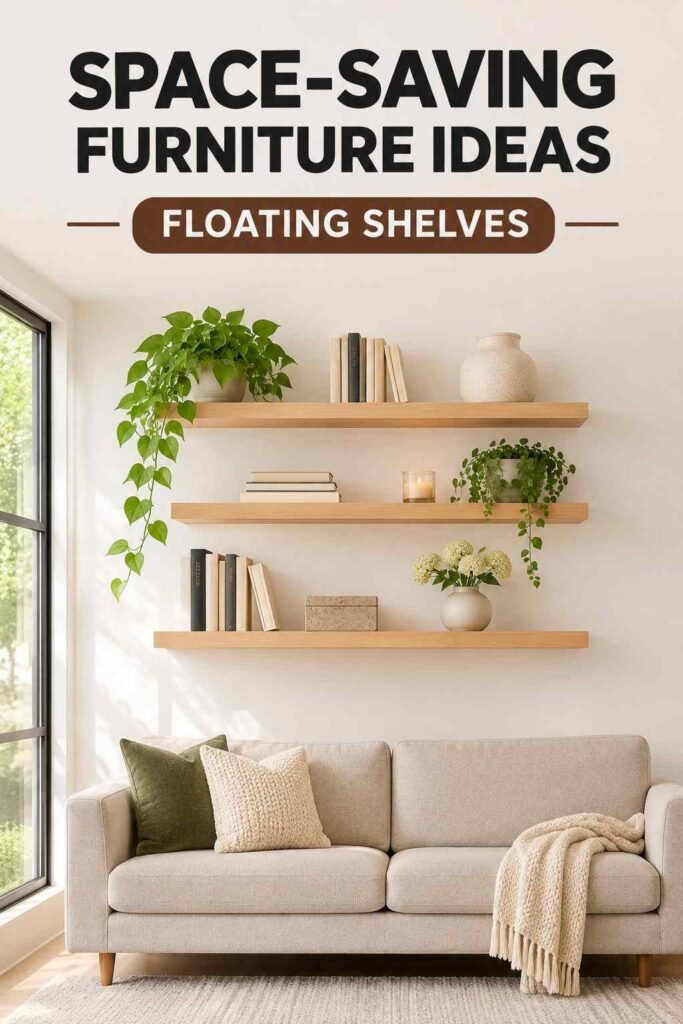
Floating shelves use vertical space and keep the floor clear. This visual openness matters more than most people expect. When you can see the floor running under furniture, the room reads as larger. Mount heavier items into wall studs and use proper anchors for drywall. Keep the lower shelves for things you reach for daily. Put lighter, decorative items higher up, and leave some space so the wall does not feel crowded.

Kitchen and Dining Space-Saving Furniture Ideas
Small kitchens and dining nooks need pieces that can shrink when the meal is over. These options keep a table without giving up the room.
8. Drop-Leaf or Gateleg Table
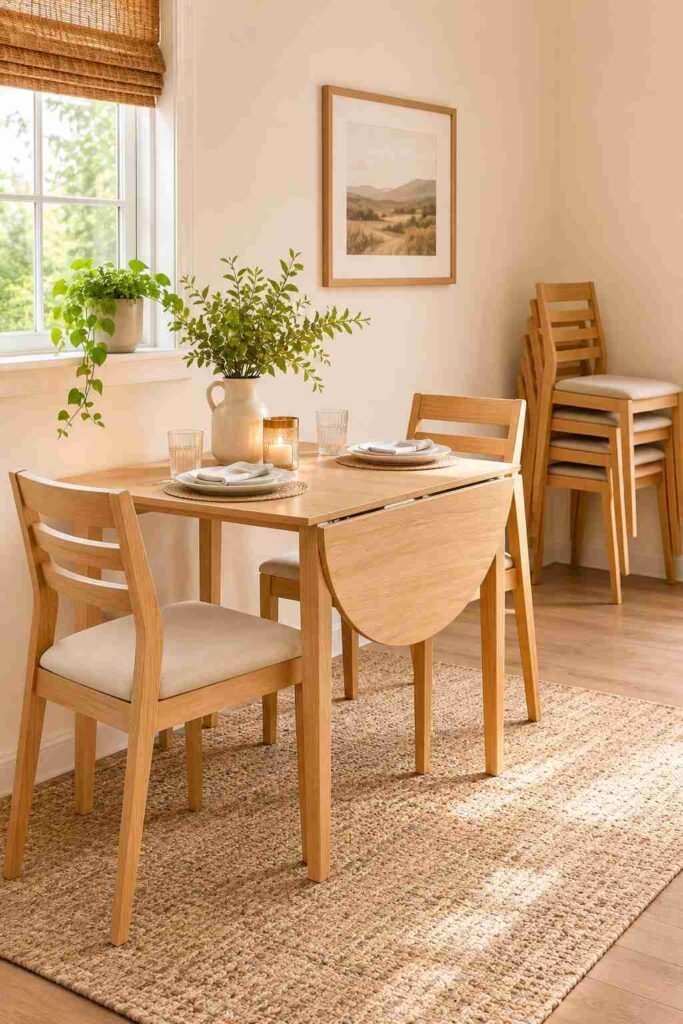
A drop-leaf table folds its sides down to a slim strip against a wall and opens to seat four or more. It is a classic for good reason. The design goes back centuries and still works in modern apartments. Choose one with sturdy leaf supports and rounded corners if you share the space with children. When closed, it can double as a console or a narrow kitchen counter.
9. Folding or Stacking Chairs

Chairs take up more room than most people expect. Folding chairs hang on a wall hook or slide behind a door. Stacking chairs pile into a neat column in a corner. Modern designs look nothing like the metal chairs in a church hall. Many come in wood, matte metal, or woven finishes. Keep two or four on hand, and store the extras out of sight until guests arrive.
10. Kitchen Cart or Rolling Island

A rolling cart adds prep space and storage where a fixed island will not fit. Wheels let you tuck it beside the fridge during the week and pull it out for baking day. Look for locking casters, a butcher-block or stainless top, and open shelves for pots and bowls. In a small kitchen, a cart can also serve as a bar or breakfast spot. Measure the clear space first. You should still keep about 36 inches for walking.
Home Office and Entryway Space-Saving Furniture Ideas
Remote work and small footprints have changed how we use bedrooms and halls. These pieces carve out useful zones without a spare room.
11. Wall-Mounted Fold-Down Desk

A fold-down desk attaches to the wall and closes flat when you are done. Some include a small cubby for notebooks and chargers. This is a smart fit for hallways, bedroom corners, and shared rooms. The key is a solid mount. Secure it to studs, and test it with your laptop and monitor. When the workday ends, close the lid, and the room goes back to being a room.
12. Secretary Desk or Compact Writing Desk
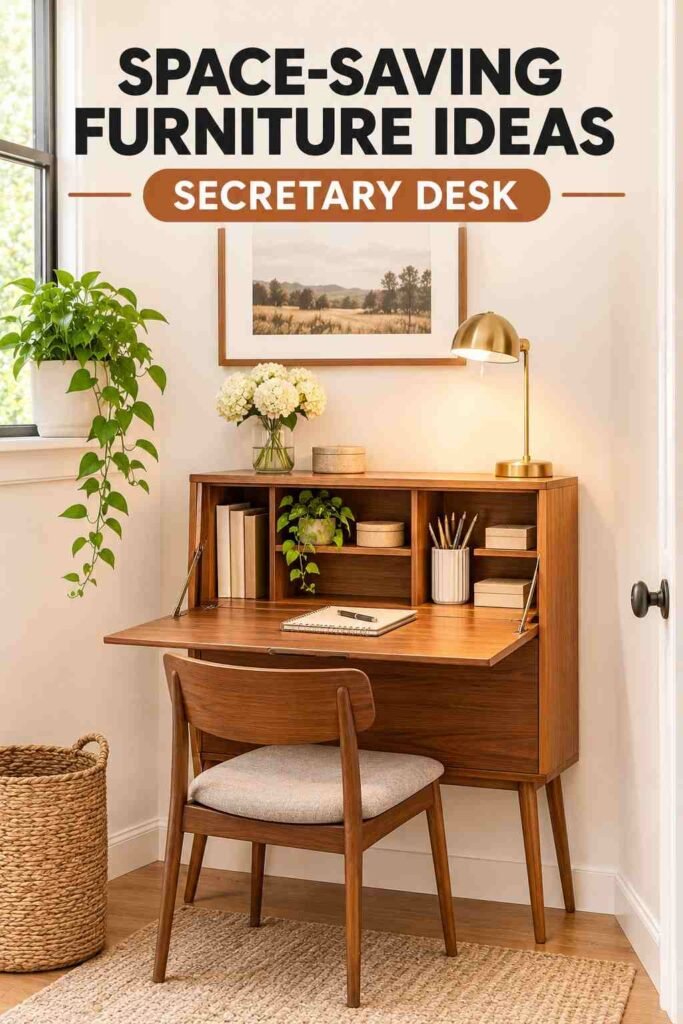
A secretary desk has a hinged front that opens into a writing surface and closes into a cabinet. It hides cables, papers, and clutter from view. That is a real benefit if your desk sits in the living room. Look for pieces about 24 inches deep or less. Pair it with a slim chair that tucks fully under, and add a small lamp. The result looks like furniture, not an office.
13. Entryway Bench with Shoe Storage

A narrow bench near the door gives you somewhere to sit, tie shoes, and drop bags. Cubbies or a flip-down shoe rack underneath keep the floor tidy. This one piece often fixes the “everything lands on the floor” problem. Choose a depth of 12 to 14 inches for tight halls. Add wall hooks above for coats. Even a small entry can feel organized and welcoming with the right setup.
14. Convertible and Multi-Functional Furniture
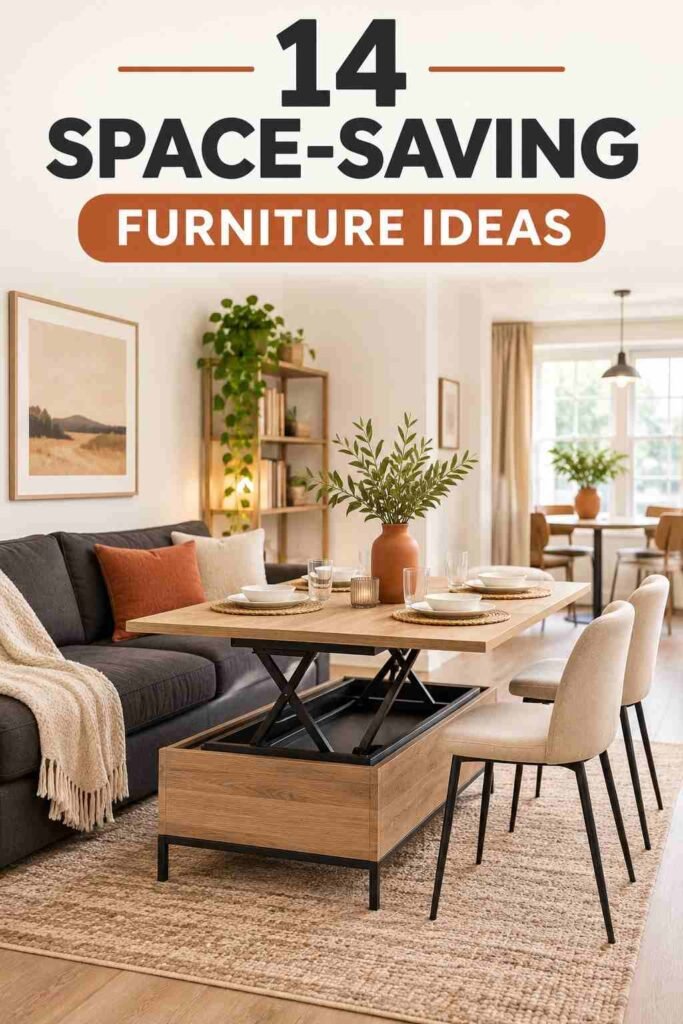
Convertible furniture changes shape to match your day. Think of a coffee table that becomes a dining table, or a bench that opens into a desk. Some modular shelves can be rearranged as your needs shift. This is where many of the best space-saving furniture ideas come together. The test is simple: can you switch it in under a minute, and does it still feel sturdy? If the answer is no, choose something simpler.
How to Choose the Right Piece for Your Home

Before you buy anything, measure the room, the doorways, and the stairwell. It is a boring step that saves expensive mistakes. Sketch the floor plan on paper and mark walkways of at least 30 inches wherever people move often. Then decide which job is most urgent: sleeping, storage, working, or hosting. Pick one idea from this list that solves that job first. A single well-chosen piece often does more than five small ones. For more budget-friendly pieces that suit small rooms, explore our affordable home decor finds.
Material and scale matter, too. Light colors and slim legs make furniture look smaller, and the room look larger. Glass, mirrors, and open frames let light pass through. Solid, bulky pieces do the opposite. Test quality by checking hinges, joints, and weight limits. Cheap mechanisms fail first, and a wall bed or fold-down desk that sticks every morning will quickly become a chore.
Common Mistakes to Avoid
The most common error is buying for the room you wish you had. Oversized sectionals and deep armchairs swallow small rooms. Another mistake is ignoring vertical space. Walls and ceilings are free storage. A third is choosing multi-use pieces that are awkward to use. If a transformation takes ten minutes, you will stop doing it. For more inspiration on styling every room, visit outinteriors.
Overfilling is the last trap. Even the smartest space-saving furniture ideas cannot hide a lack of editing. Be honest about what you own. Donate duplicates, store seasonal items, and leave breathing room on shelves and surfaces. A room with fewer, better pieces will always feel larger than one packed with clever ones.
Final Thoughts on Space-Saving Furniture Ideas
Small homes ask for more thought, but they also reward it. When each piece does two jobs, you get a space that feels organized, light, and personal. Start with the biggest pain point, whether that is your bed, your desk, or your entryway. Measure carefully, choose sturdy construction, and add one piece at a time.
These 14 space-saving furniture ideas give you a clear starting point. Pick the one that solves your daily frustration first. Then build from there, and let your home work the way you live.