Spooky Vintage Halloween Decorations That Still Haunt Homes Today
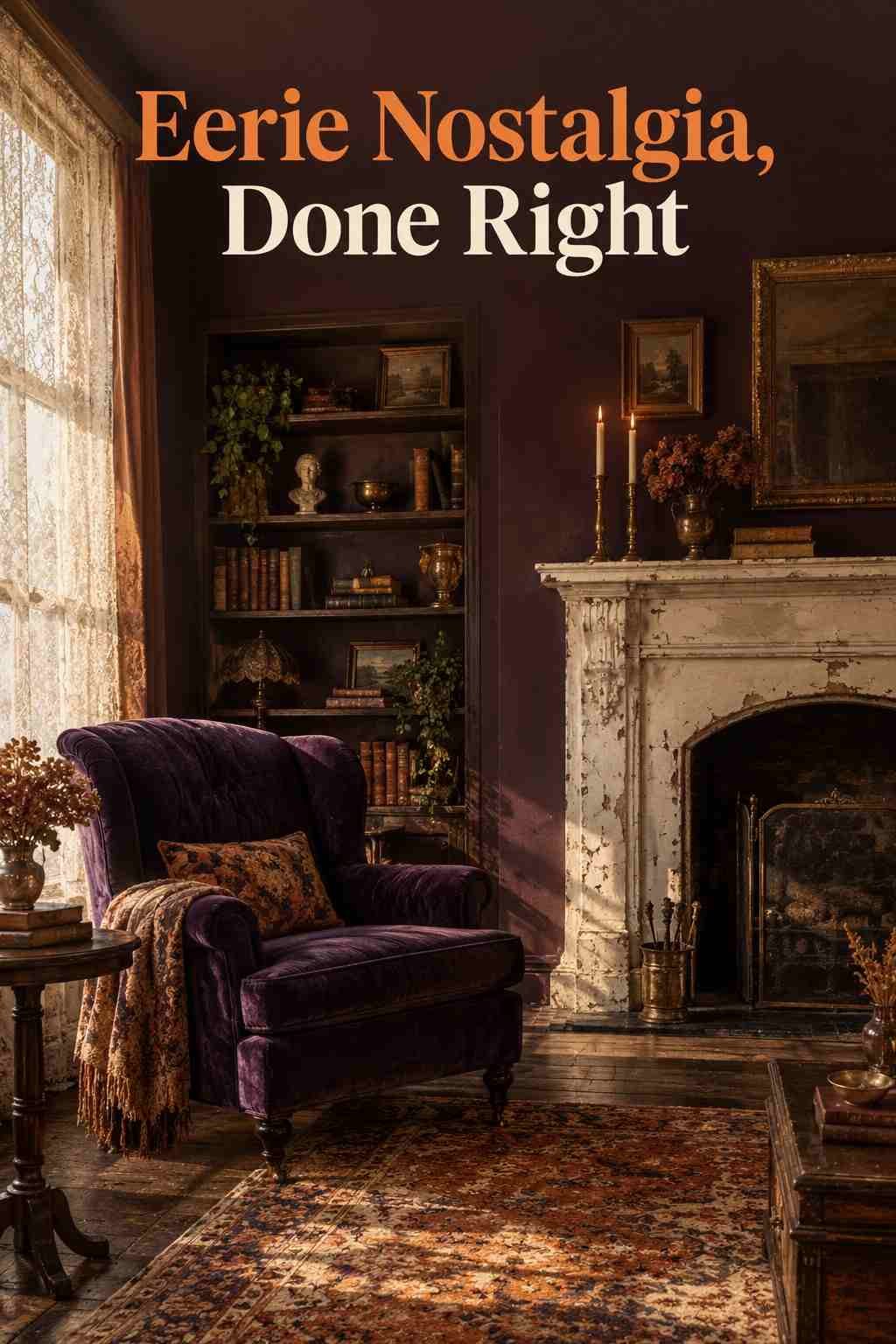
There’s a reason a faded orange die-cut cat can stop you mid-scroll faster than a brand-new plastic skeleton. Vintage Halloween decorations carry a kind of warmth that modern mass-market decor rarely manages. They were made in an era when a single company might spend a decade perfecting the fold of a paper honeycomb, and that craftsmanship still shows. Whether you’re furnishing a Vintage Halloween Decor collection, hunting for porch pieces with real history, or just curious why your grandmother’s attic box is suddenly worth something, this guide walks through 25 spooky vintage Halloween decorations, where they came from, and how to spot the real thing.
A Quick Trip Back in Time: The Story Behind Vintage Halloween Decor
Halloween decorating as we know it didn’t exist before paper companies built it. Dennison Manufacturing Company, based in Framingham, Massachusetts, began publishing its “Bogie Books” in 1909 — annual idea booklets packed with party themes, menus, and decorating instructions, all designed to sell Dennison’s crepe paper. Halloween parties exploded in popularity through the 1910s and 1920s, and Dennison’s black-and-orange crepe rolls became the backbone of nearly every home celebration.
Around the same time, Martin Luther Beistle was running a small Pittsburgh calendar business. After seeing a German paper-honeycombing technique in Heidelberg, he adapted it for tissue paper and, in 1921, partnered with the Paper Novelty Company to release his first Halloween catalog. That single decision shaped the look of vintage Halloween decor for the next century. Beistle went on to produce over 1,000 Halloween designs, and the company — still headquartered in Shippensburg, Pennsylvania — is often described as the oldest continuously operating party goods maker in the country.
How to Tell if a Halloween Decoration Is Truly Vintage
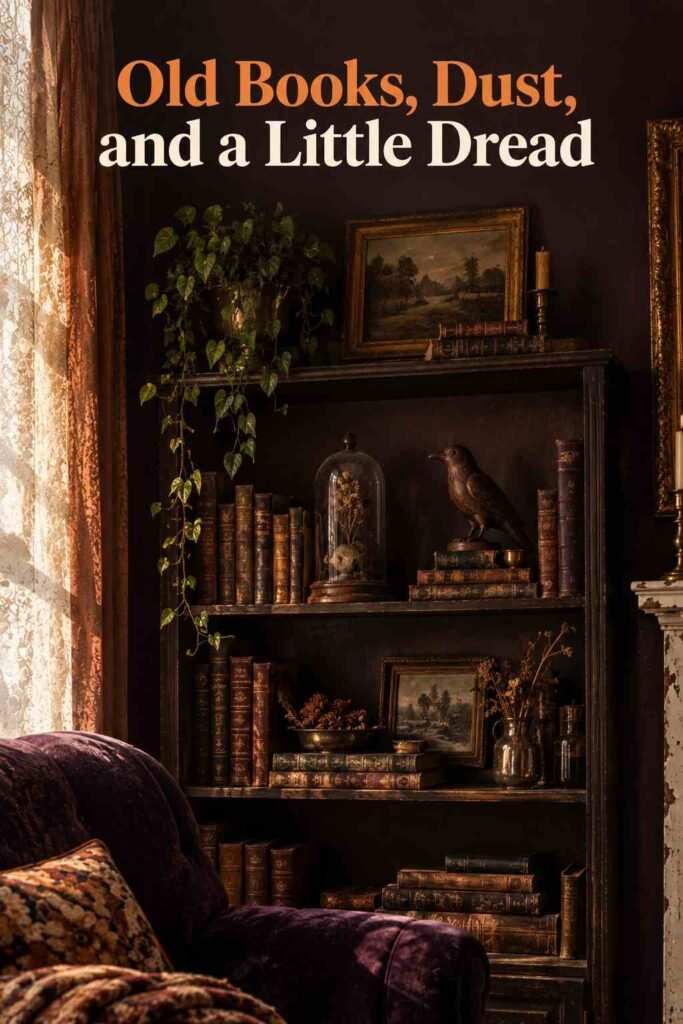
Not every orange-and-black item at a flea market is actually old. Before you build a collection of vintage Halloween decorations, it helps to know what separates an original from a modern reprint.
Check the Material and Construction
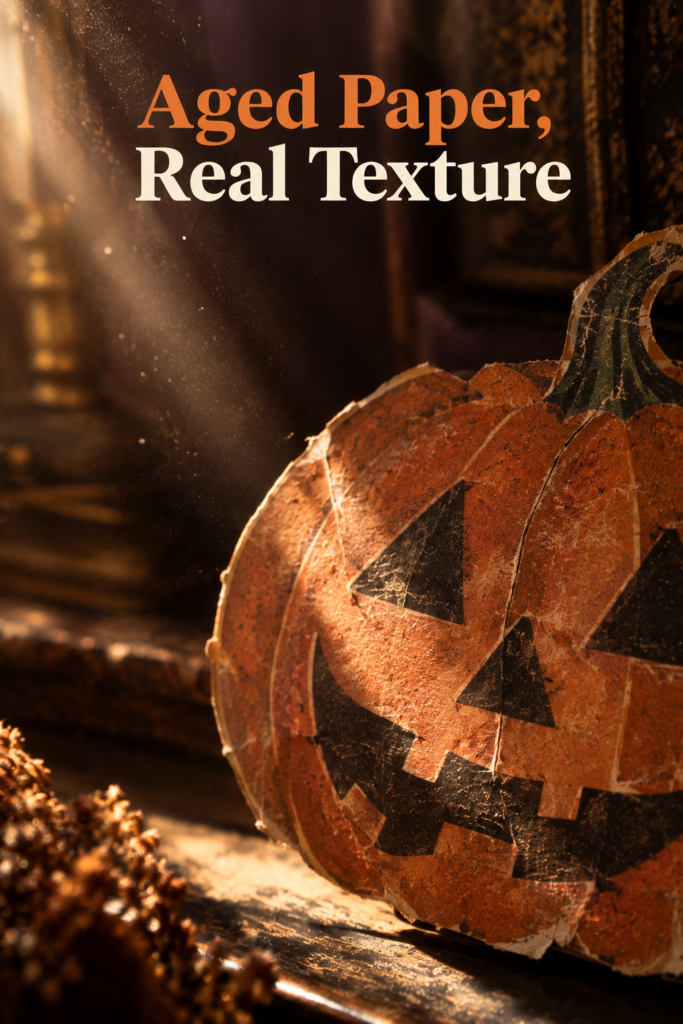
Genuine pieces from the 1920s through the 1950s are usually made of thin die-cut cardboard, crepe paper, or tissue honeycomb — never the thick, glossy cardstock used in today’s reproductions. Edges are often slightly irregular because they were die-cut by hand-fed machines, not laser-cut.
Look for a Maker’s Mark
Beistle pieces frequently carry a small printed mark or “Made in U.S.A.” stamp, while unmarked pieces sometimes trace to Dennison or smaller regional printers. A missing mark doesn’t always mean fake, but a mark that looks too crisp or a modern copyright date is a clear sign of a licensed reissue rather than an original.
Read the Color Palette
Early vintage Halloween decorations relied on a narrower ink palette — burnt orange, black, and a muted yellow — because of period printing limits. Bright, saturated orange or added colors like purple or green usually point to a later production run, often from the 1960s or a modern remake.
25 Spooky Vintage Halloween Decorations to Collect or Recreate
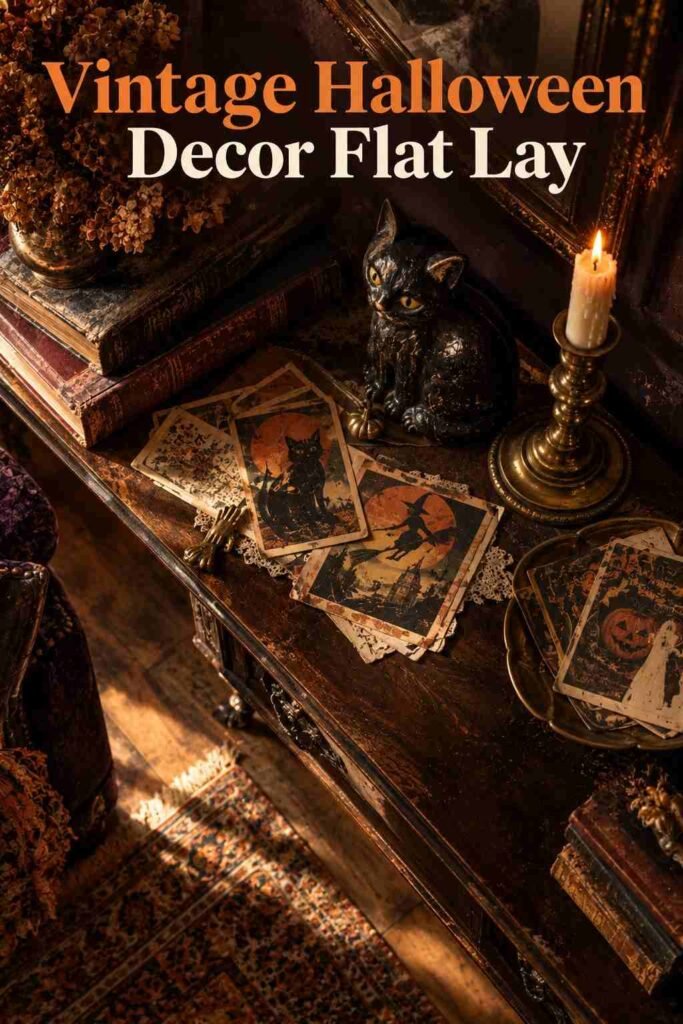
Here are 25 spooky vintage Halloween decorations grouped by category, each one a real product type that shaped the holiday’s look.
Die-Cut Paper Decorations
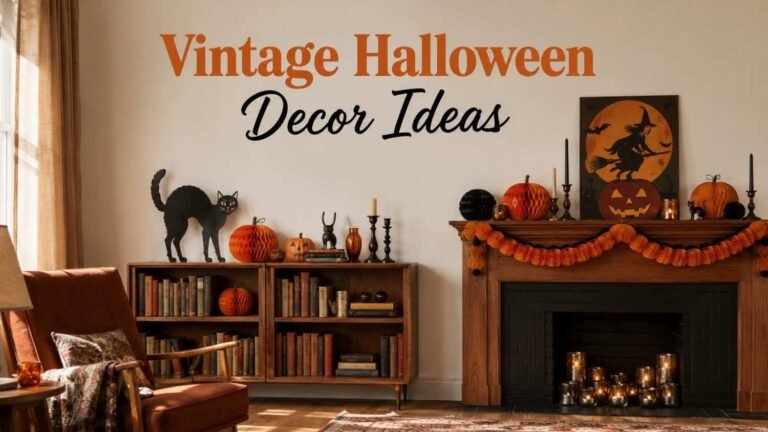
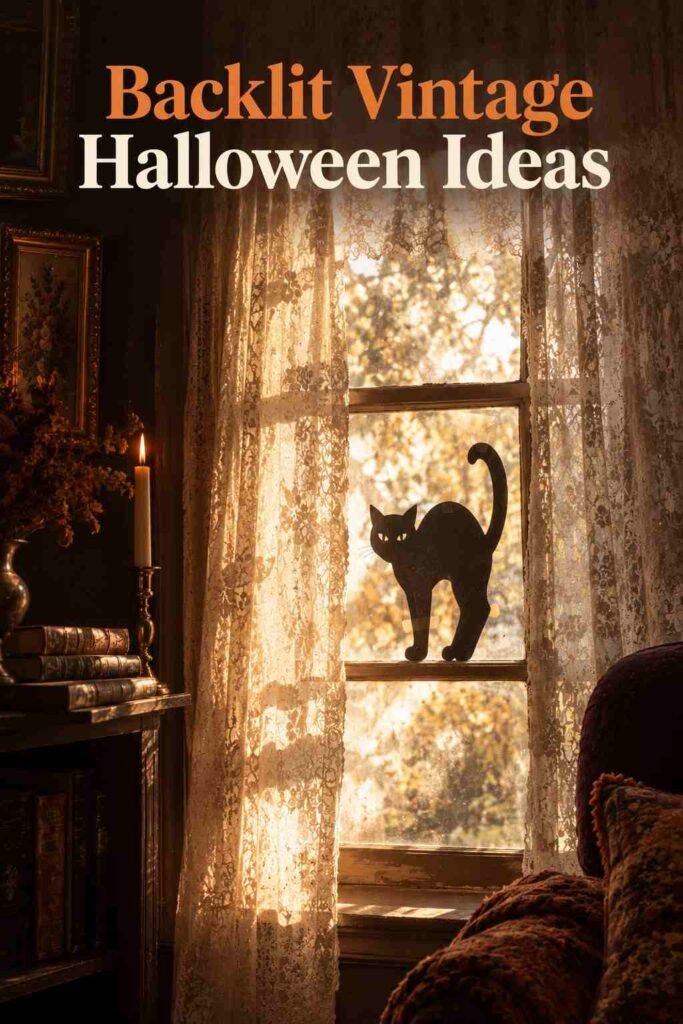
- Black Cat Die-Cut – The classic arch-backed cat, a Beistle signature since the 1920s, usually taped to windows or doors.
- Grinning Jack-o’-Lantern Cutout – Bright orange pumpkin faces with jagged black grins, often sold in sets of varying sizes.
- Witch Silhouette – A pointed-hat witch mid-flight, frequently paired with a paper moon.
- Skeleton Jointed Figure – Poseable cardboard skeletons with brass paper fasteners at each joint.
- Owl Cutout – A less common but highly collectible design, often perched on a crescent moon.
Honeycomb Tissue Centerpieces
- Honeycomb Witch on a Moon – Beistle’s most famous three-dimensional tissue piece, expanding into a full centerpiece.
- Honeycomb Pumpkin Ball – A round, accordion-style tissue pumpkin used as a hanging decoration.
- Honeycomb Black Cat – A puffed-out tissue cat shape, often paired with the witch centerpiece.
- Honeycomb Bat – Wings that fold flat for storage and pop open into a full 3D shape.
- Honeycomb Devil Figure – A rarer novelty piece from the 1930s party catalogs.
Halloween Candy Containers
- Papier-Mâché Pumpkin Head – A hollow pumpkin container with a lift-off lid, popular from the 1910s onward.
- Composition Cat Candy Box – A molded black cat figure with a hidden compartment for treats.
- Witch-on-Broomstick Container – A standing witch figure that opens at the base.
- Cauldron-Shaped Candy Dish – A small black kettle, often ceramic or pressed paper.
- Ghost Candy Container – A simple white figure with cut-out eyes, one of the more affordable finds today.
Noisemakers and Tin Litho Toys
- Tin Litho Ratchet Noisemaker – Hand-cranked metal clackers printed with pumpkin and witch scenes.
- Tin Halloween Horn – A cone-shaped horn decorated with cats and bats, common at 1940s parties.
- Tambourine-Style Noisemaker – A flat tin disc with jingling metal edges.
- Clicker Toy – A small pressed-tin device shaped like a pumpkin or skull.
- Tin Rattle – A hand-spun rattle printed with orange-and-black graphics.
Ceramic and Chalkware Figures
- Chalkware Black Cat – Originally carnival prizes from the 1930s and 1940s, now genuinely rare.
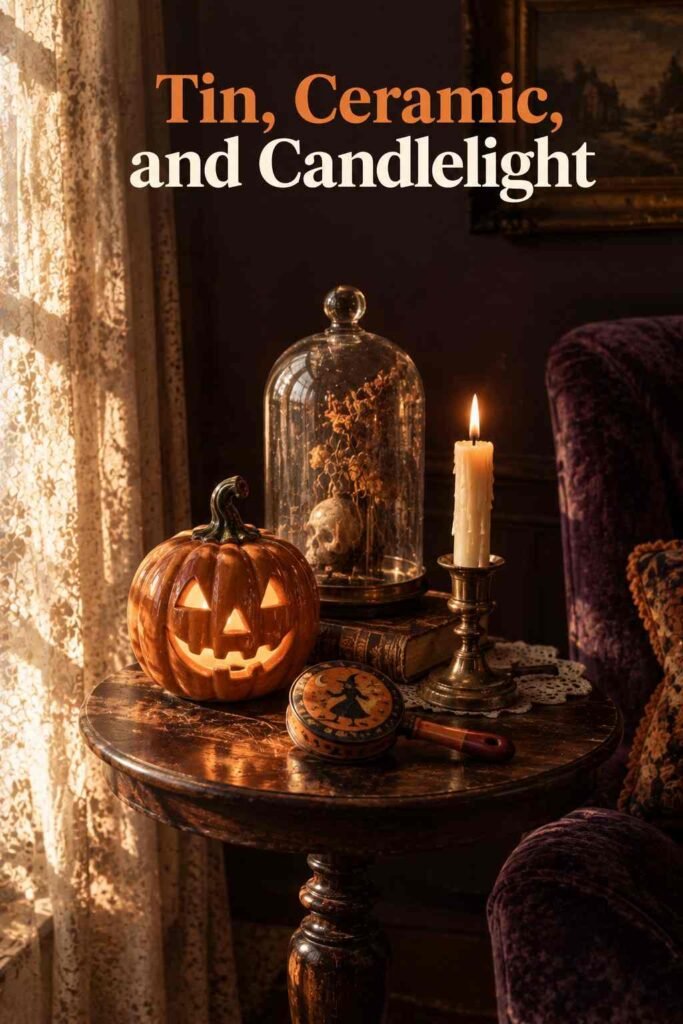
- Ceramic Jack-o’-Lantern String Light Cover – Small hollow pumpkins that slipped over C6 bulbs.
- Ceramic Owl Candle Holder – A tabletop piece combining lighting with seasonal decor.
- Painted Witch Figurine – Hand-finished plaster or chalk figures, often uneven in size from mold wear.
- Sitting Pumpkin Man Figure – A ceramic character piece with a jointed or painted grin, a favorite among today’s collectors.
Styling Vintage Halloween Decor Without Making It Look Costume-y
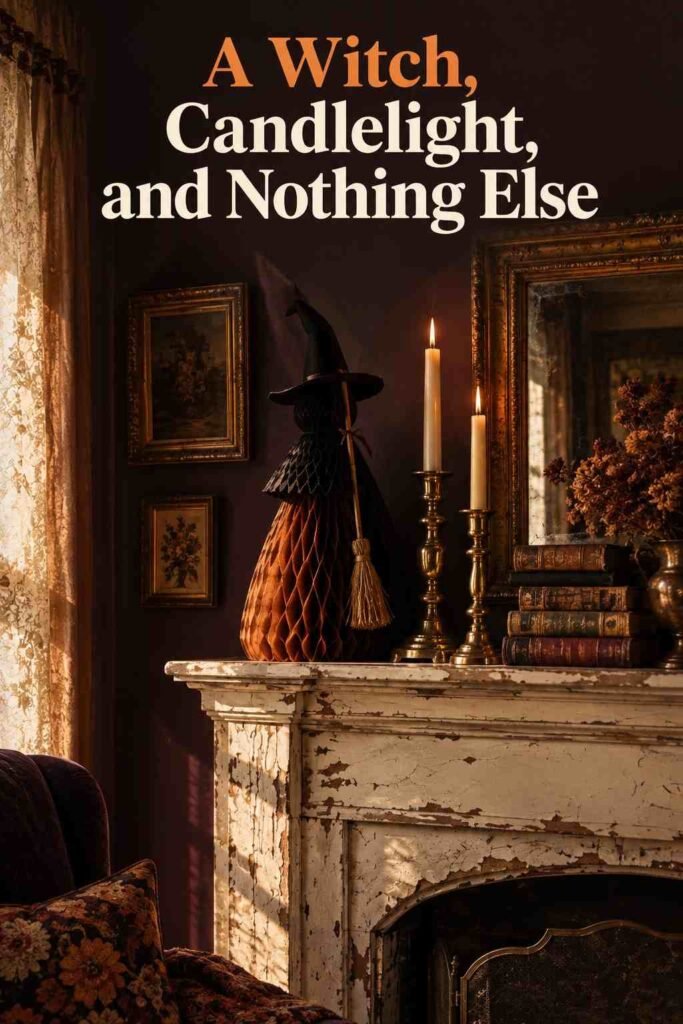
The trick with genuine or reproduction vintage pieces is restraint. A single honeycomb centerpiece on an entry table reads as intentional; five different eras crammed onto one shelf reads as clutter. Group pieces by color family and era instead of mixing every decade together, and let negative space do some of the work — these designs were built to be noticed on their own.
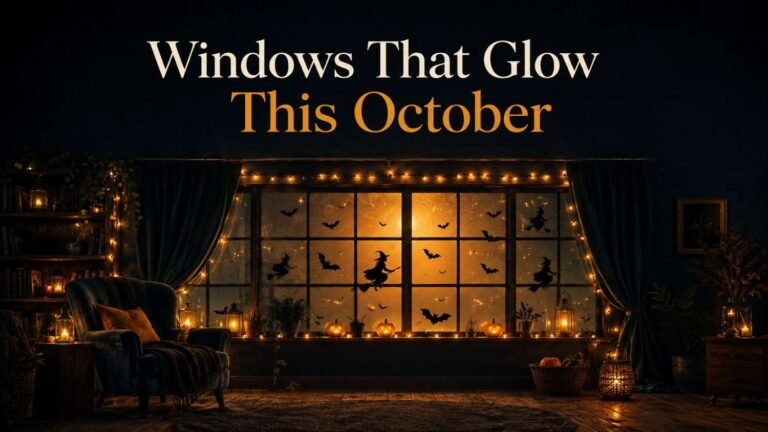
Windows are one of the most underused spots for this style. If you already like the idea of painted glass, our guide to Spooky window painting ideas pairs well with die-cut silhouettes taped just inside the frame, so the two effects layer instead of compete. For broader room-by-room inspiration on blending antique finds with a modern layout, the team at outinteriors has additional seasonal styling breakdowns worth a look.
Where to Find Authentic Vintage Halloween Decorations
Estate sales and small-town antique malls remain the most reliable sources, since sellers there are less likely to have researched exact values. Online, dedicated auction sites and vintage-specific marketplaces tend to yield better documentation than general resale apps, including seller notes on maker’s marks and production decade. Halloween-specific collector shows, usually held in late summer, are worth the trip if one happens near you — dealers there specialize in exactly this category and can often date a piece on sight.
Vintage vs. Reproduction: Knowing the Price Difference
This is where new collectors get burned most often. Beistle still manufactures decorations today, and some current items are intentional reissues of decades-old artwork, sold new at modest prices. An original 1930s die-cut can sell for $50 to several hundred dollars depending on condition and rarity, while a licensed modern reprint of the same image typically runs under $20. The giveaway is almost always the paper stock and printing sharpness — original pieces show slight fading, foxing, or fold creases that a new reprint won’t have. Buying a reproduction isn’t a mistake if you just want the look, but knowing which one you’re paying for protects your budget either way.
Conclusion
Vintage Halloween decorations survived for a reason. They were designed by companies like Dennison and Beistle at a moment when Halloween parties were becoming a genuine American tradition, and the paper, tissue, and tin pieces they produced still carry that original enthusiasm. Whether you’re chasing an authentic 1920s die-cut, styling a themed room, or simply want a porch that looks like it belongs in an old photograph, the 25 pieces above cover the full range of what made this holiday’s decor style so distinctive. Start with one or two categories, learn to read the material and marks, and the rest of the collection tends to build itself.
Frequently Asked Questions
What years count as “vintage” for Halloween decorations?
Most collectors and dealers use the term for pieces made between the 1920s and the early 1970s, with anything before the 1920s falling into the rarer “antique” category.
Are Beistle Halloween decorations still made today?
Yes. Beistle remains in operation in Shippensburg, Pennsylvania, and continues to print many of its historic designs, which is why buyers need to check paper stock and printing details before assuming a piece is original.
What’s the most valuable type of vintage Halloween decoration?
Honeycomb tissue centerpieces and chalkware figures from the 1920s–1940s generally command the highest prices, especially in undamaged condition with original packaging.
Is it safe to display original paper decorations outdoors?
No. Original crepe paper, tissue, and die-cut pieces are fragile and fade or tear quickly in sunlight and moisture, so they’re best kept indoors or replaced outdoors with reproductions.
How can I clean a vintage paper Halloween decoration?
Avoid water or cleaning products entirely. A soft, dry brush to remove surface dust is the safest option, since moisture can cause the dyes to bleed or the paper to warp.
Where is the best place to start a vintage Halloween decor collection?
Die-cut paper pieces are the most affordable and widely available entry point, making them a practical starting category before moving into rarer honeycomb or chalkware items.
Do reproduction Halloween decorations have any collector value?
Generally not as investment pieces, but well-made reproductions hold decorative value and let you achieve the look without the fragility or cost of an original.