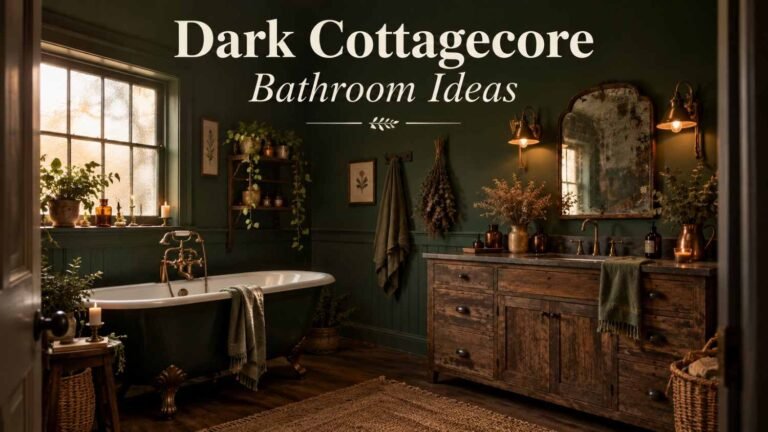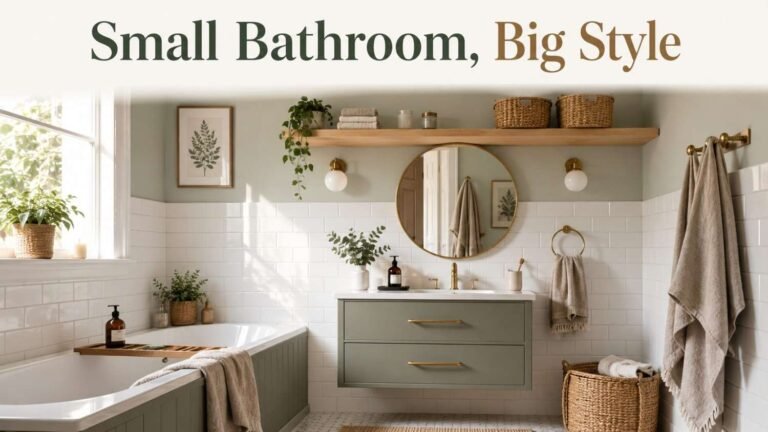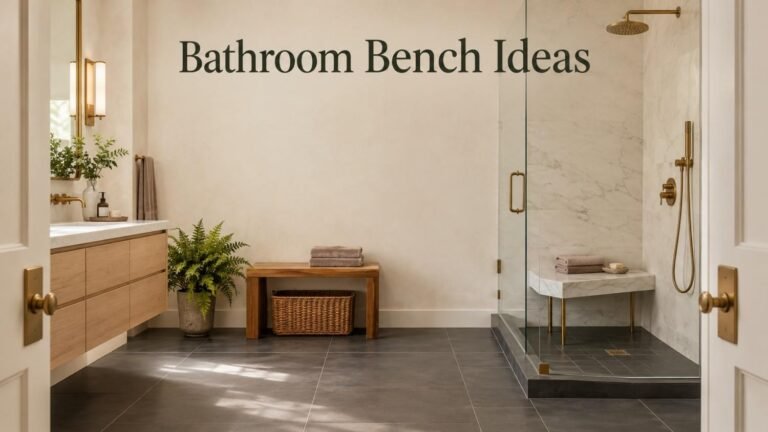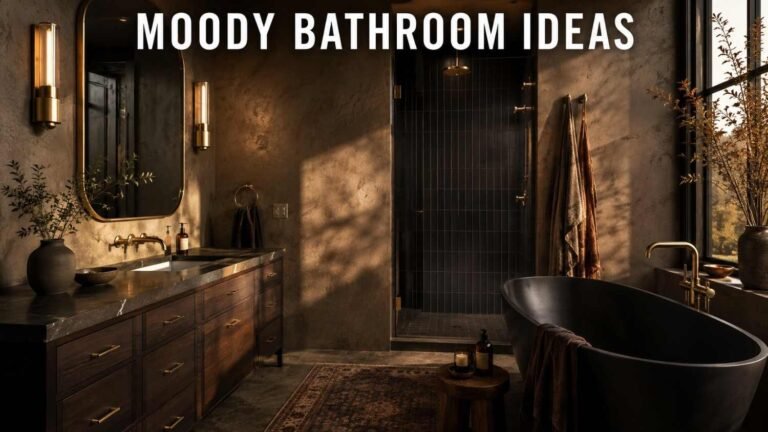
Warm Neutral Bathroom Ideas to Create a Cozy, Spa-Like Retreat
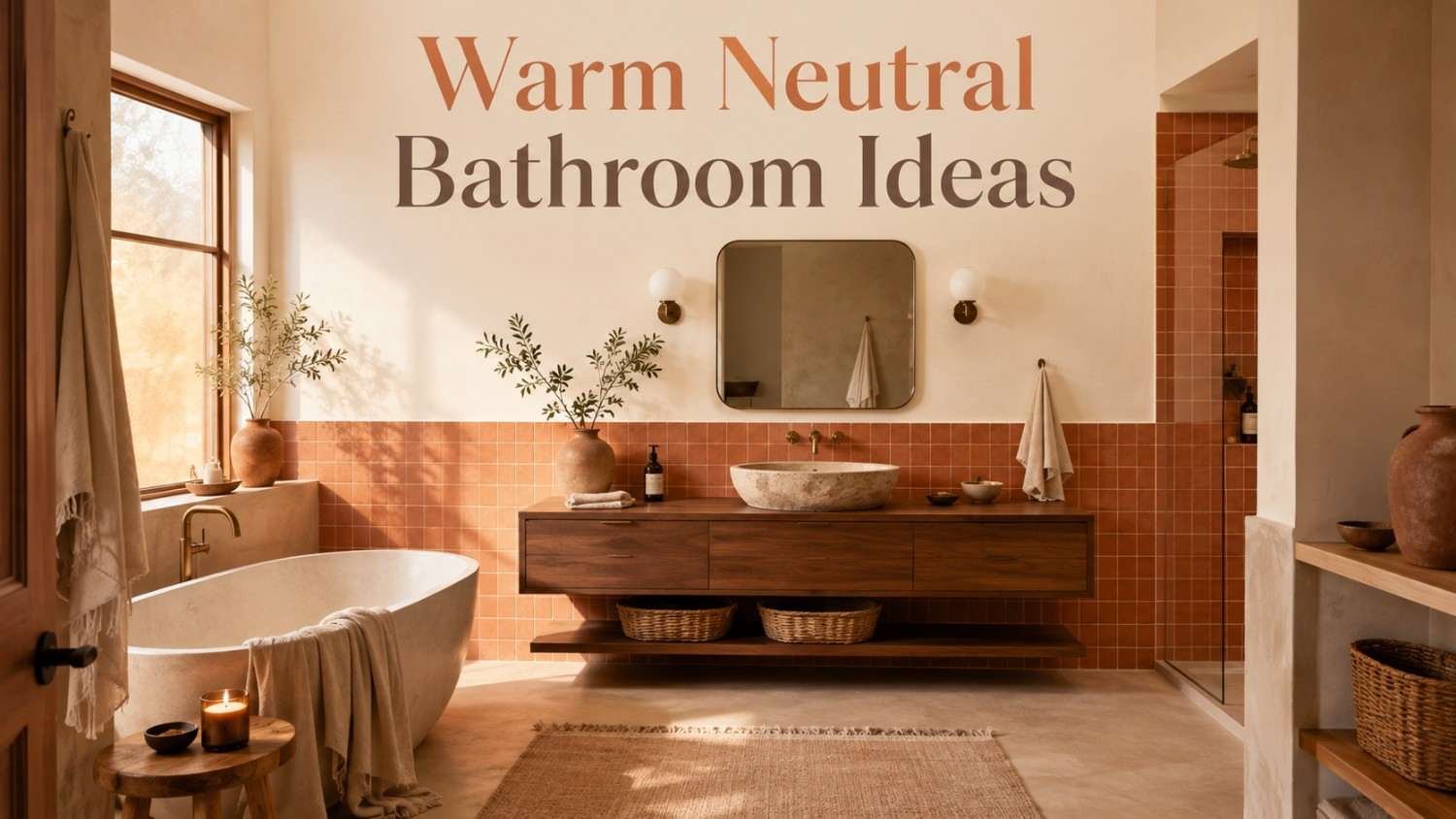
Cold, clinical bathrooms are having a moment of reckoning. Homeowners across the country are trading stark white tile and icy gray walls for something softer: creamy ivory, warm taupe, and sun-baked terracotta. These warm neutral bathroom ideas aren’t a passing trend — they’re a return to spaces that feel calm, personal, and lived-in rather than showroom-perfect. Whether you’re planning a full remodel or a weekend refresh, warm neutrals work in a tiny powder room and a sprawling primary suite alike. Below, you’ll find 25 warm neutral bathroom ideas, organized by color, material, lighting, storage, and small-space solutions, along with a practical guide to picking the right shades and the mistakes worth avoiding.
What Makes a Bathroom Feel “Warm Neutral”?
A warm neutral bathroom isn’t just beige tile and calling it done — it’s about undertone. Cool neutrals lean blue, gray, or violet, while warm neutrals lean yellow, red, or green, which is why colors like sand, clay, mushroom, and soft khaki read as inviting rather than sterile. Designers achieve this effect by layering tone-on-tone materials, such as a creamy plaster wall, an oak vanity, and a stone basin, so nothing competes for attention. The result feels closer to a boutique hotel spa than a utility room. Warm neutral bathroom ideas typically combine three elements: a warm-toned base color, natural materials like wood or stone, and warm-toned metal fixtures such as brass or bronze. When those three elements line up, even a small, budget-friendly bathroom can feel intentional rather than accidental, which is part of why this palette has held its appeal across so many home styles, from farmhouse to modern minimalist.
How to Choose the Right Warm Neutral Palette
Best Warm Neutral Paint Colors
Paint remains the fastest way to warm up a bathroom. Sherwin-Williams named Universal Khaki, a grounded, mid-tone tan with green and gold undertones, its color of the year for 2026. Benjamin Moore’s color forecasts lean similarly earthy, favoring shades inspired by clay, sand, and stone. Recent designer surveys show off-white leading bathroom palettes at roughly 58% adoption, followed by light brown and tan at 54%, and creamy white at 40% — a clear signal that warm neutral bathroom ideas have moved from niche to mainstream. When testing paint, view swatches under your bathroom’s actual lighting at different times of day, since warm tones can shift dramatically between morning and evening light.
Reading Undertones Before You Commit
Hold your paint chip next to a plain white sheet of paper. If it looks pink, orange, or yellow-tinted rather than gray or blue, you’ve found a true warm neutral. This simple trick prevents the common mistake of buying a “neutral” that turns muddy or cold once it covers a full wall, especially under artificial bathroom lighting where undertones become far more obvious than they appear on a small swatch.
Tailoring the Palette to Different Bathroom Types
A primary bathroom can handle a richer, more layered warm neutral scheme since it’s typically larger and used at a slower pace, so deeper tones like clay or caramel oak work well. A guest bathroom benefits from lighter, more universally appealing tones such as off-white or soft sand, since it needs to suit a wider range of tastes. A powder room, often the smallest and most visible room in a home, is the ideal place to experiment with a bolder terracotta accent wall or a statement stone basin, since there’s less square footage at stake if you want to change course later. Matching the intensity of the palette to how the room is used, and by whom, keeps the design feeling purposeful rather than arbitrary.
25 Warm Neutral Bathroom Ideas for Every Style
From full renovations to small updates, these 25 warm neutral bathroom ideas cover color, texture, lighting, storage, and compact layouts, so there’s a starting point no matter your budget or square footage.
Color and Wall Treatment Ideas
Warm neutral bathroom ideas usually start with the walls, since color sets the tone for every material that follows.
- Creamy plaster or microcement walls — Seamless finishes eliminate grout lines, creating a monolithic look that reads as effortlessly warm and spa-like.
- Terracotta accent wall
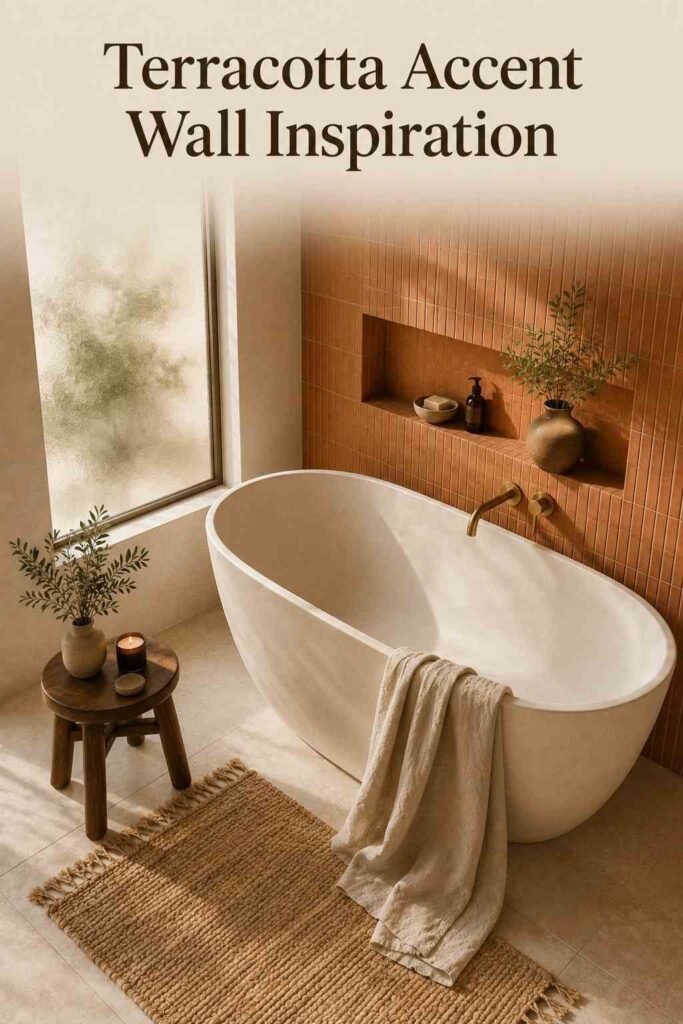
A single wall in warm clay or terracotta paint adds depth without overwhelming a small room.
- Warm khaki tile — Large-format khaki or greige tile on floors and lower walls grounds the space while staying versatile.
- Sage green cabinetry with warm trim — Pairing muted sage with warm oak trim softens the green so it reads as neutral rather than bold.
- Mushroom-toned hexagon tile — Soft mushroom or taupe hexagon tile adds gentle visual movement to floors without competing with other finishes.
Natural Materials and Texture Ideas
Texture-driven warm neutral bathroom ideas add depth that flat paint alone can’t achieve.
- Honed natural stone countertops — Warm-veined marble or travertine brings texture and a sense of permanence to vanity tops.
- Zellige tile backsplash — Hand-glazed zellige tile in cream or clay tones introduces handmade character that mass-produced tile can’t replicate.
- Wood-slat ceiling in the shower
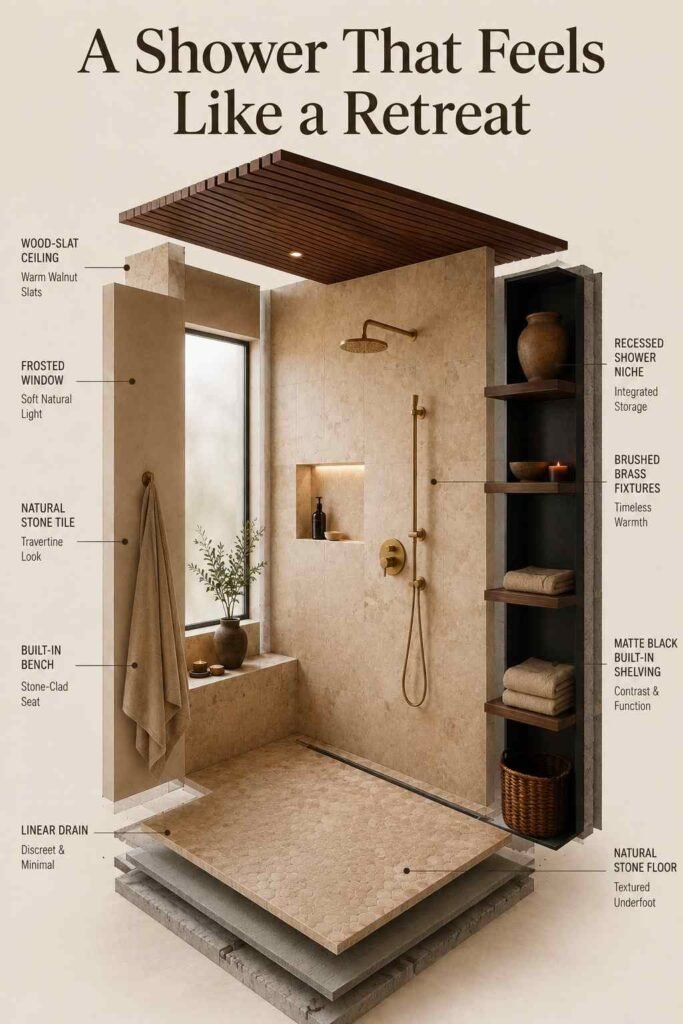
A rich wood ceiling above a stone-clad shower turns a wet area into a retreat.
- Wicker or rattan storage baskets — Natural fiber baskets soften hard surfaces and add warmth at a fraction of the cost of a remodel.
- Exposed stone accent wall — A rugged stone feature wall behind the tub or shower adds an earthy, tactile focal point. For more room-by-room design guidance beyond the bathroom, outinteriors has additional resources worth exploring.
Lighting and Fixture Ideas
Lighting choices matter as much as paint in a warm neutral bathroom, since the wrong bulb temperature can undo an otherwise perfect palette.
- Brushed bronze fixtures — Faucets and hardware in brushed bronze or aged brass echo warm wall tones down to the smallest detail.
- Warm-temperature LED lighting — Bulbs in the 2700K–3000K range flatter skin tones and keep warm neutral palettes from looking flat or gray.
- Statement pendant over the vanity — A single amber-glass or woven pendant replaces harsh overhead lighting with a softer, more flattering glow.
- Wall sconces flanking the mirror — Symmetrical sconces in warm brass create even, shadow-free light for grooming and getting ready.
- Dimmable lighting circuits — Separate dimmers for task and ambient lighting let the room shift from a bright morning routine to a moody evening soak.
Vanity and Storage Ideas
Storage-focused choices prove that function and warmth aren’t mutually exclusive in a well-planned warm neutral space.
- Floating oak vanity — A wall-mounted vanity in natural or white oak keeps the floor visible, making the room feel larger and warmer.
- Furniture-style vanity — Freestanding, furniture-inspired vanities in warm wood replace built-in cabinetry for a less clinical, more residential feel.
- Woven cabinet fronts — Rattan-paneled cabinet doors add texture and warmth to an otherwise simple vanity.
- Open shelving with ceramic accessories
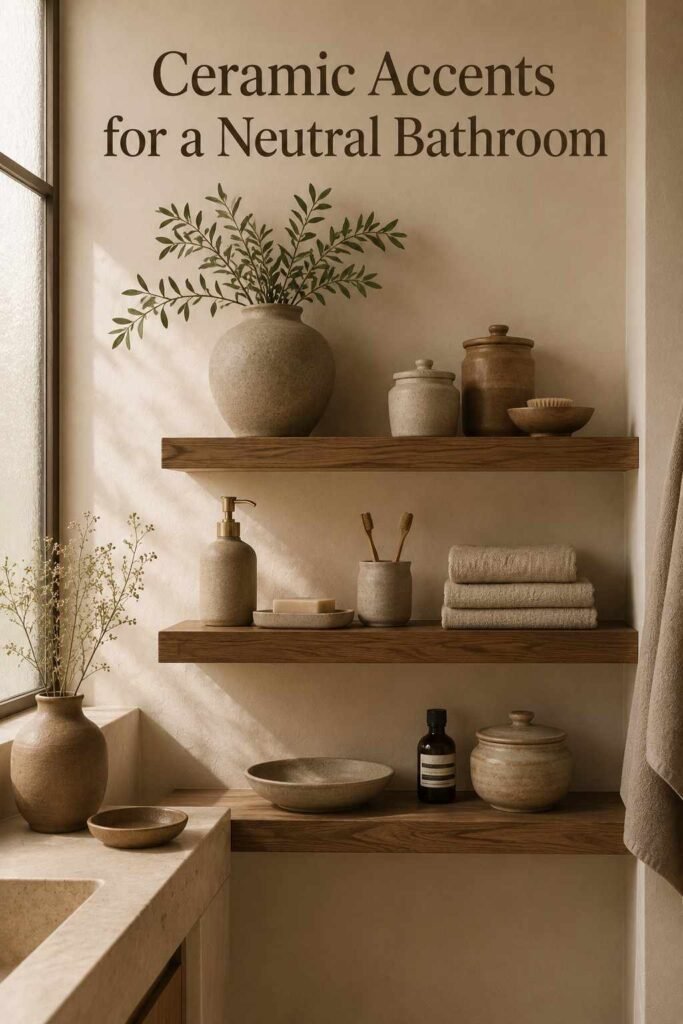
Warm stoneware jars and ceramic trays on open shelves add color and personality without paint.
- Stone vessel basins
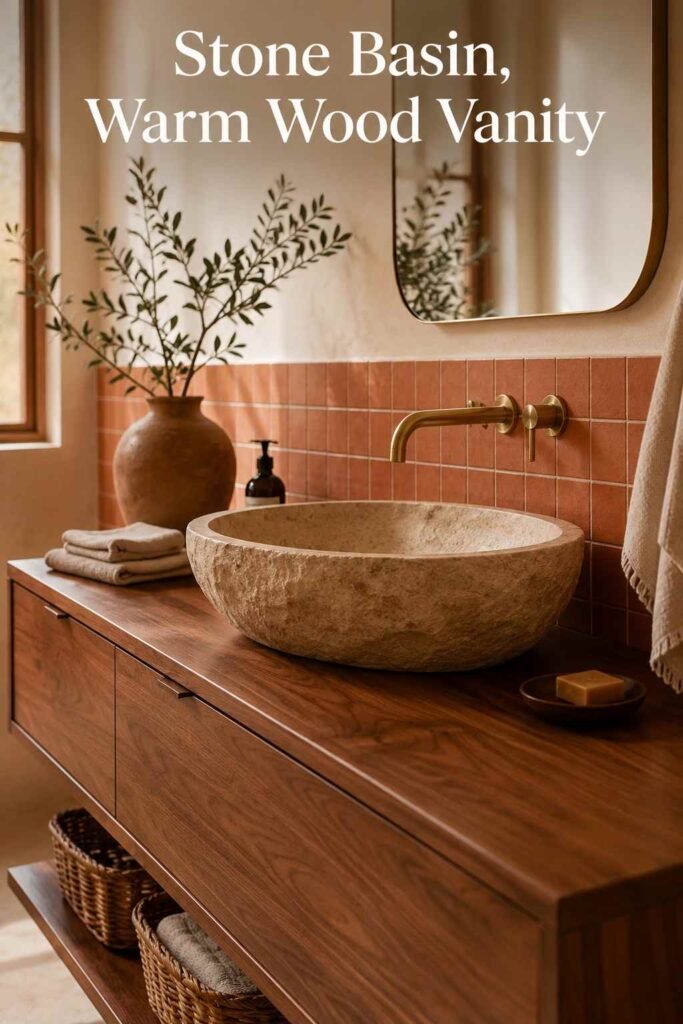
A hand-carved stone basin set atop a wood vanity becomes a sculptural focal point rather than just a fixture.
Small Bathroom Warm Neutral Ideas
Small-space warm neutral bathroom ideas prove that square footage isn’t a barrier to a calm, cohesive design.
- One warm tone, wall to ceiling — Carrying a single warm color from wall to ceiling removes visual breaks, making a small bathroom feel taller.
- Curved mirror in a warm frame
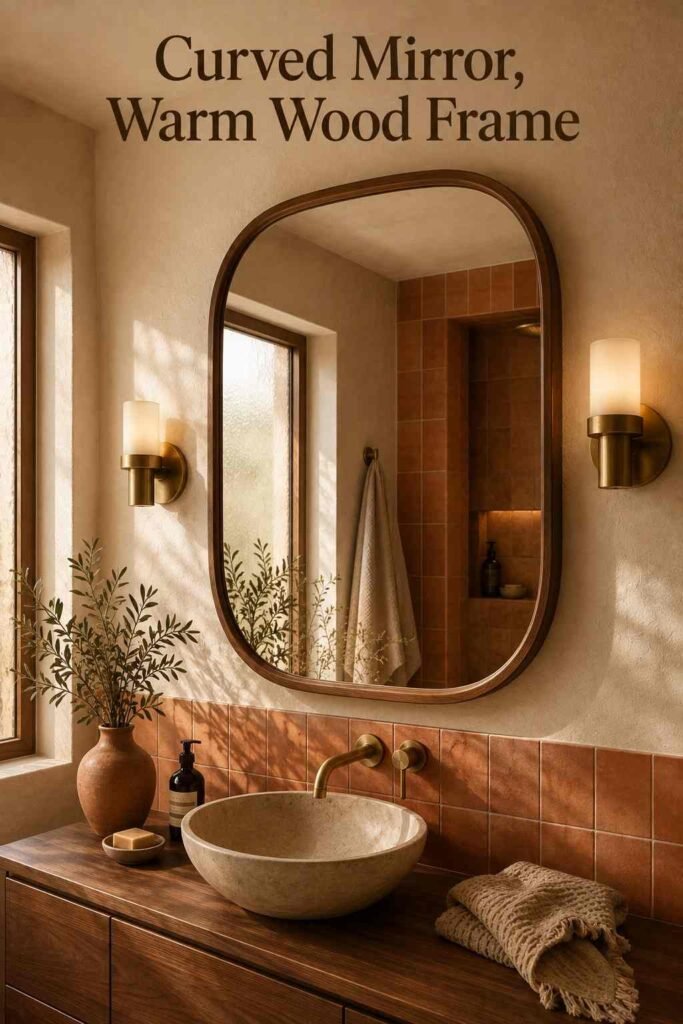
A softly curved mirror breaks up rigid lines in a compact layout without adding visual bulk.
- Curbless walk-in shower — A curbless shower with warm-toned tile reads larger and adds resale value while improving accessibility.
- Vertical wood paneling — Slim wood slats installed vertically draw the eye upward, an easy trick for bathrooms with low ceilings.
- Layered textiles
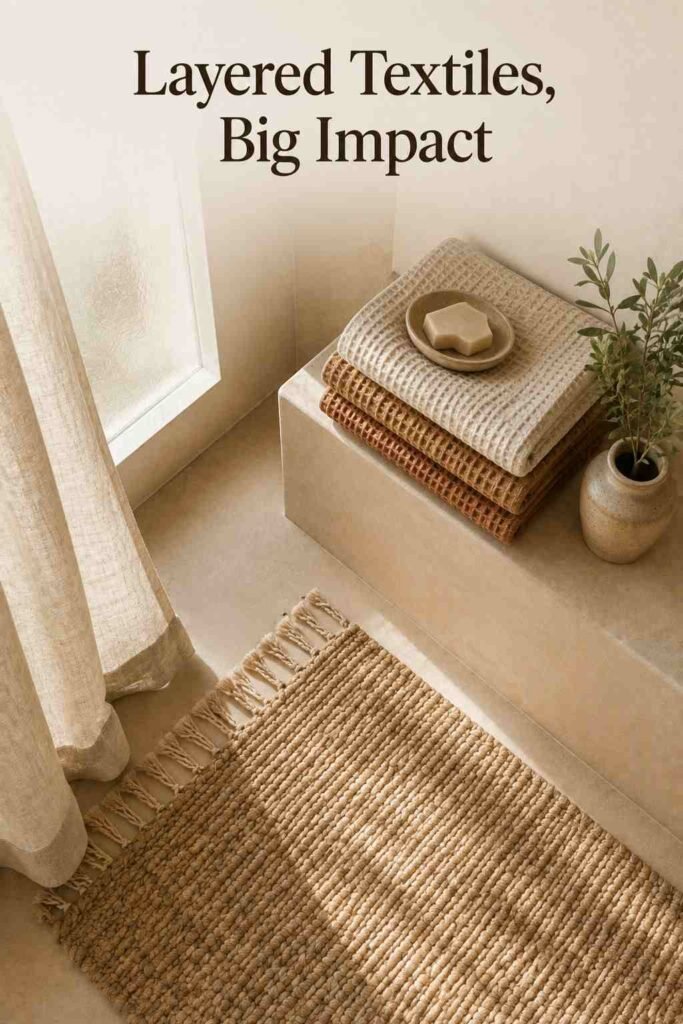
A woven bath mat, linen shower curtain, and waffle towels in cream and clay tones finish a small space affordably.
Warm Neutral Bathroom Ideas by Budget
Not every update requires a full renovation. On a modest budget, swapping hardware for brushed bronze, repainting in a warm khaki or greige, and adding woven baskets and layered textiles can transform the mood for a few hundred dollars. A mid-range update might add a floating wood vanity, a statement pendant light, and warm-toned tile on one accent wall. A full remodel opens the door to natural stone countertops, a curbless walk-in shower, zellige tile, and custom millwork. Whatever the budget, prioritize the largest surfaces first, since walls and flooring carry the most visual weight in a warm neutral bathroom. If you’d rather browse full-room inspiration first, this collection of aesthetic bathroom designs is a great place to start before settling on a palette.
Maintenance Tips for Warm Neutral Materials
Natural materials bring character, but they also need a bit more care than synthetic surfaces. Honed stone and unsealed wood should be sealed periodically to resist moisture and staining, especially in a high-humidity bathroom. Microcement and plaster finishes hold up well but should be cleaned with a soft cloth rather than abrasive scrubbers, which can dull the surface over time. Brass and bronze fixtures develop a natural living patina, so avoid harsh chemical cleaners if you want that warm finish to deepen gracefully rather than strip away. A quick wipe-down after each use keeps warm neutral surfaces looking fresh far longer than occasional deep cleaning alone.
Mistakes to Avoid When Designing a Warm Neutral Bathroom
Warm neutral bathroom ideas fail when every surface matches too closely, leaving the room flat rather than layered — contrast in texture is what keeps neutrals from reading as boring. Avoid pairing warm tones with cool-toned lighting, since a 5000K bulb can wash out even the best khaki paint. Skipping texture entirely is another common misstep: smooth walls, smooth tile, and a smooth countertop with no contrast can feel bland rather than serene. Finally, resist the urge to over-personalize with trend-driven accessories. The strength of a warm neutral bathroom is its longevity, so choose statement pieces sparingly and let the materials do the work. For homeowners who want a bolder contrast, these blue bathroom ideas show how a cooler accent can still work with warm neutral fixtures and wood tones.
Conclusion
A warm neutral bathroom isn’t about following one formula — it’s about choosing tones, materials, and fixtures that feel calm rather than clinical. Whether you start with a single terracotta accent wall or commit to a full remodel with stone basins and brass fixtures, these 25 warm neutral bathroom ideas offer a starting point for a space that feels both current and timeless. Test your undertones, prioritize natural texture, and let warm lighting do the rest — small, deliberate choices add up to a bathroom that feels like a genuine retreat rather than a trend you’ll want to undo in a few years.
Frequently Asked Questions
What colors are considered warm neutrals for a bathroom?
Warm neutrals include shades like cream, sand, tan, terracotta, clay, mushroom, and warm khaki — any neutral with yellow, red, or green undertones rather than blue or gray ones.
Are warm neutral bathrooms still popular in 2026?
Yes. Design surveys show a clear shift away from cool grays toward warm neutral bathroom ideas, with off-white, tan, and creamy palettes now dominating designer recommendations nationwide.
What paint finish works best for a warm neutral bathroom?
A satin or eggshell finish is generally recommended for bathroom walls, since it resists moisture better than flat paint while still reading soft rather than glossy.
Do warm neutral bathrooms work in small spaces?
Yes. A single warm tone carried across walls, ceiling, and even the vanity can make a small bathroom feel larger and more cohesive than a multi-color scheme.
What metal finishes pair best with warm neutral colors?
Brushed bronze, aged brass, and matte black all complement warm neutral palettes, since their tones echo the warmth of the walls rather than fighting against it.
How much does it cost to update a bathroom with warm neutral tones?
Costs vary widely. A paint refresh with new hardware can cost a few hundred dollars, while a full remodel with natural stone and custom tile can run into the tens of thousands.
Can warm neutrals be mixed with other colors?
Yes. Sage green, navy, and terracotta all pair well with a warm neutral base, since they add depth without disrupting the room’s overall calm, grounded feel.