Dark Cottagecore Bathroom Ideas for a Moody, Nature-Inspired Retreat
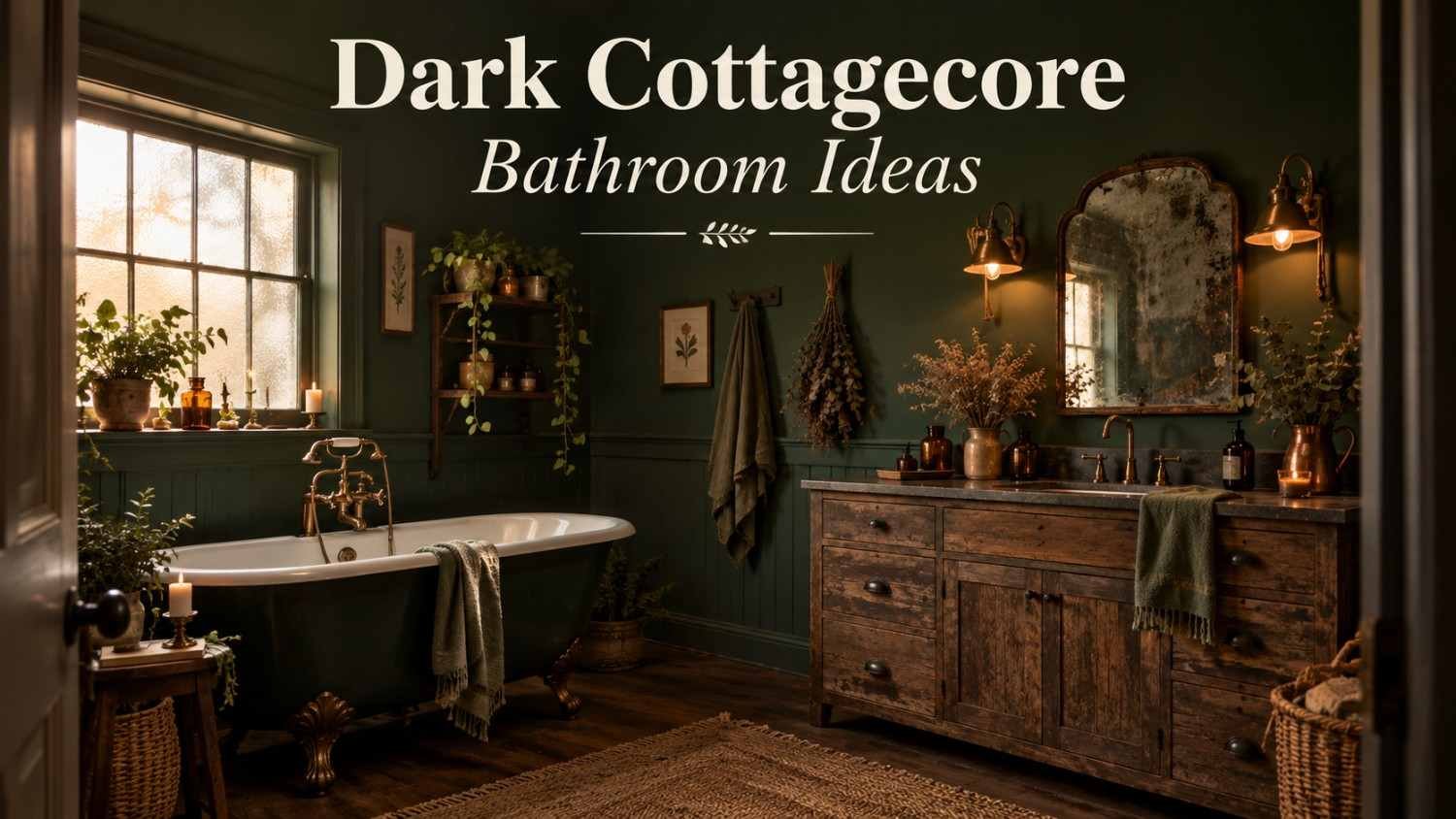
Close the door, dim the lights, and picture a bathroom that feels less like a fixture-filled box and more like a forest cabin at dusk. That’s the pull of a dark cottagecore bathroom: deep botanical paint, aged brass, dried herbs, and candlelight instead of harsh overheads. It’s a style built on contrast — hard tile softened by soft textiles, modern plumbing dressed in vintage details.
This guide goes further than a scroll-and-save photo dump. You’ll get 25 dark cottagecore bathroom ideas organized by category, real paint names you can actually buy, renter-friendly swaps, small-space tricks, and the maintenance details most inspiration boards skip entirely — like how to keep a dark, humid room from turning against you.
What Is a Dark Cottagecore Bathroom?
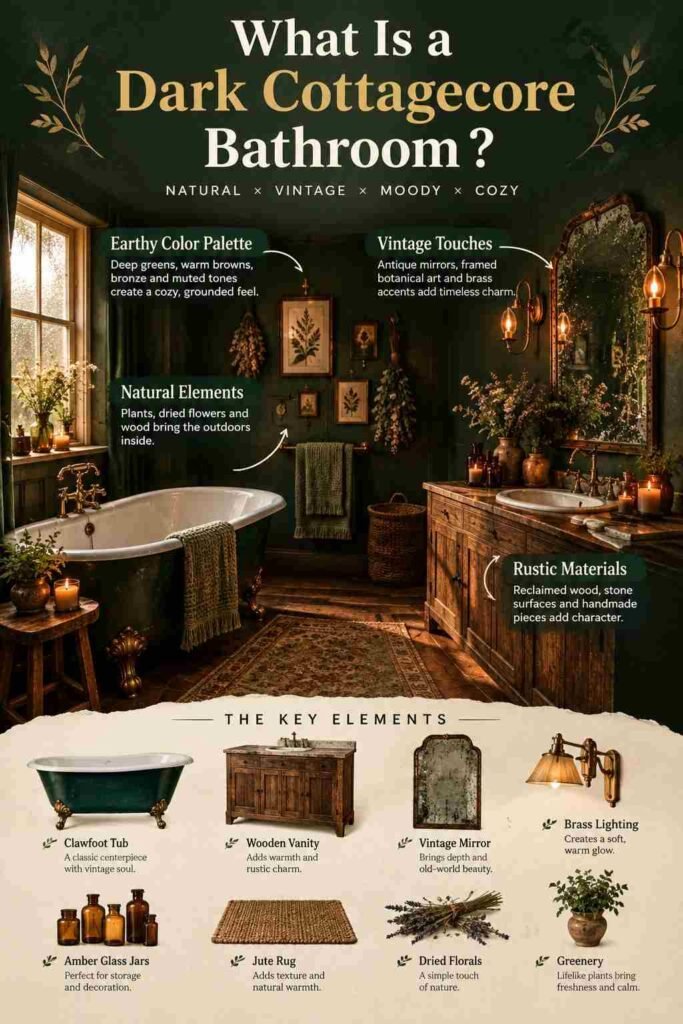
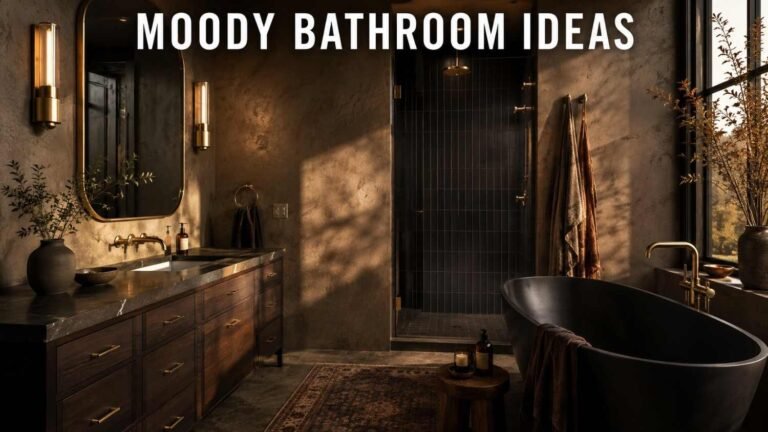
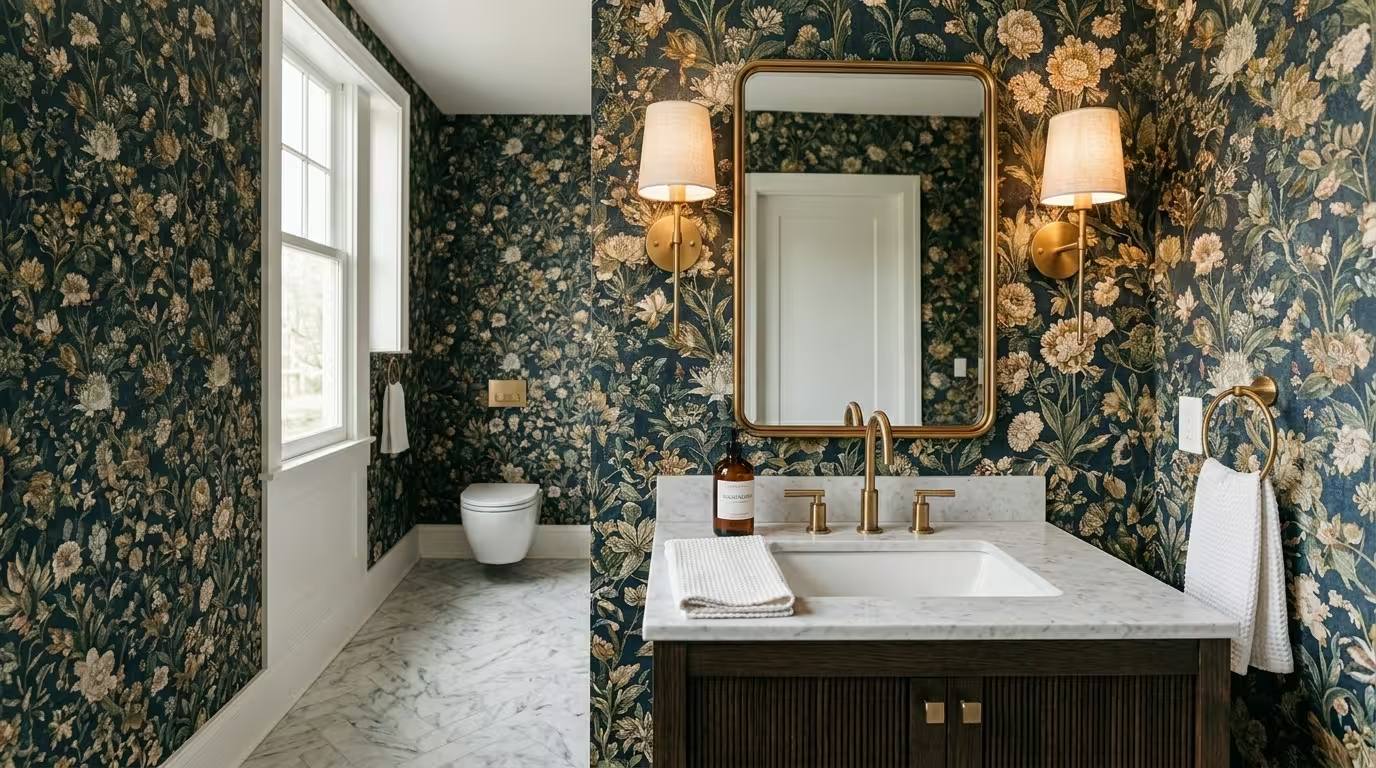
A dark cottagecore bathroom takes the cozy, nature-first spirit of cottagecore and drenches it in deeper, moodier tones. Instead of the pastel florals and airy whites typical of classic cottagecore, this variation leans into forest green, charcoal, aged navy, and near-black walls, paired with botanical textures: dried eucalyptus, pressed flowers, weathered wood, and apothecary-style glass jars.
This look can be easy to confuse with other moody trends. A whimsigoth bathroom shares the dark palette but leans harder into velvet, ornate mirrors, and gothic drama with less emphasis on plants. Dark cottagecore stays grounded in the natural world — think overgrown garden shed rather than haunted manor. The distinction matters when you’re shopping, because a single wrong accessory (think skulls versus dried lavender) can pull the whole room in the wrong direction.
Why This Look Is Having a Moment
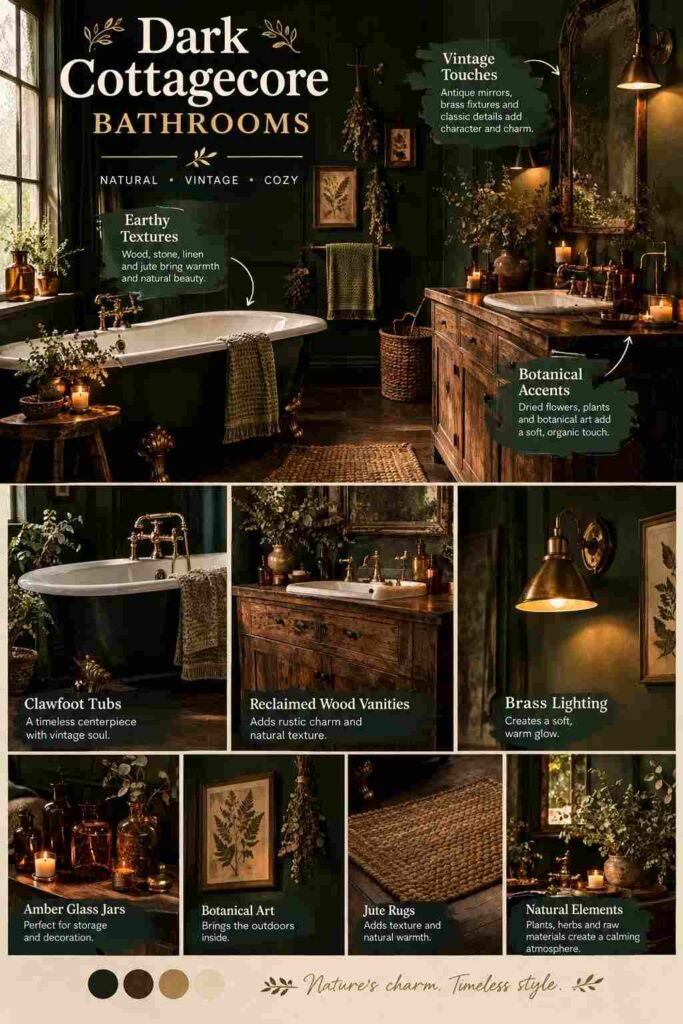
Interior designers have been moving away from stark white, catalog-style bathrooms toward richer, more textured spaces, with organic finishes like clay, terracotta, and natural stone gaining ground through 2026 as homeowners favor rooms that feel personal rather than generic. This aesthetic fits neatly into that shift. It’s also proven itself on social platforms, where the aesthetic regularly circulates through curated product lists, DIY makeovers, and moody before-and-afters that show the transformation is achievable without a full renovation budget.
25 Dark Cottagecore Bathroom Ideas by Category
Below are 25 dark cottagecore bathroom ideas, grouped so you can tackle one area at a time — walls first, then lighting, hardware, greenery, vintage touches, and finally the small details that tie everything together.
Walls, Paint, and Wallpaper
1. Paint the walls in a deep botanical color like moss, olive, or forest green to set the entire mood before adding a single accessory.
2. Choose a blue-black or midnight navy accent wall for drama without going fully black.
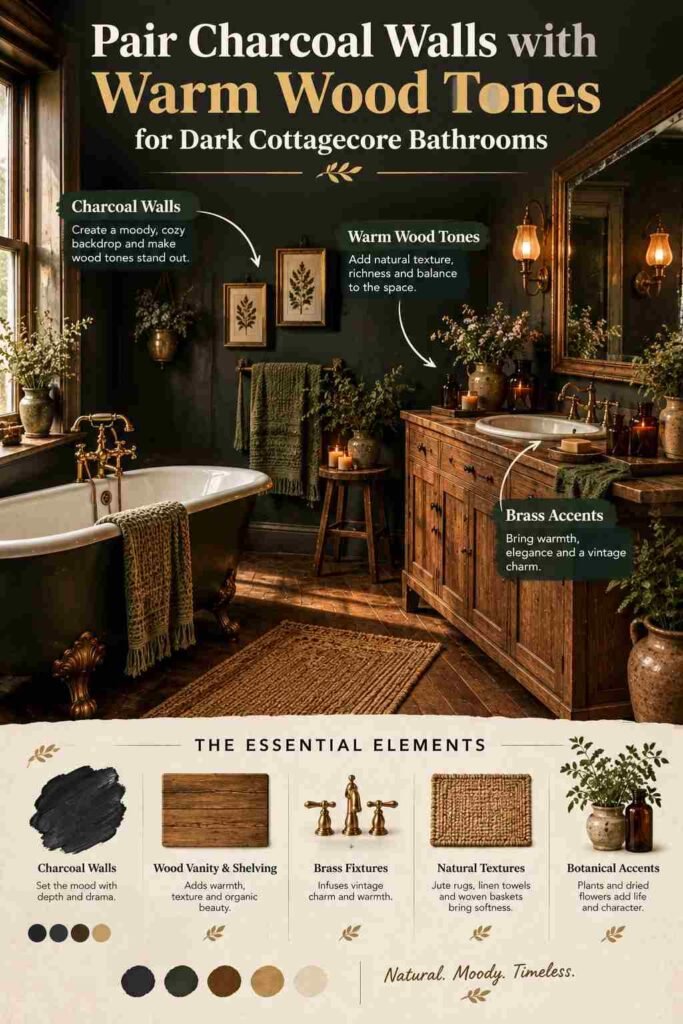
3. Pair charcoal walls with warm wood tones so the room feels grounded instead of cold.
4. Use removable, dark botanical wallpaper in a rental — fern prints or vintage damask patterns read as cottagecore instantly.
5. Try two-tone walls: a dark lower half with painted wainscoting and a lighter, plaster-toned upper half for depth without heaviness.
Lighting That Sets the Tone
6. Layer your lighting instead of relying on one overhead fixture — combine ambient, task, and accent sources.
7. Add wall sconces flanking the mirror, mounted roughly 59 to 67 inches from the floor for even, flattering light.
8. Swap cool white bulbs for warm Edison-style filament bulbs to mimic candlelight.
9. Use amber or smoked glass fixtures so the light itself takes on a firelit, golden quality.
Fixtures and Hardware
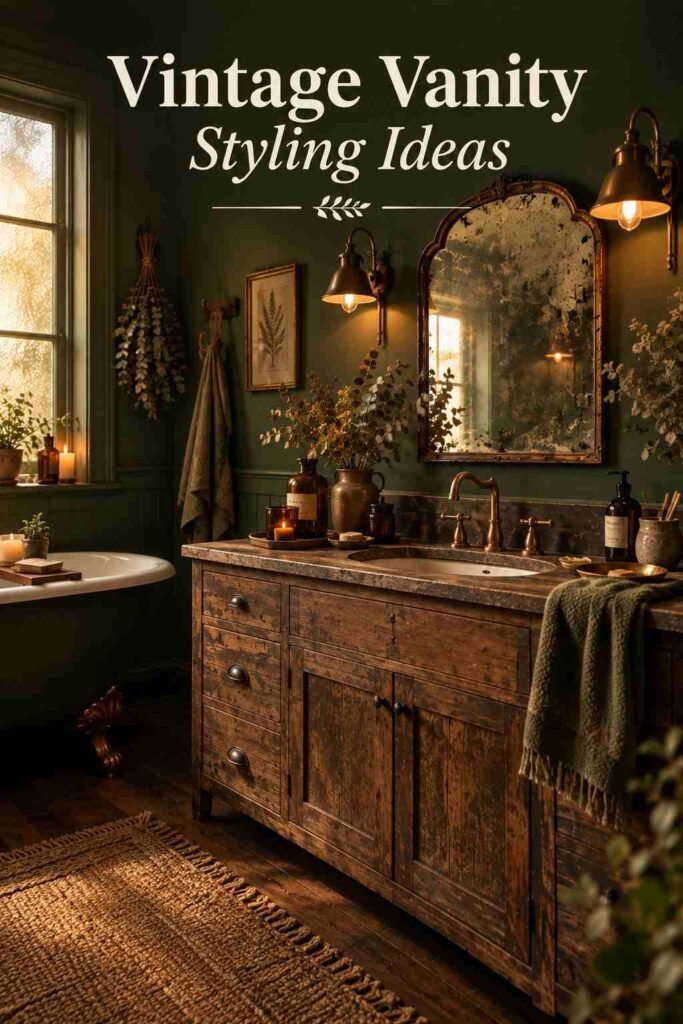
10. Choose unlacquered or aged brass fixtures — they develop a natural patina that only deepens the vintage feel over time.
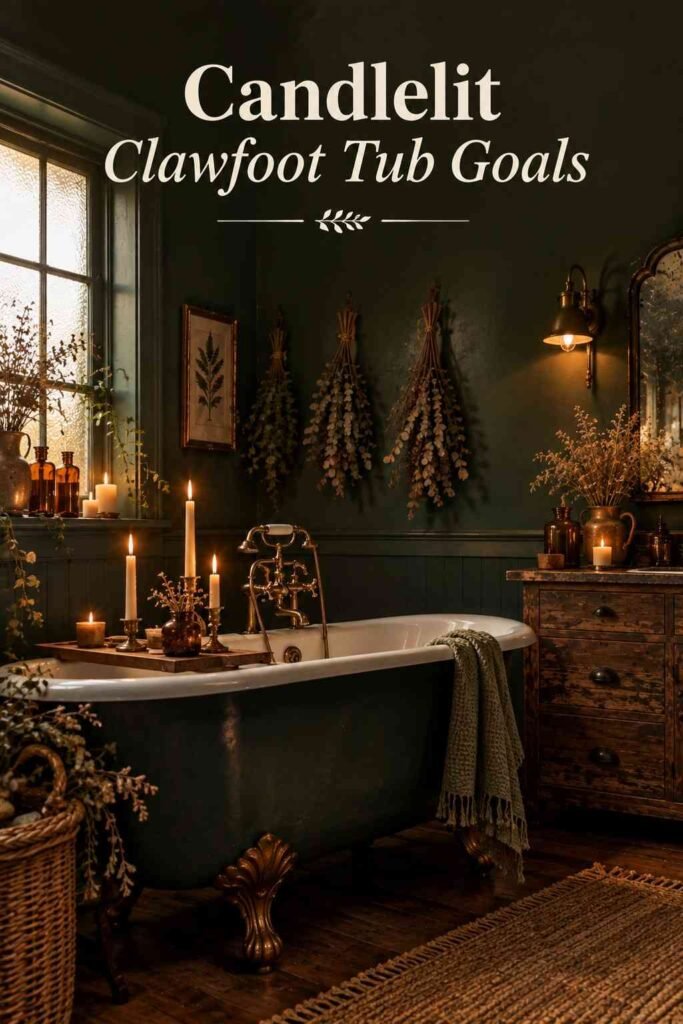
11. Add a clawfoot or freestanding tub, real or reproduction, as the room’s anchor piece.
12. Use a matte black faucet against dark walls for quiet, tonal contrast.
13. Install wrought iron towel bars and hooks instead of polished chrome.
Botanical and Natural Touches
14. Hang dried botanical bundles — eucalyptus, lavender, or wheat stalks tied with twine.
15. Frame pressed flowers or botanical engravings in aged timber or brass frames.
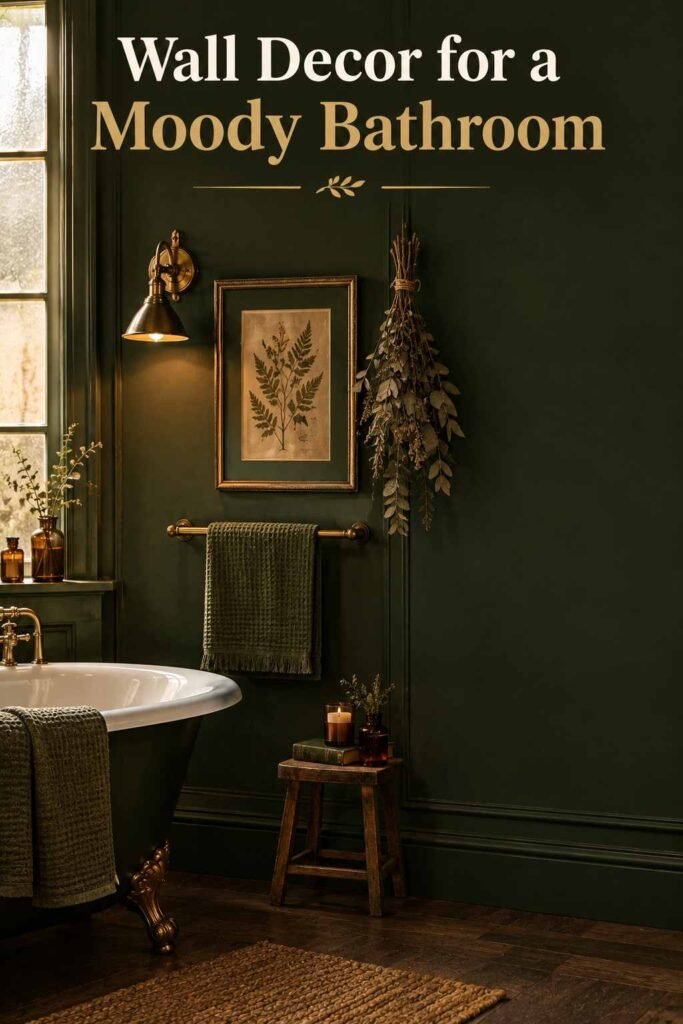
16. Add humidity-loving plants like ferns or pothos, which genuinely thrive in a steamy bathroom.
17. Bring in moss accents, whether a small preserved moss frame or a moss-toned bath mat.
18. Install a reclaimed wood vanity or open shelving for texture that pairs naturally with dark paint.
Apothecary and Vintage Details
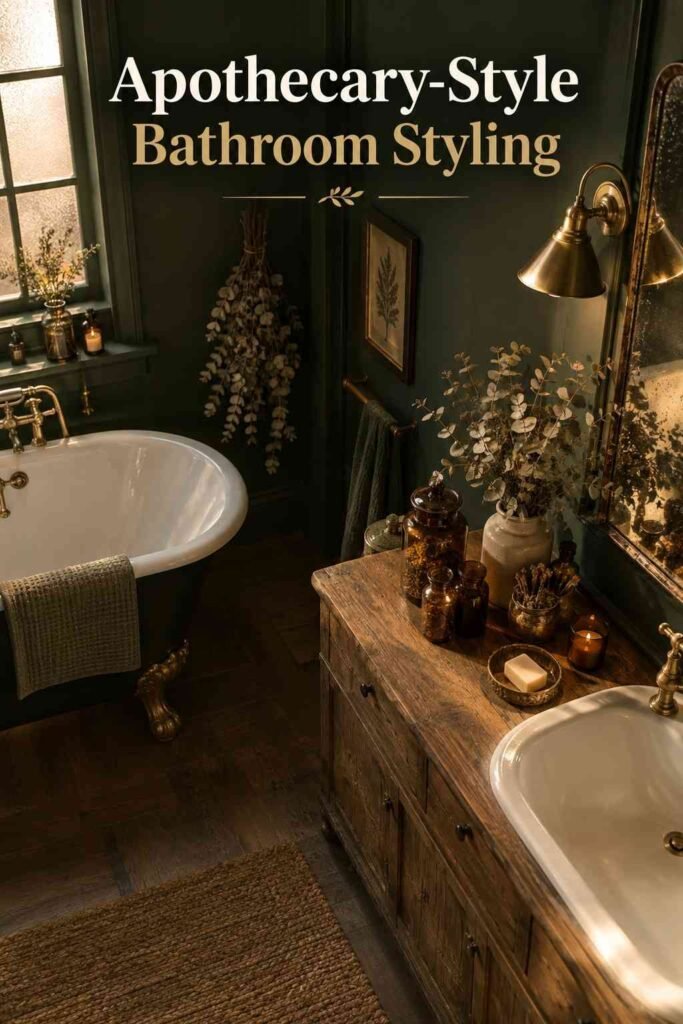
19. Store cotton balls or bath salts in amber apothecary jars for a functional, old-world touch.
20. Hang a vintage or foxed-glass mirror instead of a flat, modern one.

21. Repurpose flea-market finds — a small stool, ladder shelf, or milk-glass tray — as bathroom storage.
22. Label jars by hand with botanical names for an authentic apothecary feel.
Textiles and Finishing Touches
23. Swap in deep-toned towels — plum, forest green, or rust — to tie the palette together without any permanent changes.
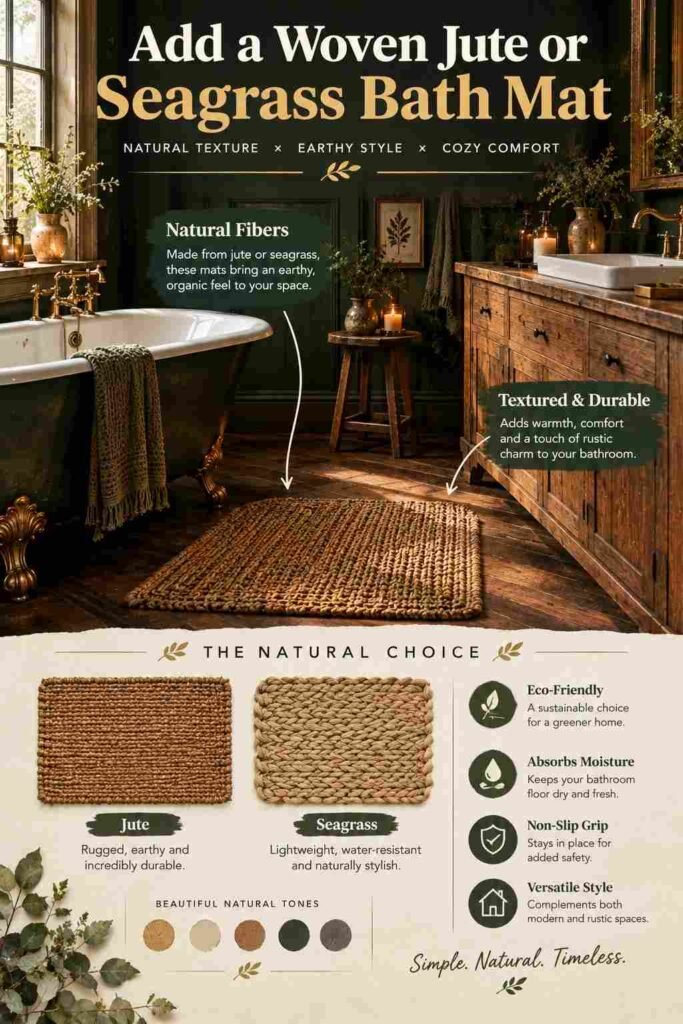
24. Add a woven jute or seagrass bath mat for natural texture underfoot.
25. Finish with stone or pottery accessories — a handmade soap dish, ceramic tumbler, or carved wooden tray.
Best Paint Colors for a Dark Cottagecore Bathroom
Paint makes or breaks this look, and a few specific shades keep coming up among designers working with moody, windowless spaces. Farrow & Ball’s Hague Blue, a dramatic, muted navy, is a frequently recommended pick for a small, low-light bathroom that still wants to feel intentional and upscale. For green lovers, Benjamin Moore’s Southern Vine and Sherwin-Williams’ Palm Leaf both read as true mossy greens once applied, though one designer found Southern Vine looked nearly black in a windowless room and switched to Palm Leaf instead.
Before committing, check the paint’s Light Reflectance Value (LRV) — a lower number means the color absorbs more light and will look darker than the paint chip suggests, especially in a room without windows. Always use a mold-resistant primer underneath, and finish with a semi-gloss or satin sheen so moisture wipes away easily instead of soaking into the wall. If you’re not ready to commit to paint, dark peel-and-stick wallpaper achieves a similar depth without the long-term commitment.
How to Get the Dark Cottagecore Bathroom Look on a Rental Budget
Renters can absolutely pull off this look without touching a single wall permanently. Start with removable wallpaper in a botanical or damask print, then swap the shower curtain, bath mat, and towels for deep, saturated colors. A cluster of taper candles around the tub, a dried botanical bundle hung near the mirror, and a vintage-style mirror clip-on light can transform the room in an afternoon. None of these changes require a landlord’s permission, and almost everything can move with you to the next apartment.
For a slightly bigger but still reversible upgrade, consider a peel-and-stick faux-brass mirror frame, a tension-rod shelf styled with apothecary jars, and a magnetic or adhesive hook system for wrought-iron-style towel hooks. Layering three or four of these smaller changes tends to read as more intentional than one expensive statement piece, and it keeps your security deposit intact.
Small Dark Cottagecore Bathroom Ideas That Still Feel Spacious
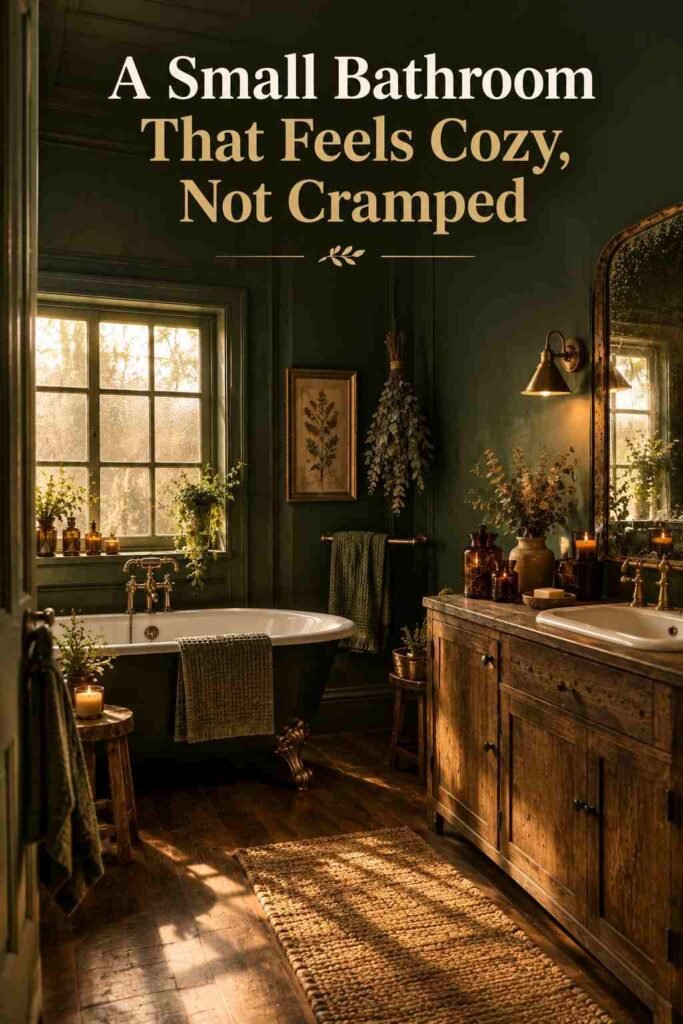
The biggest hesitation people have about this style is square footage — will dark paint make a small room feel like a closet? In practice, the opposite often happens. Dark walls in a small, enclosed space create a cocooning effect rather than a cramped one, especially once layered lighting is added back in. The key is contrast: pair dark walls with a lighter ceiling, a large mirror to bounce available light, and enough brass or warm-toned fixtures to keep the eye moving instead of settling on flat darkness.
If your bathroom has no window, lean into artificial light rather than fighting it. A dimmer switch lets you shift between a bright, functional mode for getting ready and a low, warm mode for baths. Keep clutter off visible surfaces — floating shelves or a single reclaimed-wood cabinet do more for the sense of space than open storage crowded with bottles.
Keeping Your Dark Cottagecore Bathroom Mold-Free and Fresh
Dark colors and dried botanicals both have a practical enemy: bathroom humidity. Before you commit to this kind of makeover, prioritize ventilation. Run the exhaust fan during and for at least 15–20 minutes after every shower, and caulk seams around the tub, sink, and any trim to stop moisture from creeping behind the paint. Choose a genuinely mold-resistant paint and primer combination rather than assuming any dark paint will do — cheaper formulas can trap moisture and peel within a year in a steamy room.
Dried botanicals need occasional refreshing too. Swap eucalyptus bundles every few months once they lose their color or start shedding, and check pressed flower frames periodically for condensation buildup behind the glass. A small dehumidifier or moisture absorber tucked in a corner cabinet is an easy, low-cost way to protect both your paint job and your decor.
Dark Cottagecore Bathroom Budget Breakdown
Costs vary widely depending on how far you take the transformation. A renter-friendly refresh — removable wallpaper, towels, candles, and a few dried botanicals — typically lands under $150–$300. A mid-range update that includes new paint, brass hardware swaps, and a vanity light fixture often falls between $500 and $1,500, depending on room size and whether you hire a painter. A full renovation involving a new tub, vanity, and flooring can climb well past $5,000, though most of that cost comes from plumbing and labor rather than the decorative choices that actually create the aesthetic.
Bringing It All Together
This whole look isn’t about one dramatic purchase — it’s built from a series of smaller, considered decisions that layer on top of each other: the paint color you choose, the light you install, the dried herbs you hang, and the small jar you fill with cotton balls. Start with paint or wallpaper, since that single choice shapes everything else you add afterward. From there, work outward toward lighting, hardware, and finally the botanical and vintage details that make the space feel lived-in rather than staged.
If you’re still deciding whether this palette fits your home, browse more aesthetic bathroom inspo covering everything from coastal to Scandinavian styles before you commit to paint. And for cost breakdowns and room-by-room planning guides beyond the bathroom, Outinteriors has additional resources worth bookmarking as you plan the rest of your home.
Frequently Asked Questions
1. What colors work best in a dark cottagecore bathroom?
Deep forest green, moss, olive, charcoal, and muted navy are the most common choices, often paired with warm wood tones and aged brass hardware to keep the palette from feeling cold.
2. Will a dark cottagecore bathroom make a small room feel smaller?
Not necessarily. Dark walls in a small, well-lit space often create a cozy, cocooned feeling rather than a cramped one. Layered lighting and a large mirror help keep the room from feeling closed in.
3. Can renters achieve this look without painting?
Yes. Removable wallpaper, dark towels, candles, dried botanicals, and clip-on lighting can create most of the look without any permanent changes to the walls or fixtures.
4. Is dark paint a problem in a bathroom with no window?
Windowless bathrooms actually suit darker colors well, since there’s no natural light to wash the color out. Just check the paint’s Light Reflectance Value beforehand, since colors often look darker than the chip suggests once applied.
5. How do I stop mold from ruining the look?
Use a mold-resistant primer and paint, run the exhaust fan during and after every shower, caulk seams around wet areas, and refresh dried botanicals periodically so they don’t trap moisture.
6. How is dark cottagecore different from a whimsigoth bathroom?
Both styles share a dark, moody palette, but dark cottagecore stays rooted in natural materials like dried herbs, wood, and pressed botanicals, while a whimsigoth bathroom leans further into velvet, ornate mirrors, and gothic-inspired drama.
7. How much does it cost to create this look?
A renter-friendly refresh can cost under $300, a mid-range update with paint and new fixtures often runs $500–$1,500, and a full renovation can exceed $5,000 depending on plumbing and labor.