
How to Find Renovation Contractor: A Complete Homeowner’s Guide
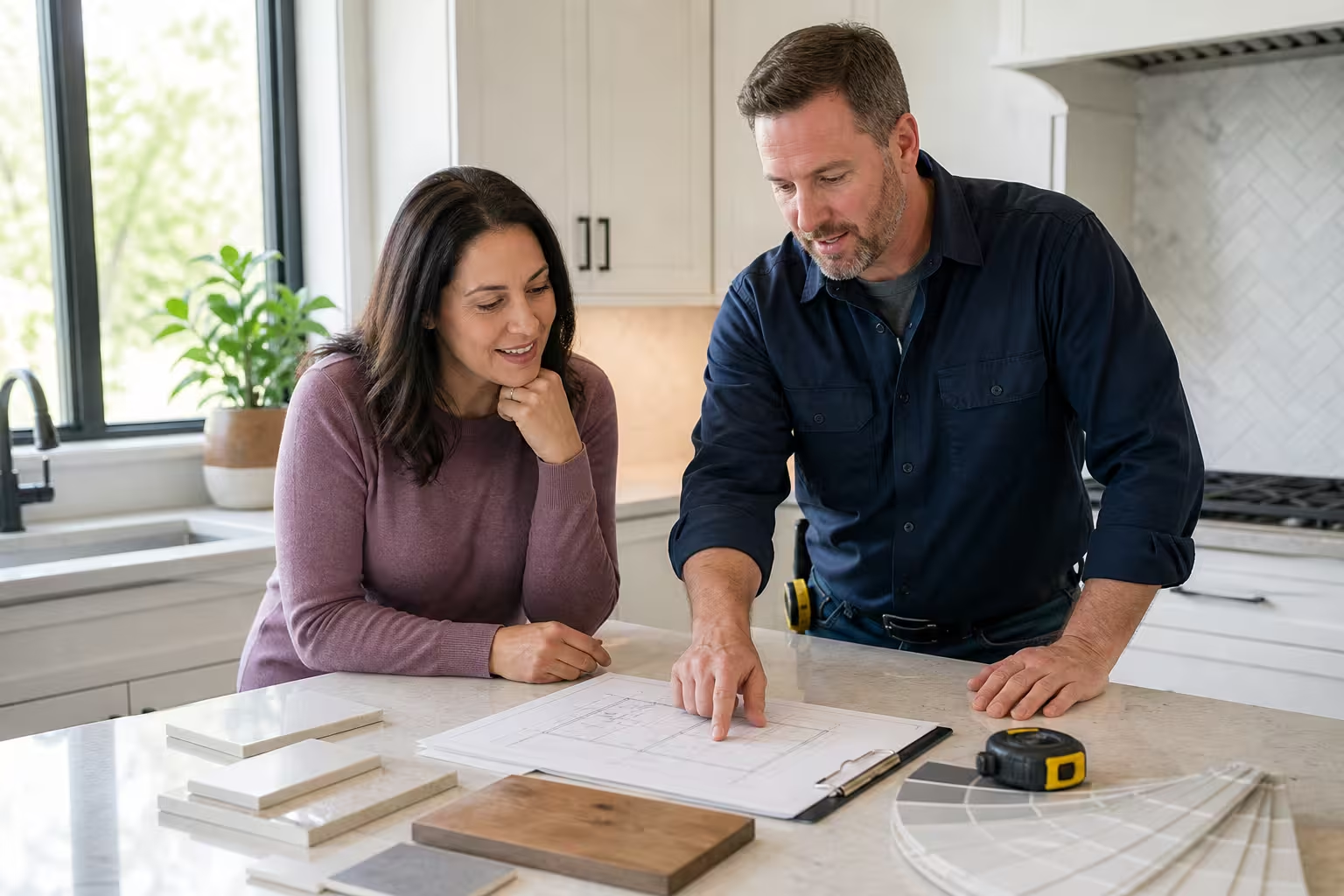
A home renovation can improve comfort, function, and property value, but the final result depends heavily on the person you hire. Many homeowners start with excitement, then feel unsure once bids, licenses, permits, materials, and timelines come into play. The real challenge is not just finding someone available. It is finding a contractor who is qualified, honest, organized, and suitable for your exact project.
If you are wondering how to find renovation contractor, start with a clear plan before you call anyone. A good contractor can guide the work, manage trades, protect your home, and reduce costly mistakes. A poor choice can lead to delays, hidden charges, unsafe work, and unfinished repairs. This guide explains each step in plain language so you can hire with confidence.
Why Choosing the Right Renovation Contractor Matters
A renovation contractor does more than complete physical work. They help turn your idea into a safe, code-compliant, finished space. For kitchens, bathrooms, basements, additions, roofing, flooring, and whole-home updates, the contractor may coordinate electricians, plumbers, carpenters, inspectors, suppliers, and subcontractors. That means you are trusting them with your home, budget, schedule, and daily routine.
The right contractor should explain the work clearly, provide written details, carry proper insurance, understand local permit rules, and communicate before problems become expensive. The wrong contractor may give vague answers, avoid paperwork, ask for too much money upfront, or push you to decide quickly. Learning how to find renovation contractor the right way protects both your home and your peace of mind.
Start With a Clear Renovation Scope
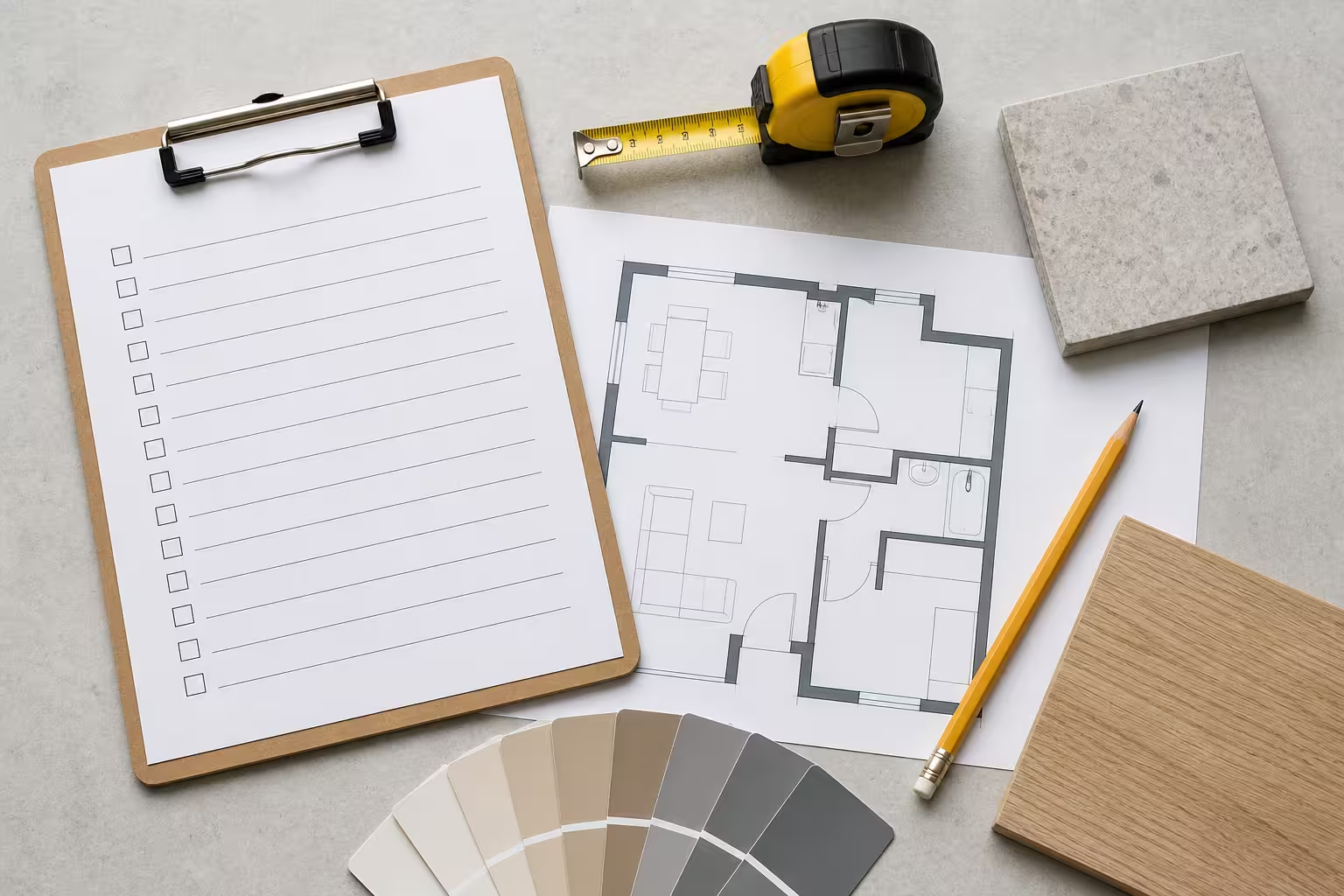
Before you contact contractors, write down what you want done. A vague request like “remodel my kitchen” can lead to confusing estimates because each contractor may price a different version of the job. Instead, list the room, problem, desired changes, preferred materials, must-have features, and any limits. For example, note whether you want new cabinets or cabinet refacing, full tile replacement or repair, recessed lighting, or basic fixture swaps.
A clear scope helps contractors price the same project more fairly. It also helps you compare bids without guessing what is included. If you are still unsure about design, say that clearly. Some contractors offer design-build services, while others expect completed plans before pricing. This first step is one of the most practical parts of how to find renovation contractor because it prevents confusion from the start.
Ask for Referrals From Trusted Local Sources
Personal referrals are still one of the strongest ways to find reliable renovation contractors. Ask neighbors, friends, family members, real estate agents, local building suppliers, and homeowners who recently completed similar projects. A person who has already worked with a contractor can tell you how the job felt day to day, not just how the finished space looks.
Ask specific questions. Did the contractor show up on time? Were change orders explained? Was the site kept clean? Did the final cost match the written agreement? Were problems handled fairly? A contractor who performs well on a similar home in your area may already understand local building styles, permit offices, climate concerns, and common repair issues.
Search Local Contractor Directories Carefully
Online directories can be useful, but they should not replace your own checking. Platforms that list renovation professionals can help you create an initial shortlist, view photos, read reviews, and compare service categories. Still, a strong profile does not prove that a contractor is the right fit. Some listings are paid, and reviews may not show the full story.
Use directories as a starting point only. Look for contractors with detailed project photos, consistent business names, real local contact information, and reviews that mention communication, cleanup, budget handling, and follow-up service. Avoid judging by star rating alone. A contractor with fewer but detailed reviews may be more useful than one with many short comments that say only “great job.”
Check License Rules in Your State and City

License rules vary across the United States. Some states require renovation or home improvement contractors to be licensed or registered. Some cities or counties have their own rules. Certain trades, such as electrical, plumbing, HVAC, roofing, and structural work, may require special licensing even when general remodeling does not.
When learning how to find a renovation contractor, never assume one rule applies everywhere. Check your state licensing board, city building department, or county consumer protection office. Ask the contractor for their license or registration number, then verify it yourself. Also, check whether complaints, suspensions, or expired credentials appear under the business name or the owner’s name.
Verify Insurance Before You Sign
A responsible contractor should carry general liability insurance and, when workers are involved, workers’ compensation insurance. Liability coverage helps protect against property damage caused by the work. Workers’ compensation helps protect you if a worker is injured on your property. Without proper coverage, a homeowner may face serious financial risk.
Ask for a certificate of insurance sent directly from the insurance agent or carrier when possible. Check the policy dates, business name, coverage type, and project relevance. Do not accept a verbal promise. A contractor who becomes irritated when asked for proof of insurance may not be the safest choice.
Look at Past Work That Matches Your Project
A contractor who builds decks may not be the best choice for a bathroom remodel. A roofing crew may not be suited for a kitchen layout change. Experience should match your project type, not just general construction. Ask for photos of completed projects similar in size, style, budget, and age of home.
For larger renovations, ask whether you can speak with recent clients. You can also ask about work completed one or two years ago because it shows whether the job held up after daily use. Pay attention to details such as tile lines, trim joints, cabinet alignment, paint finish, flooring transitions, and how well the contractor solved unexpected issues.
Interview at Least Three Contractors
One of the best ways to understand how to find a renovation contractor is to compare how different professionals handle the same questions. Interview at least three contractors when possible. This gives you a better sense of pricing, communication, the timeline, and professionalism. It also helps you notice answers that sound unclear or unrealistic.
Ask each contractor the same core questions. How long have you been in business? Who will supervise the job? Will you use employees or subcontractors? How do you handle permits? How are change orders priced? What is the expected timeline? What could delay the project? How do you protect floors, furniture, and nearby rooms? Clear answers show experience and planning.
Compare Bids the Right Way

The lowest bid is not always the best bid. A very low estimate may leave out materials, permits, cleanup, disposal, subcontractor costs, or finish details. A higher bid may include better materials, more labor, stronger project management, or warranty support. The goal is not to choose the cheapest number. The goal is to choose the clearest and most complete value.
Ask for itemized written estimates. Compare labor, materials, allowances, permits, demolition, disposal, site protection, cleanup, fixtures, finishes, and timeline. If one bid is much lower, ask what is excluded. If one is much higher, ask what extra service or material is included. This step is central to finding a renovation contractor without falling into budget traps.
Understand Allowances and Material Choices
An allowance is a budget placeholder for items not yet selected, such as tile, flooring, faucets, lighting, countertops, or cabinets. Allowances can make an estimate look lower than the real final cost. For example, a contractor may include a low tile allowance, but the tile you actually choose may cost much more.
Ask each contractor to explain every allowance in writing. Make sure the allowance matches the quality level you expect. If you already know your preferred materials, share links, model numbers, brands, colors, and sizes. The more exact your selections are before signing, the fewer surprises you will face later.
Confirm Who Handles Permits and Inspections
Many renovation projects require permits, especially when work involves structure, electrical, plumbing, HVAC, roofing, windows, additions, or major layout changes. Permit rules vary by location, but skipping required permits can create safety problems, insurance issues, resale trouble, and costly corrections later.
Ask the contractor whether permits are required and who will obtain them. A reliable contractor should not suggest hiding work from inspectors. If the contractor says no permit is needed, confirm with your local building department for peace of mind. Permit responsibility should be written into the contract before work begins.
Review the Written Contract in Detail

A written contract protects both sides. It should explain the project clearly enough that a third person could understand what is being done, what is included, what is excluded, and how payment will work. Do not rely on verbal promises. If it matters, put it in writing.
A strong renovation contract should include the contractor’s name, license details, insurance information, project address, full scope of work, materials, brands or allowances, start date, expected completion date, payment schedule, permit responsibility, change order process, cleanup duties, warranty terms, and dispute steps. If drawings, plans, or product lists exist, attach them to the agreement.
Use a Safe Payment Schedule
A fair payment schedule is tied to progress, not pressure. Many contractors request a deposit to reserve time or order materials. That can be normal, but large upfront payments can be risky. The full amount should not be paid before the work is complete and inspected.
A common structure may include a modest deposit, progress payments after defined milestones, and a final payment after completion. The exact schedule depends on project size, state law, custom materials, and contractor policy. Always get receipts. Pay by traceable method when possible. Avoid paying large sums in cash.
Ask About Lien Waivers
A lien waiver helps show that contractors, subcontractors, or suppliers have been paid for labor or materials. This matters because unpaid parties may have rights to file a mechanic’s lien against a property in many states. Homeowners are often surprised by this risk because they assume paying the main contractor is enough.
For larger renovations, ask how lien waivers will be handled. You may request partial lien waivers with progress payments and a final lien waiver when the job is complete. Rules vary by state, so it may be wise to ask your local building department, attorney, or title professional for guidance on major projects.
Watch for Red Flags Before Hiring
Red flags are often visible before the contract is signed. Be careful with contractors who pressure you to decide today, claim they have leftover materials from another job, refuse to provide proof of insurance, avoid written details, demand large cash payments, or tell you permits are unnecessary without checking.
Also be cautious if the contractor has no local address, no clear business name, poor communication, unrelated project photos, or many unresolved complaints. A busy contractor may take time to respond, but they should still be organized and respectful. Trustworthy professionals do not need pressure tactics to win work.
Check Reviews With a Critical Eye
Reviews can help, but they should be read carefully. Look for patterns rather than one perfect or one angry review. Strong reviews often mention the same positive traits: clear communication, fair pricing, clean jobsite, skilled crews, problem-solving, and follow-up after completion. Poor reviews may reveal missed deadlines, hidden charges, poor workmanship, or a lack of response.
Search the company name along with words like “complaint,” “scam,” “lawsuit,” or “license.” Check business profiles, local consumer agencies, and public complaint records when available. A few complaints over many years may not be a deal breaker if they were resolved professionally. Repeated unresolved complaints are more serious.
Ask Who Will Be in Your Home
The person who sells the project may not be the person managing the work. Ask who will be on site, who supervises subcontractors, who has keys or access, and how workers are identified. This is especially important if you will live in the home during the renovation.
Ask about work hours, parking, restroom access, dust control, pets, children, security, and daily cleanup. A good contractor should explain how they protect your home and respect your routine. These details may seem small, but they affect your daily comfort during the job.
Get the Change Order Process in Writing
Changes happen during renovations. Walls may hide old wiring, water damage, framing issues, mold, or code problems. You may also decide to upgrade materials or add work. A change order is a written approval for any change in scope, cost, or timeline.
Before hiring, ask how change orders are handled. A good process includes a written description, added or reduced cost, schedule impact, and homeowner approval before work continues. This prevents arguments later. Never rely on casual text messages or verbal agreements for major changes.
Match the Contractor to the Project Size
Not every contractor is right for every job. A small handyman may be fine for minor repairs, but not for a structural remodel. A large design-build firm may be excellent for a major addition, but too costly for a small flooring job. Matching project size to contractor type helps control cost and quality.
For a kitchen remodel, bathroom renovation, basement finishing, room addition, or whole-home update, look for a contractor with project management experience. For specialized work, such as roofing, windows, HVAC, or electrical upgrades, a licensed specialty contractor may be better. Knowing how to find renovation contractor also means knowing when a general contractor is needed and when a specialist is smarter.
Prepare for the First Site Visit
The first site visit is your chance to judge professionalism. Have your scope, budget range, inspiration photos, measurements if available, and questions ready. Walk the contractor through the space and explain what you like, what is not working, and what matters most.
Notice whether the contractor listens, takes notes, asks useful questions, checks details, and explains possible issues. A good contractor will not promise exact answers without reviewing the project properly. Be cautious if someone gives a firm price too quickly for a complex renovation without measuring, inspecting, or asking about materials.
Keep Records From Day One
Good records can prevent confusion. Keep copies of estimates, contracts, insurance certificates, permits, drawings, product selections, receipts, payment records, change orders, inspection results, and messages. Store digital and paper copies in one place.
During the project, take photos before work starts and at major stages. Photos can help document hidden conditions, progress, and completed work. Keep a simple project log with dates, payments, inspections, and important decisions. This habit supports clear communication and protects you if a dispute occurs.
How to Choose Between Two Good Contractors
Sometimes the hard choice is between two qualified contractors. In that case, compare more than price. Which one explained the work better? Which estimate is more detailed? Which contractor has stronger experience with your project type? Who responded clearly? Who seemed more realistic about the timeline and risks?
Also consider personality fit. Renovations can last weeks or months, and you may speak with the contractor often. You do not need a best friend, but you do need someone respectful, clear, and accountable. The best choice is usually the contractor who combines skill, documentation, communication, and fair pricing.
Final Checklist Before You Hire

Before signing, confirm every key point. Verify license or registration if required in your area. Confirm insurance. Check references. Compare detailed bids. Confirm permits. Review the contract. Understand the payment schedule. Ask about lien waivers. Get warranty details. Make sure all promises are written.
This checklist may take extra time, but it can save thousands of dollars and weeks of stress. Homeowners often regret rushing the hiring stage. Few regret being careful. The safest answer to how to find renovation contractor is to slow down, verify details, and choose based on proof rather than promises.
Conclusion
Learning how to find renovation contractor is about more than collecting names and prices. It means preparing a clear scope, checking local requirements, verifying insurance, comparing detailed bids, reviewing contracts, and watching for warning signs. A renovation is personal because it affects the place where you live every day.
The right contractor will respect your home, explain the process, document the agreement, and handle problems with honesty. Take your time before signing. Ask direct questions. Keep records. When you choose carefully, your renovation has a much better chance of finishing safely, fairly, and with results you can enjoy for years.