How to Choose Timeless Marble Countertops: The Complete Buyer’s Guide
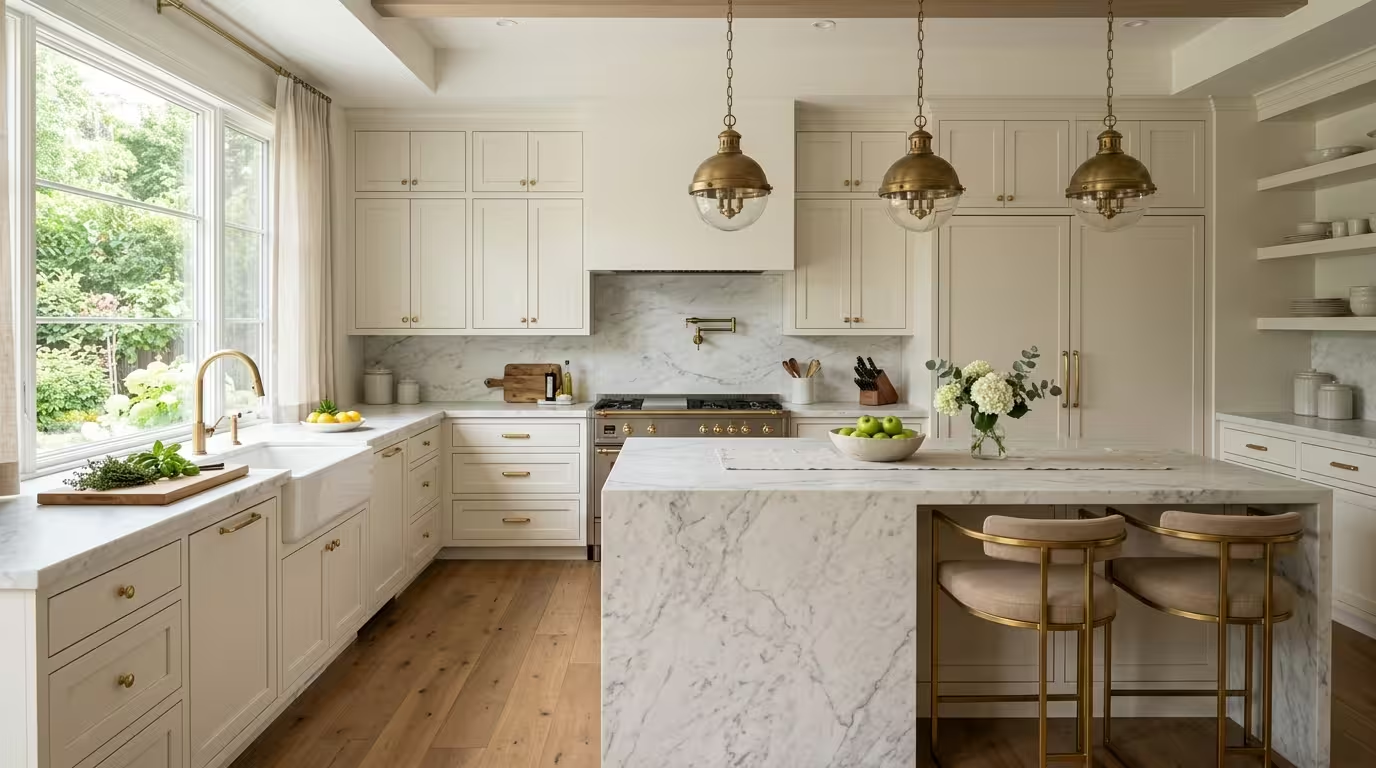
Walk into any dream kitchen or spa-inspired bathroom, and you will almost certainly find one thing in common — marble. This natural stone has graced the surfaces of palaces, museums, and beloved family kitchens for over two thousand years. And yet, despite the ever-changing tides of interior design trends, marble never looks dated.
Knowing how to choose timeless marble countertops, however, is not as simple as picking the prettiest slab at the showroom. The wrong choice can lead to staining, cracking, or a look that clashes with your space. The right choice, on the other hand, delivers beauty and function that outlasts every design fad. This guide walks you through every decision point — from stone type and veining pattern to finish, thickness, edge profile, and long-term care — so you invest wisely and confidently.
What Makes Marble “Timeless”?
Before diving into the selection process, it helps to understand what separates a timeless marble countertop from a trendy one. Timeless means it looks as beautiful in thirty years as it does on installation day. Several characteristics drive this quality.
A neutral color palette is the first indicator. White, cream, soft grey, and warm beige tones sit comfortably alongside almost any cabinet color, hardware finish, or flooring material — whether your home leans traditional, transitional, or modern. Bold or heavily veined slabs can be stunning, but they are more design-specific and harder to adapt when your tastes evolve.
Classic veining patterns also play a role. Fine, linear veining in a contrasting tone tends to read as elegant and restrained, while dramatic, large-scale movement can dominate a space. Neither is wrong, but one is more versatile over time.
Understanding Marble Types Before You Buy
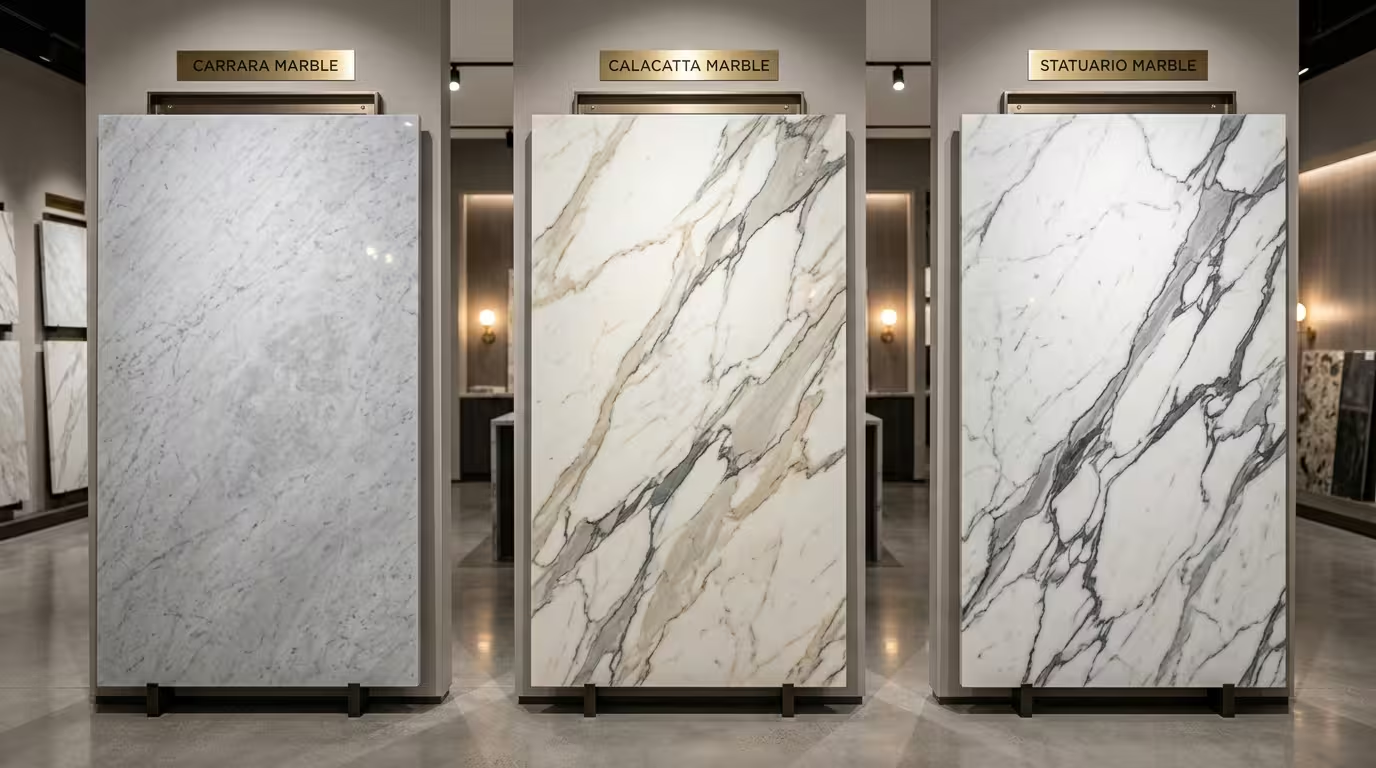
Not all marble is the same. The stone quarried in Carrara, Italy, behaves very differently from marble pulled from quarries in Turkey, Greece, or Colorado. Understanding the categories helps you match the right stone to your lifestyle.
Carrara Marble
Carrara is the most widely recognized name in marble. Its soft white-to-grey background and delicate blue-grey veining give it a quiet sophistication that suits both rustic farmhouse kitchens and sleek modern baths. It is also one of the more affordable marble varieties, making it a practical choice for larger surface areas.
That said, Carrara is a softer marble, which means it is more susceptible to etching — the dull marks left by acidic substances like lemon juice, wine, or vinegar. This does not make it a poor choice; it simply means you should go in with clear expectations and a consistent sealing routine.
Calacatta Marble
Calacatta is often confused with Carrara because both originate in Italy, but the two are quite different in look and price. Calacatta features a brighter white background with bold, dramatic veining in gold or deep grey tones. It is rarer, more expensive, and widely considered among the most luxurious marble options available.
If your goal is a showpiece island or a statement bathroom vanity, Calacatta delivers impact that is difficult to rival. Because of its high contrast, slab selection becomes especially important — more on that shortly.
Statuario Marble
Positioned between Carrara and Calacatta in terms of contrast, Statuario marble offers a pure white base with pronounced grey veining. It has a more graphic quality than Carrara and slightly less drama than Calacatta, making it one of the most sought-after options for those who want a bold but balanced look.
Emperador and Other Colored Marbles
Brown, green, black, and red marbles exist and have loyal followings. Emperador Dark, for example, is a rich chocolate-brown marble with fine cream veining that reads as warm and grounded. These colored varieties are beautiful but carry more design risk — they are harder to pair universally and may date faster than the typical white-and-grey family.
How to Choose Timeless Marble Countertops by Evaluating Slabs in Person
One of the most common mistakes buyers make is selecting marble from a small sample tile. A 6-inch sample tells you almost nothing about how the full slab will look installed across several feet of counter space. Always view full slabs in person.
The Importance of Slab Selection
Each marble slab is unique. Two slabs from the same quarry batch can have noticeably different veining intensity, background tone, and movement. When choosing marble for a kitchen, pull multiple slabs from the same lot and stand them side by side to understand the full range of variation.
For a large kitchen island, you may need two or more slabs. Ask the stone yard to “book-match” them if possible — a technique where two consecutive slabs are opened like the pages of a book, creating a mirrored, symmetrical veining pattern. Book-matching is a hallmark of high-end installations and dramatically elevates the finished look.
Viewing Slabs in Good Light
Stone yards often store slabs vertically in dimly lit warehouses. Whenever possible, ask to move your shortlisted slabs into natural daylight or well-lit viewing conditions. Colors, undertones, and veining details that appear subtle indoors can become far more pronounced once the stone is installed under kitchen pendant lights or bathroom vanity fixtures.
Finish Options and How They Affect Durability
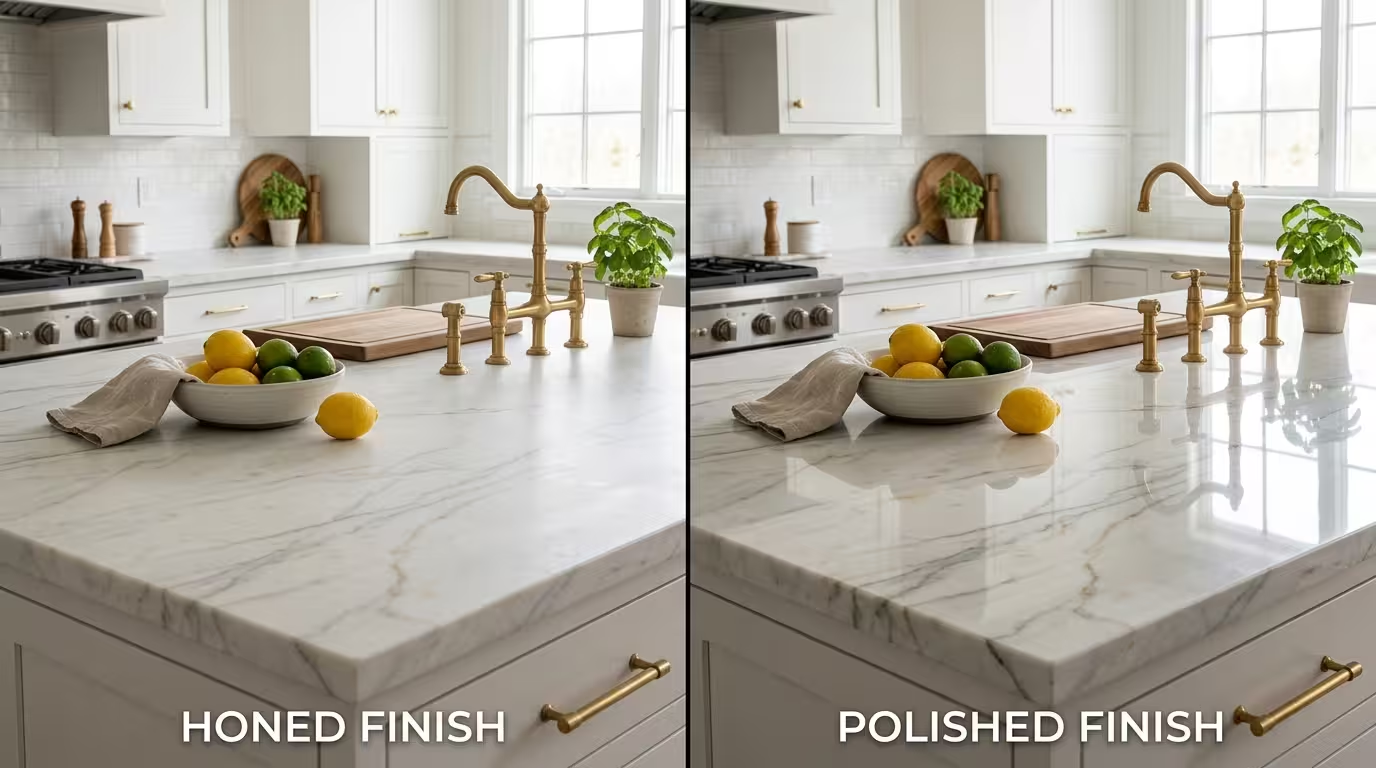
The surface finish you choose has a major impact on both the look and the maintenance requirements of your marble countertop. There are three primary options to consider.
Polished Finish
A polished finish brings out marble’s natural depth of color and creates a reflective, glossy surface. It is the most popular choice for kitchen countertops and bathroom vanities because it looks opulent and wipes down easily. The trade-off is that polished surfaces show etching more visibly — the contrast between the glossy background and a dull etch mark is quite noticeable.
Honed Finish
A honed finish is achieved by stopping the polishing process early, resulting in a matte or satin surface. This finish is the preferred choice of many designers for several practical reasons. Etch marks are far less visible on a honed surface because there is no reflective sheen to contrast against. Scratches and minor surface wear also blend in more gracefully.
Honed marble tends to look more casual and soft than polished marble — it suits farmhouse, transitional, and Scandinavian-style interiors particularly well.
Leathered Finish
Less common but increasingly sought after, a leathered finish creates a textured, slightly rough surface that feels and looks almost like brushed suede. It hides fingerprints and water spots beautifully, making it a practical choice for busy kitchens. The texture adds visual depth without the high sheen of a polished surface.
Thickness, Edge Profiles, and Why Details Matter
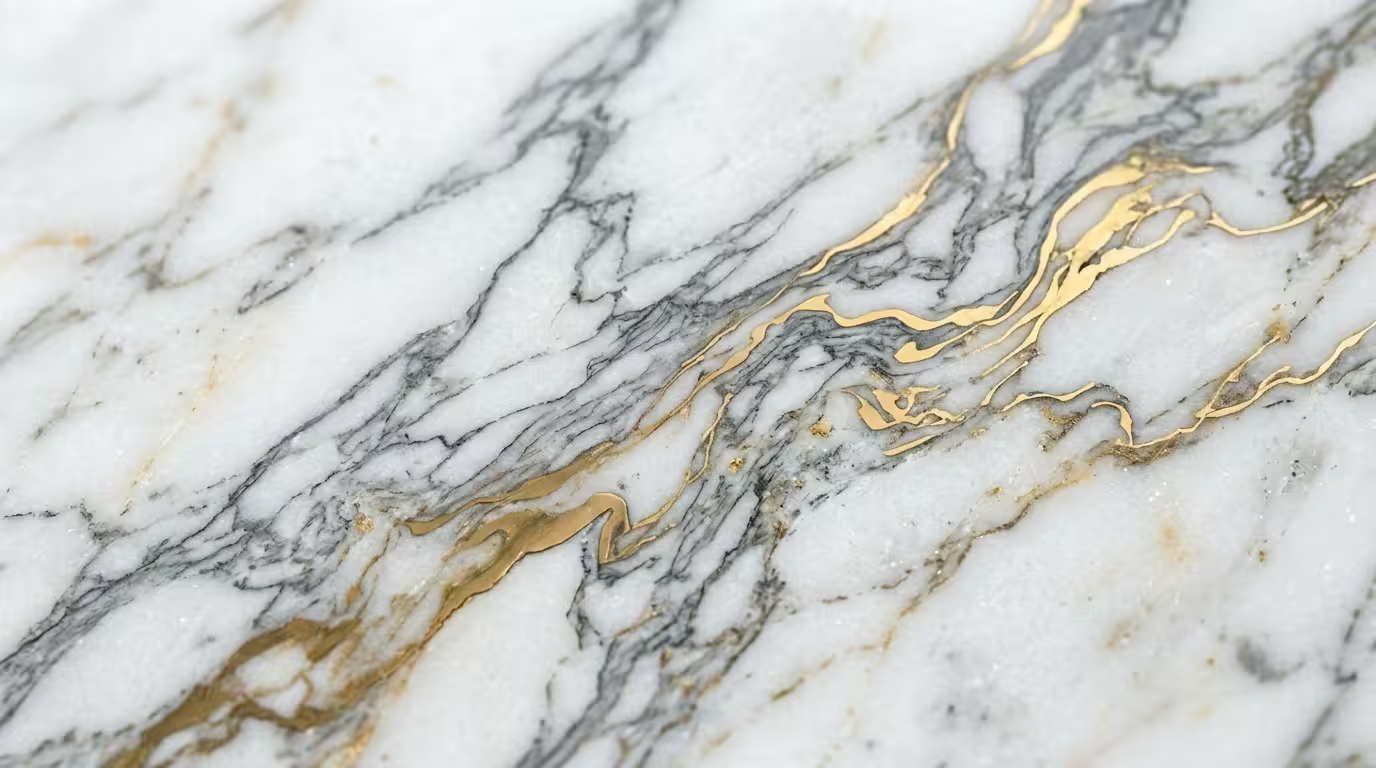
When learning how to choose timeless marble countertops, many buyers focus on color and forget that proportions and edge details can make or break the final result.
Slab Thickness
Marble countertops are most commonly sold in 2 cm (¾ inch) or 3 cm (1¼ inch) thickness. For most kitchen applications, 3 cm is the preferred choice because it provides greater structural integrity, requires less substrate support, and looks substantial and luxurious. Thinner 2 cm slabs are sometimes used in bathroom vanities where countertop overhangs are minimal.
Some high-end kitchens use mitered edges to create the illusion of a much thicker slab — two pieces of marble are joined at a 45-degree angle on the edge to achieve a 4- to 6-inch thick appearance while maintaining the material efficiency of a standard slab.
Edge Profiles
The edge profile is the shape given to the exposed front edge of your countertop. It is a small detail with a significant visual impact.
- Eased or straight edge: Clean, modern, minimal — works in virtually any design context.
- Beveled edge: A subtle, angled cut at the top, adding a slight refinement to a straight edge.
- Bullnose edge: Fully rounded, soft, and approachable — suits traditional and transitional kitchens.
- Ogee edge: An S-curve profile with a classical, ornate feel — best suited to formal, traditional spaces.
- Waterfall edge: Not technically an edge profile, but worth noting — the countertop material runs vertically down the side of the cabinetry, creating a dramatic, furniture-like appearance.
For truly timeless results, simpler edge profiles tend to age better than ornate ones. An eased or beveled edge will look as current in twenty years as it does today.
Sealing, Maintenance, and Realistic Expectations
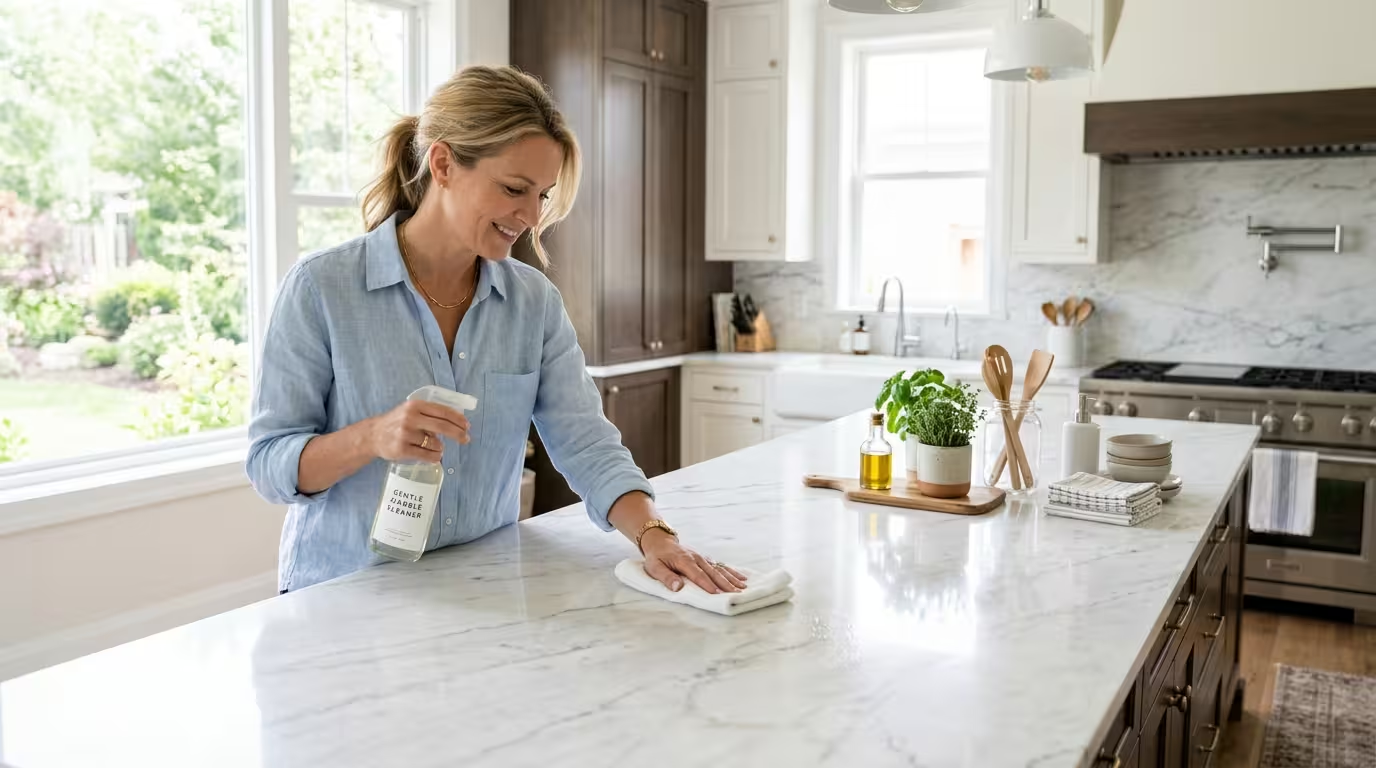
No guide on how to choose timeless marble countertops would be complete without an honest conversation about maintenance. Marble is a porous, calcium-carbonate-based stone, which means it reacts to acids and requires periodic sealing. This is not a flaw — it is simply the nature of the material.
Sealing Your Marble
A high-quality penetrating sealer applied to the surface helps resist staining by slowing liquid absorption. Most marble countertops should be sealed at least once a year, though high-traffic kitchen surfaces may benefit from sealing every six months. The process takes about an hour and is something most homeowners can do themselves.
To test whether your marble needs re-sealing, place a few drops of water on the surface. If the water beads up, the sealer is still working. If the water absorbs within a few minutes, it is time to reseal.
Etching: Understanding the Difference
Homeowners often confuse staining with etching, but they are two distinct issues. Staining occurs when a colored liquid — coffee, red wine, or oil — penetrates the stone and leaves a dark mark. Etching, on the other hand, is a chemical reaction. Acids dissolve the calcium carbonate in the marble’s surface, leaving a dull, lightened patch. Etching is not a stain and cannot be removed with cleaning products; it requires light re-honing or polishing.
Many designers and homeowners come to embrace the natural etching that develops over years of use, viewing it as part of the stone’s character — much like the patina on aged leather or the wear patterns on an antique floor. This perspective shift makes marble far less stressful to live with.
Daily Care Tips
- Wipe spills immediately, particularly anything acidic.
- Use cutting boards — never cut directly on the marble.
- Use trivets or heat pads, as extreme thermal changes can crack the stone.
- Clean with a pH-neutral stone cleaner or warm water and mild dish soap.
- Avoid bleach, vinegar, lemon-based cleaners, and abrasive scrubbers.
Where to Use Marble in Your Home for Maximum Impact
Understanding where marble works best helps you plan a cohesive, long-lasting design. While marble can theoretically be used anywhere, some applications are better suited to its properties than others.
Kitchen Countertops
The kitchen is the most popular location for marble countertops and, for good reason — the material is stunning under task lighting and gives any kitchen an elevated, custom feel. For busy, high-use kitchens, a honed Carrara or Calacatta slab strikes a smart balance between beauty and practicality. Consider reserving the marble for the perimeter counters and using a different, more durable material like quartzite for the main food-prep island.
Kitchen Islands
A marble island becomes a natural focal point in any kitchen. Since islands tend to see lighter food-prep use than perimeter counters, they can handle a polished finish with less visible wear. A book-matched Calacatta island with a waterfall edge is among the most iconic looks in contemporary kitchen design.
Bathroom Vanities
Bathrooms are perhaps the single best application for marble countertops. The reduced exposure to acidic food and the lower daily-use demands make marble a more forgiving choice in this context. White marble countertops paired with white or off-white cabinetry create bathrooms that feel spa-like and effortlessly elegant.
Fireplace Surrounds
Marble is a natural choice for fireplace surrounds, where its heat tolerance and visual drama are both assets. Because fireplace surrounds are largely decorative surfaces, maintenance concerns are minimal.
Budgeting for Marble Countertops — What to Expect
Cost varies widely based on marble type, slab quality, thickness, and fabrication complexity. Here is a general range to help plan your budget in the U.S. market as of 2025:
- Carrara marble: $40–$100 per square foot installed
- Calacatta marble: $80–$180 per square foot installed
- Statuario marble: $100–$200+ per square foot installed
- Leathered or specialty finishes: Add $10–$25 per square foot
These figures include material and standard fabrication but may not include demolition of existing countertops, plumbing disconnection, or unusual cutouts. Always get at least three quotes from licensed stone fabricators and verify that their pricing includes full installation.
Investing in quality fabrication is just as important as investing in quality stone. A beautifully selected slab can look disappointing with poor cuts, visible seams, or rough edges.
Conclusion:
Choosing Marble Countertops With Confidence
Marble has earned its timeless reputation for good reason — no manufactured material fully replicates its depth, translucency, and natural variation. The key to making the right choice lies in understanding the stone’s characteristics, matching them honestly to your lifestyle, and working with skilled fabricators who respect the material.
When you focus on classic colors, appropriate finishes, proper thickness, and a consistent care routine, your marble countertops will not just hold up over the decades — they will improve. The slight patina and gentle wear that develops over time give marble a lived-in beauty that synthetic surfaces simply cannot replicate.
Take your time, visit multiple stone yards, view full slabs in natural light, and do not be afraid to ask questions. This is a significant investment in your home, and the more informed your decision, the more confident — and happier — you will be with the result.