Best Bathroom Countertops: A Complete Guide to Choosing the Right Vanity Surface
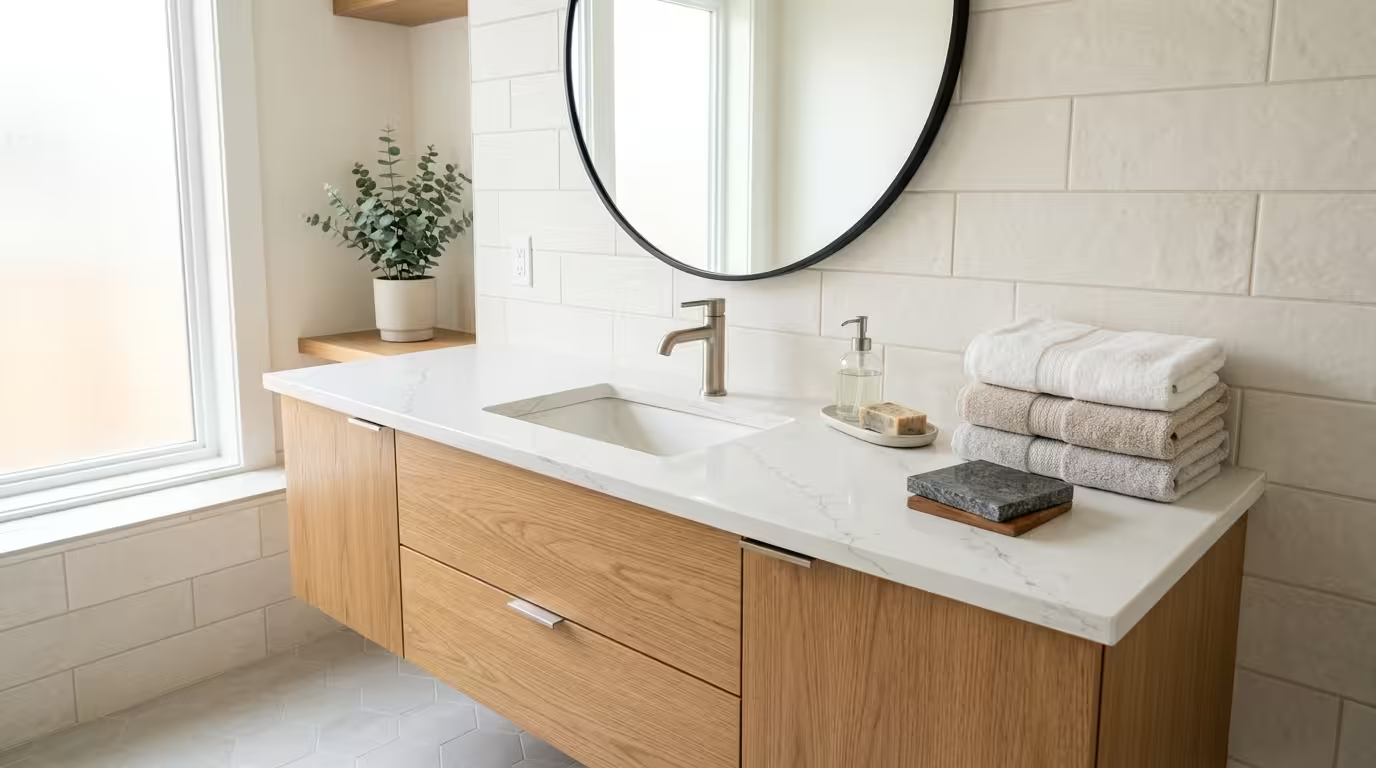
A bathroom countertop does more than hold a sink. It handles toothpaste, water splashes, makeup spills, soap residue, shaving cream, perfumes, cleaning sprays, and hot styling tools almost every day. The right surface can make a bathroom feel cleaner, brighter, and more finished. The wrong one can stain, chip, swell, or look dated far sooner than expected.
Choosing the best bathroom countertops is not only about picking the prettiest slab in a showroom. It is about matching the material to the way your bathroom is used. A guest powder room has different needs than a busy family bathroom. A luxury primary bath may call for natural stone, while a rental or budget remodel may need something practical, affordable, and easy to replace.
This guide explains the best bathroom countertops by material, cost, maintenance, durability, appearance, and everyday performance. You will also learn which options work best for small bathrooms, humid spaces, double vanities, and homes where low maintenance matters most.
What Makes the Best Bathroom Countertops Different from Kitchen Counters?
Bathroom surfaces face a different kind of wear than kitchen counters. In a kitchen, heat, knives, and food stains are the main concerns. In a bathroom, the bigger issues are moisture, hard water, cosmetics, toothpaste, hair dye, soap buildup, and frequent cleaning. A material that works beautifully in a kitchen may still need extra care in a bathroom.
The best bathroom countertops resist water, clean easily, and do not require constant sealing or polishing. They should also pair well with the vanity, sink, mirror, lighting, faucet finish, and tile. Because bathroom countertops are usually smaller than kitchen counters, you may be able to choose a higher-end material without spending as much as you would in a full kitchen remodel.
Another important factor is edge detail. Sharp square edges look modern, but rounded edges are safer and less likely to chip in a tight bathroom. A backsplash is also useful because it protects the wall from water splashes around the faucet.
Quick Comparison: Best Bathroom Countertops by Need
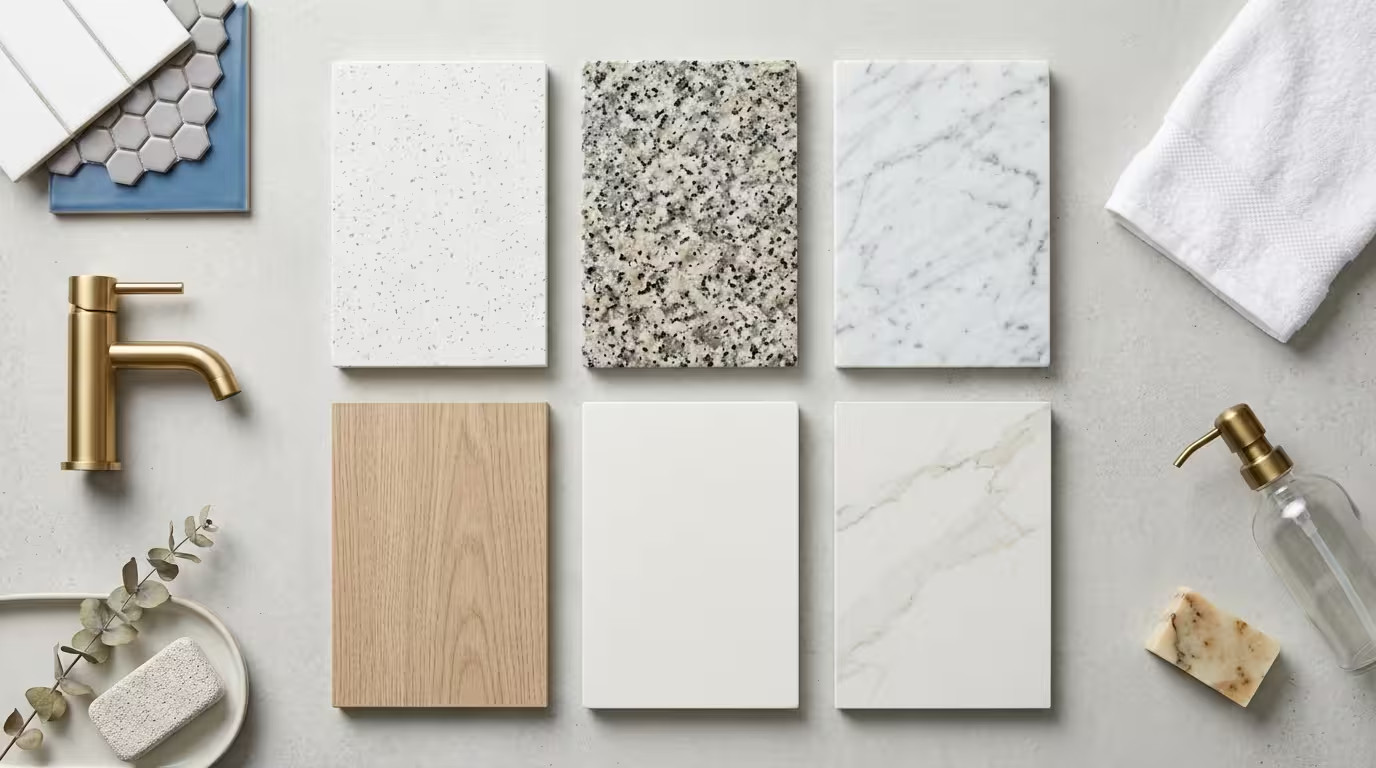
For most homeowners, quartz is the strongest all-around option because it is nonporous, stain-resistant, and does not need sealing. Granite is excellent for people who want natural stone with strong durability. Marble is best for those who love luxury and accept extra care. Solid surface is practical, seamless, and repairable. Laminate is budget-friendly and much better looking than older versions, but it is not as durable as stone or engineered materials.
If your bathroom is used by children, guests, or multiple people each day, low-maintenance surfaces are usually the smartest choice. If the room is a rarely used powder bath, you can choose a more delicate material because it will not face the same daily abuse. For resale appeal, neutral colors such as white, cream, light gray, beige, and soft stone-look patterns tend to feel timeless.
The best bathroom countertops are the ones that balance your lifestyle, budget, and design style instead of chasing only one feature.
Quartz Bathroom Countertops
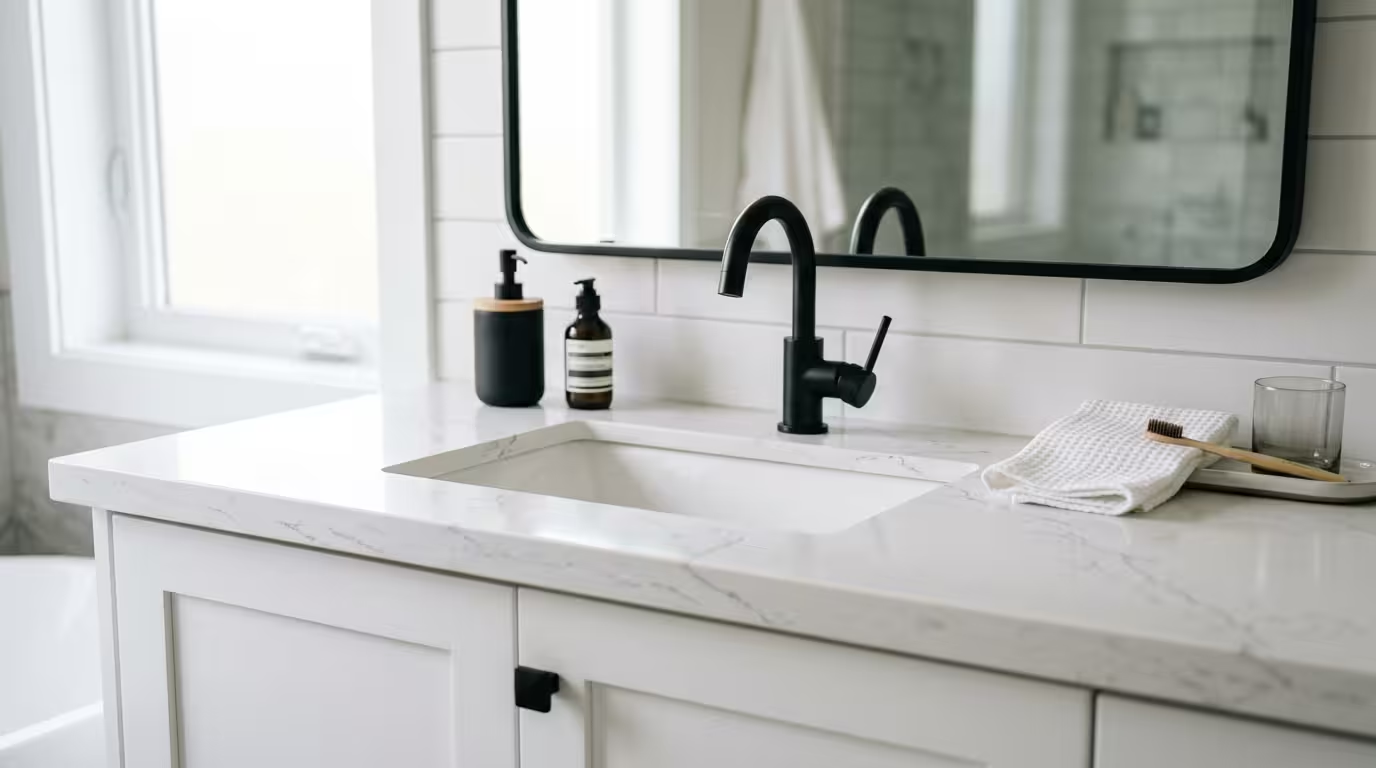
Quartz is one of the most popular choices for modern bathrooms. It is an engineered material made with quartz particles, resins, and pigments. The result is a hard, consistent, nonporous surface that can mimic marble, granite, concrete, or simple solid colors. Because quartz does not need sealing, it is a strong choice for homeowners who want beauty without complicated upkeep.
The biggest advantage of quartz is daily convenience. It resists stains from makeup, toothpaste, water, and many common bathroom products. It also comes in many colors and patterns, from clean white to dramatic veining. This makes it easy to match with white vanities, wood cabinets, matte black fixtures, brushed nickel faucets, and warm brass accents.
Quartz does have limits. It can be damaged by high heat, so flat irons and curling wands should not sit directly on the surface. Use a heat-resistant mat near the styling area. Edges can also chip if hit hard, especially on sharp corners. Still, for most homes, quartz belongs near the top of any list of best bathroom countertops.
Best for
Quartz works best in family bathrooms, primary bathrooms, guest bathrooms, and remodels where the owner wants a clean, durable, low-maintenance surface. It is especially useful for busy homes where people do not want to reseal natural stone.
Granite Bathroom Countertops
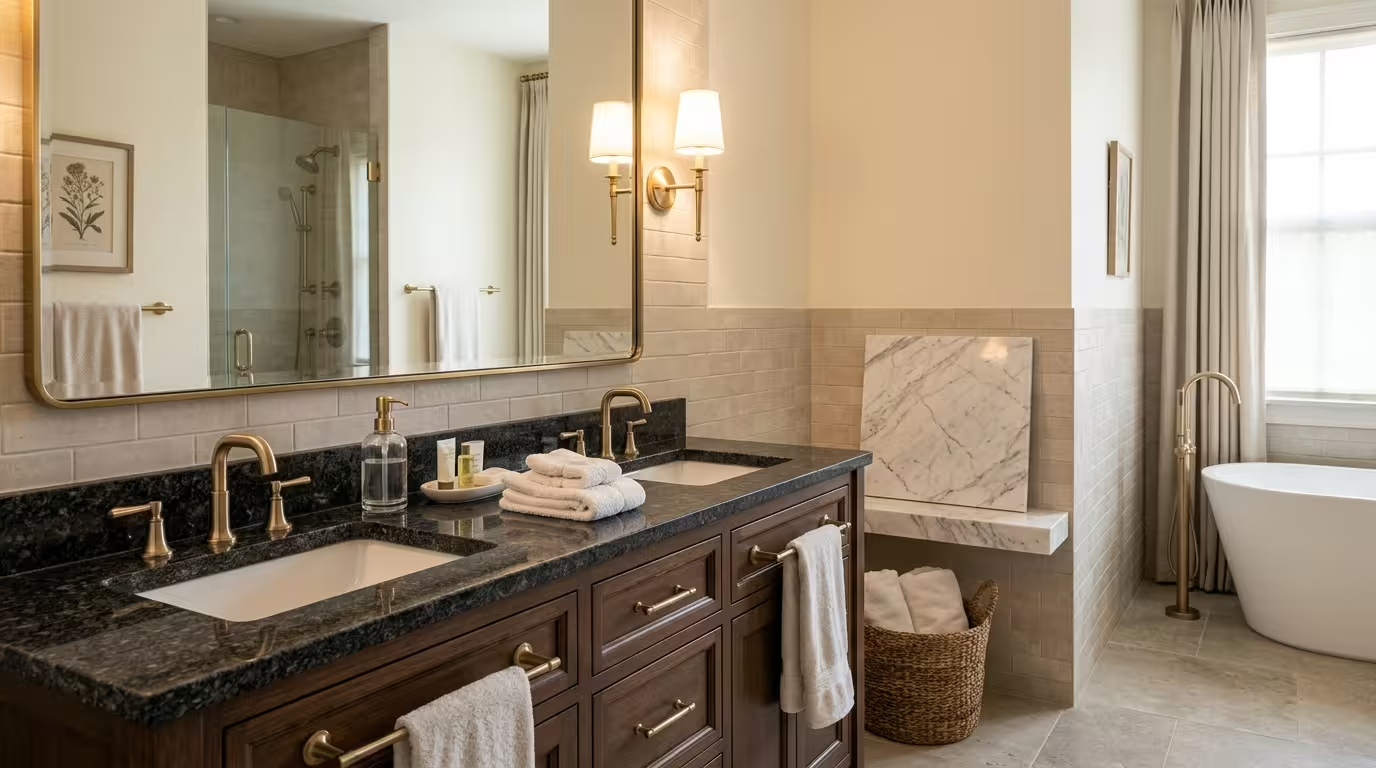
Granite is a natural stone with unique color, movement, and pattern. No two slabs are the same, which gives granite a character that engineered surfaces cannot fully copy. It is strong, heat-resistant, and long-lasting when properly installed and maintained. For homeowners who want a natural material with durability, granite remains a reliable choice.
Granite performs well in bathrooms because it stands up to moisture and daily use when sealed. The seal helps protect the stone from stains and bacteria. Depending on the stone and finish, resealing may be needed every 12 to 18 months. That maintenance is not difficult, but it should not be ignored.
Granite often looks best in bathrooms with wood vanities, traditional cabinets, earthy tiles, or classic design details. Lighter granite can brighten a small bathroom, while darker granite can add contrast and drama. Because the pattern varies, it is smart to view the actual slab or vanity top before buying.
For a compact vanity layout, see our guide to Best Small Bathroom Ideas before choosing your countertop color and sink style.
Granite is one of the best bathroom countertops for people who want authentic stone and do not mind basic maintenance.
Best for
Granite is a good fit for traditional bathrooms, transitional designs, high-use powder rooms, and homeowners who prefer natural variation over perfectly repeated patterns.
Marble Bathroom Countertops
Marble has a soft, elegant look that many people associate with luxury hotels and classic homes. It can make a bathroom feel calm, bright, and refined. White marble with gray veining is especially popular, but marble also comes in warm, dramatic, and colorful varieties.
The beauty of marble comes with responsibility. Marble is more porous than granite and can be scratched, stained, or etched by acidic products. Some toothpaste, cosmetics, perfumes, and cleaners may leave marks if spills sit too long. Annual sealing is commonly recommended, and daily care should be gentle. Avoid vinegar, lemon-based cleaners, abrasive pads, and harsh chemicals.
Marble can still be a wonderful bathroom choice if you enjoy natural patina. Over time, it may develop small marks that add character. However, if you want a surface that looks perfect with very little care, quartz with a marble-look design may be a better option.
Marble is among the best bathroom countertops for visual impact, but not for households that need the easiest maintenance.
Best for
Marble works well in primary bathrooms, elegant powder rooms, traditional spaces, and homes where the owner values natural stone beauty more than stain resistance.
A balanced home design does not stop at the bathroom, so review Bedroom Rug Size Design for better scale and proportion in your bedroom.
Quartzite Bathroom Countertops
Quartzite is sometimes confused with quartz, but they are not the same. Quartzite is a natural stone formed under heat and pressure, while quartz is engineered. Quartzite often has dramatic veining and a high-end appearance, making it appealing for luxury bathrooms.
Quartzite is usually harder and more heat-resistant than many other stones, but it still needs sealing because it is natural and can be porous. The exact care level depends on the slab. Some quartzite is dense, while other slabs absorb more moisture. That is why it is important to ask the fabricator about sealing, porosity, and bathroom suitability before purchase.
This material is often more expensive than quartz and granite. It also requires professional fabrication and installation. For a small vanity, the cost may be manageable, especially if you find a remnant slab. A remnant is a leftover piece from a larger project and can be ideal for a bathroom.
Quartzite belongs on the list of best bathroom countertops for homeowners who want rare natural beauty and are comfortable with sealing.
Best for
Quartzite is best for luxury bathrooms, statement vanities, and homeowners who want unique stone movement that cannot be duplicated.
Solid Surface Bathroom Countertops
Solid surface countertops are made from acrylic or polyester-based materials. They can mimic stone, but their biggest advantage is not imitation. It is practicality. Solid surface can be shaped into smooth, seamless designs, and some vanity tops include integrated sinks. That makes cleaning easier because there are fewer seams and edges where grime can collect.
This material is water-resistant, repairable, and comfortable to touch. Small scratches can often be buffed out by a professional, and the consistent color helps hide minor wear. It is also a good choice for bathrooms with unusual dimensions because it can be custom-fabricated.
The main drawback is heat sensitivity. Hot curling irons, flat irons, and other grooming tools can scorch or discolor the surface. It can also scratch more easily than quartz or granite. Still, for many homeowners, solid surface offers a smart middle ground between price, appearance, and easy care.
Solid surface is one of the best bathroom countertops for seamless designs and practical family use.
Best for
Solid surface works well in kids’ bathrooms, guest bathrooms, rental properties, accessible bathrooms, and spaces where an integrated sink is preferred.
Laminate Bathroom Countertops
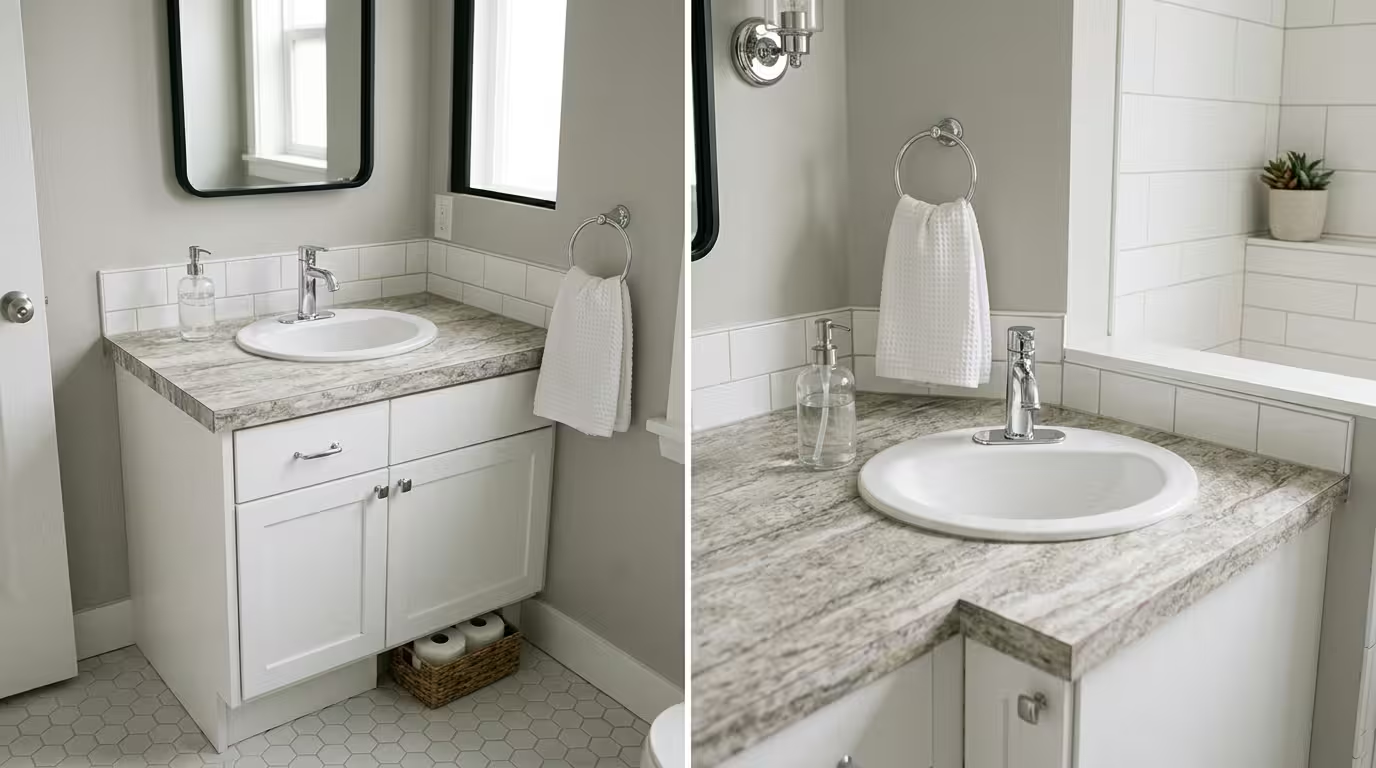
Laminate has improved a lot over the years. Older laminate counters were often thin, shiny, and easy to recognize. Modern laminate can copy stone, wood, concrete, and matte finishes at a much lower price than natural or engineered materials. It is one of the most affordable ways to refresh a bathroom vanity.
Laminate is easy to clean and can handle normal bathroom use when properly installed. It is also lightweight, which can make it useful for budget remodels. However, it has weaknesses. Water can damage the core if it gets into seams or edges. Heat can burn it, sharp objects can scratch it, and serious damage is not easily repaired.
For a powder room, rental unit, starter home, or quick upgrade, laminate can make sense. For a high-end primary bathroom, it may not offer the same long-term value as quartz, granite, or solid surface.
Laminate is one of the best bathroom countertops when budget is the top priority.
Best for
Laminate is best for low-cost remodels, guest bathrooms, powder rooms, rental homes, and temporary upgrades before a larger renovation.
Cultured Marble Vanity Tops
Cultured marble is a manufactured product made from crushed stone particles and resin, usually finished with a protective gel coat. It is common in ready-made vanity tops and often comes with an integrated sink and backsplash. This makes installation simpler and can reduce labor costs.
The look is usually soft and traditional, though newer styles can appear more modern. Cultured marble is generally affordable and easy to clean, but the gel coat can scratch, dull, or stain over time. Harsh cleaners can damage the finish, so gentle cleaning is important.
One advantage is convenience. If you want a complete vanity top with sink included, cultured marble is widely available in standard sizes. It may not have the premium feel of natural marble or quartz, but it provides a clean, finished appearance at a reasonable price.
For practical remodels, cultured marble can be one of the best bathroom countertops for speed, simplicity, and value.
Best for
Cultured marble is ideal for budget-friendly bathroom updates, hall bathrooms, guest baths, and homeowners who want an all-in-one vanity top.
Porcelain Bathroom Countertops
Porcelain is becoming more popular for bathroom surfaces because it is sleek, dense, and resistant to stains. It can be manufactured in large-format slabs that mimic marble, concrete, or stone. Porcelain is also strong against moisture and cleaning products when properly installed.
Its thin profile can create a modern look, especially with floating vanities and minimalist fixtures. Porcelain is also useful for people who want a clean, bright bathroom that feels polished but not heavy. Another advantage is that it can be used on walls and shower surrounds, allowing a coordinated design.
The challenge is installation. Porcelain slabs can chip during fabrication if handled poorly, so experienced installers matter. Edge details may also look different than thicker stone slabs. For homeowners who want a refined, modern surface, porcelain can be an excellent option.
Porcelain is one of the best bathroom countertops for contemporary bathrooms and low-maintenance elegance.
Best for
Porcelain works well in modern bathrooms, spa-inspired spaces, floating vanities, and designs where the countertop coordinates with wall panels or shower surfaces.
Concrete Bathroom Countertops
Concrete countertops offer a custom, architectural look. They can be poured in different shapes, tinted in various colors, and finished with unique textures. For industrial, rustic, farmhouse, or modern bathrooms, concrete can create a strong design statement.
However, concrete is not automatically low maintenance. It is porous and must be sealed correctly. Without proper sealing, it can stain from water, cosmetics, soap, and cleaning products. Hair dye and dark makeup can be especially risky. It may also develop small cracks over time, which some people like and others dislike.
Concrete is usually best when made by an experienced professional. DIY versions can work, but bathroom counters need smooth finishing, reliable sealing, and proper sink cutouts. If you love a handmade look, concrete may be worth considering. If you want a perfect, uniform surface, quartz or porcelain may be better.
Concrete can be among the best bathroom countertops for custom style, but only with proper sealing and realistic expectations.
Best for
Concrete suits industrial bathrooms, custom vanities, modern farmhouse spaces, and homeowners who appreciate natural variation.
Tile Bathroom Countertops
Tile countertops were once very common, and they still have a place in certain bathroom designs. Ceramic and porcelain tile are water-resistant, available in many colors, and budget-friendly. Tile also lets you create patterns, borders, and vintage-inspired looks that slabs cannot provide.
The main concern is grout. Grout lines can collect grime, soap residue, and mildew in a humid bathroom. Choosing stain-resistant grout and sealing it properly can help, but tile still requires more detailed cleaning than a smooth slab. Uneven surfaces can also make it harder to place bottles, trays, and grooming tools.
Tile may not be the first choice for a modern luxury vanity, but it can work beautifully in Spanish-style, cottage, retro, and handmade-look bathrooms. Larger tiles reduce grout lines and make cleaning easier.
Tile can be one of the best bathroom countertops for character and budget control, especially when the design calls for texture.
Best for
Tile is best for vintage bathrooms, colorful powder rooms, DIY-friendly updates, and homes where charm matters more than a perfectly seamless surface.
How to Choose the Best Bathroom Countertops for Your Home
Start with how the bathroom is used. A family bathroom needs a forgiving material that handles water, mess, and frequent wiping. Quartz, solid surface, and cultured marble are strong choices here. A guest powder room can support more delicate or decorative materials because it sees lighter use.
Next, think about maintenance. If you do not want to seal a surface, avoid marble, quartzite, concrete, and some granites unless you are ready for periodic upkeep. If you enjoy natural materials and do not mind care routines, stone can be rewarding.
Budget also matters. Laminate and cultured marble are usually more affordable. Solid surface is often mid-range. Quartz and granite vary widely. Marble, quartzite, and custom concrete can cost more, especially with special edges, undermount sinks, and custom fabrication.
Finally, choose a color that works with the whole room. A countertop should connect the vanity, mirror, lights, flooring, and tile. The best bathroom countertops feel like part of the full design, not a separate piece chosen in isolation.
Best Countertop Colors for Bathrooms
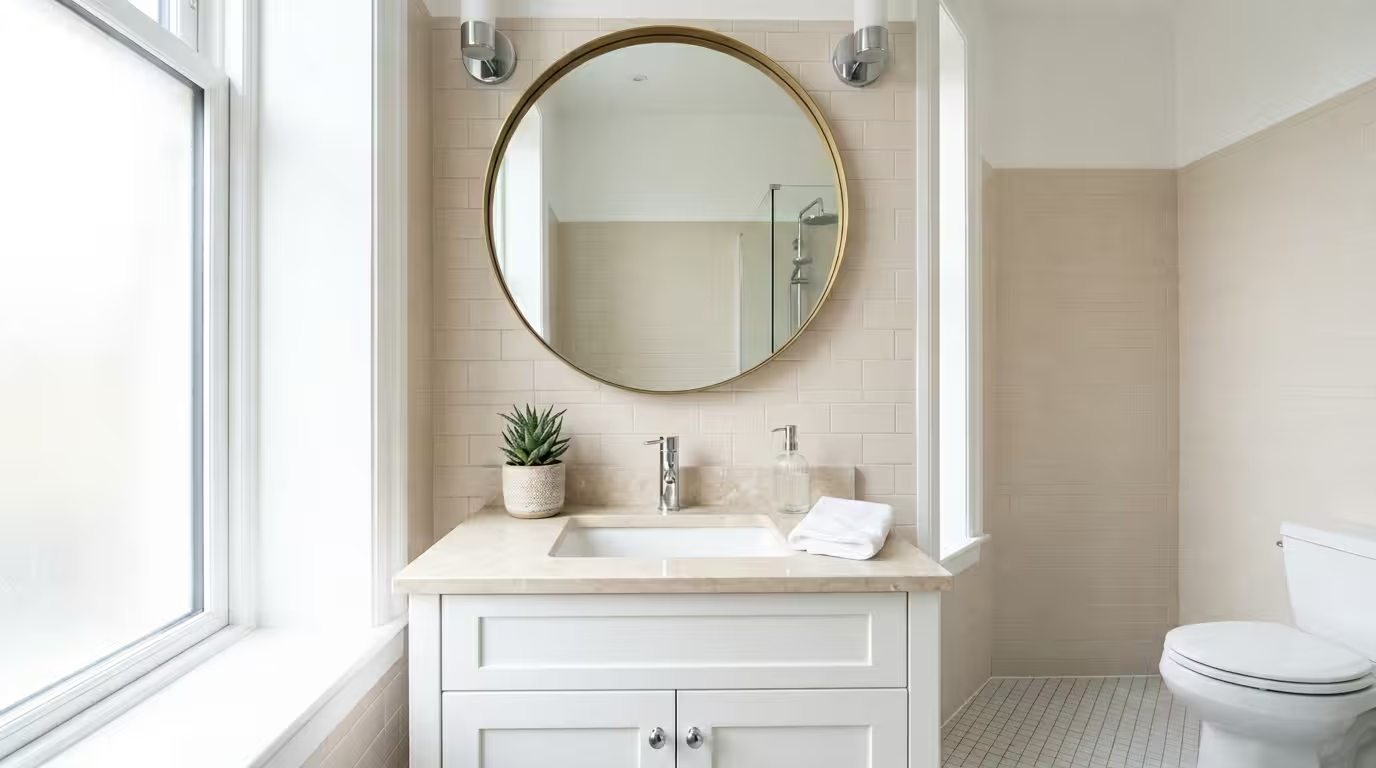
White and off-white counters remain popular because they make bathrooms feel clean and open. They work especially well in small rooms, windowless bathrooms, and spaces with darker cabinets. Soft gray, beige, cream, and warm stone patterns are also timeless because they blend with many finishes.
Dark countertops can look dramatic and elegant, especially with white sinks, wood vanities, and brass or black fixtures. The downside is that dark surfaces may show water spots, dust, toothpaste, and soap residue more easily. If you live in an area with hard water, test samples before choosing a very dark surface.
For a calm, spa-like bathroom, consider light quartz, pale granite, creamy marble-look porcelain, or solid surface in soft neutral tones. For character, use veined stone, terrazzo-style patterns, or warm concrete finishes.
The best bathroom countertops are not always the boldest. Often, the most successful choice is the one that still looks good after trends change.
Sink and Edge Choices Matter
The countertop material is only part of the decision. Sink style can change how easy the vanity is to clean. Undermount sinks create a smooth look and make it easy to wipe water into the basin. Integrated sinks, often found with solid surface or cultured marble tops, reduce seams even more. Vessel sinks look stylish but can leave more exposed counter area to clean around the base.
Edge style also matters. Rounded, eased, or bullnose edges are practical in tight bathrooms because they are less sharp and less likely to chip. Square edges look clean and modern, but may be less forgiving. If children use the bathroom, softer edges are usually safer.
Backsplashes are worth considering. A 3- or 4-inch backsplash protects the wall from water, while a full-height backsplash can create a more finished, custom look. These details help the best bathroom countertops perform better over time.
Maintenance Tips for Long-Lasting Bathroom Countertops
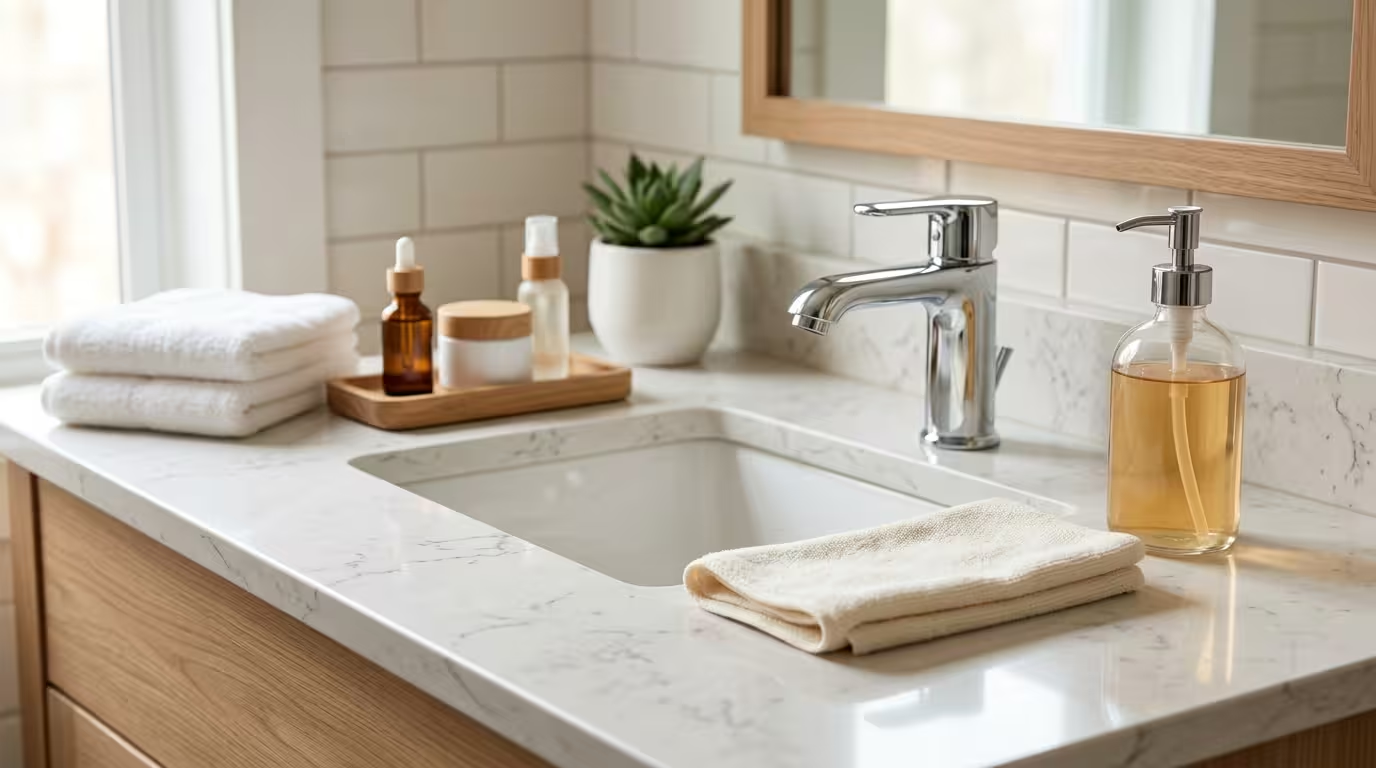
Good maintenance starts with simple habits. Wipe water, toothpaste, cosmetics, and soap residue daily when possible. Bathrooms are humid, and buildup becomes harder to remove if it sits for days. Use a soft cloth or sponge instead of abrasive pads.
For quartz, solid surface, laminate, and cultured marble, mild soap and water are usually enough for everyday cleaning. For granite, marble, quartzite, and other natural stone, avoid vinegar, lemon juice, and harsh acidic cleaners. Use pH-neutral products made for stone or gentle dish soap diluted in water.
Always protect the surface from hot tools. A flat iron can damage quartz, laminate, solid surface, and cultured marble if left directly on the counter. Keep a heat-resistant mat nearby. Also, use trays for perfumes, skincare bottles, and hair products. This small habit can prevent rings, stains, and sticky residue.
Even the best bathroom countertops last longer when daily care is simple and consistent.
When updating nearby rooms, avoid the common Feature Cheapens the Look of Your Bedroom so your home feels consistent and polished.
Common Mistakes to Avoid
One common mistake is choosing only by appearance. A beautiful marble top may not be right for a child’s bathroom where toothpaste, markers, and soap sit on the counter. A dark stone may look dramatic in a showroom, but show hard water spots at home.
Another mistake is ignoring the vanity cabinet. Heavy stone may not be suitable for a weak or older vanity without support. Always make sure the cabinet can carry the countertop, sink, and faucet. Professional installation is especially important for stone, quartz, porcelain, and custom concrete.
Do not forget faucet holes, sink type, overhang, backsplash, and edge profile. These details affect the final look and installation cost. Also, ask about remnants if your vanity is small. You may be able to get a premium stone or quartz piece for less.
The best bathroom countertops are chosen with both design and installation details in mind.
Final Verdict: What Is the Best Bathroom Countertop Material?
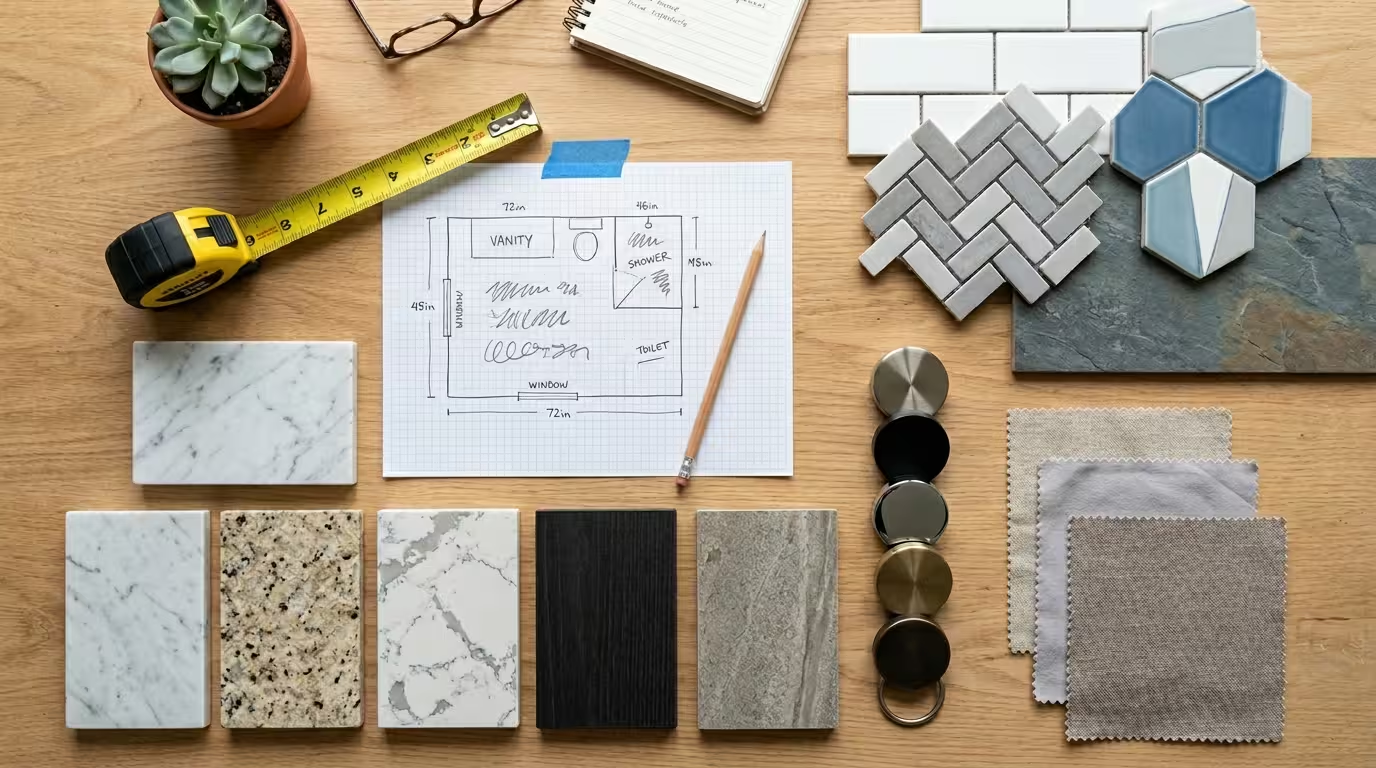
For most homeowners, quartz is the best overall bathroom countertop because it offers a strong mix of durability, style, stain resistance, and low maintenance. It works in nearly every bathroom type and comes in enough colors to suit both classic and modern spaces.
Granite is the best choice for natural stone durability. Marble is the best choice for timeless luxury if you accept extra care. Solid surface is best for seamless practicality. Laminate is best for tight budgets. Cultured marble is best for quick, affordable vanity updates. Porcelain is best for sleek modern design. Quartzite is best for its unique natural beauty. Concrete is best for a custom character.
The best bathroom countertops are not the same for every home. A smart choice fits your routine, your cleaning habits, your budget, and the feeling you want when you walk into the room each morning.
Conclusion:
A bathroom countertop is a daily-use surface, not just a design feature. It should handle moisture, cleaning, grooming products, and real life while still making the room feel comfortable and complete. Before choosing, think about who uses the bathroom, how often it is cleaned, whether hot tools are used, and how much maintenance you are willing to do.
Quartz is the safest all-around recommendation for many homes, but it is not the only good answer. Granite, marble, quartzite, porcelain, solid surface, laminate, tile, cultured marble, and concrete each have a place when matched to the right bathroom. The best decision comes from balancing beauty with honest expectations.
When you choose carefully, the best bathroom countertops can make your bathroom easier to maintain, more enjoyable to use, and more valuable for years.