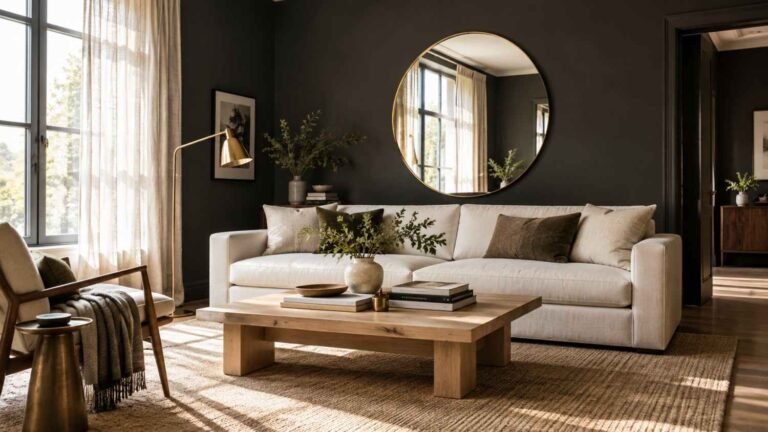
Designer Living Rooms: How to Create a Space That Feels Elegant, Personal, and Livable
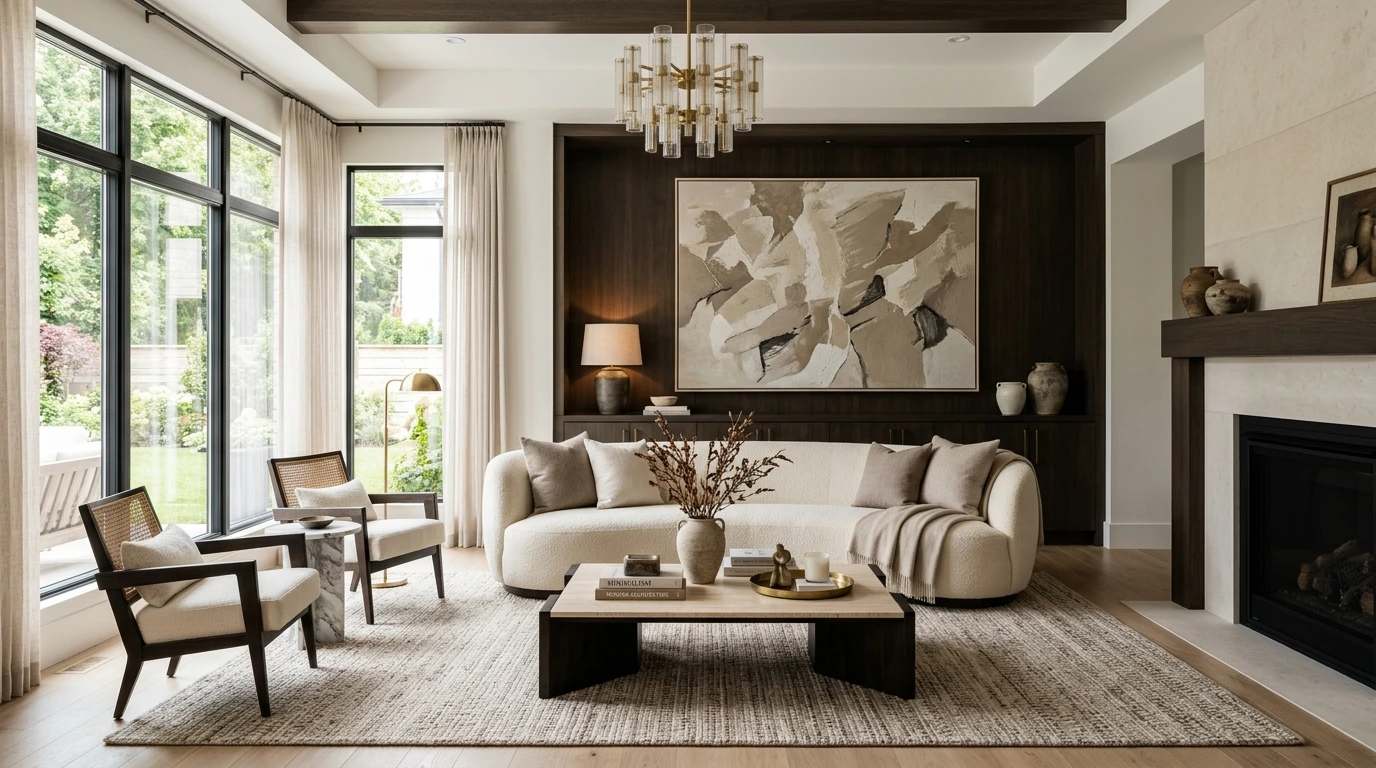
Some rooms look polished the moment you walk in. They feel calm, balanced, and memorable without seeming stiff or overdone. That is the real appeal of designer living rooms. They do not rely on one expensive sofa or a wall of matching furniture. They work because every choice, from layout to lighting to texture, supports the way the room is meant to feel and function.
The strongest living rooms today share a few clear traits. Recent guidance from major design publishers and working designers points to warmer palettes, richer wood tones, layered lighting, better scale, and more personality through collected pieces rather than cookie-cutter sets. Yet many inspiration-heavy roundups still skip the practical details that help real homeowners get the look right. This guide closes that gap with a step-by-step approach you can actually use.
What Makes Designer Living Rooms Feel Different
At first glance, designer living rooms often seem effortless. In reality, they are built on discipline. The furniture is sized for the room. The seating arrangement invites conversation. Lighting comes from more than one source. Fabrics and finishes add depth. Art feels intentional. Nothing important is floating without purpose, and nothing useful feels like an afterthought.
A well-designed room also balances beauty with daily life. House Beautiful highlights performance fabrics, ample seating, and soft rugs as practical moves that improve comfort as much as style. Martha Stewart’s recent designer advice adds another key point: start with a plan, measure carefully, and design around how your family actually uses the room. In other words, the best rooms are not showroom spaces. They are rooms that look refined because they solve real problems well.
Start With the Architecture in Designer Living Rooms, Not the Accessories
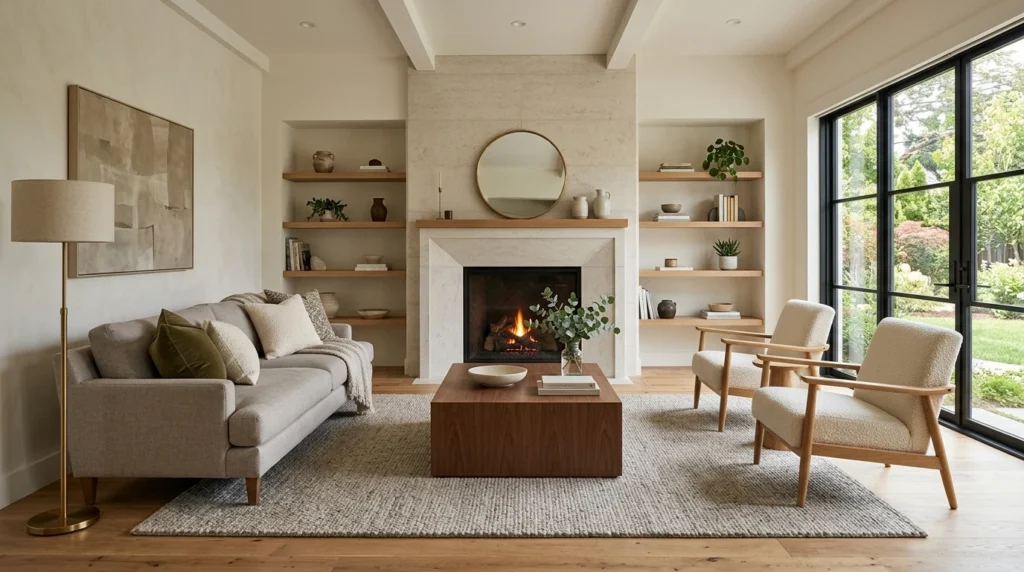
Before choosing pillows, coffee tables, or paint, study the room itself. Where does natural light enter? Which wall pulls your eye first? Is there a fireplace, a large window, built-ins, or a television that will act as the visual anchor? Good rooms respect those fixed features rather than fighting them. Architectural Digest repeatedly frames strong living rooms around bold anchors like a statement sofa, major artwork, or defining architectural elements. Martha Stewart similarly recommends clearing the room mentally, or even physically, so you can understand its true potential before decorating.
This is also the moment to define the room’s job. Some spaces are formal places for conversation. Others are family hubs for movies, reading, work, and entertaining. A room cannot excel at everything equally, so decide what matters most. Once you know the priority, furniture choices become easier. A conversation-first room may need facing chairs and a tighter seating zone. A family room may need deeper seating, storage, and durable materials. Function should shape the mood, not weaken it.
Related Article:
https://outinteriors.com/how-to-organize-kid-closet/
Use Layout to Create Calm and Confidence
The fastest way to make a living room feel expensive is not to buy more. It is arranging what you have with purpose. In many disappointing spaces, the problem is not taste. It is a layout. Furniture is pushed against every wall, pathways are awkward, or the seating group is too far apart to feel intimate.
Designer living rooms usually begin with a clear center. That center may be a rug, coffee table, fireplace, or sofa, but it gives the room gravity. HGTV recommends arranging seating to support conversation and make the most of square footage, while recent designer advice from Martha Stewart suggests marking layouts with painter’s tape before moving heavy pieces. That simple step can prevent costly mistakes and help you see whether the room needs one seating zone or two smaller zones.
For most rooms, leave enough space to move comfortably without making the furniture feel disconnected. Avoid the common urge to line every piece around the perimeter. Pulling at least some furniture inward makes the room feel more composed. In open-plan homes, use a rug and lighting to define the living area so it feels intentional instead of leftover. These small changes are often what separate ordinary rooms from spaces that feel settled and complete.
Choose a Color Story With Warmth and Range
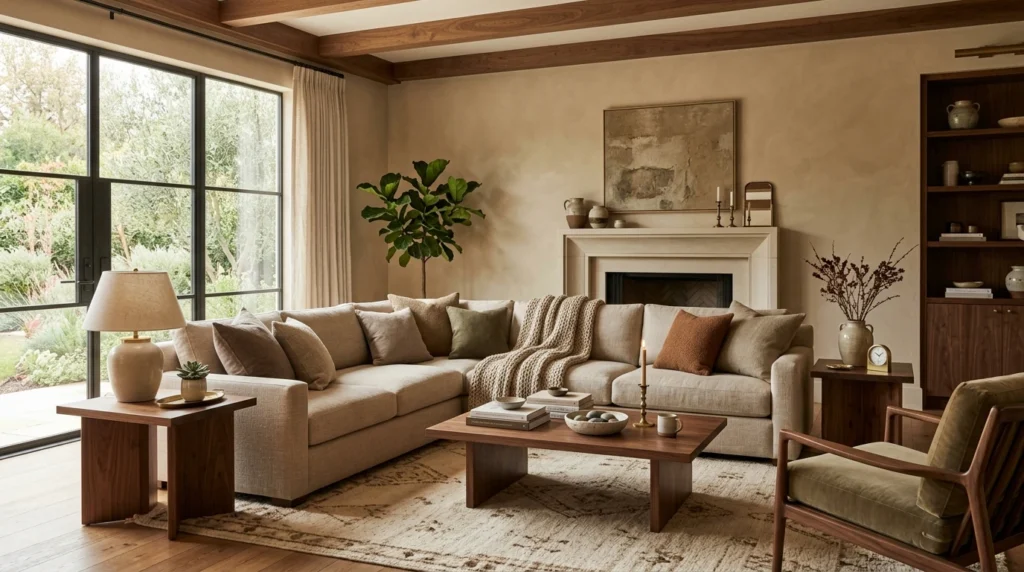
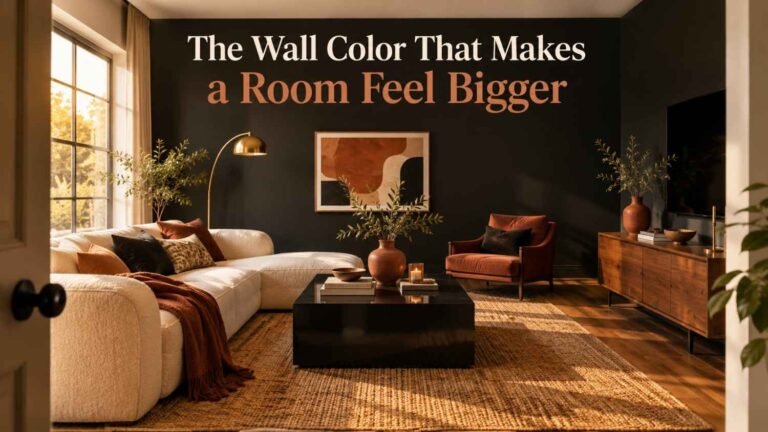
One of the clearest shifts in recent interiors is a move toward warmer, richer palettes. Architectural Digest notes renewed interest in dark and moody rooms, color-blocked browns, and darker woods, while designers quoted there say clients want more warmth, depth, and character. That does not mean every room should be dark. It means flat, cold palettes are giving way to spaces with more tonal variation and emotional warmth.
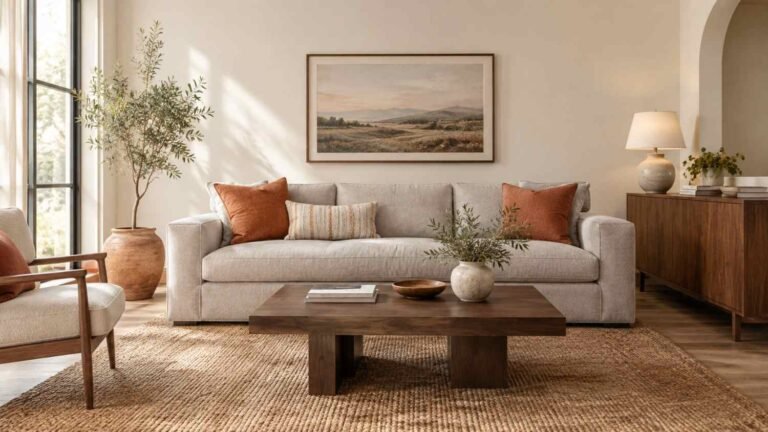
For most homes, the safest route is a layered palette built from three parts: a main field color, a supporting tone, and one contrasting accent. In designer living rooms, those layers may appear through walls, upholstery, woods, metals, art, and textiles rather than paint alone. Browns, taupes, warm whites, olive undertones, rust, muted blues, and soft blacks all work well when balanced with texture and natural light. The key is depth. A room with five versions of the same warm neutral usually looks more sophisticated than a room with ten unrelated colors competing for attention.
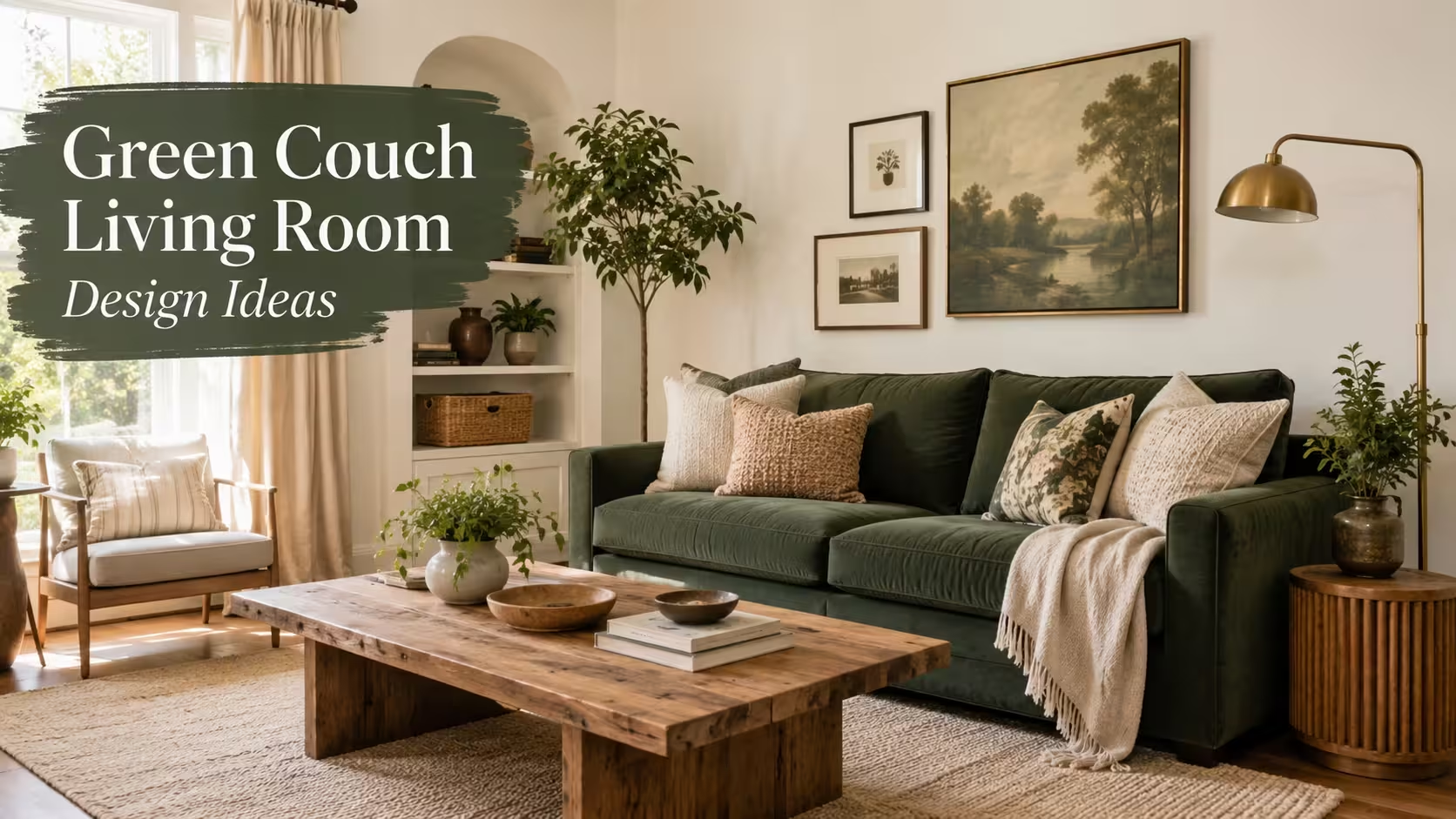
If you love color, use it with conviction. AD’s living room ideas emphasize bold sofas and stronger focal choices rather than timid accents scattered everywhere. A single dusty rose sofa, a deep green velvet chair, or a cocoa-colored wall can do more for a room than a dozen small colorful accessories. Color becomes powerful when it has scale.
Let Materials Do Part of the Decorating
When people describe designer living rooms as “rich” or “elevated,” they are often responding to materials more than furniture style. A room with linen, bouclé, wood, stone, wool, metal, glass, and matte paint naturally feels deeper than a room made from one flat finish repeated over and over. Architectural Digest’s recent trend reporting points to mixed textures, darker woods, and metals as defining features in current living rooms.
Texture is especially important in neutral rooms. Without it, beige becomes bland and white feels sterile. Add a nubby rug, tailored drapery, a wood side table, a ceramic lamp base, or a vintage leather chair, and the room starts to breathe. House Beautiful’s guidance on soft rugs and performance upholstery is useful here because great living rooms are not just pretty at first glance. They invite touch and hold up over time.
Collected pieces matter too. One of House Beautiful’s strongest ideas is the use of secondhand finds to add character. Vintage and antique items bring age, patina, and irregularity, which keeps a room from looking copied from a catalog. Even one older table, lamp, or chair can improve a new room by making it feel layered and lived in.
Get Scale Right Before You Buy More Decor
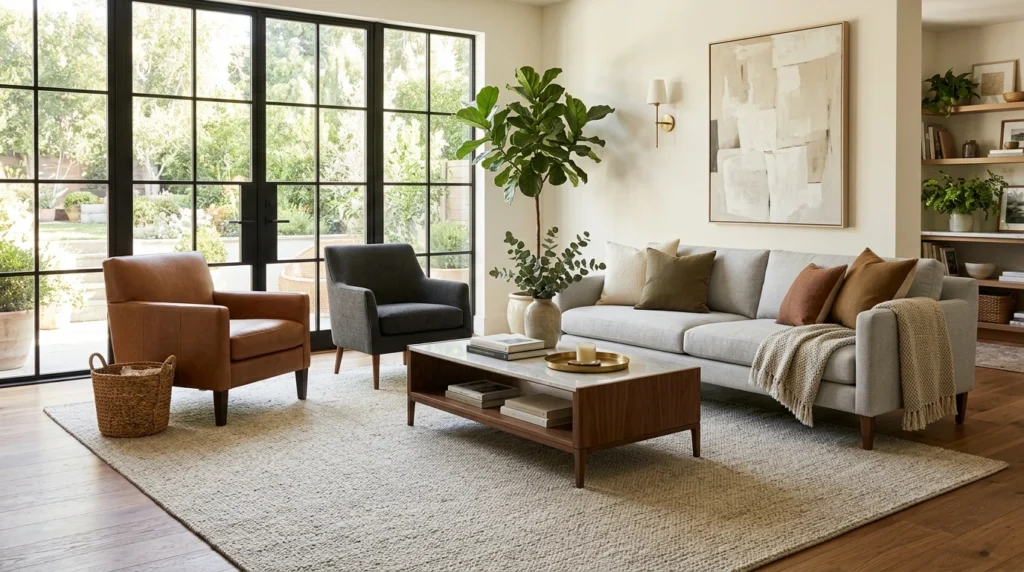
Many rooms look unfinished, not because they lack decor, but because the scale is off. Better Homes & Gardens recently noted that rooms feel “off” when furniture, rugs, curtains, and wall art are not proportionate to the space or to one another. The fix is not complicated, but it requires honesty. A tiny rug under a full seating group, a narrow coffee table in front of a long sofa, or small art above a large sectional can weaken the room immediately.
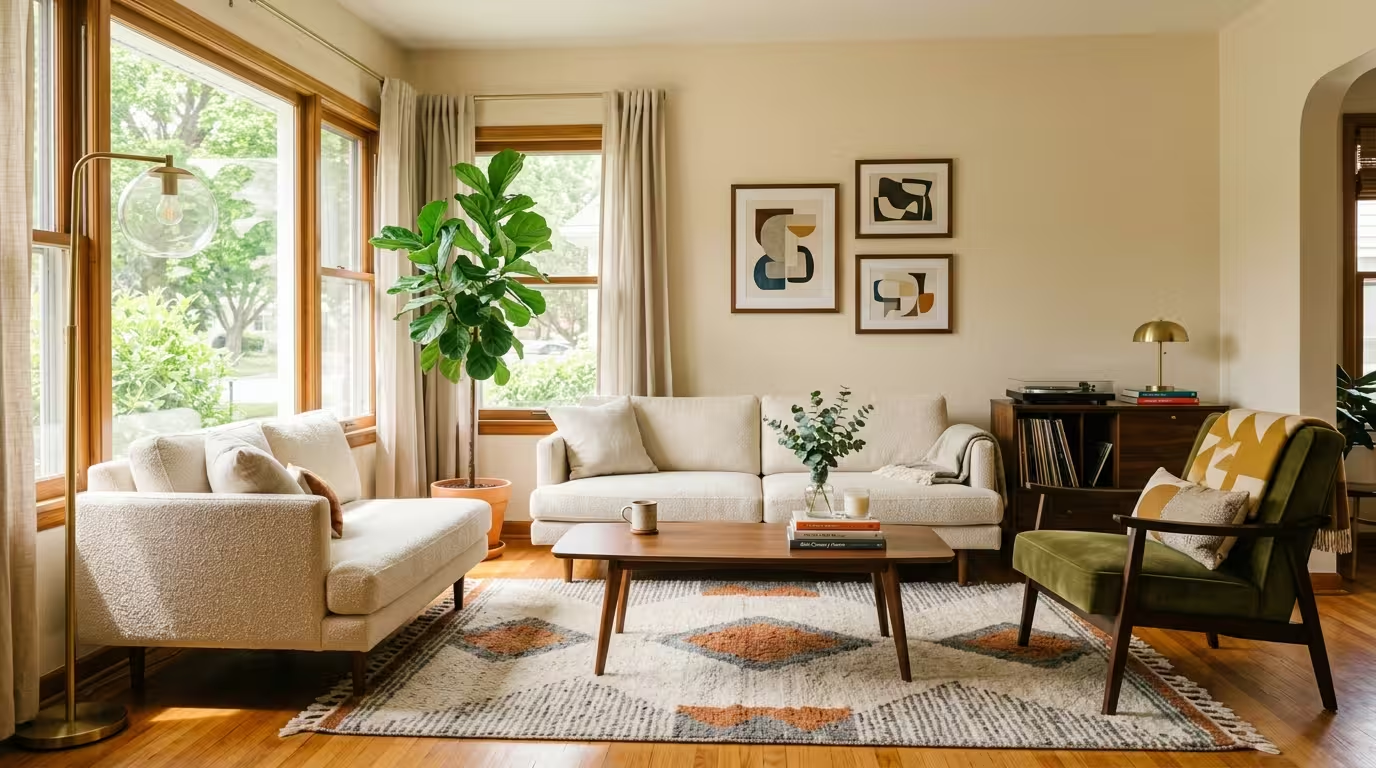
Start with the rug. The Spruce points out that rugs that are too small are one of the most common living room mistakes. In many layouts, the front legs of the main seating pieces should sit on the rug at a minimum, while larger rooms can handle all legs on the rug. Taping the rug dimensions on the floor before buying can save money and frustration. In designer living rooms, the rug is often what visually unifies the seating area.
Now consider curtains and art. Better Homes & Gardens advises mounting curtain rods higher and wider than the window frame to create a sense of height and breadth, and it notes that fuller panels usually look more custom. For artwork, proportion matters just as much. The Spruce recommends choosing wall art in relation to the furniture below it rather than in isolation. This is why oversized art often works so well: it gives the wall enough visual weight to hold the room together.
Layer Lighting Like a Designer in Designer Living Rooms
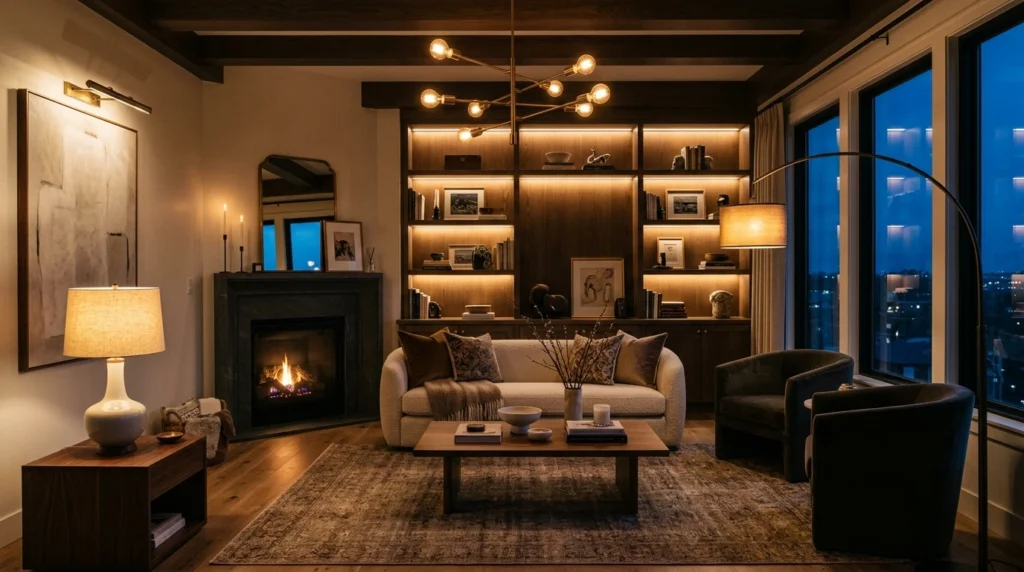
Lighting is often the hidden reason a room feels flat. One overhead fixture rarely does enough, and several recent design sources make the same point from different angles. Martha Stewart’s lighting guidance stresses layered lighting, combining ambient, task, and accent sources, while newer reporting also notes a move away from one bright central light toward a softer mix of lamps and sconces.
In practical terms, most designer living rooms need at least three lighting types. Ambient light fills the room. Task lighting supports reading or hobbies. Accent lighting highlights art, shelves, or architecture. A ceiling fixture may handle the first role, but it should not handle every role. Add a floor lamp near a chair, a table lamp on a sideboard, and perhaps picture lights or sconces if the room allows. The result is softer, more flexible, and more flattering at night.
Bulb temperature matters too. Better Homes & Gardens notes that cooler, blue-toned bulbs can make rooms feel harsh, while warm white bulbs tend to feel more welcoming. This detail sounds minor, but it changes everything from paint color to skin tone to the mood of evening gatherings. Thoughtful lighting is one of the simplest ways to make a room feel finished after sunset.
Mix Comfort With Restraint
The most appealing designer living rooms do not chase perfection. They leave space for comfort. That may mean a deeper sofa, a generous ottoman, a washable fabric, or a coffee table sturdy enough to handle books and everyday life. House Beautiful specifically calls out performance fabrics and ample seating, while HGTV’s decorating advice keeps returning to comfort, conversation, and real use.
At the same time, comfort is not clutter. The Spruce recently noted that many rooms start looking tacky when they are overcrowded, poorly edited, or filled with too many similar accessories. Better rooms choose fewer objects with more presence. Instead of six small candles, maybe one sculptural bowl. Instead of many tiny pillows, perhaps two or three well-scaled ones in contrasting textures. This editing is central to a polished room because it helps quality stand out.
A useful rule is to combine one statement piece, one grounding element, and one personal layer in each zone. For example, a curved chair can be the statement, a large rug the grounding element, and a stack of art books the personal layer. That approach keeps rooms expressive without becoming busy.
Make Designer Living Rooms Personal Without Losing Cohesion
A living room should reveal something about the people who live there. This is where many trend-driven spaces fall short. They follow the look of the moment but forget memory, personality, and cultural texture. Architectural Digest’s tours of designers’ own homes are useful because they show how strong rooms often include unusual art, collected objects, vintage seating, or custom details that would never appear in a generic package.
Personal does not have to mean chaotic. Keep a consistent thread running through the room. That thread may be material, tone, shape, or period influence. A room can combine antique wood, modern lighting, and contemporary art if the scale and palette connect them. This is where the best rooms truly stand apart. They do not feel themed. They feel edited around a point of view.
Books, family photographs, travel finds, and inherited pieces are especially useful because they create meaning no store can replicate. Place them carefully. A few deeply chosen objects do more than shelves packed edge to edge. When a room holds both beauty and biography, people feel it.
Designer Living Rooms on Different Budgets
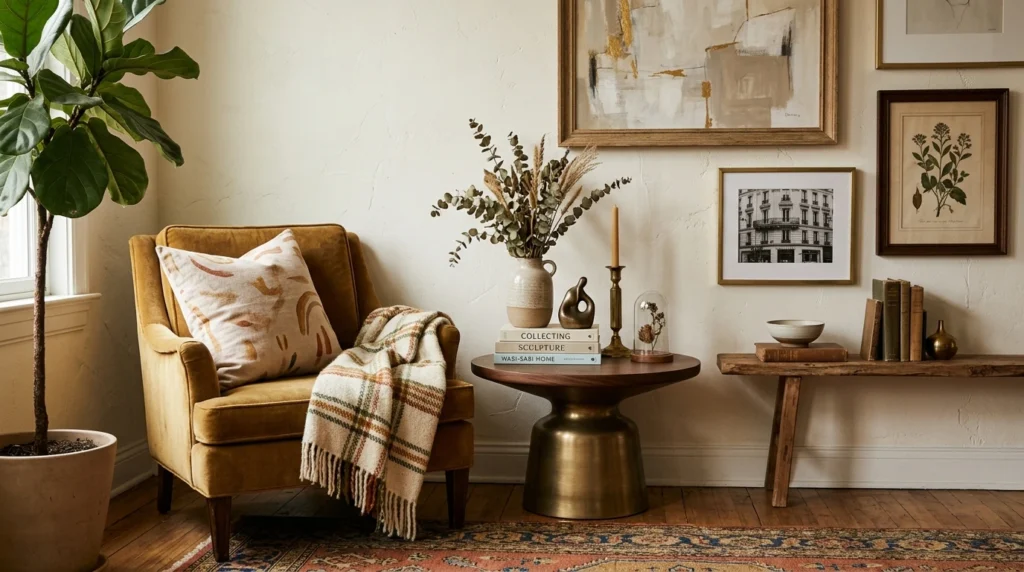
A polished room does not require unlimited spending. In fact, several top design sources suggest the opposite. Character often comes from patience, editing, and mixing new with secondhand rather than buying everything at once. Start with the pieces that affect comfort and scale most: sofa, rug, lighting, and curtains. Those choices shape the room more than trendy accents do.
If your budget is tight, prioritize in this order. First, fix the layout. It costs little and can change the room overnight. Second, improve lighting with lamps and warm bulbs. Third, upgrade the rug if it is undersized. Fourth, add proper curtains. Finally, invest in art, pillows, side tables, and styling objects. This sequence works because polished rooms depend more on structure than decoration. When the bones are right, even modest rooms look thoughtful.
If your budget is larger, spend it where craftsmanship is visible or touchable. That usually means upholstery, custom drapery, vintage case goods, art, and lighting. These are the items people notice up close and use often. Save on trend pieces that may change in a year or two.
Common Mistakes That Keep a Living Room From Looking Finished
The most frequent mistake is choosing pieces in isolation. A nice chair, a nice lamp, and a nice rug do not automatically become a beautiful room. They need a relationship. Scale, spacing, color temperature, and texture all matter together. Better Homes & Gardens, Martha Stewart, and The Spruce all return to versions of this same issue: rooms fail when their elements are not coordinated with intent.
Another common problem is relying on small decor to create impact. Tiny art, skimpy curtains, petite rugs, and accessories scattered everywhere rarely produce the confidence people associate with professionally designed rooms. Bigger, better-placed choices tend to look calmer and more expensive. The room reads faster and feels less apologetic.
Finally, many rooms lack contrast. Everything is soft and pale, or everything is dark and heavy. Strong rooms need tension. That can be old against new, smooth against rough, light against deep, or tailored against organic. Contrast is what gives living rooms energy without disorder.
Conclusion:
The best living rooms do not happen by accident. They come from a series of smart decisions that build on one another: a layout that supports real life, a warm and believable palette, layered materials, correct scale, thoughtful lighting, and a few meaningful pieces that make the room yours. Inspiration matters, but execution matters more.
If you want your own space to feel more refined, start with what the room needs most, not what the trend cycle makes look tempting. Measure first. Edit hard. Choose fewer, better elements. Let comfort guide the big pieces and let personality guide the finishing touches. When beauty and function finally agree, the room stops looking decorated and starts feeling complete.