Coastal Quiet Luxury Home Ideas: The Complete Guide to Serene, Elevated Living
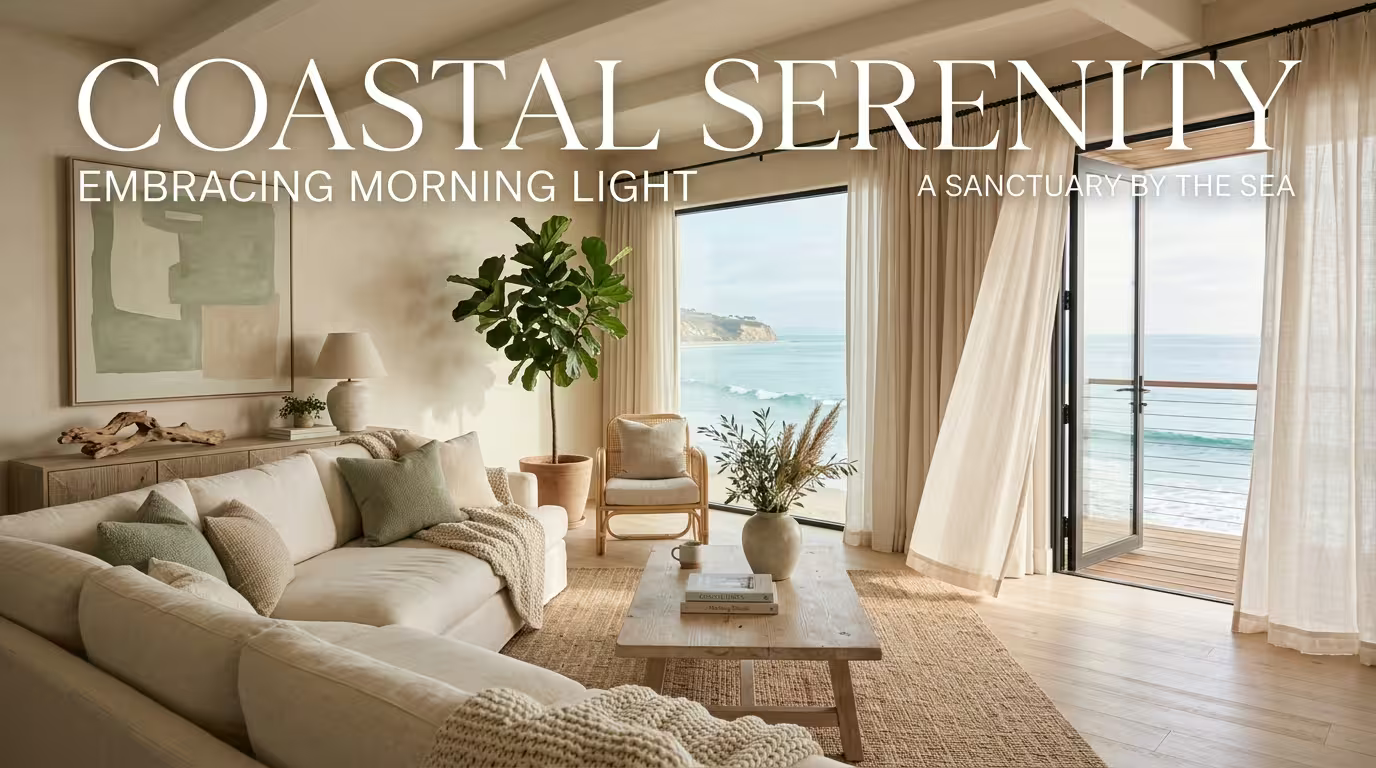
There is something about the coast that has always called people home. The rhythm of the tide, the salt-kissed breeze drifting through an open window, the soft morning light stretching across pale walls — these are not just feelings. They are the foundation of one of the most sought-after interior design movements of this decade: coastal quiet luxury.
Unlike the bold nautical clichés of painted anchors and rope accessories, this aesthetic is quieter, more considered, and deeply intentional. It draws from the natural environment of the shore but filters it through a lens of refined restraint. The result is a home that feels both deeply relaxing and unmistakably elegant — a place where every material, every tone, and every piece of furniture has been chosen with care.
Whether you live steps from the water or want to bring the calm of the coast indoors, these coastal quiet luxury home ideas will help you design a space that breathes, soothes, and endures.
What Is Coastal Quiet Luxury, and Why Is It Trending?
Quiet luxury as a broader concept emerged prominently in 2022–2023, driven by a cultural appetite for understated wealth over conspicuous display. Think natural fibers over synthetic, craftsmanship over ornamentation, and calm over chaos. When this philosophy intersects with coastal design, the results are remarkable.
Coastal quiet luxury home ideas are rooted in the belief that beauty does not need to shout. The ocean itself is the inspiration: vast, layered, deeply textural, and composed of a very limited palette — blues, greens, whites, sandy neutrals, and the subtle warmth of driftwood. Every design decision in this style references these natural elements without mimicking them too literally.
What makes this trend particularly durable is its alignment with how people actually want to feel at home: rested, grounded, and surrounded by things that are both functional and beautiful. Surveys consistently show that homeowners now prioritize wellness and calm in their living spaces — and few design styles deliver that as consistently as this one.
The Foundation — Color Palette for Coastal Quiet Luxury Interiors
Embrace a Neutral, Nature-Derived Base
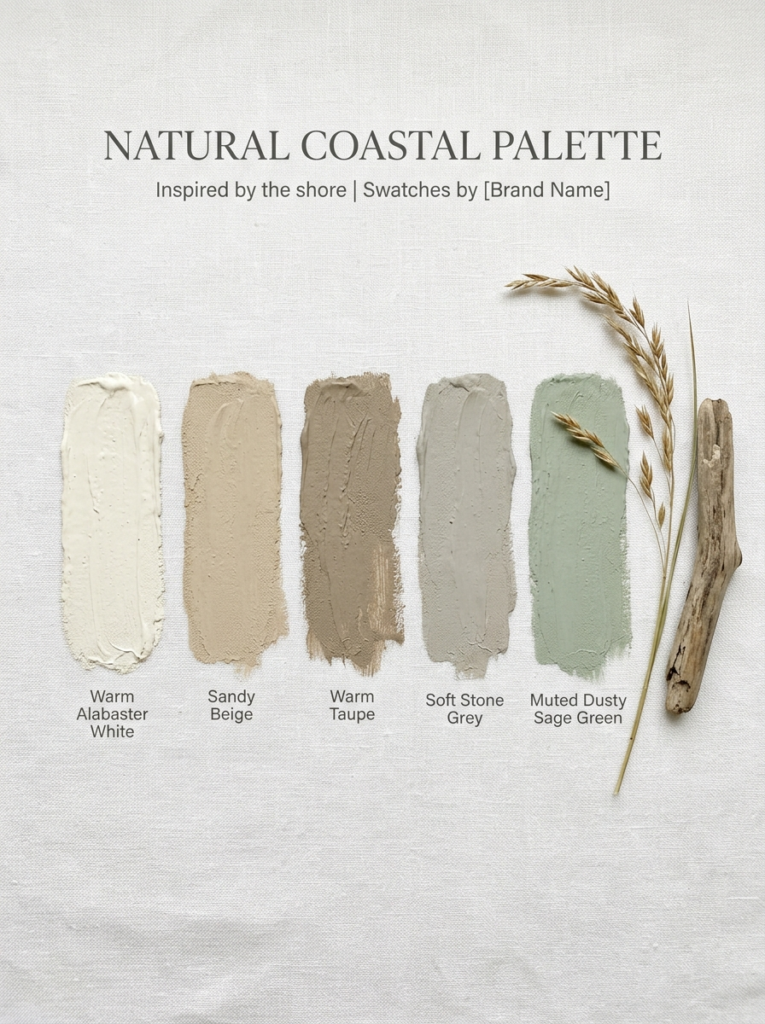
The palette is the single most important decision in any coastal quiet luxury home. Get it right, and the entire interior will feel cohesive and effortless. The key is to start with a neutral foundation built from nature.
Opt for warm whites like linen white, alabaster, or oyster rather than stark, cold whites. These tones have depth and warmth that reference sun-bleached driftwood and sea foam rather than a clinical environment. Layer in sandy beiges, warm taupes, and soft stone greys to create a palette with enough variation to feel interesting yet remain genuinely restful.
Introduce Ocean-Inspired Accent Tones
Once the neutral foundation is established, layer in subtle coastal accents. Soft sage green, muted seafoam, dusty blue, and faded terracotta all reference the organic color world of the coastline without feeling cartoonish or on-the-nose.
The goal is restraint. A single well-placed accent — perhaps a sage linen cushion, a celadon ceramic lamp, or a dusty blue upholstered chair — carries far more visual weight and elegance than multiple competing hues. If you love the sharp contrast of ocean meets sky, you may find inspiration in complementary navy blue white luxury home ideas, which bring a more defined, architectural energy to coastal spaces while maintaining that same refined atmosphere.
Materials and Textures — The Heart of the Look
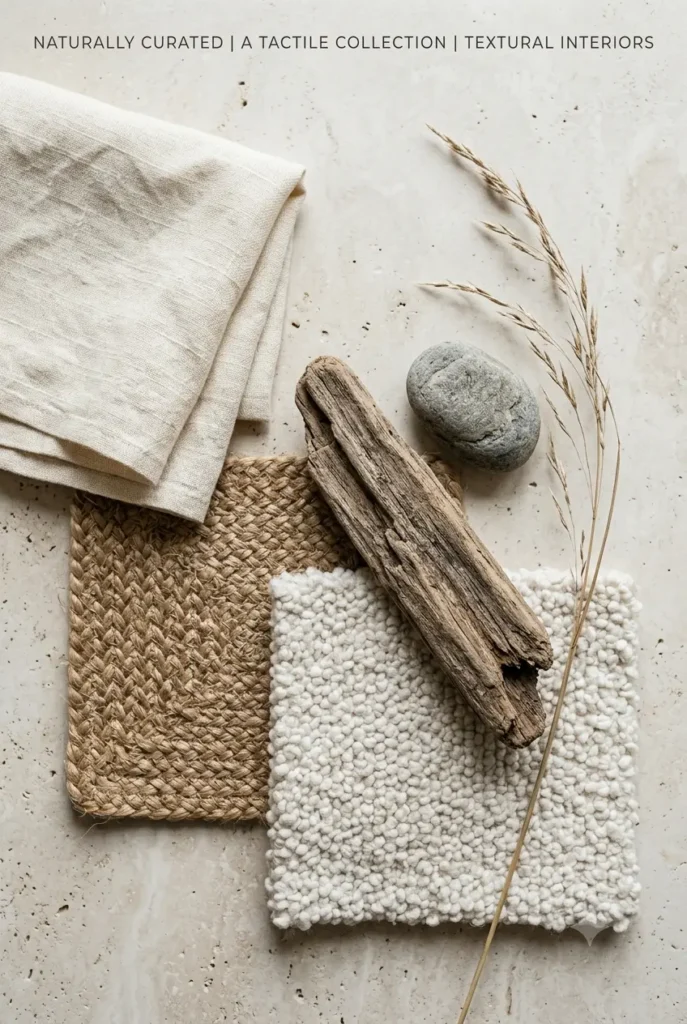
Natural Fibers and Organic Weaves
In quiet luxury coastal design, texture is everything. The right materials bring warmth, depth, and that essential sense of connection to the natural world. Linen is the cornerstone fabric of this aesthetic — in curtains, upholstery, cushions, and bedding. It creases beautifully, drapes naturally, and has a tactile quality that synthetic alternatives simply cannot replicate.
Jute, sisal, and seagrass rugs anchor a room and reinforce the organic coastal narrative. Layer a jute rug beneath a bleached oak dining table, and you have a vignette that feels both effortlessly curated and entirely liveable. Cotton, bouclé, and washed linen upholstery add softness without looking fussy.
Stone, Wood, and Organic Hard Materials
Natural hard materials are equally central to these coastal quiet luxury home ideas. Limestone flooring, travertine tiles, and honed marble surfaces all bring the geological world of the shoreline indoors. Their matte finishes and subtle veining are far more aligned with this aesthetic than high-gloss alternatives.
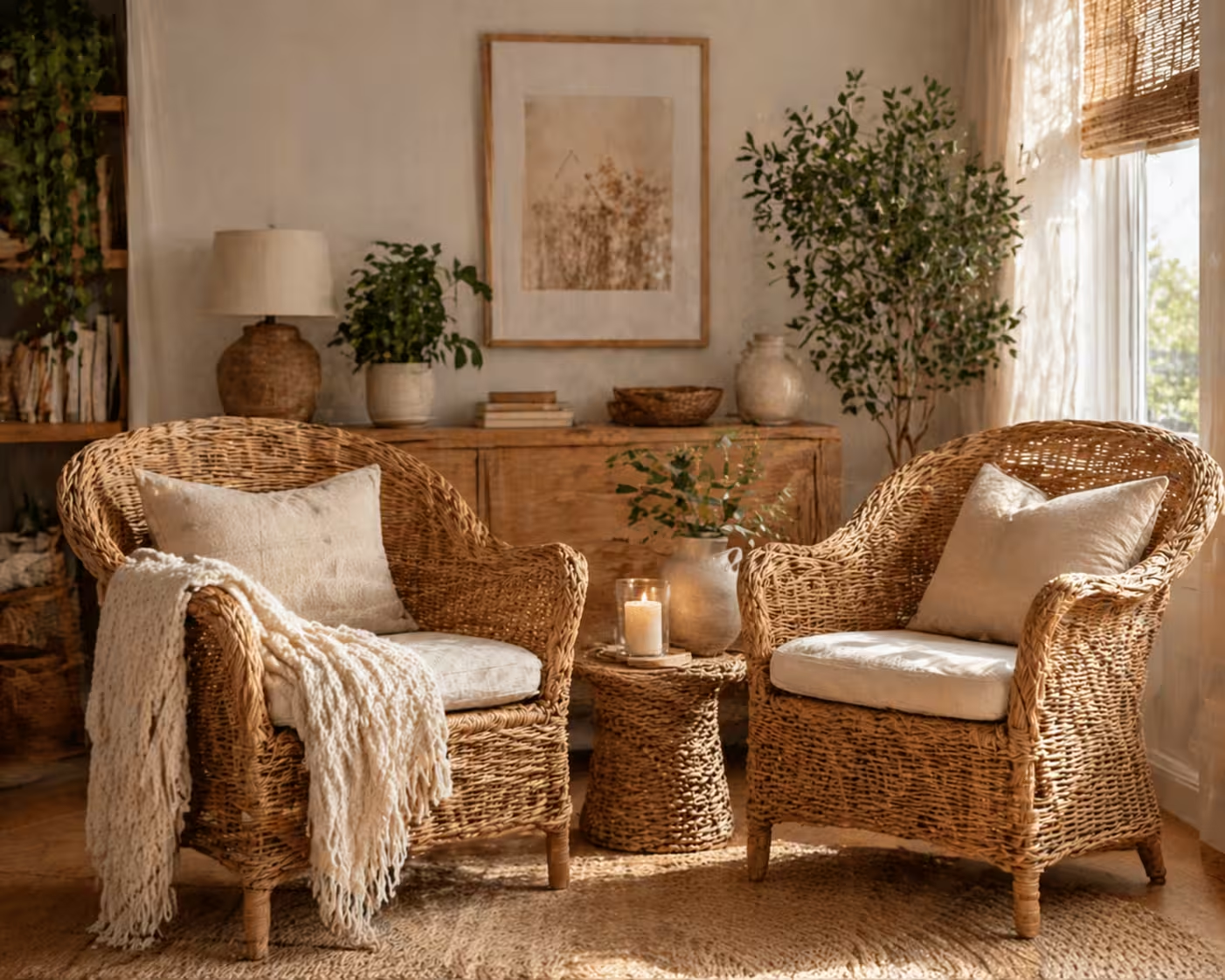
For furniture and cabinetry, lean toward bleached, whitewashed, or wire-brushed oak. These wood finishes reference sun-weathered timber without looking rustic or rough. Rattan and cane accent pieces — a bedside table, a pendant light shade, a pair of occasional chairs — add beautiful visual lightness while reinforcing the coastal identity of the space.
Room-by-Room Coastal Quiet Luxury Home Ideas
The Living Room — Calm, Layered, and Inviting
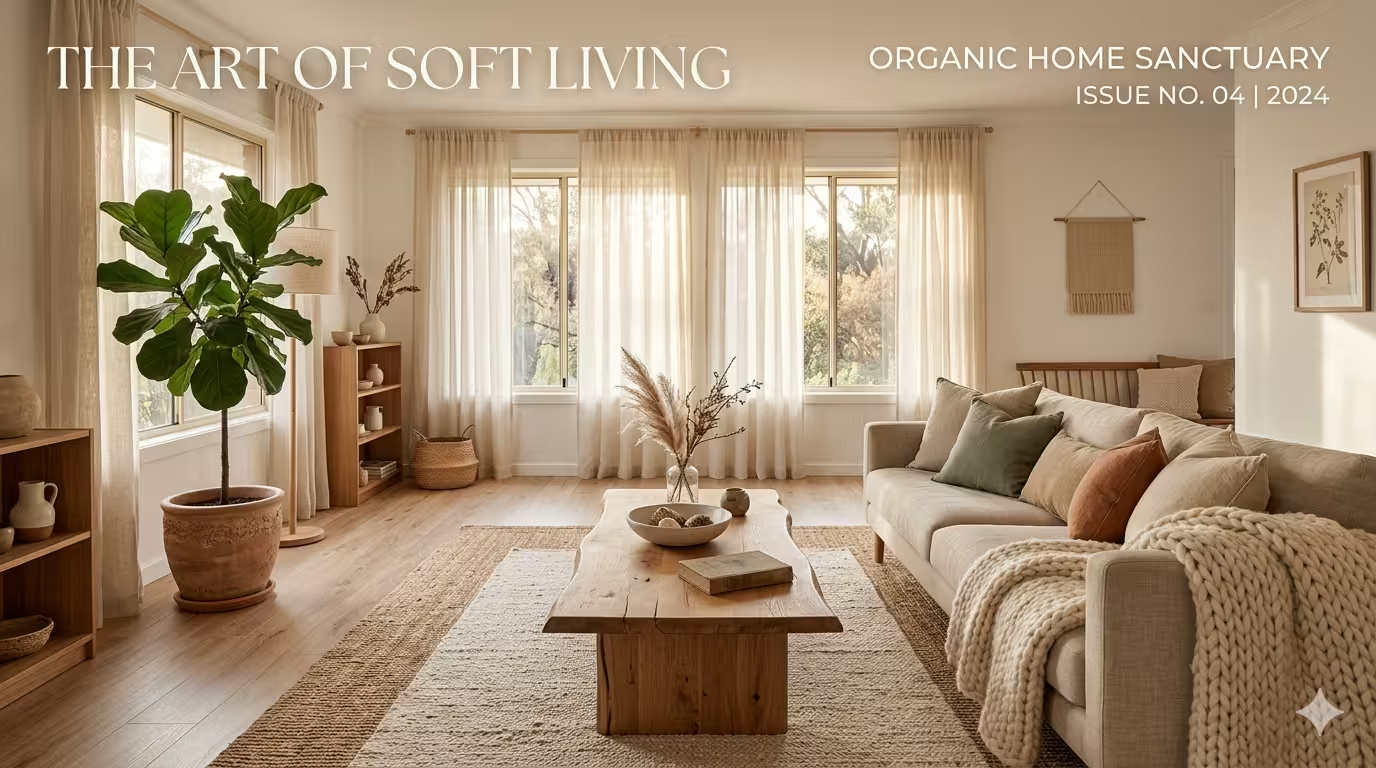
The living room is where this aesthetic makes its strongest statement. Start with a large, low-profile sofa in a natural linen or heavy cotton — ivory, warm taupe, or dusty sage are all excellent choices. Ground it with a natural fiber rug in a tone slightly darker than the floor, creating a soft, defined zone.
For those wanting to bring in more organic color, green couch living room design ideas are a natural fit within coastal quiet luxury — a sage or muted olive sofa can anchor a neutral room with warmth and personality, evoking the sea grass, marshes, and coastal flora of a living shoreline.
Layer the room with handmade ceramic accessories, a stack of art and design books with neutral spines, and a single large-scale piece of abstract artwork in organic tones. Driftwood sculptures, woven baskets, and shells displayed without self-consciousness — these personal touches complete the space with authenticity.
Lighting is critical. Choose warm-toned bulbs (2700K–3000K) and layer sources: a linen-shaded floor lamp in one corner, a sculptural table lamp in another, and perhaps a rattan or woven pendant overhead. Avoid harsh overhead lighting entirely.
The Bedroom — A True Sanctuary
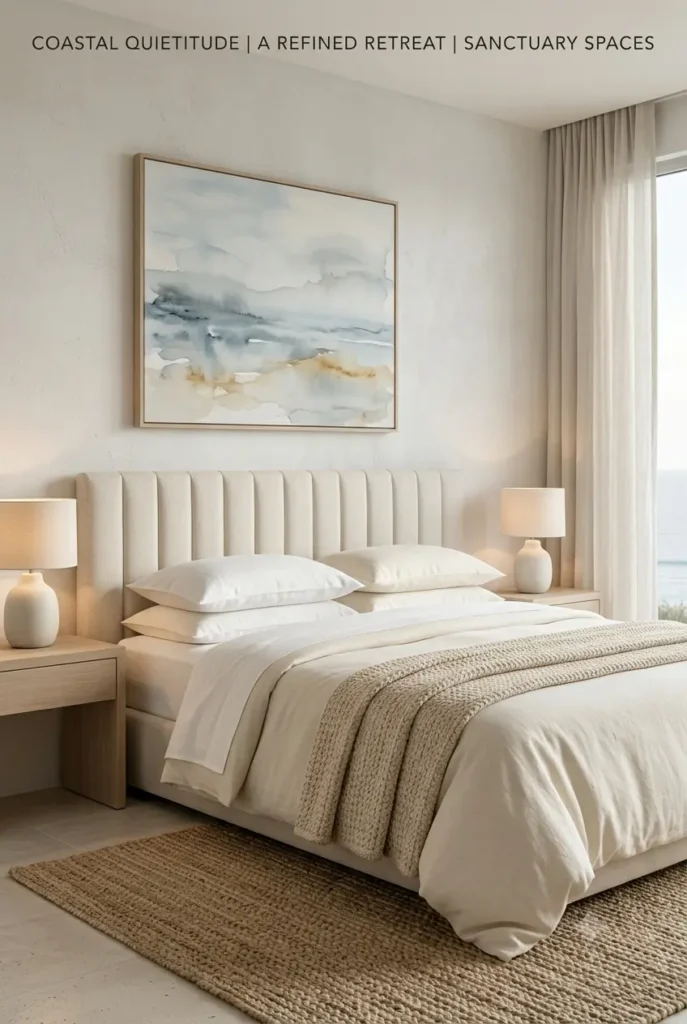
A coastal quiet luxury bedroom should feel like the finest boutique hotel you have ever slept in — but with the warmth and personalisation of a home. Begin with the bedding: high-thread-count linen or cotton percale in ivory or warm white, layered with a textured throw in a complementary neutral.
The headboard sets the tone. A linen-upholstered, slim-profile headboard in a natural tone is the signature choice. Fluted or curved edges add architectural interest without being loud. Pair it with bleached oak or stone nightstands and simple, sculptural lighting.
Keep the floor clear. A single large natural fiber rug beneath the bed is enough. Let the walls breathe — one or two carefully chosen artworks (a coastal landscape in muted tones, or an abstract piece in sandy ochres and watery blues) rather than a gallery wall. The room should have a quality of stillness that you feel the moment you walk in.
The Kitchen and Dining Space
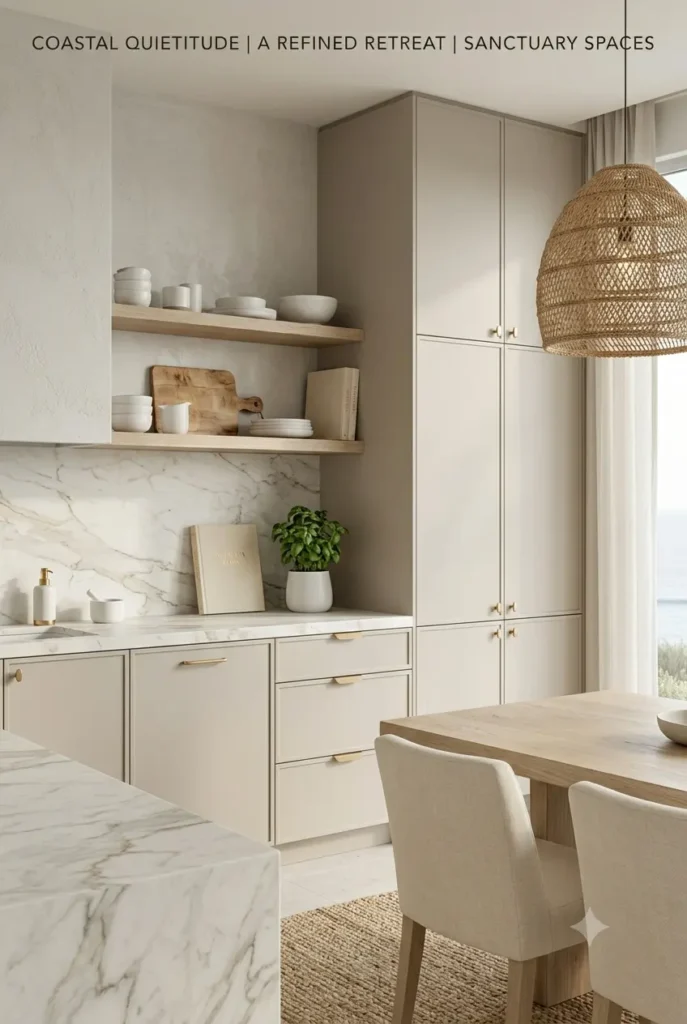
This is perhaps the most exciting application of coastal quiet luxury home ideas, because the kitchen is often the most functional, least “designed” room in a home. Transforming it through this lens is revelatory.
Choose flat-panel cabinetry in a warm off-white or greige rather than bright white. Unlacquered brass or brushed nickel hardware in simple, unfussy shapes. For the worktop, honed Calacatta marble, limestone, or a light quartzite brings natural beauty and quiet sophistication.
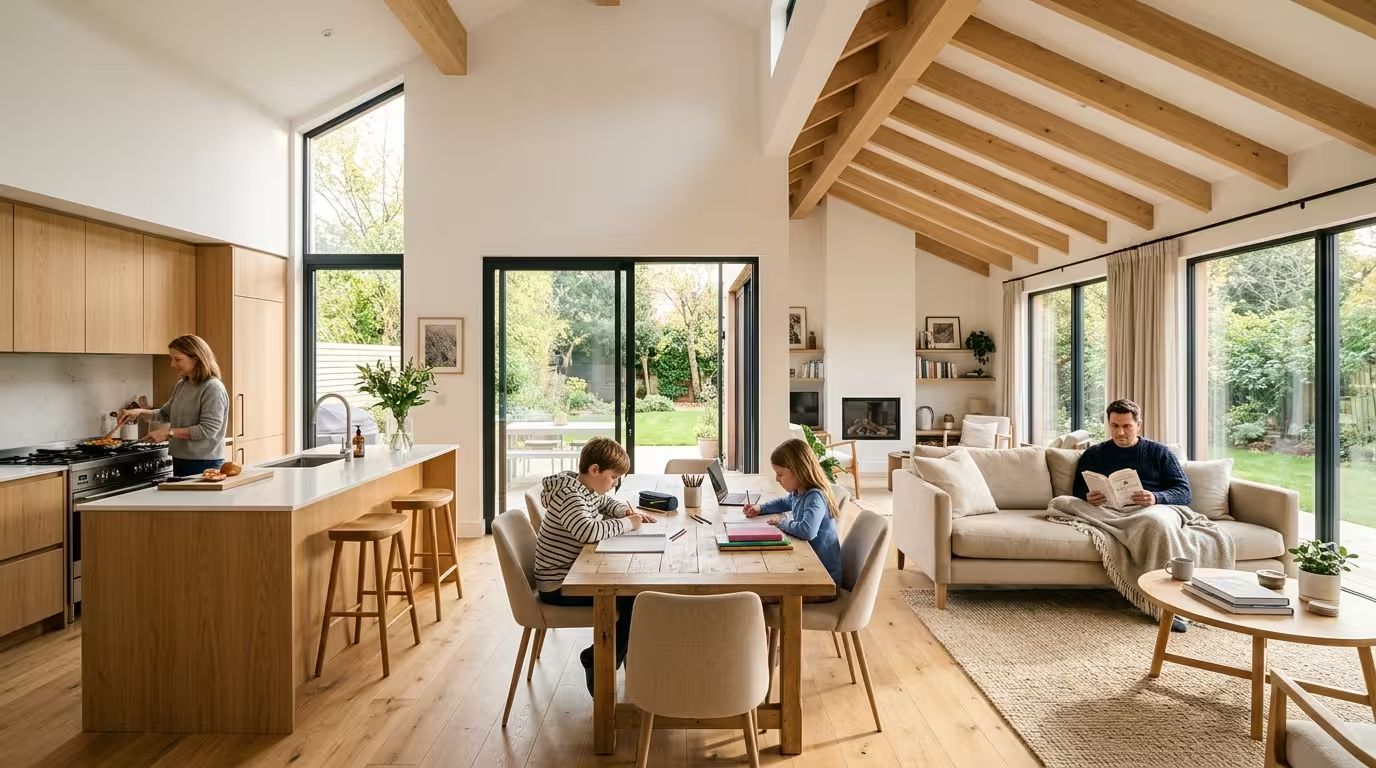
Open shelving styled with restraint — simple white ceramics, linen-covered cookbooks, wooden boards, and a plant or two — brings the organic warmth of the broader design into the room. In the dining area, a bleached oak table with linen-upholstered chairs creates a setting that feels relaxed enough for a weekday breakfast and refined enough for a dinner party.
The Bathroom—Minimal, Material-Led Luxury
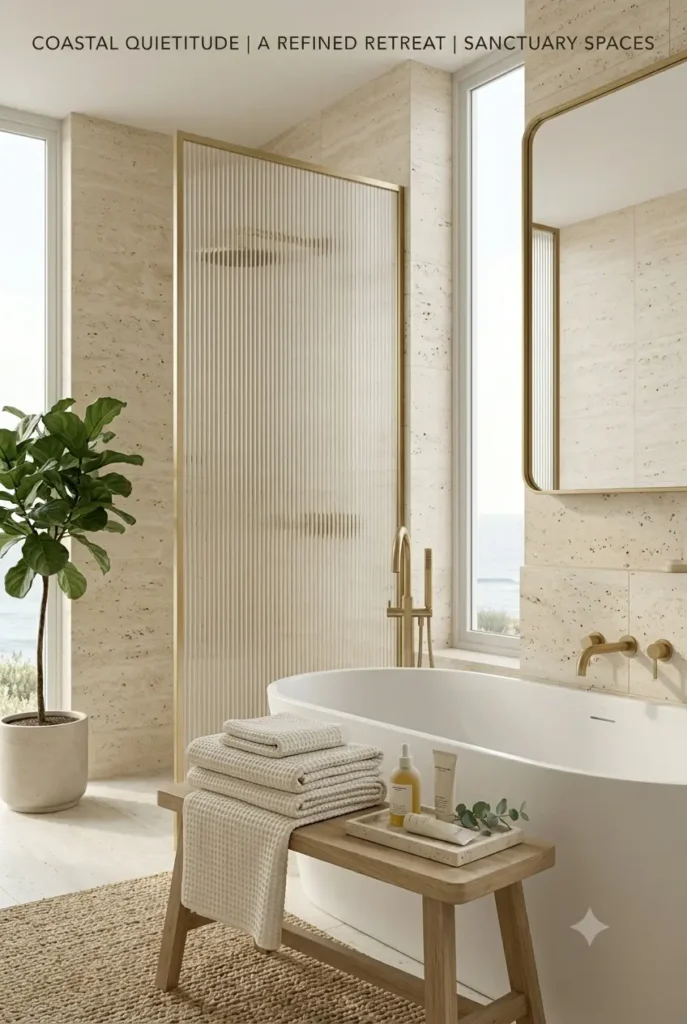
The bathroom is where this aesthetic feels most naturally at home. Think travertine or limestone walls and floors, a freestanding tub in matte white, and brushed brass fixtures in clean, architectural shapes. A fluted glass shower screen adds texture and visual interest while maintaining the minimalist quality of the space.
Accessories should be sparse and intentional: thick, waffle-weave towels in ivory or warm white, a simple wooden bath mat, and a small tray of quality skincare products treated as decor. A large unfussy mirror with a simple frame — perhaps in bleached wood or brushed brass — completes the picture. If the space allows, a live plant (a fiddle-leaf fig, a trailing pothos, or simple eucalyptus stems in a vase) brings breath and life to the room.
Furniture Selection — Less, But Better
One of the defining principles of coastal quiet luxury home ideas is the commitment to fewer, better things. This is not a style built on volume or filling every corner. It is a style built on selection — on choosing a single sculptural piece of furniture over three mediocre alternatives.
Invest in a sofa you will keep for twenty years. Choose a dining table with real character — a live edge, a beautifully proportioned base, a stone surface. Let occasional chairs be truly beautiful and truly comfortable. Seek out makers and studios whose work has integrity: pieces that have been crafted by hand, from genuine materials, with real attention to proportion and finish.
The principle drawn from quiet luxury broadly applies here: it is always apparent when someone has spent money on something genuinely good, even if the person observing it cannot name why. That quality of invisible rightness is what the furniture in a coastal quiet luxury home should communicate.
Light, Art, and the Final Layer
Working With Natural Light
No material or palette can compensate for badly managed light. In a coastal quiet luxury interior, maximising and managing natural light is a design priority from the beginning. Choose sheer linen curtains that filter light without blocking it, creating that characteristic soft, diffused glow that makes a coastal home feel like it is always bathed in golden hour.
Where possible, keep windows unobstructed. Arrange furniture to take advantage of the best light at different times of day. Mirrors — large, simply framed, and placed with intention — multiply light and create a sense of depth and air in any room.
Art and Personal Objects
The art in a quiet luxury coastal home should feel discovered rather than purchased as a set. A single large abstract canvas in earthy, oceanic tones. A framed antique map of the local coastline. A beautifully worn vintage ceramic was found at a local market. Handmade pottery from an artisan potter. These objects bring life, history, and personality that no mass-produced styling set can replicate.
The layering of personal objects is what separates a truly great interior from a showroom. The goal is a home that looks lived in, loved, and considered — not staged. For further inspiration on integrating personal style with professional design thinking, the curated resources at outinteriors offer a wealth of real interiors worth studying in depth.
Outdoor and Transitional Spaces
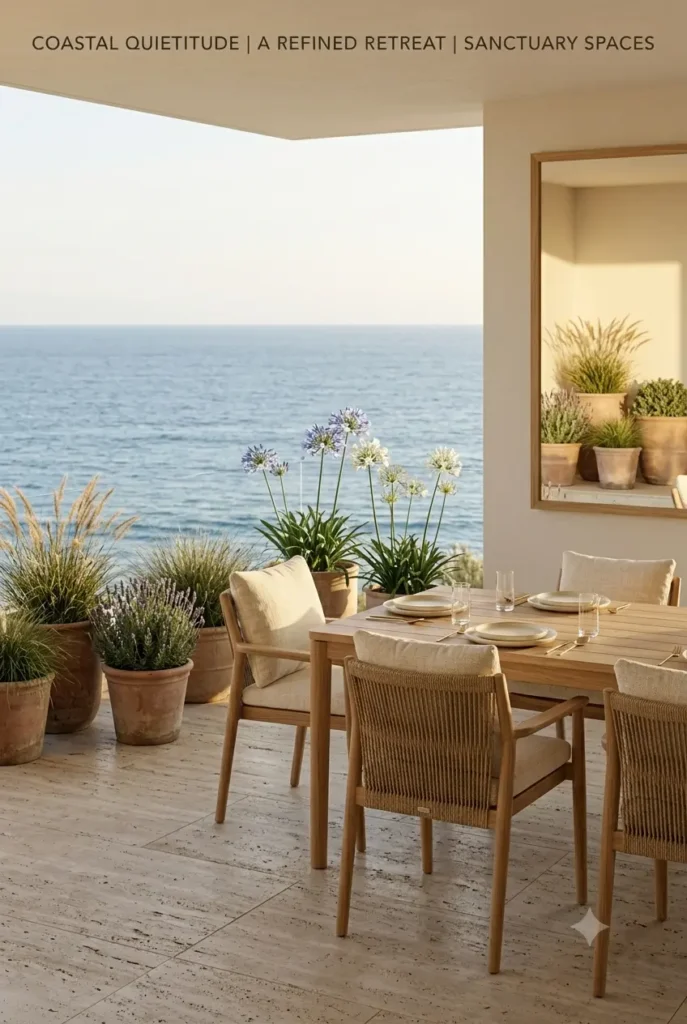
The outdoors is not separate from a coastal, quiet luxury home—it is a natural extension of it. Terraces, porches, and balconies should be designed with the same care and restraint as the interior.
Weather-resistant teak or eucalyptus furniture with natural rope or canvas upholstery brings the interior palette outside. Keep it simple: a dining table, a pair of loungers, perhaps a small outdoor sofa with linen-look outdoor cushions. Potted plants in terracotta or concrete—ornamental grasses, lavender, and agapanthus—reference the coastal planting of the natural landscape.
If the space has a view, design the outdoor area around it. Do not obstruct the sightline to the water or the horizon. Let nature be the decoration.
Common Mistakes to Avoid
Even the most carefully conceived coastal quiet luxury home can be undermined by a few common errors. The first is over-theming: adding too many literal coastal references — shells, rope, anchors, fish prints — until the space tips from elegant into kitsch. The rule is to reference the environment, not replicate it.
The second is using too many whites. An all-white palette, while clean, often feels cold and lifeless without the warming neutrals and natural textures that give this style its depth. Add warm linen, aged wood, and warm-toned stone to bring the palette to life.
The third is buying cheap versions of the right things. A low-quality linen sofa in the right color is not the same as a high-quality one. This style depends on the inherent quality of its materials—and that quality must be genuine to work.
Conclusion:
Coastal quiet luxury home ideas represent something genuinely rare in interior design: a style that is simultaneously aspirational and deeply livable. It does not demand perfection. It demands intention. Every choice — every material, every tone, every piece of furniture — should feel considered, honest, and connected to the natural world that inspired it.
Whether you are redesigning a single room or an entire home from the ground up, the principles here provide a clear and reliable foundation. Start with the palette. Build with honest materials. Choose less, and choose better. Let light do its work. And above all, let your home feel like the most restful version of itself—calm, refined, and completely yours.
Frequently Asked Questions:
1. What is the difference between coastal style and coastal quiet luxury?
Traditional coastal style often leans on nautical motifs—stripes, rope, anchors, and bright blues. Coastal quiet luxury removes those literal references and replaces them with an elevated, pared-back aesthetic that references the feeling of the coast through natural materials, a soft neutral palette, and refined craftsmanship. It is less theme, more atmosphere.
2. What colors work best for a coastal quiet luxury home?
Warm whites, sandy beiges, warm taupes, and soft stone greys form the best base palette. Accent tones like muted sage green, soft seafoam, dusty blue, and faded terracotta add depth and organic interest. The key is to avoid anything too saturated or bright—the palette should always feel as if it could have occurred naturally on a shoreline.
3. What flooring is best for this aesthetic?
Limestone, travertine, and honed marble are the premium choices for hard flooring. Wide-plank bleached or lightly whitewashed oak works beautifully in living spaces and bedrooms. Natural fiber rugs—jute, sisal, or seagrass—layer over hard floors to add warmth and texture throughout the home.
4. How can I achieve this look on a limited budget?
Focus on the areas with the highest visual impact first: paint (in the right warm neutrals), soft furnishings like linen curtains and cushion covers, and natural fiber rugs. These changes alone can transform the feel of a room significantly. Then add quality pieces gradually—a good sofa, a real wood dining table—prioritizing longevity over volume.
5. Can coastal quiet luxury work in a city apartment?
Absolutely. This aesthetic is not dependent on a sea view or a waterside location. The design principles — natural materials, a neutral palette, deliberate restraint, quality over quantity — translate beautifully into any urban environment. In fact, a calm, coastal-inspired interior can be a powerful antidote to the noise and stimulation of city living.
6. What plants work best in a coastal quiet luxury interior?
Choose plants with organic, sculptural forms and a relaxed growth habit. Fiddle-leaf figs, olive trees in terracotta pots, trailing pothos, pampas grass, dried sea grass stems, and simple eucalyptus branches all feel aligned with this aesthetic. Avoid anything too tropical or overly manicured — the goal is naturalness, not perfection.
7. How do I style shelves in a coastal quiet luxury home without making them look cluttered?
The golden rule is to keep at least 40% of the shelf space empty. Group objects in odd numbers — threes and fives — and vary height and texture within each group. Combine a tall ceramic vase, a shorter stack of books, and a small organic object like a piece of sea glass or a smooth stone. Avoid matching sets and anything that looks like it was bought as a “shelf styling kit.”