Amazing 22 Home Office Desk Setup Ideas to Boost Comfort, Style, and Productivity
Your desk is where most of your workday actually happens, yet it’s often the last thing people think about when organizing a home. A thoughtful home office desk setup can change how you feel by 3 p.m. — less back strain, fewer distractions, and a space you genuinely want to sit down at each morning. Whether you’re working with a spare bedroom, a closet, or a corner of the living room, these 22 home office desk setup ideas cover ergonomics, small-space solutions, aesthetics, and budget-friendly upgrades so you can build a workspace that actually works for you.
Ergonomic Home Office Desk Setup Ideas That Protect Your Body
A great-looking desk means little if it leaves you sore by lunchtime. These ergonomic-first ideas focus on posture, movement, and long-term comfort.
1. Add an Adjustable Standing Desk
A sit-stand desk lets you shift positions throughout the day instead of staying locked in one posture for eight hours straight. Height-adjustable desks, whether electric or hand-cranked, allow you to alternate between sitting and standing roughly every 30 to 60 minutes, which reduces stiffness and supports better circulation. Many models remember multiple height presets, so switching between sitting and standing takes seconds rather than a manual adjustment each time.
2. Choose an Ergonomic Chair With Lumbar Support
Your chair matters as much as your desk. Look for adjustable seat height, armrests, and built-in lumbar support that maintains the natural curve of your lower spine. A properly fitted chair should let your feet rest flat on the floor with your knees roughly level with your hips, preventing lower back fatigue from sitting in unsupportive seating for hours at a time.
3. Position Your Monitor at Eye Level
Screen placement is one of the most overlooked parts of a home office desk setup. The top of your monitor should sit at or just below eye level, roughly 20 to 30 inches from your face, so you’re not tilting your neck up or down repeatedly. If you work from a laptop, pair it with a stand and external keyboard to avoid hunching over a low screen.
4. Keep Keyboard and Mouse at Elbow Height
Your keyboard and mouse should sit low enough that your elbows form roughly a 90-degree angle while typing, with your wrists staying neutral rather than bent upward. A negative-tilt keyboard tray or a slightly lower desk surface can make a noticeable difference if you spend long stretches typing or working in spreadsheets.
5. Add a Footrest and Anti-Fatigue Mat
If your desk or chair can’t be perfectly matched to your height, a footrest bridges the gap and keeps your legs from dangling or your thighs from pressing into the seat edge. For standing sessions, an anti-fatigue mat cushions your feet and lower back, making longer stretches on your feet far more comfortable.
6. Follow the 20-20-20 Rule for Screen Breaks
This isn’t furniture, but it belongs in every home office desk setup: every 20 minutes, look at something roughly 20 feet away for 20 seconds. This simple habit, recommended by eye care professionals, helps reduce digital eye strain from prolonged screen exposure, especially if your workspace includes multiple monitors.
Space-Saving Home Office Desk Setup Ideas for Small Rooms
Not everyone has a spare room to dedicate to work. These ideas make the most of tight corners, closets, and shared spaces.
7. Try a Corner L-Shaped Desk
An L-shaped desk tucks into a corner and gives you two distinct work zones — one leg for your computer, the other for paperwork, sketching, or a second monitor — without eating up floor space in the middle of the room. It’s one of the most efficient home office desk setup ideas for anyone short on square footage.
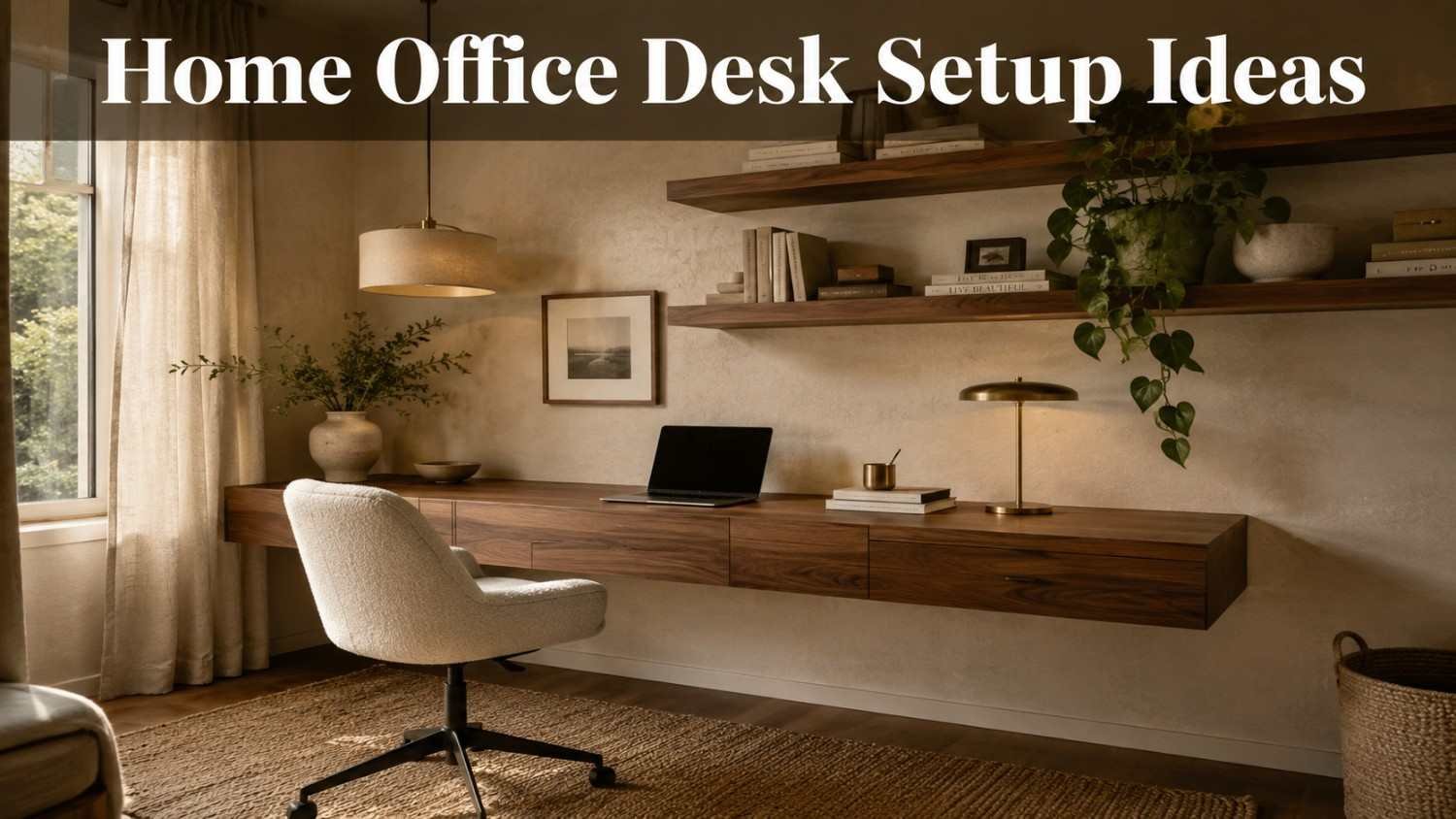
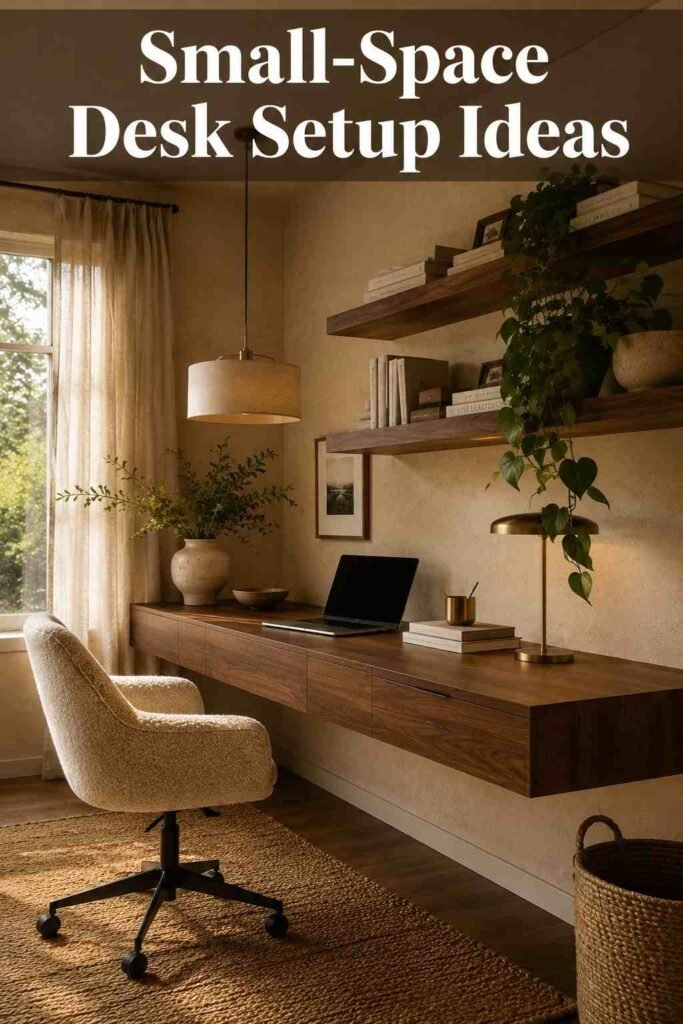
8. Install a Wall-Mounted Floating Desk
A floating desk attaches directly to the wall and skips legs entirely, freeing up the floor beneath for storage bins, a rolling chair, or simply an open sightline that makes a small room feel larger. It’s an especially good fit for narrow hallways or box rooms.
9. Build an Under-the-Stairs Office Nook
The awkward triangle of space under a staircase is often wasted, but a slim desk or floating shelf tucked into that nook can become a surprisingly private workspace. Add a small task light and a compact chair, and you’ve turned dead space into a functional station.
10. Convert a Closet Into a “Cloffice”
Closet offices, sometimes nicknamed “cloffices,” repurpose an unused closet by removing the doors (or leaving them open) and installing a small desk shelf with drawers below. It’s a smart option in apartments or shared households where a dedicated room isn’t available, and it can be closed off visually at the end of the day.
11. Use a Fold-Down Murphy Desk
For multi-purpose rooms, a wall-mounted fold-down desk disappears when not in use, turning your home office back into a guest room or craft space in seconds. Look for one with a small integrated shelf so a laptop and notebook can be tucked away with minimal setup time each morning.
Cozy and Aesthetic Home Office Desk Setup Ideas
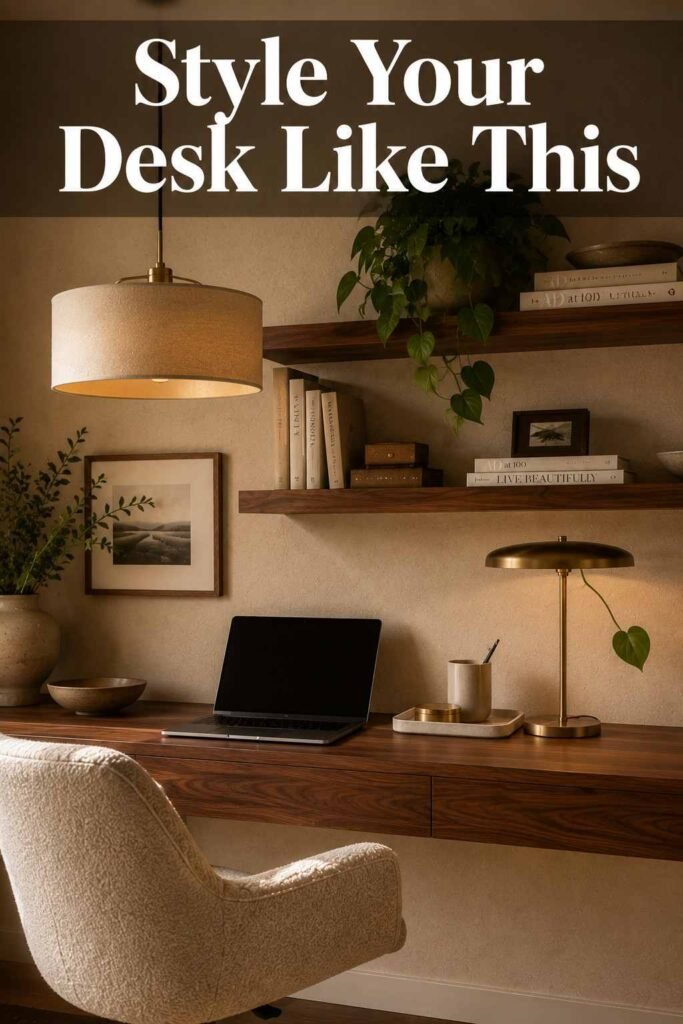
A workspace that feels good to look at can genuinely improve your mood and focus. If you’re browsing cozy home office ideas for inspiration, these five additions are a solid starting point.
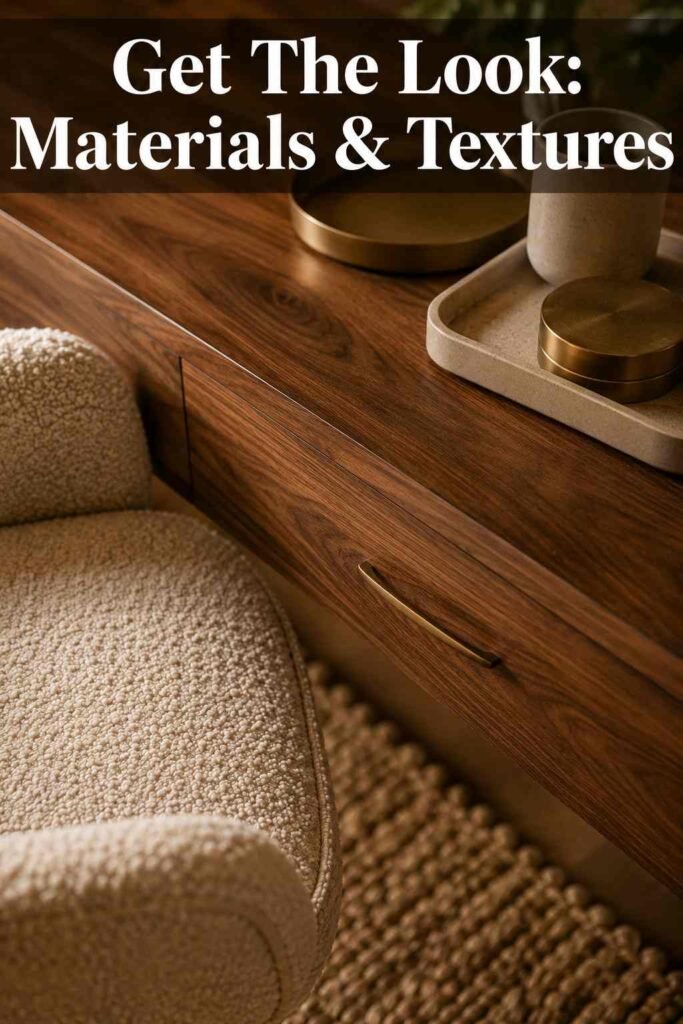
12. Bring in Warm Wood and Natural Textures
Swapping cold metal or glossy laminate for warm wood tones, woven baskets, and matte finishes instantly softens a workspace. Natural materials tend to feel calmer and less clinical, which matters if your desk sits in a bedroom or living area rather than a separate office.
13. Add a Biophilic Touch With Desk Plants
A small potted plant, like a pothos or succulent, does more than decorate — greenery has been associated with improved mood and lower reported stress in workspace settings. Low-maintenance varieties are ideal for desks that don’t get much natural light.
14. Layer Task and Ambient Lighting
Relying on a single overhead bulb creates harsh shadows and glare on your screen. Instead, combine a focused desk lamp for close work with a softer ambient source, like a floor lamp or LED strip, set around 4000K to 5000K for a bright, neutral tone that supports focus without feeling clinical.
15. Curate a Small Wall Gallery Above Your Desk
A few framed prints, a corkboard, or a floating shelf with personal photos above your desk adds warmth without cluttering the work surface itself. Thoughtful office room decor above eye level draws the room together while keeping your actual desktop clear for work.
16. Layer in Soft Textiles
A woven rug underfoot, a cushioned seat pad, or a throw blanket on a nearby chair makes a home office feel like part of the home rather than a sterile add-on. These small touches also help absorb sound in rooms with hard flooring, which is a nice bonus during video calls.
Tech-Smart Home Office Desk Setup Ideas for Productivity
Once ergonomics and aesthetics are handled, the right tech accessories keep your day running smoothly.
17. Set Up Dual or Triple Monitors
Multiple monitors let you keep reference material, email, and your main task visible at once instead of constantly alt-tabbing between windows. A monitor arm keeps both screens at matched eye level and frees up desk space that legs or stands would otherwise take.
18. Install a Cable Management System
Tangled cords under a desk are one of the fastest ways to make an otherwise clean setup look chaotic. Cable trays, sleeves, and adhesive clips route power cords and charging cables along the underside of the desk, keeping the visible surface — and the floor beneath it — clear.
19. Improve Lighting for Video Calls
If your job involves regular video meetings, a small ring light or monitor-mounted light bar positioned in front of you, rather than behind, prevents the washed-out or shadowed look that overhead lighting alone tends to create.
20. Add a Wireless Charging Pad or Docking Station
A single docking station or charging pad consolidates your phone, laptop, and accessories into one connection point, cutting down on the pile of loose cables that usually accumulates near a keyboard by the end of the week.
Budget-Friendly and Sustainable Home Office Desk Setup Ideas
You don’t need a full renovation to build a workspace that functions well and looks intentional.
21. Repurpose or Buy a Secondhand Desk
A solid secondhand desk, refinished with new paint or hardware, often outperforms a budget flat-pack option in both durability and character. Thrift stores, estate sales, and online marketplaces are reliable sources for well-built vintage desks at a fraction of retail cost.
22. Build a DIY Pegboard Organizer
A pegboard mounted above or beside your desk holds headphones, notebooks, and small tools without taking up any desk surface, and it costs far less than most commercial organizer systems. It’s easily rearranged as your needs change, which makes it one of the most flexible additions to any home office desk setup.
For more room-by-room inspiration, sources like outinteriors regularly feature real home offices that balance function with personality, which can be a useful reference point when you’re narrowing down your own style.
Final Thoughts on Building Your Ideal Home Office Desk Setup
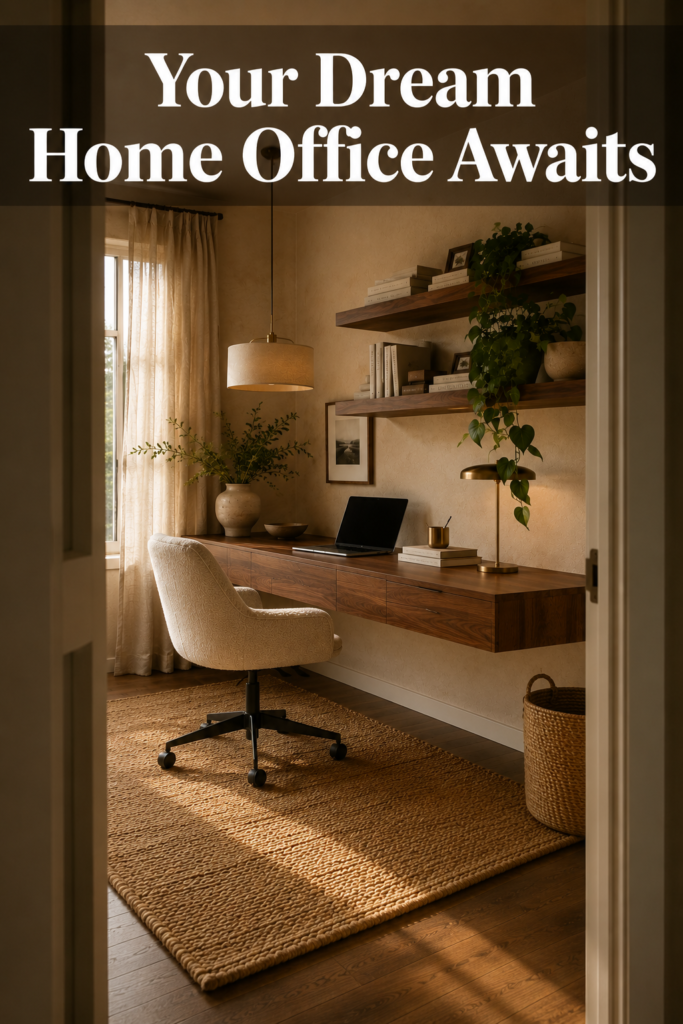
There’s no single “correct” home office desk setup — the best one is the version that fits your room, your budget, and the way you actually work. Start with the ergonomic basics, since posture and screen positioning affect your comfort every single day. From there, layer in the space-saving, aesthetic, or tech upgrades that match your priorities. Even adopting three or four of these 22 ideas can turn a forgettable corner into a workspace you look forward to using.
Frequently Asked Questions
What is the ideal height for a home office desk?
Most standard desks sit between 28 and 30 inches tall, which works for people around average height. If you’re notably taller or shorter, an adjustable desk is worth the investment so your elbows can rest at roughly a 90-degree angle while typing.
How far should my monitor be from my eyes?
Eye care guidance generally recommends positioning your monitor 20 to 30 inches away, with the top of the screen at or slightly below eye level, to reduce neck strain and minimize glare.
What’s the best desk shape for a small home office?
L-shaped or corner desks tend to make the most of limited square footage, while wall-mounted floating desks work well in very narrow rooms since they don’t require legs or floor clearance.
Do standing desks actually help productivity?
Standing desks don’t guarantee more output on their own, but alternating between sitting and standing throughout the day can reduce the stiffness and fatigue that come from staying in one position too long, which indirectly supports sustained focus.
How can I make my home office desk setup feel cozier without spending much?
Small, low-cost changes — a plant, a warm-toned desk lamp, a textured rug, or a few framed prints — go a long way toward making a workspace feel personal rather than purely functional.
What lighting temperature is best for a home office desk?
A neutral range of 4000K to 5000K is generally recommended for focused work, since it’s bright enough to reduce eye strain without feeling overly warm or overly clinical.
Can I set up a functional home office without a dedicated room?
Yes. Closets, under-stair nooks, fold-down wall desks, and even a well-organized corner of a bedroom can all support a fully functional home office desk setup with the right furniture choices.