Quiet Luxury Home Decor Ideas That Transform Every Room Into a Timeless Retreat
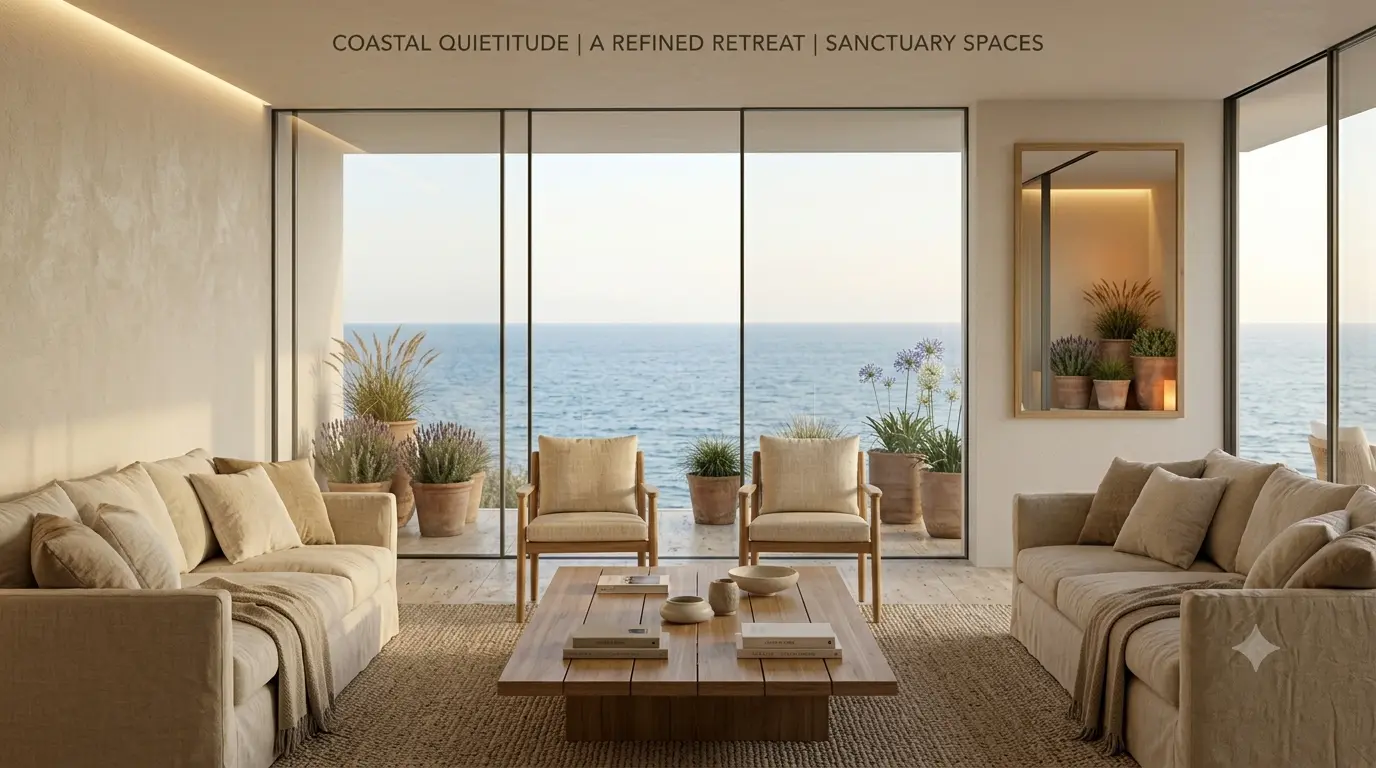
There is a quiet shift happening in homes across America. Homeowners are stepping away from loud, logo-driven decor and moving toward something far more intentional — a style that communicates sophistication through restraint, not excess. Quiet luxury home decor ideas are at the center of this movement, offering a way to design spaces that feel deeply considered, visually calm, and endlessly liveable.
This approach is not about spending more. It is about spending better. It is about choosing one beautifully crafted armchair over five mediocre ones. It is about the hush of linen curtains pooling on a hardwood floor or the warmth of a natural stone countertop that never goes out of style. Whether you are redesigning a single room or rethinking your entire home, this guide covers everything you need to create an interior that whispers elegance rather than shouts it.
What Is Quiet Luxury in Interior Design?
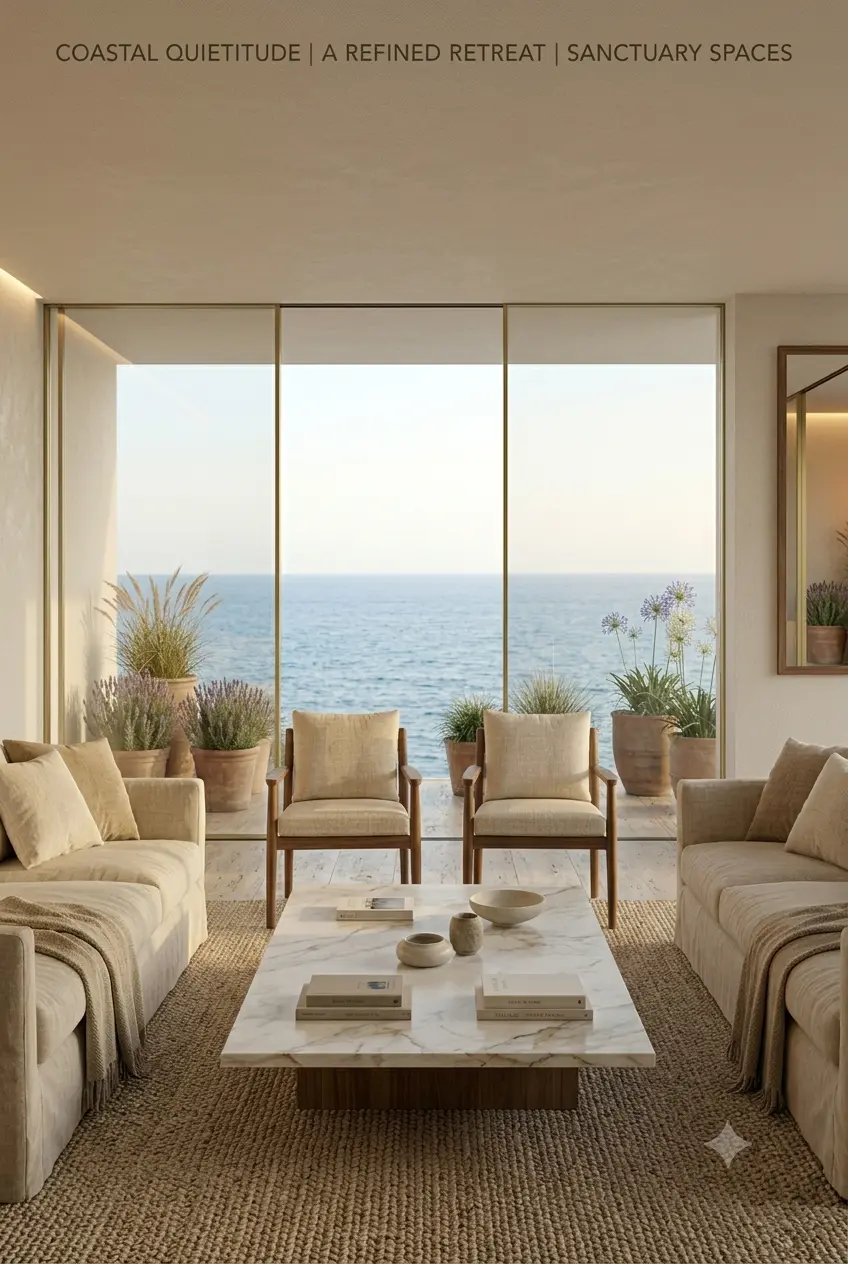
Quiet luxury, as a design philosophy, prioritizes understated elegance, quality materials, and timeless form over trend-driven aesthetics. The term gained widespread cultural attention around 2023, largely driven by fashion, and was then quickly adopted by the interior design world. In home decor, it translates to spaces where nothing feels overdone, everything earns its place, and comfort coexists with beauty.
Think of it as the opposite of maximalism. Where maximalism says more, quiet luxury says enough. It borrows from the traditions of Scandinavian minimalism, French interior design, and the classic English country house — blending warmth with restraint. The result is a home that feels curated rather than decorated, lived-in rather than staged.
The Core Principles Behind Quiet Luxury Home Decor
Before you rearrange a single piece of furniture, it helps to understand the foundational rules of this aesthetic. These principles are what separate quiet luxury from simply “plain” or “empty” interiors.
Quality Over Quantity
The single most important rule in quiet luxury home decor is that fewer, better things always win. Every item in a room should serve a purpose — either functional, aesthetic, or both. A single hand-thrown ceramic vase on a marble shelf says more than a cluster of mismatched objects. When choosing furniture and accessories, prioritize craftsmanship, longevity, and material integrity over novelty or low price points.
This does not mean everything must be expensive. It means everything must be chosen with care. A well-sourced vintage piece from an estate sale can carry the same quiet authority as a high-end designer find — often more so, because it carries history.
A Restrained Color Palette
Color is one of the most powerful tools in quiet luxury home decor ideas. The palette leans toward warm neutrals, soft whites, deep taupes, muted sage, dusty rose, and warm charcoal. These tones do not fight for attention. They settle into the room and allow texture and form to take the lead.
Monochromatic layering — using multiple shades within the same color family — is a hallmark of this style. A room where walls, upholstery, and drapery all exist in varying tones of warm cream feels cohesive, enveloping, and deeply considered. Accent colors, when used, are equally muted: aged gold hardware, the warm brown of a leather accent, or the soft green of a potted olive tree.
Natural Materials and Texture
If color sets the mood, texture tells the story. Quiet luxury interiors rely heavily on natural materials — linen, wool, cashmere, natural oak, walnut, marble, travertine, aged brass, and raw stone. These materials bring a tactile richness that synthetic alternatives simply cannot replicate. They also age beautifully, which is central to the philosophy: a quality material looks better with time, not worse.
Layering textures within a neutral palette prevents the space from feeling flat or sterile. A nubby wool throw over a smooth linen sofa, a jute rug beneath a polished oak coffee table, or a rough plaster wall behind a sleek marble fireplace — these combinations create depth without noise.
Room-by-Room Quiet Luxury Home Decor Ideas
Now that the principles are clear, here is how to apply them room by room.
Living Room
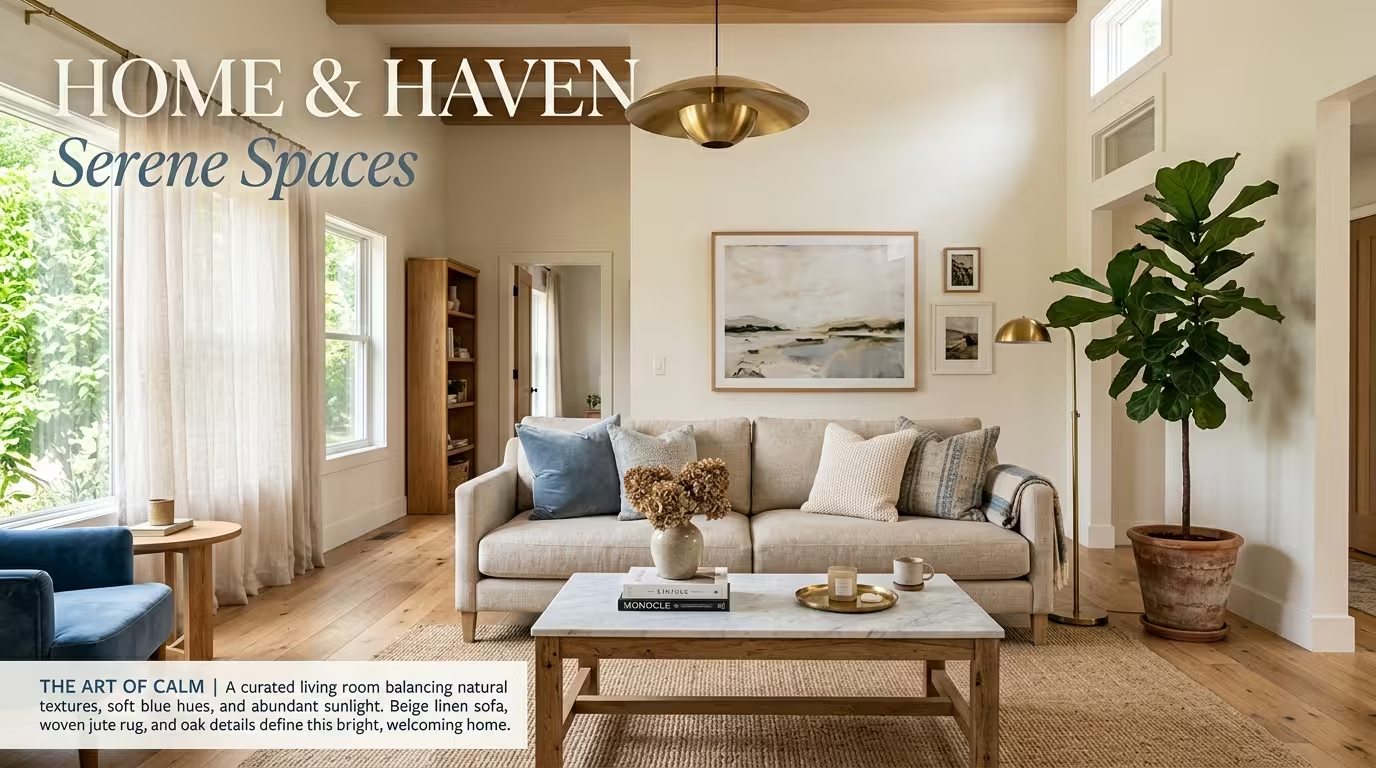
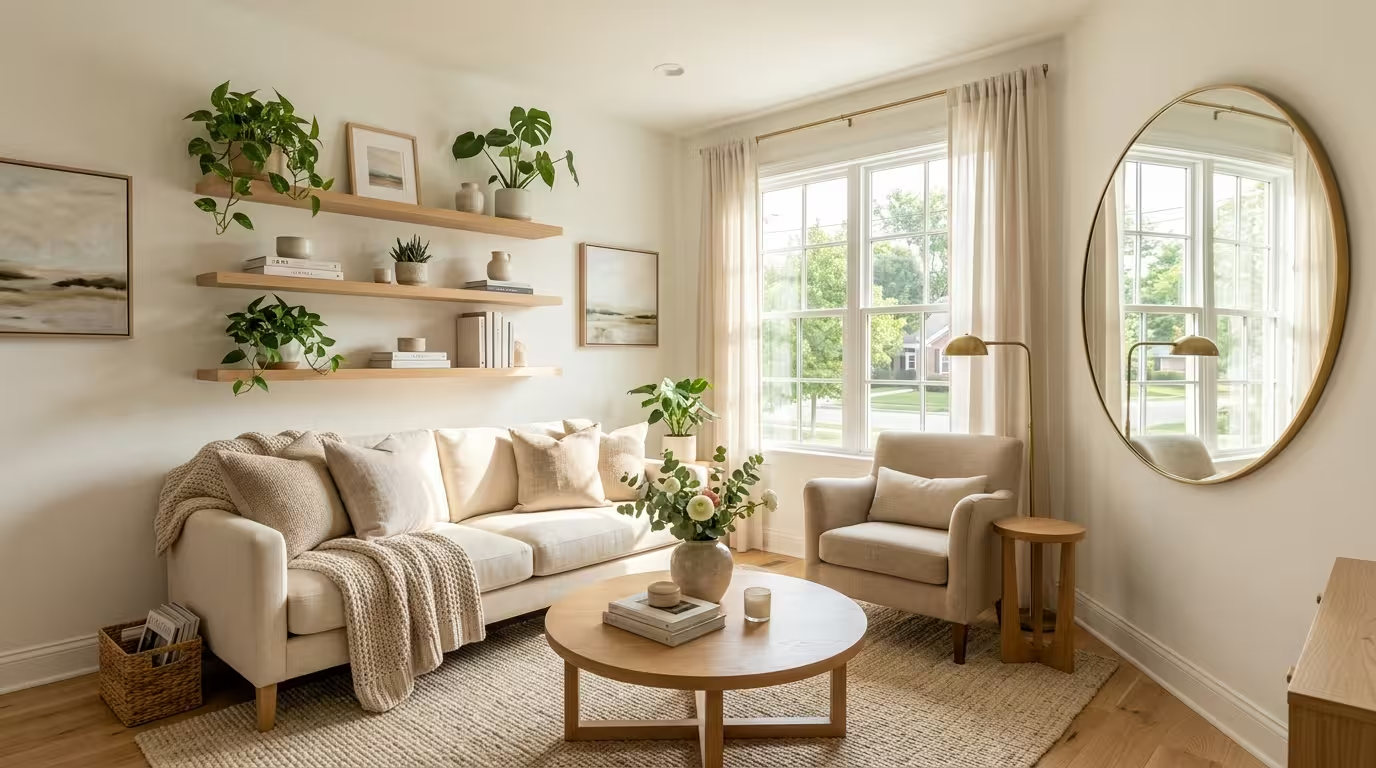
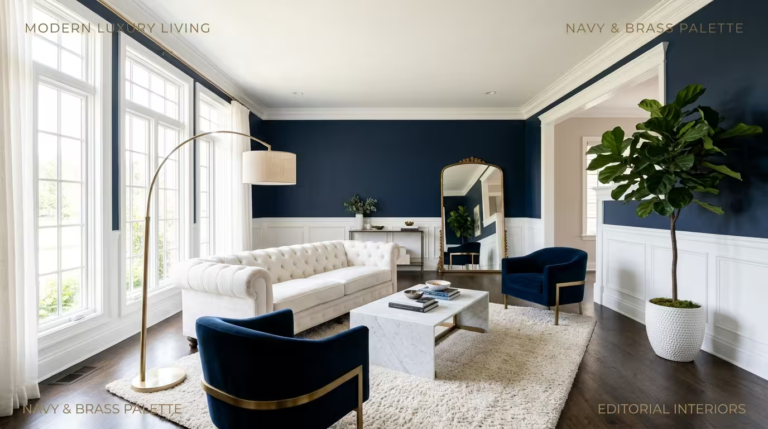
The living room is where quiet luxury makes its strongest statement. Start with a large, low-profile sofa in a neutral performance fabric — oatmeal, stone, or warm white. Avoid busy patterns or bright accent cushions. Instead, layer cushions in varying textures within the same tone. Think bouclé next to velvet next to linen.
Choose a coffee table in natural stone or solid wood — oval shapes are particularly popular in quiet luxury interiors because they feel less rigid. Add a generous area rug in a natural fiber like wool or sisal to anchor the seating area. Walls should feel unhurried: a few pieces of original art or understated prints, hung with generous spacing. Avoid gallery walls that feel busy or eclectic.
Lighting matters enormously here. A single, sculptural floor lamp with a warm-toned bulb can transform the mood of a living room more than any decorative object. Choose fixtures with aged brass, matte black, or brushed nickel finishes to reinforce the material language.
Bedroom
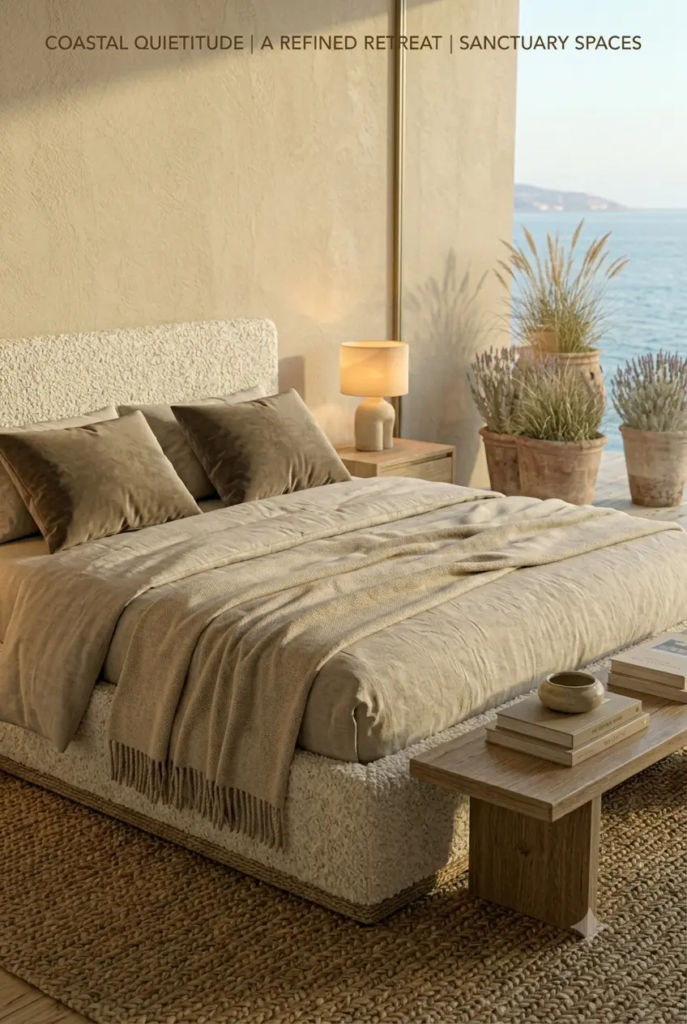
The bedroom is perhaps the most natural home for quiet luxury home decor ideas. This is the space most people associate with retreat and restoration, making it an ideal canvas for the aesthetic.
Begin with high-thread-count linen or cotton bedding in soft white, warm ivory, or dusty grey. Avoid printed duvet covers; let the quality of the fabric speak on its own. A tonal European linen pillowcase paired with a crisp white duvet cover is the quiet luxury standard. Layer a cashmere or merino throw at the foot of the bed for added warmth and visual softness.
Bedside tables should be simple and purposeful — a ceramic table lamp, a single book, perhaps a small vase of dried botanicals. Built-in cabinetry or a wardrobe with flat-panel doors and integrated handles keeps the room visually calm. Avoid exposed clothing rails or visible storage that disrupts the serenity.
Kitchen and Dining Room
The quiet luxury kitchen values functionality married with beauty. Choose cabinet fronts in flat, unfussy profiles — shaker-style works beautifully, as does a flat-panel Scandinavian approach. Stone countertops in honed marble, limestone, or quartzite are the material of choice: not polished to a high gloss, but finished in a way that feels touchable and grounded.
Hardware is where the detail lives. Aged brass or brushed bronze pulls on deep forest-green or slate-grey cabinetry create an effect that feels both warm and grown-up. Avoid chrome and brushed nickel if warmth is the goal. Open shelving, if included, should be curated strictly — a small collection of ceramic vessels, a few cookbooks, and nothing more.
In the dining room, a long solid wood or marble-topped table sets the tone. Pair it with upholstered chairs in a woven fabric rather than plastic or metal. Lighting overhead is critical — a linen or ceramic pendant shade, or a cluster of simple globe pendants, provides an intimate glow that suits the aesthetic perfectly.
Bathroom
The bathroom offers a beautiful opportunity to apply quiet luxury principles in a small, highly personal space. Think freestanding bathtubs in matte white, stone or concrete vessel sinks, and warm-toned tile in limestone, travertine, or large-format marble-effect porcelain. Grout lines should be kept thin and tonal.
Towels and bathmats should be thick, absorbent, and in a soft neutral — not pure white, which can feel clinical. Warm taupe, blush grey, or natural linen tones are ideal. A single potted plant — a monstera, fiddle-leaf fig, or trailing pothos — brings an organic element that softens the harder surfaces of a bathroom beautifully.
Vanity units should conceal, not display. Avoid countertop clutter. A simple tray holding a glass soap dispenser and a single candle is all the styling this space needs.
Home Office
A quiet luxury home office is the antithesis of the chaotic, crowded desk aesthetic. Begin with a solid wood desk in a natural finish — no glass, no hollow-core laminate. A leather or boucle desk chair in a neutral tone provides comfort without visual noise. Keep the desk surface clear: one notebook, one lamp, and one plant is the quiet luxury rule.
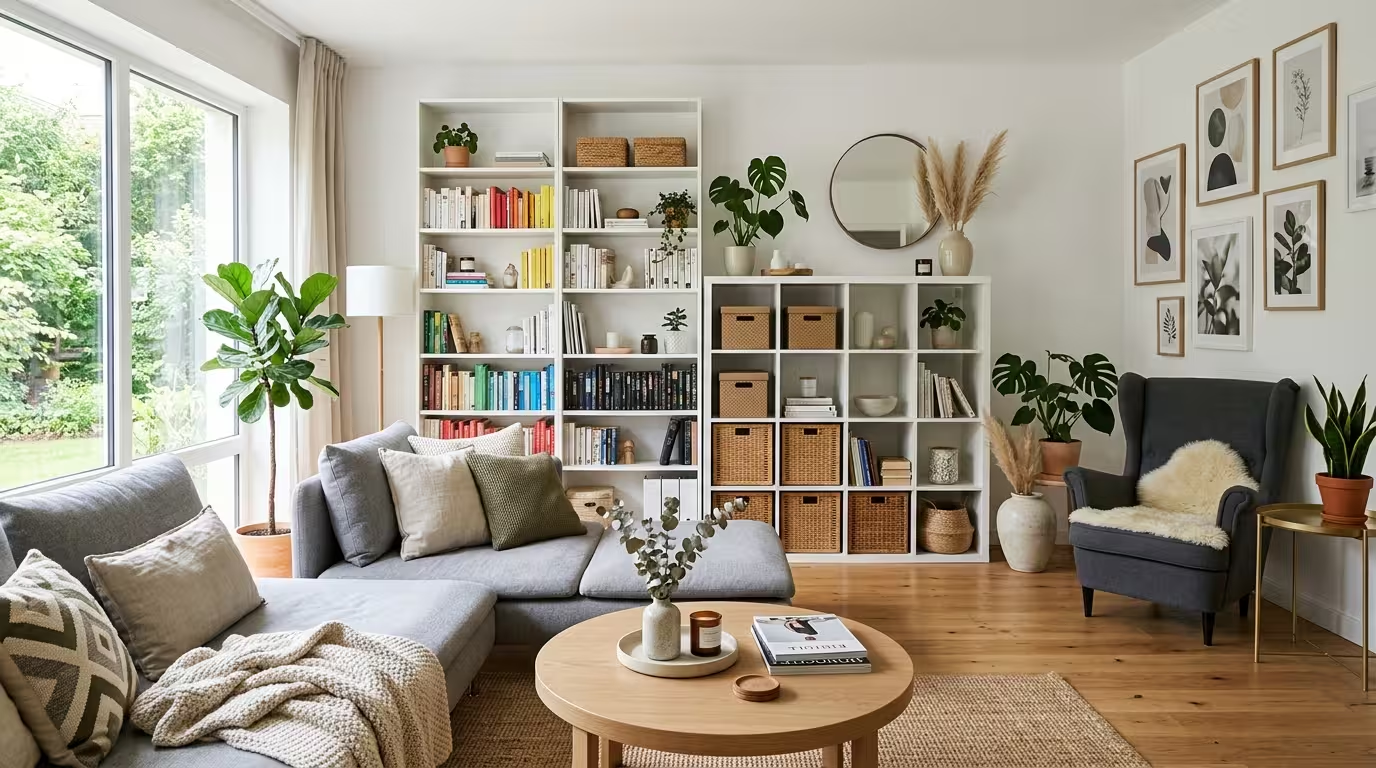
Built-in bookshelves are the aspirational centrepiece of many quiet luxury home offices. Styled with books arranged by color or height, a few framed prints, and tasteful objects, they feel both functional and curated. Avoid branded merchandise, novelty items, or overly personal knick-knacks.
Color Palettes That Define Quiet Luxury Interiors
Choosing the right colors is foundational to achieving the quiet luxury aesthetic. The five palettes most consistently found across quiet luxury home decor ideas are:
- Warm Whites and Creams: The most versatile palette. Works in every room and every light condition. Best paired with natural wood tones and aged brass.
- Stone and Taupe: A grounded, earthy palette that feels simultaneously modern and timeless. Pairs beautifully with deep walnut and matte black.
- Muted Sage and Olive: Bring the natural world indoors. Particularly stunning in kitchens, bathrooms, and bedrooms.
- Deep Charcoal and Slate: A bolder take on quiet luxury, used for dramatic rooms that still maintain restraint through material quality.
- Blush and Warm Ivory: Feminine without being fussy. Works especially well in bedrooms and powder rooms when paired with natural stone.
If you love the idea of bringing the outdoors in with a seaside-inspired palette, explore these coastal quiet luxury home ideas for beautifully understated interiors that feel both refined and relaxed.
Furniture and Layout: The Architecture of Quiet Luxury
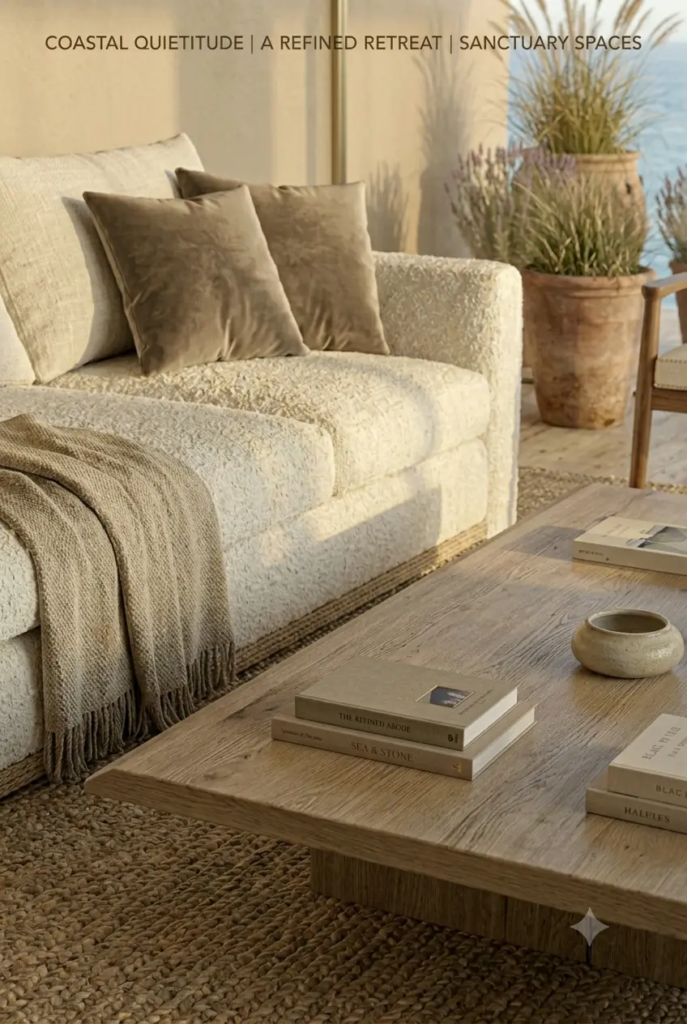
Furniture selection and arrangement are as important as any material or color choice. In quiet luxury interiors, furniture earns its place through proportion, quality, and restraint. Every piece should look like it belongs — not because it matches, but because it has been chosen with intention.
Scale is critical. Avoid undersized furniture that floats awkwardly in a room, or oversized pieces that crowd the space. The goal is generous proportions with adequate breathing room between pieces. Negative space is not space — it is visual rest, and it is one of the defining characteristics of this aesthetic.
Mixing periods adds depth and authenticity. A contemporary sofa paired with a mid-century side table and a vintage oil painting creates a room that feels collected over time, rather than bought in a single afternoon. This is the hallmark of truly sophisticated interior design.
For a palette that feels both sophisticated and airy, browse these stunning blue and beige home ideas that pair beautifully with quiet luxury principles, particularly in open-plan living and coastal settings.
Lighting: The Most Underestimated Element in Quiet Luxury Home Decor
Lighting is the invisible layer that either makes or breaks a quiet luxury interior. Harsh overhead lighting destroys atmosphere; layered, warm lighting creates it. Every room should have at least three sources of light: ambient (overhead), task (functional), and accent (decorative).
Opt for warm-toned bulbs between 2700K and 3000K in all living spaces. Dimmer switches are non-negotiable — they allow you to shift the mood of a room within seconds. In quiet luxury interiors, chandeliers are restrained: a simple cluster of hand-blown glass globes, or a single sculptural resin pendant, rather than anything overtly ornate.
Table lamps are the workhorses of quiet luxury lighting. Choose ceramic, plaster, or stone bases with natural linen or paper shades to diffuse light warmly and organically. Wall sconces add dimension and replace the need for harsh ceiling fixtures in corridors and bedrooms.
Quiet Luxury Home Decor on a Budget
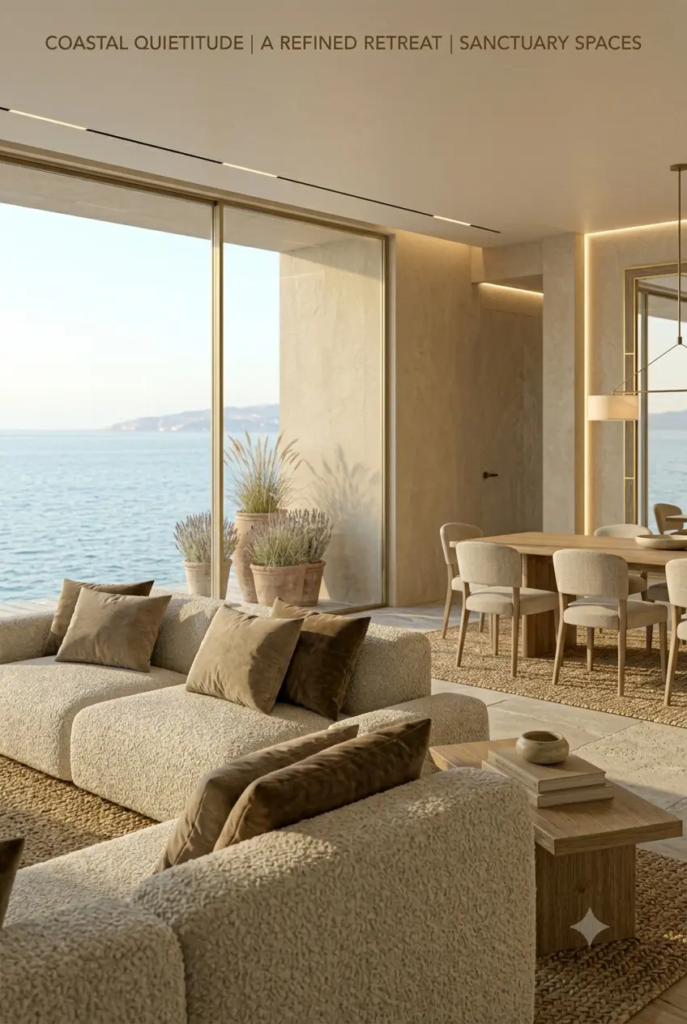
A common misconception is that achieving refined, intentional interiors requires a designer’s budget. In reality, quiet luxury home decor ideas are as much about editing and restraint as they are about spending. Here is how to achieve the look at any price point:
Start with what you already own. Remove half the objects from any given surface in your home. The room will immediately feel more considered. Quiet luxury is about what you take away as much as what you add.
Invest in textiles. Quality bedding, curtains, and throw pillows have an outsized visual impact. A set of linen curtains — even from a mid-market retailer — can elevate an entire room.
Shop vintage and secondhand. Antique markets, estate sales, and platforms like Chairish or 1stDibs offer beautifully crafted older pieces at a fraction of their original cost. A solid wood vintage sideboard will always look more interesting than a new flatpack alternative.
Repaint and reframe. A fresh coat of paint in a sophisticated neutral and the replacement of cheap frames with simple, well-made alternatives are two of the highest-impact, lowest-cost changes you can make.
For professionally curated room inspirations and design resources, outinteriors offers a wealth of ideas to help you build your perfect quiet luxury space, from furniture sourcing to complete room styling guides.
Common Mistakes to Avoid in Quiet Luxury Interiors
Even with the best intentions, certain missteps can undermine the aesthetic. Here are the most common ones and how to sidestep them:
Over-neutralizing. Quiet luxury is warm, not cold. If a room feels sterile or hospital-like, the neutrals may be too cool or the space may lack sufficient texture. Add warmth through materials: a wool throw, a wooden object, a ceramic lamp base.
Ignoring scale. A room full of small objects, no matter how tasteful, will never feel luxurious. Invest in a few large-scale pieces — a generous sofa, a substantial rug, a tall plant — to create visual weight and presence.
Overuse of visible branding. Quiet luxury, by definition, does not advertise itself. Remove any visible logos from cushions, throws, or decorative objects. The quality should speak for itself.
Neglecting the floors. Floors are the largest surface in any room. Bare, cold, or cheap-looking floors undermine every other design choice. Invest in a quality rug — even one — and if budget allows, consider natural wood or stone flooring as a long-term upgrade.
Too much matching. A room where everything matches — same wood tone, same fabric, same shade — reads as staged, not designed. The quiet luxury aesthetic celebrates harmony, not uniformity. Mix tones, periods, and textures deliberately.
Conclusion:
Quiet luxury home decor ideas represent more than a passing interior design trend. They reflect a broader cultural shift toward intentionality, quality, and enduring beauty. This is a design that respects the intelligence of the people who live with it — interiors that grow richer with time rather than dating overnight.
The path to a quiet luxury home does not require a complete overhaul or an unlimited budget. It begins with a single decision to choose better over more, to edit rather than accumulate, and to invest in the materials and forms that will still feel right ten years from now. Start with one room, one surface, one considered choice — and let the rest follow naturally.
A home designed with quiet luxury principles is, ultimately, a home designed for real life: beautiful, calm, and deeply yours.
Frequently Asked Questions
1. What is the difference between quiet luxury home decor and minimalism?
While both aesthetics value restraint, quiet luxury is warmer and more textural than strict minimalism. Minimalism often pursues near-empty spaces with clean geometric lines. Quiet luxury, by contrast, layers natural materials, soft textiles, and organic forms to create rooms that feel rich and liveable rather than bare.
2. What colors are most associated with quiet luxury home decor ideas?
The most common colors include warm whites, creams, taupes, stone grey, muted sage, deep charcoal, and soft blush. The palette avoids bright or saturated tones in favor of colors that feel grounded, sophisticated, and timeless.
3. Can I achieve quiet luxury home decor on a tight budget?
Yes. The most important steps — editing down your possessions, investing in quality textiles, repainting in sophisticated neutrals, and shopping vintage — are all highly accessible. Quiet luxury is more about restraint and curation than spending power.
4. What materials are essential for a quiet luxury interior?
Key materials include natural linen, wool, cashmere, solid hardwood (particularly oak and walnut), marble or stone, aged brass, and natural ceramics. Avoid synthetics and high-gloss finishes where possible, as they undermine the tactile warmth of the aesthetic.
5. How do I start incorporating quiet luxury home decor ideas without redecorating my entire home?
Begin with the most impactful, low-effort changes: declutter surfaces, add quality linen cushions or a throw to your sofa, replace cheap light bulbs with warm-toned alternatives, and introduce a large organic element like a tall potted plant. These small shifts dramatically change how a room feels.
6. Is quiet luxury suitable for families with young children?
Absolutely. The emphasis on quality over quantity means choosing durable, well-made pieces rather than cheap, easily damaged ones. Performance fabrics in neutral tones, natural rugs that hide dirt beautifully, and built-in storage that conceals clutter are all very family-friendly choices.
7. What lighting best suits a quiet luxury home?
Layered, warm lighting is essential. Use dimmer switches throughout, choose bulbs between 2700K and 3000K, and layer ambient, task, and accent lighting in every room. Ceramic, plaster, or stone lamp bases with linen shades are the signature lighting choice of the quiet luxury aesthetic.