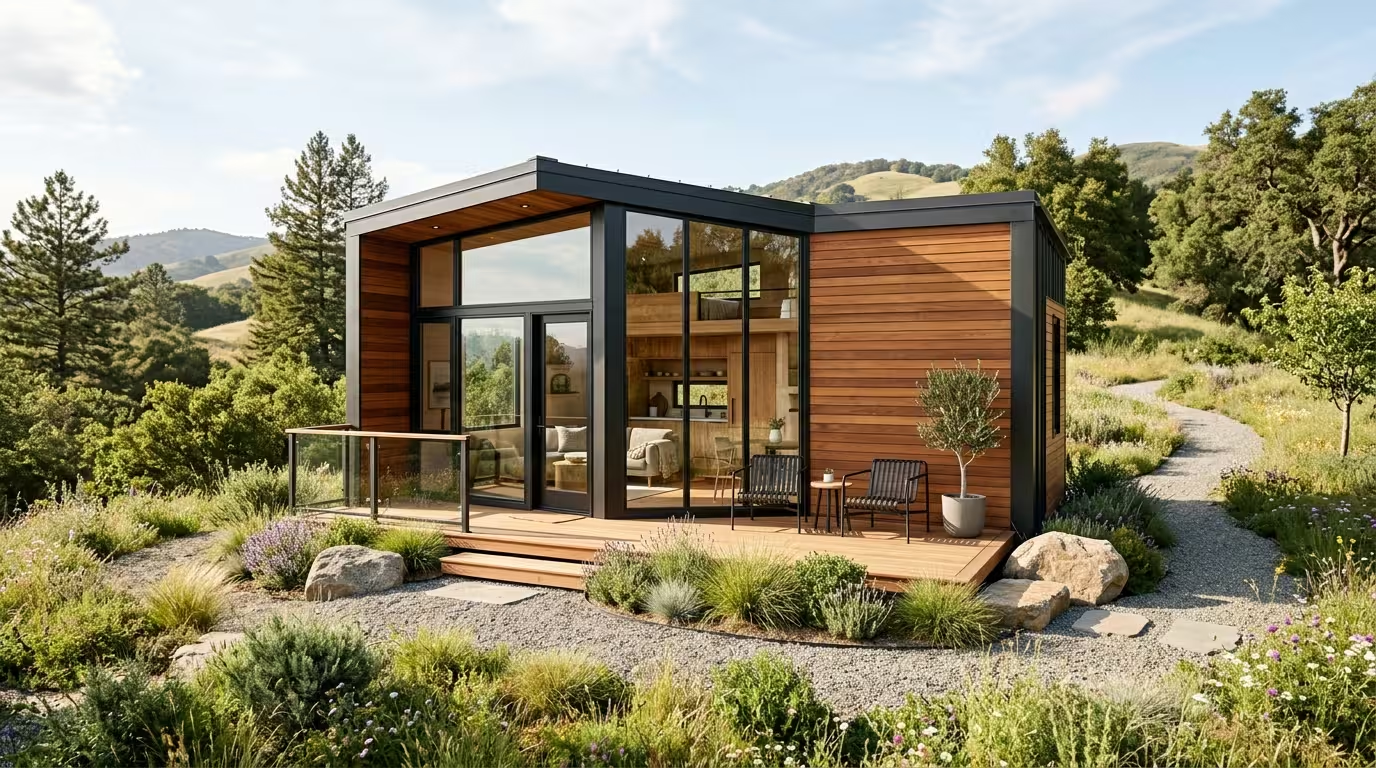
Side Yard Ideas That Turn Dead Space Into Your Home’s Best Feature
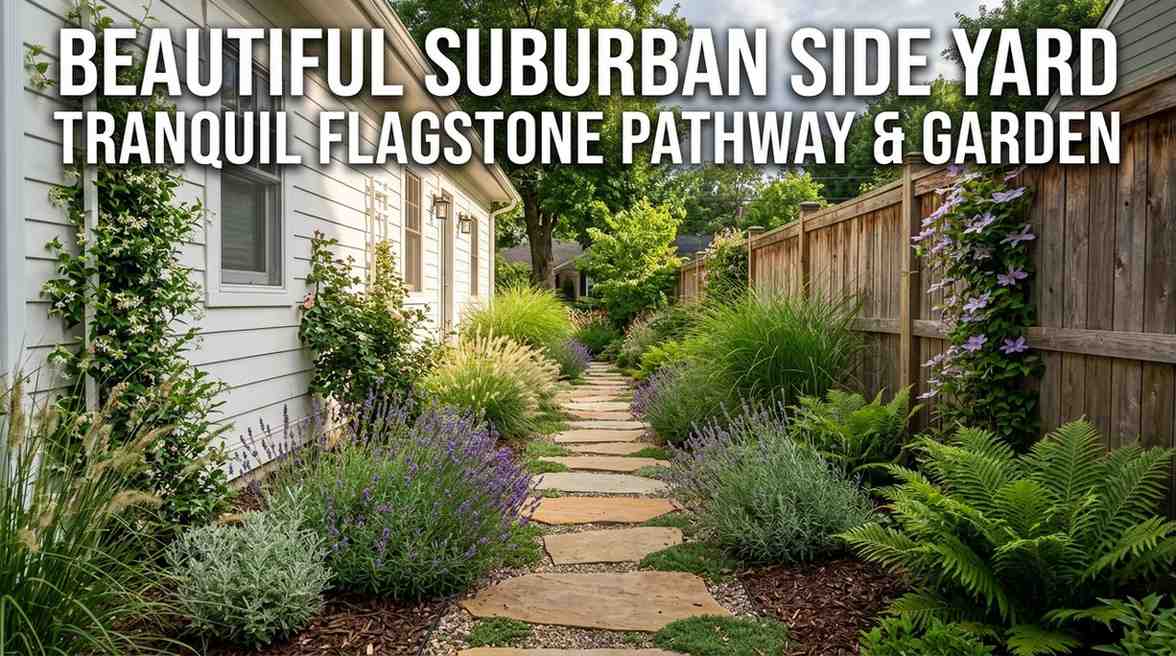
Most homeowners walk past it every day without a second thought. That narrow strip of land running along the edge of your house — bounded by the fence on one side and your home’s exterior on the other — is often the most underutilized piece of real estate on your entire property. But your side yard has far more potential than you might realize.
Whether it’s eight feet wide or eighteen, shaded by an overhang or bathed in afternoon sunlight, a well-planned side yard can become a productive garden, a peaceful walkway, a functional storage zone, or even a cozy outdoor retreat. This guide walks you through everything you need to know to transform that overlooked strip into a space that works hard and looks great.
Why Your Side Yard Deserves Attention
For years, the side yard has been treated as an afterthought — a place to store the trash bins, park the garden hose, or let weeds quietly take over. But as outdoor living has become a priority for American homeowners, the side yard is finally getting its moment.
According to the American Society of Landscape Architects (ASLA), demand for functional outdoor spaces has consistently grown since 2020, with homeowners increasingly seeking to maximize every inch of available land. The side yard, often ranging from 4 to 15 feet in width, represents significant usable square footage that most properties never fully exploit.
Beyond aesthetics, a well-designed side yard can boost your home’s curb appeal and, in some cases, its market value. Real estate professionals often note that cohesive landscaping across the entire property — including side spaces — creates a stronger first impression than a beautiful front yard with a neglected side passage.
Understanding Your Side Yard Before You Begin
Before diving into design ideas, it’s important to assess what you’re working with. Not all side yards are created equal, and understanding your specific conditions will save you time, money, and frustration.
Measure Width and Length Carefully
The width of your side yard dictates what’s possible. A 4-to 6-foot-wide space is best suited for a simple pathway with vertical planting or wall-mounted features. A 7-to-10-foot strip opens up more possibilities — including narrow seating areas, raised garden beds, or a small water feature. Anything wider than 10 feet gives you genuine flexibility to create a multifunctional zone.
Assess Light Conditions
Is your side yard bathed in full sun, deep shade, or something in between? Most side yards on the north-facing side of a home receive minimal direct sunlight, while south-facing corridors can be surprisingly bright. Knowing your light exposure determines which plants will thrive and whether you’ll need supplemental lighting for evening use.
Check Drainage and Soil Quality
Side yards often suffer from poor drainage because they sit between two structures that channel rainwater. Before planting or laying hardscaping, check whether water pools after rain. If it does, you may need to install a French drain, a dry creek bed, or a rain garden — all of which can be both functional and attractive.
Know Your Local Codes and Easements
Many municipalities have rules about what can be built or planted in side yard setbacks. Utility easements also frequently run along the sides of properties. Before adding fencing, permanent structures, or large trees, check with your local planning department to avoid costly mistakes.
Best Side Yard Ideas for Every Home
Once you understand your space, the fun begins. Here are the most impactful ways to transform a side yard, organized by purpose and style.
1. Create a Defined Pathway
A clearly defined pathway is the single most impactful thing you can do in a side yard. It immediately makes the space feel intentional rather than abandoned, and it solves the practical problem of moving between the front and back of your property.
Material options for side yard pathways include:
- Flagstone or stepping stones — natural and attractive; work well in informal gardens
- Decomposed granite (DG) — budget-friendly, permeable, and easy to install
- Brick pavers — classic look with excellent durability
- Concrete with exposed aggregate — low-maintenance and long-lasting
- Gravel with timber edging — a popular choice for cottage-style landscapes
Line the pathway with low-growing plants, solar path lights, or compact shrubs to frame the route and add visual interest. Even a simple gravel path edged with stone creates a sense of purpose and structure.
2. Build a Narrow Garden Bed or Herb Garden
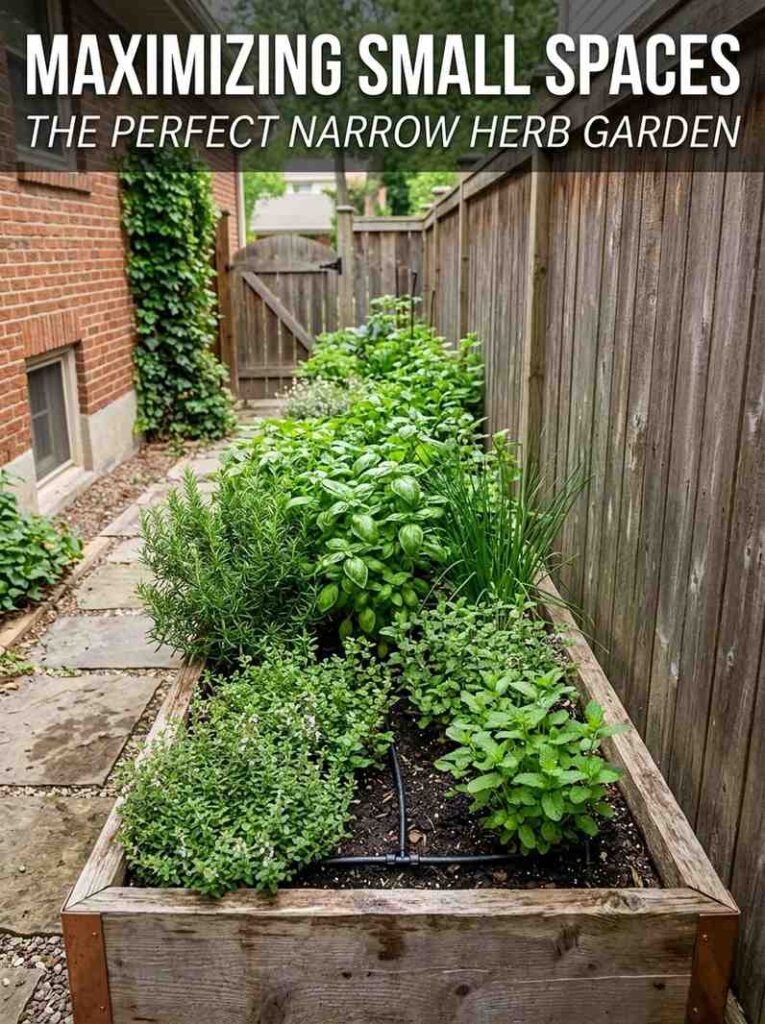
The side yard is ideal for productive planting, especially if you don’t have enough space in the backyard. A raised garden bed just 18 to 24 inches wide can be installed along a fence or wall and used to grow vegetables, herbs, or cut flowers throughout the growing season.
Herbs are particularly well-suited to narrow side yard gardens. Basil, thyme, rosemary, mint, chives, and parsley all grow well in compact beds, require relatively little maintenance, and can be harvested regularly throughout spring and summer. Keep mint in a container within the bed, as it spreads aggressively if left unchecked.
For flowering plants, consider lavender, salvia, echinacea, or black-eyed Susans — all of which thrive in sunny side yards and attract pollinators. Shade-tolerant options include hostas, astilbe, ferns, and impatiens, which can soften a north-facing side yard with color and texture.
3. Add Vertical Interest with Trellises and Climbing Plants
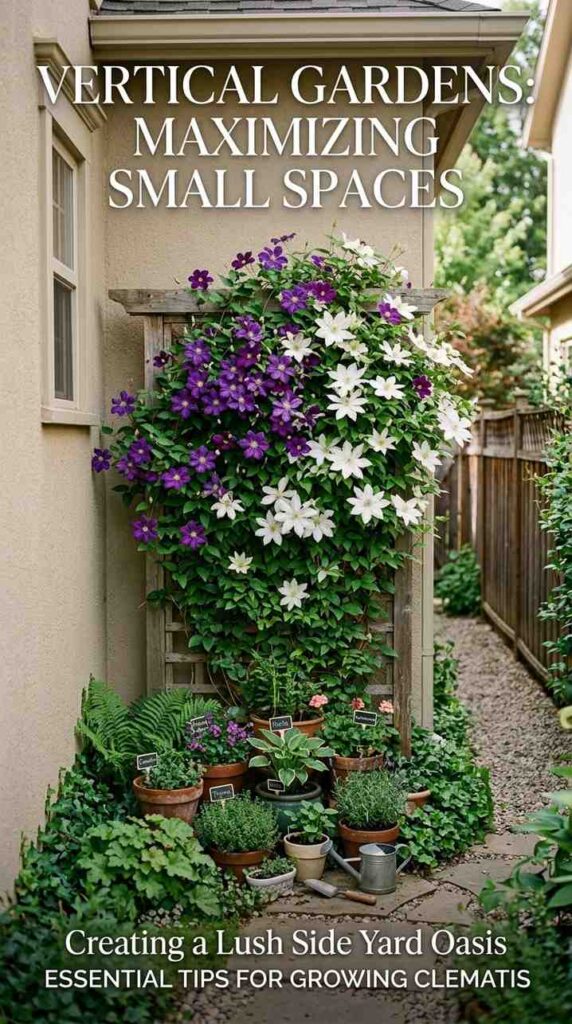
Vertical elements are especially valuable in narrow side yards because they draw the eye upward and create the impression of more space. A simple cedar or metal trellis mounted against a fence or exterior wall provides a structure for climbing plants and adds dimension without consuming precious ground space.
Popular climbing plants for side yard trellises include:
- Climbing hydrangea — slow to establish but stunning once mature; shade-tolerant
- Clematis — fast-growing, available in dozens of colors
- Trumpet vine — vigorous and excellent for attracting hummingbirds
- Wisteria — beautiful but requires a sturdy support and regular pruning
- Star jasmine — fragrant and evergreen in warmer climates
Trellises also serve a privacy function, particularly when planted with dense evergreen climbers that provide year-round screening.
4. Design a Utility Zone That Looks Good
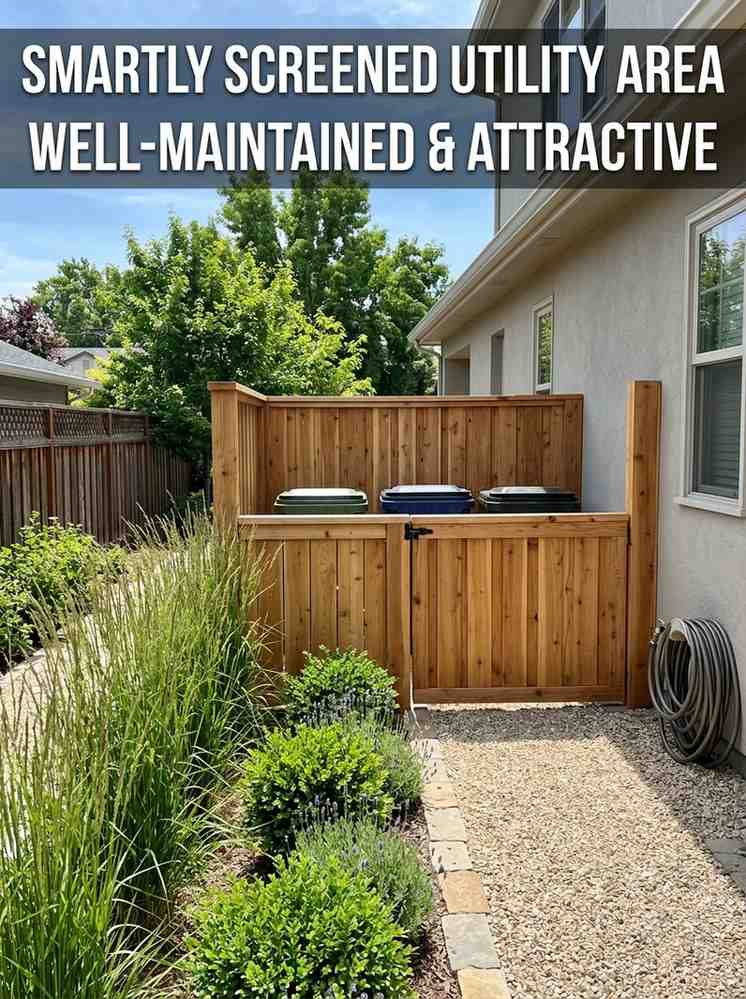
Not every side yard can be a garden showpiece — and that’s perfectly fine. Many homeowners need their side yard to store trash bins, garden equipment, HVAC units, or recycling containers. The key is to organize these functional elements so they don’t become an eyesore.
Consider a custom-built enclosure using cedar or composite fencing panels to screen trash and recycling bins while keeping them accessible for weekly collection. Add a simple gate that latches securely, and plant a row of ornamental grasses or compact shrubs in front of the enclosure to soften its appearance.
If you have an HVAC condenser unit in your side yard, surround it with lattice or slatted fencing that allows adequate airflow. Keep at least 12 to 18 inches of clearance on all sides of the unit as a general guideline, and always follow the manufacturer’s recommendations.
A well-organized side yard utility zone can coexist with attractive plantings and still feel like a thoughtfully designed space rather than a dumping ground.
5. Install Drip Irrigation for Low-Maintenance Gardening
One of the most practical investments you can make in a side yard garden is a drip irrigation system. Because side yards are often harder to reach with a standard garden hose, plants in these areas can be neglected during dry spells. Drip irrigation delivers water directly to the root zone of each plant, reducing evaporation and ensuring consistent moisture even when you’re busy.
Many homeowners connect their side yard irrigation to an existing automated system, programming it to run in the early morning hours when water absorption is most efficient. The upfront cost is modest — most DIY drip systems for a residential side yard cost between $50 and $200 in materials — and the water savings over a growing season can be significant.
6. Create an Outdoor Passageway or Pocket Garden
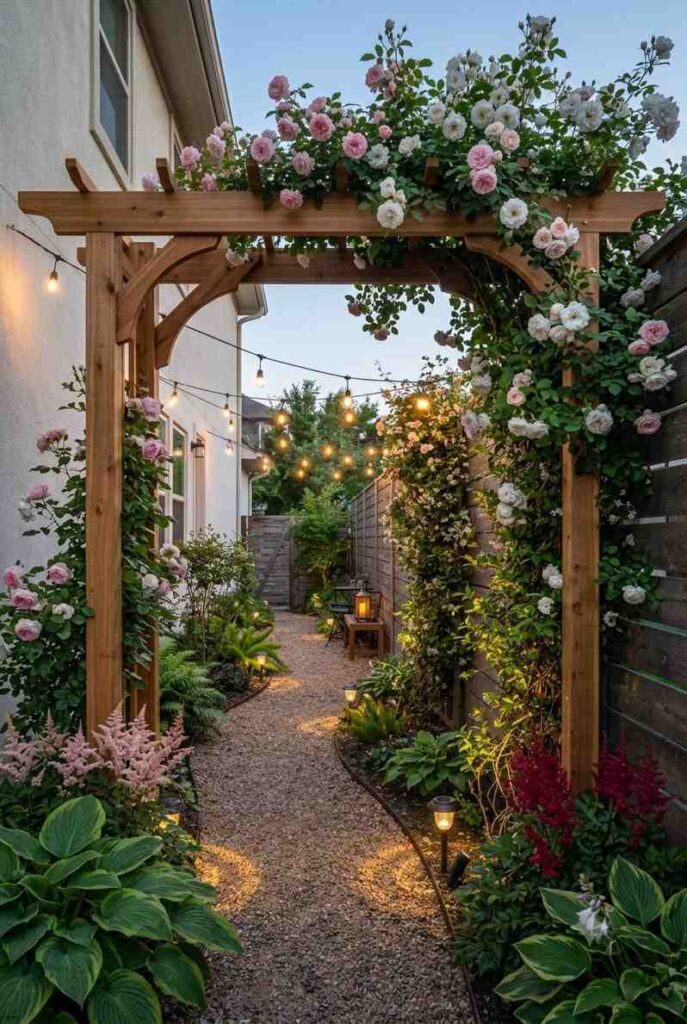
A wider side yard — one that’s 10 feet or more — is large enough to become a destination in its own right rather than just a thoroughfare. A pocket garden or outdoor passageway feels like a secret corner of the property: intimate, lush, and a little removed from the activity of the main yard.
To create this effect, frame the entry with an arbor or pergola, install a meandering path through layered plantings, and add a simple bench or bistro chair at the far end. Overhead string lights or lanterns turn the space into an inviting evening retreat. A small fountain or water feature adds sound that masks street noise and creates a sense of calm.
These details don’t require a large budget. A salvaged arbor, a few bags of gravel, and a selection of shade-tolerant plants can completely transform a narrow side passage into a garden feature guests will remember.
Once your side yard pathway and plantings are in place, furnishing any wider pockets of space with weather-resistant seating, planters, and decorative accents becomes the final step — and the curated outdoor collections at outinteriors offer a range of compact, design-forward pieces that fit comfortably in narrow outdoor spaces without overwhelming them.
7. Use Outdoor Storage Sheds or Custom Cabinetry
For homeowners who need functional storage but want the side yard to remain clean and organized, a narrow outdoor storage shed or a row of weatherproof cabinetry can be a game-changer. Slim-profile sheds — some as narrow as 24 inches deep — are available from major home improvement retailers and can hold garden tools, sports equipment, hoses, and more without overwhelming a narrow space.
Custom-built outdoor cabinetry using cedar, teak, or composite materials offers another option for those who want a more tailored look. Painted or stained to match the home’s exterior, these built-in storage solutions look intentional and cohesive rather than ad hoc.
Landscaping Strategies for Narrow Side Yards
Planting effectively in a narrow space requires a different approach than a typical garden bed. Here are the key strategies professional landscapers use in tight side yard conditions.
Layer Plants by Height
In a side yard, depth is limited, so you need to create visual interest through vertical layering. Plant tall specimens — ornamental grasses, columnar shrubs, or small trees — along the back of the bed, mid-height perennials in the middle, and ground-covering plants at the front edge. This layering technique creates a lush, full appearance even in a narrow strip.
Choose the Right Plants for the Right Place
Avoid plants that spread aggressively or require excessive pruning to stay in bounds. In a narrow side yard, columnar or fastigiate (upright) plant forms are your best friend. Varieties like ‘Sky Pencil’ holly, columnar hornbeam, ‘Emerald Green’ arborvitae, and ‘Bonjour’ boxwood provide structure and height without encroaching on the pathway.
Mulch Generously
A 2-to-3-inch layer of organic mulch — shredded bark, wood chips, or cocoa hull — serves multiple purposes in a side yard garden. It conserves moisture, suppresses weeds, moderates soil temperature, and gives the space a clean, finished appearance. Refresh mulch annually in spring to maintain its effectiveness and appearance.
Use Edging to Define Spaces
Clean edging between the pathway and the planting beds makes a dramatic difference in how neat and intentional a side yard looks. Metal, stone, or brick edging installed along the borders of pathways and beds creates clear visual separation and reduces the amount of maintenance required to keep the lawn or groundcover from encroaching.
The earthy, nature-inspired palette of your side yard — with its layered greens, muted grays, and organic textures — pairs seamlessly with the interior style explored in dreamy moody sage green home decor ideas, making it easy to carry your outdoor design language through your front door and into your living spaces.
Side Yard Fencing: Privacy, Safety, and Style
Fencing is often the first thing people consider for a side yard, and for good reason. A well-chosen fence provides privacy from neighbors, defines property boundaries, keeps children and pets safe, and establishes the visual character of the space.
Cedar, redwood, and composite fencing are the most popular choices for residential side yards in the United States. Cedar and redwood resist rot and insects naturally and can be left to weather to a silvery gray or stained in a color that complements the home’s exterior. Composite fencing requires almost no maintenance and won’t warp, crack, or splinter over time.
For a more open feel, consider horizontal slat fencing with narrow gaps between boards — it provides privacy at eye level while still allowing light and air to circulate. Lattice panels are another option, particularly when combined with climbing plants that fill in over time.
Whatever fencing style you choose, ensure it meets your local height regulations. In most U.S. municipalities, side yard fences are limited to 6 feet in height, though this varies by jurisdiction.
Lighting Your Side Yard for Safety and Ambiance
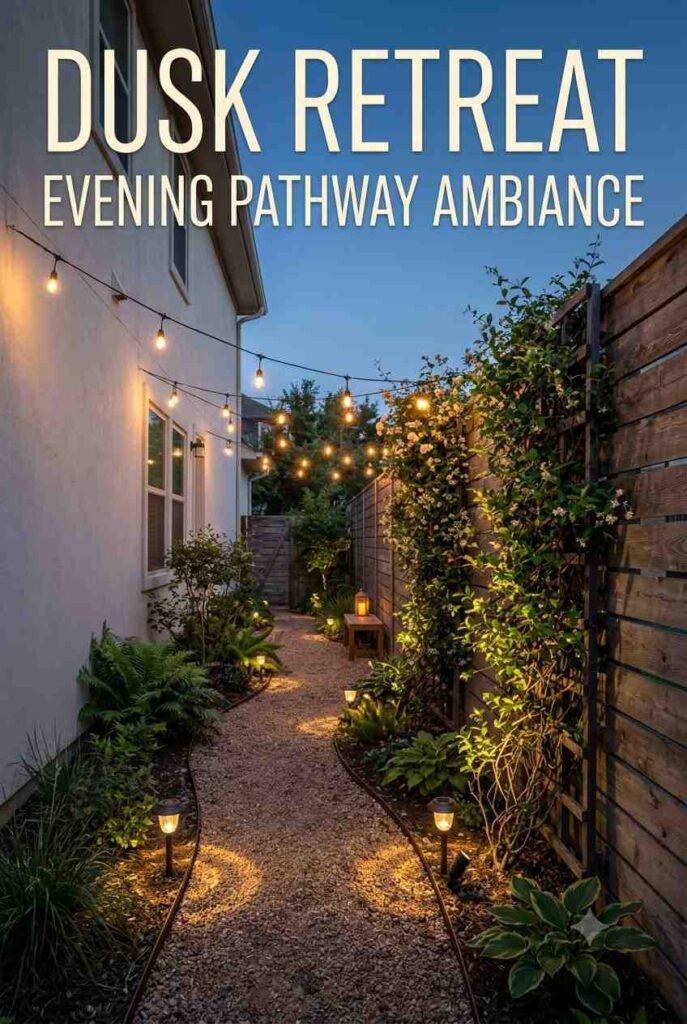
Good lighting transforms a side yard from a dark, uninviting passage into a safe and attractive feature of your property. There are two main categories of side yard lighting to consider: functional safety lighting and ambient accent lighting.
For safety, motion-activated fixtures mounted to the home’s exterior are the most practical choice. They illuminate the path when someone is present and turn off automatically — saving energy and deterring unwanted visitors. Solar-powered path lights along the edges of the walkway provide a low-maintenance, no-wiring option for gentle illumination.
For ambiance, string lights draped overhead between the home and a fence or trellis create a warm glow that makes the side yard feel like an extension of the living space. Uplighting placed at the base of trees or large shrubs adds drama and highlights the best features of your plantings after dark.
If you’re adding lighting along a side yard pathway or creating an outdoor garden display for a community or church event, the creative outdoor lighting concepts found at vbs illumination station decorations can spark ideas for lantern arrangements, string-light configurations, and thematic glow effects that work just as beautifully in a residential garden setting.
Common Side Yard Mistakes to Avoid
Even well-intentioned side yard projects can go wrong. Here are the most common mistakes homeowners make — and how to avoid them.
Planting the wrong-sized trees. A tree that looks small in a nursery pot can become a 40-foot specimen that lifts pavement and shades out everything around it. Always research the mature size of any tree before planting it in a confined side yard space.
Ignoring drainage. Water pooling in a side yard will damage your foundation, kill plants, and create a mosquito breeding ground. Address drainage before investing in landscaping or hardscaping.
Overcrowding plants. It’s tempting to fill a side yard quickly with lots of plants, but overcrowding leads to poor air circulation, disease, and constant maintenance. Give plants room to grow to their natural size.
Forgetting access needs. Your side yard often provides access to utilities, meters, and mechanical systems. Make sure any landscaping or fencing allows workers to access these systems when needed.
Conclusion:
Your side yard may be the last place on your property you’ve thought to improve — but it’s often the first place where a little attention pays big dividends. Whether you transform it into a productive kitchen garden, a serene walkway lined with lush plantings, a tidy utility zone, or a secret pocket garden, the possibilities are genuinely exciting.
Start by assessing your specific conditions: width, light, drainage, and local codes. Then choose a design approach that fits your lifestyle and budget. Even small, incremental improvements — a gravel path here, a trellis there, a string of lights overhead — can turn a neglected strip of land into one of your home’s most distinctive and enjoyable features.
Your side yard is waiting. All it needs is a plan.
Frequently Asked Questions:
Q1: What is a side yard, and how is it different from a backyard or front yard?
A side yard is the strip of land that runs along the side of a house, between the home’s exterior wall and the property boundary or fence line. Unlike a backyard, which tends to be wider and more private, or a front yard, which faces the street, a side yard is typically narrow and serves as a passage between the front and back of the property. It’s often overlooked in landscaping plans but offers real potential for functional and aesthetic improvements.
Q2: What can I do with a very narrow side yard — less than 5 feet wide?
Even in a side yard that’s only 4 to 5 feet wide, you can install a clean gravel or stepping-stone pathway, add wall-mounted planters or a simple trellis with climbing plants, use solar path lights for safety and ambiance, and hang a small potted herb garden off a fence or wall. The key is to keep things vertical and uncluttered, making the most of the limited ground space without blocking access or airflow.
Q3: What plants grow best in a shaded side yard?
Shade-tolerant plants that perform well in side yards with limited sunlight include hostas, astilbe, Japanese ferns, bleeding heart, impatiens, and coral bells (Heuchera). For shrubs, consider mountain laurel, oakleaf hydrangea, or leucothoe. Climbing plants like climbing hydrangea or Virginia creeper can also thrive in shaded conditions and add vertical interest to a north-facing side yard.
Q4: Do I need a permit to fence my side yard?
In most U.S. cities and counties, you do not need a permit for a standard residential fence under 6 feet tall. However, requirements vary significantly by municipality, and some areas require permits for any fence, regardless of height. You may also need to check for utility easements on your property before installing a fence. Always verify with your local planning or building department before starting any fencing project.
Q5: How do I improve drainage in a side yard that floods after rain?
The most effective solutions for a waterlogged side yard include installing a French drain (a perforated pipe surrounded by gravel that channels water away from the problem area), creating a dry creek bed that carries runoff toward a lower point on the property, or planting a rain garden filled with moisture-tolerant native plants that can absorb excess water. In some cases, re-grading the soil to encourage water to flow away from the house foundation is also necessary.
Q6: Can I use my side yard for food gardening?
Absolutely. Many homeowners successfully grow vegetables and herbs in side yard raised beds, particularly in sunny south- or west-facing side yards. Tomatoes, cucumbers, beans, lettuce, kale, and most culinary herbs perform well in side yard conditions. Choose compact or vining varieties that can be trained vertically to maximize limited space. Just make sure to check local regulations, as some municipalities have rules about edible gardens in front and side yards.
Q7: How much does it cost to landscape a side yard?
Costs vary widely depending on the scope of work and materials chosen. A basic side yard makeover — gravel pathway, simple plantings, and a few path lights — can be completed for $500 to $1,500 as a DIY project. Professional landscaping with pavers, raised beds, irrigation, and custom fencing typically runs $3,000 to $10,000 or more, depending on the size of the space and the complexity of the design. Getting multiple quotes from licensed landscapers in your area is always a good first step.