Farmhouse Style: A Complete Guide to Creating a Warm, Timeless Home
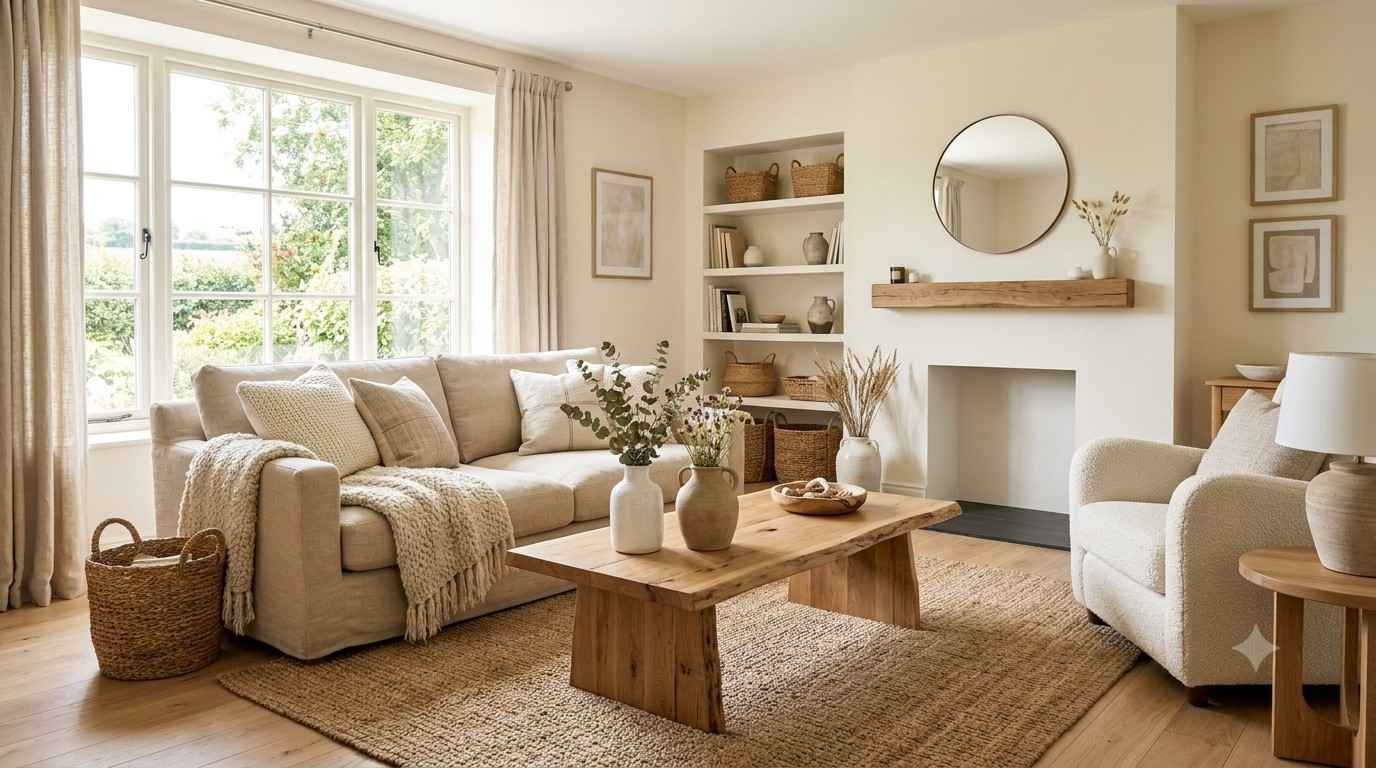
Farmhouse style has a way of making a home feel settled before the furniture is even perfect. It is not about copying a country house or filling every wall with rustic signs. At its best, it is a practical, welcoming approach to design that values comfort, natural materials, honest textures, and rooms that can handle real daily life.
The charm comes from balance. A weathered dining table can sit under a clean-lined pendant. A white kitchen can feel warmer with wood shelves, woven baskets, and soft linen curtains. A modern sofa can work beautifully beside an antique chest. The goal is not to make a room look old. The goal is to make it feel lived in, useful, calm, and personal.
What Is Farmhouse Style?
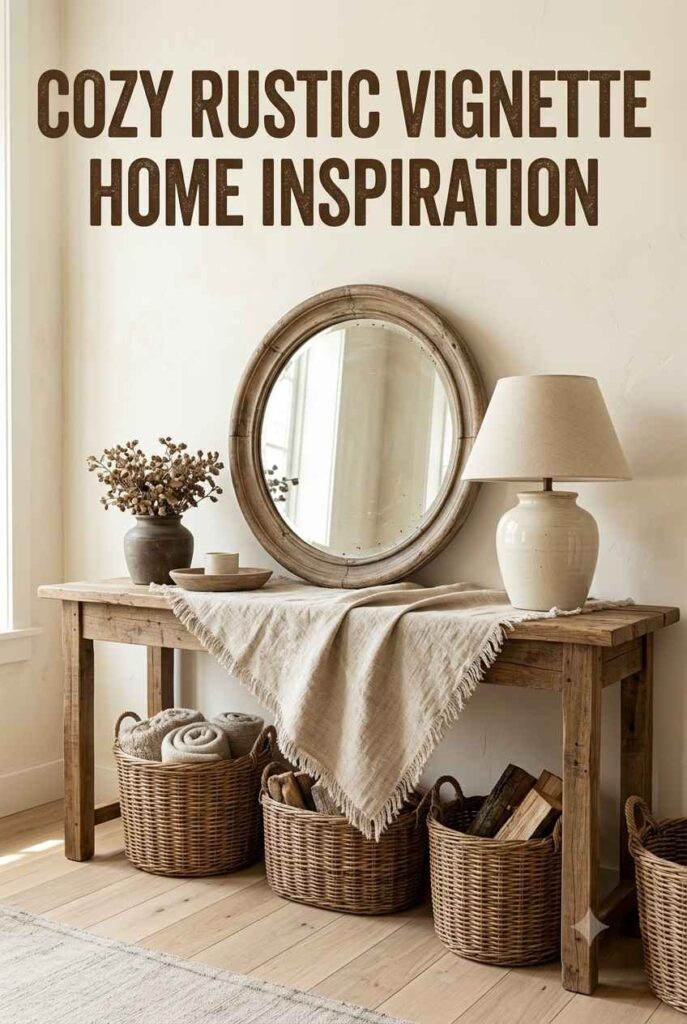
Farmhouse style is a home design approach inspired by traditional rural houses built for comfort, durability, and everyday function. Original farm homes were not designed around trends. They used available materials such as wood, stone, brick, cotton, linen, iron, and simple plaster because those materials were practical, repairable, and familiar.
Today, the look has moved far beyond the countryside. It appears in suburban homes, city apartments, new builds, cottages, and family houses because its core ideas are flexible. You do not need a wraparound porch or a barn door to create the feeling. You need warmth, simplicity, texture, and a clear sense that each piece belongs to the life being lived inside the home.
The most successful farmhouse-style interiors feel collected over time. They mix new and old pieces, avoid clutter, and use natural finishes to soften modern rooms. Instead of chasing perfection, they create comfort through layers: a wool rug, a sturdy table, a ceramic lamp, a simple bench, a worn wood frame, or a quilt folded at the end of a bed.
The Roots of Farmhouse Style
The look is tied to rural homes that served working families. In the 16th and 17th centuries, European farmhouses influenced later rural architecture, while American farm homes developed in response to climate, land, family size, and available building materials. These homes were built to work hard. Kitchens were large because food preparation was central. Porches offered shade, rest, and a transition between indoors and outdoors.
Older farmhouses were often simple in shape. Many had pitched roofs, symmetrical fronts, wide plank floors, practical storage, and rooms arranged around daily chores. Details were not overly decorative. Beauty came from proportion, light, useful craftsmanship, and materials that gained character with age.
Modern homes borrow from that history without needing to recreate it exactly. A farmhouse-inspired room can include a vintage cabinet, a black metal sconce, a natural wood island, and smooth white walls. The key is restraint. A few authentic details feel stronger than a room filled with themed objects.
Classic vs Modern Farmhouse Style
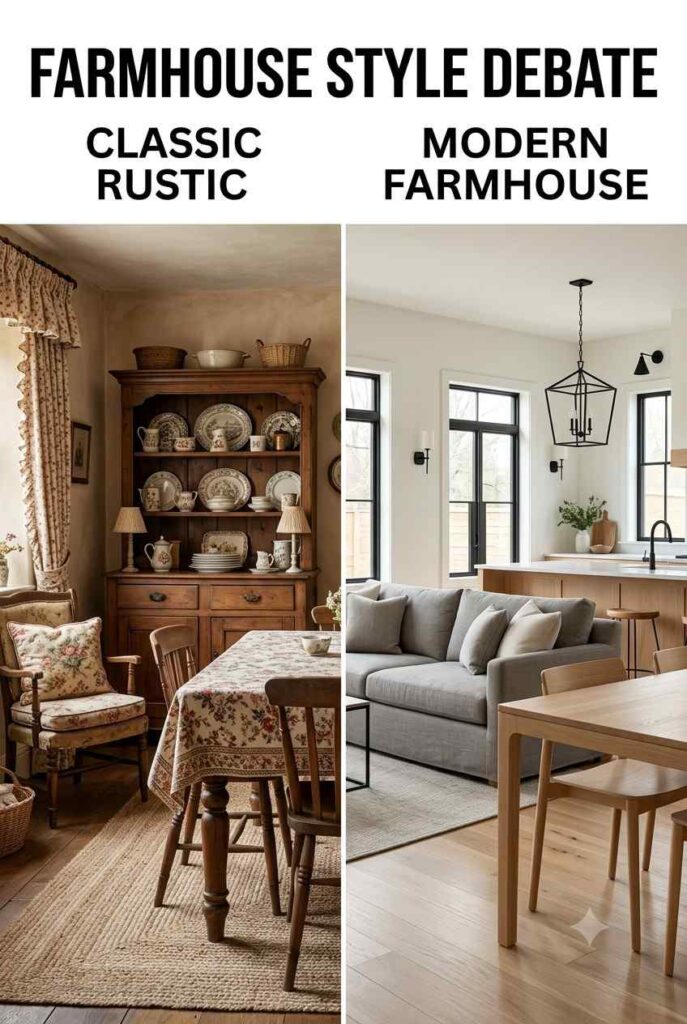
Classic farmhouse style leans more rustic, traditional, and layered. It may include painted furniture, skirted sinks, gingham, floral prints, antique hutches, handmade quilts, iron beds, and deeper colors such as navy, forest green, burgundy, or warm brown. It feels close to country living and often carries a nostalgic mood.
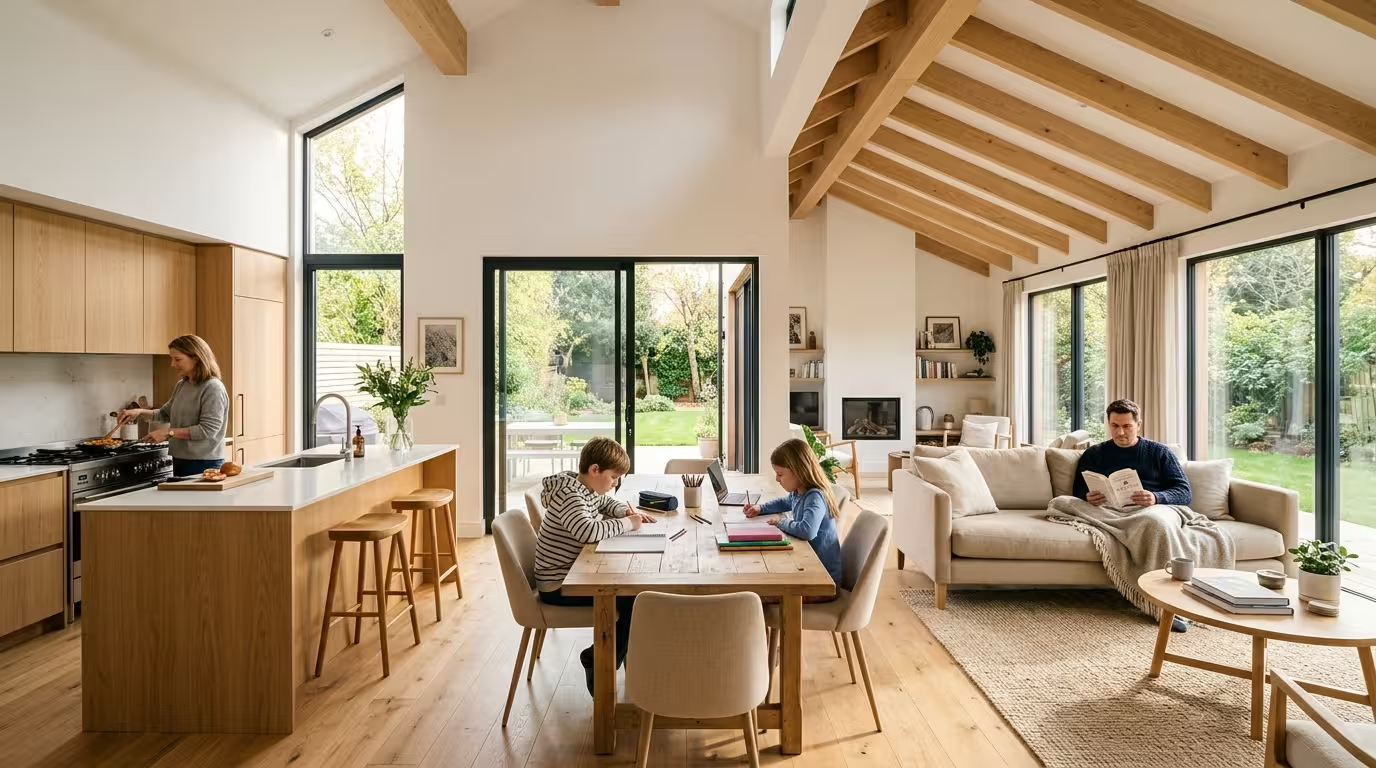
Modern farmhouse style is cleaner and more edited. It still uses natural wood, vintage touches, and soft textures, but it pairs them with open layouts, simple lines, neutral walls, black window frames, matte metal fixtures, and less ornament. It often feels brighter, lighter, and more minimal than classic country design.
A balanced home can use both. For example, a kitchen may have flat-panel cabinets and quartz counters but gain warmth from a reclaimed beam, aged brass hardware, and woven counter stools. A bedroom may feature crisp white bedding, an antique side table, and a soft patterned rug. The best version is not strictly old or new. It is comfortable, useful, and visually calm.
A narrow side yard can become a charming farmhouse walkway with gravel, planters, lantern lighting, and simple wooden edging.
Core Elements That Define the Look
A farmhouse-inspired home usually begins with natural materials. Wood is the most important. It may appear as flooring, ceiling beams, furniture, shelving, picture frames, or accent walls. The finish can be raw, stained, painted, limewashed, or lightly distressed, but it should still feel natural rather than artificial.
Texture comes next. Linen, cotton, wool, jute, rattan, wicker, stoneware, brick, plaster, and aged metal all add depth. These materials stop neutral rooms from feeling flat. A white room with smooth furniture can feel cold. The same room with a woven rug, linen curtains, a wood coffee table, and a ceramic vase feels grounded.
Useful furniture is another key feature. Farmhouse rooms favor pieces that look ready for everyday life: wide dining tables, deep sofas, benches, open shelving, storage baskets, slipcovered chairs, and cabinets with visible grain. The furniture should invite use, not feel too precious.
Farmhouse Style Color Palette
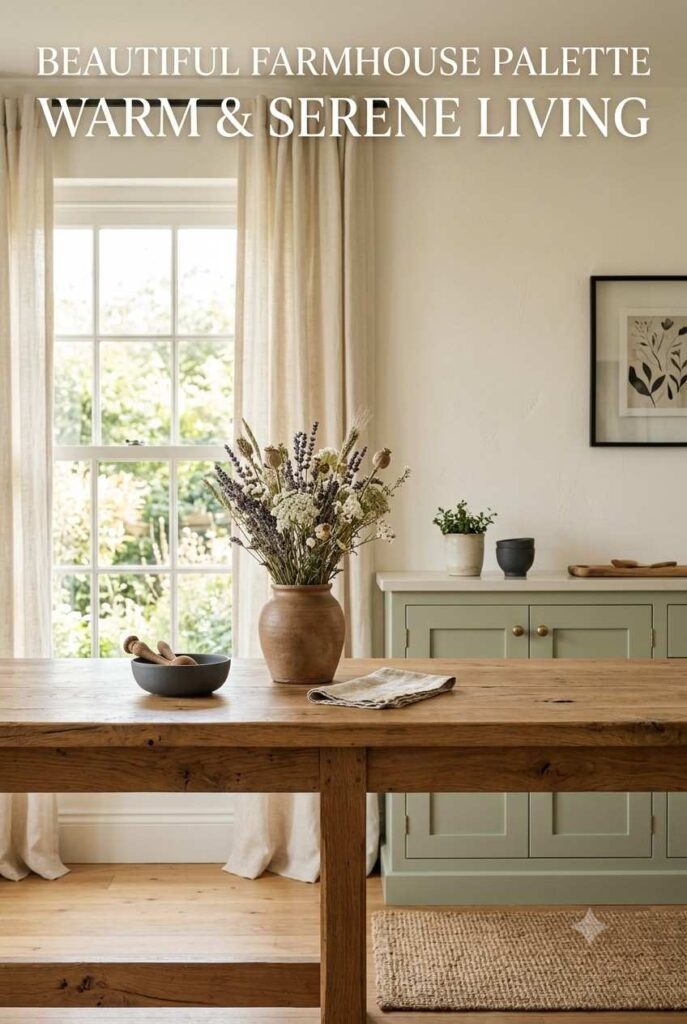
The color palette usually starts with soft neutrals. Warm white, cream, ivory, greige, taupe, oatmeal, mushroom, soft gray, and natural wood tones make a room feel open and relaxed. These colors work because they create a quiet background for texture, furniture, and meaningful objects.
Accent colors should feel pulled from nature. Sage green, dusty blue, clay, charcoal, muted black, warm brown, faded denim, soft terracotta, and deep olive all pair well with rustic home decor. These shades add personality without overpowering the room.
A common mistake is using only bright white and black. That contrast can look sharp in photos, but in real homes it may feel cold. Add warmth through wood, woven fibers, aged brass, creamy textiles, or soft brown leather. The goal is not a blank room. It is a calm room with depth.
Room-by-Room Farmhouse Style Ideas
Kitchen
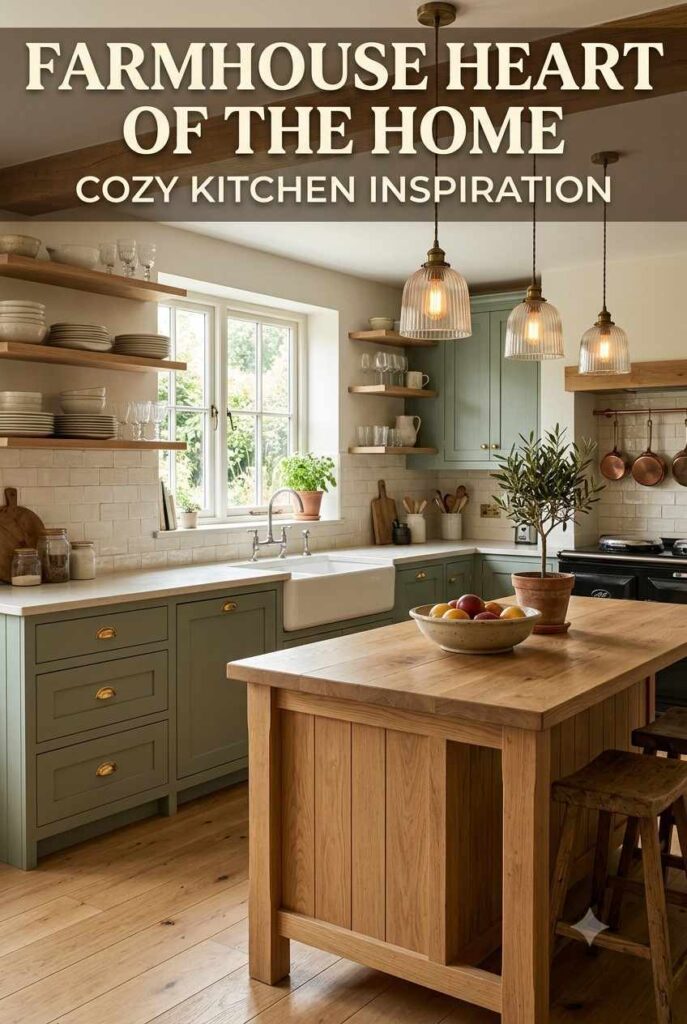
The kitchen is often the heart of this look. A strong farmhouse kitchen feels hardworking, open, and welcoming. Apron-front sinks, wood islands, shaker cabinets, open shelves, stone counters, pendant lights, and simple hardware all fit naturally. You can also use beadboard, vertical paneling, brick, or handmade-look tile for quiet texture.
Avoid filling every shelf with decorative objects. Open shelving works best when it holds items you actually use: plates, bowls, glass jars, mugs, cookbooks, cutting boards, or small baskets. A kitchen should feel alive, not staged. Even one vintage stool, aged runner, or wooden bowl can bring more character than several themed signs.
Living Room
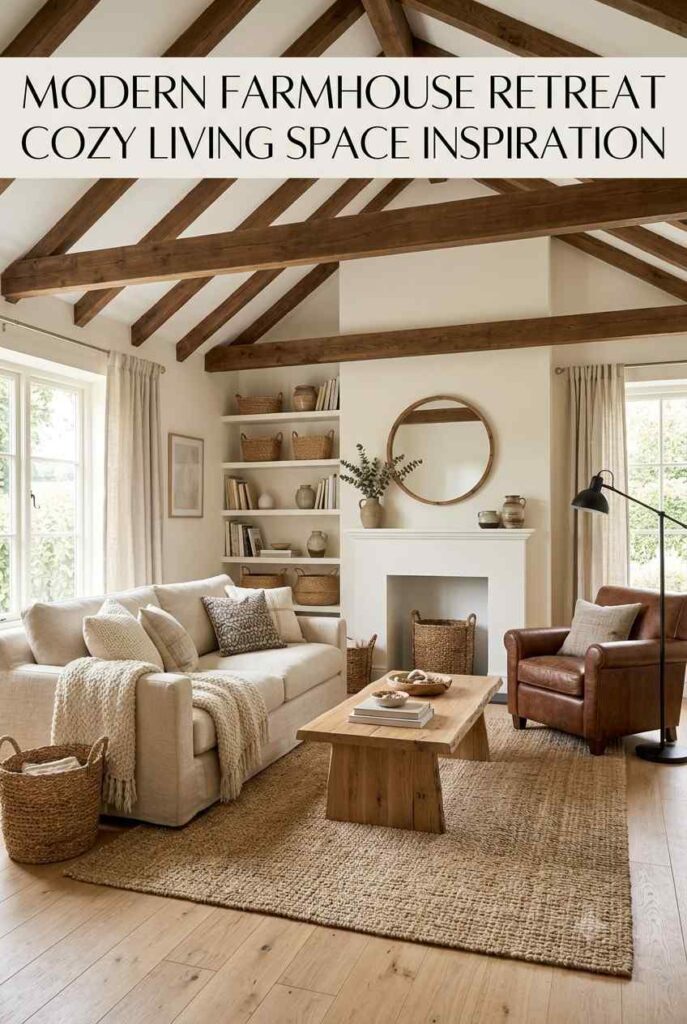
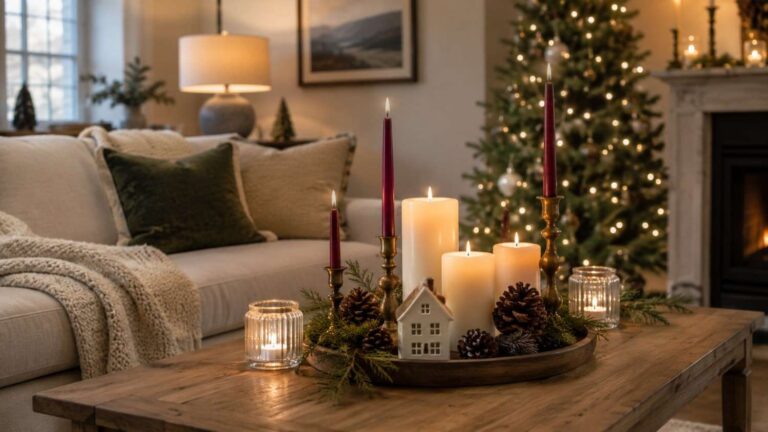
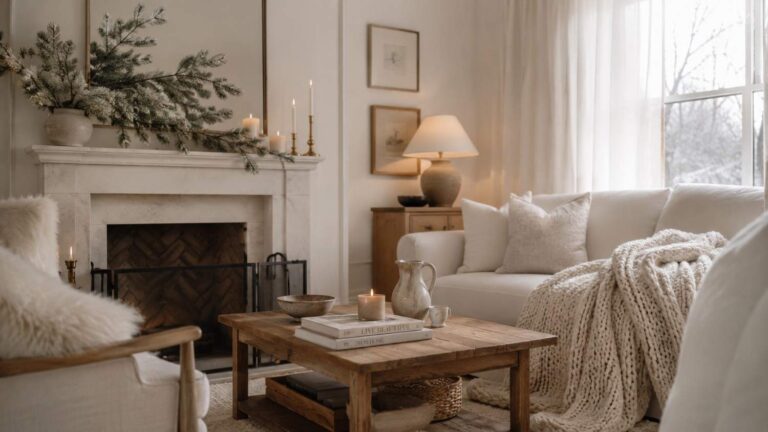
A farmhouse-style living room should feel easy to settle into. Start with comfortable seating, then build warmth through layered materials. A slipcovered sofa, leather chair, wood coffee table, wool rug, woven basket, and linen curtains can create a relaxed foundation. Add lamps with warm bulbs instead of relying only on overhead lighting.
The room should include contrast, but not harshness. Pair smooth walls with rougher wood. Pair a modern sofa with an old trunk. Pair a simple fireplace mantel with pottery, books, framed art, or greenery. The best living rooms tell a quiet story about the people who live there.
For softer windows, these living room curtain ideas pair beautifully with linen panels, woven shades, and warm neutral walls.
Dining Room
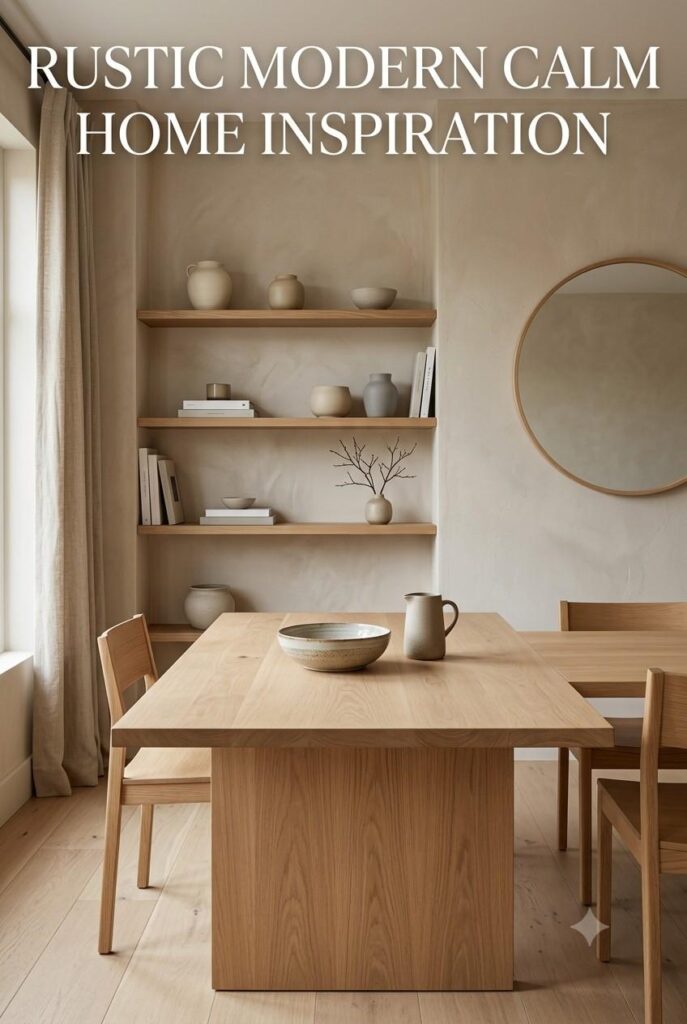
A dining room is one of the easiest places to bring in farmhouse style because the table naturally becomes the centerpiece. A long wooden table, mixed chairs, bench seating, a linen runner, and a simple chandelier can create the right mood without much else.
Keep the room practical. Choose chairs that are comfortable enough for long meals. Use a rug only if it can handle crumbs and movement. Add a cabinet, hutch, or sideboard for dishes, candles, and table linens. A few imperfect details, such as hand-thrown bowls or vintage candlesticks, make the room feel more personal.
Bedroom
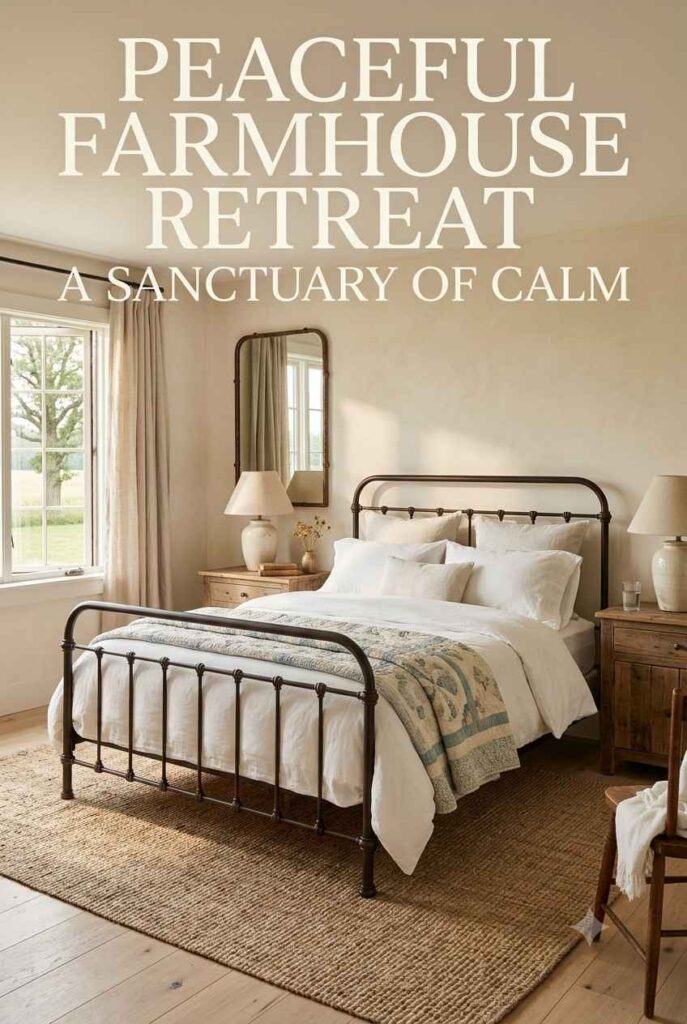
A farmhouse bedroom should be restful rather than overly decorated. Use soft bedding, layered quilts, cotton sheets, linen pillow covers, and warm lighting. Wood nightstands, an iron bed, a painted dresser, or a woven bench can add quiet character.
The palette can stay light, but it should not feel empty. Add depth with a textured rug, framed landscape art, a ceramic lamp, or curtains in a natural fabric. If you like patterns, choose ticking stripes, small florals, block prints, or subtle checks. The result should feel calm, not busy.
Bathroom
In a bathroom, small material choices make a big difference. Consider beadboard, board-and-batten, vintage-inspired mirrors, aged brass or matte black fixtures, stone counters, simple sconces, and woven storage. A wood stool beside the tub or a small cabinet with visible grain can warm up tile and porcelain.
Keep the bathroom clean and uncluttered. Too many decorative pieces can make a small room feel crowded. Use closed storage for daily items and reserve open surfaces for soap, towels, a plant, or one simple tray.
Entryway and Mudroom
Farmhouse homes are practical, so entry areas matter. A bench, wall hooks, baskets, shoe storage, and a washable runner can turn a busy doorway into a useful drop zone. This is where beauty and function should work together.
Choose materials that can take wear. Wood benches, metal hooks, woven baskets, and durable rugs all make sense. If you have children, pets, or frequent guests, this room should be designed around movement. A beautiful entryway that cannot handle bags, coats, and shoes will not stay beautiful for long.
Exterior Features That Support the Look
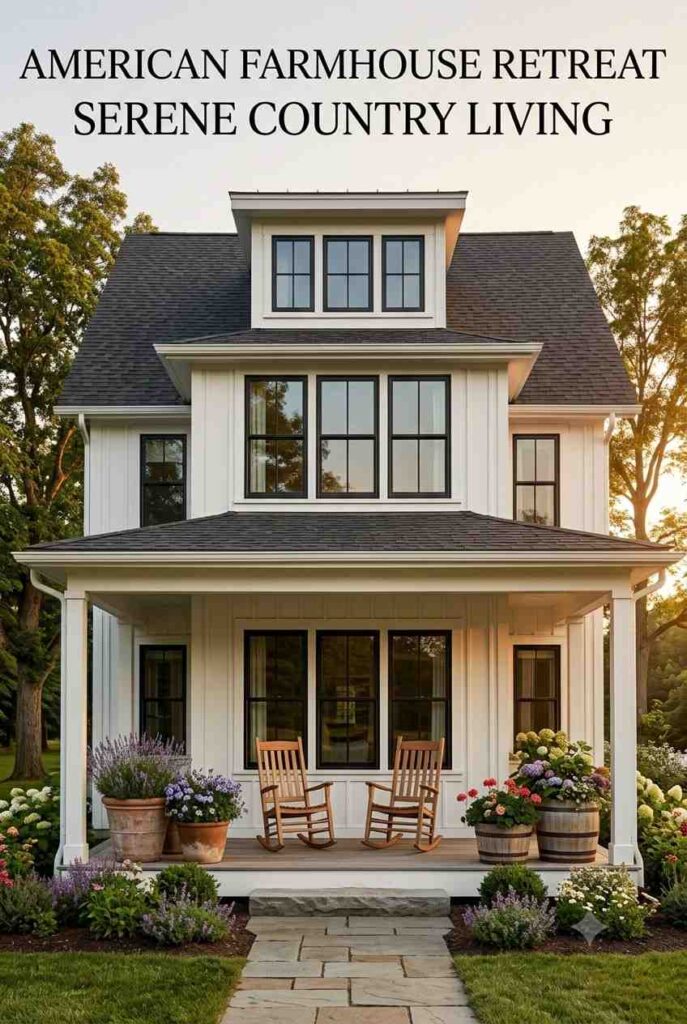
A home’s exterior can carry the same warmth as the interior. Common features include covered porches, gable roofs, board-and-batten siding, vertical lines, large windows, black or bronze lighting, simple landscaping, and natural wood accents. These details create a welcoming first impression without needing heavy decoration.
For a newer home, small updates can still help. Replace overly ornate lights with simple lantern-style fixtures. Add planters with herbs or seasonal greenery. Paint the front door in a soft black, sage, warm gray, or deep blue. Use wood or metal house numbers with clean lines. The exterior should feel fresh, grounded, and easy to maintain.
How to Bring the Look Into a Small Home
Small spaces need editing. Instead of using many rustic pieces, choose a few with purpose. A small apartment can still carry farmhouse warmth through a natural wood table, woven shades, linen curtains, soft neutral walls, and handmade ceramics. The style works best when the room can breathe.
Use storage that doubles as decor. Baskets under benches, wall hooks, lidded boxes, and slim cabinets keep clutter under control. Choose furniture with simple shapes and avoid oversized pieces that block movement. A small room can feel cozy, but it should not feel crowded.
Mirrors, lighter wall colors, and visible floor space help open the room. If you want darker wood, use it in smaller accents rather than every major piece. The goal is warmth with balance.
Choosing Furniture That Feels Authentic
Good farmhouse furniture looks sturdy, comfortable, and useful. It does not have to be expensive, but it should feel honest. Solid wood, painted finishes, cane, rattan, linen upholstery, and metal accents all work well. Look for pieces with simple shapes instead of overly carved or glossy furniture.
Mixing eras makes a room more natural. A new sofa can sit beside a vintage side table. A modern dining chair can work with an old farmhouse table. A painted cabinet can soften a clean-lined kitchen. This mix keeps the space from looking like a showroom.
Avoid buying every piece from one matching collection. Real homes develop over time. A little variation in wood tone, finish, age, and texture makes the room more believable.
Patterns, Textiles, and Soft Details
Textiles are where comfort comes in. Cotton, linen, wool, ticking stripes, gingham, small florals, quilts, chambray, faded denim, and woven throws all fit the mood. These details help soften wood, metal, and stone.
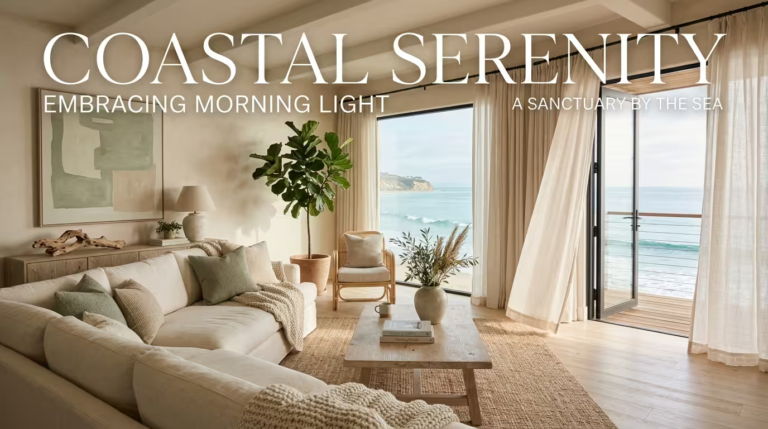
Window treatments should feel relaxed. Linen panels, cotton curtains, woven shades, and simple Roman shades are strong choices. Heavy shiny drapes usually feel too formal. Bare windows can work in bright modern rooms, but fabric often adds needed warmth.
Layering matters. A jute rug under a wool rug, a quilt over white bedding, or a linen pillow against a leather chair can make the room feel finished. Keep the palette connected so the layers feel calm rather than chaotic.
Lighting for Warmth and Character
Lighting can make or break the mood. Farmhouse rooms benefit from warm, layered light. Use table lamps, floor lamps, sconces, pendants, and chandeliers instead of relying on one ceiling fixture. Warm bulbs help natural materials look richer and make evening rooms feel inviting.
Fixture finishes can include aged brass, matte black, bronze, iron, wood, milk glass, or simple ceramic. Industrial-style lights can work, but use them carefully. Too much black metal can make the room feel heavy.
A dining room chandelier, kitchen pendants, and bedside sconces are good places to add character. Choose shapes that feel simple and useful, not overly ornate.
Visit outinteriors for more practical home styling guides, outdoor inspiration, and room-by-room decorating ideas.
Common Mistakes That Make Farmhouse Style Feel Forced
The first mistake is overusing signs, slogans, and themed wall decor. A few personal pieces are fine, but too many words on the walls can make the home feel less authentic. Choose art, family photos, landscapes, mirrors, baskets, or vintage objects instead.
The second mistake is distressing everything. Not every piece needs chipped paint or weathered wood. A room feels stronger when rough textures are balanced with clean surfaces. Pair a rustic table with simple chairs, or a modern sofa with an antique chest.
The third mistake is ignoring comfort. A beautiful bench that no one wants to sit on is not useful. Thin rugs, poor lighting, and stiff seating weaken the feeling of welcome. Comfort is not a bonus in this style. It is the point.
How to Keep the Look Fresh Today
Farmhouse style feels most current when it is cleaner, warmer, and more personal. Instead of bright white everywhere, use layered neutrals. Instead of heavy rustic furniture in every room, mix in lighter silhouettes. Instead of copying one popular version, adjust the look to your climate, architecture, and daily routine.
Add handmade and vintage items slowly. A ceramic pitcher from a local maker, an old framed print, a woven basket, or a repaired wood chair can carry more charm than mass-produced decor. Let the home build character through use.
Modern touches also help. Streamlined lighting, simple tile, clean cabinetry, and uncluttered surfaces keep the look from feeling dated. The best rooms feel connected to the past but ready for modern life.
Budget-Friendly Ways to Start
You do not need a full renovation. Start with paint, textiles, lighting, and small furniture changes. A warmer wall color, linen curtains, woven baskets, wood frames, and a better table lamp can shift the mood quickly.
Secondhand furniture is especially useful. Look for solid wood dressers, side tables, hutches, benches, and dining chairs. A simple coat of paint, new hardware, or light sanding can make an old piece feel fresh. Choose quality over quantity.
Focus on rooms where you spend the most time. A cozy living room, welcoming kitchen, or peaceful bedroom will matter more than decorating every corner at once. Build slowly and choose pieces that feel right beyond one season.
Conclusion:
Farmhouse style endures because it is rooted in comfort, usefulness, and natural beauty. It does not ask a home to be perfect. It asks a home to be warm, practical, and connected to the people who live there. That is why the look can work in a country house, a suburban new build, or a small apartment.
The strongest version is not crowded with trends. It uses real materials, soft colors, good lighting, comfortable furniture, and personal details. When old and new pieces are balanced with care, the result feels timeless instead of themed. A home shaped this way does more than look inviting. It feels easy to live in.
Frequently Asked Questions:
Is farmhouse style still popular?
Yes, farmhouse style is still popular because it continues to adapt. The newer approach is less cluttered, less themed, and more focused on natural materials, warm neutrals, useful furniture, and personal details. It works best when it feels collected rather than copied.
What colors work best with farmhouse style?
Warm white, cream, greige, taupe, soft gray, sage green, dusty blue, charcoal, warm brown, and muted black all work well. Natural wood tones are also important because they keep neutral rooms from feeling cold.
What is the difference between rustic and modern farmhouse design?
Rustic design usually feels rougher, older, and more traditional. Modern farmhouse design keeps some rustic warmth but adds cleaner lines, brighter spaces, simpler decor, and updated finishes. It is more edited and often easier to use in newer homes.
Can this look work in an apartment?
Yes. Use a few key elements instead of large architectural features. Natural wood, linen curtains, woven baskets, soft lighting, vintage accents, and warm neutral colors can create the feeling without needing a porch, beams, or shiplap walls.
What should I avoid when decorating?
Avoid too many signs, overly distressed furniture, matching sets, cold white-and-black-only palettes, and decor that has no practical or personal purpose. A few authentic pieces usually look better than a room full of themed accessories.
What materials are best for this design?
Wood, linen, cotton, wool, jute, rattan, wicker, brick, stone, plaster, iron, aged brass, ceramic, and natural leather are strong choices. These materials add texture and help the home feel warm and grounded.
How can I make a farmhouse room feel more elegant?
Use fewer decorative items, choose better lighting, mix vintage pieces with clean-lined furniture, and keep the color palette soft. Add texture through fabric, wood, and handmade ceramics rather than clutter.