Capiz Shell Decor: A Complete Guide to Styling, Buying, and Caring for Natural Shell Accents
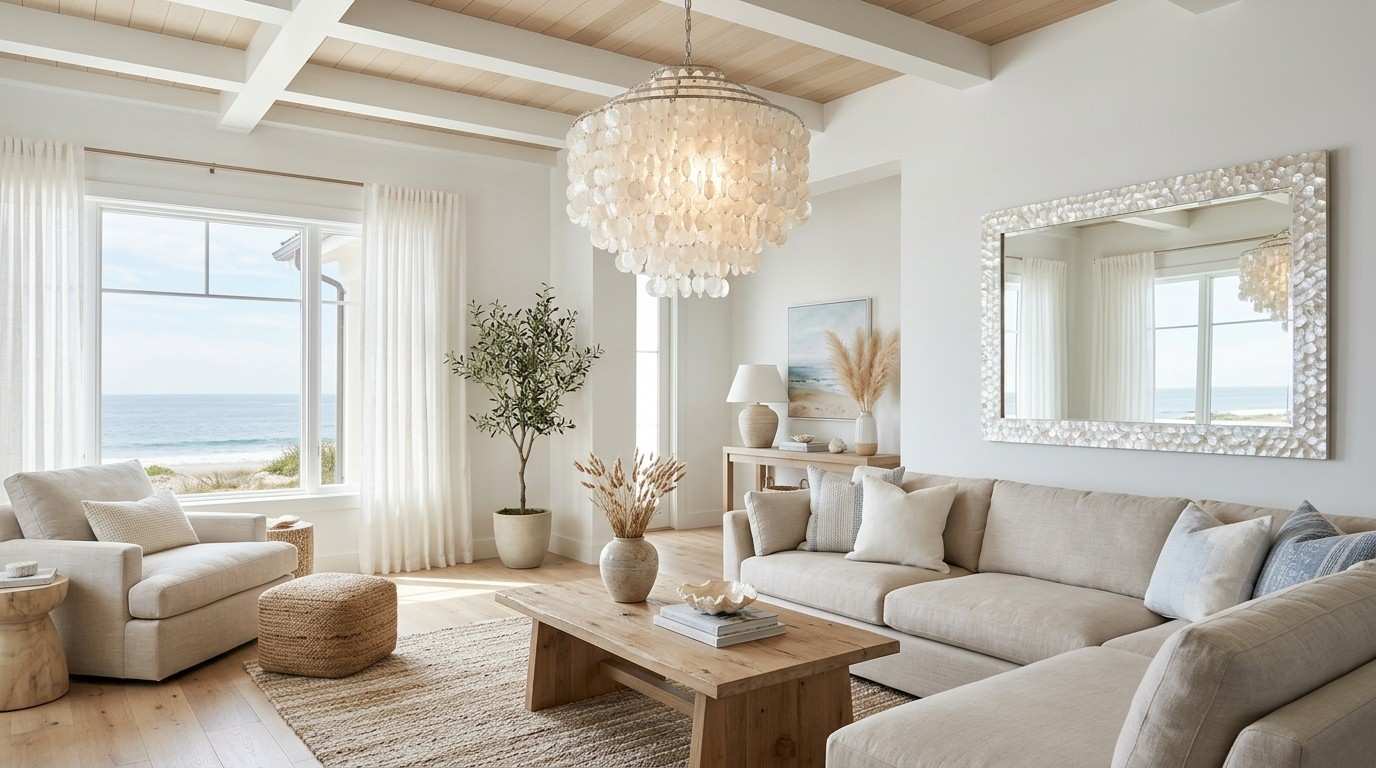
There is a reason capiz shell decor keeps appearing in calm living rooms, breezy bedrooms, coastal bathrooms, and elegant dining spaces. It catches light softly without feeling flashy. It adds texture without making a room look busy. It brings a gentle ocean-inspired feeling, yet it can still work in modern, classic, boho, and transitional homes. That balance is what makes it so useful.
If you have ever seen a pearly chandelier glowing above a dining table or a shell-framed mirror brightening a hallway, you have already seen the quiet charm of capiz shell decor. This guide explains what it is, why it works, where to use it, how to choose quality pieces, and how to care for them so they stay beautiful for years.
What Makes Capiz Shell Decor Special?
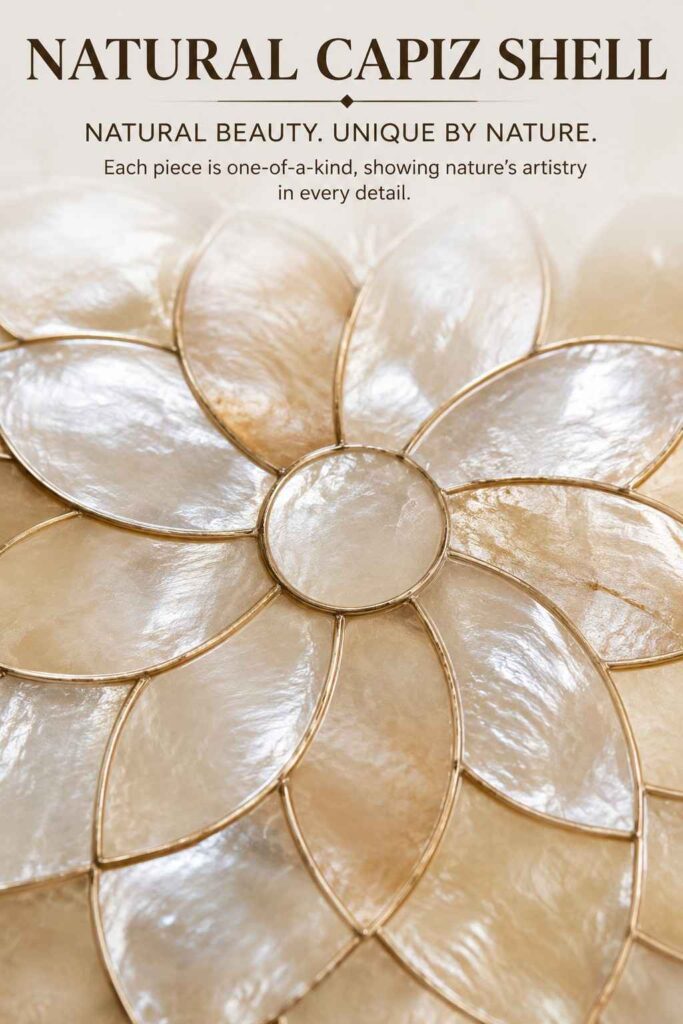
Capiz shell decor is made from thin, translucent shells that come from the windowpane oyster, a marine bivalve known for its light-passing quality. The shell has a soft pearl-like shine, usually in white, cream, ivory, champagne, or pale gold tones. When light touches it, the surface reflects a gentle glow rather than a sharp sparkle.
That glow is the main reason people love it. Glass can feel cold, metal can feel heavy, and plastic can look flat. Capiz has a natural warmth because each shell has small differences in shade, texture, and pattern. These variations make every piece feel slightly handmade, even when the overall design looks polished and refined.
Another reason capiz shell decor feels special is its weight. It often looks delicate and luxurious, but many shell accents are lighter than stone, solid glass, or heavy ceramic pieces. This makes it useful for wall art, lampshades, chandeliers, mobiles, mirrors, boxes, trays, and decorative panels.
A Short Origin Story Behind Capiz Shells
Capiz shells are closely linked with the Philippines, especially the province of Capiz, where the shell became known for craft and decorative use. Long before it became popular in modern interiors, the translucent shell was used as a practical material in traditional windows. It allowed light to pass through while offering privacy and protection.
That history gives capiz shell decor more depth than a simple home accessory. It is not just a pretty surface. It comes from a material with cultural, architectural, and craft value. In older homes, shell windowpanes softened harsh sunlight and created a warm indoor glow. Today, designers use the same luminous quality in lighting, wall accents, mirrors, and furniture details.
This connection between function and beauty is part of its lasting appeal. A capiz piece can feel both natural and refined. It carries a sense of craft, but it also suits polished homes where the owner wants something elegant without being loud.
Why Capiz Shell Decor Works in Modern Homes
Capiz shell decor works because it solves a common design problem: many rooms need brightness and texture, but not more color or clutter. A capiz pendant, tray, mirror, or wall panel can lift a room visually while keeping the palette soft and peaceful.
In a neutral room, capiz adds movement. In a colorful room, it provides balance. In a small room, it reflects light and helps the space feel more open. In a large room, it brings softness to hard surfaces like wood floors, stone counters, and metal fixtures.
It also bridges several styles. In coastal interiors, it feels natural and breezy. In modern rooms, it adds organic contrast. In glam interiors, it gives shine without looking overly formal. In boho spaces, it brings a handmade look. In traditional homes, it works as a subtle accent beside wood, linen, brass, and classic artwork.
Best Places to Use Capiz Shell Decor in the Home
The best place for capiz depends on light, moisture, traffic, and the mood you want. Since the material is naturally delicate, it performs best where it can be seen, touched lightly, and protected from rough use. It should not be treated like outdoor stone, heavy metal, or washable plastic.
A good rule is simple: place capiz where you want glow, texture, and softness. Avoid locations where it will face constant water, strong impact, greasy buildup, or children’s rough handling. With thoughtful placement, the material can turn ordinary corners into graceful focal points.
Living Room
The living room is one of the easiest places to use capiz shell decor because it offers many styling options. A round shell mirror above a console can brighten a dark wall. A framed shell panel can add texture behind a sofa. A capiz table lamp can make evening light feel warmer and softer.
For a balanced look, use one strong capiz feature instead of many small pieces scattered everywhere. For example, choose a shell wall sculpture and keep nearby accessories simple. Pair it with linen cushions, a jute rug, warm wood, and a few ceramic pieces. This keeps the room layered but not crowded.
Bedroom
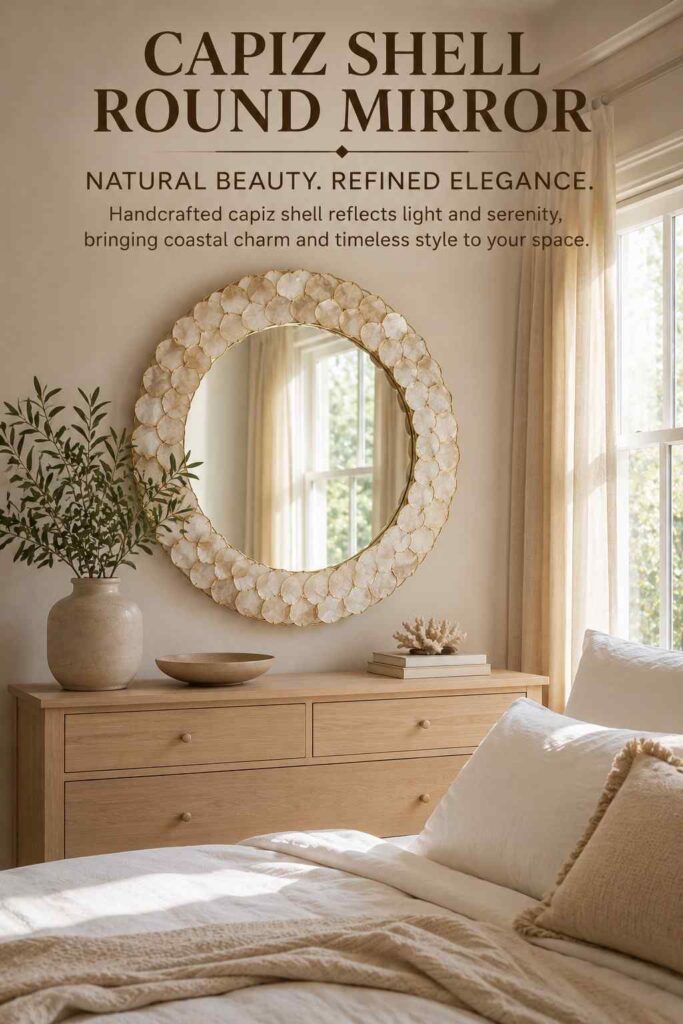
In a bedroom, capiz works best when the goal is calm. A capiz pendant light, bedside lamp, mirror, or small decorative box can bring a soft glow without disturbing the restful mood. White and champagne shells look especially good with cotton bedding, rattan, pale wood, and warm neutral paint.
Avoid placing fragile shell items where they may be knocked over during daily use. A tray on a dresser is fine if it holds light items like perfume bottles or jewelry. A shell-framed mirror can also work beautifully above a vanity, as long as it is mounted securely and cleaned gently. For a soft, nostalgic room, pair a capiz lamp with gingham pillows, painted furniture, and a little cottage color palette.
Dining Room and Kitchen
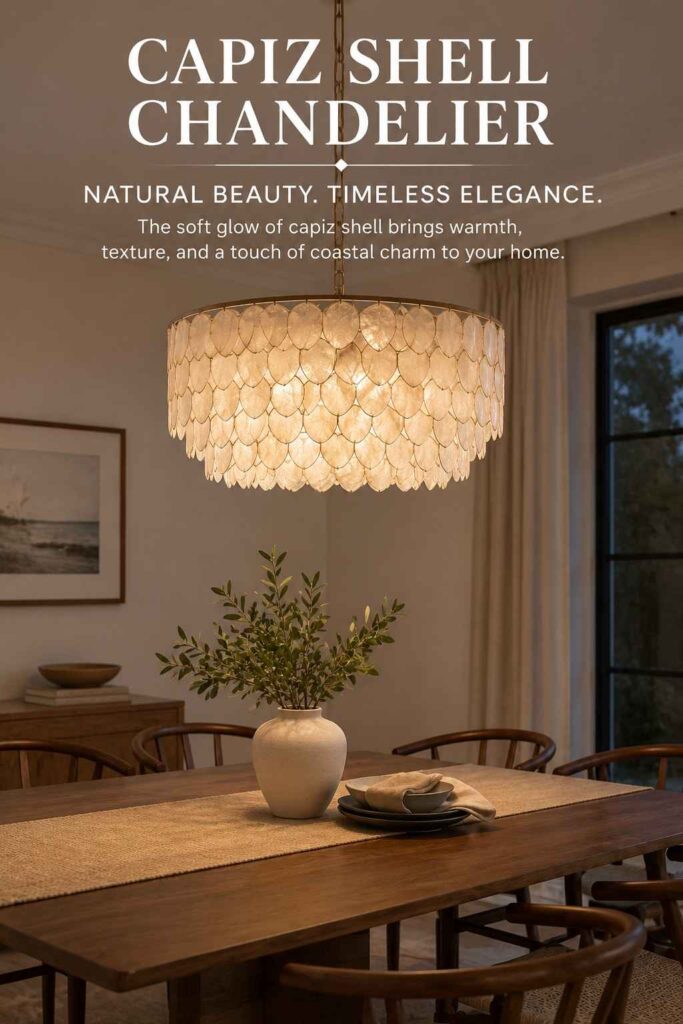
A dining room is a natural home for capiz shell decor because lighting matters so much there. A capiz chandelier or pendant can make the table feel inviting, especially in the evening. The shell softens the light and creates a pleasant glow for dinners, family gatherings, or quiet weekend meals.
In kitchens, use capiz carefully. A pendant over an island can work if it is far enough from steam, splashes, and cooking grease. Decorative trays or small accents are better placed on open shelving away from the stove. If your kitchen gets heavy daily use, choose capiz pieces with a protective finish and easy-to-clean construction.
Bathroom
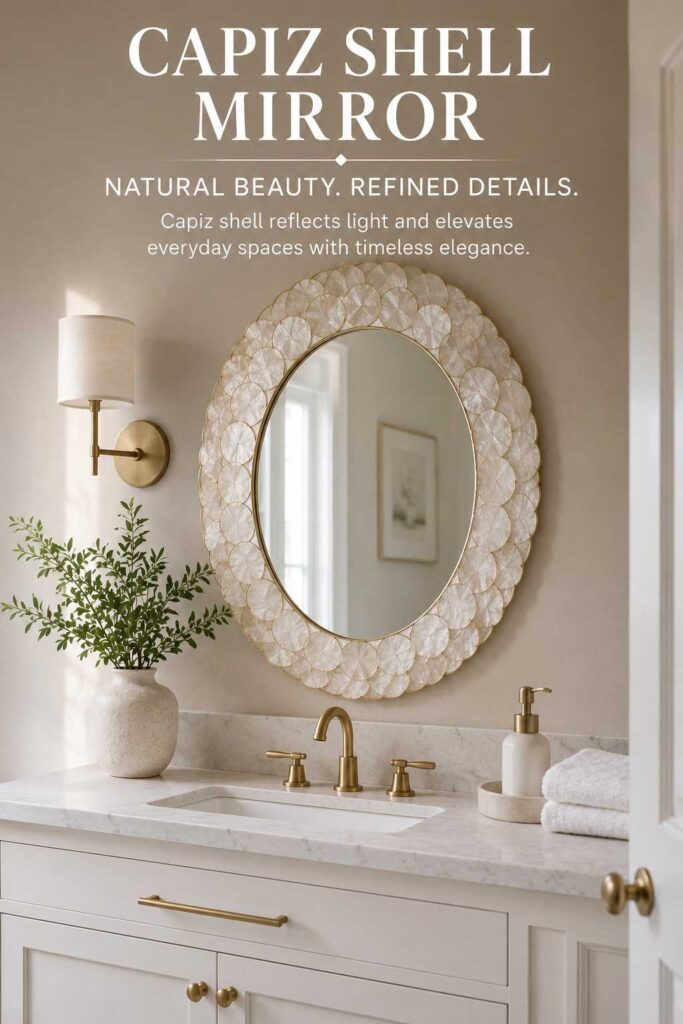
Capiz can look beautiful in a bathroom, but placement matters. A shell mirror, sconce, or bath accessory can make the space feel fresh and spa-like. However, bathrooms have humidity, water splashes, and cleaning products, so not every capiz item belongs there.
Look for products specifically described as suitable for damp areas, especially with lighting. Keep shell accessories away from standing water and wipe moisture quickly. A powder room is usually safer than a shower-heavy family bathroom. If the space has good ventilation, capiz can add a pearly finish that pairs well with marble, white tile, brushed brass, and soft towels.
Popular Types of Capiz Shell Decor
There are many ways to use this material, but some categories are more practical and timeless than others. The right choice depends on your room size, lighting, existing finishes, and how much attention you want the piece to receive.
Capiz Lighting
Lighting is one of the most popular forms of capiz shell decor. Chandeliers, pendants, sconces, flush mounts, and lampshades all benefit from the shell’s translucent quality. When the bulb is on, the shells diffuse light and create a warm, layered effect. When the bulb is off, the piece still works as a decorative object.
For dining rooms and bedrooms, a chandelier or pendant can become the main focal point. For hallways or bathrooms, a flush mount or sconce may be more practical. Always check bulb type, wattage, installation requirements, and whether the fixture is rated for the room where you plan to use it.
Capiz Mirrors
Capiz mirrors are useful because they combine reflection with texture. A plain mirror can feel flat, but a shell frame adds depth and softness. Round mirrors work well above consoles, dressers, and bathroom vanities. Rectangular mirrors can make bedrooms and entryways feel taller and more open.
Look closely at the frame construction. Some mirrors use capiz over wood, MDF, metal, or resin. A protective topcoat can help preserve the finish, especially in areas where hands may touch the frame. For a clean look, choose a mirror shape that matches the room. Round shapes feel soft, while rectangular forms feel structured.
Capiz Wall Art
Wall art made from capiz can include floral shapes, geometric panels, shadow boxes, mosaics, sunburst designs, and layered shell sculptures. These pieces are good for blank walls because they add interest without needing bold colors.
A large shell wall piece looks best when it has breathing room. Do not crowd it with too many frames or shelves. Let the texture do the work. If your room already has patterned wallpaper, colorful artwork, or heavy curtains, choose a simpler capiz design. If the room is minimal, a more dimensional shell sculpture can add life.
Capiz Trays, Boxes, and Small Accents
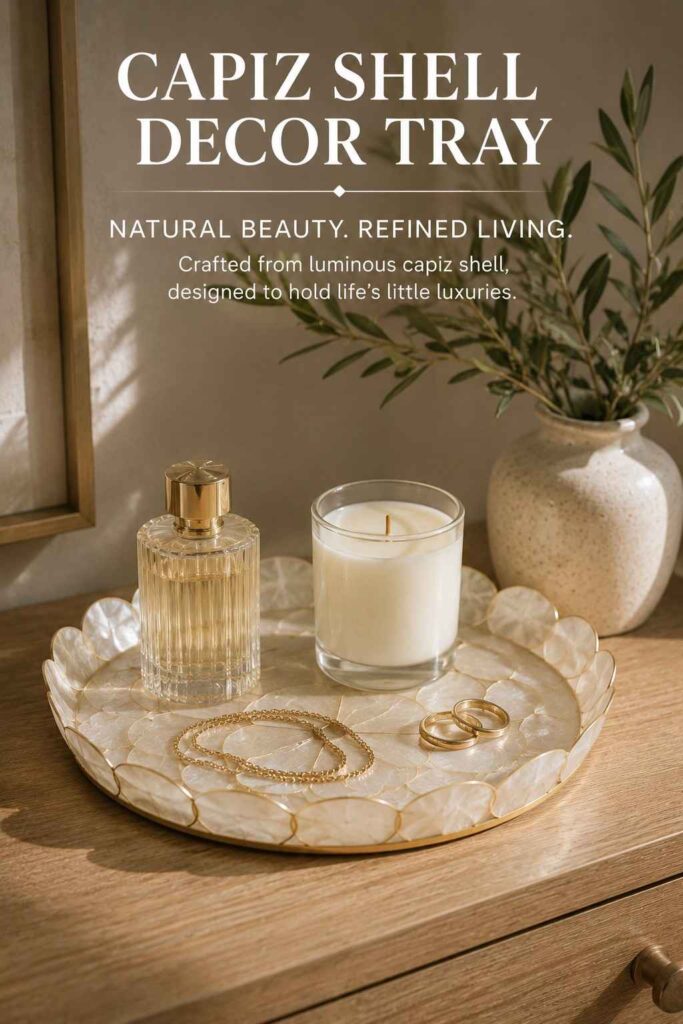
Small capiz pieces are ideal when you want a soft decorative touch without changing a whole room. Trays, boxes, bowls, candle holders, ornaments, and picture frames can be used on coffee tables, dressers, bookshelves, and sideboards.
Use these pieces for light styling rather than heavy-duty storage. A capiz tray can hold jewelry, keys, perfume, or a candle, but it should not be overloaded with wet cups, sharp objects, or heavy stacks of items. Small accents are also a safe way to test the look before buying a larger mirror or chandelier.
Capiz Furniture Details
Some furniture pieces use capiz on drawer fronts, cabinet doors, tabletops, or decorative inlays. These pieces can look striking, especially in bedrooms and entryways. A shell-front nightstand or dresser adds natural shine while staying softer than mirrored furniture.
Because furniture receives more contact than wall art, quality matters. Check whether the shell surface is sealed, how the panels are attached, and whether the base material is sturdy. Capiz furniture works best in adult spaces where it will be treated with care.
How to Choose Quality Capiz Shell Decor
Good capiz shell decor should feel thoughtfully made, not flimsy or uneven in a careless way. Natural variation is normal. Cracks, loose shell pieces, sharp unfinished edges, or weak hardware are not.
Start by checking the material description. A piece may be made from real capiz, mother-of-pearl, resin, glass, or a mix of materials. These can all look attractive, but they are not the same. Real capiz is usually lighter, more translucent, and softer in appearance than faux shell.
Next, look at the backing and frame. Wall art should have secure hanging hardware. Mirrors should list the frame material and mounting method. Lighting should include electrical details, bulb compatibility, and safety information. For bath or covered outdoor areas, do not assume a fixture is safe unless the product description clearly says so.
Also pay attention to color. Natural capiz often has creamy, milky, ivory, or champagne tones. Dyed versions may appear blue, green, pink, gold, or bronze. Choose dyed pieces carefully because strong colors can feel trendy. Neutral shells are easier to use for many years.
Styling Ideas for Different Interior Looks
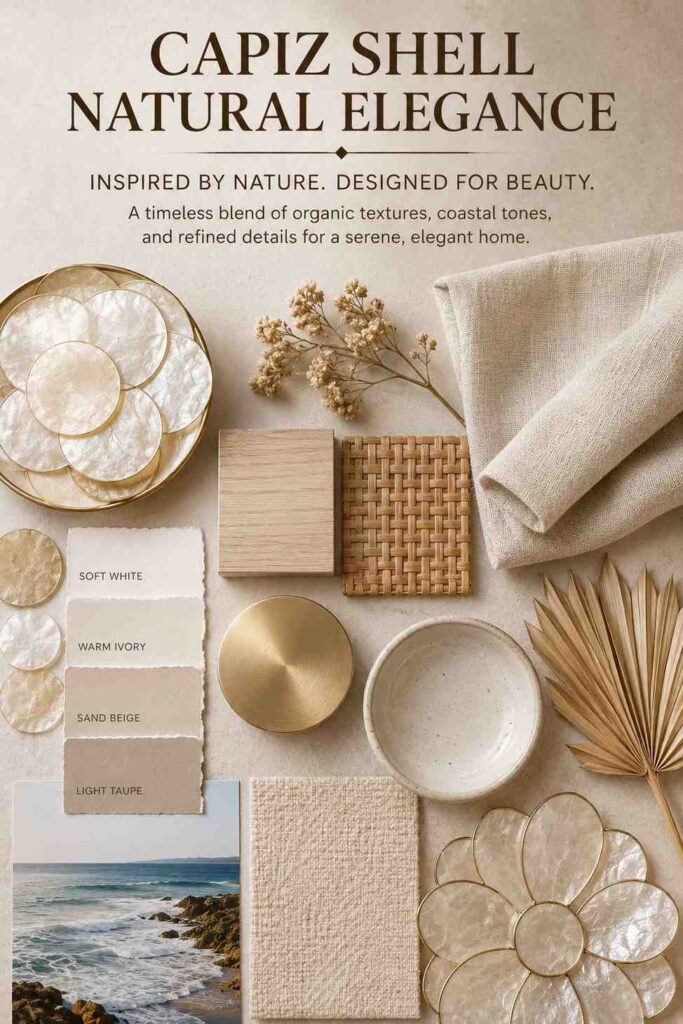
The beauty of capiz is that it can shift moods depending on what you pair it with. The same shell mirror may feel coastal beside driftwood and linen, modern beside black metal, or romantic beside velvet and brass.
This makes the material feel warm and grounded instead of overly beachy. For planning a larger home refresh, outinteriors finding more room-by-room decorating inspiration.
Coastal Calm
For coastal rooms, keep the palette light and natural. Use white walls, sandy beige upholstery, pale wood, rattan, and soft blue or sea-glass green accents. Add one capiz mirror or pendant to echo the reflective quality of water.
Avoid turning the room into a theme. You do not need anchors, seashell prints, and beach signs. Capiz already brings enough coastal feeling on its own. The most elegant coastal rooms usually feel relaxed, not literal.
Modern Glam
For modern glam interiors, pair capiz with brass, polished nickel, marble, velvet, and clean-lined furniture. A capiz chandelier over a dining table can replace crystal when you want glow without a formal ballroom look.
Keep the rest of the room edited. Choose simple dinnerware, tailored chairs, and a smooth rug. Let the shell texture create the shine. This approach feels elegant but still livable. Capiz also fits a farmhouse style room when paired with weathered oak, white walls, woven baskets, and matte black hardware.
Boho Natural
In boho rooms, capiz works well with macramé, cane, woven shades, plants, and layered rugs. A shell mobile, hanging wall piece, or capiz wind chime can add movement and lightness.
The key is balance. Boho spaces can become visually heavy when every surface has texture. Capiz helps because it reflects light. Use it near a window or lamp so it does not disappear into the background.
Quiet Luxury
Quiet luxury is about refined materials, soft contrast, and careful restraint. Capiz shell decor fits this look when used in simple shapes and neutral tones. A cream shell mirror, a white shell tray, or a slim capiz sconce can add richness without shouting.
Pair it with wool, linen, stone, oak, and brushed metal. Avoid overly shiny finishes or too many shell pieces in one room. The goal is calm elegance, not decoration for decoration’s sake.
How to Care for Capiz Shell Decor
Capiz shell decor should be cleaned gently. Use a soft, dry cloth for regular dusting. If needed, use a lightly damp cloth, then dry the surface right away. Avoid soaking, scrubbing, abrasive pads, strong sprays, bleach, ammonia, and harsh multi-surface cleaners.
Water is one of the biggest concerns. A quick wipe is usually fine, but standing moisture can damage the shell, adhesive, frame, or finish. This is especially important for trays, bathroom accessories, and lighting in humid rooms.
Handle pieces with care. Thin shell can chip, bend, or crack if dropped or pressed too hard. When moving wall art or mirrors, hold the frame rather than the shell surface. For chandeliers or pendants, dust gently and turn the light off before cleaning.
Direct sunlight can also affect some finishes over time, especially dyed or varnished pieces. A little natural light is fine, but harsh daily sun may fade color or dry out surrounding materials. If a room gets strong afternoon sun, consider placing delicate pieces on a side wall rather than directly in the window’s path.
Is Capiz Shell Decor Sustainable?
The sustainability of capiz depends on sourcing, harvesting, processing, and waste practices. The shell comes from a natural marine species, and in many craft traditions the material supports artisan work. However, natural does not automatically mean harmless. Responsible sourcing matters.
When buying, look for sellers who provide clear material information, country of origin, and craft details. Handmade pieces are often described with natural variation, which is normal for shellwork. Be cautious with vague listings that use unclear words such as “shell-like,” “pearl look,” or “ocean-inspired” without saying what the material actually is.
A practical buyer can make better choices by purchasing durable designs, avoiding throwaway trends, and caring for each piece properly. The longer an item stays in use, the better its value becomes. Timeless shapes, neutral colors, and repairable construction are usually wiser than overly trendy pieces that may feel dated quickly.
Common Mistakes to Avoid
One mistake is using too many shell pieces in the same room. A capiz chandelier, mirror, tray, lamp, and wall sculpture together can feel repetitive. Choose one focal point and one small supporting accent at most.
Another mistake is placing capiz where it faces daily damage. A tray beside a wet sink, a wall piece in a narrow hallway, or a delicate lamp in a child’s play area may not last well. The material is beautiful, but it still needs sensible placement.
A third mistake is ignoring scale. Small capiz art may disappear above a large sofa, while an oversized chandelier can overwhelm a small dining nook. Measure before buying. Check width, height, depth, weight, cord length, hanging rods, and mounting hardware. A beautiful piece only works when it fits the room properly.
Finally, do not assume every pearly decor item is capiz. Some pieces are mother-of-pearl, resin, painted glass, acrylic, or shell veneer. Read the material details before purchasing so your expectations match the product.
Capiz Shell Decor Buying Checklist
Before buying, ask a few simple questions. Is the material real capiz or a lookalike? Is the color natural, dyed, baked, or coated? Is the frame wood, metal, MDF, resin, or iron? Does the piece include hardware? Is it safe for the location where you want to use it?
For lighting, check whether it is hardwired or plug-in. Check bulb type, wattage, dimmer compatibility, damp rating, and installation requirements. For mirrors and wall art, check weight and mounting style. For trays and boxes, check whether the surface is sealed and what cleaning method is recommended.
Also think about the room’s existing finishes. If your space has warm brass, choose champagne or cream shells. If your room has silver, chrome, or polished nickel, white or ivory capiz may feel cleaner. If your home uses black accents, geometric shell art with a dark frame can create a stronger modern contrast.
Conclusion:
Capiz shell decor is loved because it brings light, texture, and quiet elegance into the home. It feels natural without being rustic, polished without being cold, and decorative without needing loud color. From chandeliers and mirrors to trays, wall panels, and furniture accents, it can work in many rooms when chosen carefully.
The best approach is to use it with restraint. Let one piece become the soft highlight of the room, then support it with natural materials, calm colors, and balanced lighting. Buy with attention to material, finish, scale, and care instructions. Keep it dry, clean it gently, and place it where it can glow without being damaged.
When styled well, capiz does more than decorate a space. It changes how the room feels. It softens the light, adds a handcrafted note, and brings a graceful sense of calm that can make even a simple corner feel thoughtfully designed.
Frequently asked questions:
What is capiz shell made from?
Capiz shell comes from the windowpane oyster, a marine bivalve known for its thin, translucent shell. After cleaning and processing, the shell can be cut, shaped, layered, dyed, or attached to frames and surfaces. It is commonly used in lighting, wall art, mirrors, trays, boxes, and decorative furniture details.
Is capiz shell decor fragile?
Yes, it can be delicate compared with wood, metal, or stone. The shell is thin and may chip, crack, or loosen if dropped, bent, soaked, or scrubbed harshly. However, well-made pieces can last for years when placed carefully, cleaned gently, and kept away from rough handling or constant moisture.
Can I use capiz in a bathroom?
You can use capiz in a bathroom if the item is suitable for damp spaces and placed away from direct splashes. Powder rooms are usually safer than steamy family bathrooms. For lighting, always check the product’s damp rating and installation details. For accessories, wipe moisture quickly and avoid standing water.
How do you clean capiz shell pieces?
Use a soft, dry cloth for dusting. For light marks, use a barely damp cloth and dry the surface immediately. Do not soak the item, use abrasive pads, or apply harsh chemical cleaners. Strong cleaners can dull the finish, damage adhesives, or affect the frame material around the shell.
Does capiz only work in coastal homes?
No. Capiz is popular in coastal homes, but it also works in modern, glam, boho, farmhouse, transitional, and traditional interiors. The key is pairing. Use it with linen and rattan for coastal rooms, brass and marble for glam spaces, black metal for modern contrast, or warm wood for a softer classic look.
What colors go best with capiz?
Capiz pairs beautifully with white, cream, beige, tan, soft gray, pale blue, sage green, warm wood, brushed brass, and polished nickel. Natural shell tones are the easiest to style because they work with many palettes. Dyed shell pieces can be attractive, but neutral colors tend to stay timeless longer.
Is capiz shell the same as mother-of-pearl?
No. They can look similar because both have a pearly effect, but they come from different shell materials and are used differently in decor. Capiz is usually thinner and more translucent, which makes it especially useful for lighting. Mother-of-pearl is often denser and used for inlay, jewelry, buttons, and decorative surfaces.