12 Covered Outdoor Kitchen Ideas for a Backyard You’ll Actually Use All Year
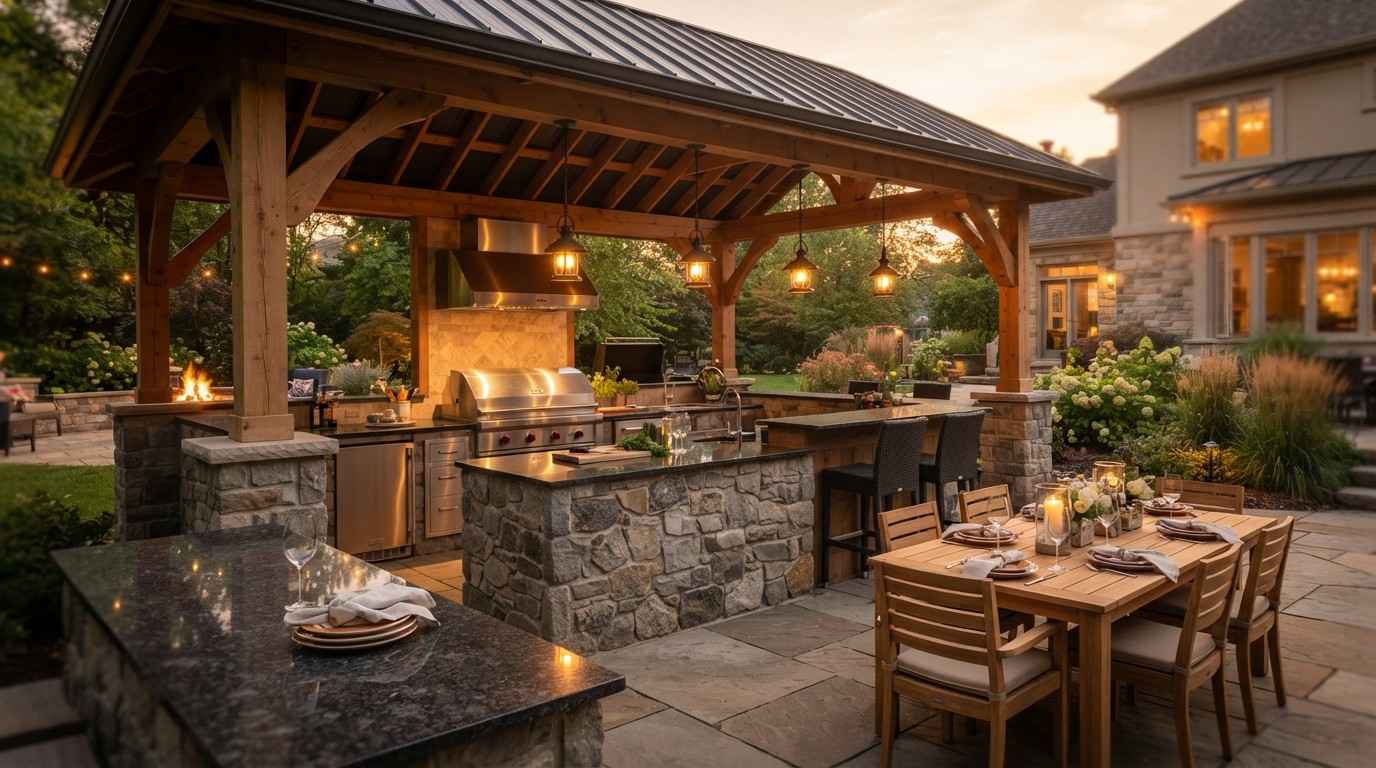
Rain shouldn’t cancel dinner. A blazing July sun shouldn’t chase you back inside after ten minutes at the grill. That’s the whole promise of covered outdoor kitchens: a cooking and gathering space that works with the weather instead of against it. Instead of packing appliances away every winter or dodging afternoon storms all summer, you get a space that’s ready whenever you are. This guide walks through twelve real design directions, the safety details most articles skip, honest cost ranges, and the maintenance habits that keep a covered outdoor kitchen looking sharp for decades.
What Actually Makes a Kitchen “Covered”?
A covered outdoor kitchen is any outdoor cooking setup with a permanent or semi-permanent structure overhead — a roof, pergola, awning, or ceiling extension — built to shield the cooking area from sun, rain, and debris. That’s a broad definition on purpose, because “covered” ranges from a slatted pergola that filters light to a fully enclosed, insulated roof that turns the space into a true second kitchen. Understanding which category fits your climate and budget is the first decision, and it shapes almost every choice that follows, from countertop material to appliance placement.
Why a Cover Changes Everything
Sun exposure fades cabinet finishes, warps wood, and can push stainless steel surface temperatures past 150°F. Rain and snow accelerate rust on unprotected appliances and shorten the life of stone and grout. A covered outdoor kitchen solves both problems at once, extending usable cooking days from a few warm months to nearly the whole year in most U.S. climates. It also protects a genuine financial investment: homeowners typically recover a meaningful share of what they spend on a well-built outdoor kitchen when they sell, and real estate agents consistently point to covered, integrated designs as the ones buyers respond to most.
12 Covered Outdoor Kitchen Ideas Worth Considering
Every backyard, budget, and climate calls for a different structure. Here are twelve proven approaches, ranging from budget-friendly to fully custom.
1. The Classic Pergola Kitchen
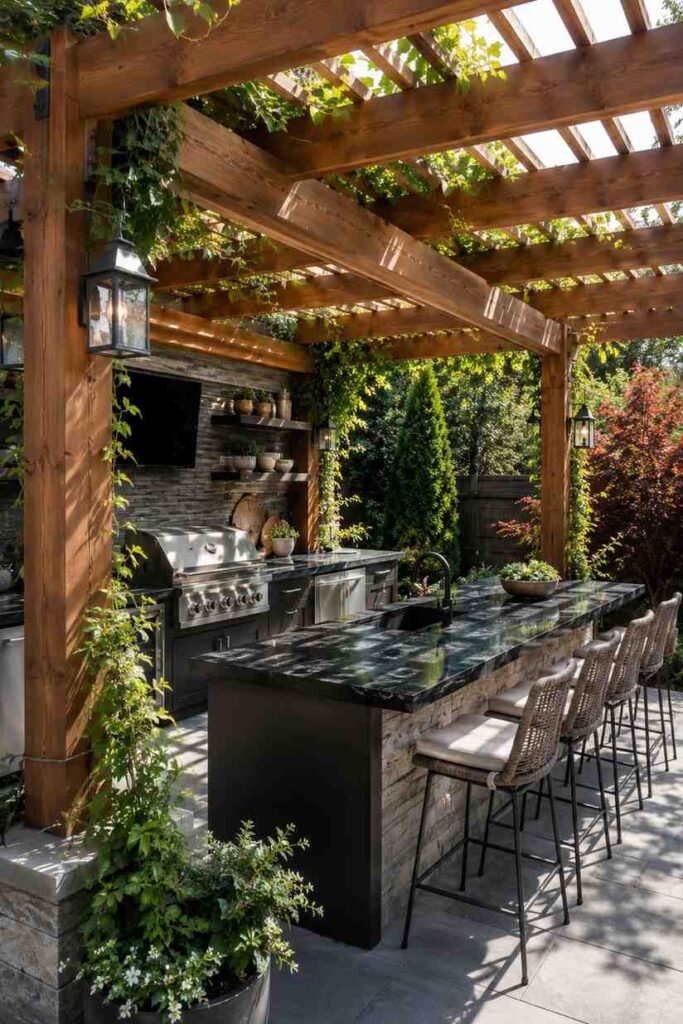
A wood or aluminum pergola with cross-beams offers filtered shade without blocking airflow, making it the most popular entry point into covered outdoor kitchen design. Add retractable canopy panels or climbing vines for extra shade, and it works beautifully as a freestanding structure or attached to the home.
2. Solid Roof Extension Off the House
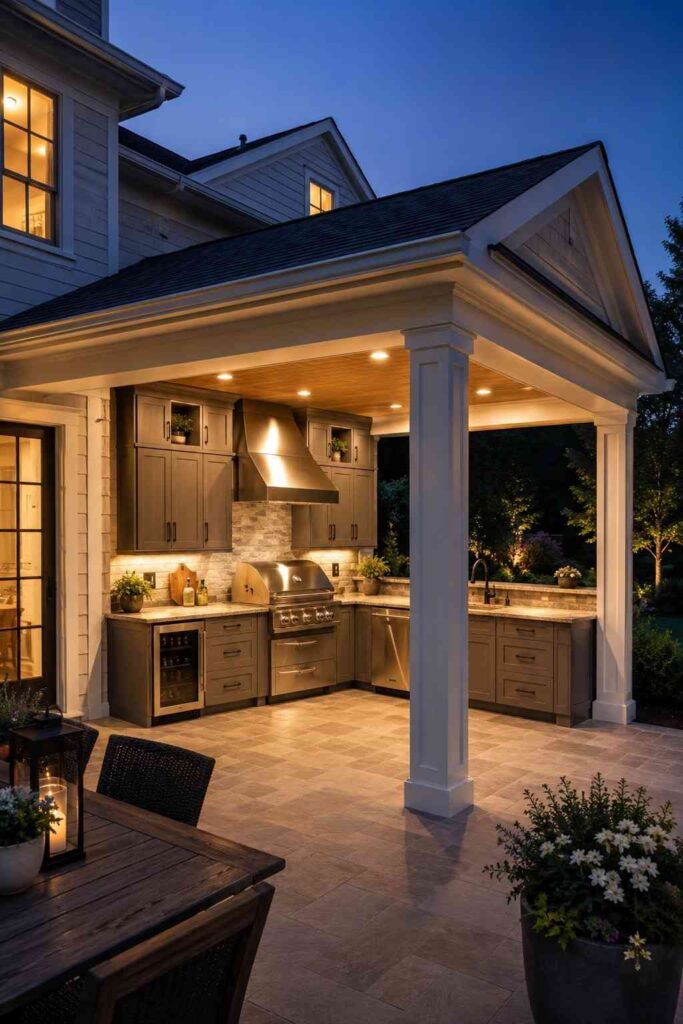
Extending your home’s existing roofline over the patio creates a seamless, weathertight cooking area. This option handles rain and snow loads best, but it requires proper venting and often a permit since it ties directly into your home’s structure.
3. Retractable Canopy or Awning Kitchen
Motorized or rope-operated canopies let you open the space to sunshine on mild days and close it during storms or intense heat. It’s an efficient middle ground for homeowners who want flexibility without committing to a fixed roof.
4. Screened Lanai Kitchen
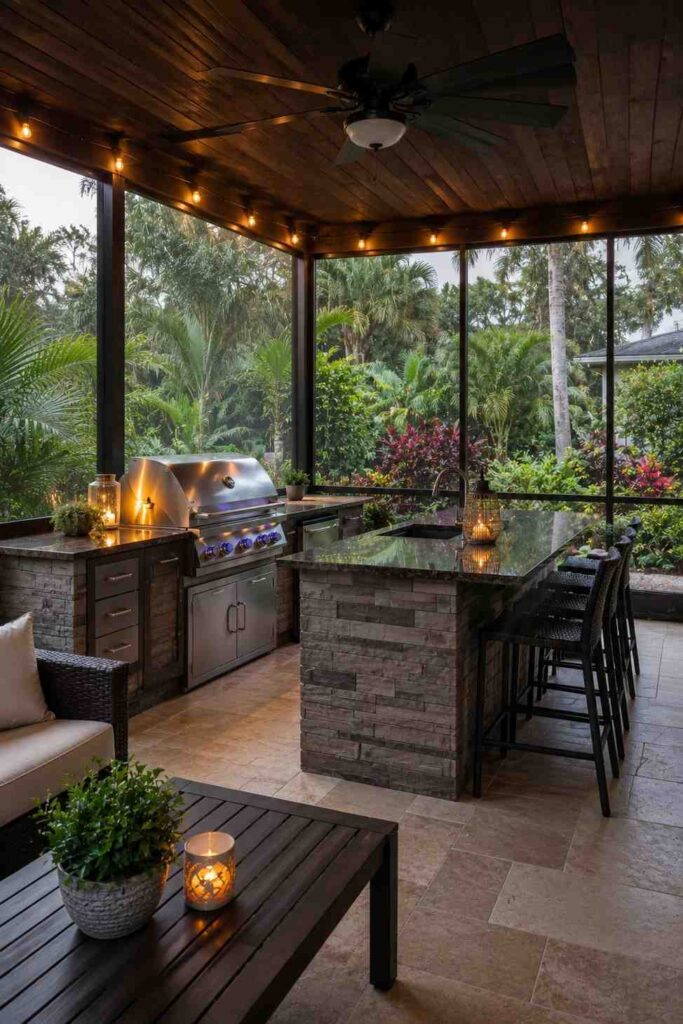
Popular in humid, bug-heavy regions, a screened lanai wraps the kitchen in mesh walls under a solid roof. You get full weather protection plus relief from mosquitoes, making it ideal for evening entertaining near wooded or coastal properties.
5. Freestanding Gazebo Kitchen
A gazebo creates a distinct architectural focal point separate from the house, often centered around an island grill and bar seating. Octagonal or round designs pair especially well with backyards that already have a pool or fire feature nearby.
6. Poolside Cabana Kitchen
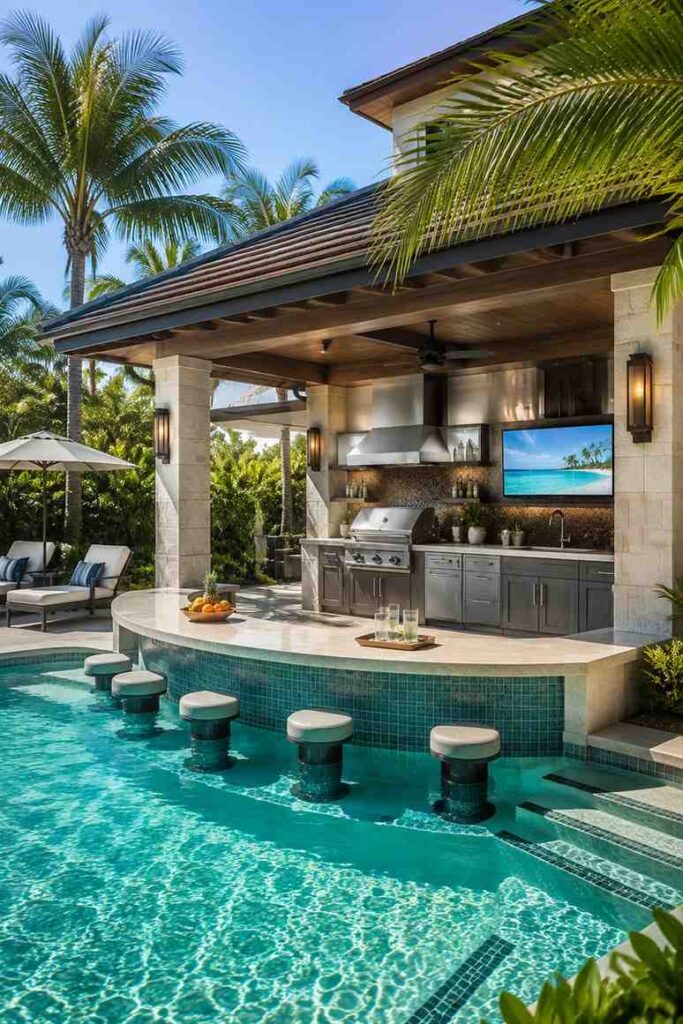
Built alongside or into a pool cabana, this layout keeps swimmers fed without a trip back indoors. Materials here need extra chlorine and moisture resistance, so marine-grade cabinetry and sealed stone countertops are worth the upgrade.
7. Adjustable Louvered Roof Kitchen
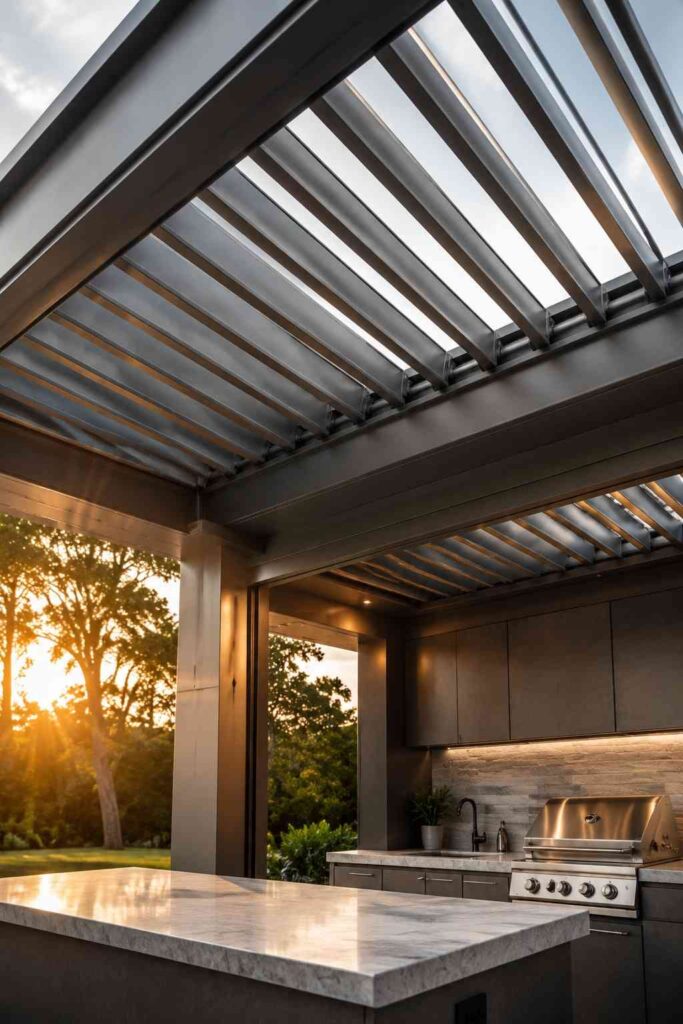
Motorized louvered roofs rotate to control light, rain, and ventilation on demand. It’s a premium option, but it’s also the most adaptable covered outdoor kitchen style for regions with unpredictable weather swings.
8. Kitchen Tucked Under an Existing Deck or Porch
If your home already has a second-story deck or covered porch, building the kitchen underneath it is one of the most cost-effective ways to get full coverage. Just confirm the structure above can handle heat and moisture from cooking below.
9. Combination Kitchen and Fireplace Pavilion
Pairing a covered kitchen with an adjacent fireplace or fire pit under one shared roofline stretches usable hours into cool evenings and shoulder seasons. This layout tends to become the true center of backyard gatherings.
10. All-Weather Prefab Steel Kitchen
Galvanized steel prefab kitchens with built-in metal roofs are increasingly popular for their rust resistance and quick installation. Many are engineered to hold significant snow loads and withstand high wind speeds, which suits colder or storm-prone states well.
11. Rustic Timber-Frame Kitchen
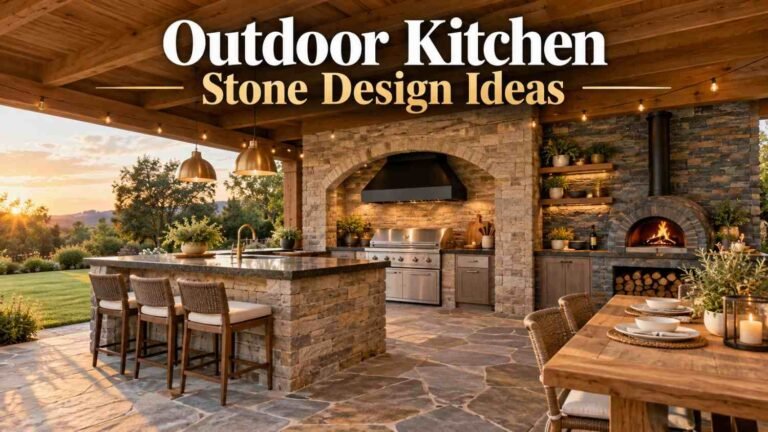
Exposed wood beams, stone veneer, and a shingled roof give this style a cabin-like warmth. It suits mountain or wooded properties and pairs naturally with reclaimed materials and a wood-burning pizza oven.
12. Modern Flat-Roof Minimalist Kitchen
Clean lines, a flat or low-slope roof, and monochrome cabinetry define this contemporary take. Concealed lighting and a simple color palette let the appliances and countertop material do the visual work.
Ventilation and Fire Safety: The Detail Most Guides Skip
Here’s something many articles gloss over: any solid roof positioned over a grill, smoker, or pizza oven needs proper ventilation, typically a vent hood connected through the roofing to the outside air. Skipping this step lets smoke and grease collect against combustible materials overhead, creating a genuine fire hazard. Manufacturers specify exact clearance distances between the cooking surface and any roof or beam, and following those measurements precisely — not approximately — is what keeps a beautiful covered outdoor kitchen safe rather than risky.
Permits, Codes, and Placement Tips
Most municipalities require a permit once you add a permanent roof, run gas or electrical lines, or attach a structure to your home. Rules vary by county, so check with your local building department before pouring a foundation. Placement matters too: keep the kitchen close to existing utility lines to control cost, but also consider wind direction and sightlines so smoke drifts away from seating rather than through it.
Design Tips to Make Your Covered Kitchen Feel Like Home
The best covered outdoor kitchens borrow their personality from the house they sit beside. If your home leans toward a breezy, beach-inspired palette, echo the soft blues and linens of a coastal bedroom in your outdoor cushions and table settings. Homeowners with a little cottage tend to keep the roofline low and the materials rustic, so the kitchen reads as an extension of the home rather than a bolt-on addition.
Covered Outdoor Kitchen Cost at a Glance
Budgets vary enormously depending on structure type, materials, and region. A basic prefab kitchen with a simple pergola can start around $3,000 to $8,000, while a mid-range custom build with stone veneer, a solid roof, and full appliances often lands between $20,000 and $40,000. Luxury builds with premium framing, motorized louvered roofs, and high-end appliances can exceed $60,000. Countertops alone typically run $60 to $200 per square foot installed, and labor usually makes up 30% to 50% of the total project cost. Getting quotes from a local contractor is still the only way to pin down an exact number for your yard.
Maintenance and Year-Round Care
A cover reduces maintenance, but it doesn’t eliminate it. Reseal stone or concrete countertops every one to two years, wipe down stainless steel with a non-abrasive cleaner, and inspect roof fasteners and gutters each spring. In colder states, drain water lines before the first freeze and use fitted appliance covers even under a roof, since blowing snow and wind-driven rain can still reach exposed corners. For more ideas on carrying a single design language from indoors to out, outinteriors is a useful resource to browse before finalizing your palette.
Final Thoughts
A well-planned covered outdoor kitchen turns a backyard from a fair-weather amenity into a space your family actually uses through every season. Whether you start with a simple pergola over a grill island or go all in on a screened, fully finished pavilion, the structure overhead is what determines how often you’ll really use the space — and how well it holds up over time. Match the cover style to your climate, get the ventilation right, and the rest of the design will follow naturally.
Frequently Asked Questions
1. Do covered outdoor kitchens need a permit?
In most areas, yes — especially if the structure attaches to your home or involves gas, electrical, or plumbing work. Always confirm with your local building department before starting construction.
2. What’s the cheapest way to cover an outdoor kitchen?
A basic wood or aluminum pergola is generally the most budget-friendly option, followed by a retractable canopy. Solid roof extensions and screened lanais cost more but offer better weather protection.
3. Can I put a roof over an existing outdoor grill?
Yes, but the roof must include proper clearance and ventilation above the cooking surface to prevent smoke buildup and reduce fire risk. A contractor or manufacturer’s spec sheet will confirm safe distances.
4. How long does it take to build a covered outdoor kitchen?
Most projects take four to twelve weeks from design to completion, depending on permit approval times, material lead times, and whether the roof ties into the existing house structure.
5. Do covered outdoor kitchens increase home value?
A professionally built, well-integrated covered outdoor kitchen is generally seen as a valuable upgrade by buyers and can meaningfully boost a home’s appeal, though exact return varies by market and build quality.
6. What roofing material lasts longest outdoors?
Galvanized steel and aluminum roofing tend to outlast wood shingles in wet or snowy climates, resisting rust and requiring less annual upkeep.
7. Can a covered outdoor kitchen be used in winter?
Yes, especially designs with solid roofs, screened walls, or nearby fireplaces. Water lines should still be winterized in freezing climates, even when the structure is fully enclosed.