
Elegant 25 Bedroom Lighting Ideas to Transform Your Space in 2026

Walk into a bedroom with the wrong lighting, and you feel it before you can explain why. The bed is nice, the paint color works, but something feels flat. Nine times out of ten, that “something” is a single overhead bulb doing a job meant for three or four different light sources.
Good bedroom lighting ideas aren’t about buying the prettiest fixture in the store. They’re about layering light so a room can shift from bright and functional in the morning to soft and calming at night. Below are 25 bedroom lighting ideas, organized by function and style, along with the color science, budget guidance, and common mistakes most guides skip over entirely.
Why Layered Lighting Is the Foundation of Every Bedroom Lighting Idea
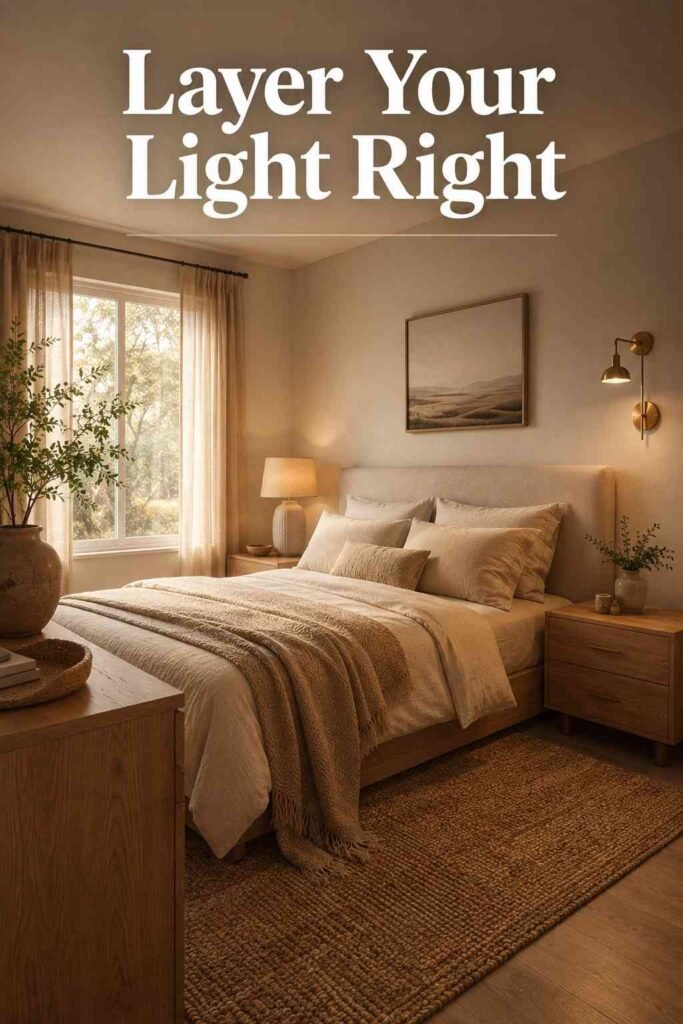
Professional designers rely on three layers: ambient, task, and accent. Skipping any one of them is why so many bedrooms feel either too harsh or too dim with no in-between. Once these three layers are in place, everything else — chandeliers, sconces, smart bulbs — becomes decoration on top of a solid base.
1. Ambient Lighting
This is the room’s general light source, usually a ceiling fixture or recessed downlights. It should be bright enough to get dressed by, ideally on a dimmer switch so it can be scaled back at night without being turned off entirely.
2. Task Lighting
Task lighting is focused and functional: a reading lamp, a closet light, a vanity bulb. It solves a specific problem — reading in bed without waking a partner, for instance — rather than filling the whole room.
3. Accent Lighting
Accent lighting adds depth and mood. Think LED strips behind a headboard, a picture light over artwork, or a small uplight in a corner. It’s the layer most bedrooms are missing, and it’s often the cheapest to add.
Choosing the Right Color Temperature for Bedroom Lighting

Color temperature, measured in Kelvin (K), is the detail most bedroom lighting guides mention in passing but rarely explain well. Warm light (below 3000K), closest to candlelight, helps the body wind down. Cooler, bluer light (4000K and above) does the opposite — it can delay melatonin production and make it harder to fall asleep, according to guidance from the U.S. Department of Energy and the Illuminating Engineering Society.
For most bedrooms, 2700K to 3000K is the sweet spot for ambient and bedside lighting. If there’s a vanity, desk, or closet area used for tasks like applying makeup or picking out clothes, a slightly cooler 3000K to 3500K bulb in that specific spot renders colors more accurately without disrupting the room’s overall calm. Also worth checking: the Color Rendering Index (CRI). Aim for a CRI of 80 or higher so skin tones and fabrics look natural rather than washed out.
Statement Overhead Bedroom Lighting Ideas
The ceiling fixture sets the tone the moment someone walks in. These bedroom lighting ideas work as the room’s visual anchor.
4. A Sculptural Chandelier
A chandelier isn’t just for dining rooms. In a primary bedroom with 8-foot ceilings or higher, a scaled-down chandelier over the foot of the bed adds drama without overwhelming the space.
5. A Semi-Flush Mount for Lower Ceilings
Standard chandeliers and pendants need clearance. In rooms under 8 feet, a semi-flush mount delivers the same style with a few inches of breathing room, avoiding the “bumped head” problem entirely.
6. A Ceiling Fan With an Integrated Light
Practical and stylish, a ceiling fan with a built-in fixture solves airflow and lighting in one purchase — useful in warmer climates or rooms without central air conditioning.
7. Recessed Downlights on a Dimmer
For a cleaner, more minimal ceiling line, recessed lighting spread evenly across the room (paired with a dimmer) gives full control over brightness without a visible fixture pulling focus.
Bedside and Nightstand Lighting Ideas for Better Sleep

The area directly around the bed gets used more than any other lighting zone in the house. These bedroom lighting ideas focus on comfort and function.
8. Adjustable Table Lamps
A lamp with a swing arm or adjustable shade lets you direct light exactly where it’s needed for reading, without spilling brightness across a partner’s side of the bed.
9. Wall-Mounted Sconces
Sconces free up nightstand surface space entirely — a real advantage in smaller rooms — and they create a more architectural, built-in look than a lamp ever can.
10. Mini Pendant Lights
Hung on either side of the bed at slightly different heights, mini pendants add visual interest and keep the nightstand clear for books, water glasses, or a phone charger.
11. Plug-In Sconces With a Switch on the Cord
For renters who can’t run new wiring, plug-in sconces mounted with adhesive hooks deliver the sconce look with none of the electrical work.
Wall-Mounted and Accent Bedroom Lighting Ideas
This is the layer most rooms skip, and it’s usually the one that makes a bedroom feel finished rather than just furnished.
12. LED Strips Behind the Headboard
A warm-white LED strip mounted behind an upholstered or wood headboard creates a soft glow that reads as high-end, especially against a textured wall.
13. Picture Lights Over Art
A small, angled picture light above a piece of framed art turns a flat wall into a focal point, and it doubles as a low, indirect night light.
14. Cove Lighting Along the Ceiling Perimeter
Recessed into a ceiling ledge, cove lighting washes the ceiling in soft, indirect light — a subtle trick borrowed from hotel design that makes rooms feel taller.
15. Under-Bed LED Lighting
A strip of LED lighting tucked beneath a platform bed frame adds a floating effect and doubles as a practical night light for late-night trips to the bathroom.
Small Bedroom Lighting Ideas That Don’t Sacrifice Style
Most bedroom lighting guides assume a large primary suite. In reality, plenty of bedrooms are compact, rented, or both — and that changes which of these bedroom lighting ideas actually work.
16. Wall Sconces Instead of Table Lamps
In a tight room, sconces reclaim nightstand real estate and visually declutter the space, which matters more in small rooms than large ones.
17. A Slim Floor Lamp in an Empty Corner
An arc or torchiere floor lamp with a narrow base fills dead corner space and adds a light source without competing for surface area on furniture.
18. A Lit Mirror or Vanity Light
In small bedrooms without a separate dressing area, a lit mirror does double duty — grooming task light and ambient bounce light — in a single fixture.
Smart and Energy-Efficient Bedroom Lighting Ideas
Sustainability and convenience are two areas where most bedroom lighting content stays surprisingly shallow. These ideas address both.
19. Smart Bulbs With Scheduled Wind-Down
Smart bulbs that automatically shift from cooler to warmer color temperature in the evening support the body’s natural wind-down without anyone touching a switch.
20. Voice- or App-Controlled Dimmers
Retrofitting a dimmer switch with smart controls means the whole room’s brightness can be adjusted from bed, which is a small change that gets used constantly.
21. ENERGY STAR-Rated LED Fixtures
LED fixtures use roughly 75% less energy than incandescent bulbs and last significantly longer, according to the Department of Energy — a meaningful saving across a home with multiple bedrooms.
Bedroom Lighting Ideas by Style
The right fixture should match the room’s broader design language, not fight against it.
22. Warm, Minimal Japandi Lighting
Paper or linen-shade pendants paired with wood or bamboo elements suit a pared-back aesthetic. If this look appeals to you, our guide to Japandi bedroom ideas breaks down how to pair soft, warm lighting with natural materials for a genuinely restful room.
23. Brass and Glass for Traditional Rooms
Antique brass fixtures with fluted or ribbed glass shades suit rooms with existing millwork, wallpaper, or heavier furniture.
24. Woven and Rattan Fixtures for a Boho Feel
Woven pendant shades cast a dappled, textured light across the ceiling and walls — a detail that reinforces a room’s overall mood far more than most people expect. Since lighting is only one piece of the picture, it helps to think about room aesthetics as a whole before settling on a single fixture.
25. Matte Black and Linear Fixtures for Modern Bedrooms
Clean-lined sconces or a linear suspension light over a bench at the foot of the bed suit rooms built around straight lines and a neutral palette. For fixtures that make these looks easy to put together without sourcing from a dozen retailers, Outinteriors curates a range of bedroom lighting pieces across most of these styles.
Common Bedroom Lighting Mistakes to Avoid
Even with the right fixtures, a few habits quietly undo good bedroom lighting ideas. Relying on a single overhead light is the most common one — it creates harsh shadows and offers no flexibility for different times of day. Mismatched color temperatures across fixtures in the same room is another; mixing a 3000K lamp with a 5000K overhead bulb makes a space feel visually disjointed even if each fixture looks fine on its own.
Skipping dimmers is a smaller but costly oversight, since a $10–$20 dimmer switch often does more for a room’s atmosphere than an expensive fixture. Finally, placing bedside lighting too high or too low relative to the mattress forces awkward reading angles — the bottom of a shade should generally sit at or just below eye level when seated up in bed.
What Bedroom Lighting Actually Costs

Budget varies widely, and most bedroom lighting ideas round-ups avoid numbers altogether. As a general range: plug-in sconces and basic table lamps typically run $25–$100 each; mid-range pendants, semi-flush mounts, and quality floor lamps fall around $80–$300; and statement chandeliers or designer fixtures can range from $300 well into four figures. A smart dimmer or smart bulb kit adds roughly $30–$80 per room. A complete layered lighting refresh — ambient, task, and accent — is realistically achievable for $150–$500 without hiring an electrician, assuming existing wiring is used.
Final Thoughts
The best bedroom lighting ideas rarely come down to one perfect fixture. They come from layering ambient, task, and accent light so the room can adapt — bright for a Monday morning, dim and warm by Sunday night. Start with color temperature, add a dimmer wherever possible, and build the rest around whichever style already feels like home. Small changes, made in the right order, tend to matter more than any single statement piece.
Frequently Asked Questions About Bedroom Lighting Ideas
What is the best color temperature for bedroom lighting?
Most designers and lighting guides recommend 2700K to 3000K for bedrooms. This warm range supports relaxation and doesn’t interfere with the body’s natural wind-down before sleep, unlike cooler, bluer light above 4000K.
How many light sources should a bedroom have?
A well-lit bedroom typically uses three to five sources across the ambient, task, and accent layers — for example, one ceiling fixture, two bedside lamps or sconces, and one accent piece like a picture light or LED strip.
Are LED strip lights good for bedrooms?
Yes, as long as they’re warm-white (2700K–3000K) rather than cool white or rapidly color-changing. Used behind a headboard or under a bed frame, they add ambience without the glare of a direct light source.
Should bedroom lighting be on a dimmer?
In most cases, yes. A dimmer lets one fixture serve two purposes — bright for daytime tasks and dim for evening relaxation — without needing to install additional lighting.
What’s the difference between task and ambient lighting?
Ambient lighting fills the whole room with general brightness, usually from a ceiling fixture. Task lighting is focused on a specific activity, like reading or applying makeup, and is typically dimmer and more directional than ambient light.
How do I light a small bedroom without making it feel cluttered?
Favor wall-mounted sconces over table lamps to free up surface space, and choose one statement piece rather than several competing fixtures. Slim floor lamps in unused corners also add light without taking up much visual room.
Is warm or cool light better for reading in bed?
A warm, focused lamp around 2700K is generally more comfortable for extended reading than cooler light, which can feel harsh at close range. What matters most for readability is lumen output and shade placement, not color temperature alone.




One Comment