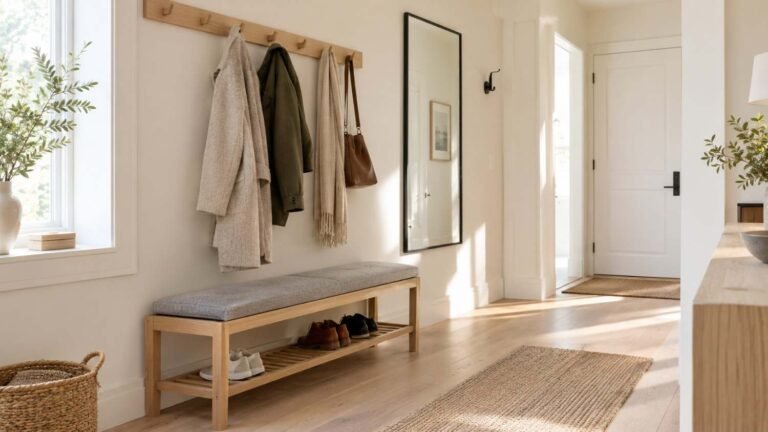
Luxurious 15 Coastal Living Room Ideas to Bring the Seaside Home in 2026

There’s a reason coastal living room ideas keep resurfacing on mood boards long after most trend cycles fade. The style taps into something simple: a room that feels like it’s breathing. Soft light, natural texture, and a palette borrowed from sand and water read as comfort you can actually see. But a well-designed coastal living room in 2026 looks nothing like the anchor-pillow, rope-mirror version that defined the trend a decade ago. Homeowners now want warmth, texture, and personality — not a beach-themed rental. Whether the house sits three blocks from the shoreline or three states inland, the goal stays the same: a room that feels sun-warmed, lived-in, and calm. Below are 15 ideas covering color, furniture, texture, lighting, and small-space solutions, built around how people are actually decorating right now.
What Makes a Coastal Living Room Feel Authentic, Not Themed
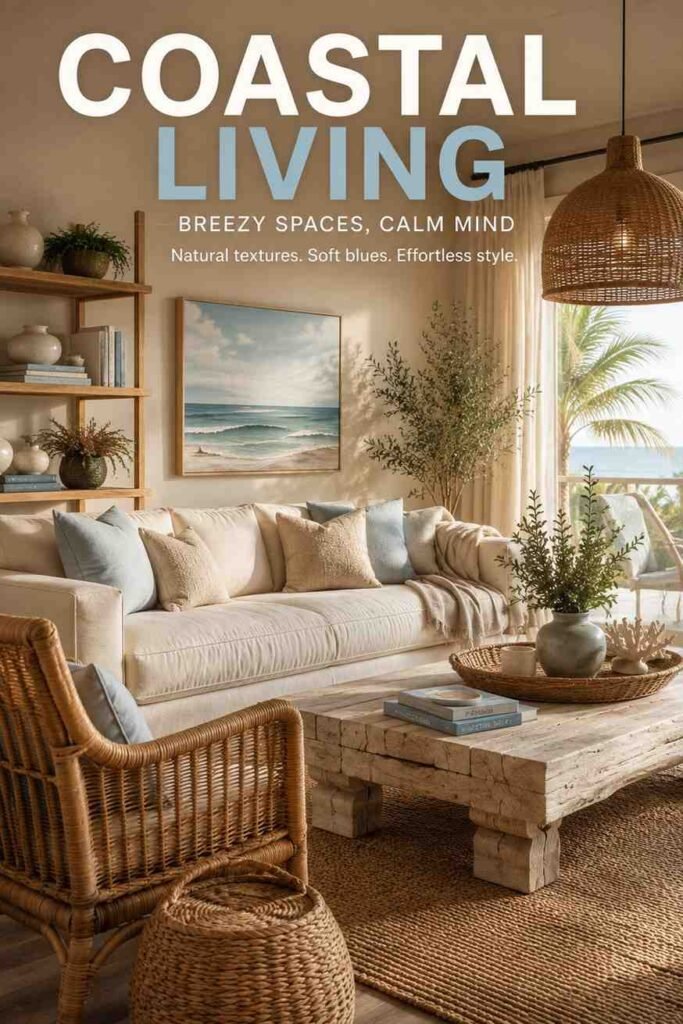
The line between “coastal” and “beach-themed” comes down to restraint. A themed room leans on literal props — ship wheels, starfish, rope trim. A genuinely coastal room leans on materials and light instead: linen slipcovers, bleached or warm wood, woven textures, and a palette that echoes the coastline rather than illustrating it. Designers moving through 2026 are also stepping away from the all-white, all-blue formula that once defined the look, mixing in deeper greens, sandy taupes, and even the occasional bold accent. The result feels layered and current rather than seasonal or novelty-driven, which is exactly why the style has held up for so long.
Coastal Living Room Color Palette Ideas
1. Start With Warm, Sandy Neutrals Instead of Stark White
Bright white walls were the default for years, but a warmer neutral — think sand, oat, or soft greige — adds depth to a coastal-style room without losing its airy quality. Warm neutrals also read better in homes that don’t get constant direct sunlight, since stark white can feel cold or flat under artificial light. Use the neutral as your base on walls, large upholstery, and trim, then build everything else on top of it. This single swap is one of the easiest ways to make a coastal living room feel current instead of dated.
2. Layer In Ocean Blues and Deep Greens as Accents
Blue hasn’t disappeared from coastal decorating — it’s just no longer doing all the work. Use it in smaller, higher-impact places: a set of throw pillows, a piece of art, ceramic lamps, or a single upholstered chair. Pairing deep navy or forest green with your neutral base creates contrast that feels intentional rather than themed. This approach also ages better over time, since you can swap accent pieces without repainting an entire room whenever your taste shifts.
3. Try Cloud Dancer as a Grounding Base Color
For a subtle, design-forward option, consider PANTONE 11-4201 Cloud Dancer, named Pantone’s Color of the Year for 2026 in December 2025. It’s a soft, weightless white with none of the coldness of a stark white, making it an easy match for driftwood tones, woven textures, and muted blues. Used on walls or on a large sofa, it gives a coastal living room a quiet, grounded backdrop that lets furniture and texture carry the visual interest rather than the color itself.
Furniture and Layout Ideas for a Coastal Living Room
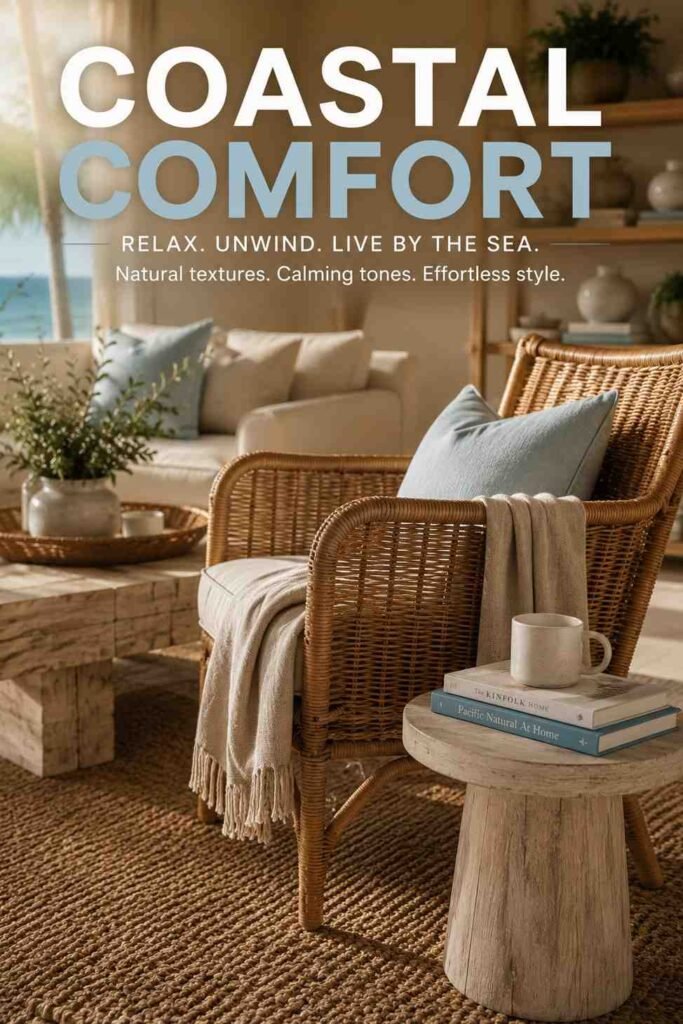
4. Choose Slipcovered or Performance-Fabric Sofas
Comfort is non-negotiable in coastal design, and the sofa sets the tone for the entire room. A slipcovered sofa in cotton or linen keeps the look relaxed and washable, which matters in a style built around everyday living rather than showroom perfection. If the room gets heavy daily use, a performance fabric in a similar soft neutral gives you the same casual look with far more durability, an upgrade many designers now recommend over traditional linen.
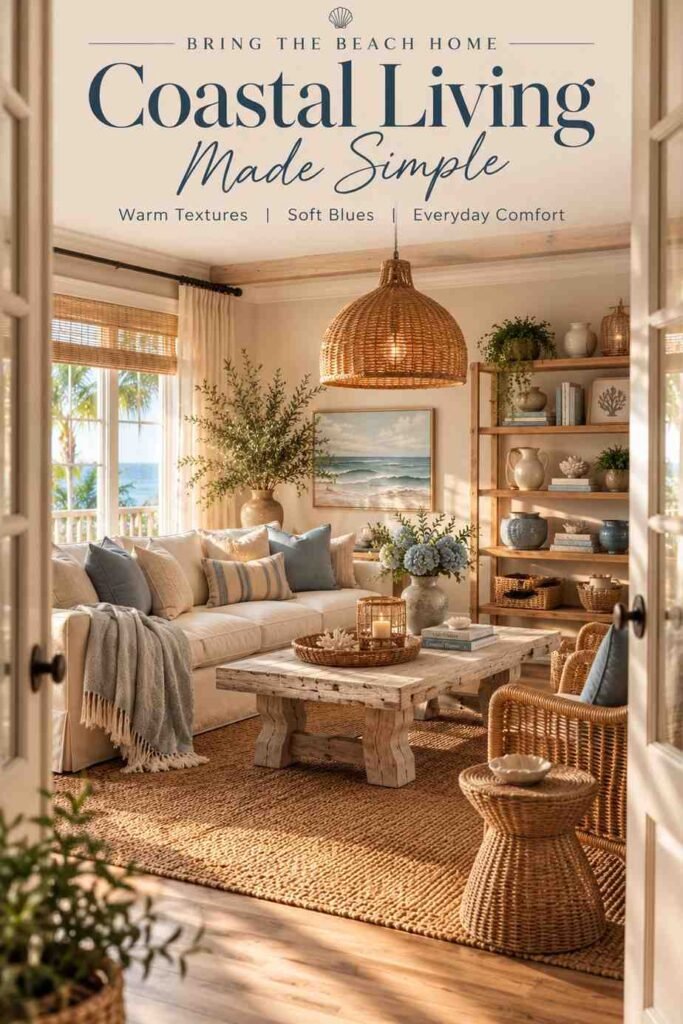
5. Add One Curved or Rattan Accent Chair
Rounded silhouettes are having a real moment in coastal interiors, echoing the soft lines of dunes and water rather than hard architectural edges. A single curved accent chair, or one with a woven rattan frame, adds texture and shape without overwhelming the room. It also breaks up a space that’s otherwise dominated by straight-lined sofas and rectangular coffee tables, giving the eye somewhere unexpected to land.
6. Float Furniture Toward the Light, Not Just the TV
Coastal design prioritizes natural light, so furniture placement should support that instead of fighting it. Pull seating slightly away from the walls and angle it toward windows or the brightest part of the room, even if that means the television isn’t the sole focal point. This layout choice does more to create an authentic coastal feel than almost any single decor item, because it changes how the entire room is actually used and experienced day to day.
Texture and Material Ideas
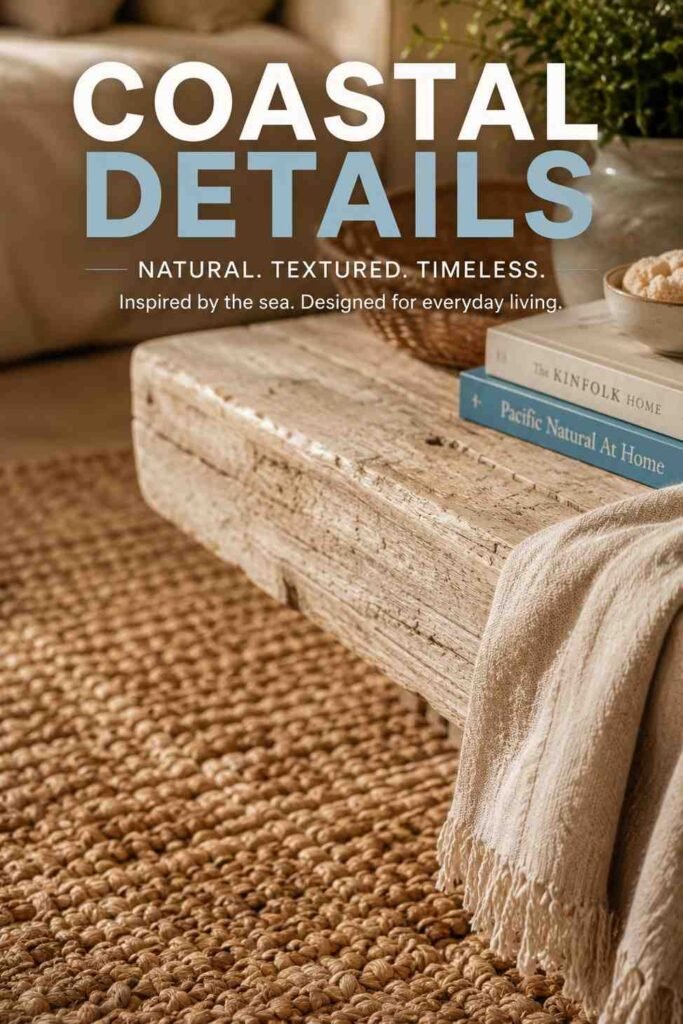
7. Bring in Jute, Sisal, or Seagrass Rugs
Natural-fiber rugs are one of the fastest ways to ground a coastal living room without adding more color. Jute and sisal bring warmth and texture underfoot while staying neutral enough to work with almost any palette. They also hold up well in high-traffic rooms and pair naturally with wood floors, which is why they show up in nearly every well-executed version of this style, from beach cottages to inland homes chasing the same relaxed feel.
8. Mix Whitewashed and Warm Driftwood-Tone Wood
Instead of matching every wood finish in the room, mix a lighter whitewashed piece — a coffee table or console — with a warmer, driftwood-toned item like an open shelving unit or side table. This combination mimics the natural variation you’d find in reclaimed or weathered wood and prevents the room from feeling like a matched furniture set. It’s a small detail, but it’s one of the clearest signals of intentional, layered design.
9. Add Dimension With Shiplap, Grasscloth, or Limewash Walls
A flat painted wall works, but textured walls do more heavy lifting in a coastal-style room. Shiplap remains a classic choice, while grasscloth wallpaper and limewash finishes have become popular 2026 alternatives that add tactile depth without leaning nautical. Even one accent wall with texture can transform a plain coastal living room into a space that feels custom-designed rather than assembled from a catalog.
Lighting and Decor Accent Ideas
10. Layer Natural Light With Warm, Low Lighting
Sheer or linen curtains let in maximum daylight while still softening harsh sun, which is essential to the airy feel coastal rooms are known for. In the evening, layer in warm-toned lamps rather than relying on a single overhead fixture. This combination keeps the room bright and open during the day and cozy after dark, avoiding the flat, showroom lighting that makes many living rooms feel unfinished after sunset.
11. Choose Organic Light Fixtures Over Literal Nautical Ones
Skip rope-wrapped or ship-lantern-style fixtures in favor of organic shapes — woven rattan pendants, sculptural ceramic lamps, or fixtures in matte brass and driftwood tones. These choices nod to the coastal aesthetic through material and form rather than obvious imagery, which is a big part of what separates a current coastal living room from an outdated, overly literal one.
12. Style Shelves With a Few Curated Pieces, Not a Collection
Open shelving is a coastal staple, but cluttered shelves undercut the calm the style is built on. Choose a handful of items per shelf — a stack of books, a single ceramic vase, one piece of art — and leave visible negative space between them. If your bookcases currently feel more like storage than styling, these living room shelf decor ideas walk through how to edit them down with the same relaxed, uncluttered hand used throughout the rest of the room.
Small-Space and Budget-Friendly Coastal Living Room Ideas
13. Use Mirrors and Light Fabric to Open Up a Small Room
Small living rooms benefit enormously from a well-placed mirror across from the main window, which bounces daylight deeper into the space. Pair it with lighter-weight curtains and a lower-profile sofa to keep sightlines open. This combination matters more in compact coastal rooms than almost anywhere else, since the entire style depends on a feeling of airiness that’s easy to lose in a small footprint.
14. Repaint and Restyle Before You Replace
A full furniture overhaul isn’t necessary to shift a room toward coastal style. Repainting walls in a warmer neutral, swapping hardware for brushed brass or matte black, and adding a natural-fiber rug can transform an existing living room for a fraction of the cost of new furniture. Save replacement budget for the sofa and one or two statement pieces, and let paint and accessories do the rest of the work.
15. Mix a Few Investment Pieces With Budget Finds
Not every item needs to be high-end for a coastal living room to feel elevated. Choose one or two investment pieces — typically the sofa and a well-made coffee table — and fill in the rest with budget-friendly rugs, throw pillows, and accessories. This mix is how most professionally designed rooms actually get built, and it keeps the space from looking either overly precious or obviously low-cost.
Coastal Style vs. Other Living Room Aesthetics
Coastal design shares more overlap with other neutral-driven styles than people often expect. It borrows warmth and restraint from soft minimalism, while its use of layered tans and creams runs close to the palette behind many luxury beige living room ideas, just with more texture and a cooler undertone worked in. The difference usually comes down to material choice: coastal rooms lean on natural fiber, rattan, and driftwood-toned wood, while other neutral styles lean more on velvet, marble, or polished metal. For more room-by-room inspiration beyond the living room, outinteriors has a growing library of design guides worth bookmarking.
Final Thoughts
A coastal living room works best when it’s built around how a family actually lives, not around a strict list of props to collect. Start with a warm, neutral base, add texture through natural materials, and let color and lighting do the rest of the work in smaller doses. None of the 15 ideas above require a full renovation — most can be layered in gradually, room by room, without disrupting a budget or a timeline. The result is a living room that feels calm and collected year-round, whether the nearest coastline is a five-minute walk or a five-hour drive away.
Frequently Asked Questions
What colors work best in a coastal living room?
Warm neutrals like sand, oat, and soft greige work best as a base, with blue, green, or navy used as accent colors rather than the dominant palette. This keeps the room feeling airy without looking flat or one-note.
Is coastal style outdated in 2026?
No, but the literal, nautical-heavy version of coastal style has fallen out of favor. Current coastal design leans on texture, warm neutrals, and natural materials instead of ship wheels, anchors, or rope accents.
How do I make a small living room look coastal?
Focus on light: use mirrors to bounce daylight, choose lightweight curtains, and pick a lower-profile sofa. A jute or sisal rug and a warm neutral wall color will do more for a small space than adding extra furniture or decor.
What’s the difference between coastal and nautical style?
Nautical style uses literal maritime imagery like anchors, stripes, and ship-inspired decor. Coastal style is broader and more subtle, drawing on natural materials, light, and a sand-and-sea color palette without leaning on obvious beach symbols.
Do I need blue in a coastal living room?
No. Many current coastal rooms use blue sparingly or skip it entirely in favor of greens, warm neutrals, or sandy tones. The style is defined more by texture and light than by any single color.
What flooring works best for coastal living rooms?
Light or mid-tone wood floors are the most common choice, often paired with a natural-fiber rug like jute or sisal. Whitewashed wood and light tile also work well, especially in warmer climates.
How much does it cost to redesign a living room in coastal style?
Costs vary widely depending on how much furniture you’re replacing versus restyling. A refresh using paint, a new rug, and updated accessories can often be done for a few hundred dollars, while a full furniture replacement typically runs into the thousands.