Vibrant 15 Living Room Shelf Decor Ideas to Transform Your Space
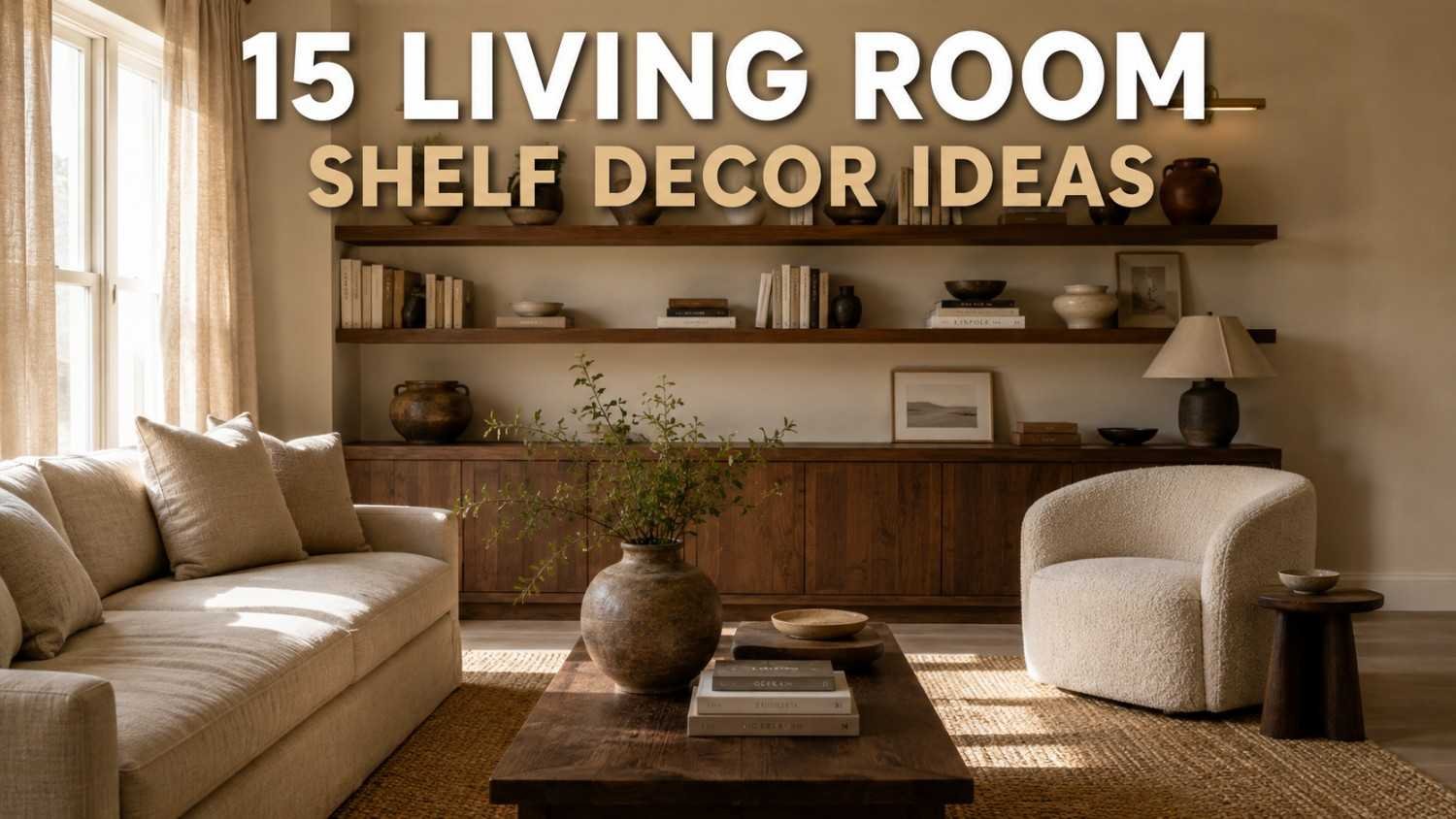
Empty shelves have a way of exposing a room’s personality — or the lack of one. A stack of unread paperbacks, a lone candle, a picture frame turned the wrong way. If that sounds familiar, you’re not decorating wrong; you just haven’t had the right framework yet. Living room shelf decor ideas aren’t about buying more stuff — they’re about arranging what you already love with intention, so every shelf tells a small story instead of collecting dust. Below are fifteen practical, design-backed living room shelf decor ideas, the styling rules that make them work, the mistakes that quietly ruin a good shelf, and answers to the questions people ask most often.
Why Living Room Shelf Decor Ideas Matter More Than You Think
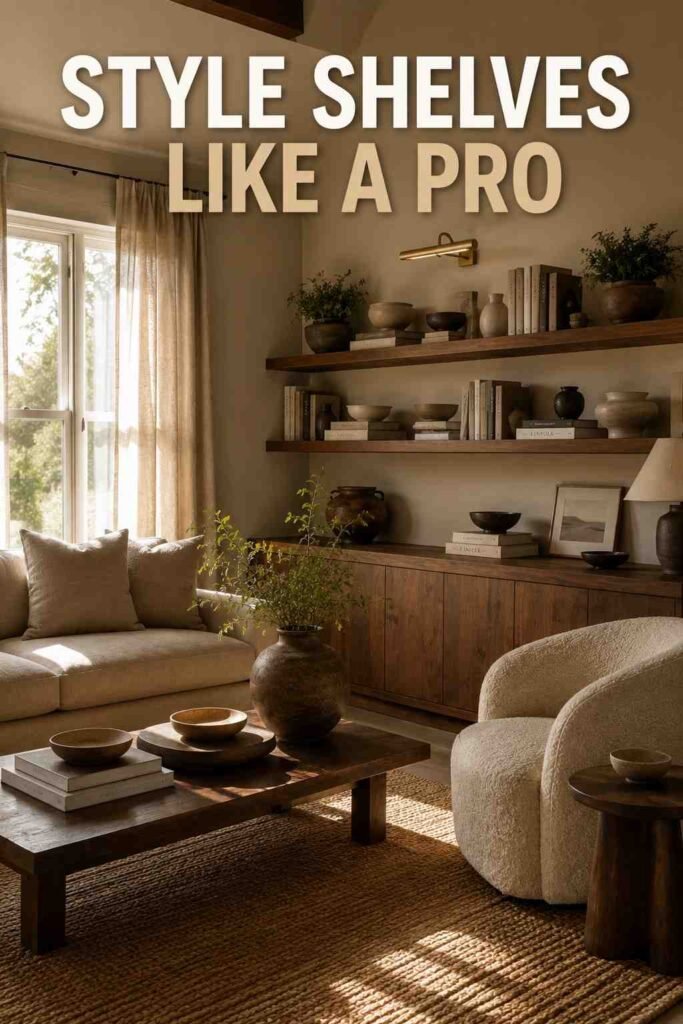
Shelves sit at eye level, which means they get noticed before your sofa or your rug even register. A well-styled shelf signals that a room was considered, not just furnished. It also solves a practical problem: most living rooms need somewhere to put books, remotes, and framed photos, and open shelving does that without hiding everything behind cabinet doors. The right living room shelf decor ideas turn a purely functional surface into a focal point, which is why interior designers treat shelf styling as seriously as wall color or furniture layout.
The Design Rules Behind Every Great Shelf
Before jumping into individual ideas, it helps to understand three principles that professional stylists rely on again and again. These rules underpin nearly every living room shelf decor ideas list worth following, and once you know them, you can improvise with confidence.
The Rule of Three
Group items in odd numbers — three, five, or seven — rather than pairs. Odd-numbered groupings read as more natural and less staged, because the eye can’t split them evenly. A trio might be a stack of books, a small bowl, and a short plant. This single habit fixes more awkward shelves than any decor purchase ever will.
The Triangle Method
Once your items are grouped, arrange their heights into a rough triangle — tall in the back or center, shorter pieces stepping down toward the front or sides. This gives the eye an anchor to follow instead of bouncing randomly across the shelf. A tall vase, a medium stack of books, and a small frame is a classic version of this shape, and it works in both minimalist and maximalist rooms.
Leave Room to Breathe
Negative space isn’t wasted space. Packing every inch makes even beautiful objects look cluttered, while space around a grouping lets each piece stand out. A useful benchmark: aim to fill roughly 60 to 70 percent of each shelf, leaving the rest open. This one adjustment is often the difference between a shelf that looks curated and one that looks like storage.
15 Living Room Shelf Decor Ideas Worth Trying
With those rules in mind, here are fifteen living room shelf decor ideas you can start using today, regardless of your shelf size or design style.
1. Set a Cohesive Theme
Pick one thread — a color, a material, or a subject like travel or nature — and let it repeat across shelves without being identical on every level. A theme keeps shelf decor from feeling like a random collection of things that happened to be nearby.
2. Mix Books With Decorative Objects
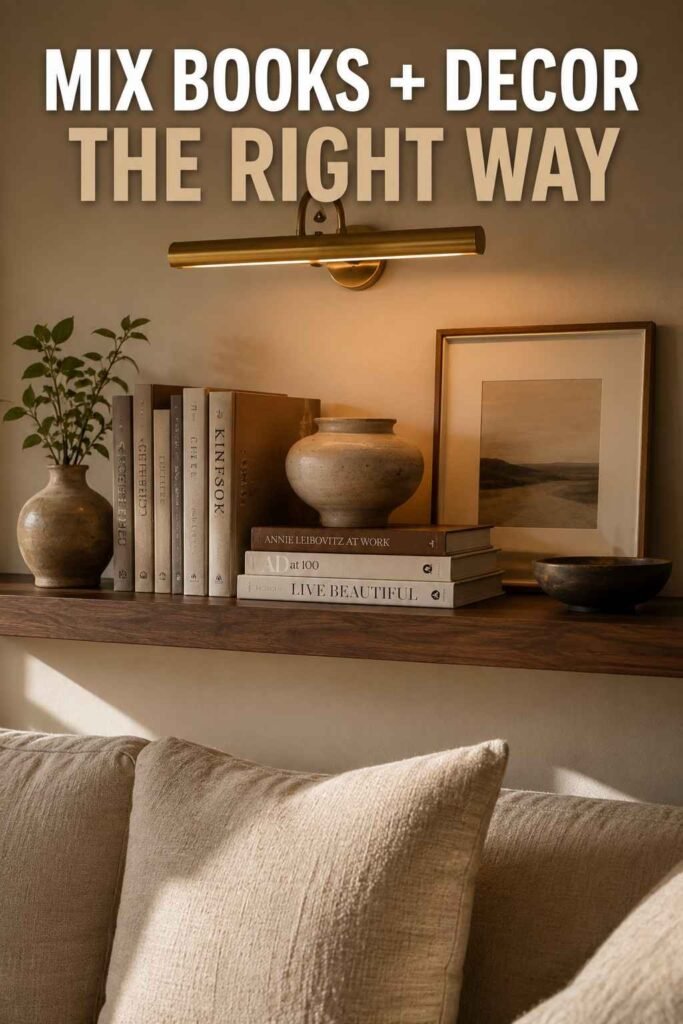
Books are functional, but stacked strategically, they become styling tools. Lay a few flat to create a pedestal for a small sculpture or plant, and stand others upright for vertical lines. Group by color for a curated look, or by size for something more relaxed.
3. Bring in Houseplants
A trailing pothos or a small snake plant softens the hard edges of wood and metal shelving and adds texture decor objects can’t replicate. If natural light near your shelves is limited, a realistic faux plant does the same visual job without the maintenance.
4. Layer in Personal Photography
Framed photos make a shelf feel like yours rather than a catalog page. Lean a few against the wall at slightly different depths, and mix frame finishes — matte black next to warm wood. Limit yourself to one or two photos per shelf so the personal touches feel intentional.
5. Use Trays and Risers
Small items like matchboxes or tiny sculptures tend to disappear on an open shelf. Corral them onto a tray and they read as one grouped object instead of clutter. Risers or stacked books lift a short item so it can join the triangle shape instead of getting lost.
6. Add Sculptural Bookends
The good ones double as sculpture. Marble, brass, or stone bookends hold a stack of books upright while adding weight and material contrast to a shelf otherwise full of paper and fabric textures. Choose a pair with a distinct silhouette and let it anchor one end of a grouping.
7. Incorporate Baskets for Hidden Storage
Not everything needs to be on display. A woven basket at the base of a bookshelf hides remotes and cords while adding natural texture that balances glossy ceramics. Baskets solve the practical side of living room shelf decor ideas — a shelf that only looks good rarely stays tidy for long.
8. Play With Lighting
A small battery-powered puck light or plug-in picture light tucked above a shelf changes the mood of a whole wall after dark. Even a single strand of warm-white LED tape along the underside of one shelf is enough to make the unit feel finished.
9. Style Floating Shelves for Small Spaces
In smaller living rooms, a pair of floating shelves does the job of a bulky bookcase without eating floor space. Keep the styling restrained — two or three groupings per shelf, with visible wall space between them — so the room doesn’t feel more crowded than it is.
10. Decorate Corner Shelves
Corners are often wasted space, but stacked corner shelves turn that dead zone into display real estate. Because corner shelves run narrower and deeper on one side, they suit taller, slimmer objects — bud vases, single upright books — better than wide groupings.
11. Rotate Decor Seasonally
Swapping a few pieces each season keeps a shelf feeling current without a full redesign. A ceramic pumpkin in fall, fresh greenery in spring — small rotations stop shelves from going visually stale. Keep a small bin of seasonal pieces stored away for quick refreshes.
12. Choose a Deliberate Color Palette
Limiting a shelf to three or four colors, echoed from the room’s rug or artwork, keeps the space feeling connected rather than assembled at random. Neutral bases — cream, wood tone, black — paired with one or two accent colors tend to age better than trend-driven palettes.
13. Add Art and Mirrors
Leaning a small framed print or mirror against the back of a shelf adds depth and reflects light, which helps in rooms without much natural sunlight. Propping art at a slight angle behind other objects creates layers and makes a shallow shelf look deeper than it is.
14. Mix Textures and Materials
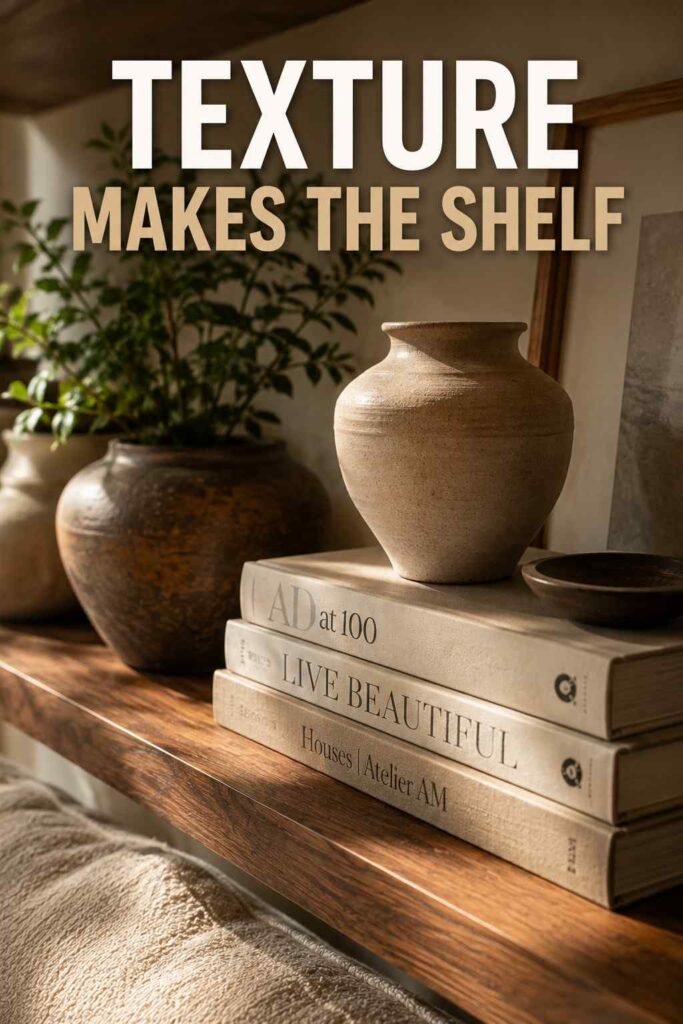
A shelf made entirely of glass and ceramic looks cold; one built entirely from wood and fabric looks flat. Combining materials — a woven basket beside a smooth ceramic vase beside a matte stone bookend — gives the eye more to explore and feels collected over time.
15. Use Ladder Shelves for a Modern Look
A leaning ladder shelf brings an architectural line into a living room without the commitment of built-ins. Because each rung is open on multiple sides, style it lightly — one grouping per level at most — so the piece keeps its airy, modern silhouette.
Common Shelf Styling Mistakes to Avoid
Even great living room shelf decor ideas fall flat when a few habits creep in:
- Matching everything perfectly — a shelf with zero variation in height, color, or material looks stiff rather than styled.
- Overfilling every shelf — with no negative space left, the eye has nowhere to rest.
- Ignoring shelf spacing — shelves set closer than 10 to 12 inches apart limit which objects can actually fit.
- Forgetting function — a shelf that holds only decor and no storage often ends up cluttered with everyday items that have nowhere else to go.
- Styling once and never touching it again — shelves go visually stale exactly like any other part of a home; a seasonal refresh keeps them feeling current.
Living Room Shelf Decor Ideas by Design Style
Not every living room calls for the same approach. Here’s how living room shelf decor ideas shift depending on the style you’re working with.
Modern and Minimalist
Fewer objects, more negative space, and a palette limited to two or three neutral tones. Choose one statement piece per shelf — a single sculptural vase or a stack of art books — rather than several small items competing for attention.
Farmhouse and Cottage
Lean into natural materials like woven baskets, reclaimed wood, and stoneware. Mix in greenery and a few vintage finds, like an old glass bottle or enamelware bowl, for warmth without visual clutter.
Boho and Eclectic
This is the style where more is genuinely more. Layer textures — macramé, rattan, ceramics, global textiles — and don’t worry about perfect symmetry. Plants in varying pot styles tie an eclectic shelf together.
Luxury Beige and Neutral
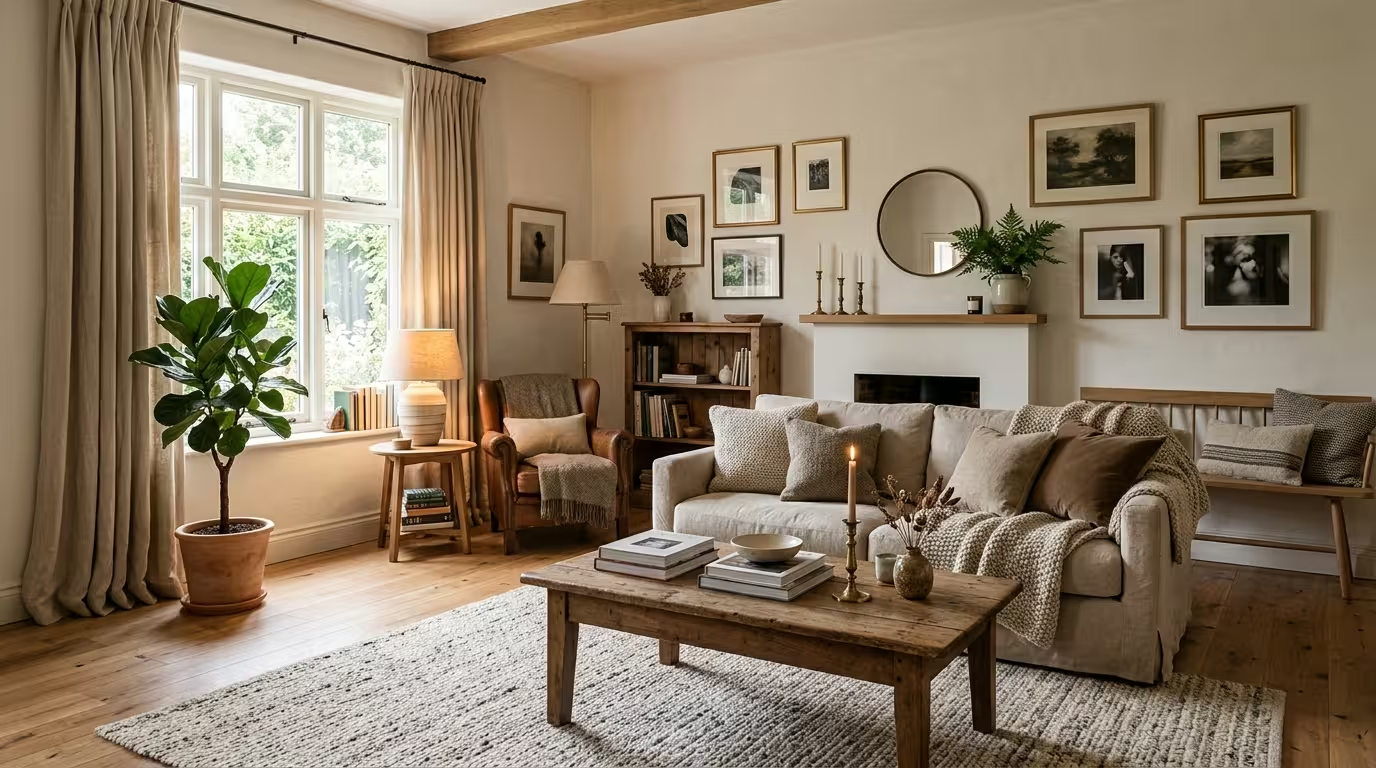
A tonal palette of warm beige, cream, and soft taupe reads as quietly upscale rather than plain, especially paired with brass or stone accents. If this appeals to you, these luxury beige living room ideas show how the same warm, neutral approach translates from shelves to the rest of the room.
Choosing the Right Shelf Type for Your Living Room
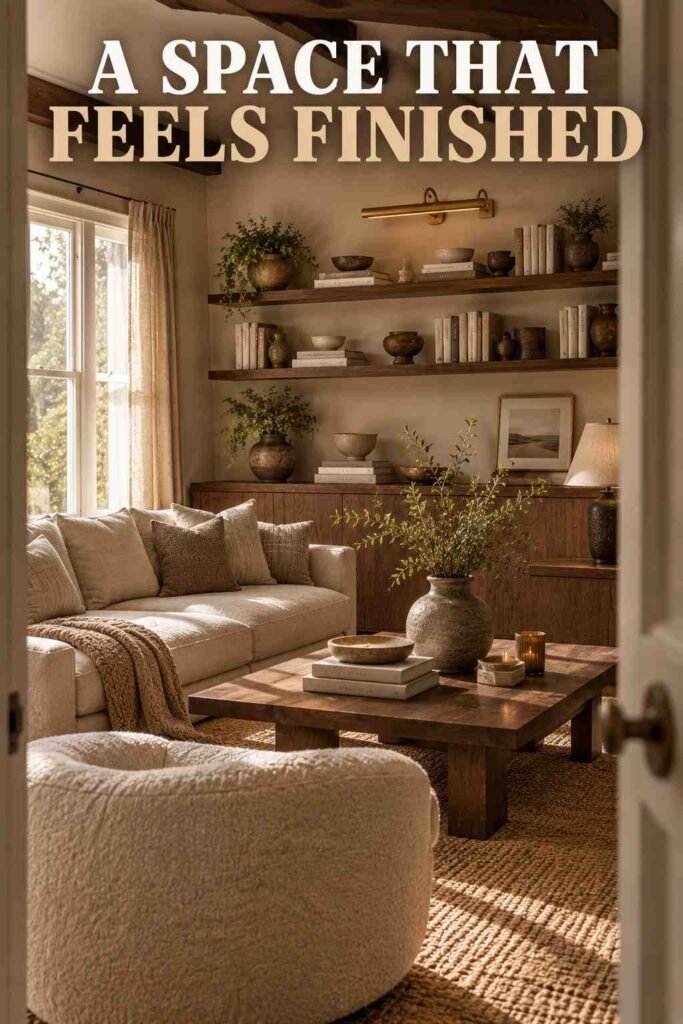
Picking the right shelf structure matters as much as the styling on top of it, and it’s a step many living room shelf decor ideas guides skip entirely.
Floating shelves work best when floor space is limited, or when flanking a fireplace or television, since they add display area without visual bulk. Built-in shelving suits larger, more permanent living rooms and offers the most storage, though it’s a bigger investment and harder to reconfigure later. Corner shelves make use of otherwise dead space and suit narrower, taller objects. Ladder shelves bring a casual, modern feel and work well when a full wall isn’t available for built-ins. Weight capacity matters too — most floating shelves are rated for 15 to 50 pounds depending on the hardware, so heavier items like stacked hardcovers belong on shelves anchored into wall studs rather than drywall anchors alone.
Conclusion
Great living room shelf decor ideas don’t require a full renovation or a shopping spree — they require a plan. Start with the rule of three, build groupings into loose triangles, and leave enough negative space for the room to breathe. From there, layer in books, plants, personal photography, and a few sculptural pieces that reflect how you actually live. If you’re building out the rest of the room around your newly styled shelves, these cozy living room ideas offer warm, livable pairings, and for more room-by-room inspiration, browse the full collection at outinteriors. However you style them, your shelves should feel like the most personal part of the room — not an afterthought squeezed in after the sofa and rug were chosen.
Frequently Asked Questions
1. How many decor items should go on one shelf?
Three to five items per grouping is the general sweet spot — enough to form a triangle shape without overcrowding. Larger shelves can hold two smaller groupings instead of one large, cluttered one.
2. What is the best height for living room shelves?
Eye level, roughly 57 to 60 inches from the floor, is the standard reference point for hanging shelving and art in a living room, since that’s close to average standing eye height.
3. How do I decorate empty shelves on a budget?
Start with what you already own — books, plants from other rooms, ceramics from the kitchen — before buying anything new. Thrifted vases, bookends, and trays are some of the most cost-effective living room shelf decor ideas, since secondhand pieces often bring character that new items don’t.
4. Should every shelf match exactly?
No. Matching shelves exactly tends to look stiff. Repeating one or two colors or materials across shelves creates cohesion without forcing every shelf to be identical.
5. How much weight can a floating shelf hold?
Most floating shelves hold between 15 and 50 pounds, depending on the bracket type and whether they’re anchored into a wall stud. Heavier collections need stud-mounted or bracket-supported shelving rather than adhesive or drywall-anchor installs.
6. How often should I restyle my shelves?
A light seasonal refresh — swapping a handful of pieces every few months — keeps shelves feeling current without a full redo. A deeper edit once a year, as your taste or collection shifts, is usually enough.
7. What’s the difference between styling a bookshelf and open shelving?
Bookshelves typically have more vertical divisions and a mix of books and objects across several levels, while open shelving is often just one or two long shelves that need fewer, larger groupings to avoid looking sparse.