Chrome Lamp Ideas: A Complete Guide to Styling, Buying, and Caring for This Timeless Fixture
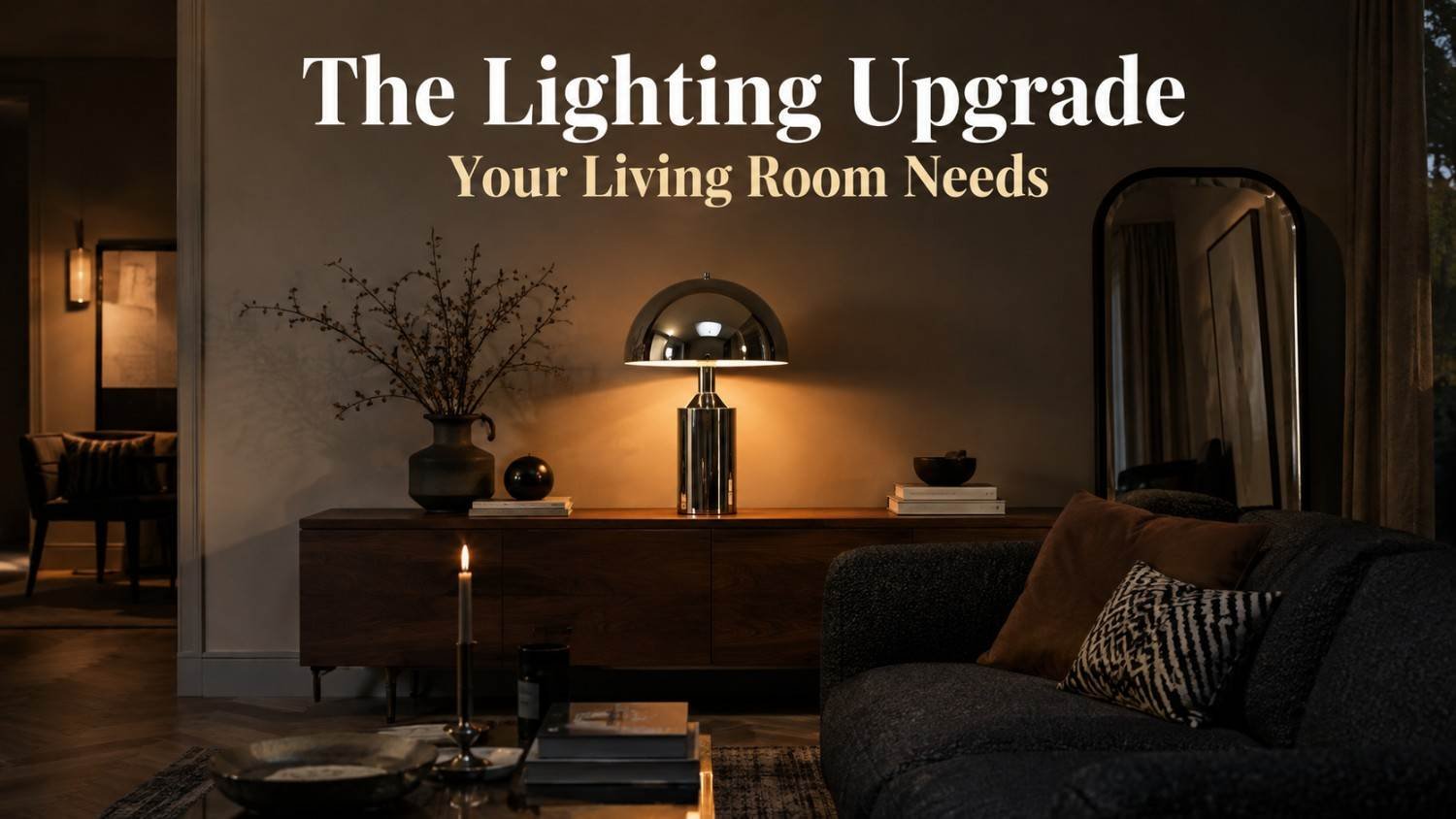
Walk into any well-lit room, and there’s a good chance a small, polished detail is doing more work than you’d think. A chrome lamp does exactly that. It throws light where you need it, catches every other surface in the room, and somehow never looks dated. That’s a rare combination in home lighting.
Most guides either sell you a lamp or show you a Pinterest board. Few actually explain where this finish came from, how to pick the right one for your space, or how to keep it looking new for decades. This guide covers all three, plus twelve practical ways to bring one into your home without it feeling cold or out of place.
What Exactly Is a Chrome Lamp?
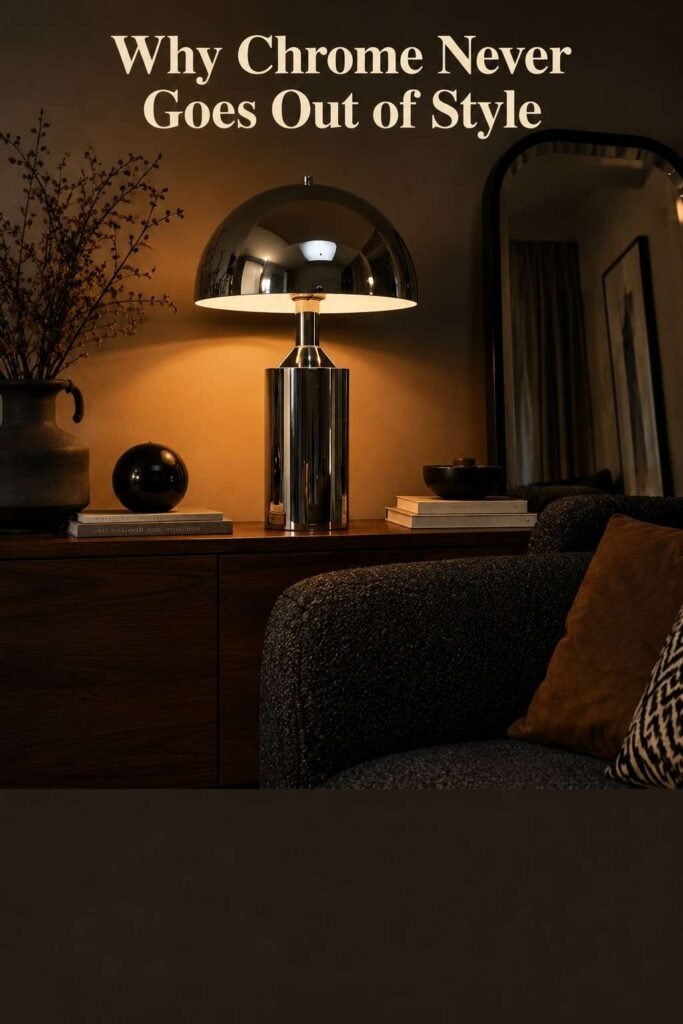
A chrome lamp is any lighting fixture — table, floor, or desk — finished with a thin layer of chromium plating over a base metal, usually steel or brass. The plating gives the lamp its mirror-like shine, resistance to scratching, and a cool, silvery tone that differs from warmer finishes like brass or bronze.
Because chrome reflects rather than absorbs light, this type of fixture doesn’t just illuminate a room; it bounces that light back into it. That makes it especially useful in smaller rooms, dim corners, or spaces with limited natural light, where every bit of reflected brightness counts toward making the room feel larger.
The Surprising History Behind the Chrome Lamp
Chrome didn’t start as a design trend — it started as an industrial breakthrough. Commercial chromium plating became widely available in 1926, and it quickly became a defining material of the Art Deco movement, which had taken shape at the 1925 Paris Exposition Internationale des Arts Décoratifs et Industriels Modernes. Chrome offered a harder, more scratch-resistant surface than nickel, and unlike nickel, it didn’t tarnish or rust over time.
During the 1920s and 1930s, chrome objects were nicknamed “poor man’s silver.” They gave middle-class households the gleam of sterling without the price tag, and lighting designers embraced the finish fast. The Chase Brass and Copper Company in Waterbury, Connecticut, became one of the earliest producers of decorative chrome pieces, and designer Ruth Gerth created a chrome “glow lamp” for the company that is now archived in the Cooper Hewitt Smithsonian Design Museum. A century later, that same reflective quality still defines why this finish feels modern in almost any setting.
Types of Chrome Lamps for Every Space
Not every chrome lamp serves the same purpose. Knowing the category helps you match the fixture to the room before you even think about style.
Chrome Table Lamps
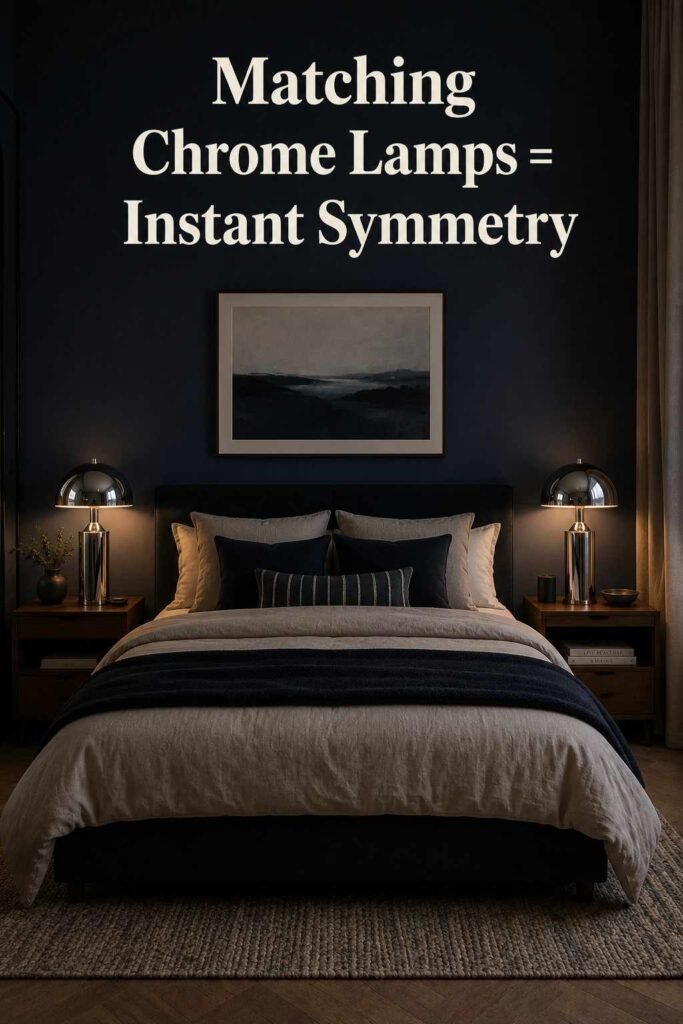
These sit on nightstands, side tables, and consoles. They’re the most versatile option and typically pair a chrome base with a fabric or glass shade for softer, ambient light.
Chrome Floor Lamps
Taller and often adjustable, chrome floor lamps work well beside reading chairs or in corners that need a vertical anchor. Arc-style versions can stretch over a sofa without needing a side table at all.
Chrome Desk Lamps
Built for task lighting, these usually feature an articulating arm and a narrower shade or exposed bulb, aimed at concentrating light on a workspace rather than filling the whole room.
Chrome Pendant and Wall Lamps
Hung from the ceiling or mounted to a wall, these free up surface space entirely and work especially well over dining tables, kitchen islands, or bathroom vanities.
Ready to compare options side by side? Browse the full Chrome and Wood Ideas collection to see current styles across every category and price point before you commit to one for your space.
Chrome vs. Other Finishes: Which Should You Choose?
Chrome is only one of several popular metal finishes, and choosing between them comes down to tone, maintenance, and the other metals already in your room.
|
Finish |
Look |
Maintenance |
Best Paired With |
|---|---|---|---|
|
Chrome |
Bright, mirror-polished, cool-toned |
Shows fingerprints; easy to wipe clean |
Glass, black metal, walnut wood |
|
Brushed Nickel |
Matte, soft silver |
Hides smudges well |
Warm woods, linen shades |
|
Brass/Gold |
Warm, reflective |
Can patina over time |
Marble, cream tones |
|
Matte Black |
Deep, non-reflective |
Low-maintenance, few visible marks |
Industrial or modern-minimalist decor |
If your room already leans cool and modern — think glass tabletops, black frames, or gray tones — a chrome fixture will feel like it belongs there naturally. If your space is heavy on warm wood and earthy textures, chrome can still work beautifully as a deliberate contrast rather than a match.
12 Chrome Lamp Ideas to Elevate Every Room in Your Home
1. Pair it with warm wood furniture. A chrome lamp base on a walnut or oak nightstand creates the kind of contrast that makes both materials look more intentional. For more direction on combining these two finishes, this guide to Chrome home decor breaks down proportion and placement in detail.
2. Flank a mirror with matching table lamps. Two identical chrome lamps on either side of an entryway mirror create instant symmetry and double the reflected light.
3. Use an arc floor lamp over a reading chair.
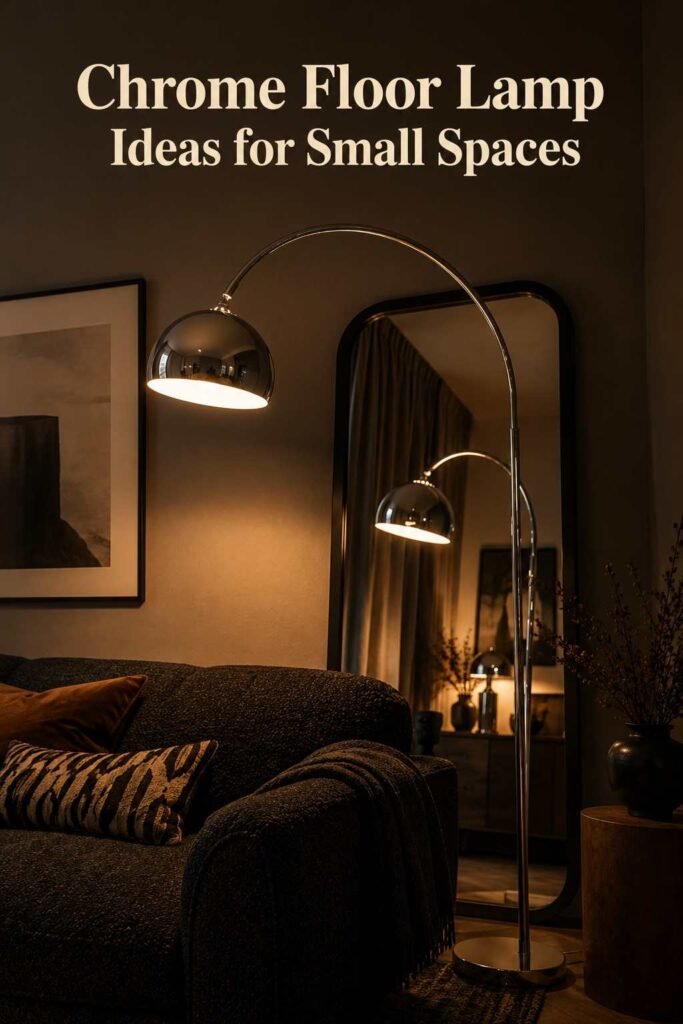
It delivers overhead light without requiring a side table, which is ideal for tight living room layouts.
4. Add a chrome desk lamp to a home office.
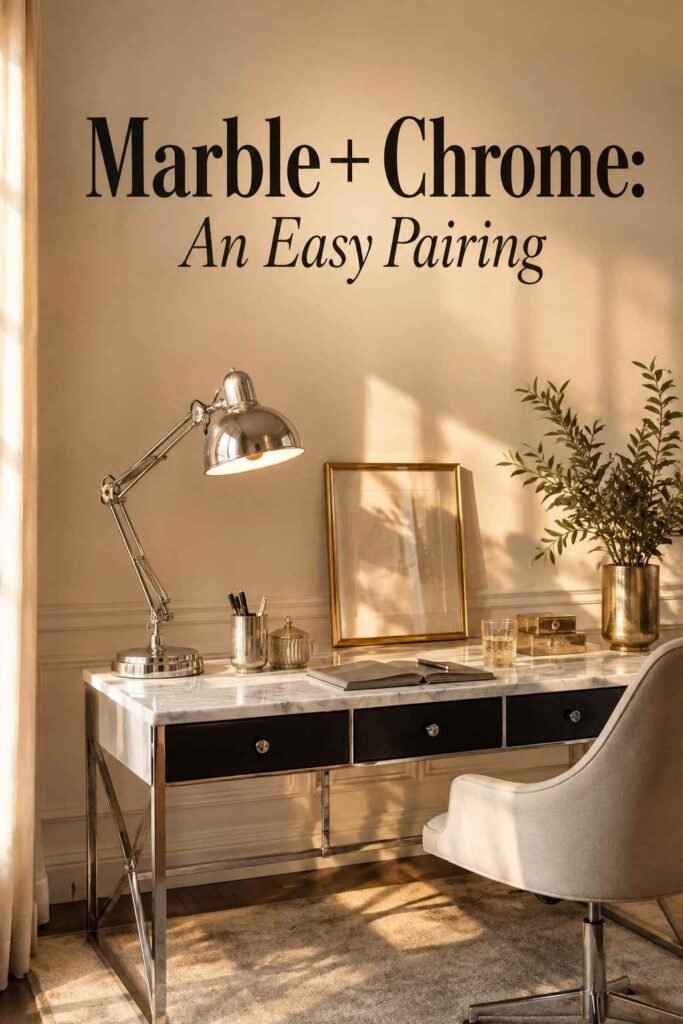
The cool tone keeps a workspace feeling sharp and focused, especially against a white or black desk.
5. Layer it into a gallery wall setup. A slim chrome sconce beside framed art adds a metallic accent that ties the whole arrangement together.
6. Choose chrome for a bathroom vanity light. Its resistance to moisture and easy-clean surface make it one of the more practical finishes for humid spaces.
7. Bring it into a nursery or kids’ room. A small chrome table lamp with a soft fabric shade keeps the room bright without feeling babyish as the child grows older.
8. Use a pendant version over a dining table. It keeps sightlines open across the table while still making a visual statement overhead.
9. Style it beside a marble side table. Chrome and marble share the same cool, polished quality, making the pairing feel curated rather than accidental.
10. Add one to a reading nook. A slim chrome floor lamp with an adjustable head lets you angle light exactly where you’re sitting.
11. Mix metals deliberately. It doesn’t need every other fixture in the room to match; pairing it with black hardware or brass drawer pulls can look more collected than a single-metal room.
12. Choose a warm-white bulb to soften the finish.
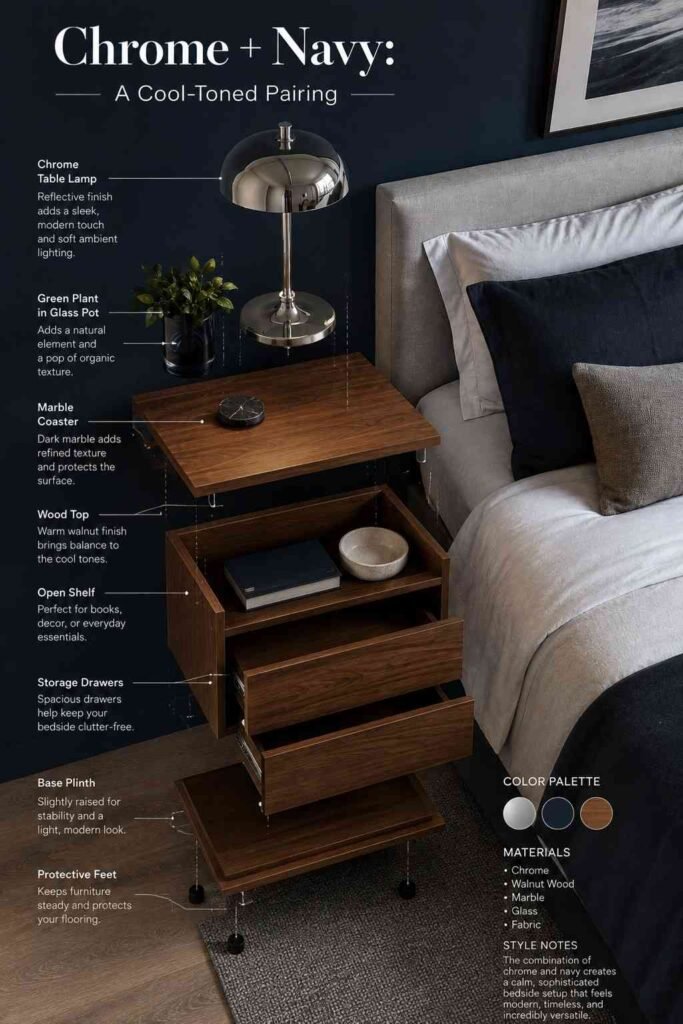
Chrome can read as stark under a cool bulb, so a warm 2700K bulb keeps the room inviting while the metal still shines.
How to Choose the Right Chrome Lamp for Your Home
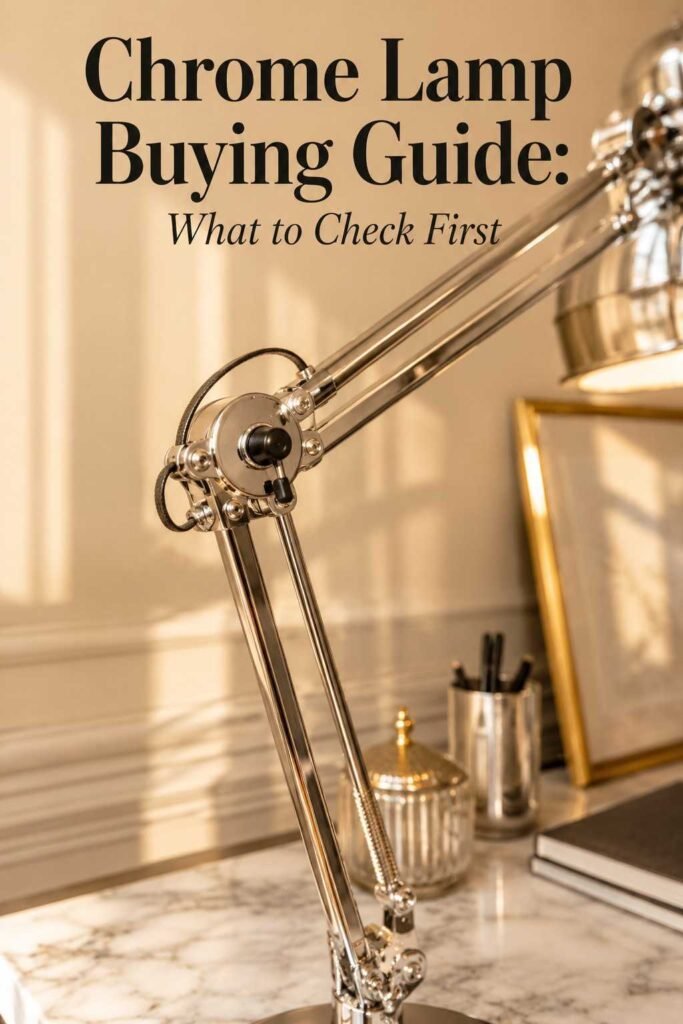
Consider the scale first. A lamp that’s too tall or too wide for its table throws off the whole room’s proportions. As a rule, the shade should sit at eye level when you’re seated nearby, and the lamp’s height (base plus shade) should be roughly one-third the height of the wall behind it.
Check the bulb type. Most modern chrome lamps are compatible with LED bulbs, which run cooler and last longer than incandescent options — a meaningful detail since chrome can hold heat differently than matte finishes. Look for fixtures rated for at least 60-watt equivalent LEDs if you want the lamp to double as a reading light.
Pay attention to the shade material. A linen or fabric shade softens the light and takes some of the sharpness out of a chrome base, while a glass or metal shade keeps the look sleeker and more architectural.
Test the base weight. Because chrome is a plating over a lighter base metal in many budget fixtures, cheaper lamps can tip easily. A weighted base, often filled with sand or concrete, is worth the extra cost for anything going on a nightstand near an active household.
Set a realistic budget. Chrome table lamps generally range from $40 for basic models to $300 or more for designer or vintage pieces, while floor lamps and pendants tend to sit higher depending on size and brand.
How to Clean and Maintain a Chrome Lamp
Chrome is a plating, not a solid metal all the way through — typically a layer of nickel underneath for corrosion resistance, topped with a thin chromium layer as fine as 0.3 to 1 micron for shine and hardness. That’s why the right cleaning method matters more than how often you clean.
For routine dusting, a dry microfiber cloth removes light dust without scratching the surface. For fingerprints or buildup, mix a few drops of mild dish soap with warm water, wipe with a soft cloth, then dry immediately to prevent water spots. For tougher grime or mineral deposits, a solution of equal parts white vinegar and water works well — just don’t let it sit for more than a few minutes, since vinegar’s acidity can dull the finish over time.
Avoid bleach, ammonia-based cleaners, and any abrasive sponge or scouring pad. These strip the protective layer and leave fine scratches that permanently dull the mirror finish. A gentle baking-soda paste can help with stubborn spots, but always test it on a hidden area first.
Final Thoughts
A chrome lamp carries nearly a century of design history in a single finish, and it hasn’t lost relevance yet. Whether you’re placing one on a nightstand, hanging a pendant over a dining table, or picking a desk lamp for a home office, the finish adapts to almost any room without demanding attention it hasn’t earned. Start with one well-placed piece, get the scale and bulb temperature right, and let the reflective quality do the rest. For more curated pairings and room-by-room inspiration, browse the lighting library at outinteriors before you buy.
Frequently Asked Questions
1. Does a chrome lamp go out of style?
Chrome has stayed relevant since the 1920s because it pairs with nearly any interior style, from Art Deco to modern minimalism. Trends around it shift, but the finish itself has proven durable both physically and stylistically.
2. Is this finish hard to keep clean?
Not particularly, but it does show fingerprints and water spots more visibly than matte finishes. A quick wipe with a microfiber cloth every few days keeps it looking new, and a deeper clean with dish soap or diluted vinegar handles buildup.
3. Can this finish work in a warm, traditional room?
Yes. Chrome works well as a deliberate contrast against warm wood tones, brass hardware, or traditional furniture shapes. The key is using it sparingly rather than trying to match every metal in the room.
4. What’s the difference between chrome and brushed nickel lamps?
Chrome has a bright, mirror-like polish, while brushed nickel has a softer, matte texture that hides fingerprints better. Chrome tends to read as more modern and reflective; brushed nickel feels quieter and blends into more rooms.
5. Is chrome safe to pair with LED bulbs?
Yes, and it’s usually the better choice. LED bulbs run cooler than incandescent bulbs, which helps preserve the plating over time and reduces the risk of the base metal discoloring near the bulb socket.
6. How do I know what size to buy for my table?
A good guideline is that the lamp’s total height (base and shade combined) should be about one-third the height of the wall space behind it, and the shade should sit roughly at eye level when you’re seated beside it.
7. Why does chrome sometimes tarnish or discolor over time?
This usually happens on lower-quality fixtures where the chromium layer is too thin or where the underlying nickel layer wasn’t applied evenly. Buying from a reputable brand and avoiding harsh cleaners will keep a good-quality fixture looking new for years.